Blog Archives
Long Journey to Self-Awareness

Pillars of Salt follows a man’s journey from bitterness and cynicism to a place of appreciation for his father’s integrity. What was the inspiration for the setup to your story?
My inspiration for writing this story was an actual unsolved disaster in Louisiana: in 1980, an oil drilling rig atop a lake punctured a salt mine, causing the mine’s collapse. Some drastic miscalculations, intentional or otherwise, led to the loss of millions of dollars of equipment and homes, yet the cause was never properly investigated.
In my narrative, H (Harvey Doucet, Jr.) carries out an investigation that the authorities neglected to do. After his father’s alleged suicide, H knows that his father, Harvey, Sr., a passable if not devout Catholic, could never have committed such a mortal sin. H, a bitter young man, has resented his father ever since H’s mother and the baby she was carrying died during childbirth. In his grief, Harvey, Sr., simply left his two young sons in the care of his older sister, Ethel, and rarely visited them. Understandably, H feels abandoned and harbors his bitterness all his life, estranging himself even more by joining the Air Force after college instead of working for Doucet Drilling Company as his father had wanted.
But as cynical as H is, he can’t desert his father after this tragedy. It’s too late for H to atone for past resentments; all he can do now is clear his father’s name of the false allegation of suicide. In the process of finally gaining respect for his father, he uncovers the greed and corruption that have led to so much destruction and death.
H is an intriguing and well-developed character. What were some driving ideals behind your character’s development?
At the beginning of the story, H is not an admirable character; life circumstances have made him a depressed, self-absorbed cynic. At times, though, he is able to see himself through a critical lens: he understands that Midge probably saw that he had more of his father’s flaws than he ever realized; he is able to admit that he is probably as much to blame for his breakup with Midge as she is; he also reasons that his father was just trying to bury his grief in the business after losing his wife and infant daughter. Unlike his father, though, H has the moral compass in this situation to take an extended leave from his job in the Air Force, risking both his chance of advancement and his own life, to vindicate his father’s name.
During H’s long journey to self-awareness, he has occasional flashbacks to rare visits by his father, during which he was always scolded more than his brother Victor. H finally understands that Vic looks like his father’s Cajun side of the family, while H looks more like his mother; he rationalizes that his resemblance to his mother might have caused his father more pain. H also understands how his enlistment in the Air Force instead of joining the business would have contributed to his father’s suffering.
H marvels at the loyalty and respect that employees, Placide and Earlene, have toward his father, despite Harvey, Sr.’s hard exterior. By the end of the story, H is still cynical about corporate and political greed, but he appreciates his father’s integrity and honesty in the face of such malign corruption, and he has renewed his faith in humanity, particularly in his new circle of loyal friends.
What were some themes that were important for you to explore in this book?
A main theme is good vs. evil: H against the greed and corruption of the wealthy and powerful. H vows to clear his father’s name, whatever the cost, and the cost turns out to be steep. Facing extreme danger, H, with help from Placide and Earlene, uncovers a widespread conspiracy leading all the way to the White House. In this sense, H becomes the “David” to the “Goliath” of corporate and political corruption.
Another theme is redemption. H knows it’s too late to change his past relationship with his father, but he believes that if he can restore his father’s good name, he will somehow atone for past resentments. His journey is as much an internal as an external one, as he uncovers bits of his father’s past that afford him new understanding of Harvey, Sr.’s motivations and the forces working against him. H finally arrives at empathy for his father’s lonely and tragic life and death.
What is the next book that you are working on and when will it be available?
With Ukraine much in the news recently, I’m exploring the effects of the Soviet breakup on the ideologically split Ukraine, with many in the eastern portion being sympathetic to Russia’s desire to annex the country, while many in the western portion want to remain independent and become more allied with Europe.
The family of my protagonist, Mykola, moves to the US shortly after the breakup of the Soviet Union, as did many Ukrainians, while Myko is still in high school. His father had been on a Ukrainian naval ship tasked with returning nuclear weapons to Russia after the Soviet collapse. One nuke was lost in a bomb cyclone near the Kerch Strait, an event that piques young Myko’s curiosity, so much so that he plans to return to Ukraine and search for the lost nuke. It consumes his university career as well as his professorship until he finally visits Ukraine one summer to comb the suspected area. He discovers the bomb’s coordinates and alerts the US Embassy in Kyiv.
Meanwhile in Ukraine, Oksana, the daughter of Russian sympathizers, is recruited by Russia to spy on Myko in the US. The Russians, through surveillance of H’s research and teaching, know of his interest in finding the bomb and suspect he’s found it. Oksana’s assignment is to move to the US, enroll in his class, and use all her seductive wiles to acquire the bomb coordinates from him. Some interesting and dangerous twists ensue as several groups attempt to be first to find the bomb and potentially use it, or prevent its use, as a dirty bomb during the unrest in Western Ukraine and Crimea.
I hope to have the book completed in the next year or two.
Author Links: GoodReads | Website | Amazon
His son, Harvey Jr. – H – knows this, so after Doucet Drilling causes the collapse of a salt mine and thirteen deaths, H searches for clues to clear his estranged father’s name. H and his father’s bodyguard, Placide, encounter dangerous cliffhangers, as the pursuers become the pursued. On the way, H exposes greed, fraud, and corruption, leading all the way to the White House.
In Pillars of Salt by J.A. Adams, we experience H’s journey from his original bitterness, angst, and cynicism toward his life and his father, to a place of appreciation and understanding of his father’s integrity. Maybe H will also discover the inherent goodness in people, even when the world seems to be circling the drain.
In The Face of Oppression and Tyranny
The Emergence takes place in a vibrant future where machines, technology, and humans are integrated and a movement is underway to challenge the governments’ control and hierarchy. What was the inspiration for the setup to your story?
This story actually began in 1986 for me, where I explored the main ideas in a short story done for a writing class at the University of Washington. Themes about emerging technology and the struggles for identity, authenticity, and freedom were already prevalent in society, as well as the disintegration of social structures such as family, rigid gender roles, and the negative impact of patriarchy at that time. These issues became much more significant as time passed, especially the impact and need for surveillance technologies, and how their misuse was being rationalized by governments all over the world. I needed to explore this more fully in the novelized version of this story, and I wanted to do it while telling a good story.
Your characters were intriguing and well developed. What were some driving ideals behind your character’s development?
The struggle for personal freedom and autonomy versus conformity, the emergence of psychological independence and free-thinking as the juxtaposition between the struggle of free will and determinism was a driving force. Of course, I strongly wanted to show that individual and collective choices can still be made even in the face of oppression and tyranny. For the disempowered, there is always a struggle for assertion of identity and I wanted to show how the power of love can help sustain anyone, even in the face of what appears to be insurmountable odds to persist and achieve, even what they thought was not possible. Love triumphs and free choices and acceptance can help an individual reinvent themselves if they need to!
What were some themes that were important for you to explore in this book?
I looked at dialectical thinking and dialogical relating, something which I’m quite familiar with in my long career as a therapist and my training. I see them both as important to psychological development. I also wanted to explore how technology impacts culture and community. Is it both good and bad, can it be used for the good or not? What would an emerging AI consciousness look like? And finally, how has patriarchy enslaved people and cultures? How does encountering and esteeming an existential Other make us more enlightened as persons and cultures? And what changes are possible as people embrace freedom? Lastly, I wanted to show that the inclusion of others, even those much different from ourselves, is a worthwhile pursuit.
This is book one of the Robochurch Trilogy. What can readers expect in book two?
In book two, the movement known as Robochurch continues to develop, but it is not an easy path. There is tremendous conflict between the status quo, government controls, and the promise for independence and freedom which many elites are seeing as a threat. The Robochurch continues to develop and in some cases, warring factions become more polarized in their struggles, and open war breaks out. There are betrayals and allegiances that are discovered and rediscovered. The characters develop further. The robots and AI become even more developed. What will be the outcome? Readers will have to read it to see!
Author Links: GoodReads | Twitter | Facebook | Website
Using Our Combined Passions
Midnight Light, A Unique and Spooky Journey! is a collection of poetry and photography that shows how creepy things can be beautiful through a different perspective. What inspired you to create this book?
BP: The first photo that you see in Midnight Light is what inspired me to create this project with Michael. A colonial era crypt in the side of a hill. It’s façade green with mold, it’s iron doors brown with rust. A cluster of trees on top, stretching high in the air. It was hauntingly beautiful. Such images combined with Michael’s poems, I thought it was possible to bring a reader to that place and time. That is what I wanted to accomplish.
MP: My future wife and I started having get togethers at our home in 2010-2011 and we began to have certain themes like tv events or cocktail jazz parties, etc.. Brian would attend and at one event we began talking about his passion for photography. He said that he would like to shoot some pictures at a local cemetery and asked if I would like to join the next morning. After that morning we began talking about adding my poetry to his pictures and creating a book. For me, the project’s goal developed into something greater than finishing the book; it became a means for Brian and I to evolve our friendship and use our friendship to create a work of art using our combined passions of photography and poetry.
I loved the image accompanying the poem ‘Resting Star/Nesting Star’. Do you have a favorite or stand out image from the book?
BP: Well besides the first photo of the crypt, which is my inspiration for Midnight Light, I would choose the angel from “As Dead”. I go and visit that cemetery fairly often, and I always get a new perspective of it every time I visit.
MP: One of my favorites is Underneath Icicles and its photo on page 32. I can remember as a kid during the winter playing in my backyard. Against my house the daytime melting snow water would drip from the gutters and create ice drip castles on the ground when the water would refreeze. I remember thinking that they were emerald cities within the ice. These cities were perfect, almost heavenly. I would sit there and imagine living inside under the drips. Later I wrote Underneath Icicles thinking of those ice drip castles and dancing with my lost love inside them. The image on page 32 reminds me of me as a child looking into the emerald city and watching myself and the girl it was written for dancing inside the paradise, complete with our smiling blue lips…
What were some themes that were important for you to explore in this book?
BP: I really enjoyed exploring and taking photos for Midnight Light. But the ones we had chosen always had the themes of Michael’s writing in mind: Love, Death and Redemption.
MP: Love, death and redemption are the main themes in this book.
What is the next book that you are working on and when will it be available?
MP: We have a second volume of Midnight Light that hopefully we will begin to talk about bringing to life in 2022.
Book Links: Amazon | GoodReads
Poetic tales of Love, Death, and Redemption, each paired with an artistic photo of a final resting place. This is Midnight Light, an artbook created in the crossroad of perspective. A modern Gothic literature piece. What is Dark and Creepy to Some, is Beautiful and Inspiring to Others. Come join us! Cheers!
A Dead Love Interest

Cataclysm: End of Worlds follows Jacob and his AI companion as their discovery of a dead body sets them on an adventure where the fate of worlds hangs in the balance. What inspired the setup to this novella?
I wanted to introduce a love interest for Jacob, and it seems the mystery element injects itself into my stories when I’m not looking. I did not intend to start the story with a dead love interest. The idea came to me as I was writing the first chapter. The death-to-life angle appealed to me, and I thought it would add interest to the story.
What are some challenges that you enjoy taking on when writing novellas?
It’s a challenge to face the unknown. It’s also very scary. It requires faith and gumption, and some degree of insanity. I used to write outlines. Now, I throw down pages of story ideas. It’s more fun this way. It’s also scarier. There is always the lurking fear that what I’m writing will suck. I think the first two books were well received. I’m trying (hoping) not to disappoint in Book 3. It’s certainly a challenge.
What were some ideas that you were excited to explore in this book?
I wanted to deepen the characters, their backgrounds, and their relationships. I believe these factors pushed the plot forward into multi-faceted and unexplored areas. I particularly liked the idea of Amy’s resurrection and Arcon’s evolving consciousness. I liked how, in some ways, the book seemed to be writing itself. That was a new experience.
This is book two in The Silver Sphere series. What can readers expect in book three?
I will be introducing a fourth character to the team. The plot will be more complex. I hope book three will go to at least twenty chapters (parts). I’m working out the middle and the end of the story as we speak. The story may end as a trilogy. We’ll have to see what happens.
Author Links: GoodReads | Facebook | Website
Each book in The Silver Sphere series is “free-standing.” You can read these books in any order. The author provides enough background information in each novella to orient readers to the characters and other relevant details.
Anything Could Be Lurking There
The House of Wynne Lift follows two men who hunt for a wealthy recluse but when they find him they discover something much darker. What inspired the mystery at the heart of your story?
The book was inspired, strangely, after I took a nap thirty years ago, and when I woke up, I had the title and basic premise in my head. It may have also been in the dream, but I don’t remember the actual dream. However, I wanted to write it, even if it never got published. I’ve been writing books and poetry for as long as I can remember, even before I could read, but always just for the pleasure of doing so. I never thought of publishing anything, which is why the book took so long to come together.
When I was writing the book, Richard Connell’s “The Most Dangerous Game” may have been in the back of my mind, as well. I liked the idea of writing about things not being what they seemed and a host who had an ulterior motive.
There are lots of caverns to explore around my city, and my family visited several when I was young. However, the one that I remember the most was one where they turned the lights out behind our tour group to preserve the delicate cave formations. It was a darkness unlike anything I’d ever experienced, growing up in a big city. The darkness and silence of that cave informed some of this story too, thinking that the space was mostly unseen, and anything could be lurking there.
I enjoyed your characters and how well developed they were. What were some sources that informed their development?
It was a challenge to write them, of course. I read some psychology books over the years and took some classes in school as I was fascinated with the subject. I wanted their actions and reactions to be realistic as much as I wanted the reader to experience what they were feeling. I didn’t think that would happen if the characters weren’t relatable.
So, part of this was picturing the characters and their backgrounds in my head as I wrote, even if that background wasn’t written expressly in the book. Initially, they were very different from each other, and it was easy to sense that they might have conflicting agendas, as well as personalities, which would make them clash with each other.
I also have a tendency to cast books in my head as I write, so I had specific people in mind as I developed the dialog. It helps me to visualize the speaker and imagine his or her voice and possible facial expressions as if it were a movie. Even when I read, I tend to do this, so the characters come alive in my head.
My two favorite classes in school were always English and Art, and writing, for me, combines both worlds. I get to be creative with language. Writing and art were escapism, always, as I got to live temporarily in someone else’s life while I was doing so. Plus, I read a lot. I’ve always loved reading, and I think people were always puzzled when I read for fun as a child, even with all of the reading I had to do in school. I always had another book or two that I took with me everywhere for my own entertainment.
Lastly, I had a twin sister growing up. We were always acting out stories that we developed and brainstorming ideas. Hers was always the first opinion that I sought, and we had always wanted to collaborate on a project, but she never had the chance. But acting helped me learn to picture myself in someone else’s situation (even a fictitious one). I even took acting classes later in life.
What were some themes that were important for you to explore in this book?
For me, this book was somewhat personal, in that I really felt the need to express my fears and hurts from childhood. I was bullied relentlessly, and I still have the scars. Unfortunately, those “lessons” weren’t always positive. Not everyone wants to be your friend. Not everyone will understand or empathize with you. Some people are only interested in what they can get from you.
However, I also wanted to show what can happen when people work together, that problems and obstacles can be overcome, that understanding and compassion will get you farther than selfishness. This is important for us a society and not just as individuals. The characters of Livingston and Wylie only succeed when they stop arguing and try to understand each other.
For me, Wynne Lift is a tragic character, too. He’s fed up with society and the evils of civilization, as he sees it. Part of me could definitely relate to this. But Lift didn’t really want to face his rejection of those ideals alone, even if he didn’t realize it at first. He did need someone to help him keep his humanity.
What is the next book that you are working on and when will it be available?
I’ve been writing several books, actually, but the one that is the closest to being completed is a science-fiction novel about a city built on another world, The City That Disappeared. The city sends daily transmissions to Earth for ten years before the transmissions suddenly stop. I’m not sure yet when it will be available, but I will be aiming for a release next year, if possible. It’s a character-driven story that has gotten positive feedback from those who have read it, so I hope that people will really like the book. I’ve given myself a deadline of February 2022 to finish it, revisions and everything.
Author Links: GoodReads | Twitter | Facebook | Website
Ruthlessly Thrown Overboard

Vampire’s Day: Epicenter takes place in LA where bloodthirsty vampires are taking over the city and only a few people stand in their way. What was the inspiration for the setup to your story?
My inspiration was the best action movies of the eighties, such as Die Hard and Lethal Weapon. It just so happened that they were filmed in Los Angeles.
I really enjoyed the action in this novel. What scene did you have the most fun writing?
The whole line of Brown – a mercenary who turned the apocalypse into a successful business. And in contrast – the story of Gloria, a simple school bus driver who is forced to stand against vampires without weapons and any training. It’s interesting to watch a bunch of mighty warriors in battle, but how an ordinary person will survive and save others is much, much interesting.
What were some new ideas you wanted to introduce to the vampire genre in this book?
I’m ready to make a sincere confession: I don’t really like vampire’s books and movies too. In my opinion, the genre has become rather ossified, has ceased to develop. Therefore, my novel is an anti-vampire, creating which I set myself the task of getting rid of all the clichés and stamps of vampire literature. You want bloodthirsty vampires – OK, as many as you want, a whole army. But realty in Transylvania, coffins and aspen stakes, ancient prophecies, chosen ones and love triangles – forget it, for this, you need to turn to some another book. Clichés and stamps are ruthlessly thrown overboard, starting with the most important thing – all the action takes place during the day.
This is book one in the Vampire’s Day series. What can readers expect in book two?
They can wait for the continuation of the war, watching the conflict both from the human side and from the vampire’s point of view, when the same event can and will be seen and evaluated in completely different ways. Plus a prequel telling exactly where did vampires who aren’t afraid of the sun come from. It will be unexpected…
AuthAuthor Links: GoodReads | Amazon
Do you enjoy a good thriller but can’t seem to find the right book?
Are you a jaded fan of vampire fiction?
Then look no further, you are in for a treat, and it is bloody good!
This book will shatter all your previous vampire book experience into pieces.
If you think you know what kills a vampire, you are dead wrong. Discard all the romantic fairy tales about vampires and get ready for a horror trip. They are violent, thirsty, and they are coming after you.
What would you do?
This action-packed horror story takes place in urban Los Angeles and its suburbs. Officer Victoria Jimenez is compelled to take the fight against the unstoppable bloodthirsty power. Vampires are in advantage. Forces are unequal. Millions of people’s lives are at stake. Failure seems imminent, and the future is gloomy. What will it take to prevent the apocalypse?
This book is nothing like you’ve read before in any vampire horror books. It is a vivid, shocking and petrifying venture which won’t leave even the most cold-hearted reader untouched.
Its captivating and thrilling plot will keep you on your toes the entire time.
The author takes vampire status on a new level by showing their true nature in this gripping spin of events. They are advanced and fierce creatures, hungry for blood.
How long will it take to leave the whole city of Angels bloodless?
Test your courage by diving into this bloodbath of adventure.
An Outrageous Dating Adventure
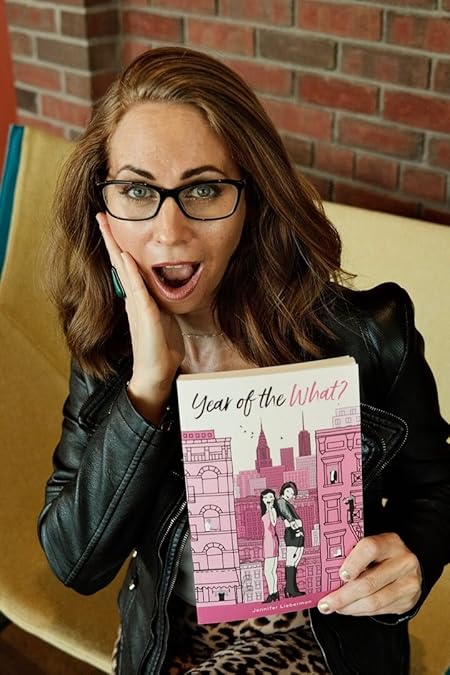
Year of the What? follows a young woman who’s newly single and sets out to discover who she is meant to be. What was the inspiration for the setup to your story?
The story for “Year of the What” began as a theatrical piece of writing loosely based on my life in my early 20’s when I was living in New York City following my first major heartbreak. When I first moved to Los Angeles I developed a solo-show to showcase my acting rage and writing ability. The story started off with my personal experiences and then I took many liberties in order to develop a cohesive story arc and a range of 10 hilarious characters to show how I could seamlessly flip back and forth between different accents, genders and ages. After the show gained some notoriety in New York City a colleague suggested I adapt the play into a novel. Once I dove into working on the novel the piece took on an entire life of its own; without the restrictions of a stage performance, the story could go anywhere so I decided to create an outrageous dating adventure of sexual and self discovery.
Dana is an intriguing and well developed character. What were some driving ideals behind her character’s development?
I feel like Dana embodies the characteristics of so many young women trying to find their identity and their place in the world. First there is the insecurities and lack of self-esteem in a world where it’s simply impossible to live up to the beauty standards set out by the media, the inward judgments of never feeling enough, and the universal desire for love and acceptance. Although Dana starts off quite naïve, she learns that she is more judgmental about herself than anyone else would ever be towards her. This is a recurring theme I’ve seen both in my life and with many of my friends. It’s amazing how many things “we think we know” before we have gained the life experience to back up our opinions, I was also able to show this through Dana’s evolution and internal dialogue.
What were some themes that were important for you to explore in this book?
Some of the themes I wanted to explore in this book were female empowerment and positive sexuality for women. The original title of this book (an title of the stage play) “Year of the Slut” was meant to be provocative as the story deconstructs a word that is weaponized against young women regardless of their actions. Calling a woman a slut is an easy attack, but what does it even mean? I feel like society discourages teenagers from having sex (understandably so), yet we never re-visit the topic of sexual health with women in their twenties and that a healthy sex life and sexual desires doesn’t make the woman a freak or a bad person, is completely normal for adult women. I used the character of Kelly the dominatrix, who lives on the opposite end of the sexual spectrum from Dana to help reframe our protagonist’s point of view.
The next theme I wanted to explore was a loving and supportive friendship between two women where they were unconditionally supportive of each other with zero competition, but still didn’t hold back from difficult and honest exchanges.
Lastly, I wanted to show the evolution of a character who was so focused on falling in love that she kept putting her own needs aside, because this is something so many young women do in order to please their partner, myself included, when we don’t have the confidence to assert ourselves in fear of being rejected. Dana ultimately realizes that until she is able to love herself and her flaws she will never have the confidence to be in the relationship she dreams of.
What is the next book that you are working on and when will it be available?
My next book is Book #2 in the “Year of the What?” series: ‘Year of the Bitch’. In this book Dana’s journey towards love and success continues. In the vein of the first book, I am deconstructing another word that is used as a weapon against women as they mature and become more assertive both in life and in the workplace. This book has an expected release date of late 2022/early 2023.
Author Links: GoodReads | Twitter | Facebook | Website
Fear of the Dark
Dark Was the Night follows a woman whose home is invaded by intruders and she’s forced to face her fear of the dark to save her daughter. What was the inspiration for the setup to your story?
The inspiration for my story is two-fold. The main events of this story happen during one Halloween night, and the idea for that came to me many moons ago when I was home alone giving candy to trick-or-treaters. It was a Friday night, and Unsolved Mysteries was on TV. Already, the mood was gloomy. Every time the bell rang, I would get up, grab the big bowl of candy and open my front door without looking who was knocking. And then a spooky thought entered my mind. What is to stop anyone from barging in here the moment I fling that door wide open? How would anyone know my screams of terror are actual screams and not some silly Halloween prank? And from that single thought emerged this story. A home invasion one Halloween night.
Next, I needed to decide whose home would be invaded and why. Three intruders seemed like a timeless number in the horror/thriller genre and much more menacing than a single antagonist. Placing a lone girl in a big house on Halloween night seemed so cliché. Then what could be more vulnerable than a young lonesome girl? A mom with her young child. I gave my protagonist nyctophobia because it is a classic childhood fear. I wanted to explore what that would look like in a grown person. A person who understands there are no monsters under her bed or in her closet. Yet, she can’t shake the terrible feeling that something sinister lurks in the dark, even though she knows nothing is there. I wanted to make her fear so paralyzing the readers would not find it absurd but concerning. Most of us shake our childhood fears when we hit the double digits in years. But she carried hers into adulthood, so it is evident there is something more lying beneath the surface than a simple fear of the dark.
Lucie Arnold is an intriguing character. What were some driving ideals behind your character’s development?
Lucie is loosely based on my mother and grandmother. Two of the toughest women I have ever met. I have never seen them show fear, ever. No matter what life threw at them. Starting the story with my protagonist as a tough woman did not seem interesting or credible, giving her unusual fear of the dark. I wanted her to evolve during her ordeal. To start out like any of us would in such a situation, scared to death. But slowly, her fear would take second place to her resolve of surviving that frightful night and saving her daughter. And from that unshaken resolve would emanate a strong, almost ferocious individual. Someone those three intruders had to contend with unexpectedly. They say there is nothing more dangerous than a woman protecting her child. I wanted that image to become increasingly evident as the night went on, without the reader ever being sure of the story’s outcome.
What were some themes that were important for you to explore in this book?
Seeing as the story happens on Halloween, fear was a big theme playing throughout the plot. But not just fear of the dark, fear of death, fear of sickness, fear of loss, fear of trauma. Lucie and other characters experience all or part of these fears throughout the story in one form or another. Namely, her daughter, Natalie, who is home with her mother when the three intruders penetrate their house. Lucie, being the main character, experiences all of these fears. Some of them haunt her daily, while others are triggered by other characters and events. Parenthood was another important theme. What does it mean to be a good parent? Is it to protect your child at all costs, and what does that entail? How far can one be prepared to go to protect a child? And what is one willing to sacrifice to do so? Another critical theme is trauma and post-traumatic stress disorder. The thing with PTSD is that it’s a fickle creature, and it looks different depending on the person and the kind of trauma they’ve endured. Several characters deal with PTSD in this story, and I wanted to illustrate that in different ways. People don’t just get over a traumatic event. There is a whole process involved. But in this story, I wanted to show that if you don’t deal with past traumas, they can come back to haunt you.
What is the next book that you are working on and when will it be available?
I am now working on a drama, part fiction, part biography based on my grandmother’s life. The story starts in the 1930s in El Salvador and follows the main character through several years of her life. My grandmother has always said that her life story was more dramatic than any telenovela. I’m setting out to prove that. I am aiming for a release in the summer of 2022.
Author Links: Amazon | GoodReads



 LITERARY TITAN