Blog Archives
Imperfections Are What Make You Unique
Hooray for Heidi! follows a young turtle who makes a new friend on her way to see the animal games; once there, she learns the value of teamwork and that everyone has different strengths. What was the inspiration for your story?
I am very aware that we live in an age where children are becoming increasingly self-conscious in terms of their appearance, physique and abilities. I was therefore inspired to write an entertaining story that ultimately teaches children that it is okay to be good at some things and not so good at others. Nobody can be good at everything, and in fact your imperfections are what make you unique.
Are there any emotions or memories from your own life that you put into your character’s life?
Due to adverse experiences in my childhood, I had a habit (and still do) of being self-critical, for example, comparing my abilities to other children, what I was good at and not so good at etc. I wanted to refer to this with characters in the book as it’s important for everyone, especially children, to realise their strengths and weaknesses, how to learn from them, how to accept yourself and others and to be kind and show compassion to people no matter how similar or different they are.
What were some goals you set for yourself as a writer in this book?
I wanted to make sure that this book had more excitement in it with it being the final book in the Sumatran Trilogy, and I hope I have achieved that. It was important to me to have the book flow well and for the theme to remain as close to the first two books, The Problem with Poppy and What’s Troubling Tawny?, as possible. I also wanted to make it funny and a little more light-hearted than the first two books but still with meaningful messages that would help children handle their emotions and feelings.
What is the next book or series you will be writing, and when can your readers look for it to be out?
Hooray for Heidi! is the final book in the Sumatran Trilogy, but I do have plans for more books in the future. I am co-writing one with another author at the moment, but I can’t reveal any details yet. Watch this space!
Author Links: GoodReads | Twitter | Instagram | Website
Will José be able to cheer Heidi up, and can the two animals find a way to join in the fun?
Not Aware of Their Own Beautiful Existence
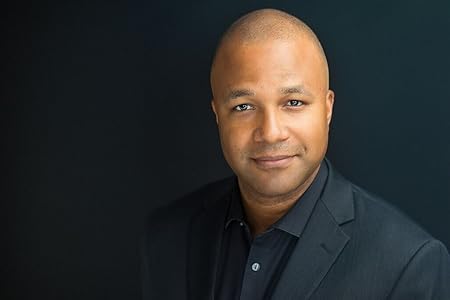
Death Throes of the Broken Clockwork Universe is a collection of poetry that takes readers on a journey through physical space and abstract worlds of emotion. What inspires you to write poetry?
Since childhood I was a person who experiences life deeply through the senses. Being this way can be overwhelming, and for years, my daily life was a standing question of how to successfully manage this condition.
Writing became a path of sense-making, or simply making sense. It was a long time before I realized that certain writings were poetry.
Today I tend to think of my writings as dispatches: short reports of elements seen externally or felt internally. Occasionally these reports are verbatim, but more often they take a tangential, indirect approach.
What most captures my attention are (so-called) ordinary people, cultures, cities, nature, and the near limitless catalog of human experiences. As much as I wish, my poems may never carry the full weight of how certain moments feel. They are just one snapshot of many possible angles.
What themes do you find your poetry often explores?
Astronomy is an endless source of fascination to me. Poets have, of course, been writing about the heavens since Gilgamesh (before the Bible), and in doing so, they have raised innumerable questions on the nature of time and power of love. I feel perfectly at home in this lineage.
Except in my lifetime, astronomy has undergone through several revolutions, thanks to huge leaps in technology. Tremendous new discoveries about stars, exoplanets, and galaxies occur on a routine basis. Our understanding of the universe is continually being upended by new information. This fills me with a sense of awe and expansiveness.
And yet, as inspiring as these other worlds are, the stars are not aware of their own beautiful existence. Human beings can be. It is a wonder to be alive. Reflecting on these concepts pull me beyond my daily dramas, which feel ever urgent, but in fact are very local in the grand scheme of everything.
Perhaps the center of gravity in most of my poems is a sense of astonishment.
My favorite poem from this collection is ‘MATRICES’. Do you have a poem that stands out to you from this book?
MATRICES is a wonder, and each line contains a story in itself. The dream of vanishing numerals was an actual experience in 2012. The image of the full moon came from a car ride at dusk through a mountain valley in late autumn many years ago. The poem’s framework came in 2019 while studying linear algebra for an engineering fellowship. The poem itself is an act of infusion, compression, and imagination. Most of my poems follow this process.
My favorite poem is THE REBELLION OF SISYPHUS. The famous myth and its deep philosophy has both inspired and haunted me ever since I first heard the story from a teacher in elementary school. As an adult, it was the essays of Albert Camus which taught me how to contend with its reality. Camus imagined Sisyphus happy in the course of his travails. I always wanted to imagine Sisyphus free.
Do you plan to write and publish more works of poetry?
Yes. I write daily and abundantly. Publishing seems to take me a long time, yet Death Throes of the Broken Clockwork Universe was a positive experience. I emerged with a clear sense of voice and direction.
I have already composed new verses for THE ARIA collection. Other poems are ready for daylight. I am not sure if I will continue the astronomy and science theme, but I do hope to have a new collection out in couple of years. It will definitely be less than a decade!
Author Links: GoodReads | Amazon | Website
Combining choreological precision with playfulness, readers enter the mind’s eye of a poet standing along the shoreline of powerful forces that shape all lives: time, place, and love.
Written over a ten-year period, the collection calls to mind the poetry of Lorine Niedecker, Rae Armantrout, Larry Eigner, and Carl Phillips. Importantly, these poems resist thick, impenetrable themes, instead celebrating ordinal wonders of life that are hidden in open view. This spare book offers strong, memorable imagery and questions that will delight thoughtful readers.
A Killer, Or Someone Who Could Love

The Killer Half follows a dispirited military veteran who stumbles across a plot to invade America and is forced into action to stop it. What was the inspiration for the setup to your story?
I read a magazine story, with pictures, of a horrible thing that happens to some women when they are being led illegally across the border. The leaders will take some of the women to a predetermined spot and gang rape them, and leave the undergarments of the women hanging on a tree that the whole company would pass by—and the article included a photo of one such tree. I wondered if I had been there would I be able to stop it. The answer was probably not because those men are armed. Then I asked myself who would be able to stop it, and that’s when the character of Hawk was born. I dreamt about it every night for two years, building on the story of Hawk. I reached a point when I decided I must write it down before I forgot it. When I wrote the story from my mind it was like taking dictation—I didn’t have to stop writing to think what would come next. It was about 50,000 words on that first pass. I continued to reread the book and more sections came into my mind as completely finished scenes. When I finally decided to find a publisher, the story was slightly more than 93,000 words.
Hawk is a fun character to follow. What were some driving ideals behind his character’s development?
Hawk would need expert combat skills and a good support group of operators around him. He would be conflicted about who he was: a killer, or someone who could love. He would be a leader that others with similar skill sets would follow. He would not take for granted the feelings of those who were close to him. His relationship with women would be conflicted because of his experience in seeing the horror of rape on the psyche of women who were caught in the middle of a war.
This seemed like a fun book to write. What scene in the book did you have the most fun creating?
There are so many it is difficult to pick just a few, but I’ll try.
I love dogs and I know their body language very well. The scene of canine separation anxiety makes me laugh when I read it. The dogs are alone on base without Hawk’s supervision. They drag loose stuff from around the base and make a big debris pile outside of Hawk’s hooch. Then, they accidently set fire to the debris pile in the middle of a large military base. His conversation with them, and their resulting shame is a classic for all dog lovers.
The rescue of Sarah Stuart, a beautiful British MP, from the Miss-Tique night club is a big scene involving Hawk’s team. That’s all I’m going to say about it—except to say that Hawk walks in looking like a very big Don Johnson from Miami Vice.
Hawk delivering a baby in the middle of a battle and wanting to name it “AK” because of the rifle fire he hears around them.
The rescue of Heidi Lothbrok, a beautiful, young, inexperienced FBI agent. Hawk refers to her as a Viking Shield Maiden.
Any scene with Uncle Peter, the degenerate gambler and Night Stalker pilot.
Hawk meeting the beautiful Mossad operator, Rachel.
Hawk having Leah Parker, a young actress, literally fall into his arms.
The big scene with the wolf attack and how Hawk and his dogs resolved it.
The final battle scene.
Do you have future books planned featuring Hawk and his exploits?
With a large wink of my eye I will say that it is possible that there is more to the story of Hawk. I’ll reply in the best practice of a covert operator, who would say, “I can neither confirm nor deny the existence of a Part 2 of The Killer Half: The Legend of Blackhawk 6 Deuce.” Try not to notice that I’m winking again!
Author Links: Amazon | GoodReads
His naïveté about the purpose for the war in Afghanistan was gone. Witnessing the death of someone he was close to was the final blow that shattered his spirit. Hawk declined reenlistment and went home brokenhearted only to find another war beginning. Would he always be just a cog in a combat machine? Would Hawk become a warrior again?
In a chance fight with a border-crossing scouting party, Hawk discovers a plan for an armed invasion of America. All of his combat instincts return. Using all of his special operations contacts, he organizes a resistance. Will the resistance succeed? Will he find love again? If Hawk is torn between combat and love, which would win, the killer half, or a man who could truly love?
—
JB Blake – Student of military history, behavioral science, servant leadership, critical thinking, innovation, and economics. Successful entrepreneur and intrapreneur, corporate executive, and university professor. Every career path has led to interactions with fascinating characters whose traits could be woven into this story. They are like the ingredients that make an amazing recipe.
See you on the other side.
Empower Future Generations

1 2 3 Count with Me on Granddad’s Farm follows a family who visit the family farm for the day and learn about different activities that go on there. What was the inspiration for your story?
My passion and purpose is to inspire, teach, and empower future generations. This story was inspired by summers on my grandfather’s farm and pays tribute to the special bond between children and their grandfathers. The concept of the book is based on my work with young mathematicians in grades K-6 as an Elementary Mathematics Specialist (and former classroom teacher). And, I dedicated this book to my Aunt Katherine Johnson, NASA Mathematician and Hidden Figure, because she loved to count.
What were some educational aspects that were important for you to include in this children’s book?
I want everyone to love math, so I’m writing math-themed children’s books to help ignite a love for math in all children.
The two important educational aspects included in this book—teach math and empower parents to support learning at home with tips, tools, and hands-on tasks. Parental involvement helps to increase student engagement and academic achievement. Parents can also help make learning less scary by practicing math at home. Learning to count is more than just memorizing and calling out numbers. The book’s back matter helps little ones develop (and reinforce) a strong foundation in counting and quantity by engaging in meaningful learning experiences (i.e. practicing the counting sequence, counting a collection, matching the number words with the objects being counted, exploring the idea of more or less, etc.) with visual supports.
The Discussion Starters, questions in the back of the book, help young readers comprehend and analyze the story for deeper meaning. The visual models (counting dots, fingers, animals, etc.) on the following pages help little ones to dive deeper into counting and reasoning mathematically.
The art in this book is fantastic. What was the art collaboration process like with illustrator Cee Biscoe?
Illustrating my picture book went through a lot of stages and took many months to complete.
First, I sent my manuscript to Cee Biscoe along with other background information so that she could start imagining how everything would look. Over the next several weeks, we collaborated on character development. Then, she drew pencil sketches of the characters and animals. Next, she planned what to show on each page of the story (to determine if there would be single or double-page spreads). Then, she created the thumbnail sketches, rough sketches, and full-size sketches. Revisions also occurred during that time. Once the page layouts (text placement and illustrations) were finalized, she painted the final artwork on large sheets of watercolor paper using gouache paint.
What is the next book that you are working on and when will it be available?
I love fractions and sweet potato pie. And, I’m using both to ignite a love of fractions with a heartwarming story about friendship, sharing, and grandparents — which was inspired by the classic book The Doorbell Rang. This picture book will introduce young readers to basic fraction concepts. I hope to have my next picture book available next year.
Author Links: Instagram | Twitter | Facebook | Website
Welcome to our farm! It is a place to learn about farm life and animals on a farm, and to celebrate family, especially grandparents.
Children will love counting their way through Granddad’s farm. Pigs and chickens, cows and horses, apples, tomatoes, and plums-so many things to see and count on the farm. Follow an adventurous young girl as she spends the day with her grandfather helping with chores, riding the tractor, and enjoying a big family dinner to celebrate the farm’s bounty and the love of her family.
Learn to Count Build your little ones’ counting knowledge while reading together. Count up to 10. Count the farm animals, tractors, apples, flowers, and anything that can be counted. Read it again! Count down to 1.
Count to Learn Engage in meaningful math moments. Find and count the number of animals on each page, count how many animals there are all together, ask how many would be left if some were taken away, and talk about more and less.
Count in the Real World Help your little ones develop a love of numbers and math. Explore your home, neighborhood, and school. Count everyday objects forward up to any number and backward from any number.
A perfect book for little readers. Have fun counting from 1 to 10 and back again as you learn about farm life, farm animals, and family! Grab your copy of 1 2 3 Count with Me on Granddad’s Farm.
Next steps: Register at westoaklanekids dot com for awesome coloring sheets
Share it with others and provide a review, if you love the story
Share your thoughts and stories @wolkidsllc
The Story That Was Meant To Be Told
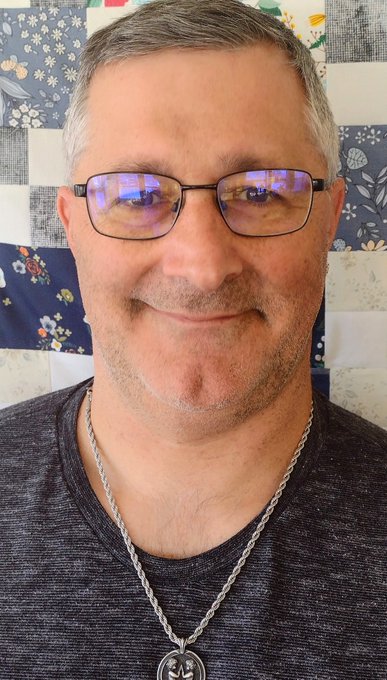
Little Town Blues follows a police chief and his family whose lives are interconnected with the people in the town as scandal drama unfolds in all their lives. What was the inspiration for the setup to your story?
Little Town Blues began merely as a title that I came up when I was a boy (probably age 11 or 12), which is a line from the song, “New York, New York” by Fred Ebb and John Kander. Even with my songwriting, I often get inspired creatively when I begin with a title, telling myself that I need to make this title work. As a creative writing coach and professor, I often ask my students to create ideas by beginning with a title. So like in the film Juno where the line says, “It began with a chair,” in Little Town Blues, it began with the title. I am a fan of Lars von Trier’s film The Five Obstructions, which has to do with creating within limitations. I love seeing a creative project as a puzzle or problem to solve and being forced to make it work within strict guidelines.
I grew up in Amesbury, a small town in Northern Massachusetts, and the mythical town of Fryebury Falls is based on this town (while combining the names of other towns like Fryeburg, Maine and Bedford Falls from It’s a Wonderful Life). As one might imagine, the characters are mashups of people I know and people I am inventing…all rolled into one. Despite the melodramatic nature of the novel, most of the events—including anything related to a potential scandal—is based on actual events.
I first envisioned the title as being the idea for crime movie (as a little boy growing up in the 1980s, I would create film ideas as they might appear in the old HBO and Cinemax movie guides) taking place in Amesbury with a specific image from downtown Amesbury in mind as the story began to brood and develop.
Your novel is a genre-crossing novel with elements of a mystery, police procedural, and paranormal as well. Did you start writing with this in mind, or did this happen organically as you were writing?
Once I start with a title, I immediately begin to develop a short premise, which will then turn into an outline in the form of a summary of the entire story as a whole (often just a page or two). The summary then develops into a longer summary where I break things down by chapters; like Dickens, I have lots of fun naming my chapters, but these chapter titles will evolve from the summary that I first write. For instance, I came up with the chapter title “Something Wicked this Way Comes” which is a line from Macbeth spoken by my theater character, Miss Julie, as it relates to the diabolical character of Jack Cleary. I love being able to make these connections and allowing the layering of titles (which can often work on literal and metaphoric levels) to serve as mini stories within the bigger story.
With that said, once the full outline was completed, then I began writing the first draft and even though I have a very specific outline, it really serves as just a guide to the story; I anticipate and expect changes along the way, which allows the story to unfold organically. When I write I do my best to “listen” to what I feel the story is. Like Michelangelo who believed the sculpted piece already existed and it was the artist’s job to simply unveil it, I work the same way with my creative process…and this includes my creative writing and music. In other words, I told myself that this novel was already written but I needed to be the vehicle that released it.
This now leads me to the question. During this process, I become aware of genre tropes and additionally aware of how I might challenge those tropes. Before writing the novel, I never imagined myself—ever—writing a book that features a small-town police chief. To me that seemed like it has been done a lot and it simply did not match my style of writing (I’ve often told people I am more interested in setting and character over plot events), but this was the story that was meant to be told, so I went with it anyway. I am a fan of stories that utilize overlapping genres, so that part must have innately emerged.
With so many unique characters in this novel, did you create an outline for the characters in the story before you started writing or did the character’s personalities grow organically as you were writing?
The characters—like the genre-crossing plot and story—evolved and grew from my aforementioned outline process. Then I simply write. Day by day, I would give myself a writing quota (often 750-1,000 words) and in that time I would see the novel much like an episode in a series, not really knowing what was going to happen even though I was developing it and often getting excited about what the characters would do. I do like when characters can show their flip sides.
Mike Melanson, for instance, is seen as a simple mild-mannered chief but we discover there is something grander about his existence and the same is true with his wife Miss Julie and son Adam. In fact, most likely due to my love of Billy Wilder’s films (Sunset Blvd, The Lost Weekend, Stalag 17), I have been intrigued by characters who have symbiotic relationships – in addition to the Melanson family, this is true of the Pearson brothers (George and Sam) as well as Moira and her daughter Maygyn. Speaking of Maygyn, it is also fun to be playful with names; her name is spelled “Maygyn” because it combines the month she was born with the root ‘gyn’ which is associated with women.
What were some themes that were important for you to explore in this book?
One of the biggest themes is fate as represented through “the inevitable order of things” that is connected to several characters. There might very well be a predestined plan (or fate) for us all – this is also a pretty common theme in Greek mythology and tragedy like Oedipus Rex and I am a fan of ancient archetypes and myths (I teach courses on the subject). The novel presents potential plot points that don’t play themselves out because another event comes along and annihilates it. For instance, what becomes of Moira’s attack by Jack Cleary and what about the scandal/blackmail of Mike’s sex letters? I deliberately did this because these experiences happen frequently in real life – not every event plays out with a resolution and I am a big fan of ambiguity in stories. I am also a fan of the cause and effect of characters. In It’s a Wonderful Life, what happened when one person we know, like George Bailey, was never born? That chain reaction of events is infinite.
Another theme is the symbiotic relationships that exist with characters like George and Sam Pearson.
Another theme is that “almost famous” phenomenon that occurs with characters like Sam, George and Miss Julie who are on the verge of greatness but don’t quite “make it” in the traditional way (or someone like Sam Pearson who becomes a best-selling author and has his “fifteen minutes” of fame) …
Another theme has to do with the role of the ghosts/visions/hallucinations/fantasies that all the characters encounter. Is Fryebury Falls a microcosm where these things roam or are these ghosts really internal manifestations of the characters’ subconscious? Or both? I like the idea that these ghosts can be experienced in a paranormal way and/or as a product of neuroses and psychoses. You decide.
Identity (which I feel might be the most prominent theme in all of storytelling…and our lives) is certainly present. At one point, Maygyn was seen as the main character and storyteller, but that point-of-view shifted to a third person narrator—but I kept developing her even as I was in my final stages of revision. A couple years ago, my “son” came out as transgender and she is now my daughter (a beautiful, life-changing experience for me as a parent and as a human as a whole who was awoken to a new way of looking at humanity), so I explored this coming-of-age nuance with Maygyn. One might find it strange, but Maygyn in many ways is the soul of the novel and in some ways, I see her as the main character—at least at one point I had her as the main narrator. In my final stages of revision, however, it made more sense to simplify the narration, so the reader might not see that and that is fine. I am a fan of those stories where a seemingly minor character (like Chief in One Flew Over the Cuckoo’s Nest or Cookie in the film Stalag 17) is actually the main character. And Maygyn, in many ways, even before my daughter was born, was a female version of myself. Carl Jung would call her the “anima.”
In short, the themes evolved over a twenty-year period. I began writing this in 2000 and in that time the book went through a number of years of rewrites and even more years of doing nothing but sitting in a file (until I reached out to Atmosphere Press). So, the novel of a fifty-year-old man began with a twenty-seven-year-old younger man and in that time, life’s experiences and maturity became major parts of the revisions—and changing themes—over time.
Author Links: Amazon | GoodReads
Set in the mythical New England microcosm of Fryebury Falls, Little Town Blues tells the story of nine characters, in the spring, summer and fall of 1984: Mild-mannered police chief Mike Melanson, his eccentric, prophetic wife “Miss Julie” and their empathetic son, Adam; the gifted and tarnished Pearson brothers, former best-selling writer Sam and former high school coach and teacher, George, marked by tragedy and scandal; hard-boiled musician, Moira Davis and her precocious teenage daughter, Maygyn, going through her own coming-of-age story; and the diabolical deputy Jack Cleary and his emotionally tortured brain-injured son, J.J. This interwoven mosaic of small-town neuroses and psychoses leads to a quirky scandal involving the chief of police.
Little Town Blues critiques small-town America through the lens of ethics, traditions, creativity, repression, the illusion of fame and diversity, gender identity and undiagnosed mental illnesses. In his first novel, David Gonthier illustrates how the unfolding of one event might easily be forgotten because of the unfolding of another event…just like in our own lives.
This Has Been A Mind-blowing Journey

Christmas Begins with Christ is a beautiful picture book explaining the meaning of Christmas and the role that Christ plays in the season. What was the inspiration for your story?
It’s a wild backstory. I wrote this book last year when I was pregnant with my 2nd child. I was determined to write an adult fantasy trilogy that I’d plotted, but life got in the way. I was moving out of state, juggling a toddler, pregnant, and knew I had many sleepless nights ahead of me. I had to shelve the series in my head that I desperately wanted to put on a bookshelf. It crushed my soul a little bit.
So one night I said a prayer to Jesus asking for help with my writing aspirations. Apparently He heard me, because out of nowhere an idea for a picture book fell into my head upon waking up from a pregnant-woman nap. The story was about Him.
I asked, and He definitely answered. I didn’t have time to write an adult novel, but I could write a poem for kids.
I never set out to become a children’s book author, so this has been a mind-blowing journey for me. I’m incredibly grateful that my prayer was answered in the most unexpected way.
What were some educational aspects that were important for you to include in this children’s book?
There were three key points I wanted to teach kids. The first is that even though you can’t see Jesus, He’s always with us. I’ve seen a lot of children’s books insert Jesus physically alongside kids into a modern-day scene. I wanted to have a more realistic depiction. I emphasized that Jesus is invisible, but we can still feel Him, talk to Him, and see His guidance.
The second educational aspect was to teach that Jesus’s love lives in us. When we share our love through acts of kindness, it creates a ripple effect of joy.
That segues into my third teaching point, which was incorporating counting to ten. Using numbers was a simple way to demonstrate how love grows.
The art in this book is fantastic. What was the art collaboration process like with illustrator Marissa Napolitano?
We talked in-depth on the phone about my vision for the book before she started illustrating. It was important for me to represent Jesus’s presence through the usage of light. It’s one of the main reasons why I chose her to be my illustrator. I thought she was incredibly gifted at drawing light that looked divine and otherworldly.
I sent her a document in the beginning of the project with art notes for each page to communicate what I envisioned. If I didn’t have a specific idea, I gave her a generalized concept and let her run with it. Often I would draw detailed, ugly sketches of what I wanted and emailed them to her. She always turned it into something magical.
What is the next book that you are working on and when will it be available?
I’m currently writing another rhyming book about Jesus for children that I’m extremely excited about. It’s not a holiday book, so you can read it any time of the year. Without giving too much away, the theme is to “let go, let God” and trust in His plan. What excites me the most is that it hasn’t been done before and has the potential to impact both children and adults.
I can’t wait to get it illustrated! Hopefully I’ll publish it in the fall of 2023 or early 2024. I also plan to write my adult fantasy series. It’s alive and breathing in my head, so I have to write it. That will definitely take me longer, but I’m determined to do it.
Author Links: GoodReads | Website | Instagram | Website
This rhyming concept book introduces how Jesus is always in our lives. Beautiful illustrations show Christ’s supportive spiritual light around us. When we share God’s light through acts of love and joy, it creates a ripple effect. Children will learn their numbers by counting how happiness grows from the true spirit of Christmas.
Both children and adults are reminded through lyrical prose to pause and connect with Jesus. Christmas Begins With Christ is the perfect gift for the holiday season that’s sure to inspire families for years to come.
Based on True Stories
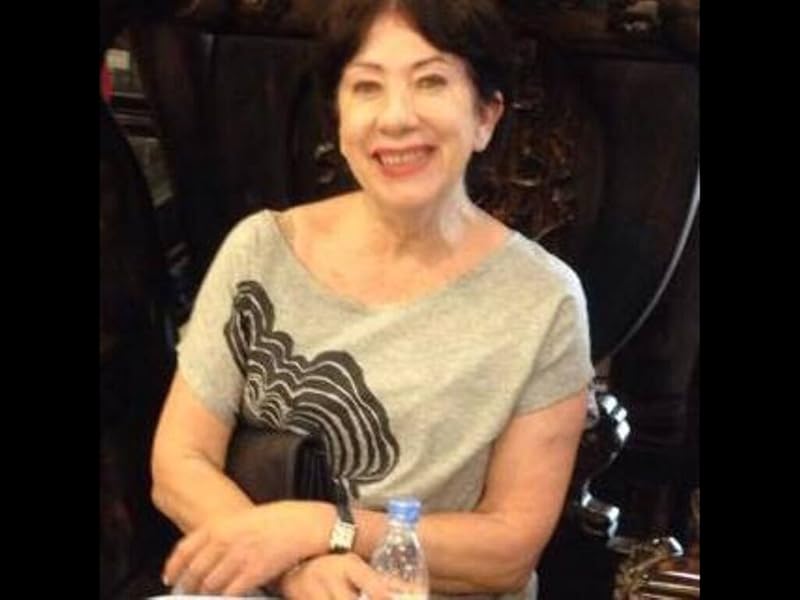
Margaret’s Story follows a woman living in a nursing home and her dysfunctional family’s actions both in the past and present. What was the inspiration for the setup to your story?
The inspiration for writing Margaret’s Story came from the time when nursing facilities were being reported in the media as places in which aged people were placed and abandoned by their families.
Margaret endured giving up a child, a husband with bipolar disorder, and children in toxic relationships. What were some driving ideals behind your character’s development?
Just like many novelists, my stories are based on true stories I have encountered interwoven with a fictional overarching narrative.
What were some themes that were important for you to explore in this book?
I wanted to show the readers how mental illness can strike suddenly with resultant ramifications for the victim and his family and how surrendering a baby for adoption leaves an indelible mark on the birth mother.
What is the next book that you are working on and when will it be available?
My next novel, Return to Portovenere was inspired by a visit I made to Portovenere in Cinque Terre, Italy. I and my son were so entranced by this magical place I knew there would be a novel ready to be written. The book is due for publication soon by Pharos Books.
Author Links: GoodReads | Facebook | Twitter | Website
A baby surrendered for adoption, the trauma of mental illness, a dysfunctional family. Can happiness be achieved or what fate awaits this ordinary woman called Margaret?
From an early age, Annette was encouraged to write and was awarded several prizes for English. A native of Sydney, Australia, she published a short story at the age of twelve. She remained passionate to her writing, but the demands of raising a family left no time to pursue her interest. Now retired, Annette has reignited her passion and written six books with the seventh nearing completion. Annette lives with her partner, Stephen, at Neutral Bay, a suburb on Sydney Harbour. She has two sons, Mark and Brett, two grandsons, Jaime and Flynn and a sister, Maree.
It Doesn’t Mean That We’re Nothing

The 5-Time Rejected Gamma and the Lycan King follows a Gamma werewolf who is bonded to a lycan king but wants nothing to do with him; he must prove he is different and that they are meant to be together. What was the inspiration for the setup of your story?
The vibe I was going for in the setup for Lucy was, “Again? Really? Let’s just get this over and done with”, whereas the one for Xandar was, “This isn’t fair. I just met you”. The inspiration stemmed from the connection between failures and second chances…well, in this case, the sixth chance since Xandar is Lucy’s sixth-chance mate. And the failures I was looking at aren’t confined to relationships.
When I wrote this scene, I saw it as a person’s resistance to trying something again after failing so many times in the past. It could be a passion we’d given up because we were taking longer to get the results we wanted, an idea that had been shelved because we no longer believed in it after the number of times it was rejected, or even a dream we kept as a dream because the effort we put into turning that dream into reality never seemed to have amounted to anything.
Lucy opened herself up to love before. She did put in the effort to be liked, to be loved. But for various reasons explored in the book, her past mate-bonds never worked out. If it never worked out, not for lack of trying on her part, why should she keep tormenting herself in something that she felt she wasn’t good at and feel bad about herself after? So, when she met Xandar, she automatically assumed that he, like the rest, would find something wrong with her, something that she should be ashamed of and would make him want to reject the mate-bond.
By contrast, before Lucy, Xandar’s heart had never been given to anyone. And being the crowned prince and subsequently the king, he never had to put in much effort to be liked or loved. Whereas respect was something that others had to earn, it was Xandar’s birthright. Meeting Lucy changed that. She was closed-off and dismissive of him, spoke minimally when answering his questions like they were holding a formal conversation, and altogether lifeless and indifferent when it came to their bond. Nevertheless, he is determined to open up to her and love her, hoping she’d feel safe enough to open up to him.
The inspiration for this setup is basically how something extraordinary may begin to happen just when we decide to give up, how the arrow pulls back only when it’s about to propel forward. It is frustrating not to know whether to keep knocking on the same door or find another door entirely, and this story explores how when one woman decides to stop knocking on doors altogether, being content with everything she already has, is exactly when the right man comes knocking, only to have her close her door on him, one that he continuously knocks on with romantic gestures, attentiveness and constant reassurance through his words and actions that he wasn’t like the rest.
Lucianne, despite having been rejected multiple times, maintains a strong personality and sense of self-preservation. What were some driving ideals behind your character’s development?
With each failed mate-bond, Lucy had grown to learn that she’d be okay on her own. At some point, she even felt that she was better off on her own. It was difficult for her to let Xandar in, learn to trust him, and believe that he would never let her go.
To develop her character, it was really about making her aware of how different Xandar was to her compared to her past mates. And this awareness was brought about by the people close to her. It is difficult to be objective when one has been treated poorly so many times, so awareness was planted in Lucy’s mind by supporting characters before the thought blossomed on its own.
Another thing was a matter of self-belief. I don’t disagree that she has a strong personality but she’s not one with the highest self-esteem. When she began considering the possibility of being with Xandar, she was hit with the undeniable fact that she wouldn’t just have to be a mate, she’d have to be the queen – a role that terrified her in the beginning. It was a fear of being an imposter and not being good enough. She didn’t see herself the way her friends, family, and allies saw her. It took time, encouragement and progressive assimilation into Xandar’s professional world before she truly believed she was the right person for the job, not only because she had the required skillset already, but because she had the attitude and character required to stand on the pedestal with him.
What were some themes that were important for you to explore in this book?
There were so many, but I’ll just keep it to the top three. The first was definitely the importance of always getting up again even after being belittled, beaten, bruised and destroyed. As long as we’re still alive, there’s no doubt there’s something we can do, something that can make a difference in the world if not in our own world.
The second was attentiveness and effective communication in a relationship. We are all creatures of emotion and the lack of these two aspects leads to emotional starvation that may turn into distance, feelings of abandonment, and even resentment. I wanted to explore how two people, after deciding to give each other a chance, go all out in making things work, in seeing and hearing the little things that others don’t see or hear, and in resorting to solution-oriented communication to strengthen their relationship as opposed to leaning towards emotional outbursts and blame-shoving to get a point across.
The third, and arguably the most important one, was the vitality in knowing that you matter, no matter what anyone says. Most, if not all of us, have been through phases in our lives where we were either told or implied to be a failure, a lost cause, a complete nothing. It hurts more when it comes from the people we love or respect. It hurts most when it comes from ourselves. The message this book is trying to convey is that we have the final say in whether we matter – and we do. Just because we haven’t reached the same heights or found the same happiness as the people around us yet doesn’t mean we’re failures. It doesn’t mean that we’re nothing. Each of us is a work-in-progress and that’s something. That something matters. We matter.
What is the next book in the Coalescence of the Five series that you are working on, and when will it be available?
Book Two is entitled The Rogues Who Went Rogue, and it’s already available on various pay-by-chapter platforms. It’ll be released in paperback and pay-by-book eBook in July 2023. This sequel delves deeper into the world of the rogues and introduces readers to a species that shut itself away from the werewolves and lycans for more than two centuries – vampires. Like the shifters in Book One, vampires possess their own unique abilities that may or may not complement wolves and lycans. New friendships will be formed, past foes will emerge, a buried truth will force itself out, and an unknown power will surface. It’s a tale of love, strength, acceptance and forgiveness, along with a dash of humor.
Author Links: GoodReads | Amazon
After 5 failed mate-bonds, she’ll do anything to escape another heartbreak…
Gamma Lucianne learns that her prayers to the Moon Goddess were ignored, and she’s being bonded once more. But this time, she’s not giving an inch—even offering the lycan king a chance to reject her on their first meeting…
… but he refuses.
The lycan king owns everything… except her heart.
King Alexandar considers his mate a gift from the Goddess. Yet she seems determined to reject him. His patience is tested as he finds any and every way to win her heart and protect her, especially when Lucianne becomes a magnet for danger.
Certain creatures don’t want her as queen, and they’ll do anything to stop Alexandar from making her his. Even if it means eliminating her.
Alexandar won’t stand for anyone disrespecting his mate, let alone harming her. He’ll remove anyone who stands in his way. He will win Lucianne’s heart, no matter the cost. Blood will be shed, and in the end, will the king and queen still be standing?



 LITERARY TITAN