Blog Archives
Blue Bubble Gum


Blue Bubble Gum follows one sticky piece of gum from the moment it’s chewed to all the places it ends up afterward. The story starts small, just “gum,” and keeps growing with every page, adding playful, sing-song words until the gum becomes this big, messy, funny nuisance. It sticks to shoes, clothes, and even hair. It rides through rain and roads, and before you know it, the gum’s journey turns into this wild chain of sticky adventures.
The rhythm in this book made me smile. The repetition feels like a chant, something kids would giggle through while pointing at each silly situation. The way the words build up, all gooey and goofy, makes it fun to read out loud. It reminded me of those tongue-twister rhymes you mess up but laugh at anyway. There’s no deep message here, and honestly, that’s kind of refreshing. It’s just pure play.
I started thinking about how it’s also a tiny lesson in consequences. The gum goes everywhere it shouldn’t, just like the messes kids get into when they don’t throw things away properly. The illustrations are charming, with a hand-drawn aesthetic that feels both classic and inviting, perfectly suited for a children’s picture book. The use of colored pencil on textured paper lends the art a warm, tactile quality that evokes a sense of nostalgia. The simple, earnest style creates an atmosphere of sweet simplicity and community that will undoubtedly capture the attention and hearts of young readers.
I’d recommend Blue Bubble Gum to parents of preschoolers or early readers who love silly rhymes and word play. It’s perfect for storytime when you want something short, rhythmic, and full of laughs. Kids will love saying “sticky-tacky, wicky-wacky” again and again, and adults might secretly enjoy it too.
Pages: 27 | ASIN : B0CW18WG1F

The Never Witch (A Thorne Witch Novel #1)

JP McLean’s The Never Witch opens with Adeline Thorne, a woman trying to live an ordinary life while being anything but ordinary. She’s the sister of a powerful witch, yet stripped of her own magic and burdened by a complicated past that’s steeped in betrayal, mystery, and supernatural politics. When an encounter with a dying warlock leaves her scarred, physically and otherwise, Adeline becomes caught in a dangerous web of secrets that threaten the fragile peace between witches and warlocks. The story twists between two worlds: the mortal calm of Vancouver and the hidden, charged realm of covens, spells, and old feuds. It’s part mystery, part fantasy, part family drama, and all heart.
The writing is clean and unpretentious, yet it hits hard where it counts. McLean paints vivid scenes with just the right amount of detail, never overdoing it. Her dialogue feels real, sometimes painfully so, and her characters carry their own bruises in ways that stick with you. Adeline is an intriguing character. She’s sarcastic, wounded, stubborn, and somehow still full of grace. I found myself rooting for her even when she tried to push everyone away. The pacing surprised me, too. It starts quietly, but by the second act, it’s hard to look up. Every chapter seems to add a new question or cut a little deeper into the old ones.
What really hooked me though was the emotion running underneath all the fantasy. Sure, there’s magic and danger and political scheming, but it’s the relationships that carry the story. The bond between Adeline and her sister, Sarah, felt honest, messy, protective, and full of old hurts that never quite healed. And then there’s Luke, whose own guilt and duty twist him into something both noble and tragic. The way their lives tangle together feels fated, like watching two storms collide. McLean doesn’t hand you easy answers. She lets you feel the tension, the fear, the hope, and the exhaustion that come with fighting battles you didn’t choose.
By the time I finished the book, I wasn’t just entertained, I was attached. The world McLean built feels layered and believable, and her characters have that rare spark that makes you wonder what they’re doing after the last page ends. The Never Witch is perfect for readers who like their fantasy grounded in emotion and their magic served with a side of grit. If you enjoy stories about found strength, sisterhood, and the kind of courage that comes from surviving what breaks you, this book will hit home.
Pages: 316 | ASIN : B0FCGK7MWV

This Time

This Time is a story that weaves together love, loss, and redemption in the small town of Tartan Springs, West Virginia. At its heart, it follows Ty Harrell, a Marine pilot, and Siena “Seeney” Tyson, a woman rebuilding her life after a messy divorce and betrayal. The story opens with their ten-year high school reunion, where old sparks rekindle and dormant feelings stir. Around them, the novel paints a vivid picture of small-town America, filled with complex relationships, community politics, and quiet battles for dignity and forgiveness. Beneath the romance lies a thread of corruption, environmental tension, and moral choice, giving the book more depth than a typical love story.
Coe’s writing is full of detail, almost cinematic, and that made it easy to slip into the world he built. I could smell the rain in the hills, hear the small-town chatter, and feel the awkward warmth between Ty and Siena as they stumbled through old emotions. Sometimes the dialogue felt a little too polished, but the emotional truth beneath it rang clear. I liked that the characters were flawed, real people who made mistakes and carried scars. Siena, especially, stood out, resilient, sharp, and unwilling to let the past define her. Ty’s decency and quiet loyalty balanced her strength perfectly.
What really got to me, though, was how the story handled forgiveness. It wasn’t wrapped in a neat bow. The pain from betrayal lingered, and love didn’t erase it. Coe didn’t shy away from showing the ugliness of pride, or the way people cling to control when their lives are falling apart. Yet, somehow, through the grit and sorrow, the book stayed hopeful. The scenes about military service, small-town politics, and even environmental issues added layers that gave it substance without slowing the pace too much.
I’d recommend This Time to readers who enjoy heartfelt fiction with real emotional weight. It’s perfect for anyone who loves stories about second chances, especially those set against the backdrop of small-town life where everyone knows your secrets. It’s not just a romance, it’s about rebuilding, forgiving, and learning when to fight and when to let go. This book pulled me in, and when I turned the last page, I just sat there for a minute, thinking about how some things are worth risking again.
Pages: 348 | ASIN : B0FST7LVL2
Hope on the Border

In Hope on the Border, author Gil Gillenwater dismantles the misconceptions surrounding the U.S.–Mexico border with rare honesty and humanity. Drawing on nearly forty years of personal experience as founder and president of the Rancho Feliz Charitable Foundation, Gillenwater offers a deeply moving exploration of what life is really like along the world’s most perilous migrant corridor. The result is both a visual and emotional journey, one that enlightens as much as it inspires.
This is not a book about politics; it’s a book about people. Through gripping stories and stunning photography, Gillenwater captures the contradictions that define the border: suffering and joy, despair and resilience, inequity and generosity. He introduces the concept of “reciprocal giving,” an approach to charity that rejects dependency and instead emphasizes empowerment and mutual respect. In the villages of Agua Prieta, where Rancho Feliz operates, residents “earn” their homes through fair rent-to-own programs and participate in community-driven initiatives that uplift both givers and receivers.
Gillenwater’s message extends far beyond the borderlands. He challenges readers to reflect on the dual poverty that afflicts both nations, Mexico’s material deprivation and America’s spiritual emptiness. His argument is both searing and hopeful: true transformation begins not with policy, but with personal responsibility and human connection.
Every page of Hope on the Border radiates with color and life. The photographs are vivid, compassionate, and unflinching, and offer more than illustration; they act as testimony. Smiling faces, vibrant murals, and rugged landscapes bring the narrative to life, emphasizing the beauty and strength found in even the harshest environments.
Hope on the Border is a call to conscience. Gillenwater offers readers a rare gift: the opportunity to see the border not as a place of division, but as a landscape of shared humanity. His blend of storytelling, activism, and introspection makes this a must-read for anyone seeking to understand the deeper truths behind one of the world’s most misunderstood regions. A masterpiece of empathy and vision. Part photojournalism, part personal odyssey, and entirely transformative, Hope on the Border reminds us that the most powerful walls we can dismantle are the ones within ourselves.
Pages: 318 | ASIN : B00OH0HUHK
Never Too Late to Live

My Sexual Awakening at 70 is a raw and daring memoir that traces the path from your childhood steeped in repression and control to a late-in-life explosion of freedom, sensuality, and truth. Why was it important for you to share your story with the world?
It was important to me for a few reasons. One, I wanted to be able to tell the truth about all I went through in my growing-up years, and two, I wanted to share the joy I felt at experiencing sexual freedom for the first time in hopes that other women might be inspired and able to do the same.
What were some ideas that were important for you to share in this book?
That it is possible to live, really live, free from nightmares from the past and experience the joy of sexual freedom.
What was the most challenging part of writing your memoir, and what was the most rewarding?
It was challenging to open up about all of it, my past with my parents, and my sexual explorations, but all of it was rewarding because in the end, I was able to feel free for the first time in my life.
What do you hope is one thing readers take away from your story?
That it’s never too late to live, truly live, your own life, no matter what torment you have gone through.
Author Links: GoodReads | X (Twitter) | Facebook | Website | Amazon
Interweaving a repressed and intimidating upbringing with her lively and uncensored search for sexual liberation (complete with writing erotic stories), Rosenberg discovers it’s never too late to find freedom and begin life anew.
Compelling Mystery
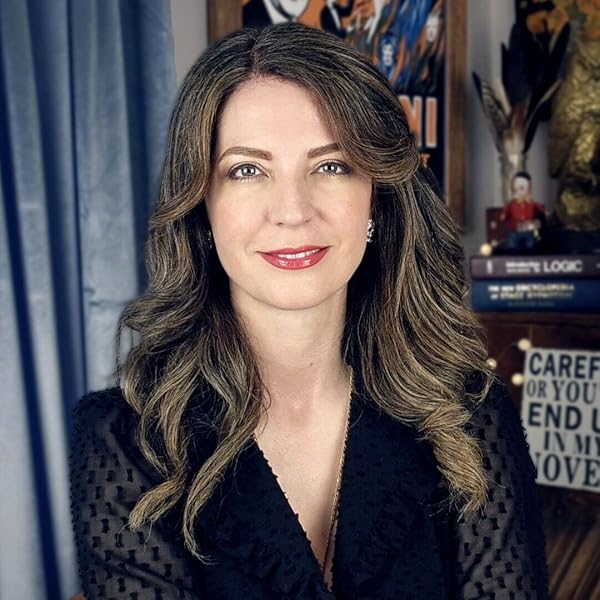
The Magician’s Wife follows a small-town journalist who gets pulled into the mysterious disappearance of a magician’s glamorous assistant who vanishes during a live TV performance, only to reappear a week later, dead. What was the inspiration for the setup of your story?
First and foremost, I wanted to write a novel with a compelling ‘impossible’ mystery at its heart, and give the book the kind of hook that would instantly make a reader want to know exactly how such an impossible event could have occurred. My starting point for this particular mystery was the teleportation illusion, a classic of stage magic. A magician’s assistant gets into Box A on a live TV talent show and is supposed to reappear in Box B, but vanishes for an entire week. She then does reappear in Box B on the show’s next round… but she’s dead. My journalist, Clare, is as shocked by this as everyone else. As the books are told from her perspective, she is echoing what a reader is perhaps thinking as the narrative unfolds. It also appealed to me to have a character drawing the reader in who cared deeply about a missing person case, which is the reason Clare became a journalist in the first place, something we learn more about as the story progresses. A broader inspiration for this book (and the upcoming books in the series!) has been my husband, who is a professional stage and TV magician and with whom I worked backstage for a time. It’s been very useful having a magic advisor on hand while writing this book, especially when devising some of the methods and effects!
When creating Clare, did you have a plan for her development and character traits, or did they grow organically as you were writing the story?
I think it was a bit of both! The two main characters in this story are Clare Deyes and Mara Knight. They’re unlikely allies as they’re such different people from different backgrounds. Originally, I conceived The Magician’s Wife in third-person, to centre more around Mara. But compared to Clare, Mara can be cynical and brittle, a little dismissive and subversive. Certainly in commercial fiction, I find that a character with these traits usually has to be offset by a foil, more of an ‘everyman’ that a greater percentage of readers are able to identify with straightaway. It was true of the Sherlock Holmes stories (a big inspiration for me), and I think it still holds today. In contrast to Mara, Clare sees the good in everyone, is optimistic, and friendly. So Clare and Mara have a real Watson/Holmes dynamic. Clare’s the heart and Mara the brain; you can’t have one without the other. And it’s the contrast between these characters’ personalities that drives much of the novel’s pathos and tension. Saying that, some of Clare’s background and core motivations did grow organically as I was writing the book. As much planning as you might do, as a writer you always tend to make some discoveries about your characters as you go along – and these can often be the most exciting parts of the story!
What was the most challenging part about writing a mystery story, where you constantly have to give just enough to keep the mystery alive until the big reveal?
The Magician’s Wife is my first novel in the crime/mystery genre, and I’ve often heard other writers say that it’s possibly the most difficult genre to write in. Not only do you have to create a compelling mystery in the first instance, but you must ensure that you’re feeding clues to your reader in an ‘honest’ way, so that none of the ultimate reveals come out of nowhere. However, one of the most challenging things I found when writing this book – particularly as the story is told from the first-person perspective of Clare – was keeping in my head what a reader/Clare was thinking about the mystery at any given time (the story’s ‘logical progression’), versus what I knew was actually happening. It certainly kept me on my toes throughout the various drafts! I found having a detailed chapter-by-chapter breakdown written out before I started work on the book was invaluable, and I’ll definitely tackle future novels in the series in the same way.
When will Book Two be available? Can you give us an idea of where that book will take readers?
I’m currently working on the next book in The Magician’s Wife series, and it should be widely available to readers in early 2026! It’s called Second Sight and tells the story of a young boy who claims to be having unsettling visions of the future, visions that appear to be coming true. Even stranger, these visions only started happening after a cornea transplant the boy had to save his sight. When the child makes his most disturbing prediction – that his own life is in danger – it’s up to Clare and Mara to get to the bottom of what lies behind it all in order to save the boy’s life. The setting is a bit of a contrast to the world of TV studios and stage magic in the first book, as Second Sight is largely set in an inner-city London housing estate. I’m hugely enjoying writing this series so far and have lots more impossible mysteries up my sleeve for future books. My biggest hope is that readers will enjoy them as much as I do, as entertaining someone who has parted with their money to read my work is – and has always been – extremely important to me.
Author Links: GoodReads | Instagram | Facebook | Website | Amazon
When Angel, the wife of magician Dex Devereaux, mysteriously vanishes on a live TV talent show, journalist and wannabe investigator Clare Deyes cannot resist trying to work out what happened. But a week later, when Angel reappears dead during the show’s next round, Clare is certain she is out of her depth.
Clare soon realises only one person can help: the brilliant, brittle Mara Knight – magic consultant, psychologist and wife of the world famous illusionist Travers – whose husband’s disappearance is still unexplained.
Can Clare and Mara together solve the puzzle of Angel’s death before the talent show’s live final, when they are sure someone close to Angel has something even more extreme planned?
—
The Sherlock Holmes stories meet Jonathan Creek in this fast-paced, twisty mystery with a generous peppering of pathos and humour. Perfect for fans of Richard Osman and Elly Griffiths, The Magician’s Wife is the first in a brand new series from internationally published author (and real-life magician’s wife) Lora Jones.
Insane Extremes
Uncommon Sense is a raw, unfiltered, and unapologetic deep dive into the heart of American dysfunction, exploring the problems with both parties, and helping Americans understand how we got to this point and what we can do to correct the course. Why was this an important book for you to write?
We all know the country is more divided than it has ever been, and we all know that it has become the norm to hate those with whom we disagree…simply because we disagree. I just had enough of the shouting and the hate and the noise; I had enough of the lies that are never questioned and the misinformation that is readily accepted as fact. So, I set out to offer context and a tough reality check. Writing this book was the only way I could think of that I could contribute to the solution, to help the country get back to what we were intended to be. My biggest hope is that enough people will read it and be moved by it to wrest the control of society away from the insane extremes on both sides and restore it to the vast majority of voters closer to the middle- where governing and growth can happen.
What is a common misconception you feel people have about how America has drifted so far from its founding principles?
I am not sure I understand what you mean by misconception. America has objectively drifted from its founding principles. I believe mass media and social media are to blame. Too many people accept memes as news and headlines as information. Too many people don’t understand enough about history and the foundation of this country to see that most of what they see is just wrong. If the people shouting the loudest understood the Constitution, for example, they would see there is no reason to shout.
What were some ideas that were important for you to share in this book that can help voters start to heal the division that is dividing the country?
The most significant idea to be found on the pages of this book is that we can disagree and still be friends; that disagreeing doesn’t make us enemies; that supporting conservative ideas does not make one a nazi and supporting liberal ideas does not make one a communist; that the answer to everything that ails us can be found in the middle.
What is one thing that you hope readers take away from Uncommon Sense: For the Voters Who Can Save America From Itself?
Beyond what I have already said, I hope readers take from this book the courage and tenacity to always ask the follow-up questions until they get real answers; to never accept talking points as answers; to hold their elected officials accountable for doing what is right for their constituents, or to vote them out regardless of party affiliation. Mostly, I hope they take away the ability to agree to disagree.
Author Links: GoodReads | Instagram | Facebook | Website | Amazon
The immeasurable abundance of misinformation and outright lies, combined with the unfettered vitriol cloaked in the anonymity of the internet, are feeding the beast of hate faster than anything ever has in our history. If the misinformation and hatred don’t end, America will.
Drawing from American history, the Constitution, and the voices of past leaders, Uncommon Sense makes the case that it’s not politicians who will save America, but informed, engaged, and principled voters who dare to think critically, ask questions, and speak civilly.
This is not a book for the far left or the far right—the extremes on both sides may hate its message. Uncommon Sense is for every American who’s tired of the shouting and the noise and the hate; for every American who is willing to have a real conversation.
Getting there is going to require that we put away our biases and party allegiances; that we take a deep breath and open our minds; that we flush away everything we have been told about governing and politics by network media corporations, social media content creators, and clickbait talking point headlines. We must adopt a position of simple pragmatism and logic—we must all think it through to find the simplest solutions for voters and politicians alike to pursue and tap into the true greatness America has to offer in the twenty-first century and beyond. Getting there is going to require that we ask more questions and listen to more answers . . . and that we normalize talking about it civically.
Fight For What Matters
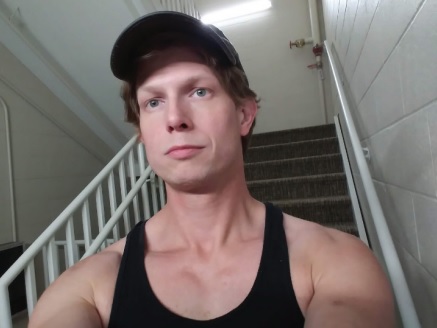
American Entropy is a collection of poetry that swings from political outcry to spiritual yearning, from queer love to existential doubt, and ignites readers’ desire to fight for what matters. What inspired you to write this particular collection of poems?
It was largely just paying attention to the news and seeing how every day, Trump is violating the Constitution, trying to force universities and museums to adopt right-wing propaganda and treat it as fact. Like all fascist authoritarians, Trump hates it when truths that contradict his lies proliferate, so I felt it important to do my part to tell those truths.
Doing it in a way that makes readers want to fight for what matters, rather than just dwelling on the darkness of modern American life, was important to me too, because if you don’t focus on what we still have, it becomes all too easy for people to give up.
The poems about love, metaphysical, spiritual topics, and queer love are all just examples of me writing what I know.
Your poetry tackles deeply emotional and politically volatile topics while also touching on hope for the future. How do you approach writing about deeply personal or emotional topics?
“Power through and write what’s true,” like it says in the poem “It’s Not Too Late.” I just get it out onto the page as accurately as I can before giving myself a chance to question how honest is too honest. I feel like if I’m too reserved in writing my poetry it won’t be as relatable, and the reader will be able to tell I’m holding something back, and it won’t foster empathy as much as I hope my work does by being unflinchingly honest.
How has this poetry book changed you as a writer, or what did you learn about yourself through writing it?
This book really crystalized for me that poetry is an important type of resistance, which is something I think my work has always been when it comes to fighting heteronormativity and homophobia and other bigotries, but this is the first time I’ve dedicated so much of any one poetry collection to raging against one corrupt administration and detailing all the ways it’s trampling our rights and waging war against the American people.
I’ve learned about myself that I really just don’t give up no matter what, and I can help others not give up either.
What is one thing that you hope readers take away from American Entropy?
That this isn’t normal, the way Trump is shredding the Constitution and speaking to our worst natures, and the way Republicans in Congress and conservative Supreme Court justices are complicit in enabling it. That it’s bigoted Nazi fascism, and we don’t have to just roll over and take it.
Author Links: GoodReads | Facebook | Website | Amazon
Through explorations of the metaphysical, religion, and relationships, the poems delve into both darkness and the light born of efforts to expand human consciousness. Despair is given unflinching witness, making the discovery of hope all the more profound. And love—raw, imperfect, and essential—is celebrated as a balm for our plugged-in yet detached modern lives.
If you’re disillusioned with an America sliding toward fascism and the strain it places on relationships, American Entropy may reignite your fire to keep fighting for what matters, keep loving, and hold faith in something greater than ourselves.



 LITERARY TITAN