Blog Archives
Self-Care for the Creative: A Survival Guide for Creatives, Empaths and Highly Sensitive People

Self-Care for the Creative is part memoir, part survival manual, and part pep talk for empaths, highly sensitive people, and artists who are burning themselves out in pursuit of their craft. Fryzel draws on her own life of gritty lows, career highs, and all the messy middle, to explain how sensitivity and creativity often walk hand in hand, and why that combination demands intentional care. The book blends personal stories, practical tips, and a hefty dose of humor to guide readers through setting boundaries, managing overwhelm, and building a self-care toolkit that actually works in the unpredictable life of a creative.
Fryzel writes with a voice that is equal parts tender and unapologetic. She’s funny without being flippant, and her swearing isn’t there for shock value; it’s exactly how a real conversation with her would sound. I appreciated that she never veered into airy, vague “just love yourself” territory. Instead, she gave concrete, actionable steps, all while weaving in stories that made me laugh, wince, and occasionally nod in recognition. That mix of vulnerability and authority made me trust her completely.
What I liked most was how well she captures the emotional reality of being both highly creative and highly sensitive. She doesn’t romanticize the struggle or paint it as a necessary price for great art. She calls out toxic patterns, talks openly about depression and burnout, and reminds the reader that martyrdom isn’t a badge of honor. At the same time, she treats sensitivity as a superpower worth protecting. Her framing felt liberating, especially for those of us who have been told our feelings are “too much” for as long as we can remember. The book also gave me a few new self-care strategies that I immediately wanted to try.
I’d recommend this book to any creative who feels overwhelmed, stuck, or simply too drained to make their best work. It’s especially powerful for empaths and highly sensitive people who haven’t yet learned how to protect their energy without shutting down their gifts. If you’ve ever felt like your art is costing you more than it’s giving back, Fryzel’s words might just be the reminder you need to step back, take a breath, and start taking care of the most important tool you have… yourself.
Pages: 369 | ASIN : B0CLK5HRQ8

Bad Actor

Bad Actor is a gritty and sharply observed noir that follows Ellis Dunaway, a washed-up TV writer turned private investigator, as he’s pulled back toward the fringes of Hollywood. The book blends a murder mystery involving the death of a high-profile agent, the troubles of fallen actor Urs Schreiber, and Ellis’s own struggles with sobriety, fading relevance, and financial strain. Vaughn sets the action against a vividly sketched Los Angeles, equal parts glitz, decay, and absurdity, while drawing the reader deep into Ellis’s sardonic inner world.
The writing had me hooked from page one. Vaughn’s voice is lean, smart, and sly, with a knack for tossing in lines that sting as much as they amuse. The dialogue crackles, bouncing between bone-dry humor and tense undercurrents. I loved how Ellis is flawed without being a cliché. He’s self-aware enough to see his own failings, but still likely to trip over them anyway. The mix of PI procedural detail, showbiz satire, and personal confessions makes the book feel like it’s living in multiple genres at once. And somehow, Vaughn keeps the balance.
Beneath the twists and snappy banter, there’s a steady hum of commentary on reinvention, ego, and the way Los Angeles eats its own. Vaughn doesn’t preach; he just lets his characters prove the point. I found myself laughing in one paragraph and then unexpectedly feeling the weight of Ellis’s loneliness in the next. The city in this book isn’t just a backdrop, it’s a character with its own moods, grudges, and jokes. It reminded me of walking through Hollywood after midnight: the beauty, the weirdness, the sense that anything could happen, good or bad.
Bad Actor delivers as both a mystery and a character study. It’s for readers who like their noir with bite, their comedy tinged with sadness, and their protagonists both frustrating and impossible to abandon. If you’re into Michael Connelly but wish Harry Bosch swore more, smoked more weed, and wandered into surreal Hollywood detours, this is your book. I’d hand it to anyone who loves a crime story that doesn’t just solve a case but also lays bare the person doing the solving.
Pages: 245 | ISBN: 979-8-9865319-3-9
Journal of a Black Man
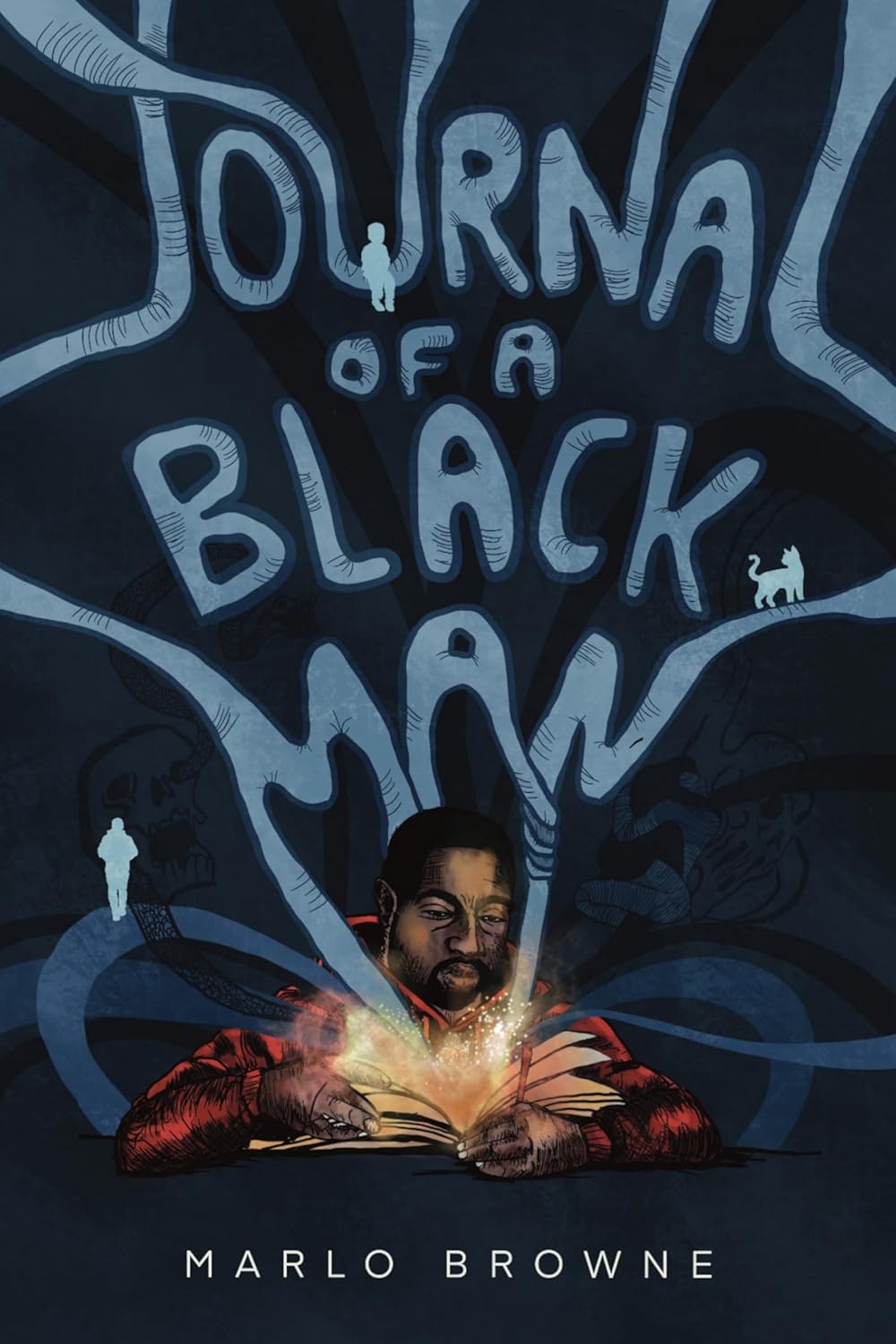
Marlo Browne’s Journal of a Black Man is a collection of poems that captures the lived experience of being Black in British Columbia while weaving in themes of love, faith, family, loss, and identity. It reads like an open diary, where Browne reflects on everything from systemic racism and social inequities to the tenderness of romance and the quiet power of prayer. The book is divided into two parts, with the first centering on Browne’s personal journey and the second featuring collaborations. Throughout, there is a strong undercurrent of vulnerability, pride, and resilience. It’s raw, rhythmic, and deeply personal, pulling the reader into the struggles and triumphs of a voice that refuses to be silenced.
What struck me most was the honesty. Browne speaks on racism at work, the ache of missing community, the pain of addiction, and the pressure on Black men to wear masks of strength. At times, the words felt like a confession, almost whispered, and at other times, they were a rallying cry. Some poems made me pause, sit with my own discomfort, and think hard about privilege and empathy. Others carried so much beauty and love that they softened the edges of the heavier pieces. I admired the way his style switches between conversational storytelling and sharp lyrical punches. It felt alive, like something meant to be performed aloud, not just read quietly.
Some pieces circled back to similar themes, but the sincerity shone through, and I found myself underlining lines that felt timeless. The references to culture, history, and community made the book richer and reminded me that poetry doesn’t just come from one person, it carries the voices of many.
Journal of a Black Man left me thoughtful, stirred up, and grateful. I’d recommend this book to anyone who wants to better understand the realities of Black life in Canada, or anyone who simply loves poetry that wears its heart on its sleeve. It would resonate deeply with readers who crave authenticity and aren’t afraid to face hard truths, but it also offers comfort to those who need to feel seen. It’s a book for people who believe words can heal, challenge, and connect us.
Pages: 132 | ASIN: B0FBV64YYB

Delaware at Christmas: The First State in a Merry State
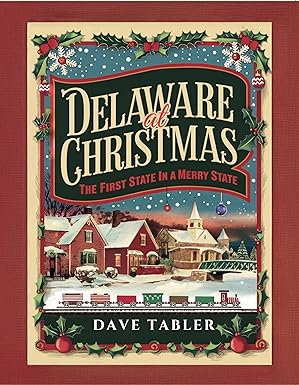
Dave Tabler’s Delaware at Christmas is a richly woven tapestry of stories, customs, and curiosities that together create a vibrant portrait of how one small state has celebrated the holiday season through centuries. Moving from the earliest Swedish settlers at Fort Christina to modern multicultural traditions, the book touches on nearly every facet of Christmas life in Delaware. It dives into the origins of local customs, such as the Sankta Lucia Festival, the Feast of the Seven Fishes, and Antebellum Black Christmas celebrations, while also exploring quirkier tales like IBM punch card wreaths and the holly industry in Milton. Along the way, it’s part history lesson, part cultural scrapbook, part gentle ode to the persistence of tradition in the face of change.
I was surprised at how much heart this book carried alongside its historical detail. Tabler doesn’t just list events or describe customs; he breathes life into them. The chapters on lesser-known practices like Finnish straw ornaments, the Irish divide between Protestant and Catholic Christmases, felt like secret treasures I’d stumbled across. His research is evident, yet it never drowns out the warmth of his storytelling. I also enjoyed the contrast between the solemn and the whimsical. One page, you’re deep in the sacred rituals of Orthodox congregations, the next, you’re smiling at the image of a turn-of-the-century Delawarean crafting elaborate outdoor “lawn trees.”
The book’s density might challenge readers expecting a breezy holiday read. The scope means that some chapters feel like they’re just getting started when they move on, and occasionally, the factual richness leaves little room for narrative pause. But in a way, that’s part of its charm. It reads like a holiday buffet where you can sample from dozens of flavors, each with its own texture. I felt my mind wandering in the best possible way, thinking about how each tradition carried its own thread into the present.
Delaware at Christmas is a gift for anyone who loves the intersection of history, culture, and seasonal joy. It will especially appeal to Delawareans, history buffs, and those who enjoy Christmas lore. The images and illustrations on nearly every page bring the stories to life, adding texture and warmth that make the history feel immediate and tangible. This isn’t a book you rush through; it’s one you savor over several evenings.
Pages: 131 | ASIN : B0F4NJ2KTZ
The Image Maker
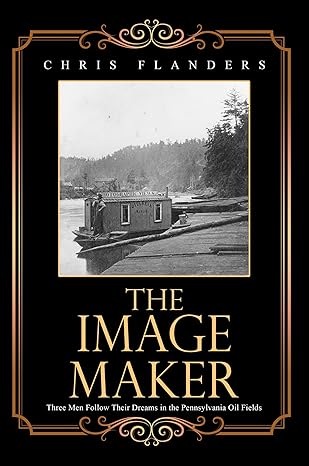

The book follows three men, John Mather, Charles Miller, and Patrick Boyle, whose lives intersect in the early days of the Pennsylvania oil boom. John is a restless photographer determined to capture the grit and grandeur of an industry in its infancy. Charles is a disciplined young soldier whose sense of duty shapes his choices in the Civil War era. Patrick is an impulsive dreamer from an Irish immigrant family, eager to escape the small-town life that feels too small for him. Their stories unfold against a vivid backdrop of muddy streets, booming derricks, political tension, and the ever-present lure of fortune. While grounded in historical fact, the novel moves with the ease of personal storytelling, never drowning in dry details.
I found the writing to be grounded and full of texture. Chris Flanders has a knack for painting a vivid picture without making it feel like a history lesson. The voices of the three men are distinct. John’s ambitious restlessness, Charles’s measured sense of order, and Patrick’s raw yearning. The pacing struck me as unhurried yet purposeful. Some passages lingered on small domestic or mechanical details, and instead of feeling tedious, they made the world feel lived-in. The narrative sometimes wandered, and I caught myself wanting certain plotlines to move faster. But when the moments landed, like a dramatic freshet scene or a tense exchange between characters, they landed hard.
The emotional heart of the book for me was less about oil or war and more about the push and pull between ambition and belonging. Each man is chasing something: security, glory, independence, but they’re also tethered to the people and places they can’t fully leave behind. I felt the quiet ache in John’s marriage, the wary pride Charles took in his promotion, and Patrick’s mix of fear and thrill as he signed enlistment papers. The dialogue read naturally, without feeling over-polished, and I appreciated that not every conflict had a neat resolution. Life in the 1860s oilfields was messy, and the book doesn’t shy away from that.
I’d recommend The Image Maker to readers who enjoy historical fiction that feels both relatable and vivid. If you like stories where real events breathe through the grit of everyday life, this will draw you in. History buffs will appreciate the accuracy, but even if you don’t usually reach for that genre, the characters are engaging enough to keep you turning pages.
Girl Bait

Girl Bait blends historical drama with a gritty present-day thriller. It opens in 1837, Alton, Illinois, where a young boy witnesses the violent death of abolitionist Elijah Lovejoy at the hands of a mob. This harrowing prologue sets a tone of danger and moral conflict that carries into the modern timeline, where paramedics, cops, and shadowy operatives are drawn into a tangled web of crime, exploitation, and survival. The narrative alternates between past and present, linking threads of courage, corruption, and human vulnerability across centuries.
I found the writing to be sharp and visual, with scenes that sometimes feel like a camera panning over raw, unvarnished reality. The pacing swings between fast and methodical, letting you breathe just long enough before the next burst of action. The historical passages have a somber weight to them, and they stick in the mind. The modern storyline is blunt, unapologetic, and often brutal, yet it’s grounded by moments of humanity like small gestures and flashes of conscience that make the darkness hit harder.
At times, the bluntness can be jarring. The violence is graphic, the language is rough, and the moral lines are deliberately blurred. Personally, I appreciated that the book doesn’t sand down the edges. Life in this world, whether in 1837 or in the back alleys of Oakland, isn’t tidy. Still, there were moments where the intensity made me pause, not because it was bad, but because it demanded space to digest. The character work is strong, especially in how Pruitt shows both flaws and virtues without telling you what to think.
Girl Bait is an intense and layered read for those who like their thrillers gritty and their history more than just a backdrop. It will appeal to readers who can handle graphic realism and who value moral complexity over neat resolutions. If you want a book that entertains while leaving you unsettled in all the right ways, this one delivers.
Pages: 345 | ASIN : B0F8H7GGJ6
The Domino Effect

Finding Sutton’s Choice follows a young writer who confronts old memories when she returns home to face her father’s declining health and deal with the family’s struggling newspaper. What was the inspiration for the setup of your story?
I’ve witnessed so many loved ones impacted by Alzheimer’s disease—beloved mentors, friends, friends’ parents or spouses, and even one of my own family members who has shown early signs of dementia. As I researched the topic, it became more and more important to weave a plot that unobtrusively but positively raises awareness of the disease and provides caregivers with a relatable story. As a past journalist of a family-owned Pittsburgh publication, I was drawn to the idea of incorporating a community newspaper. Setting the story in Lakeside Chautauqua, the very real place where I live, also allowed me to offer a snapshot of a closeknit, small Ohio town, not unlike the farming community where I grew up in Coshocton County, Ohio.
Which character in the novel do you feel you relate to more and why?
I have all the feels for Charlotte, as complicated (and sometimes annoying) as she may be. She’s a very, very distant version of myself… an insecure, immature, dutiful but damaged, sometimes angry, and inherently messy version. But aren’t we all a little messy when we’re 10? 20? Older? It takes time to work out the kinks. Charlotte holds onto old hurts far too long, but for good reason. As is seen through her memories, her childhood was complex. I can relate to that. I killed some personal demons in the writing of this book, and, like Charlotte, I’ve grown into a more self-aware human during the process.
Now, if you were to ask me what character I aspire to be, that would be The Surly Sturgeon’s barkeeper, Bea, who is a Boss Lady and completely unconcerned with what others may think. My new motto? Be like Bea.
What were some themes that were important for you to explore in this book?
Finding Sutton’s Choice explores complicated parent-child relationships, failing mental health, forgiveness, and the domino effect family choices have on who we become.
I am fascinated by how our perceptions of the past can shade and shape our future. Note that I say “perceptions.” Our personal histories are only as factual and reliable as our memories of those moments in time. And, though we are a product of our past, our future is what we make it. We can choose a new path to produce different outcomes. As my character Chuck Sutton would say, “It’s the final inning that really matters.”
Can we look forward to more work from you soon? What are you currently working on?
In the past six years, I’ve completed multiple first drafts during National Novel Writing Month in November. Though I’ve got a healthy stack of potential projects, I’m currently editing a sequel to Finding Sutton’s Choice. The follow-up, tentatively titled Sutton’s Second Chance, is set 15 years in the future. You can expect a few of the same quirky characters and many new ones, all living their best (but equally messy) lives in the little Lake Erie town of Lakeside, Ohio. Additionally, I’ve been working on personal essays about my lake life. I hope to bundle them for future publication.
Author Links: GoodReads | X | Facebook | BlueSky | Instagram | Website | LinkedIn
Chuck Sutton-newspaper editor, retired baseball player, and the town’s most beloved celebrity-is thought to have Alzheimer’s disease. The community newspaper is also on the verge of closure, and a childhood friend holds a decade-long grudge. Despite all this, there is Lakeside. The quaint waterfront community, flush with ivy-covered cottages and vintage charm, hasn’t changed even as everything else in Charlotte’s life has shifted. She intends to stay only long enough to get her father’s affairs in order.
But, to reconcile her past and unearth family secrets, Charlotte must reconnect with Chuck through his Alzheimer’s diagnosis and reevaluate her own misconceptions about growing up in the small Ohio town that still holds her heart.
Healing is Possible

Mother’s Ruin is a brutally honest and heartbreaking memoir that shares with readers your tumultuous childhood and early adulthood life as you coped with the effects of your mother’s alcoholism and emotional instability. Why was this an important book for you to write?
Definitely for my own healing and for that of those facing similar circumstances. My mother’s addiction and untimely passing have long since overshadowed me, and I needed to share my story to achieve full emotional freedom from this.
Despite what the stigma may have you believe, addiction is a trauma-response and never a choice. Nobody wakes up one morning and decides to pick up a bottle of alcohol or similar, and this was something that I was desperate to convey through my writing.
How did you decide what to include and leave out in your memoir?
This was something that I struggled with: the fine line between oversharing and undersharing. I wanted my writing to be rich and emotive, but to also not read like a personal diary, and I hope that I have achieved this.
I do believe that having already outlined my second memoir at the time also helped in choosing what to include (alongside endless rounds of editing, of course!).
What was the most challenging part of writing your memoir, and what was the most rewarding?
The flashbacks and the fear of being perceived were equally challenging. Long-suppressed memories were suddenly boiling to the surface, and not only did I have to address and write about these, but I also had to learn to do so in a safe, controlled and healthy manner, without reverting to previous toxic coping mechanisms.
Though my mum may not have been my protector, I have spent my life believing that I should be hers. With this in mind, I was worried that people would believe that I was villainising her in some way, when this could not be further from the truth.
That said, Mum may well have been poorly, but this is no justification for her actions, and I am tired of living a life enshrouded in secrets and lies to protect a collective.
The most rewarding aspect has definitely been the feedback that I have received. Though it pains me to know how many people can relate to my story, I am also proud of and thankful for those who have reached out to me whilst on their own healing journeys.
What do you hope is one thing readers take away from your story?
That healing from trauma may be painful, messy, and never linear, but it is always possible.
Raised fatherless on a ’90s poverty-stricken council estate, in the East Midlands, Belle details the struggles faced as she shared the role of young carer with her older brother, and the difficult transitional period as their relationship changed from brother and sister to child and caregiver, following court-approved legal guardianship.
MOTHER’S RUIN is an honest account of the devastating long-term impact of a mother’s addiction, dangerous actions and untimely death, just before her daughter’s eleventh birthday.



 LITERARY TITAN