Blog Archives
Wagon of Worries
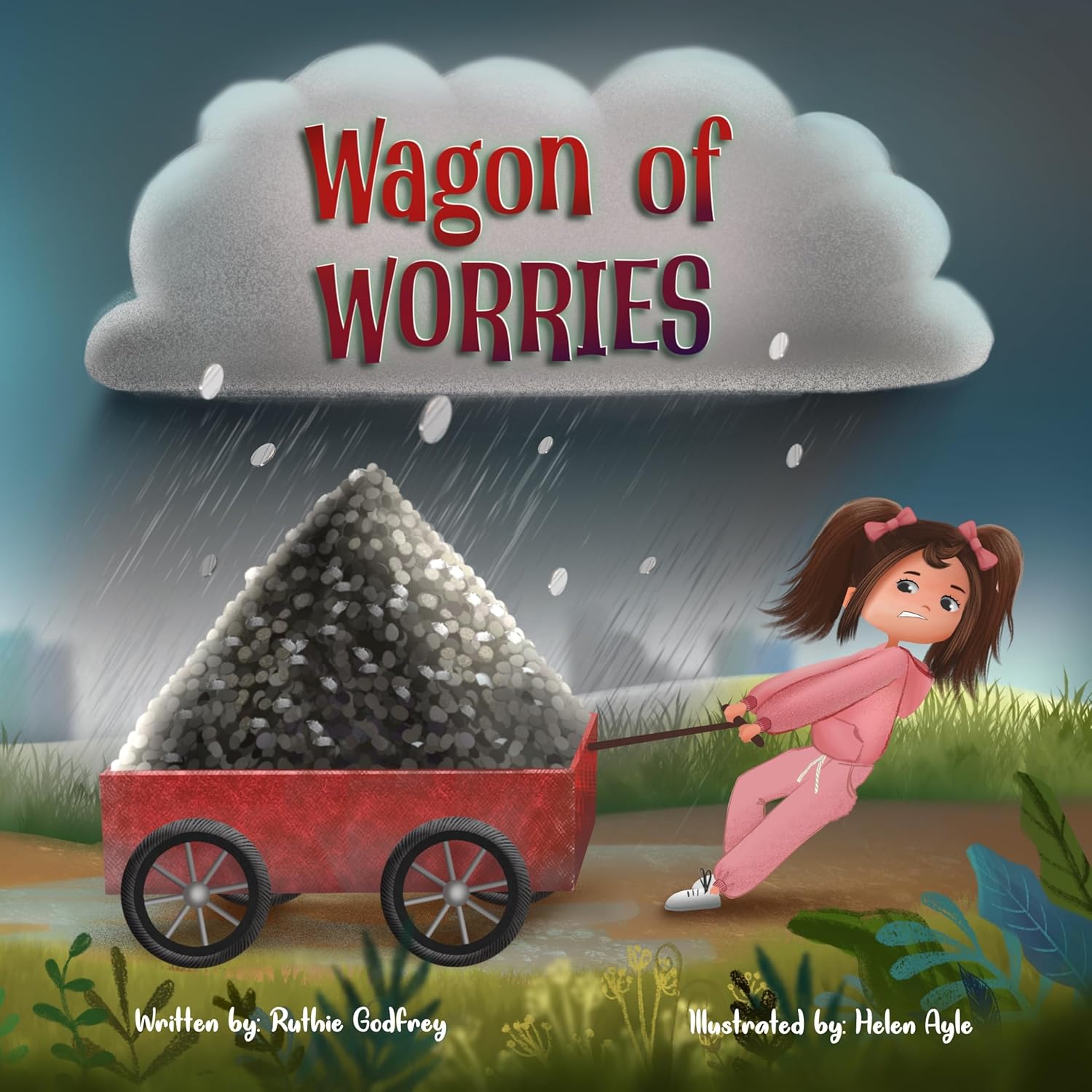

Mabel is gathering something in her little red wagon, though it’s hardly the sort of collection that brings comfort. What she piles inside are worries. They appear everywhere, multiplying with ease, and Mabel scoops them up almost without thinking. Soon the wagon swells with these gray tokens of unease, growing so weighty that she can scarcely drag it along. She tries to abandon it, to shake herself free, yet finds she’s somehow bound to it, tethered by forces she doesn’t fully grasp. The question becomes urgent: how can she move forward? A turn toward a higher power may hold the key.
Wagon of Worries, written by Ruthie Godfrey, targets readers roughly ages 4 through 11. While older children may find the message too direct, younger readers are likely to enjoy its vibrant illustrations and the gentle wisdom woven throughout.
Godfrey introduces the idea of anxiety with refreshing creativity. The dull gray coins Mabel gathers function as symbols for the small but persistent stresses that follow us through life, whether we are children learning to navigate the world or adults juggling responsibilities. As those worries accumulate, steering one’s life can feel increasingly difficult. Mabel’s journey demonstrates that seeking help from the divine can offer a release, a way to surrender the heaviest burdens and trust in something beyond oneself. Once she does, her wagon and her path forward grow lighter.
The symbolism may lean toward the obvious, yet the message remains valuable for young readers. Godfrey emphasizes that even those outside the Christian faith can find meaning in the book’s core principle. A “let go, let God” mindset, whether interpreted literally, spiritually, or metaphorically, can help anyone overwhelmed by anxieties regain perspective. In an era where worry feels nearly universal, the book presents a gentle, sensible approach to coping, wrapped in a story children can understand and remember.
Pages: 36 | ASIN : B0F6M8Y7BH

The Turquoise Butterfly
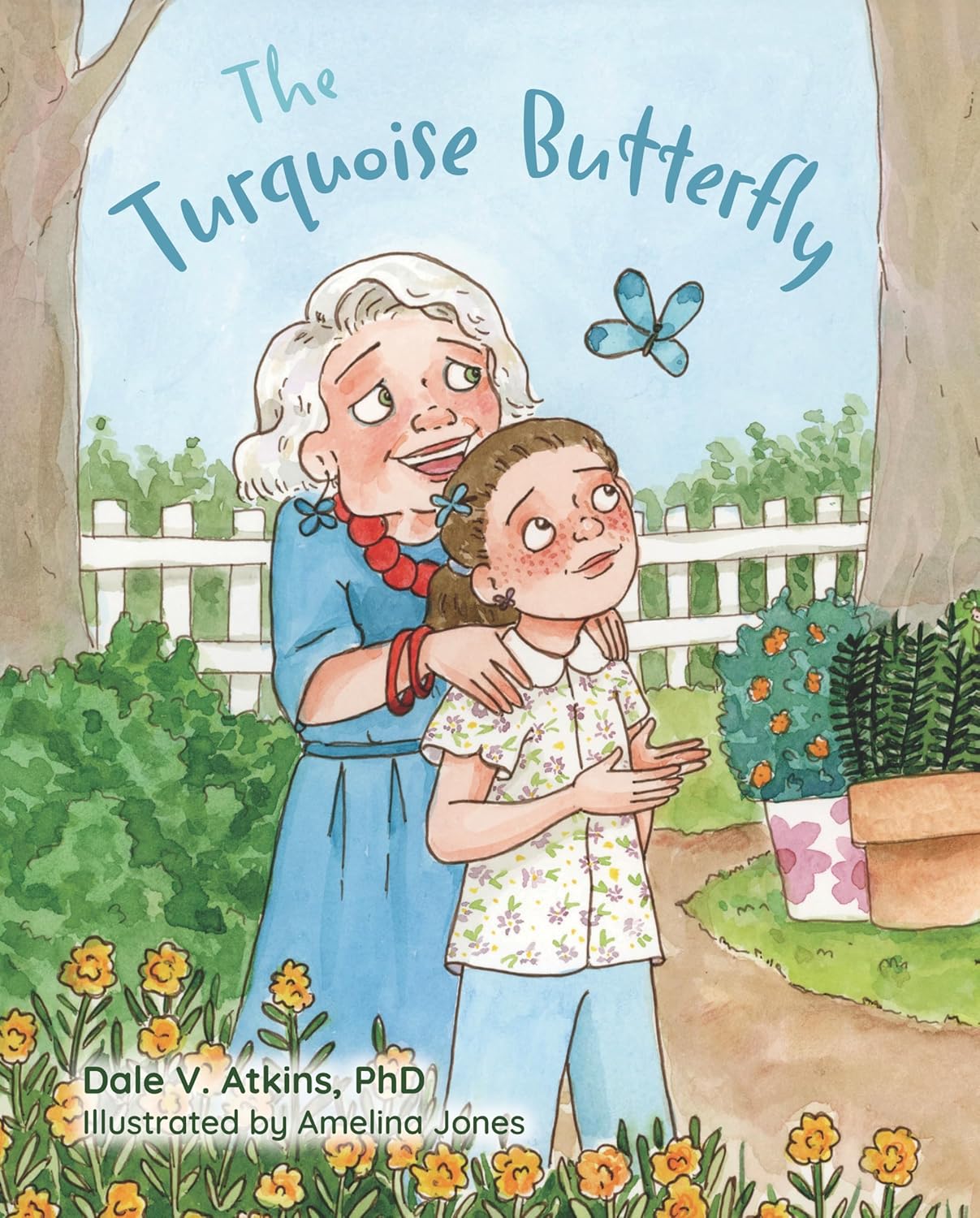
Each year, young Victoria makes her way to her grandmother Sylvia’s home, a tradition that has come to anchor her childhood. To Victoria, Sylvia stands as a model of poise and quiet courage, qualities the girl longs for as she wrestles with her own fears. Anxiety tightens around her like a cage, yet she finds a measure of freedom in mirroring her grandmother’s steadiness, as if Sylvia’s wisdom might lend her a temporary shield. As Victoria grows, new situations test her resolve; still, with her grandmother close, she begins to imagine a future where the relentless din of self-doubt finally softens.
The Turquoise Butterfly, written by Dale V. Atkins, occupies a thoughtful space best suited for older children who are already grappling with early adolescent challenges. Its tone and subject matter echo the spirit of Judy Blume’s work, drawing attention to the emotional terrain young readers often navigate.
Several ideas weave through the narrative. One centers on the belief that wisdom accumulates with time. Victoria, caught in the swirling currents of early adolescence, looks to Sylvia for steadiness. The older woman offers guidance freely, distilling years of lived experience into gentle, pointed lessons, gifts Victoria accepts with genuine gratitude.
Another prominent theme explores the rising tide of anxiety among younger generations. Atkins suggests that while worry may be unavoidable, it can be managed with perspective and practiced calm. Through Sylvia, Victoria learns exactly that. Her grandmother’s grounded, pragmatic nature reflects an approach shaped by age and experience, an approach the story encourages older generations to share with the young. Sylvia does so with grace, and the impact is unmistakable.
The Turquoise Butterfly presents a warm portrait of intergenerational connection and quiet support. Soft, expressive illustrations reinforce the book’s central messages, while Grandma Sylvia’s composed presence leaves as lasting an imprint on readers as it does on Victoria herself.
Pages: 38 | ASIN : B0FPHJWKGD
Beginner’s Guide to Growing Wealth and Investing: Planting Seeds & Growing Riches

The book lays out a clear journey for beginners who want to understand wealth building from the ground up. It uses a gardening metaphor to explain how money grows slowly through planning, patience, and consistent action, beginning with mindset shifts and ending with long-term habits that shape a legacy. The guide repeatedly emphasizes becoming the kind of person who can invest, not just learning about investing itself, and frames the reader as the CIO of their own financial life, responsible for planting and tending the seeds of their future. It walks through core financial concepts, tools, behavioral pitfalls, and emotional management, finishing with a message that wealth is cultivated over time and that every decision contributes to a family’s long-term future.
I found the writing warm, steady, and surprisingly comforting. The gardening metaphor is everywhere, and while metaphors can get tired fast, this one works. It made the book feel patient and grounded, almost like someone was sitting with me at a kitchen table, showing me how to repot a plant. The message that wealth grows “underground before it blossoms” hit me in a personal way because it captures how slow progress can feel when you’re just starting out. At times, the tone is motivational, almost like a pep talk, and I caught myself nodding along anyway. The author seems to know that readers might come in with fear or shame, and the writing gently pushes against that with encouragement.
I also appreciated how direct the book is about mindset. The idea that every dollar is an employee and that you are responsible for directing them made the whole wealth-building process feel more intentional and less mysterious. I liked the sections that broke down risk, fees, time, and inflation in simple terms. They avoided jargon and kept everything practical. Some sections felt a bit repetitive since the book often circles back to the same big ideas, but I didn’t mind too much because the repetition made the advice sink in. The emotional guidance in later chapters feels honest and helpful, especially the reminders to stay grounded during uncertainty.
Beginner’s Guide to Growing Wealth and Investing impressed me with its mix of heart and straightforward teaching. I’d recommend it to anyone who feels overwhelmed by money or stuck in old habits. It works well for readers who want a simple path, a friendly voice, and a sense of direction rather than complex charts or intimidating math. If someone wants a book that eases them into investing and gives them a little hope while teaching them the basics, this is a great place to start.
Pages: 170 | ASIN: B0FXTY8PJX
Fatal Castle

David Boito’s Fatal Castle is a vivid blend of historical fiction, mystery, and modern suspense. The novel begins in 1850, as Queen Victoria receives the fabled Kohinoor diamond, a gem steeped in blood and superstition. The scene, rich in imperial detail, establishes the diamond’s dual identity as both a symbol of conquest and a vessel of curse. From there, Boito shifts to 2023, where the story follows Ashley Bellamy, an American graduate student researching British history, and her father, Clive, the Chief Yeoman Warder of the Tower of London. When Ashley handles the same diamond that once adorned Victoria’s crown, the quiet rhythms of her life and her father’s duty-bound existence are disrupted by echoes of the past.
Boito’s command of setting is remarkable. The Tower of London is rendered as more than a historical monument; it becomes a living organism, filled with its own shadows and echoes. The description of the “castle amidst skyscrapers” evokes both reverence and unease, as if the past refuses to die beneath the modern skyline. The opening chapters, particularly those involving Queen Victoria and Lord Dalhousie, are grounded in historical authenticity while introducing the supernatural undertone that ripples through the rest of the book. The contrast between the 19th-century grandeur and contemporary London life creates a fascinating tension between legacy and change.
The novel’s strength lies in its emotional core: the strained but tender relationship between Ashley and her father. Clive’s old-world devotion to tradition clashes with Ashley’s modern independence, creating a dynamic that mirrors Britain’s own struggle between history and progress. Their exchanges, especially the scene in which Ashley presents her father with an AI-powered informational kiosk, only for him to perceive it as a threat to his calling, reveal Boito’s sensitivity to generational conflict. Through them, the novel suggests that inheritance is not only material or historical but deeply personal.
Though the pacing shifts between the historical and modern storylines, these transitions ultimately enhance the novel’s rhythm. Boito’s seamless fusion of factual history and imaginative suspense creates a narrative that remains consistently engaging, both intellectually stimulating and genuinely thrilling.
Fatal Castle will appeal to readers who enjoy historical thrillers with intellectual depth and emotional resonance. It offers a compelling meditation on how relics, whether jewels, buildings, or memories, continue to shape those who guard them. Poised between history and haunting, Boito’s novel is an ambitious and evocative exploration of the legacies we cannot escape.
Pages: 264 | ASIN : B0FSC9MWXS
From Idea to Reality – ‘A How To’ on Audiobooks
Introduction
Creating an audiobook can feel overwhelming for many authors—especially when you’re navigating unfamiliar equipment, new technology, and the challenge of bringing your characters to life through voice. In this candid and entertaining piece, authors and audiobook producers Susan Rogers and John Roosen share their real-world journey from curious beginners to successful audiobook creators of Dead Man’s Pose, Cobra Pose, Tree Pose, and Warrior Pose.
Susan and John provide a behind-the-scenes look at the trials, laughter, mishaps, and surprising moments that shaped their audiobook experience. Their story is a reminder that creativity often flourishes through experimentation, persistence, and a willingness to “give it a go.”
Whether you’re considering producing your first audiobook or simply curious about what the process looks like from the inside, their journey offers both encouragement and inspiration.
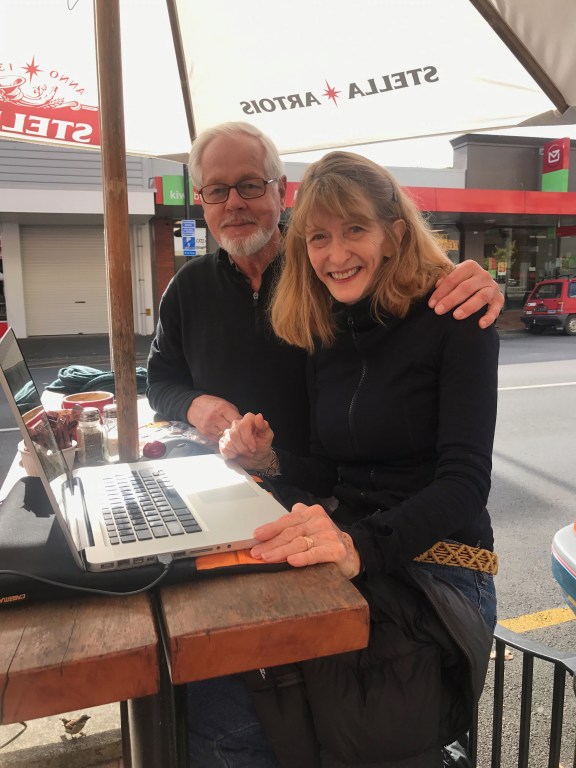
By Susan Rogers & John Roosen
Almost four years ago, we knew nothing about how to produce an audiobook.
After reading our book series to each other (about 50 times each), we knew we wanted to try and create a quality audiobook.
It’s almost undefinable what drove us to start this new and complex project. Some would say we’re addicted to writing. Our children and friends complain that we don’t answer the phone or respond to emails.
“Time choices” we say to them.
Our real passion is telling a good story … but it must be wrapped in the best art of storytelling. Creating an audiobook and producing it? Well, that’s an entirely different story.
Blending two styles.
To begin with we are two completely different personalities. We met in Officers Candidate School in the US military. Our last names started with the same two last letters, and we stood beside each other – it was destiny ‘At attention’ of course.
John is tall, a long-distance runner and a person who is good at predicting future events. Susan is a slender woman, who is like a firecracker full of action and a long list of things that must be done today!
On most topics, we see things differently, and our ways of expression are a stark contrast.
How could we come together and write as one voice? By necessity, we’ve had a lot of practice. Through our wide-ranging occupations and projects over the years in multiple countries, we’ve learned to blend our styles to make a unifying approach for most things …including cooking.
John cooks, and Susan says how great it is. [“Such a deal,” Susan confides.]
Producing a DIY audiobook.
You know all those Experts who say: “Do It Yourself’ is soooo EASY”?
We now wonder if that is AI speaking.
We did try to create an audiobook ourselves. There are all kinds of articles, videos, podcasts and influencers trying to influence you one way or the other in creating your own audiobook.
We bought all the equipment from a local electronics store.
“Ever done this before?” the salesperson with the crew cut asked.
“No, we haven’t,” we enthusiastically replied.
‘It’s Non-Refundable,’ he reminded us.
We crafted our closet into a sound stage leaving our clothes there to absorb sound and hanging up a wool blanket to cancel echoes.
We sat in our bedroom closet with our sound equipment perched on our sports clothes and the mike hanging from wooden coat hanger but could still hear the street traffic.
Extra blankets were borrowed from a neighbor who wanted to know what we were doing in the summer with the blankets. Duct tape sealed the door jam. The door chimes were disabled. And we decided not to answer the door … for anyone.
We thought about calling the airport about all those aircraft landing at a nearby airport. We didn’t think we’d have much success with that.
Then there were the thousand dogs that seemed to have recently moved into the neighborhood. That became a never-ending mission of negotiation and dog treats.
Finally, we resorted to using camping mattresses and five sleeping bags over windows and doors to create our sound set. It sort of sounded quiet. But we felt like we were in a small igloo in Antarctica.
We listened to the playback. John’s voice was scratchy in places. Susan sounded like a sultry 1930’s movie star vamp with a heavy breath delivery. We considered other possible use for her voice.
We listened to more playback and knocked over one of the cabinets in the closet—
we laughing so hard.
“This isn’t working,” John suggested.
“Let’s hire a narrator,” Susan replied.
The World of Narration
There is a bountiful number of narrators ‘out there’. They are called lots of things: narrators, readers, voice performers, voice actors, golden voices, storytellers and relators to name a few.
Actually, the first person that gave us a sample of their voice performing talents WAS our real estate agent. He was interested in changing his career, so he didn’t have to depend on the ups and down of the real estate market. We avoided mentioning his sample for almost two months, until we broke down and said he was such a great agent and the market was clearly picking up.
In the interim we subjected ourselves to 20 digital voice demos per day from everywhere on the planet until we were hearing voices … even when we weren’t listening. It felt like the Chris Young’s country western song where he sings, “I hear voices all the time”. After a few months, our neighbor, who is a psychologist told us to put pillows over our heads and hope the voices would go away.
AI Enters the Marketplace
When Artificial Intelligence started making a greater debut, it seemed like a possible option. We listened to dozens of AI generated voices who clearly could mimic anyone, but never really had the same type of feeling that any of the organic human narrators or voice performers could conjure up.
It was like your car telling you to check the back seat when you were leaving the car … and about as romantic. The worse part was AI didn’t know how to deliver a line the way we envisioned it.
“It’s doing, but not feeling,” John said.
“Duh,” Susan strongly responded. “It’s not feeling anything and never will.”
We Have a lot of Characters
The truth is—we have a lot of characters. Anyone reading to our books will see and know we delight in creating a wide spectrum of characters. They are from every demographic, every age and every personality.
Each book has a smorgasbord of these characters. The challenge of course, is to make each character seem authentic and multi-faceted. This includes characters that may have quirky characteristics that allow them to be visualized in the reader’s mind. We also rely on the readers’ imagination to mold our characters to the people they might know or think about. It is part of the partnership of willing participation between us and the readers.
How could we get that same type of quirky emotion into the audiobook version?
And worse, our stories do have a few killers, psychopaths, sociopaths a serial killer or two running around. There are heaps of romantic scenes, sprinkled with all the tension, suspense and thrills that we can wring out of any given page.
How was anyone going to act out all that?
After year of listening to all these voices, we decided one day that it would be our last day of searching.
The Voice
We were living in Sydney, Australia at the time. The day began with an ominous thunder and lightning rainstorm. We had difficulty with our internet. And power was sporadic. Perfect for trying to communicate with the last handful of people we wanted to connect to narrate our books
We held our communications dongle out the window for our very last call of listening to voices from around the world.
When the connection wasn’t happening, John decided hanging out the window further while holding a Wi-Fi device connected by a wire to a power point during an electrical storm was A-okay.
“Don’t worry Susan. I’m heavily insured and there’s always that military burial,”
Rupert Degas picked up on that last call. This extraordinary voice performer, who only works with you if he ‘likes your stuff’. We sent him a copy of the first book … and He liked our stuff! Sat up and read the entire book all night.
And in what was total irony … it turned out that Rupert Degas was living in Sydney, not far from us.
We so love irony. It was “The Voice – at first listen”.
Give it a Go
Have we had fun in all this writing and producing of Audiobooks?
You bet … we certainly have met that goal. And while there are moments of tension and frustration, Susan suddenly stands up, signaling we must practice the kissing scene again so we can describe it just right.
“Rupert will need this description so he can act it out during the audiobook performance,” Susan suggests.
“Alright Susan,” John says. “I’m happy to Give it Go.”
Author Links: Website | SoundCloud | GoodReads | Instagram | YouTube | Linkedin | BlueSky | Mastodon
Caroline’s Purpose
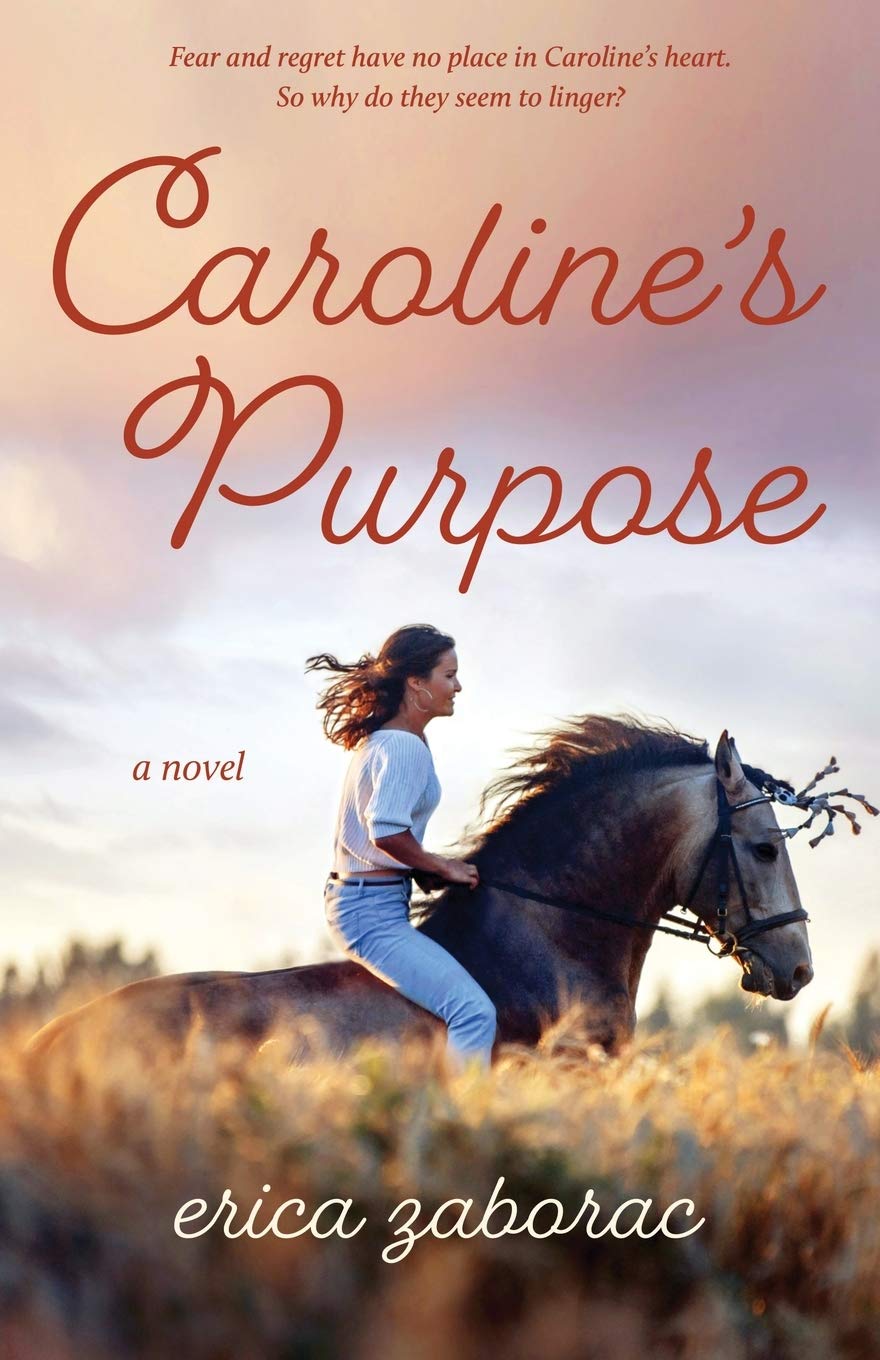
Erica Zaborac’s Caroline’s Purpose is a heartfelt coming-of-age story about loss, faith, and rediscovery. It follows Caroline Davis, a once-promising athlete and equestrian whose dreams are shattered by injuries and tragedy. As she navigates college, broken relationships, and haunting memories, she struggles to find purpose in a life that feels hollow. Through new friendships, reluctant encounters with horses, and a reawakened faith, Caroline slowly learns that healing isn’t about returning to who she was, but about embracing who she’s becoming.
I knew this book would be emotional right from the start. Zaborac writes with such sincerity that it’s hard not to feel Caroline’s pain right alongside her. The story never rushes her healing, and I appreciated that. Caroline’s fear, anger, and guilt feel raw, and they hit close to home. The writing is clean and direct, never flashy, and that simplicity lets the emotions breathe. I loved the moments with Luna, the weanling filly, those scenes carried a quiet grace that said more about healing than any speech could. The faith elements were woven gently, never forced, and they gave the story warmth instead of weight.
The dialogue is straightforward, and I admired how Zaborac balanced heartbreak with hope. Connor’s steady kindness and his belief in purpose grounded the story when things got heavy. The pacing dipped in a few middle chapters, but the emotional payoff near the end made up for it. The book reminded me how fragile and strong people can be all at once. It left me thinking about how pain doesn’t always end neatly, and maybe that’s okay.
I’d recommend Caroline’s Purpose to anyone who’s ever had to start over. If you’ve loved something, lost it, and had to figure out who you are without it, this book will speak to you. It’s perfect for readers who enjoy stories about resilience, second chances, and quiet faith. Caroline’s Purpose feels like a blend of The Lucky One by Nicholas Sparks and It Ends With Us by Colleen Hoover, but with a gentler heart and a stronger thread of faith running through its core.
Pages: 222 | ASIN : B08P57Z37B
A Deeply Personal Look

Nothing So Broken is a heartfelt memoir that weaves together family, friendship, and the long-lasting effects of war across generations. Why was this an important book for you to write?
This is a deeply personal book for me on multiple levels. My father was a Vietnam Veteran, and for most of my life I had little understanding of what he—and so many others—had endured. They rarely spoke about their experiences. Instead, they carried their trauma quietly, doing their best to protect their families and communities from the weight of it. It wasn’t until I began writing this story that I realized just how profoundly the Vietnam War had shaped my father’s life and, in turn, my own. With the remaining Vietnam Veterans now reaching their final years, preserving their stories feels more urgent than ever. We need to remember, to bear witness, and to ensure we never repeat the same mistakes as a nation.
I also wrote this book to honor a family that has been part of my life for as long as I can remember. The father served three tours in Vietnam and one in Korea, while the mother raised five boys at home. I still don’t know which of them had the harder job. During my turbulent adolescence, the second youngest son became like a big brother to me. When he was twenty-one, he was crippled in an industrial accident, a tragedy that shook their family and our entire community. His life, and the lives of his parents, were forever changed. This book is my way of honoring their resilience, sacrifice, and the decades-long struggle they’ve carried with grace. I hope this memoir gives them the recognition they deserve.
What were some ideas that were important for you to share in this book?
I wanted to show that wars don’t end with treaties or proclamations. They end in living rooms, hospitals, and family histories and their consequences echo through generations. The Vietnam War is a powerful example of this because of the long-lasting physical effects of Agent Orange. Even fifty years after the war officially ended, it still shapes my life every single day.
I also wanted to explore what perseverance looks like in its most extreme forms. Traumatic Brain Injury. Agent Orange poisoning. These aren’t the kinds of challenges most people encounter, and yet some individuals face them head-on. While writing the book, I was dealing with my own struggles and found myself constantly thinking about my father and my friend—how they managed to survive, and even rebuild, despite profound and permanent disabilities. Their resilience continues to inspire me, and I hoped to share that strength with readers.
What was the most challenging part of writing your memoir, and what was the most rewarding?
The most challenging part of writing my memoir was weaving together three stories across three different timelines. Abigail Thomas’s brilliant memoir, A Three Dog Life showed me that I didn’t need to be rigid about time or sequence. I could move back and forth between moments in each story to create a natural rhythm for the reader. Narrative flow mattered far more than strict chronology. Still, when the book came out, I worried that the shifts in time might confuse readers. So far, no one has had trouble following it.
The most rewarding part has been the response from my family, friends, and community. Many readers now see the love and respect I have for my father and my childhood neighbors. On a broader level, it has also been rewarding to hear from folks who are learning about the Vietnam War, and how poorly our veterans were treated for decades afterward. Being able to help share their plight—and to honor my father’s experiences in particular—has been profoundly gratifying. I’m very grateful that he trusted me with his story.
What do you hope is one thing readers take away from your story?
I hope readers come away with a deeper understanding of resilience. We all face challenges. Most are the everyday struggles that, in their own way, help us grow and move forward. But every so often, life hits harder than we can withstand. Something breaks. Our plans are demolished, our sense of self is shaken, and we’re left standing in the wreckage asking, “What now?”
I hope my story offers a meaningful look at how two people confronted that moment and found their way through it.
Author Links: Facebook | Website
In the fall of 1990, Steven Bott was finishing up a day at work when the unthinkable happened. Several weeks later he woke up in a hospital bed with no memory, physically and cognitively crippled. He was 21 years old.
These stories are connected through Chris Richards, Larry’s oldest son and Steven’s close childhood friend. The immense challenges that followed both men would haunt Chris, shaping his life. It wouldn’t be until many years later, when faced with his own crisis, that he would be able to look past his fears and grief and find inspiration within their broken lives.
Recommended by US Review of Books
Literary Titan gold award
The Path from Hell to Heaven: The 2 Sided Spiral of the Ego
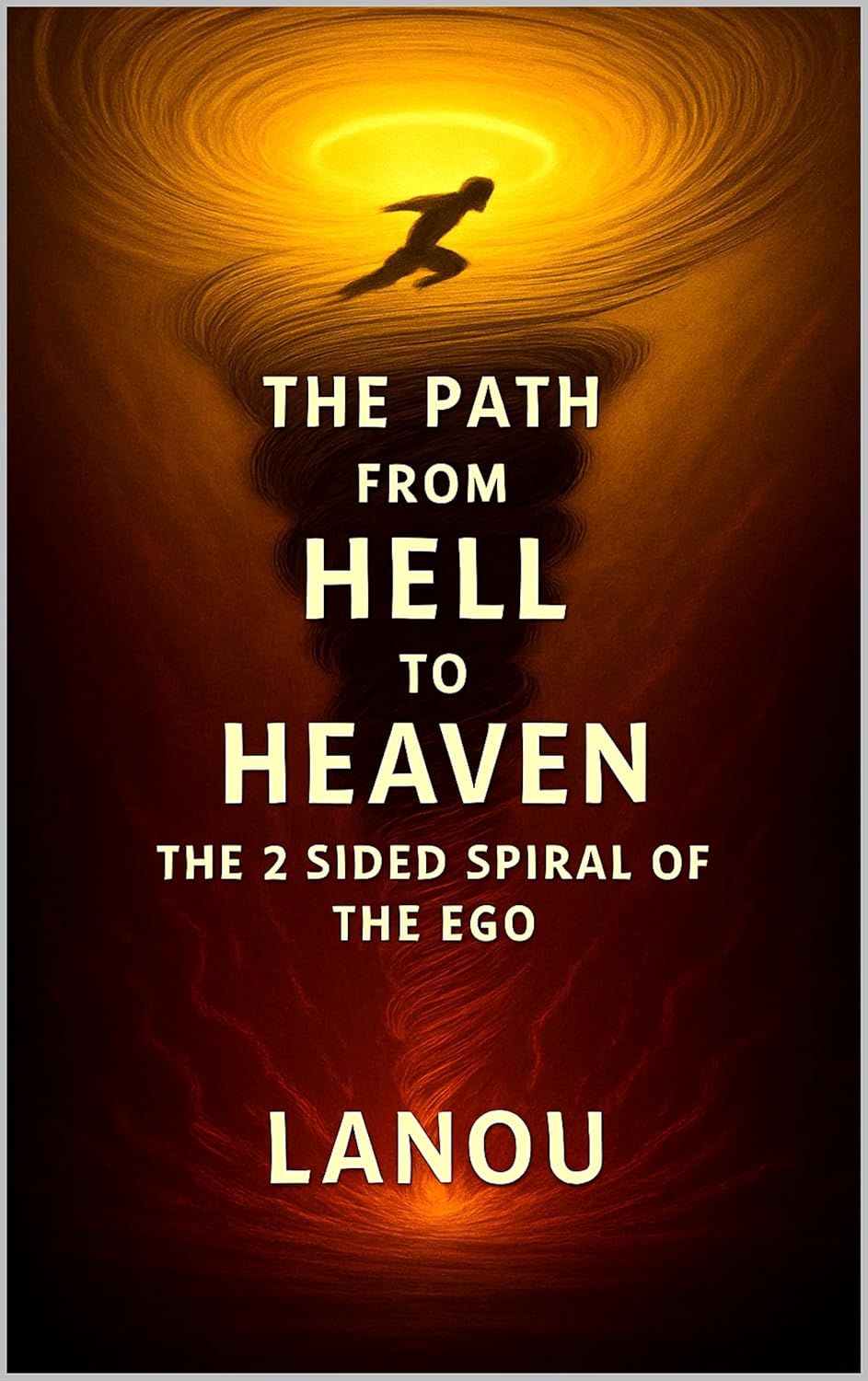

This book is a philosophical and psychological map of the ego, tracing how individuals, groups, and societies spiral downward into “Hell” through fear, shame, and denial, and how they rise toward “Heaven” through trust, openness, and renewal. It’s written like a guide for self-awareness, where the ego’s descent, wound, shell, mask, illusion, collapse, and denial are mirrored by its ascent through trust, openness, adulthood, mastery, and renewal. Each section builds on the last, connecting personal trauma to collective dysfunction and, finally, to global healing. The language is clear and rhythmic, sometimes poetic, and the structure moves like a spiral itself, repeating ideas but deepening them each time.
I liked how direct this book is and how it pointed to familiar pain without drowning in theory. The writing style blends psychology and spirituality without turning preachy. I could feel the author’s intention: to wake readers up, not to comfort them. Sometimes the simplicity of the prose makes it cut deeper than expected. It’s not a book that flatters, it exposes. At points, it felt like being called out and held at the same time. The “spiral” metaphor worked for me; it explained so much of what people repeat in life, from personal self-sabotage to entire societies collapsing under pride and denial.
The book’s tone is confident, almost absolute, which can feel heavy when you’re already raw. The ideas are strong, but their repetition across individual, group, and world scales sometimes blurs the freshness. Yet even then, I found myself underlining lines, rereading them, and thinking of people I know who live both spirals at once. The message that Heaven and Hell are not destinations but daily states of ego, sticks.
I’d recommend The Path from Hell to Heaven to people who crave clarity more than comfort. It’s for readers who think deeply about healing, leadership, and the way our inner wounds ripple into culture and politics. Therapists, activists, or anyone burned out on shallow self-help would probably find it bracing. It doesn’t tell you what to do; it shows you what you’re already doing. And if you’re willing to face that, it can be liberating.
Pages: 151 | ASIN : B0FT5HM9RS



 LITERARY TITAN