Blog Archives
Watery Eyes: Reflections of a Muslim Woman


Watery Eyes: Reflections of a Muslim Woman, by Yerusalem Work, is a wide-ranging collection of poems that moves through faith, womanhood, identity, memory, grief, and tenderness. It blends personal history with spiritual reflection and cultural pride. The book shifts from intimate whispers to big declarations, sometimes soft as prayer and sometimes sharp as truth. The themes that repeat across its many pages feel like a heartbeat. Love. Loss. Devotion. A soul trying to stay steady in a world that keeps testing it.
As I read, I felt pulled into the author’s inner world. Her writing is warm and direct, and I found myself pausing often just to sit with an image or a line. She talks about faith in a way that feels lived rather than taught, and that honesty hit me hard. I kept feeling this mix of ache and comfort. Some poems feel like opening a window after a long night. Others feel like stepping into a memory that isn’t mine, yet somehow rings familiar. Her voice rises and sinks, and I liked that the rhythm never stays still. It mirrors real emotion. Messy, surprising, sometimes contradictory. The work feels confident and vulnerable at the same time.
There were moments when the ideas felt bigger than the poem holding them, but I didn’t mind. I actually liked the looseness. It gave the book a raw edge. I loved how she writes about Ethiopia and womanhood and faith as if they’re woven into the same cloth, each thread tugging on the next until the whole thing glows. Some pieces felt playful, some mournful, and others almost like confessions. The writing invited me to consider my own ideas of belonging and purpose.
I would recommend Watery Eyes to readers who enjoy poetry that comes straight from the heart. It’s a good fit for people who like reflective writing, spiritual searching, and stories rooted in identity and culture. It would also speak to anyone who has ever carried love and loss in the same breath. This is a book for readers who want to feel close to another person’s inner life and who appreciate writing that is sincere, emotional, and alive.
Pages: 167 | ASIN : B0G6WHMTZ8

Armando and Maisie

Armando and Maisie is a tender collection of poems that tells the story of a man who lives mostly in the woods of Central Park and the dog who adores him. The book moves through small encounters between the narrator, his dog Maisie, and Armando. Each poem gives another glimpse of Armando’s gentle philosophy, his odd wit, his hardships, and his unwavering affection for animals. The story grows quietly and steadily. It becomes a portrait of friendship, aging, loss, and the strange joy of showing up for another creature again and again.
As I read the book, I kept stopping to feel the weight of its simple lines. The poet uses plain talk, almost casual, yet the emotion sneaks up on you. I felt pulled in by the mix of sweetness and ache. The writing is warm and steady. It never tries to impress. It just speaks. I liked that. I liked how the poems let small moments breathe. A dog leaning her weight on a man. A red cap in the rain. A squirrel sitting like a regular at a bar. These little things hit harder than I expected. They felt honest and felt close to life.
Armando’s thoughts on time, change, or space might sound whimsical at first, but they left me thinking long after. I could feel the poet wrestling with affection for a man who is both joyful and worn down. I could feel his fear as Maisie ages. I could feel that sinking sense when someone doesn’t show up to their usual bench. The poems made me laugh at one moment and swallow hard the next. That swing in feeling gave the book a raw, authentic quality.
By the end, I cared about these two figures in the woods. I cared about the man who feeds the birds and the dog who looks for him, whether he’s there or not. I’d recommend this book to readers who like quiet stories with a lot of heart. Dog lovers will melt. City walkers will recognize the strange intimacy of passing friendships. Anyone who has lost someone, waited for someone, or loved someone in a simple daily way will find something here that settles in and stays awhile.
Pages: 67 | ASIN : B0FPDP4PKL
Faithless Friends and Replacement Lovers: Short Stories About Love and Loss

Faithless Friends and Replacement Lovers is a collection of short stories about the messy, complicated, and sometimes sweet intersections of love, loss, loyalty, and self-discovery. The tone shifts from historical drama to whimsical fable to quiet contemporary reflection, but the heartbeat across the book stays the same. Each story looks at how people cling to one another, fail each other, and try again. Reading it felt like moving through a gallery of relationships, each framed a little differently but sharing a common light.
I was surprisingly moved by how earnest the writing is. Horst leans into classic storytelling styles, almost old-world at times, especially in stories like Rosalyn’s journey away from her “father the general” and the richly voiced tales that read like folklore. There is a simplicity to the prose that makes the emotional turns hit harder. Sometimes the characters feel like archetypes. Other times, they feel painfully relatable. I liked that the author doesn’t rush to explain the lessons. She lets the stories sit with you so you can decide what they mean in your own life.
What stood out most, though, was the author’s underlying curiosity about why we choose the people we choose. Some stories felt like gentle warnings. Others felt like quiet invitations to look inward. And a few caught me off guard, offering moments that were tender or humorous or unexpectedly sharp. The book lives in that space between longing and clarity, where love is both desire and discipline. I appreciated that. It felt honest, even when the characters themselves were fumbling through their own illusions.
This is a collection for readers who enjoy literary short fiction with a reflective bent, especially those who like stories about relationships, imperfect, hopeful, and sometimes heavy. If you appreciate narrative variety within a unified emotional theme, this book will land warmly. And if you’ve ever wondered about your own faithfulness to the people in your life, these stories will give you plenty to think about.
Pages: 211 | ASIN : B0G4HXJF39
SACRED SEXUALITY: Grace and Truth Revealed in a Culture of Confusion
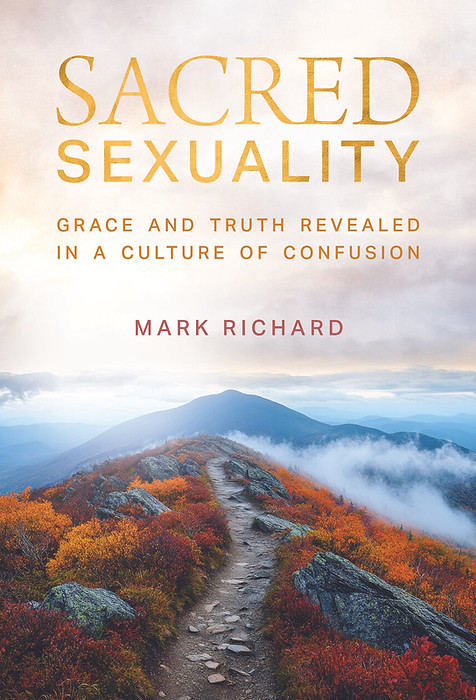

Sacred Sexuality is a straightforward and deeply personal exploration of biblical sexuality told through the lens of Mark Richard’s own journey out of what he describes as deception, confusion, and sexual brokenness. The book blends teaching and testimony, moving from his years in a same sex relationship to his eventual break with that life as he embraced what he believes is God’s design for sexuality. Throughout the chapters, he lays out a consistent argument: Scripture is the unchanging authority on sexuality, culture has drifted far from it, and believers must return to a life shaped by holiness, repentance, and obedience. The book weaves his story with biblical passages, devotional sections, and practical steps meant to guide readers toward what he calls sacred sexuality.
The sincerity of the author is undeniable. His emotional honesty, especially in the preface and his retelling of leaving behind a relationship of many years, comes through with force. There were certain moments that were thoughtful and moving, like when he described falling to his knees with Scripture open, wondering what it must have felt like to have your whole sense of self cracked open by a single passage. The writing carries an intensity that sometimes made me feel like I was sitting across from someone who desperately wants you to grasp what he grasped. That passion can be stirring. His voice is pastoral, urgent, and deeply convicted. Whether one agrees with every interpretation or not, it is clear he has lived every word he wrote, and that kind of vulnerability will resonate with readers.
The book leans on long blocks of Scripture and strong declarations about sin, judgment, and identity. There were moments when I wanted more nuance, especially when he addressed topics like same sex relationships, temptation, or modern cultural norms. His certainty is absolute, which can feel steadying for some. I would have liked more stories from people he has ministered to. The book’s frame of reference is clear, sharp, and unwavering, which offers readers clarity.
The book has a solid sense of purpose, and it delivers exactly what it promises. Readers who long for strong biblical arguments about sexuality, or who want a testimony of radical life change, will likely find this both challenging and encouraging. Pastors, parents, and believers who feel lost in cultural debates might also appreciate the book’s firm convictions and practical steps. If someone is already inclined toward a traditional Christian sexual ethic, this book will feel like a roadmap and maybe even a lifeline. If someone is questioning, searching, or carrying pain around sexuality, they may find honest reflection and heartfelt hope.
I would recommend Sacred Sexuality to readers who want a bold, earnest, Scripture-centered approach to sexuality and identity. It is best suited for those who appreciate direct teaching and personal testimony woven together. The emotion in these pages is raw, and the message is clear, and for the right audience, it could be deeply impactful.
Pages: 120 | ISBN 13: 979-8-89804-030-7
Glorious Hyperbole

The Capricious Nature of Being is a collection of short stories filled with intrigue and satire about the unpredictable turns life takes, and how ordinary people stumble, resist, adapt, or come undone. What was the inspiration for this collection of stories?
Life! Almost every story in the book is based on an experience of mine or one of a person I knew. “Dick & Jane” was inspired by Stephen King’s book On Writing, and Jane is a composite of a couple of women who blazed through my life. “Uber” came from research I was conducting for a business column, and “The Accident” practically wrote itself at a wedding I attended. I haven’t a clue where Dr. Margaret Mary McAllister came from, but I love her to death. “The Other Side of the Tracks” was kind of a goof I was playing around with that sprouted wings and took off like a big old 747, tequila and all. However, most of the time when I write, I haven’t a clue where I’m going until I get there.
You often place people and stories in familiar environments. Why is everyday life such an effective stage for inner upheaval?
Because that’s where it happens. I’m not a big fan of a lot of descriptive narrative or metaphorical muscle flexing. I like my characters to develop themselves through dialogue and behavior, and the drama of their situation to emerge from within. Familiar, low-keyed settings allow that drama to play out without a lot of superfluous distractions, and I believe it allows the reader to better identify and empathize with the emerging personalities.
What were some themes that were important for you to explore in this book?
The capricious nature of being! Like WTF, man! Life’s a bitch and then you die, and all that hard-edged confetti wherein we frame our experiences. Everybody, to one degree or another, has some kind of cross to bear, and how you perceive that challenge, how you deal with it, is the story of your life. There are no victims, only the vanquished and survivors, and it’s your choice.
What is the next book that you are working on, and when can your fans expect it to be out?
It’s titled How to Sell the Plague, a memoir I’ve been working on for about 15 years; the story of my life in all its overstated and glorious hyperbole. Only most of it’s true, and I hope interesting. It’s subtitled From Woodstock to Wingtips, and it’s ostensibly about me morphing from hippie to businessman, but the real theme is finding out who I am amidst a slew of confusion and misdirection. The narrative winds through my emotionally formative years with lots of side alleys and illusionary backdoors, like doing jumping jacks in a jock strap in front of a Broadway producer or smashing my guitar against a tree (a la Peter Townsind) on the top of a Sierra Nevada mountain to impress a pretty young blond (wink, wink). Like the driving issue in all my writing, it’s about perspective and choices, and some of the fun along the way.
Author Links: GoodReads | X (Twitter) | Facebook | Website | Amazon
These engaging tales will make you laugh and cry…and leave you wanting more.
Bad Americans: Part I

Bad Americans: Part I is a big collage of stories wrapped inside a wild and strange summer retreat. Twelve Americans head to the Hamptons during the first Covid summer, brought together by a billionaire who wants them to share meals, go on dates, compete in games, and tell stories every night. Their tales reveal pieces of pandemic life, cultural friction, loneliness, and hope. The frame narrative follows the guests as they argue, flirt, bond, and judge one another. Inside that frame sit the stories they tell, each one capturing a different slice of American life during a time when everything felt fragile. The book moves from hospitals overflowing with fear to city streets full of noise and protest.
I was pulled in by the bold mix of voices. The writing jumped between tones and moods, and sometimes it caught me off guard in the best way. One minute I was laughing at a character’s dry remark, and the next I felt a lump in my throat as someone described a loss. The author writes with an energy that propels you forward, and I liked that. The moments with Andrea, the nurse, especially resonated with me. Her story about the ICU felt authentic and honest, and I could almost hear the alarms and taste the fatigue that soaked every shift. The book’s choice to set these heavy stories inside a glitzy mansion made everything feel even stranger, and somehow more real.
The author leans into the messiness of America. People squabble over politics, race, class, and identity. They misread one another. They cling to their own truths. I wished the dialogue would slow down sometimes, but I think that constant rush was the point. The country has not been quiet for a long time. The book mirrors that noise, and it does it with heart. I respected the risks it took.
I would recommend Bad Americans: Part I to readers who like big casts, sharp contrasts, and stories that jump from tender to chaotic without apology. Anyone interested in how fiction can capture a national mood would get a lot out of this book. It is not a simple read. But it is full of life, and it stirs emotions that stay with you for a while afterwards.
Pages: 390 | ASIN : B0FF5DZ7GV
Teach Me How to Die. A Novella and Other Stories

Teach Me How to Die opens with a quiet but striking premise. A small group of strangers gather in a New York rehearsal studio to attend a master class on writing suicide notes. Their teacher, Professor Scott Mirrormord, runs the class with a mix of dry humor, unsettling calm, and sudden flashes of emotion. Each character carries a private storm. The Violinist trembles under his own sensitivity, the Hunter bristles at the world that has rejected him, the Accountant clings to order like a life raft, the Poet aches for beauty, the Loser sinks under the weight of lifelong disappointment, and the Philosopher hovers above them all with cool detachment. Across several sessions, their stories unravel in ways that feel surreal, funny, raw, and sometimes painfully honest. The novella blends this unusual setup with short stories that explore gender identity, empathy, loneliness, and the strange ways people hold themselves together when the world feels inverted.
The writing feels theatrical in the best sense. Scenes move with quick beats, like spotlights snapping on and off, and the dialogue carries a rhythm that made me imagine the characters speaking just inches away. Sometimes the tone shifts fast. One moment I laughed at Scott’s odd habits. The next I felt a sharp ache when the Poet revealed the quiet desperation behind her romantic bravado. The emotions hit hard because author Lisa Monde does not overcomplicate them. She keeps them human. There were times I wanted the prose to hurry because the tension between characters felt so tight it made me restless. Still, that uneven pulse worked. It mirrored the way real people think when they are standing at the edge of something dark and trying to talk themselves back toward the light.
The book treats suicide with seriousness and compassion. It does not glamorize it. It does not trivialize it. Instead, it asks why a person might arrive at such a thought and what might pull them away from it. The Poet’s loneliness shook me the hardest. She sees beauty everywhere, yet cannot see herself reflected in anyone else. I also found myself oddly moved by the Accountant, who tries so hard to appear composed while cracking open from the inside. Even the humor carries weight. It softens the darkness without hiding it. The stories that follow the novella expand the book’s themes in unexpected directions. Some felt warm. Some felt strange. All of them carried a heartbeat that stayed with me after I closed the pages.
Teach Me How to Die would be a meaningful read for anyone who enjoys character-driven stories that ask real questions about why people suffer and how they heal. It is also a good fit for readers who appreciate theater and intimate ensemble pieces. For readers willing to sit with tough emotions and still look for hope, this book will land with force.
Pages: 216 | ASIN : B0FXNNRLR3
ENTWINE

ENTWINE sweeps through forests, brooks, moonlit branches, and wingbeats, all woven with a steady pulse of wonder. The book moves through poems and meditations that circle hummingbirds, birches, hawks, seeds, storms, memory, and grief, and it builds a picture of the Hudson Highlands as a living, breathing companion. It feels like a record of attention, a long look at the more-than-human world, and a quiet insistence that our lives thread through soil and water, whether we notice or not. The poems shift between close observation and big feeling, and the book holds everything from scientific detail to spiritual yearning in one continuous braid.
Author Mary Newell writes with this mix of tenderness and excitement that made me lean in and then lean back as if I needed more room to breathe. Some poems rush with energy like the hummingbirds she studies, while others settle into slow, grounded rhythms. I loved that variation. It kept me off balance in a good way. I was wrapped up in her affection for trees and birds and rocks, and then suddenly swept into her grief for lost species or her worry that the land is shifting faster than we can keep up. That emotional jumpiness felt real to me. Life is like that. Beauty and ache and humor all at once. The writing invites that kind of response.
I also found myself reacting strongly to the way she folds her own life into the landscape. Her stories of drought, gardening, watching hawks, losing her mother, or waiting for a familiar hummingbird all cracked open something soft in me. None of it felt forced. I could sense how hard she listens to the world around her and how much she wants to meet it with honesty. Sometimes the imagery felt wild and tangled. Sometimes it hit with a clarity that made me stop reading for a moment so I could feel the point land. I appreciated the intimacy of that.
ENTWINE is perfect for readers who love nature writing that feels alive, for people who enjoy poetry that is tender. If you like work that blends science with feeling or work that welcomes you into the woods and asks you to stay awhile, ENTWINE will be a good companion.
Pages: 94 | ISBN : 1609644921



 LITERARY TITAN