Blog Archives
Peanut Butter and Jelly Sandwiches from Outer Space! (A Twenty-First-Century Fairy Tale)
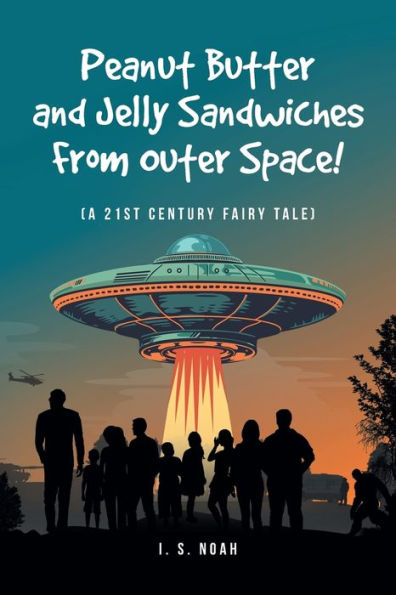

Peanut Butter and Jelly Sandwiches from Outer Space! is part zany sci-fi adventure, part heartfelt coming-of-age story, and part sharp commentary on youth, education, and social change. It follows Violet—a strong-willed, smart, and slightly overburdened teen—who just wants to start a school newspaper and save the world from ignorance. Instead, she ends up hiking through the forest with her best friend, two chaotic little brothers, and eventually discovering what appears to be a literal alien spaceship with a sandwich in it. You can’t make this stuff up—except, of course, I.S. Noah did, and did it with charm, sass, and a lot of insight tucked under the goofiness.
I adored Violet. She’s the kind of teen I wish I had the guts to be when I was that age—smart, mad as hell about the world’s problems, and totally driven to do something about it. Her internal monologue had me nodding and laughing in equal measure. Like in Chapter 1, when she vents about classmates calling facts “fake news” and quoting Asimov? Chef’s kiss. Relatable, sharp, and kind of heartbreaking. Also, the banter between the kids feels so real. Brad, her pain-in-the-neck brother, is hilarious in that “I want to throttle you but you’re also kind of brilliant” way.
What surprised me most, though, was how layered this book is under all the humor. Sure, there are fart jokes and banana slugs and a glowing alien disc, but there’s also real commentary on truth, science, journalism, and what it means to grow up in a world flooded with noise and nonsense. Violet’s drive to bring back the school newspaper is more than just a school project—it’s her way of fighting for reason in a world full of opinions. And then you get a twist like the sandwich from space—I won’t spoil it, but let’s just say it’s both hilarious and bizarrely thought-provoking. Who knew intergalactic peanut butter could stir up so many questions?
If you’re into stories that mash up teenage drama, sci-fi nonsense, heartfelt moments, and a healthy dose of “what the heck just happened?”—this book is for you. Teachers, nerdy teens, exasperated older siblings, and anyone who’s ever rolled their eyes at misinformation or dreamed of aliens—y’all will love this. It’s smart. It’s weird. It’s got heart. And somehow, it makes space sandwiches feel profound.
Pages: 256 | ISBN : 9798887316918

Locust Hill: A Romantic Family Saga
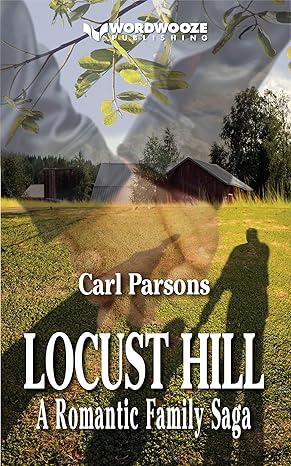
Locust Hill is a nostalgic, slow-burning romantic saga set in the rural landscape of West Virginia during the 1960s. Told through the voice of Cassandra “Cassie” Clark, a popular high school girl with big dreams and big-city expectations, the novel traces her unlikely love story with James Russell, a quiet, philosophical young farmer. What begins as a tutoring session in trigonometry unfolds into a deeply layered exploration of family, resilience, sacrifice, and the quiet kind of love that grows deeper with time. It’s a coming-of-age tale just as much as it is a love story—rooted in soil, memory, and legacy.
On the surface, it reads like a wholesome farm story, but Parsons writes with such clarity and charm that I was hooked by the end of chapter one. The first few pages in which Cassie describes her surprise attraction to the serious, slide-rule-toting Jim are full of heart and humor. The whole “fertility goddess” conversation made me laugh and then think way harder than I expected. Jim’s quiet wisdom stuck with me. He’s not just a farmer, he’s a philosopher with dirt under his fingernails.
One of the most touching and vivid sections is when Cassie visits Jim’s family farm. The way she describes the house, the land, the compost piles, the ducks, the guineas, it’s more than just descriptive. It’s loving. You can feel her world shifting as she walks through the barn or sees the warmth of Jim’s mother. Parsons doesn’t romanticize farm life. He honors it. He shows how the land, like love, takes patience, work, and guts. There’s a part where Jim says the garden “informs the fields,” and I had to pause and take that in. It’s a beautiful metaphor for how small efforts, like relationships, can grow into something sustaining.
Some chapters drift like a slow river, and if you’re expecting non-stop action, this might feel a little sluggish. But that’s kind of the point. The pacing mirrors the farm life it describes—seasonal, methodical, purposeful. There’s real tension beneath the calm, especially when the story veers into environmental issues in later chapters. Still, it’s the romance that held me. The way Jim proposes at the creek, under budding trees, made my heart melt. It’s tender without being sappy, and just the right amount of awkward.
I’d recommend Locust Hill to anyone who loves character-driven stories, rich settings, and quiet, meaningful drama. If you enjoy books where not much “happens” but everything matters, you’ll feel at home here. It’s especially perfect for readers who miss the days when love stories were more about soul than spark. This isn’t a whirlwind romance, it’s a slow build that feels earned. Like a good harvest after a long, hard season.
Pages: 220 | ASIN : B0DVCFPM4M

The Wake of Expectations
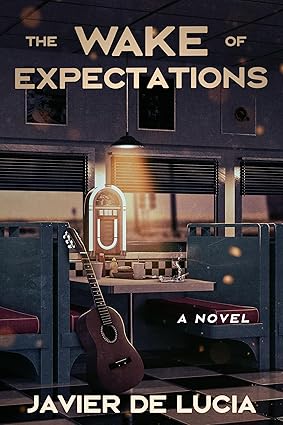
Javier De Lucia’s The Wake of Expectations is a raw, poetic unraveling of self in a world where dreams, disillusionment, and the pressure to perform collide. The book journeys through a fragmented psyche, moving between poetic introspection and philosophical musings, all while probing the cost of living under the weight of inherited ideals and cultural norms. It’s less a narrative and more a lyrical excavation—a fevered diary torn at the seams.
What struck me first was the voice. It’s angry, tender, lost, and deeply human. De Lucia doesn’t hold your hand. He throws you in. His words crackle with emotion—grief, rage, shame. The prose can be jagged, like broken glass, but that’s the point. It’s meant to cut. It’s meant to hurt. And it does, in the best way. I found myself underlining lines not because they were pretty, but because they felt true. Like he’d scooped thoughts out of the back of my mind and dared to say them out loud.
But some passages drift into abstraction. There were moments when it felt like De Lucia was writing for himself. It’s unapologetically personal, but it’s fantastic when it lands; however, I craved more shape and clarity. Still, even in its chaos, there’s something magnetic about it.
The ideas in the book were thought-provoking, and something I really enjoyed about this novel. He questions everything: ambition, masculinity, belonging, even time. And he doesn’t offer answers. Just cracks. Openings. Invitations to think, to feel. I came away shaken, but also strangely comforted. There’s something healing in the honesty, in knowing someone else is just as bewildered by the world.
The Wake of Expectations isn’t for everyone. It’s heavy. It’s weird. It doesn’t pretend to be neat or nice. But if you’ve ever felt like you’re drowning in who you’re supposed to be, this book might throw you a rope—or at least show you you’re not alone. I’d recommend it to readers who crave emotion over plot, who aren’t afraid of the dark corners. It’s poetry with teeth. And it lingers.
Pages: 551 | ASIN : B0DYBJVG9C
Recognizing the Strengths Within Ourselves

Heroes of Another Age follows twin shifter brothers who realize their destiny lies in stopping a catastrophic event, and they must leave their home to battle a sinister force that may prove fatal. What was the inspiration for the setup of your story?
I’ve spent my life writing and reading about characters with magical powers and incredible abilities—but one day, a question struck me: What would it feel like to suddenly discover that you had powers of your own? That you weren’t “normal” anymore? How would that reshape your sense of self and your place in the world? And what if those powers demanded something of you—something that you didn’t want to give?
That’s how Aton and Aaron were born: two brothers, one thrilled by the discovery, the other unsure and reluctant to take up the call.
I find the world you created in this novel brimming with possibilities. Where did the inspiration for the setting come from, and how did it change as you were writing?
I’ve been fortunate to travel across six continents, experiencing a wide range of cultures, cuisines, and landscapes—and that inspiration weaves itself into my writing. As I followed Aaron and Aton on their journey, I found myself revisiting places from my own memory: their hometown, Vidar, has the feel of an old European village; the mountains they cross are echoes of the Alps; and the City of Sky Fire carries distinct influences from my time in Asia. Each real-world place helped shape the mood, texture, and wonder of every new step on their path.
What were some themes that were important for you to explore in this book?
Some of the core themes that guided me while writing were the reluctant hero, the strength of family bonds, and—most importantly—self-validation. It’s so easy to compare ourselves to others: someone who writes better, runs faster, or seems so much smarter. But it’s much harder to recognize the strengths within ourselves. That’s what I wanted to explore in this story—the quiet courage it takes to believe in your own worth.
Where does the story go in the next book, and where do you see it going in the future?
My next book is titled A Glimmer of Hope, and it marks the beginning of The Guardian Series—with Heroes of Another Age serving as its prequel. This story follows a young human sorceress named Resara, her encounter with the Five Gods of Eris, and a mysterious plague threatening to wipe out life across the world. In this first installment, readers will meet Garron, her werewolf guardian, along with a vibrant cast of characters from all walks of life—and species.
The series is planned as 8.5 books: four novels in the first arc, a fun interlude novella, and four more in the second arc. Along the way, readers will explore more of the world of Eris, encounter strange and wonderful creatures, and maybe even run into Aaron and Aton again.
I hope you’ll join me for the journey ahead.
Author Links: GoodReads | Instagram | Website
Aaron loves the life he’s got. It’s just him, his twin brother Aton, and their mother living atop a picturesque mountaintop, herding sheep, and hiding the fact that they’re all werewolves. The humans down below don’t care much for shifters, and they’d like Aaron even less if they knew he also had magical powers. But as long as they stay hidden, they’re safe.
After a tragic accident, Aaron and Aton learn of a looming catastrophe in the east—and that it’s their destiny to stop it. Aton is eager to embrace the call to adventure. He’s always been the stronger, braver brother. But Aaron isn’t so sure.
Trekking through snow-covered mountains and shadowy forests filled with vicious, unrelenting demons, Aaron begins to question if he’ll even survive the journey—let alone face the sinister force that awaits.
Can Aaron’s fledgling magic and Aton’s warrior strength stand against the darkness? Or will they be swallowed by it? Fate may have chosen them—but when dragons and gods enter the fray, how can two brothers hope to defy destiny?
If you enjoy His Dark Materials, you won’t want to miss Heroes of Another Age by B.L. Mostyn—an epic fantasy full of magic, monsters, and myth.
Will Aaron rise to meet his destiny—or be devoured before he gets the chance?
Click BUY NOW and begin the adventure.
Emotional Free Fall
The Scald Crow follows a Canadian news anchor who loses her job and the last of her family, leading her to move to Ireland to claim an inheritance from a man she has never met. What was the inspiration for the setup of your story?
I knew I wanted the story to be set in Ireland—it’s a place that pulses with history, myth, and an atmosphere that feels almost otherworldly. But I also wanted a protagonist who had a compelling reason to go there and never look back. That’s where Calla came in. She’s a Canadian news anchor who loses not just her job, but the last of her family. That kind of emotional free fall gave her the perfect motivation to uproot her life and start fresh. The idea of her inheriting something mysterious from a stranger in Ireland just clicked—it opened the door to secrets, magic, and self-discovery. It was the setup I needed to launch her into a world where reality and myth collide.
In many contemporary coming-of-age fiction novels, authors often add their own life experiences to the story. Are there any bits of you in this story?
Absolutely. I spent ten days in Ireland with my family, and every location mentioned in The Scald Crow is a place I actually stood. The cliffs, the pubs, the winding roads—all of it left an imprint on me. But it wasn’t just the landscape. It was the people. Bits and pieces of the locals—their warmth, wit, and mystery—found their way into my characters and dialogue. So yes, there’s quite a bit of me in this story. It’s woven with real moments, real places, and the kind of magic you can only feel when you’re truly present somewhere that stirs your soul.
What were some themes that were important for you to explore in this book?
One of the most important themes for me was bringing to life the magic of the land, the folklore, and the people. Ireland is rich with stories that feel older than time, and I wanted that deep-rooted sense of myth and wonder to pulse through every page. I was drawn to the idea that the land itself holds memory and mystery and that the people—whether mortal or magical—are deeply connected to it. Exploring how place shapes identity, and how folklore can both haunt and heal, was at the heart of writing The Scald Crow.
Where does the story go in the next book, and where do you see it going in the future?
In the next book, Resurrection, Calla journeys into the otherworld and meets the magical family she never knew she had—including twin sisters who are opposites in every way and a father with a dangerous glint in his eye. As old powers awaken and a ruthless prince threatens the realm, Calla discovers abilities she never imagined—shifting into other beings in moments of fear. Meanwhile, Colm must reach back through bloodlines and legend to save her, even if it costs him everything.
The future of the series? Let’s just say the veil between worlds is growing thinner… and not everyone who crosses it will return the same.
Author Links: GoodReads | Facebook | Website | Amazon
Colm fled from Clonmara seven long years ago, but now it’s his father’s birthday, and the clan has gathered to celebrate the ould one. Each day brings back the memories that ruined him.
Saoirse dwells in the shadows of a lost love, unwilling to move on and unable to forget. The crystals say one thing, but the cold, hard truth tells another.
Ciarán walked away from the woman he loved for the fun, for the craic. He didn’t realize that one rash decision would impact the lives of so many, least of all his own.
Four broken hearts, brought together by the thread of love.
Guardians of the Cosmic Clocks: The Emerald Tablets
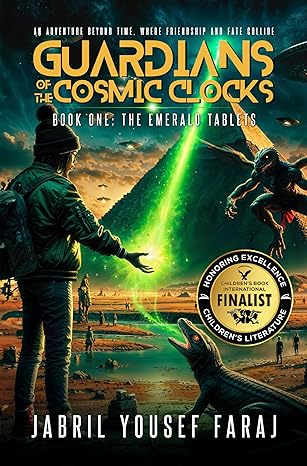
Jabril Yousef Faraj’s Guardians of the Cosmic Clocks kicks off a wild, genre-blending ride through time, space, and soul-searching adolescence. It follows Zya, a spunky, sharp twelve-year-old girl with big dreams and an even bigger heart, and her quieter best friend Elijah, a kid with a mind for circuits and logic. When they stumble upon a mysterious portal in the forest behind their neighborhood, they’re launched into a futuristic yet ancient interstellar conflict. There are aliens, time travel, cosmic watches, and high-stakes missions to recover the enigmatic Emerald Tablets—artifacts of immense power tied to humanity’s fate. All of it is steeped in Afro-futurist themes, social commentary, and enough banter to keep it all feeling grounded.
I honestly fell in love with the way Zya is written. She’s the kind of kid you root for immediately—complicated, headstrong, sweet, and full of fire. Her thoughts about wanting to be free, wanting to be seen and heard, absolutely resonated with me. It’s not just character-building; it’s emotionally real. Her world feels alive even before aliens and spaceships show up. When the science fiction finally kicks in—like when Zya and Elijah first lay eyes on the glowing portal in the forest and jump through it without hesitation—I was hooked. The pacing is snappy, but not rushed. The way Faraj builds out the Lumerian race, particularly through the elegant and mysterious Maroun and the guide Kelven, is slick and satisfying. The Nimrod (their spaceship) is described in such a cool, cinematic way it’s easy to imagine it.
But what surprised me most was how layered the story is. Faraj isn’t afraid to get deep. The Archons—power-hungry lizard-like overlords—aren’t just sci-fi baddies; they’re stand-ins for systemic oppression. The idea that they’ve used Earth’s pyramid structures to send out mind-controlling frequencies is wild, sure, but also kind of genius. It reimagines colonialism and spiritual suppression through a futuristic lens. The Emerald Tablets themselves are introduced with mythic reverence, and their purpose remains just cryptic enough to keep you curious. That said, I think some of the explanations got a little too exposition-heavy—especially in the scenes where Maroun lays out the backstory. It wasn’t bad, just a bit dense for younger readers. Still, the dialogue often balances it out with humor and warmth. Zya and Eli’s dynamic never feels forced. They’re just two kids, caught up in something huge, doing the best they can with sass and heart.
Guardians of the Cosmic Clocks: The Emerald Tablets is a blast. It’s heartfelt and hopeful. It manages to feel epic and intimate all at once. If you love sci-fi with strong characters, real-world metaphors, and a touch of magic, this is for you. Teachers and parents looking for a smart, diverse, adventurous read for middle schoolers—grab this.
Pages: 140 | ASIN : B0DNR18FLZ
An Old Soul


Reading An Old Soul felt like flipping through a vivid photo album of the late ’90s—sun-drenched streets, VHS stores, sweaty CTA rides, and all. M. Kevin Hayden tells the story of Isaac André, a thoughtful, offbeat 25-year-old from Chicago’s South Side who’s just trying to make sense of his life, his past, and the weirdly precise coincidences that keep nudging him toward something… bigger. Between working at Big Shoulders Video, helping his grandma with groceries, and being a low-key jazz and sci-fi nerd, Isaac starts experiencing reality in ways that don’t quite add up. Then, a late-night chatroom encounter changes everything.
Hayden’s writing hits that sweet spot between lyrical and raw. The book’s opening—Isaac sweating it out in Chicago’s brutal summer heat—pulled me right in. It’s textured, specific, and alive. There’s this subtle magic threaded through the ordinary moments, like buses always arriving on cue or the TV glitching in a loop—small, eerie clues that something’s off in Isaac’s world. That grounded surrealism reminded me a bit of early Richard Linklater or Donnie Darko, minus the angst and with more Miles Davis.
But the soul of this book, for me, is Isaac’s quiet longing—for connection, for clarity, for meaning. It’s in the way he tenderly checks on his grandma every day, how he geeks out over Philip K. Dick and jazz records, how he paints a mural in his tiny attic apartment of a sun-drenched meadow with two silhouetted figures. That mural is such a beautiful, wordless representation of hope and memory and maybe even fate. And the scene where he finally goes online for the first time was straight-up nostalgic gold. That slow, clunky loading screen. The “You’ve got messages!” voice. The awkward chatroom banter. And then he meets Noa, aka BirdGurl9, and suddenly his world expands in a way that feels both cosmic and heartbreakingly personal.
Hayden nails the vibe of being young, smart, and totally unsure if you’re lost or exactly where you’re meant to be. The scenes with Sharika at the video store—her insults, Isaac’s restraint, the sheer mundanity of rewinding VHS tapes—make the oddness of the rest of the story feel even sharper. And the way the universe seems to respond to Isaac’s quiet goodness made me weirdly emotional. This isn’t just a story about synchronicity; it’s about faith—not religious faith, but that quiet, gut-level trust that maybe you’re not as alone as you think. Maybe the right people show up when you need them most.
By the end, I didn’t want to leave Isaac’s world. An Old Soul is a book for anyone who’s ever felt out of step with the world but still believes there’s something waiting for them—something meaningful, something more. I’d recommend it to fans of coming-of-age stories with a touch of the mystical, readers who love deeply specific character work, and anyone who’s ever searched for “something” late at night on a dial-up connection.
Pages: 233 | ASIN : B0F453QXNG
Be Kind To Others

Fahrenheit 2600 follows a teen boy battling his demons who, after getting into some trouble, meets a dreamer with a crazy plan and forms a bond of friendship in a steel foundry. What were some ideas that were important for you to share in this book?
I wanted to capture the spirit of 1970s Australia—the grit, the slang, the music, and the quiet dignity of people who broke their backs every day just to get by. But I also wanted to explore the irony behind the old adage, “they don’t make them like they used to.” The so-called good old days weren’t always so good. Yes, we worked hard and faced real physical challenges, but there was also a kind of silent suffering that went unnoticed. Pain buried under pride, humour, and often long shifts at a factory.
Today’s world—while more comfortable—comes with its own brand of pain. We may not be toiling on production lines, but we’re caught in the exhausting, cerebral maze of social media, identity, and constant comparison. The struggle has shifted—from the body to the mind—and both eras carry their own kind of scars. I wanted to give that some air, to draw a line between those two worlds, and maybe bridge the generations a little.
What was the most challenging part of writing your memoir, and what was the most rewarding?
My first book, Wog in a fish shop of which Fahrenheit 2600 is a sequel, was a challenge in a different way. I forced myself to revisit a tough childhood, but I wanted to tell it with humour and warmth. I wrote it in an anecdotal style, leaning into the absurdity of certain moments to make it more entertaining than heavy.
Fahrenheit 2600 was tougher in that I didn’t just want another collection of memories—I wanted it to feel like a proper story, with a clear protagonist, stakes, and a reason to keep turning the pages. That shift from memoir to narrative was an enormous leap for me. The hardest part was editing it down—it was nearly twice the length at one point. Being brutal with the cuts, killing off scenes I liked for the sake of pace and structure, that was painful but necessary.
One thing that really helped me through the process was something my daughter, Jess Leondiou, taught me. She’s a journaling advocate who is podcasting about the benefits of writing down both positive and negative thoughts and can help rewire the brain. That practice helped me push through the doubts and stay clear on why I was writing this book in the first place.
What do you hope is one thing readers take away from your story?
It might sound like a cliché, but I truly believe the most important thing in life is to be kind to others. No matter how they present themselves—More often than not they are carrying some kind of internal struggle. In Fahrenheit 2600, I wanted to show that via the conflict between the main character and the antagonist, who at one point are on the brink of actual violence. But as the story unfolds, something shifts. There’s a twist near the end that I hope catches readers off guard—in a good way—and shows just how complex and surprising people can be when you look past the surface. If that moment leaves readers thinking twice before judging someone too harshly, then that’s a good thing.
Author Links: GoodReads



 LITERARY TITAN