Blog Archives
Jumping In And Out Of Reality
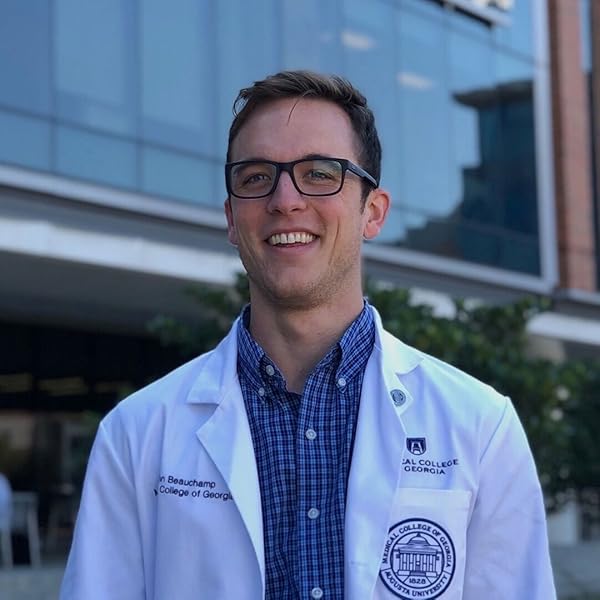
Freeze Frame follows a teen with PTSD who struggles to separate film and reality at times as he works through his trauma and makes new friends. What was the inspiration for the setup to your story?
“When quarantine started, I was living in a room with no windows. It definitely psyched me out at times, not knowing if it was light or dark, rainy or sunny. The mind can sort of wander in a place like that. I remember having these vivid daydreams after a while, and after one of them, it took me a minute or two to figure out if the daydream had actually happened. That’s when this image appeared of a boy who was constantly jumping in and out of reality. I had spent a lot of time working at a Free Mental Health Clinic in medical school, and that paired with my own mental health battles helped shape the boy’s story. Almost instantly, I knew I wanted to tell a story about a vulnerable boy overcoming trauma while highlighting key issues of youth mental illness today (social media, peer pressures, anxiety/depression).”
Will wants to be like the other teens at his high school but knows he is different and struggles to battle his mental illness while moving forward. What were some driving ideals behind your character’s development?
“Certainly Will’s battle between passion and personal guilt drives the story and his development as a young man. When the thing that makes you happy is the same thing that’s tied to your worst memory…it can weigh heavily on your mind and how you move from the past. Ultimately, I chose to make the Coreless his saving grace because I believe it can take a village to help someone work on their own mental health. We may not be able to directly heal others who are struggling, but we can certainly offer support and love to help them get to where they wish to be. As a society, we’ve made incredible strides at de-stigmatizing mental illness, but we still have a ways to go. People often feel they must carry their burdens on their own, and my hope was through Will readers might feel more open to sharing their struggles and leaning on others for help.”
What were some themes that were important for you to explore in this book?
“In my opinion, children are the most vulnerable members of our society, a society by the way that runs at a sprint driven by social media. Children are surrounded by social pressures very few of us can even fathom. And I really don’t mean to say social media is bad. In fact, when used properly, I think it has the power to be our saving grace. But anything powerful can be destructive. I think sometimes we don’t think about just how much power a child with a phone wields, and neither do they. We don’t just need to teach children how to use these tools responsibly, but there needs to be better guidance behind the tools themselves to protect kids. Like I said, the tools aren’t bad inherently. A hammer isn’t bad. It can build a house. But it can also end a life. So that’s where the antagonist was born to combat these counterculture kids. I thought it would be really fascinating for a group of kids with today’s technology and interests to choose to make a movie in a more classic fashion. Setting their work as a competition against social media platformers just made the story more intriguing. It definitely gets meta at times, with a filmmaker losing his grip on reality and seeing films play out before his eyes. But writing the story from Will’s perspective in that way really allowed me to highlight how everyone lives out their own trauma in a unique way, and hopefully readers will see that.”
What is the next book that you are working on and when will it be available?
“I am currently working on a new children’s series that is sort of a “Magic Tree House” meets “Medicine.” More to come on this later, but each book will focus on a new bacteria or virus the way Magic Tree House focused on a new time period for each story. I’ve currently written a good portion of Book 1 with a few others outlined. It may take some time until it is available as I am finishing up medical school at the moment, but I hope for the first book to drop in the next year or two.”
Author Links: Instagram | GoodReads | Twitter | Facebook | Website
A troubled boy. A mysterious past. An ever-changing reality.
Will Horner leaves his former high school behind for a fresh start. Soon, he will find the past repeats itself. Will begins his junior year at Pinehurst Academy, a neighboring Arts School. As an introverted, avid filmmaker, it seems like the perfect fit. However, Will hasn’t made any films since the incident. Instead, he’s been living them. His world is not always what others see. When his emotions take over, Will’s reality runs in danger of suddenly shifting. When he becomes too nervous, too excited, or too scared, the world before him transforms into a new reality, a real-life film. His father forced Will to stop making movies altogether, believing them to only bring on the episodes. When a new group of friends recruits Will for a major movie project for a grand prize, Will must decide if the film is worth the risk. With the help of his new friends, he will push the boundaries of his reality and try to move on from the horrors of his past. Can he escape his past before it’s too late?
Freeze Frame explores the mind of a troubled teen filmmaker who is plagued with the horrors of his tragic past. Jump into the mind of a shy Will Horner as he meets a new group of friends who bring him into the fold. Together, the group will butt heads against the Content Crew, a group of social influencers in the school led by the notorious Rodrigo Silva, creator of a widely popular YouTube channel. The two groups will battle to win Pinehurst’s Arts Night and the attention of creators nationally.
From the first page, let life become a movie and dive into Tyler Beauchamp’s debut novel, Freeze Frame!
Literary Titan Silver Book Award November 2022
The Literary Titan Book Awards are awarded to books that have astounded and amazed us with unique writing styles, vivid worlds, complex characters, and original ideas. These books deserve extraordinary praise and we are proud to acknowledge the hard work, dedication, and writing talent of these brilliant authors.
Silver Award Recipients


ZONT-2 and Beyond by Blair Wylie
The Parables of Chance by John Nicholson
Visit the Literary Titan Book Awards page to see award information.
Women Working Together
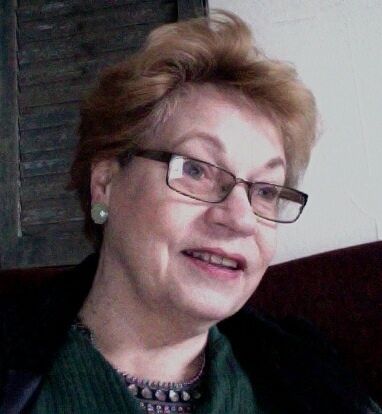
The Bush Clinic follows a doctor who is forced to support a hospital where she encounters tribal women fighting for their and their children’s lives in a war that does not value them. Where did the idea for this novel come from and how did it develop over time?
Thanks for asking. I was so pleased to find reviewers who call THE BUSH CLINIC femme-driven. Ha, ha, that was my intent. In all societies, women live in a network of women, although that practice is not dramatized in our novels or movies. For female heroes as far back a Angie Dickinson”s Police Woman, women characters operate in a world of men. Where were her sisters, aunts, daughters, sorority sisters, female colleagues who held strong positions like judges or reporters?
https://www.imdb.com/title/tt0071034/
Women working together is a novel idea in some writing genres. Mostly we see a few forced together like in refugee camps, or the wives of men in leadership like in the church.
I started with the writing principle that the female characters drive the plots of my stories. Nothing happened except by their pushing. That’s in all my stories, but not so much LGBTQ+. I looked at women in combat zones and saw that they had no protection, no cover, no rights even to clean water. How did they manage to feed the children and stay clean?
Women were corralled together and could not resist abuse or separation. My idea was that women talked among themselves and found strategies for how to respond to abuse and support each other, except some were ostracized.
In a free emerging democracy, women must secure the right to vote, the right to open a business, to own property, to choose when to have kids. Access to capital is critical for women to have a voice in business and in politics. Not a token woman on the board of a corporation, but a self-made woman who succeeds by the work of her own hands.
So I developed several of these types in a fantasy story set on another planet to see what obstacles they addressed, what bad behavior they indulged, and how much social power they could accrue. The fantasy series starts with THE BUSH CLINIC, and several novels follow our connected tribal women and intruders from Earth.
The male characters were not neglected. In fact, some get hero roles as militia leaders of generals in the peace-keeping corp. A woman is more interesting when an interesting man pursues her.
What were some of the emotional and moral guidelines you followed when developing your characters?
I feel that women compete and undercut each other. I feel that there’s a hunger among readers to see women who are generous in spirit and want the best for others, but that’s an ideal, isn’t it? Finding the oxygen for oneself is a daily struggle, so which woman has the energy to fight for the group? Unfortunately, altruism is learned behavior.
Just the same, women emulate some who they admire — either for looks or clothes or attracting men or the voice of outrage. The undercutting comes when a genuine position gained through effort is lost or not available. Women (and men) turn to other strategies.
What were some themes that were important for you to explore in this book?
The solutions I found for women in a combat zone were partly about how to handle the children for education and guiding them into different expectations. The tension between Dr. Greensboro, an offworld doctor with the bush clinic, and her growing native assistant Brianna Miller rang true, I believe, for the limitations of how women help women.
What is the next book in the Tribal Wars series about, and when will it be available?
In THE BODY POLITIC Brianna Miller returns to Dolvia as a grown woman with experience and the access to capital to make a difference among the savannah tribes. Her voice in the militia is strong because she contributes connections with offworlders and ideas for managing the kids at risk.
The tribal women who the reader has gotten to know in the first novel each come to the public square in Cylay and partake in self-torching, a protest act against the oppression of Rabbenu Ely. We feel the lost because we know each of the women as individuals.
Brianna Miller takes on an assistant named Kelly Osborn who is my heart’s favorite in the series. Kelly is a poet and trying to find her place, betrothed to a warrior who she fears, but still relating her love of the savannah and the people in her published poems. The differences between cynical Brianna Miller and emotional Kelly Osborn are stark and tell us more about women working together.
Author Links: GoodReads | Twitter | Facebook | Website
On Dolvia, Lt. Mike Shaw demands Dr. Greensboro’s doctoring skills at the hospital, forcing the closure of her bush clinic. She witnesses forced labor, forced migration, and the threat of an epidemic from bad water. She sees how tribal women–often wearing burkas–find solutions for saving the children in a conflict zone, and she commits to the their cause for Home Rule.
Brianna Miller is an isolated girl–a mixed-blood orphan–among the Dolviet tribes. With the lessons from Dr. Greensboro, the abuse from soldiers, the sisterhood among victims, Brianna prepares for a future she will choose for herself. But first she must travel offworld.
A Different Kind of Idea

Midgard follows a brilliant scientist as he looks for a way to prevent the downfall of humanity and keep humans alive. What was the inspiration for the setup to your story?
The world of Midgard, which is set in the not-so-distant future—came almost naturally after I decided to try my hand at writing fiction. The breadcrumbs were there and had been there since I was young– I just needed a medium in which to bring them all together. The first “crumb” was in second grade, when my teacher told me that there was a hole in the sky, and, that if that hole continued to grow, my family and I would never be able to live outside again. That notion was terrifying to me, but I later learned that people had decided to stop using the pollutants that made the hole and that it had healed. Growing up in the 1980s and 1990s, I encountered 60s and 70s-era science fiction stories about the bad things that could happen if humans didn’t stop abusing the planet, and I was one of the first of my friends and family to see “An Inconvenient Truth” in the early 2000s. In 2017, I was reading Let my People Go Surfing (Yvon Chouinard) during a trip to Sonoma, California, when Robert Kamen himself joined us in his vineyard and put a word to what I had been thinking about “stewardship.” In the next couple of years, I read a lot more about climate change and global warming, including The Uninhabitable Earth by David Wallace-Wells, which was dense but fascinating. By then, however, I was tired of academic writing and lacked the energy and interest to explore yet another policy problem through non-fiction. A more fun read, however, was The Future We Choose, by two architects of the Paris 2015 agreement – Christiana Figueres and Tom Rivett-Carnett. They present two fictional futures for the earth – one in which humanity bonds together to save the environment, and another in which it fails to do so – and the spark was lit for a different kind of idea. After the “closeted novelist” announcement, I put the pieces together and realized that I could learn and explore the consequences of overconsumption and poor stewardship through fiction, and have way more fun doing it.
Sam is brilliant and perhaps too trusting at the start, but he soon learns not to trust anyone. What were some driving ideals behind your character’s development?
There were a couple of things that drove his character development. I knew I wanted his “superpower” to be his intelligence, and that his weakness was going to be a combination of social awkwardness and claustrophobia. One my editors early on suggested that the story read like a mystery, which is how I decided to make Sam a sci-fi “detective” of sorts. As I continued with my revisions, however, my revisions editor pointed out that Sam, my main character, was far too reactive, and that he needed more depth. Personality tests are a hobby of mine, and I happened to be reading about the enneagram test, I decided to assign him a “Type” – the best fit for what I was looking at was a “Type 5” or the “Investigators” – that type tends to be brilliant and inquisitive, but also a little too trusting or naive, and they tend to be more cerebral than physical. Using the enneagram really helped me understand how Sam would react or the types of actions he would take.
What were some themes that were important for you to explore in this book?
There are three things I hope readers will take away from this book:
1) That we need to be better stewards of our habitat or we will fall victim to the worst aspects of human nature. (Note: I deliberately avoid the use of the worlds “climate change” or “global warming” in the book itself as well as during discussions I’ve had about it – those terms are politically and emotionally charged in current debate). I want to re-frame the topic as “environmental stewardship” and better stewardship of resources more generally – getting away from consumption culture and back to things that matter…before we lose all of it as a species.
2) That “talent” comes in many forms and that yours / theirs deserves to see the light of day, no matter what the rest of one’s family, society, or culture values
3) Writing a book is like having children – there’s never a good time! (e.g. I want to inspire others who, like me, wanted to write fiction but didn’t think they could!).
What is the next book that you are working on and when will it be available?
I am already working on the sequel to Midgard (which ends on a bit of a cliffhanger). The original ugly draft was about 80,000 words – as I went through the revisions process, my editor made me realize that writing the WHOLE story would make the book too long (and I would never get it finished before the final “pens down” deadline). I plan to publish the second book in early 2024 and, if all goes well, the third and final book in this series in sometime in 2026. (Ultimately, I would like to be able to become a full-time writer).
Author Links: GoodReads | LinkedIn | Facebook | Instagram | Website
It is the mid-22nd century, a time in which humankind has reached a point of no return with respect to the destruction of its habitat on Earth. The only ray of hope is the Human Resiliency Program—a conglomeration of government sponsored efforts to preserve human life until such time as the Earth is able to recover. Unfortunately, the program’s projects are only capable of saving small, select members of the population, and the competition to assess into and remain in those programs is fierce.
Sam Richmond is one of the lucky few who has made it into one of these programs. However, his elation is short-lived as people close to him disappear, his headquarters is attacked, and he learns of a plot to selectively destroy nearly all remaining human life on the planet. Sam must unravel complex misinformation and find clues that will lead him to the source of the disappearances and the one person capable of salvaging civilization.
The Antunite Chronicles

Antunites Unite follows different ants who are trying to prevent their colonies from being enslaved by cyborg insects. What was the inspiration for the setup of your story?
The first two novels in my trilogy, The Antunite Chronicles, were the backstory of my wife’s children’s book Black Hole Radio-Bilaluna. They explained how Earth insects were transported to a planet in a far-off galaxy, transformed into cyborg insects, decimated their world, and nearly destroyed their moon. The third novel of the trilogy is much more open-ended since it occurs long after the period described in the children’s book. Yet the characters are still cyborg insects that have returned to their rejuvenated planet. So, although the plotline was less constrained, I again drew the world-building and character archetypes from my wife’s story. The premise for the plot, however, was heavily inspired by the dystopian novels Brave New World by Aldous Huxley and 1984 by George Orwell. As in book 2 of my trilogy, an authoritarian dictator seizes control of the planet, but this draconian leader takes it to an entirely different level. Rather than the environmental crisis of book 2, the leader thrusts the citizens of book 3 into a dystopian world where all aspects of their lives are controlled. Unlike Brave New World and 1984, which have very depressing endings, in Antunites Unite, spies from the planet’s moon implement actions that result in a positive conclusion for the planet’s residents.
What themes were important for you to explore in this book?
The trilogy’s primary focus is on the struggle between altruism and aggression, two characteristics that are critical to insect social interactions but equally important to human civilization. These two motivations underlie the conflict between authoritarianism and social control versus freedom and insectism that is prominent in Antunites Unite.
Insectism is a political philosophy on Poo-ponic and Bilaluna that stresses benevolence and treating others how you wish they would treat you. This ideal reflects my views on the importance of humanism in our society and across cultures worldwide. The opposing view to insectism stressed in Antalonia is the sentiment that ants are better than other insects. This xenophobic attitude also causes red ANTs to feel they are superior to black and brown ANTs. Thus, the book represents an allegory for the racism and speciesism that permeates our world.
I selected red ANTs as the oppressors in this story because red ants on Earth are usually more aggressive and are most often the species of ants that exhibit hostile behaviors that justify their label as slave-maker ants. They earned the name because of their efforts to subjugate other species of ants (often black ants) into sustaining their colony.
All three books of my trilogy highlight the similarities between ants and humans. Through my research, I discovered that despite their vast differences in size and appearance, ants share a third of their genes with humans. Like humans, ants work together and understand the division of labor. Like humans, ants can be aggressive toward other species, as well as with other ants they consider ‘others’ because they have different genes, smell different, or come from distant nests.
The main points of this story are timely, with the horrors and atrocities taking place in Ukraine and elsewhere, failing democracies, and the growing acceptance of authoritarianism worldwide. Ants in Antalonia, like humans on Earth, need to learn how to squelch basic aggressive instincts and xenophobia that drive a lust for power and to conquer one’s perceived enemies. Instead, they must strive for altruistic enlightenment that inspires compassion for those like us and those who are different, allowing for inclusiveness as we work towards common goals that elevate all in our world, insect or human.
What drew you to writing young adult and teen science fiction novels?
My wife, Ann Birdgenaw, started the second book in her children’s chapter book series, Black Hole Radio, where her young heroes travel through wormholes to distant planets. Initially, she was undecided about what type of aliens her protagonists would meet, and I helped her decide and gave her some ideas about the alien world. As she progressed in her book, I continued to give her input. However, at some point, she felt the plotlines were getting too complex for the target age of her readers. She suggested I write a backstory about the planet in a book targeted at older kids, and I took her up on it and started my fiction writing adventure.
As the original storyline was quite juvenile, yet the themes and messages were more mature, I targeted young adults. As an allegory of human nature taking place on another planet with displaced insects, I have difficulty choosing the genre for the resulting novels. One could call the story a beast fable, yet as an allegory, it also has elements of satire. The idea that insects could evolve to become highly intelligent is unbelievable, so that one could see it as a fantasy. Still, the story contains many scientific facts about insects. It also takes place within a far-off galaxy, so I felt it best fit within the science fiction genre or perhaps within the speculative fiction category. I say speculative fiction because of the narrative’s robust post-apocalyptic and dystopian themes, which bring the novels into the realm of what if.
Will there be a book 4 in the Antunite Chronicles? If so, when will it be available?
Not for now. However, my trilogy originally started as a novella that expanded into three novels. The novella was a historical account written as a satire of former President Donald Trump and his administration. It had little dialogue, primarily written as fictitious historical quotes. I was fortunate to have an early draft read by a fellow scientist, Sci-Fi author, and book coach, Nina Munteanu. Nina inspired me to expand my story to include more dialogue and action scenes, and my novella grew first into a novel and eventually into a trilogy, The Antunite Chronicles.
The novella was initially entitled Poo-ponic Plague, with plague referring to the toxic environment caused by ignoring a rapidly developing climate crisis on Poo-ponic. Yet, as the novella grew into a novel and the novel into a trilogy, it became apparent the efforts of the trilogy’s first character, Antuna, would have a lasting impact on the insect civilization of Poo-ponic throughout its history. Thus, the first book, which centers on Antuna and her friends and their struggles, understandably became Antuna’s Story. Antuna’s descendants, and later followers of her philosophy, became known as Antunites, explaining the trilogy’s title.
I wrote the original title before Covid-19 started and changed it to avoid referencing a pandemic like the one that has tired all of us. I split the book in two when the story got too long. Then I changed the title for book 2 (The Rise and Fall of Antocracy) to reflect the creation and failure of the democracy dominated by the cyborg ants on Poo-ponic. Given the vast amount of time between the two historical periods for this story, there was a natural break that justified splitting the story into two books.
I wrote the first draft of Antunites Unite (book 3) in November 2021 as part of National November Writer’s Month. NaNoWriMo is a challenge to write a 50,000-word book during the 30 days of November. I only considered entering NaNoWriMo during the last week of October 2021 and had no plan or outline for the story. Yet I met the challenge with a 53,000-word first draft of book 3 completed during the month. Still, I knew this was a rough draft that would expand. Following comments from my developmental editor and a series of beta readers between December 2021 and Spring 2022, and after considerable editing, my second draft topped out at around 85,000 words. Still not completely satisfied, I sent this draft to another beta reader and a line editor. After subsequent revisions, copy editing, and proofreading by my reading-partner wife, I completed the final draft at 95,000 words or about 400 formatted pages after ten months.
As for book 4? Who knows, November is looming!
Author Links: GoodReads | Twitter | Facebook | Website
Generations after cyborg insects return to their revitalized planet, a draconian red ANT ruler takes over the colony exterminating other insectoids and enslaving brown and black ANTs by genetic and social engineering.
The queen BEE on the planet’s moon must rely on two tiny ants, Rose and Jasper, raised amongst their enemy, to infiltrate the Antalone cyborg elites. They must dismantle a dystopian regime that uses histrionics, bionics, and socionics to subjugate its populace.
An allegorical Brave New World that is out of this world, where the fate of the Antunites depends on chameleon ANT spies who plot a revolution to unshackle their kin.
Can Rose and Jasper accomplish what no ANTs have before them?
A World Turned Upside Down

Broken follows a young woman in a dystopian future who finds fate placing her on a dangerous path toward freedom. What were some sources that informed the development of this novel?
I watched a lot of films that covered dystopian fiction as inspiration for world-building. These include Mad Max, Terminator, Bladerunner, a little touch of The Walking Dead, and Divergent. My fascination with dystopian fiction started with Farhenheit 451, by Ray Bradbury. The idea of a world turned upside down, and the separation for survival by the main characters really thrilled me and piqued my interest.
What scene in the book did you have the most fun writing?
The escape from the Horder village. it occurs right toward the end, and the weight of the escape and the things the stakes that were raised by the time Kessa and her friends reach this critical moment of the story was so heavy. I wanted to capture the sense of urgency in the narrative and hopefully keep the readers on the edge of their seats, guessing what will happen next or who might make it out alive.
Was there anything from your own life that you put into Keesa’s character?
The absence of both parents in her life was something I wanted to pull from my own experience of living in a one-parent home. How that experience shaped her character and what pieces or components of her personality could’ve or should’ve been different because it was a focal point.
What can readers expect in book two in The Young Hellions series?
The comic is a blast and was very exhilarating to script out because it allowed me to finally introduce more of the Ashers into the story-telling. So yes, readers will see zombies front and center here.
Author Links: GoodReads | Twitter | Facebook | Website
It is 2035, and the path of Earth’s inevitable destruction has finally been realized. Efforts to perfect weapons of mass destruction and subsequently destroy one another have come to a head as the most powerful countries engage in an all-out nuclear assault—the time of The Big Drop—that nearly banishes everyone to death in a wake of destructive Fallout. Humanity devolves back to its carnal heritage of slavery to re-establish currency through the slave trade. Nobody knows who started it, but the devastation ravages every organic life form, both plant and animal. 90% of human life is wiped out, and of the 10% that survive, radiation poisoning has varying effects on the human genome, creating both mindless beasts called Ashers and beings with special gifts – Alphas. As humanity struggles to survive, migrating to the safety of continental coastlines in search of fresh water, the planet scurries to salvage some kind of economic stability. Enter16-year-old Keesa Donovan and her younger brother Kiran. They live out their lives in a slave pod run by The Establishment, just outside Savannah, Georgia. Losing everything she loved after the Fallout, she desperately seeks freedom while navigating the trials of teenhood, sifting through emerging feelings for her best friend Wynn, and realizing the growing attraction for newcomer Dobbs. Confounded by her gift of ESP, she is haunted by unexplainable visions of mysterious days to come, holding onto a sliver of hope that one day she and her brother will be freed. But on the fateful day of the annual Reckoning, Keesa’s life takes a turn as fate steps in and forces her onto the narrow road of her destiny.
Something I’ll Never Forget
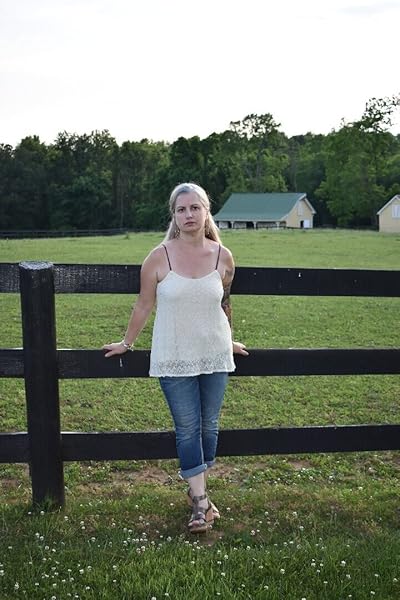
The Prodigal Daughter follows a husband and wife who navigate the labyrinth of a society that doesn’t tolerate dissent in order to escape. What were some ideas that you wanted to explore in this book that were different from book one?
The Governor’s Daughter mainly focused on Emma and Declan’s relationship, and how two people from very different walks of life can fall in love despite potential grave consequences. I wanted to expand on that theme, and The Prodigal Daughter gave me a great opportunity to delve into how the fall of American Democracy affected more than those in the Premier City. We already saw in the first novel how women became the property of men, and minorities were forced to live outside the city walls in a constant state of semi-starvation and extreme poverty. Now we get to see how a city that refused to kowtow to the Committee was punished, and how the deadly rebel group, known as the BSB, came to be.
In this novel, I was able to get into the minds of characters of different races, sexual orientation, and beliefs. I also delve deep into the ideology of morality, especially when it involves doing one’s duty in their specific careers. Ranging from soldiers to a minister, we see how they balance their moral conscience during a time of war. I wanted to explore the idea of what is morally right or wrong during times of war and oppression.
What scene in the book was the most emotionally impactful for you to write?
I don’t want to spoil anything for anyone, but we lose some major characters in this novel. One scene in particular, when Declan euthanizes a dear friend who is beyond his ability to save, really got to me. The passage where he remembers a discussion about euthanasia with a veterinarian friend was a conversation I actually had when I was a veterinary technician with my boss. It was a major eye-opening moment when he called euthanasia “the final treatment option” because it’s the last medical treatment in their arsenol to treat pain and suffering. It’s something I’ll never forget.
What were some challenges you set for yourself as a writer with this book?
Overall, it was a tough novel to write, as there were a lot of questions that needed answering, and of course, I had to raise a bunch more for you to ponder over before book three comes out! I wanted this novel to be inclusive, to show how people can band together and fight for what’s right, and that all the things people let divide us really don’t matter. I wanted every reader to be able to see themselves in at least one of our heroes, and to hopefully get involved in a way that can hopefully prevent this saga from coming true. As bleak as much of the tale is, I wanted this part of the tale to end on a more hopeful note while still holding on to the gravity of the topics. I want people to understand there’s still time to get involved, and most importantly, to vote.
What is the next book that you are working on and when will it be available?
My Mother’s Daughter will be the third book in the Daughters of the New American Revolution series, and if the stars align, will be released next summer. This one is a particularly difficult novel to write, and I will give a lot of backstory about how women were a major part of the creation of this new government. We get to know Emma’s mother, the pitiable Louise, and of course her grandmother, the formidable Mother Barbara. The story continues with Emma and Declan and the BSB on the run, and by the end of the novel, I promise you will finally get to meet the infamous Trinity. It’s going to be a true whirlwind, so hang onto your hats!
Author Links: GoodReads | Facebook | Twitter | Website
a grief-stricken “girl” incapable of concocting a plan.
Oh, how wrong they were.
Years of enduring their abuse have made Emma stronger, smarter, and more sure of herself. With a sharp mind and quick wit, she managed to get herself out of situations in the past that seemed impossible.
With the eyes of the nation on her and the consequences for her actions greater than ever, can Emma find a way to save herself again?
After sacrificing herself to save her brother and husband, Emma finds herself surrounded by bloodthirsty bounty hunters eager to claim their reward. Knowing her crimes are more than enough to get her executed, she has but one chance at freedom before being returned to the Premier City and her furious father, the newly-promoted Interim Supreme Archon.
While Emma fights for her life, her husband, Declan, is dying. Knowing Declan doesn’t have long to live, his loyal friend, Adam, takes him to the one place with people who can save him, but doing so is practically suicide. The ruined city “that no longer has a name” may have been walled in and destroyed, but an active patrol, ready to kill on sight, combs the rubble for the remaining elusive members of the resistance group known only as the BSB.The members of the resistance are not the only ones whose lives hang precariously, as those in the Premier City are also on edge. Edward James Bellamy has no intention of giving back the throne should Ryan Gregory recover from injuries incurred the night the National theater collapsed.
At first, everyone in the nation believes Bellamy to be a safer, saner choice, but then, he sets into motion a series of events that will make him the most feared leader yet. With the threat of an upcoming rebellion knocking on his door, Bellamy’s determination to stay on the throne will leave everyone in the nation in grave danger, but none so much as his prodigal daughter.



 LITERARY TITAN