Blog Archives
Haiku Makes Me Happy!

How Do You Haiku? A Step-by-Step Guide with Templates helps readers understand the form of Haiku and teaches them how to write their own beautiful poetry. What inspired you to write this book?
I wanted to write a book I wanted to read as a child. I’ve always loved playing with words. I had many excellent teachers along the way but ten-year-old me would have loved to have had access to a book that taught me simple ways to understand and write Haiku while encouraging me as a shy child. I would have loved to have a book that told me my words were worthwhile and my poetry was worth sharing. This book is part technique, part pep-talk, and part wordplay with a whole lot of templates and Haiku crafts.
What draws you to the Haiku style of poetry? Is there one poet who stirred your love for this style of writing?
Haiku makes me happy! It isn’t a long, arduous poetry form, so I can write it on the fly or while I quietly observe the world through my window. I love that one can express so much with so few words. Writing and reading about little winking moments in nature and time significantly impact my well-being.
Of course, I admire the masters’ Haiku, but I also love Haiku written by current poets and fellow children’s book authors, such as the poets who contributed to this book, Kate Coombs, Raven Howell, and Amy Losak, among others. I also love reading Haiku written by children. Kids come up with amazing poems with unusual and entertaining wordplay!
What were some goals you set for yourself as a writer in this book?
Many kids (and adults) feel they can’t write poems or that their poems are not “good enough.” I wanted to give my readers ample opportunity to see that writing a poem can be easy and fun! My goal was to explain Haiku in a way that gets kids excited about it and gives them the confidence to try something new and be proud of their work.
Is this the first book in the series? If so, when is the next book coming out, and what can your fans expect in the next book?
How Do You Haiku? is a stand-alone book, but another Haiku book is available for my littlest readers (Preschool & up). Peek-A-Boo Haiku (Little Simon) features Haiku about hidden woodland animals, plus flaps that reveal those animals! It’s never too early to introduce kids to poetry!
Author Links: GoodReads | Instagram | Website
This book will help you understand haiku so you can create poems with powerful words and images. Each chapter contains examples from Japanese haiku masters and current poets. The included activities and templates will guide you through fun ways to “haiku,” including painting poem stones for your garden (Kuhi), creating haiku comic strips, and writing group poems with your friends (Renga). How Do You Haiku? This handbook will show you how— step-by-step.
Includes haiku by contributing poets Kate Coombs, Nancy Etchemendy, Matt Forrest Esenwine, Raven Howell, Linda Hoffman Kimball, Amy Losak, Bobi Martin, Angie Quantrell, Sydell Rosenberg, Lee Wardlaw, and Linda Whalen.
Constantly Challenge Yourself

The Teaching Guarantee is a collection of lessons learned over 50 years of working in the school system, starting as a teacher, moving into administration, and becoming a principal. Why was this an important book for you to write?
Experience is a wonderful thing! During my 50 years in education, I have enjoyed educational leadership experiences covering all educational sectors in Australia and overseas, including primary, secondary, and international schools, training organisations, international business colleges, school quality assurance reviews, and tertiary study abroad programs.
Many lessons have been learnt over this time and I wanted to share these as I believe many teachers and prospective principals may benefit from the various aspects that I discuss. As I mention in the book, the clues are within.
What were some ideas that were important for you to share in this book?
Life is full of challenges and opportunities, and teaching and school leadership provide them by the bucket load. It is not an easy job, but every day is guaranteed to be different and full of special moments and memories.
Like every day is different, so is every child and every school. So, constantly challenge yourself to improve what you do.
Embrace change so that the students you teach will enjoy change, rather than shun it.
Get as many varied experiences as possible in different learning environments and communities.
Challenge yourself when leadership opportunities arise.
Always remember you are a role model; as a teacher for your students and as a Principal for your school community.
When difficult moments arise, remain calm and resolute.
Always be fair but firm, and everyone will respect you for your consistency.
Never lose your sense of humour.
Your well-being is sacrosanct, so always remain balanced.
What is one piece of advice you wish someone had given you when you were a younger teacher and just starting out?
Experience IB (International Baccalaureate) education as soon as you can and travel the world as part of your IB journey.
What is one thing you hope readers take away from the experiences you share in this book?
Teaching is a vocation, but it is not for everyone. While salaries may not be attractive or reflect your real worth, the joy you receive at the end of each year when you reflect on the impact you make on each of your students is priceless! It is what teaching and school leadership are all about—making a difference!
Author Links: Goodreads | Website | Amazon
The author comments on the important aspects of schooling and being a principal. These reflections and observations may result in thoughtful discussions and lead to actions in schools to improve their current practices in any way that will benefit the students under their care.
Not Everything Online is True

Lost and Found follows a young girl and her friends at school as they investigate rumors they hear and find out that not everything they hear or read online is true. What was the inspiration for your story?
This is not an uncommon occurrence for any of us online, but while the instance in the book about fake cheese and sleeping janitors are innocent enough, the real danger is that individuals lose the ability to critically think about a subject when they see it online. Over the last decade or more, we’ve seen an explosion of people getting online, and that has brought with it more information available for a wider audience. This brings with it the challenge of validating what we see and hear online.
What were some educational aspects that were important for you to include in this children’s book?
There were a few items I wanted to highlight in this particular book. One was being aware of information that is online and ensuring that we understand that we need to take it with a grain of salt. Another notion was to be able to take a break from our devices on occasion. Many of us struggle to distance ourselves from our devices, but doing so periodically is healthy. Lastly, I wanted to bring in the concept of cyberstalkers. I struggled with writing this in a way that wasn’t frightening for a children’s book, but at the same time was able to convey the seriousness of the problem. While cyberstalkers are a very real thing, simply knowing that you cannot always confirm whom it is you are conversing with online is a key takeaway.
Your book touches on topics that are relevant for children today and is written in a manner they can connect to the characters. What’s your experience as a writer?
This is my third children’s book, and I also have a technical book published by Manning Publishing on the topic of software security. These are very different audiences, but the discipline and process is similar. In both cases, you need to put yourself in the mindset of the reader. I have a young daughter, so I was able to leverage some of the interactions that she has online with her friends to pull together some of the storyline.
What is the next book that you are working on, and when will it be available?
I am working on a novel for adults that is a bit of a cyber-thriller. I’m in the early stages of writing, so I don’t have a publishing timeline in mind. My hope is to have it out in 2024. Additionally, I am starting to frame a choose-your-own-adventure book for children on cybersecurity. This will, most likely, have a different set of characters. I am aiming for a 2024 release for this one as well.
Author Links: GoodReads | Twitter | Facebook | Website
Alicia and her friends also learn that not everything you hear can be trusted as a rumor spreads like wildfire through the school bus one morning. The friends are shocked to find out that some of the information that is online, isn’t always true. With the help of her parents, Alicia sets out to investigate the rumor and determine the truth. Through this, she learns about the dangers of fake news and the importance of fact-checking.
When Alicia and her parents take their long-awaited trip, they enjoy all that nature can offer. Even better, they are able to combine nature and technology by doing one of Alicia’s favorite activities. Geocaching! But when they return home from the fun-filled weekend, Alicia discovers that she has a cyberstalker. While Alicia is able to navigate the situation with her parents, one of her friends has to find a way to protect herself from a similar problem. Luckily, the friends are able to come together to learn how to protect themselves from these dangers online.
In the third and final book (with a 5 Star review from Readers’ Favorite!) in the Alicia Connected series, the friends learn about different types of online threats and how to stay safe on the internet. They also discover the importance of device responsibility, taking a break from being online, and being able to identify false information online.
I Want to Increase Health Literacy
Nurse Florence, What is Polymicrogyria? follows a middle-school girl who wants to learn about a condition her cousin has and asks the school nurse for help. What was the inspiration for this story?
I asked my illustrator if she had a family member with a rare disease, and she said yes, which was the topic of this book. Every third book that my illustrators do with the company is about a rare disease. We believe the company is providing a public service and needs to help all of the families with their medical education. Families with rare diseases need reliable information too, and we are providing that service.
One thing that Nurse Florence discusses with students in this book is how to find reputable medical information online. How did you approach integrating this important topic into your story?
This disease is very rare, and it was hard to find good information about it. I used my educational training from my degrees to guide my search and then put that process or steps into a book that was understandable. Our kids need to learn how to sort through a lot of information, and we made an attempt to give a disciplined approach to it.
In your mind, what’s the best part about being an author?
The best part about being an author is the creative process of writing. Sometimes it is exhilarating when the words just flow through your fingers to the keyboard. For me, it is also a peaceful adventure writing a new book. This may sound strange, but sometimes when I write, I teach myself as I synthesize information into a new insight. Writing is fun!
What would fans be most surprised to learn about you?
The thing that seems to surprise people the most is when they learn that I have 5 college degrees. I like to say that getting that many was the universe’s punishment for me stressing out my parents for dropping out of college (not once, but twice) during my first degree. I got laser-focused on education, learned how to study, found joy in self-study, and found the educational system fun and rewarding once I learned how to succeed within the system. I think I am finished getting advanced degrees. I love being a children’s book author and being in the niche of researching intellectually stimulating topics and writing at an elementary level while still maintaining scientific accuracy. I hope my love of learning is passed on to many kids through my books, but most importantly to my kids who are “required” to read all of the Nurse Florence books. They do enjoy them, and I created the series for them to help ensure that they have at least a good health literacy level as an adult. Too many adults in the country and the world have a low health literacy level. Dow Creative Enterprises aims to increase everyone’s health literacy since parents are reporting learning new things with each Nurse Florence book as they read them with their children. Let’s leave the world a better place than what we found it.
Author Links: GoodReads | Facebook | Website
How Do You Haiku? A Step-by-Step Guide with Templates
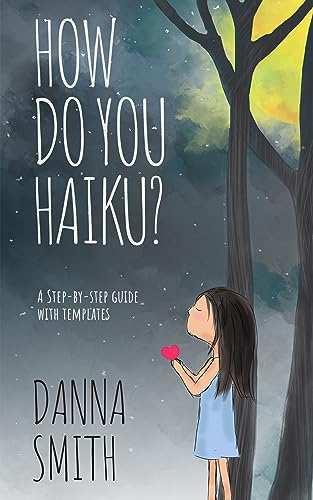

Poetry is an art form that allows us to express ourselves and concisely share feelings. However, the characteristics of poetry vary based on its place of origin. In Japan, for instance, we encounter Haiku, a seventeen-syllable poem with a unique structure and composition. The Haiku aims to draw us out of our daily routine, encouraging us to pause and appreciate nature as if we were capturing a special moment in a photograph. In this context, Danna Smith introduces us to How Do You Haiku? A Step-by-Step Guide with Templates. This guide showcases Haiku’s meditative aspects and highlights its ability to explore the dramatic and the amusing. Thus, Danna Smith leads us through the fundamentals of Haiku efficiently and engagingly, providing instructions, examples, and tips.
Danna Smith discusses how the Haiku sparks imagination and shifts our perception of our surroundings. But she goes even further. She shares vocabulary and explains how to find dynamic words to maintain a solid structure. One of my favorite parts was the Haiku’s history, as it offers insight into using poetry as a means of expression. Furthermore, the book presents clear explanations, and the numerous examples are enjoyable. Another aspect I appreciated is Danna Smith’s addition of translations and explanations for the Japanese terms she uses, enhancing our understanding of Japanese culture.
Writing poetry might initially seem complex, especially in Haiku, where space is limited. Nevertheless, Danna Smith does an outstanding job motivating us to give it a try. While more examples of Haiku would have been helpful to complement the emphasis on technical aspects, overall, the information is well-explained, and there’s ample material to inspire us.
How Do You Haiku? A Step-by-Step Guide with Templates is an exceptional children’s book to help educate and inspire children and adults. This guide is excellent for beginners, serving as a helpful tool to learn how to perceive the world through the lens of poetry and practice the art of Haiku.
Pages: 112 | ASIN : B0CF65LDHT

Understanding Finance Is Key

The Startup Checklist for Success is a comprehensive guidebook that distills the complex world of entrepreneurship into practical insights, blending essential business principles and real-world wisdom to empower entrepreneurs. Why was this an important book for you to write?
I have worked in various industries since 1989 at the senior level in large public and private companies, and as an entrepreneur in companies I set up and ran, so I want to impart valuable nuggets of knowledge learned in a way that I know will help aspiring entrepreneurs. Too many startups fail because entrepreneurs don’t have the knowledge or skills, and I am encouraging women entrepreneurs to understand what they don’t know and arm themselves with the necessary knowledge and skills so that they will succeed.
What is one common misconception you feel people have about entrepreneurship?
Misconceptions are that they will be their boss and earn more money working for themselves, that it is easy, and that anyone can be an entrepreneur because they don’t know what they don’t know. Even if they have a great idea, some don’t have the skills or leadership ability to run a business. I have spoken to several entrepreneurs who thought their idea was worth much money, did not need cofounders to make the business happen, and were looking for funding without business plans. Ideas are cheap without the ability and funds to make the idea into a profitable business, and that takes pure grit, hard grind, courage, resilience, self-belief, and the willingness to take some risks. Getting to the point where you can fundraise involves many steps covered in Start-up Checklist for Success– the essentials you need to know. Because of our combined experiences as entrepreneurs and mentors, we have learned a lot about why start-ups succeed and fail.
Another misconception is that entrepreneurs do not realize the importance of managing cash from the get-go because it disappears quickly if you don’t control it daily. Many businesses fail because of cash shortages and insufficient time to raise more funding. When cash is tight and bills cannot be paid, it diverts energy from getting a business up and running.
What is one hurdle you often see new entrepreneurs face, and how can they overcome it?
In my experience, the biggest hurdle for entrepreneurs is raising finance and managing cash flows; the statistics will bear this out. There are also other hurdles, including, at the beginning having to become a jack of all trades, including bookkeeping, sourcing services, employing people, sourcing office space, and paying bills, but this is temporary.
In many cases, entrepreneurs need help understanding finances or financial jargon. They check their bank account and think it’s okay, but they have yet to learn of the commitments entered into that must be met on specified dates or the accruals in the accounts relating to expenses incurred that still have to be paid. The concept of accrual accounting is not understood, and they don’t prepare forecast cashflows which helps them to look ahead and see when cash will run low. It can take over six months to raise funds, from preparing a business plan to getting the cash into your bank.
CB Insights, in a report dated 3rd August 21, cited the top reasons startups fail, and the number one reason was “Ran out of cash/ failed to raise new capital. “These are critical issues entrepreneurs need to pay attention to be successful. Ref: Why startups fail: Top 12 reasons L CB insights. (2022, December 1). CB Insights Research. https://www.cbinsights.com/research/report/startup-failure-reasons-top/
What is the next book that you are working on and when will it be available?
Statistics show that there are few women entrepreneurs globally. Things are improving due to the efforts of many countries targeting support for women entrepreneurs. According to The World Bank’s Gender Data Portal, “Globally only 1 in 3 small, medium and Large businesses are owned by women. This rate varies across regions from as low as 18% to a high of 50% in Latin America and the Caribbean. “ref: Women entrepreneurs needed—stat! (n.d.). World Bank Blogs. https://blogs.worldbank.org/opendata/women-entrepreneurs-needed-stat
There are many biases that women have to overcome, significantly when raising finances. I explain the biases they may encounter during their entrepreneurial journey and how they can overcome them. I am writing my next book to encourage women to start their new businesses armed with the knowledge they need to succeed and give themselves time to prepare rather than rushing in head first and failing. I am also encouraging women to learn what technologies they can use, such as Artificial Intelligence (AI) and cloud-based systems, encouraging them to work smart to make their startups more efficient, enabling them to focus on what is essential such as leading their teams to success.
I cover subjects such as leadership, preparing business plans, raising cash and pitching to investors and how to source funding through other sources such as government support and tax-based funding, managing cash, managing risks, environmental, social, and governance matters, building a great team, building resilience and agility and balancing work and personal life. I also encourage women to think big because most women entrepreneurs start small businesses and don’t go global, and perhaps that’s because they fear going big due to a lack of confidence. The Title will be She’s Got This- Strategies for Women Entrepreneurs to Overcome the Odds and Achieve Success.
Author Links: GoodReads | Facebook | Website
This book shows you how to communicate with professional experts, including lawyers, accountants, and engineering and design consultants, and when to get in touch with them. It demystifies financial matters and explains financial and corporate finance jargon. If you’re ready to take the big step, bring this book with you as your intelligent companion.
Start-up Checklist for Success is a bible of valuable information you need to succeed with your start-up and could be a game changer for you and your new start-up.
Monologues for Young Adults: 60 Original Monologues to Stand Out, Inspire, and Shine
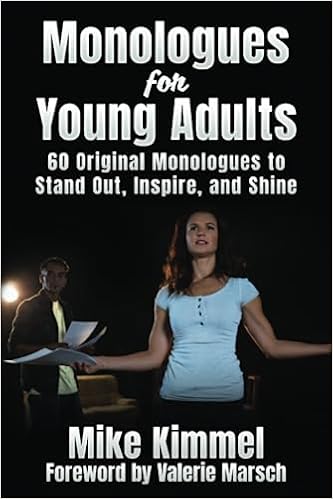
Mike Kimmel’s collection, Monologues for Young Adults: 60 Original Monologues to Stand-Out, Inspire, and Shine, is a refreshing and engaging read that is approachable and insightful. Comprised of succinct and easily digestible monologues, this book shines as a valuable resource for the acting community.
The work kicks off with a thoughtful foreword by Valerie Marsch, lending an experienced perspective, followed by a 13-page introduction by Kimmel himself. More than a mere prelude, the introduction serves as a pragmatic guide with a sensible list of do’s and don’ts for budding actors.
What sets this collection apart is the short, conversational monologues, each infused with sage advice that is both practical and inspirational. Kimmel’s pieces stand out for their cleanliness and optimism. They are devoid of vulgarities, consistently forward-looking, and brightened by an uplifting spirit.
Each monologue contains at least one poignant line ripe for impactful delivery, such as “the only difference between a rut and a grave is the length” or “if you don’t heal from the things that hurt you, you’ll bleed all over people who didn’t cut you.” The themes vary widely, ranging from small mindset adjustments needed to push forward and overcome personal limitations and fears to the poignant reflection on unfulfilled dreams symbolized by the clever play on words ‘Someday Isle’ (Someday I’ll).
Kimmel’s collection is an excellent source of good, clean material for aspiring actors. Beyond merely being a collection of monologues, it also serves as an informative primer for those new to the acting industry. The author’s extensive experience is eloquently captured in the introduction and afterword.
Monologues for Young Adults admirably fulfills its stated intention and stands as a testament to Kimmel’s understanding of the needs and aspirations of actors. Engaging, encouraging, and earnest in its approach, this collection is a must-have for anyone seeking to navigate the challenging yet rewarding world of acting.
Pages: 137 | ASIN : B0BRT1BCCP
Courage, Self-Confidence, and Fun

A Special Sweater follows a young boy who, after learning to knit, wants to take on the big project of making a sweater; he has to overcome several obstacles to make his vision a reality. What was the inspiration for your story?
I have always admired the enthusiasm and optimism that, at its best, helps children to grow as people constantly. They may have unrealistic ideas about their chances of achieving the desired results but still want to try.
I was a resourceful child who was constantly trying to outdo myself. Sometimes, I built a hut with insufficient supplies. My dream of the finished building was much more wonderful than the cabin I finally created from twigs.
I also collected a bunch of fragrant flowers and tried to make perfume out of them. Of course, it was a bit sad when the result was only a smelly gray broth, not the sweet scent of a rose.
Later, as a parent, I have always tried to encourage my three children to test their limits – and in moments of disappointment, I have comforted them when necessary. They were all very active and believed in their abilities as builders, cooks, merchants, and journalists from an early age. My daughter was a great example of an indomitable child who built herself sandals from pieces of wood, nails, and ribbons. And she didn’t mind even though she couldn’t walk on them. All in all, the sandals were a success, and we still have great photos of this unique project!
Adults should remember that the most important thing in a child’s activity is not a perfect result. Even more valuable is the opportunity to dream and create – and the chance to try again.
Do you enjoy knitting or doing any other craft work like Eddy?
I have always been enthusiastic about knitting. My skills only developed as an adult when I could do things at my own pace. School craft classes, at least in my childhood, were about following exact instructions and often suppressed your desire to create.
Later, when I could take responsibility for knitting all alone, I started to enjoy it. Knitting is simply inspiring if you can design freely and choose yarns, models, and colors. Of course, the results of my knitting are already more satisfactory today.
My specialty is woolen socks, which I give away to my friends. When I knit something warm and homemade for my loved ones, it feels like I care about them with warm thoughts.
I have also included the idea of knitting in one of my upcoming children’s books. In it, an old writer, frustrated with the results of his work and their reception, invents a new way to influence. That also includes knitting. But I won’t reveal the story more now. Let’s wait for the illustration and publication.
Is there any moral or idea that you hope children take away from the story?
The most important message of the story is that children should have enough freedom to realize their ideas and dreams. It’s not a question of them being allowed to do or get anything, nor about materials and excessive costs. Instead, adults should recognize situations where a child’s creativity and ideas just need a little support and encouragement.
I want to encourage children to try their ideas without worrying about whether they will succeed perfectly or what others say. Building self-confidence is one of the most important things I strive for when writing for children.
It is also important to identify various limiting factors. There can be many kinds of people in the environment, which prevents the child’s natural desire to experiment. Authorities in schools and hobbies set limits. People in one’s family circle, both parents and siblings, can block and doubt. Even among friends, some may criticize and discourage you. In the midst of all this, children must find their personal power and learn to use their judgment.
Although many of the children’s efforts do not lead to tangible results, something even more valuable follows. Children gain courage, self-confidence, and fun in their lives. A person who has not been needlessly restricted or suppressed in childhood grows into a strong and whole adult.
Your “I Did It” series is one of my favorites, I love seeing children work through problems and have success. Will there be more books in this series?
There are currently three books in the I Did It series. In addition to this story, A Special Sweater, I have written the books My Sunflowers and A Tree House Night. They also describe situations where the children face resistance and difficulties but find ways to overcome them and achieve their dreams.
Children take the reins to some extent in all of these books. They don’t exceed the allowed limits in any radical way, but the message is the same: The limits set by the environment can sometimes be too strict. For growth to be possible, you must be encouraged to go a little further. Of course, I am not inciting dangerous anarchy because the safety of children’s lives means a lot to me.
I think such environments, where the child’s ideas and enthusiasm are at odds with the environment, are interesting and important topics in children’s literature. Maybe I will write more parts in the series. At least, there are many delicious ideas from my childhood and the lives of the children around me.
Play is an excellent way to develop skills needed later in life. My goal is to help children grow into mentally strong adults with self-esteem. Cooperation with other people also becomes natural and equal from this starting point.
I have to admit that after writing each book in the I Did It series, I have felt proud of the accomplishments of the main characters. Witnessing their success and survival also makes the writer of the stories happy.
Author Links: Facebook | Website
At school, I already learned how to knit a potholder. I can surely manage a sweater now! Eddy thinks.
Eddy feels confident about his skills, although nobody else does. The result will be something unique-but not like the photos in the magazin



 LITERARY TITAN