Blog Archives
Emotionally Open & Spiritually Attentive

Composed in Silk blends vivid portraits with short essays about stillness, grace, identity, and the long, slow work of becoming, taking readers on a reflective journey tracing the movement between silence and revelation. What were some ideas that were important for you to share in this book?
Composed in Silk is the second book in a five-book series titled The Life’s Theater: Art and Essays from Behind the Curtain, and it is dedicated to my wife. Each portrait in the book is highly stylized and created in my own distinctive painting style, with one exception. The final portrait is rendered in a realistic style using classical technique.
The portraits are small seconds of my wife’s presence. They are heartbeats of her silence, quiet, stillness, grace, identity, and the long, slow work of becoming. Although the figures do not physically resemble her, each image carries her mood, her rhythm, and a frozen moment that is unmistakably hers. What mattered most to me was capturing not likeness, but essence, allowing stillness to speak as loudly as form.
Can you share a bit about your writing process and how you selected the artwork that accompanies each writing?
Throughout my creative life as an artist and painter, I have followed Leonardo da Vinci’s view of art, which I believe remains timeless and deeply relevant today. For him, art arises from careful observation guided by intellect. He believed that true art is not the result of skilled hands alone, but of a thoughtful mind capable of understanding the complexity of nature and translating that understanding into expression. Studying nature was essential, not to imitate it mechanically, but to reveal the intentions and insights of the artist’s mind.
My process begins long before a painting is completed. I observe, study, create thumbnails and rough sketches, and work toward developing a unique style. During this time, I also take notes, sometimes just a few sentences, sometimes a paragraph, capturing my observations and emotional responses. Over time, these notes become part of the painting itself. They live within the work for years, shaping its meaning and presence, until they eventually find their way into a two- or three-hundred-word essay that accompanies the artwork. In this way, image and language grow from the same moment of attention and reflection.
Do you think there is a particular mindset or environment that a reader should be in to fully appreciate your work?
Composed in Silk, and the entire series The Life’s Theater: Art and Essays from Behind the Curtain, are not meant for everyone. They are for readers who are emotionally open and spiritually attentive, who appreciate an image on canvas not only as a painting, but as an emotional moment worth entering. The work invites readers to explore both the artist’s inner state and the subject’s emotional presence at a particular moment in time.
I do not expect the book or the images to resonate with a large audience, and I accept that some readers may connect with certain pieces while others may not connect at all. The work was created for me, from my heart and my emotions, and Composed in Silk was dedicated to my wife.
What will the next book in that series be about, and when will it be published?
The next book in the series is The Life’s Theater, Book Four: The Places That Carried Us. It is dedicated to my brother and explores memory, places, and the landscapes that shape who we become. The tentative publication date is the first half of March 2026.
The full chronology of the series is as follows:
- The Life’s Theater, Book One: Echoes That Suffocate, dedicated to my parents. Published and available on Amazon.
- The Life’s Theater, Book Two: Composed in Silk, dedicated to my wife. Published and available on Amazon.
- The Life’s Theater, Book Three: The Quiet Architecture of Love, dedicated to my sons. Just published and available on Amazon.
- The Life’s Theater, Book Four: The Places That Carried Us, dedicated to my brother. Tentative publication date: first half of March 2026.
- The Life’s Theater, Book Five: Geometry of Memory and Light. Dedication to be decided. Tentative publication date: summer 2026.
- The Life’s Theater: Art and Essays from Behind the Curtain, the complete edition. Tentative publication date: late 2026 or sometime in 2027.
Together, the series forms a single, continuous meditation on memory, love, and the emotional spaces we inhabit over a lifetime.
Author Links: GoodReads | Website
The figures within do not seek to be seen. They dwell in the strength of being known, in gestures that reveal the beauty of endurance and the courage of tenderness. Through them, love is not spectacle but continuity, an unfolding that survives without need for proof.
Blending visual art and lyrical prose, Composed in Silk invites the reader into a space where perception softens and truth breathes. It asks nothing but attention, offering instead a stillness that restores, and a grace that lingers long after the final page.
Meanwhile, here in Austin


Meanwhile, Here in Austin is a warm and vivid portrait of a life rebuilt in a new city, told through photographs, seasons, small moments, and quiet revelations. The book moves through a year in Austin and folds in memories of storms, wildlife, music, food, community, and family. Author Cetywa Powell shares snapshots that feel intimate and honest. Some pages linger on deer and wildflowers, others settle into the chaos of winter storms or the comfort of neighborhood rituals. The through line is a deep affection for a place that slowly becomes home.
I was pulled in by Powell’s writing style. It feels simple at first, almost gentle, yet underneath it sits a surprising emotional weight. Her images of deer in spring made me smile, and the chapters on thunderstorms made me sit up a little straighter. I felt her worry during Winter Storm Uri and her delight during summer afternoons at swimming holes. The voice feels like someone thinking out loud while watching the world drift by. I enjoyed that. It made the book feel personal. I wished the book had lingered longer on certain ideas, because some scenes flew by quickly, but maybe that fleeting quality is the whole point.
What stayed with me most was how the author tied her family’s everyday life to the bigger personality of Austin. The mix of humor, frustration, awe, and curiosity reminded me of what it feels like to fall into a city and let it shape you. Her thoughts on rising costs, constant change, and the churn of neighbors felt real. I felt her pride when she found slivers of beauty in chaos and her sadness when the bats did not appear one summer night. Some passages felt like private confessions. It is rare for a book of photography and short reflections to leave such a strong impression.
By the end, I felt like I had taken my own quiet tour of Austin, guided by someone who pays close attention to the world around her. I would recommend this book to readers who enjoy reflective writing, newcomers to Austin, longtime Austinites who want to see their city through fresh eyes, and anyone who loves stories built from ordinary days that somehow feel extraordinary. It is a heartfelt and thoughtful read, and a lovely companion for anyone who enjoys watching a place become home.
Pages: 100 | ISBN : 0998892378

The Life’s Theater, Book Two: Composed in Silk. Art and Essays.


Composed in Silk feels like a quiet walk through a gallery where each painting holds a story that unfolds in whispers. The book blends vivid portraits with short essays about stillness, grace, identity, and the long, slow work of becoming. It moves from the discipline of silence to the spark of inner fire and finally to a blooming calm that feels earned. The characters, imagined yet relatable, reveal themselves through color and mood as much as through words. The whole book reads like a meditation stitched together with art.
As I moved through the pages, I felt pulled into the softness and tension living inside these women. The writing struck me with its gentle insistence. I found myself slowing down, feeling the rhythm shift as each section invited me to pay closer attention. The author’s language is simple yet loaded, like he trusts the reader to sit with the quiet parts and actually feel them. It reminded me of moments in life when I’ve had to make sense of my own silence, and the book made that inner work feel less lonely. Sometimes I wanted a more direct explanation, but part of the charm is that nothing is overexplained.
The ideas in the essays caught me by surprise with how personal they felt. The portraits of women such as Deborah, Gabriela, and Goldie lingered with me long after I turned the page. Each figure holds a kind of truth about strength that doesn’t look like the usual loud version. The book treats softness as something powerful, and that hit me in a very real way. The writing about becoming, especially in Act II, made me pause and look at my own life, the ways I’ve tried to grow without losing myself. Some chapters stirred up sadness. Others felt warm and almost healing. I appreciated how the author never tried to tie everything up neatly. The ideas wander a bit, and honestly, that wandering felt human.
I think this book would be perfect for readers who love art that makes them feel instead of analyze. It’s also a good fit for anyone who has moved through quiet seasons in their own life and wants a book that understands that kind of journey. If you enjoy reflective writing, emotional honesty, and portraits that tell stories without shouting, this book will feel like a companion.
Pages: 85 | ASIN : B0G16921FG

The Backyard Peace Project

The Backyard Peace Project, compiled by Cathy Domoney, feels like a woven quilt of human experience stitched together with courage, pain, and healing. Each chapter comes from a different voice, yet they all hum the same melody of self-discovery, resilience, and love. From psychic awakenings to stories of grief, motherhood, and self-acceptance, every piece pulls at something tender inside. The narratives are raw and deeply personal, sometimes almost uncomfortably so, but they carry an undercurrent of light that keeps the pages turning. It’s not a book about perfection. It’s about peace found in the middle of mess and meaning drawn from the fragments of ordinary lives.
Some chapters hit me harder than others. Alice Terry’s account of her psychic gift and the fear that shadowed it as a child made me pause and think. Cathy and Skye Domoney’s mother-daughter dialogue about inherited trauma and forgiveness touched something familiar, that ache we all have for connection that doesn’t wound. And then there’s Gretchen Holmes, whose story of learning to love herself harder when everything hurt, felt like an echo of what many of us need to hear but rarely say aloud. The writing across these stories is conversational, imperfect, and real. It pulls you close instead of performing for you.
What I loved most was the honesty. These writers are trying to connect with the reader. There’s this feeling of being seen through their words, even when the subjects are heavy, like grief, illness, loss, and shame. I found myself nodding, sometimes tearing up, other times smiling at the resilience that sneaks through in small moments. The tone is hopeful without being forced, spiritual without preaching. A few stories reiterate lessons about self-love and empowerment. You can sense that every contributor truly believes in the peace they’re offering.
The Backyard Peace Project feels like a gentle nudge to look inward and to see our scars as invitations instead of flaws. It’s not just a collection of essays; it’s a movement of voices reminding us that healing happens in community. I’d recommend this book to anyone walking through their own transformation, anyone craving connection, or anyone who just needs to be reminded that there’s light even in the cracks. It’s for people who want to feel rather than analyze, who value stories told from the heart more than those crafted for applause.
Pages: 278 | ASIN : B0FSQWQ1GZ
Life-Changing Journeys

Awakening Stories is a collection of personal essays written by twenty-three individuals who share their spiritual and emotional transformations. What was the inspiration behind putting together this collection of stories about personal awakening?
After navigating my own spiritual transformation over the past ten years and listening to the stories of others, I recognized a pattern. People often felt alone, sometimes crazy, as if no one else could possibly understand what they were going through. Since these types of experiences are so unique— deeply personal and often traumatic—it is important that we break the stigma and mystery surrounding spiritual awakenings. This anthology covers a variety of themes and experiences in the hope that readers will find at least one story that resonates, realizing that they are not alone and are always supported.
What was your process to collect the stories, and how did you decide what to include in this anthology?
For this anthology, I sought out authors from diverse demographic backgrounds who had successfully navigated a variety of life-changing journeys. I wanted readers to see themselves in those stories, to know that they are not crazy, not alone, and that there is light at the end of the tunnel. The authors who said “yes” to this project recognized the importance of sharing; they were willing to be vulnerable in order to assist others. They felt called to this project, and I am in gratitude for their contribution.
Did you find anything in your research of this book that surprised you, or that you found especially moving?
What surprised me, truly, was the authors’ courage—their willingness to tell their stories boldly and revisit sometimes painful memories. Even those who didn’t experience a “dark night of the soul” had navigated events that were challenging for them to integrate, such as an NDE, UFO encounter, or out-of-body experience. As the anthology editor, I was moved by their strength and tremendously grateful for their gift to humanity.
What is one thing that you hope readers take away from Awakening Stories?
My hope is that readers who have navigated (or may, in the future), their own spiritual transformation will find advice, refuge, and strength in these stories…that they will recognize themselves in the words of our authors and know that, though the ride might be bumpy, the outcome will be beautiful.
Author Links: GoodReads | X (Twitter) | Facebook | Website | Amazon
A Sustainable Life

Humanity in Trouble and Our Failure to Act is an unfiltered collection of essays that offer insights into the human condition, where humans have gone wrong, and potential solutions to alleviate human suffering on both individual and global scales. Why was this an important book for you to write?
Because as a species we have not improved our lot or reversed our negative impact on the environment and life on the planet. We have not lived up to our potential given our big brains and despite our “invention” of science and technology and subsequent understanding of how the Universe works.
What were some ideas that were important for you to share in this book?
Humanity’s lack of connection or respect for Nature resulting in our devastating effect on the environment.
Our lack of impulse control, egocentric nature, and failure to live up to the potential of our big brains.
Gradual but impending environmental devastation and high probability of species-level extinctions, including our own.
Perpetual emergence of dictatorial, warlike leaders throughout history, now armed with nuclear weapons.
What advice do you have for individuals who feel powerless in the face of the world’s current challenges and want to make a positive impact?
Start with working to improve all aspects of one’s own existence: live a sustainable life, support humanitarian and environmental action, vote for enlightened political candidates, practice charity, study the self, meditate, improve the education of children, and promote global peace.
What is one thing that you hope readers take away from Humanity in Trouble and Our Failure to Act?
You are not a “separate being” but rather a sentient member of the Universe interconnected with the web of all life, matter, and energy, and act accordingly by practicing gratitude, love, and compassion.
Author Links: GoodReads | X (Twitter) | Facebook | Amazon
This book is the result of overwhelming outrage and disappointment with our species, our failure to adequately address worldwide problems that threaten our very existence. We (if there is a ‘we’) should be embarrassed and ashamed. Nature has endowed us with near perfect bodies and amazing brains and for the most part we squander our evolutionary inheritance. And the greatest gift of all, consciousness, is under-developed in most of us. In this collection of essays, the author offers insights into the human condition, the reasons we have run afoul of the natural order, along solutions to alleviate human suffering on an individual and global scale plus some playful jabs at our human folly.
JewGirl
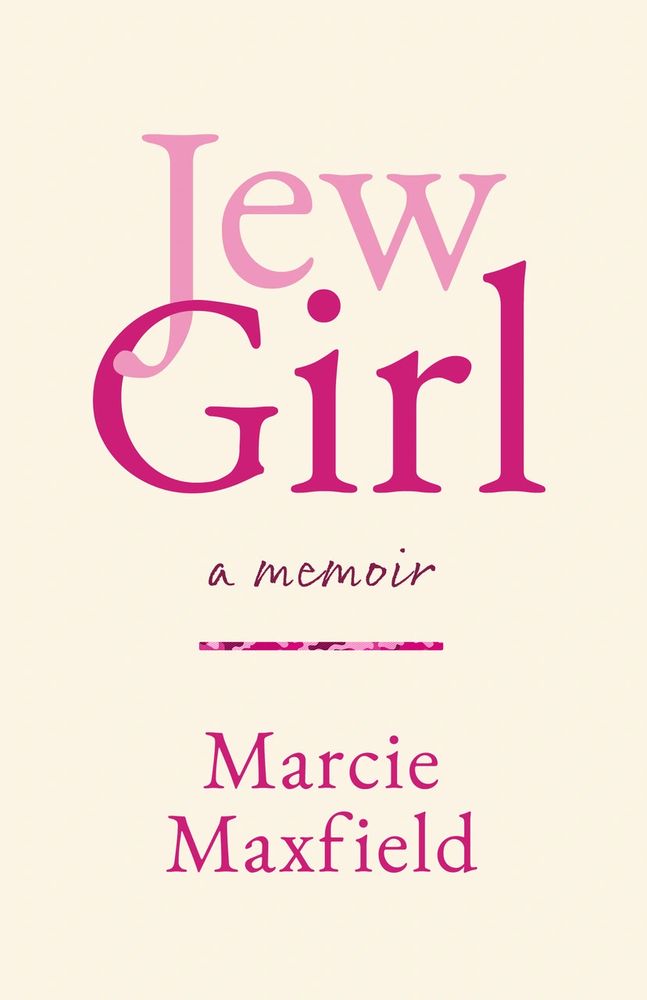
The book is a memoir about identity, family, and the messy, often contradictory ways of belonging. Marcie Maxfield weaves together her childhood in Detroit, her encounters with antisemitism, her complicated relationship with religion, and her adult life as a Jewish American woman. She writes about the boxes society asks us to check, about being pushed into identities that don’t fit, and about the tension between privilege and persecution. The stories are intimate and raw, often funny, sometimes heartbreaking, and always threaded with her determination to make sense of what it means to be Jewish in America today.
Reading this book felt like sitting across from a friend who’s decided to tell you everything without a filter. I loved the way Maxfield blends humor with pain. One moment I was laughing at her sharp one-liners, the next I felt a knot in my stomach from the ugliness of the prejudice she describes. What I liked most was her honesty. She doesn’t pretend to have neat answers, and that made the book feel real. The writing isn’t polished in a “perfect” way, but that’s part of its charm. It rambles sometimes, it jumps tracks, it circles back. Life is messy, and her style matches that chaos. I found myself leaning into the voice, trusting it, even when it got uncomfortable.
Some chapters felt like she was emptying a lifetime of stories onto the page. There were sections where I wanted more reflection and less rapid-fire memory. But even in those moments, the energy carried me forward. She writes with urgency, as if she knows these stories need to be told now, before they’re forgotten or drowned out by louder voices. That urgency gave the book a pulse, and I couldn’t put it down for long.
JewGirl isn’t a neat narrative, it’s a lived one, and that’s what makes it powerful. I’d recommend it to anyone who has ever felt out of place, anyone curious about the lived experience of American Jews, and anyone who likes memoirs that aren’t afraid to be messy and sharp and tender all at once. It’s not a book that holds your hand. It’s a book that looks you in the eye and says, This is how it is.
Emotional Weight

Feisty is a powerful anthology featuring essays, memoirs, and poetry by over twenty women who each share their personal struggles with shame, oppression, trauma, and the quest for self-worth. How did you decide what themes this collection would encompass?
The themes emerged organically from a single, powerful question. When we opened submissions, we asked: What does it mean to be feisty in a world that wants you silent or small?
The stories that poured in were raw, courageous, and deeply personal. We didn’t impose themes—we listened for them. Patterns naturally emerged around shame, resilience, healing, and reclamation of power. That’s the beauty of the Brave New Voices series: we trust women to tell the stories that matter most, then we build the container around that truth.
What was the most challenging aspect of curating these voices, and what proved most rewarding?
The greatest challenge was holding the emotional weight of these stories with the care they deserved. As both editor and publisher, I felt a profound responsibility to honor each woman’s individual voice while crafting a cohesive, powerful whole that would amplify their collective impact.
But that challenge became the greatest reward. I witnessed transformation—not just on the page, but in the writers themselves. For many contributors, this marked their first time sharing their story publicly. Watching them stand taller, speak louder, and fully own their truth has been one of the most profound honors of my publishing career.
What do you hope readers will carry with them after experiencing Feisty?
Above all, I hope readers feel less alone in their own struggles. There’s extraordinary strength in vulnerability, and these stories serve as a reminder that we’re all navigating complex, layered lives with courage and imperfection.
I want Feisty to be permission—permission to be louder, bolder, and more unapologetically authentic. In a world that profits from our silence and smallness, choosing to be feisty is a radical act.
The Brave New Voices series seems to be building momentum. What’s next?
Absolutely. Brave New Voices has evolved into something much larger than a book series—it’s become a movement. Our next collection is already in development, and while each book tackles a new theme, the heartbeat remains constant: amplifying voices that have been overlooked, silenced, or dismissed by traditional publishing.
Readers can expect more fierce honesty, diverse perspectives, and the kind of storytelling that doesn’t just entertain—it disrupts the status quo and catalyzes real change. We’re proving that when you give marginalized voices the platform they deserve, magic happens.
Author Links: GoodReads | LinkedIn | Website | Facebook | Instagram | Amazon
If you’re ready to rewrite all the rules and start thriving, just as you are, then Feisty is a must-read!
WARNING: This book is not for everybody. Well-behaved women rarely make history, so, check your good-girl card at the door. There is something even better waiting on the other side, if you dare venture.
Stories to inspire you to new heights of bravery, new depths of vulnerability, and new dimensions of femininity.
What does it mean to be feisty?
This collection of true tales of resistance and persistence in the face of historical oppression from cycle-breaking writers of all walks of life will defy your expectations, validate your experiences, and rally your inner warrior-woman.
Not only that, this book also teaches you how to:
Identify and share your own feisty flickers and acts of brave badassery
Release the “shoulds” and embrace your true desires
Heal from shame and trauma
Accept and embrace your authentic self
Find hope and resilience in any situation
The moment we stop judging our wishes is the moment we become capable of fulfilling them.
Order your copy of Feisty NOW!
Bonus: free, easy-to-implement tools to guide you through your personal transformation from each of these remarkable women authors.
For a limited time: download this remarkable book at its temporary introductory price!



 LITERARY TITAN