Blog Archives
AI Today: OI Tomorrow – The Dawn of Organoid Intelligence: Opportunities, Ethics, and the Future of Humanity


AI Today: OI Tomorrow offers a fascinating exploration of the cutting-edge advancements in brain organoid technology and the emerging field of organoid intelligence (OI). With precision and clarity, Edmund J.B. White chronicles pivotal breakthroughs—beginning with brain cells learning to play Pong—and examines the implications of these lab-grown neural networks. The book delves into their potential to revolutionize biological computing, model neurological diseases, and ignite crucial ethical debates about the nature of intelligence and consciousness.
The book tackles themes of innovation, ethics, and human essence with a dual focus on opportunity and risk. White emphasizes the transformative potential of brain organoids to enhance industries and improve lives while warning of their possible misuse. By weaving philosophical questions into the narrative, he compels readers to ponder the meaning of thought, emotion, and existence in a world where the line between natural and artificial intelligence grows increasingly indistinct. The author’s writing strikes a remarkable balance between accessibility and intellectual depth. Complex scientific concepts are rendered comprehensible without oversimplification, inviting readers of varying expertise to engage fully with the material. The prose shifts effortlessly from awe-inspiring depictions of groundbreaking discoveries to measured discussions of the ethical and existential dilemmas they raise.
Vivid imagery, such as a dystopian vision of a totalitarian regime exploiting brain organoid technology, provokes both fascination and unease. Drawing from cutting-edge research, including Cortical Labs’ 2022 milestone, White offers a thorough account of brain organoid development and its implications. The inclusion of philosophical musings on intelligence and consciousness elevates the discussion, sometimes leaving readers with more questions than answers but the kind that linger and spark further thought.
AI Today: OI Tomorrow is both a scientific chronicle and a philosophical guide, presenting an extraordinary advancement that challenges fundamental notions of intelligence and humanity. White’s ability to distill intricate ideas into an engaging, thought-provoking narrative makes this book an essential read for scientists, ethicists, and curious minds. It is a compelling exploration of a transformative frontier one that demands attention, reflection, and action.
Pages: 260 | ASIN : B0D2Z24L2L

Philosophical Tidbits

Philosophical Tidbits is an engaging collection of musings, observations, and reflections with a philosophical bent. The author, Michael Tate, delves into an array of life’s facets, blending serious contemplation with humor. This mix offers readers a distinctive view of life’s varied aspects. The book serves as a thought-provoking journey, inviting readers to explore the complexities of human experience. Tate’s knack for combining wit and wisdom allows for an exploration of diverse topics, ranging from introspective thoughts to societal commentary.
Tate’s writing style is both engaging and contemplative, encouraging readers to reflect on life’s intricacies through a narrative that is imaginative yet grounded in adult experiences. He skillfully juxtaposes lighter topics with profound philosophical queries, adding depth to his musings. The reflections, covering everything from personal relationships to societal issues, resonate due to their relatable nature and the author’s insightful observations on humanity’s imperfections. Tate’s use of humor is a key aspect of his work, providing a counterbalance to the more serious philosophical themes. His quips, such as “He that can see the future shall rule the world” and “If a child asks, answer. If a man asks, wonder,” inject a playful element into the narrative.
Moreover, the book bravely tackles often-shunned subjects like politics, justice, and belief systems, sparking vital discussions about societal perceptions. While the book offers insightful perspectives, it also presents a level of cynicism and skepticism, particularly regarding societal constructs and belief systems. Tate’s views on truth, ignorance, and justice showcase a critical, questioning mindset, which I feel might challenge some readers. The book’s more pointed critiques of established beliefs might not appeal to everyone, but I believe those who look beyond will find the work enriching.
Philosophical Tidbits is a stimulating read for enthusiasts of philosophical discourse, especially those who appreciate a blend of humor and skepticism. Tate’s ability to convey mature experiences with childlike imagination adds a novel dimension to the philosophical discussions. The book stands out not only for its broad range of topics but also for its forthright approach to expressing thoughts that many might harbor but seldom voice. It serves as an intriguing catalyst for deeper conversations and encourages a departure from conventional social norms in pursuit of honest dialogue.
Pages: 89 | ISBN : 0578269473

A Catharsis
Dialogues with the Wise Woman follows a lonely man in search of answers as he connects with a psychologist who guides him toward better and more philosophically-based life choices. What was the inspiration for the setup of your story?
George Sistern is my alter ego. I was scammed by a con artist, and like George, I also have a lot of trouble “letting go.”…which is highly destructive. Like I explain in the book, we can take every precaution to make sure we never get into a situation like this. But other than learning from it, we cannot undo what has already happened. By constantly obsessing and reliving the situation, we hurt ourselves more than our perpetrators did…and by doing so, we grant them enormous power over us.
I decided to write this book as a catharsis. I’m sure that others have experienced the same feelings of shame and guilt, and subjected themselves to massive self-flagellation…even if they were too embarrassed to admit it to anyone.
There was clearly a lot of time spent crafting the character traits in this novel. What was the most important factor for you to get right in your characters?
I wanted my readers to feel George’s pain – especially if they have experienced similar situations. I also wanted to let them know that they are not alone – even if it might seem that way at the time. I invented Mildred as the ideal therapist that I would like to see – if one like this existed. She had a PhD in psychology and philosophy, so she could address raw, overpowering emotions, but at the same time, incorporate iron-clad logic and offer practical and tangible solutions. She was loving, compassionate, understanding, and someone who you could comfortably share anything with without worrying about being judged. But at the same time, she was no-nonsense and solution-based. Visiting her Mercer St. office would not only represent a physical pilgrimage, but a psychological and philosophical one.
What were some themes that were important for you to explore in this book?
Even in the most dire circumstances, there are some things that even our most wicked oppressors cannot take from us. Victor Frankl proved this in Man’s Search for Meaning. People like Natan Sharansky have also proved this. No matter what physical and psychological abuse an oppressor can subject us to, they can’t take away our self-esteem and our attitude. Just like the term implies, it comes from the self. I also wanted to convey that if we’ve done something wrong, are truly sorry for it, try to make restitution, and vow never to do it again, then these incidents don’t define us. The reason people who have done things which were wrong feel so bad is because they have a conscience. That is what separates us from evil people. Evil people not only enjoy inflicting pain and suffering, but they seek out opportunities to do so. Good people will make mistakes. That is the price all of us pay for being human. But good people do not violate their moral code.
George’s story has all the makings of an engaging series. Can we expect to see more from you?
I’m flattered if some people would like to read a series, but I honestly hadn’t thought about it. I do know that I definitely have more books in me. I think it is great if an author can express ideas, provide food for thought (with maybe a new way of looking at things), and make his readers think about and contemplate important issues…even if they don’t agree with everything he writes. If I can provide help and inspiration at the same time, and really “make a difference,” that would make me very happy. But right now, I’m going to take a little respite. This has been an enormous undertaking, especially for an obsessive-compulsive guy like me.
Dialogues with the Wise Woman
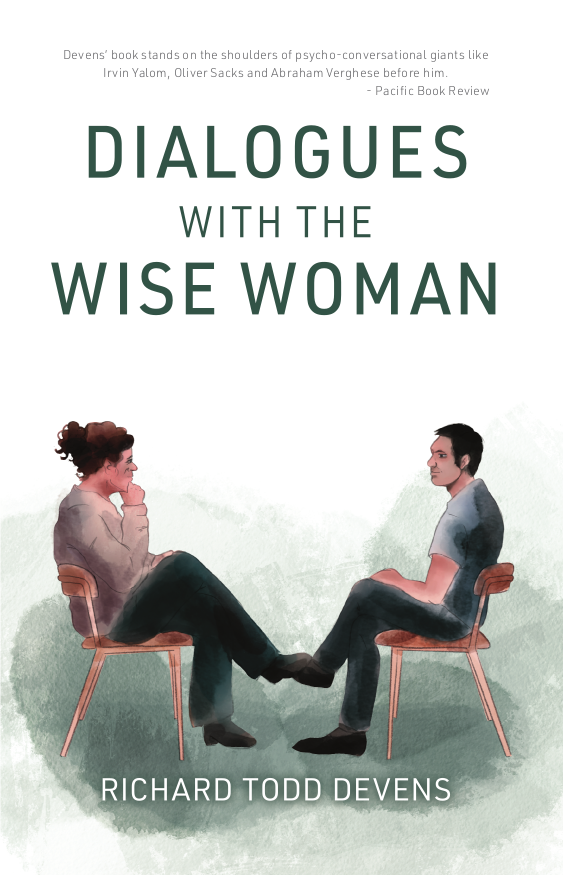
Dialogues with the Wise Woman, by Richard Todd Devens, is an enlightening exploration of human psychology and the quest for meaning. Devens weaves a captivating narrative through engaging dialogues and profound insights, guiding readers on a thought-provoking journey alongside the troubled character, George Sistern.
George, a middle-aged man, is trapped in a world of romantic solitude. George’s unique proposition to potential partners sets the stage for an intriguing encounter with the strange Poker Queen. Per the terms of their agreement, the Poker Queen wins him some money and eventually cons him out of $500. This loss triggers a downward spiral, forcing George to confront his intelligence, self-awareness, self-worth, and other existential questions.
In his pursuit of healing, George seeks solace in the company of psychotherapist, Mildred Markowitz. Their dialogues touch on issues of self-esteem, violent crime, and the philosophy of self-improvement, offering readers a profound reflection on their own lives and choices.
What stands out in this book is Devens’ ability to weave a story around the myriad of issues raised. Devens’ narrative brims with wisdom, inviting readers to explore the complexities of life, morals, and ethics. Although I feel the book lacks a clear central theme as the characters seek to practically address the big questions of life bordering on morals and ethics, its unique storytelling style infuses the journey with a distinctive flavor. At first glance, the transition from conversations on loss and self-chastisement to a full-blown debate on violent crime may seem smooth, but I believe it may distract readers somewhat from the troubles of the central character.
Dialogues with the Wise Woman delivers refreshing and insightful perspectives that resonate with a variety of readers. For those who might find philosophy and therapy daunting, this book illuminates pathways toward inner conviction and liberation. Richard Todd Devens has crafted a compelling narrative that encourages introspection and self-discovery, making it a valuable addition to the genre of psychological and philosophical literature.
Pages: 238 | ISBN: 1662933215
A Contrary Voice Of Reason
Meditations for Modern Man provides wisdom on morality, ethics, and everyday life. Why was this an important book for you to write?
I wrote this book at my son’s request. My book is a contrary voice of reason to an increasingly emotional and reactionary leftist society in America. For two decades I have been a parent, led Boy Scouts, and supervised military members. I have lived in several countries in Europe and Asia. I witnessed a severe decline in American critical thinking, rational thought, and historical facts. Contrary opinions to leftist (mostly Marxist and anti-Capitalist) dogma are literally being prosecuted as violating newly implemented company policy or worse prosecuted as a criminal without justifying the policy/law with facts, scientific studies, or logical argument. This is extremely dangerous and anathema to a free society.
What is one piece of advice someone gave you that changed your life?
An old adage military leaders once professed was “I Disapprove of What You Say, But I Will Defend to the Death Your Right to Say It”. This maxim is no longer in vogue and is not a tenant of current Academia ideology. Contrary opinion is silenced and individuals espousing it are censored or de-platformed. “Right is right even if no one is doing it; wrong is wrong even if everyone is doing it,” attributed to St Augustine of Hippo.
There are a variety of quotes I found valuable like, “When Logic fails, Emotion reigns.” What quote in the book do you find you most often refer to?
The quote I most often refer to is “An emotional mind is blind to reason, quick to anger, and intolerant of contrary thoughts.” This is the crux of the problem. Emotional people who cannot or will not think logically are easily manipulated. Rational people, on the other hand, question beliefs and behaviors while demanding those who profess them to logically justify them. Challenged emotional people quickly turn to anger.
What do you hope is one thing readers take away from your book?
Everyone must be able to challenge what they’ve been told, justify what they think, and logically defend what they believe. As Socrates wrote: “The unexamined life is not worth living”. Most critics of my book assume it is a “conservative viewpoint”. It is not. It is an unemotional logical viewpoint of traditional American values and principles. I hope people who were never exposed to contrary viewpoints are open-minded enough to entertain a rational belief.
Author Links: GoodReads | Twitter | Website
… this is the book you wish your parents gave you.
Have you ever questioned what you believe to be true?
Many unasked questions are answered from nine topics: Leadership, Morality, Logic, Facts, Liberty, Criticism, Character, Education, and Politics.
Do you regret not asking a parent, grandparent, or mentor about certain life lessons?
Get this book now for the answers.
TRIGGER WARNING
This book contains unapologetic content that could be emotionally and intellectually challenging to the reader.
If you are easily triggered, this book provides the opportunity to contemplate your strongly held beliefs and question your cultural conditioning.
An open mind is a free mind. Recent studies published in Clinical Psychological Science “suggest a trigger warning is neither meaningfully helpful nor harmful.”
A must-read for parents and children alike. Meditate on maxims developed by a loyal follower, moral leader, and compassionate parent.
Get it now.
LEGAL DISCLAIMER: The views presented are those of the author and do not necessarily represent the views of the Department of Defense or its components.
Meditations for Modern Man
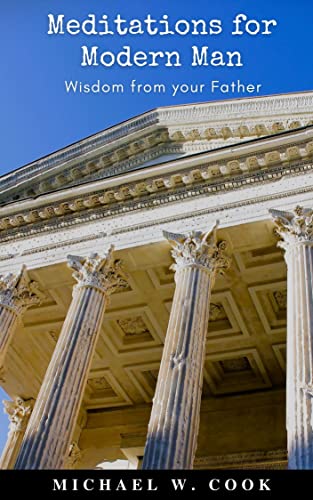

In Meditations for Modern Man author Michael Cook provides readers with inspirational quotes that cover a variety of enlightened and humanistic topics from logic to morality and more. These intellectually stimulating quotes empower readers with timeless wisdom that anyone can use in their daily lives.
Author Michael Cook has written a unique and thought-provoking book that many readers will find encouraging and uplifting. While reading the quotes in the book you feel as though you are getting advice from a mentor or someone who has experienced so much in life and has a wealth of knowledge to share.
I encourage readers to, as I did, stop and reflect on what is read, because while some quotes are subtle but potent, like this one “When Logic fails, Emotion reigns.”, I found others to be layered and profound. I’m sure that some of these keen aphorisms will echo in your mind as you go about your daily life.
This is a great book for readers who are looking to grow as a person and for those seeking an enlightened opinion on how to be the best version of themselves. I enjoyed the author’s candid and unapologetic voice in his book. Readers will be able to sense his personality, and I think these aphorisms hold more value because of it.
As I was reading, I found myself agreeing with many of the maxims, but I would have enjoyed a bit of an introduction to each section if only to dive deeper into the authors thoughts on the topic. There may be some quotes in the book that readers may not agree with, but I like that the author’s writing can spark debate, either within a group or within your mind.
The author has written an observant and enlightening book of maxims that can easily become common adages. I recommend this book to parents and to young adults who are ready to go out into the world on their own and find out what kind of person they really are. This is a fantastic book for anyone that is about to embark on a personal transformation journey, as these will help guide them.
Pages: 167 | ASIN: B09BQ9FWW1
The Empathy Academy
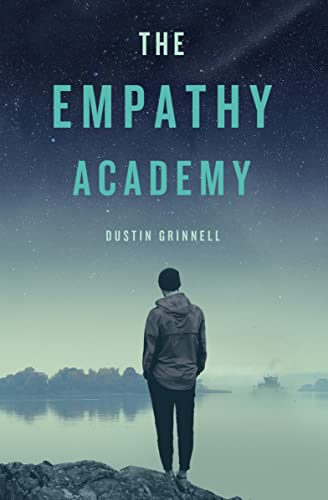
The Empathy Academy, by Dustin Grinnell, follows Montgomery Hughes on his journey of discovery as he questions his morality. A school was built for those who test positive for genes that affect empathy, and even though Monty tests negative, he finds his way onto Nantucket Island to enroll.
Montgomery “Monty” Hughes is a terrific kid, intelligent, and constantly questioning if he is doing the right thing. When he discovers his father profited on a fake cancer drug, he decides to enroll in the Empathy Academy, which is run by Dr. Sonja Woodward. Monty uses his friend’s test results to get into the academy so that he can escape his father’s wrongdoings.
Monty has been intrigued by medicine and wants to become a doctor; however, he does not want to make his father’s same mistakes. As Monty goes to the academy for the summer, the FBI places his father under house arrest while awaiting trial for the biggest fraud committed in medicine. His father, Richard Hughes, marketed a drug that was supposed to cure cancer and ended up being harmful. There is some irony in the story as his father was diagnosed with terminal Pancreatic Cancer.
The writing style and tone of this book are a balance of science and questioning morality. Are our genes responsible for our behavior and empathy, or does our environment also play a role? Throughout this book, Grinnell accurately captured human nature and the fine line between right and wrong. Some characters in this book know what they are doing is wrong but move forward because they are scared the outcome would negatively impact them. Other characters believe what they are doing is just and right but blind themselves to the true nature of their actions. Monty is inherently good but feels he needs help because of his father’s mistakes.
This captivating novel was interesting to read. Each character had a unique development, and you could see the inner workings of human nature. The underlying plot of the fake cancer drug could elicit some strong emotions from those that have been impacted by cancer in their lives. Cancer is a touchy subject, but I believe the author handled it well throughout the book.
The Empathy Academy combines science fiction and ethical philosophy into a riveting fantasy novel. If you question right and wrong, love deciphering morality, and would like to dive into human nature, then this book is for you.
Pages: 209 | ASIN : B09RTSZ7PQ
I Am A Healer At Heart

Wisdom: A Very Valuable Virtue That Cannot Be Bought takes a secular approach to explain what wisdom is and how to obtain it. Why was this an important book for you to write?
Wisdom, values, ethics and so on are very important to me personally, and of major importance to what I consider to be an ailing America. Yes, I believe that America (and of course many other countries) are in serious trouble nowadays. If we do not begin to quickly value wisdom as a society, our institutions will continue to fail, Americans will become increasingly politically polarized and violent, and the promise of the American dream will slip further and further from the grasp of all but the wealthiest individuals. People who are wise have been advising us to listen to our better angels, or our gods, or our inherent potential as human beings, for millennia, and yet here we are…. As it stands, human beings will likely destroy ourselves through nuclear war or global warming in the foreseeable future. This is of great concern to me because I think of all the good and decent people who have come before me–they didn’t work so hard and reach for the stars simply to see the world implode.
But also, I am a healer at heart. I see the power of philosophy and the potential of philosophy to engender personal growth, critical thinking, and moral values in the hearts and minds of people. I did my very best with the book because my overarching goal was to be helpful to people.
What is a common misconception you feel people have about wisdom?
I personally think it is amazing that wisdom is this age-old virtue that every significant civilization has had some interest in, which can be of unparalleled use to us as individuals and as members of society, and yet most people never think about it. Wisdom is behind truth, justice, and love in regard to how highly it is regarded–and it is certainly behind money, power, beauty, popularity, and significance on the list of those things to which Americans aspire. This is tragically misguided, because wisdom is that which can most accurately guide us through all the trials and tribulations, all the mountains and valleys life throws at us all. It can even save your life, as anyone knows who has had an accident involving gasoline, hurt someone while drunk driving, or been faced with an agonizing decision to carry a child to full-term or end the pregnancy! I have also made some dumb decisions in my life, either as a person, as an investor, or in my relationships, and it is only through wisdom that I can hope to do better in the future!
Another element that seems interesting to me is that wisdom (to the degree that folks even really ever think about it, as I said…) tends to be associated with those who are excellent in some attribute or social status, or even simply more advanced in age. I live in a part of the country with more than a few Confederate flags flying on the porches and trucks of folks who are well over 50. So it is a bit of a paradox as to what engenders real wisdom, and what has merely a superficial appearance of wisdom.
What do you hope is one thing readers take away from this book?
We each have the capacity to make wisdom our greatest strength. And in a world some say has gone mad, character strengths and worthy virtues are of the highest value. These things, like love and peace, cannot be bought with money, but they can be worked toward, cultivated, prized, and loved. Indeed, the word philosophy comes from the Greek for “the love of wisdom.” So, to philosophize is to seek out, care about, and take seriously wisdom. That is amazing! To succeed in this high aspiration and worthy goal, we ought to make a habit out of taking a broad, deep look at large numbers of individuals throughout history (and from different cultures) who have lived wise, successful, impressive lives. What I call living “a life of value.” I have a free quote search engine on my website that has over 35,000 wonderful quotes about wisdom, values, virtues, ethics, personal growth, etc. Some are just plain truth (in my opinion) that I read in some magazine or heard someone say. In the present book, I bring in many philosophers, thinkers, artists, freethinkers, and spiritual exemplars to the fore. Even one quote about wisdom can make a difference in a person’s mindset, which is why I love quotes and have been thinking about these issues for almost twenty years. If we heed the lessons the wisest people have learned and then taught in many millennia of civilization, struggle, creation, cooperation, and thinking, we will surely benefit as a species.
What is the next book that you are working on and when will it be available?
I really left it all on the field with this book! It took me hundreds of hours of reading, thinking, and typing–dear God, THE TYPING!! I have issues with my eyes due to the side effects of glaucoma medications I take daily, so often to stare at a computer screen is hard to do. Further, I have to promote this book for the next year or so–and that is no easy task since I don’t have a publishing house behind me and I really don’t like book promotion. Frankly, I am not a full-time author and I don’t even think I am that great of a writer, so the thought of yoking myself to a computer for another 300 hours sounds frankly abhorrent to me at present. I also feel like I had a certain wind in my sails for this project because the Trump years were very hard on me, and the present moment causes me trepidation, and I am not sure I could replicate that “fire” for a subject such as meaning, compassion, or success. Wisdom is a thing of beauty, and I was transfixed by it, indeed!
Author Links: GoodReads | Facebook | Website
Why is America increasingly plagued by tribalism, elitism, materialism, and ME-ism?
What do philosophy, psychology, and personal growth have to say about wisdom?
Are the Bible and other religious texts legitimate and useful sources of human wisdom?
Wisdom is not able to be bought — no matter how much money a person has!
And philosophy has typically discouraged many who find it difficult, abstract, and boring.
Modern psychology and age-old personal growth principles are given a bad name by many social media personalities who oversimplify modern psychological science in an effort to make money.
What is wisdom, how can it help me, and is this book authentic, reliable and useful?
Four-time author Jason Merchey believes wisdom can be developed and acquired and improving your understanding of wisdom will certainly lead to living a better life! Wisdom is one of humankind’s oldest and most prized virtues, yet it is not much respected nowadays. . .
This new book has the potential to assist readers to live a life that harnesses the power of philosophy, critical thinking, and applied psychology. These secular sources of wisdom are not as complicated as they may seem, and indeed are road maps to a better life.
Greater wisdom leads to improved personal growth, happiness, and success.
Wisdom is not simple or plug-and-play, but it will yield its secrets to those who love it.
In fact, the word philosophy is Greek for “the love of wisdom.”
Wisdom is a comprehensive, transparent exploration of ancient and intriguing concepts combined with critical thinking, compassion, and other aspects of wisdom. Brimming with examples of psychological principles, careful analysis, and insightful quotes from many cultures and civilizations, it provides a basis for authentic intellectual, emotional, spiritual and moral growth.
The author deftly combines digestible psychological research findings, compelling personal stories, and useful quotations about wisdom.
Anyone aiming to build a life of value—one that yields purpose and happiness—should consider wisdom to be their basis. Wisdom has been one of humanity’s highest aspirations for millennia.
Jason Merchey has dealt with mental illness most of his life, but also earned a master’s degree in clinical psychology and trained as a psychotherapist. No stranger to “the big questions” and the difficulty of life, he has studied wisdom, values and virtues for twenty years.
In addition to personal benefits, this book sheds light on some of America’s significant social problems. The great philosopher Socrates himself knew that ancient Athens, Greece was in serious trouble. If we were all wiser and we had more enlightened and humane priorities, many of the problems that mark communities and nations would give way to more love, fellowship, and prosperity.
This deep and eclectic book is full of ideas and insights that will assist you to:
Discover and prioritize wisdom in your personal life and relationships
Achieve greater fulfillment, happiness and self-confidence
Bring about true success based on self-knowledge and values
Make a positive difference in your community—and the world as a whole
One cannot buy wisdom per se but investing in this affordable book provides a refreshing opportunity for self-improvement and intellectual growth. It has the potential to assist you to make wisdom your greatest strength!



 LITERARY TITAN