Blog Archives
Sifting Through Memories

A Pleasant Fiction follows a middle-aged man as he prepares his parents’ home for sale after their deaths, navigating the rooms of his childhood one last time and unearthing long-buried memories. What was the inspiration for the setup of your story?
The setup came from a very real place. After my own father passed away last year, I found myself in the exact position Calvin is in—sorting through the physical and emotional remnants of a life once shared. It’s a process that’s equal parts grief, memory, and reckoning. The house in A Pleasant Fiction becomes a kind of emotional topography. Each room holds its own ghosts, each item its own story, and the act of cleaning it out becomes a meditation on meaning, family, and what we carry forward.
One of the hardest parts was letting go of the things—not just because they had sentimental value, but because they felt like all that was left. Giving or throwing them away felt like saying goodbye again, and maybe for the last time. But eventually, out of necessity if nothing else, you realize you can’t keep 80 years of someone else’s life in boxes. And when you accept that, something shifts. You begin to understand that what remains isn’t the stuff—just as the people you loved weren’t only their physical bodies—it’s the memories attached to them and the impact they had on you. You can let go of the things without letting go of the person. The love, the lessons, the echoes—that’s what endures. So the house and the process of letting go becomes a metaphor for that deeper truth. It’s not about holding on to what was, but learning to carry forward what still matters.
It seemed like you took your time in building the characters and the story to great emotional effect. How did you manage the pacing of the story while keeping readers engaged?
The pacing was deliberate—almost musical. I wasn’t writing toward a traditional climax so much as riding waves of emotion, like experiencing the movements of a symphony. There are motifs that return, refrains that echo. The structure is non-linear because grief isn’t linear. It loops, it lingers, it ambushes you. You think you’ve moved past one feeling, and then it washes over you again in a different key.
And while the book is ultimately structured around the five stages of grief, I didn’t outline it that way ahead of time. If I had started with that framework, I think it would have felt artificial—too linear and orderly for something as inherently chaotic as real grief. Instead, I focused on the emotions I went through while settling my own parents’ estates and let the story tell itself. And in that process, the five stages revealed themselves organically—in all their messiness and overlap.
There’s also a kind of chain reaction that happens when you’re sifting through memories like this. One object sparks a memory, which sets off another, and then another. It’s not just nostalgia—it’s more like activating a neural network. Each association sparks the next, building its own momentum, and you find yourself pulled deeper and deeper into a sequence of emotional discoveries. That dynamic shaped the book’s rhythm. It’s why the story doesn’t move in a straight line but follows the emotional logic of memory itself.
What keeps readers engaged, I think, is that Calvin isn’t just telling a story—he’s actively processing it, in real-time, with the reader. There’s vulnerability in that. And maybe, if it’s working, there’s catharsis too.
I find that, while writing, you sometimes ask questions and have the characters answer them. Do you find that to be true? What questions did you ask yourself while writing this story?
Absolutely. Writing for me is a form of philosophical inquiry. I’m less interested in delivering answers and more concerned with framing the right questions—questions that keep echoing long after the book ends.
In A Pleasant Fiction, one of the core questions Calvin keeps circling back to is: Did they know how much I loved them? It’s heartbreaking because in some cases the answer is clearly no—and not just among the dead. That realization carries its own kind of grief, but also a kind of salvation. Because for the people still here, you still have a chance. You can say the thing. You can show the love.
There are theological questions too—ones Calvin doesn’t always like the answers to: Is this really the best an omnipotent and omnibenevolent being can do? What is the point of all this suffering? But also more human-scale ones: Are we better off when we don’t get the thing we want? And if so, were we wrong to want it? What is the cost of noble self-sacrifice to those who rely on your presence? Is the best we can do ever really enough when facing a no-win situation?
There’s also a quieter question that haunts the edges of the narrative: Who am I to grieve for someone I barely knew? That might mean a Facebook friend—someone whose life ended up touching yours in ways it never did when you were physically in the same place. There’s an irony in feeling closer to someone through written posts and late-night messages than you ever did sitting across from them in a classroom. But it’s not about the medium—it’s about the substance of the interaction. You can sit in front of someone and still not see them. And sometimes, through the filter of distance or time or reflection, something more real emerges.
Or it might mean an unborn child—someone you never met, but whose absence still lingers. Grief doesn’t always follow logic. Sometimes it reveals what mattered to us more than we understood in the moment.
Some of these questions Calvin voices directly. Others are embedded in his contradictions—how he says one thing but shows another. That tension is intentional. Even when we think we’re being honest, we’re still performing a version of ourselves. Calvin often presents possible answers, but the reader doesn’t have to agree with them. They’re not conclusions—they’re invitations. Sometimes Calvin’s answer is literally, “I don’t know.” The book isn’t trying to resolve these questions so much as asking the reader to sit with them, to feel them, and maybe to bring their own answers to the table.
What is the next book that you are working on, and when can your fans expect it to be out?
Right now, I’m putting the finishing touches on Coming of Age, Coming to Terms, a companion volume for readers who want to dig deeper into the themes, characters, and questions raised in The Wake of Expectations and A Pleasant Fiction. It’s over 300 pages and really exposes the underlying emotional architecture of the series. It will be available as a free ebook for readers who join the email list and should be released around the same time A Pleasant Fiction comes out—early July.
I’m also releasing a serialized version of The Wake of Expectations—starting with Becoming Calvin—as a more accessible entry point for new readers who might be intimidated by the full novel. And I’m planning to release the first audiobook this fall, most likely beginning with Becoming Calvin as well.
As for what’s next, I’m working on a new novel, tentatively titled Last Summer. It’s still in the early stages, but tonally, you might think of it as The Sopranos meets The Goonies—a 1980s coming-of-age story featuring some familiar faces. It’s sort of a YA novel with dark humor. I’m aiming for a 2026 release.
Author Links: Goodreads | X (Twitter) | Facebook | Website | Amazon
Calvin McShane has lost everyone who made him who he is. As he prepares his parents’ home for sale after their deaths, he navigates the rooms of his childhood one last time—sorting through his family’s belongings, unearthing long-buried memories, and reckoning with the weight of what was said, what was left unsaid, and what was never truly heard.
Set in the quiet spaces between loss and remembrance, A Pleasant Fiction is an immersive and unflinchingly honest novelistic memoir, blending lived experience with literary storytelling. With raw vulnerability and emotional depth, Calvin revisits his past—his complicated family, his long-abandoned musical ambitions, and the friendships that shaped him—searching for meaning in what remains.
A deeply personal and profoundly emotional meditation on grief, love, loss, and identity, A Pleasant Fiction explores the bittersweet reality of memory and the struggle to move forward without leaving the past behind.
The follow-up to De Lucia’s debut novel, The Wake of Expectations, A Pleasant Fiction revisits its central characters a quarter-century later, revealing how time, loss, and perspective can reshape even our most intimate truths.
Gone The Sun
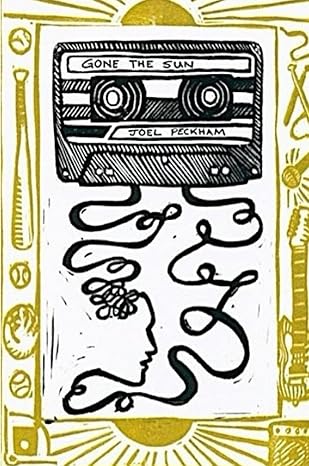

Joel Peckham’s Gone the Sun is a searing memoir wrapped in a tender love letter to his father, himself, and the complicated beauty of memory. Set mostly in the nostalgic-yet-chaotic backdrop of Camp Manitou, this book tracks Peckham’s navigation through grief, identity, generational legacies, and dementia, his father’s, and possibly his own. Through lyrical storytelling, he examines what it means to lose and find oneself in the rhythms of place, people, and pain. The memoir reads like a long conversation with an old friend, raw and honest, never trying to fix things, only to understand.
What struck me most and most powerfully was the depth of emotional vulnerability Peckham allows himself to reveal. In the opening scene, as he portrays his father’s anger as both atmospheric and oppressive, I felt a visceral sense of unease stir within me. The description of his father’s explosive moods, their routine eruptions, and the fallout that ripples through a summer camp already humming with energy, hit home. “You just don’t understand,” his father says, and suddenly, we’re in it. The first chapter is remarkable, striking a careful balance between lyricism and impact, maintaining poetic grace without sacrificing clarity or momentum. I found myself returning to certain passages, drawn by the cadence and precision of the prose.
Peckham’s integration of rhythm and sound into the structure of the narrative is both deliberate and profoundly affecting. His relationship with music serves as a form of sanctuary, a language he continues to share with his father when spoken words no longer suffice. When he writes, “Rhythm is life. Is peace,” the sentiment resonates with unmistakable weight. His descriptions of baseball drills as musical compositions and the ambient noise of camp life as a kind of symphonic backdrop elevate the prose beyond observation into something lived and embodied. The music program he builds becomes a refuge not only for himself but for the marginalized and overlooked, both campers and staff. It is not merely about music; it is about creating meaning and belonging in a world that can so often feel overwhelming and dissonant.
Peckham’s portrayal of his father’s dementia is both devastating and deeply unsettling. He captures, with unflinching clarity, the painful contradiction of witnessing someone gradually disappear while still physically present. “He doesn’t just forget things, he forgets who he is,” he writes a line that lingers long after it is read. Peckham does not exempt himself from scrutiny; his own history of trauma, brain injury, and profound personal loss permeates the narrative, often just beneath the surface. Yet he continues to persevere, showing up for his students, the camp community, and most of all, his father. At times, this devotion is marked by resentment, at others by tenderness, but it is always rendered with striking honesty. In one particularly affecting moment, he embraces his father and simply says, “I know, Dad. I know.” It is a moment of raw human truth, an acknowledgment that sometimes presence and empathy are the only answers we have.
This is not a neatly structured memoir. It is expansive, circuitous, and deliberately so, mirroring the unpredictability and complexity of lived experience. Gone the Sun resists the temptation to impose order on chaos, instead offering a narrative that embraces uncertainty and emotional truth. I would recommend this book to anyone who has cared for a loved one facing memory loss, struggled to hold a family together through sheer will and fragile hope, or turned to music as a means of survival. This is more than a tribute; it is an unflinching reckoning with grief, identity, and love.
Pages: 97 | ASIN : B0DNTQV5FS

Inherited Trauma
The Tennis Champion Who Escaped the Nazis is a deeply personal and emotionally charged biography of your grandmother, Liesl Herbst, who went from being Austria’s national tennis champion in the 1930s to a Jewish refugee fleeing Nazi persecution. Why was it important for you to write this book?
In 2018 my daughter, who was a student at the time, asked me about her family heritage and I realised I knew very little. So I took my three children to Vienna, and I started my research. I soon realised that what I’d planned to be a book for my children, could be something for a wider audience. It just grew from there.
What were some ideas that were important for you to share in this book?
Inherited trauma and survivors’ guilt. I realised that my grandmother and mother both suffered from survivors’ guilt and trauma, and they had unwittingly passed these down to the next generation. Writing the book has been cathartic for me. It is not just those who survived the Holocaust who might feel this way, but anyone who has survived war or a tragedy – but their friends or family have not.
What was the most challenging part of writing your grandmother’s biography, and what was the most rewarding?
Most challenging was having to travel to the places in the Czech Republic and Slovakia where my grandparents were born and where my grandmother’s family was murdered. It was upsetting visiting the concentration camp near Prague where my grandmother’s mother and oldest sister were killed, and the forest in Slovakia where my grandmother’s other sister and her family were massacred among 700 people. It was also difficult searching museum archives in languages I do not speak or read. Most rewarding was the people I met in those places who gave up their leisure time to help me and were all incredibly helpful and friendly.
What do you hope is one thing readers take away from your book?
Even in the darkest situations, there is hope.
Author Links: GoodReads | Instagram | Facebook | Bluesky | Website | Amazon
In London, though initially stripped of their Austrian passports and rendered stateless aliens, both Liesl and her daughter Dorli competed at Wimbledon. They remain the only mother and daughter ever to have played doubles together at Wimbledon.
This moving story of escape and survival is told by Liesl’s grand-daughter, Dorli’s daughter. Some of the story, the author heard first-hand from her grandmother; the rest, she has meticulously researched over many years in four countries. It is as much a search for the author’s own identity as for her own children and grandchildren to ensure that their remarkable family history is never lost again.
Illustrated throughout with family photographs and original documents, this is a story of survival against terrible odds, an inspiring tale of resilience and hope.
The Importance of Family

Muunokhoi’s Awakening follows a marmot who wakes from hibernation early and is unable to return to sleep, finding himself alone and needing to find a way to survive the winter. What was the inspiration for the setup of your story?
I wish I could identify an inspiration for the story, but the truth is I stumbled upon the idea. The initial plot I had in my mind when I began to write the novel, was a children’s story about a marmot who is transported in its dreams to different countries during hibernation. At each place, it gets to experience the people, culture, and an adventure or two. However, I quickly realised when I began writing, that the idea would not be credible. The interactions in various places will have to be with humans in towns or cities to experience the culture, and the idea of this animal living like a human would be a stretch. So, I shelved this idea, but I still wanted to write an anthropomorphic tale. I went back to it after about a week pondering what to do next when the idea popped into my head; what if instead of dreaming, it is the only one awake in the burrow? Several ideas and questions quickly flowed from this which ultimately led to the story. I settled on a Mongolian marmot because this species hibernates for 7-8 months which allowed one sufficient time to develop the story without rushing it; I also found the animals of Mongolia quite fascinating.
What were some ideas that were important for you to personify in your characters?
Muunokhoi’s journey was going to be long enough for him to meet a variety of creatures he did not know. It was important therefore that the creatures he meets should include those with good character traits as well those with bad undesirable character traits to reflect what we as humans see around us. Thus, we meet creatures who are greedy, selfish, arrogant, cunning, and untrustworthy as well as creatures who are courageous, empathetic, goodhearted, caring, selfless, well-meaning, and trustworthy.
What were some themes that were important for you to explore in this book?
Some themes I wanted to explore were the importance of family, loyalty, betrayal, friendship, bravery, perseverance, several aspects of loneliness, and hope.
What is the next book that you are working on, and when can your fans expect it to be out?
The next book I am working on is completely different from this first one. It is primarily about the lives of students, at a university in Ghana (my country of birth) in the early 1970’s, a period of political instability and economic hardship in the country. The idea is to weave in the fiction with political events occurring in the country. My inspiration for this is Paul Scott’s quartet of books The Raj Quartet which I read decades ago. My ambitions are more modest as I plan to write only one book.
With respect to when it will be out, my hope is sometime in 2027. I do not write daily or have a schedule for writing. I also write the initial and second drafts by hand with a pencil, so it takes time, but I am more than halfway through the first draft, so fingers crossed.
Author Links: GoodReads | Website | Amazon
Muunokhoi emerges from his burrow into a hostile winter environment, to explore the availability of food. He first encounters an eagle owl, who advises him that with no food available in the winter months, his only option for survival is to embark on a quest to lower elevations where he can find food to sustain him until the spring.
The journey will be fraught with danger from predators that stalk the mountainous Mongolian terrain, but the marmot will surely starve to death if he stays put. Summoning all his courage, Muunokhoi sets out on an adventure that could ultimately save his life . . . or end it.
Fight the Battle with Faith

Welcome to My World offers a deeply personal exploration of the often-misunderstood condition of Dementia, drawing from your own journey to illuminate the path for others and offer practical insight and emotional support. Why was this an important book for you to write?
I have seen how families and even society treat Dementia as a disease and this prompted me to write this book, to think otherwise.
What were some ideas that were important for you to share in this book?
Important is family acceptance and treating the family member’s illness as normal, as by so doing the condition may be stable.
I appreciated the candid nature with which you told your story. What was the hardest thing for you to write about?
The hardest part was that my father-in-law passed on not due to dementia, but multiple heart attacks, which I feel can be prevented. We were told to accept that breathlessness is due to the ageing process, which is WRONG. If only I didn’t believe.
What is one thing that you hope readers take away from Welcome to My World?
You are not alone. Some may experience family members having advanced stages. We need ask ourselves if we want to give up hope or to fight the battle with faith.
Author Links: GoodReads | Facebook | Website | Amazon
Welcome to my WORLD – is DEMENTIA the END OF THE WORLD for the patient and family members?
Family members must accept and journey along with their loved ones and try to understand their “NEW WORLD”
Community should not categorize and brand people with DEMENTIA but attempt to understand their WORLD.
LOVE and COMPASSION is the “KEY” for us to understand and embrace this NEW WORLD,
ARE WE READY?
No Sugarcoating

Real Aussies: John’s Heartbreak follows a man struggling with family drama and his identity, who finds himself questioning his life choices and their impact on who he is now. What was the inspiration for the setup of your story?
There are plenty of brilliant authors out there, each exploring their own genre, offering their own lens. But something’s always struck me: as readers, we usually watch a story unfold. Whether it’s first or third person, there’s still a barrier — you’re seeing the world through someone else.
My work shifts that. I don’t want you watching. I want you inside it. I want you experiencing everything as if it were your life. No inner monologue distractions. No cinematic distance. Just you, immersed. That’s the goal — that the life unfolding on the page feels indistinguishable from your own.
Where many authors focus on plot, I focus on consequence. Cause and effect. The way people stay stuck in self-inflicted nightmares because it’s all they know. My job is to make it real. That’s why it hits hard. It’s confronting. And yes, it’s designed to be. Not for shock — but to surface what’s buried. I write to draw out the emotional junk most people never look at.
Call me a literary exorcist, if you like. My job isn’t to write pretty metaphors that need decoding — that’s useless to someone having a breakdown at 3 AM. My job is to make a reader feel, viscerally, so they process. It’s therapy without the label. Even Beatrice — when she speaks to John, she’s really speaking to the reader. “Good to see you.” That’s intentional.
The inspiration wasn’t John. It was the reader. My intention was always to unearth something in them — to bring them face-to-face with the parts of themselves they’ve ignored. That’s why the novel has a warning up front, why the blurb literally tells you to have tissues ready. It’s not a story about you… until it is.
That’s also why the novel ends with a poem. By the final page, I shift focus directly back onto the reader. Verse-by-verse, I hold up the mirror. You realise it was never about John. It was always about you. The choices you’ve made. The patterns you repeat. But there’s solace in that. You get to use John’s story as a scaffold — a safe space — to unravel what’s unresolved in your own story.
So far, every review echoes the same thing: “It lingers.” “It hit me harder than I expected.” It’s not a light read, by design. If you’re lying to yourself, this book won’t let you. It’ll show you — cracked mirror and all.
I didn’t write this to win awards. I wrote it for the people who didn’t know they needed it. And the most unexpected part? The reviews don’t reflect me or the book. They reflect the readers themselves. You can watch the healing (or resistance) play out in the reviews. One star, five stars — it’s not about John at all. That’s the art.
Is there anything about John that came from you or your life experiences?
Absolutely — but it’s not about facts, it’s about feeling. Every emotion in the novel is real. I don’t want readers to witness John’s feelings or mine — I want them to sit inside their own. That’s the point. I’ve spent years deconstructing emotion — peeling away the polite language and self-protective narratives we use — until I could write it raw, in its unfiltered form. That rawness is what bleeds through John.
Love, hate, despair, anxiety, disbelief, torture, horror, hope, humour — it’s all there. These aren’t just themes. They’re mine. I’ve lived them in one form or another, and instead of dressing them up in literary robes, I hand them to the reader as they are: messy, confusing, overwhelming. That’s what makes the novel so confronting.
My writing isn’t about literary awards or clever turns of phrase. It’s about impact. I write for people who don’t usually read. People who’ve been through real pain. People who are emotionally constipated and don’t even know it. That’s my audience. That’s who I care about reaching. My job is to make sure the work remains readable in 20 years — 50 years. That means: no sugarcoating. Just as I’ve never had the luxury of a sugarcoated life, as someone who grew up autistic, dyslexic, and an outcast — this work had to be just as honest.
Setting the novel in the past wasn’t just for the killer music (although — quote me — it is the best). I wanted to lull the reader into a false sense of nostalgia. That dream-state safety net. Then — rip — pull them deep into emotional terrain they weren’t expecting. That’s how real healing begins. When you’re least prepared.
The Real Aussies series isn’t fiction in the traditional sense. These are my emotional truths, fictionalised just enough to get under your skin. I make them yours. That’s the goal.
What were some themes that were important for you to explore in this book?
If you’re Australian, you’ll know the complexity of Australian men. From the outside, we’re seen as fun-loving, relaxed, and some of the friendliest people in the world. But scratch the surface, and you’ll find men are often expected to fit one of two emotional lanes: the hard-working provider, or the larrikin who cracks jokes over beers to mask the pain.
That’s the irony of Australia. Real emotional depth is often hidden. Having any feelings outside the intimacy of your bedroom — with your wife, your child, or your closest mate — is quietly forbidden. For me, it was time to show who the Australian man really is. Setting the story in the past allowed me to amplify that unspoken, strictly enforced social code: once you’re boxed in, you’re rarely reclassified. This limits potential — and creates internal chaos when your truth no longer fits the label.
Another core theme is beauty in pain. We don’t always reflect on the quiet glimmers in our darkest moments — the friend who helped, the stranger who saw us. Life can feel like one storm after another, but if we slow down and look closely, we’ll often find there was always a guardrail. Even in disaster, there’s something beautiful — that’s what carries us forward. This was true for John. For Chris. For Stew. For all of them, their “Refuge” was a club full of misfits — a symbol of chosen family in a world that rejected them.
I also wanted to preserve and spotlight community. Specifically, the LGBTQ+ community in Sydney during the 70s and 80s. It really was as intense as I depicted. The violence, the tension, the desperate need for a safe space — it was all real. Today, as society becomes more tolerant, we risk forgetting what community used to mean. I wanted this novel to capture that moment in time, so we remember how people found belonging through pain.
Finally, I wanted to confront the reader with the consequences of accumulated choice. The novel stretches through John’s twenties, showing how each decision either aligns him — or derails him. Life doesn’t punish. It doesn’t reward. It just stacks up your choices until the result is undeniable. You get what you build. If you live for others, lie to yourself, or compromise your truth — that stack eventually collapses. The novel reminds us: we’re born alone, we die alone. Everything in the middle is experience — but how we carry it determines who we become.
Is this the first book in the series? If so, when is the next book coming out, and what can your fans expect in the next story?
Yes, this is the first novel in the Real Aussies series — and also the first novel I’ve ever written. Quite the mountain, especially when you’re someone who reads words wrong, flips similar-sounding ones in your head and constantly fights to stay on the line. It’s exhausting. But I persisted. Because I had to.
The next novel is Peter’s Nightmare. If John’s Heartbreak was about how our choices align or unravel over time, then Peter’s Nightmare is about when you never had a choice at all. When your identity isn’t something you built — but something constructed for you through trauma, projection, and other people’s pain.
It explores what happens when the lessons you’re forced to carry don’t belong to you — childhood burdens, family shame, expectations you never agreed to. It’s a story about how we unconsciously repeat what we hated. How we become the bully, even when all we ever wanted was kindness. Peter’s story doesn’t hold back. It goes into territory most people avoid.
The schoolyard bully who wrecked you? He was likely wrecked too. This novel digs into that truth — that intergenerational cycles of pain can be broken, but not if we stay in victimhood. Not if we keep pretending we’re not part of the problem.
You’ll finally understand who Peter really was in John’s story. What shaped him. Why he was the way he was. And by the end of it, just like with John, you’ll be holding a mirror — not to Peter, but to yourself.
This is a novel about the parts of life we don’t speak of. The moments society can’t language properly. Peter’s Nightmare will give readers that language. And with that, maybe the power to finally change.
I’m aiming to release Peter’s Nightmare in early 2026. I’ve got a few other projects on the go that need to clear first — it’s a bit of a juggling act (especially when you’re navigating it all with disability compensation!) — but hey, that’s life. 🙂
Author Links: GoodReads | X (Twitter) | Website | Amazon
Sydney is thrown back to the late 70s and early 80s in this Aussie epic that sees John navigate the explosive consequences of his ill-thought actions, his wife’s destructive wake, and the unexpected feelings he has for his nurse; his male nurse… oh crap!
Amid drag queens, nightclubs, drugs, and iconic decade-defining music, John struggles with his identity, whilst trying to secure the custody of his two sons. With a batshit crazy family and a chaotic trip to Kiama, John’s life spirals out of control.
This rich multi-decade LGBT quasi-hetero romantic drama, written by an Aussie nomad, is layered with deep emotion and complex relationships. Profound, soul-touching, and reflective, this novel opens questioning the impact of all life’s choices.
Perfect for that weekend curled up in bed with a box of tissues, chocolates, and ice cream.
The Opioid Epidemic

Flirting With Extinction is a raw and unapologetic mosaic of personal essays and stories that chart a life punctuated by grief, recklessness, resilience, and searching. Why was this an important book for you to write?
I needed to process my grief in some way, and I thought that by analyzing it and finding the life lessons in all that had transpired and writing about it would help me navigate my pain as well as the pain of others who have lost cherished loved ones to the opioid epidemic sweeping America’s youth.
What were some ideas that were important for you to share in this book?
My love for my sons was not as powerful a motivating force in their lives as the cultural zeitgeist they lived with. They had moved away from their Land Before Time and Pokémon mindset into what their peers were doing in the Seattle music scene in the late 1990s and early 2000s. The 1960s bohemian fashion was in style along with designer drugs I had never heard of until one of my sons died after using the latest drug on the scene, fentanyl. And then even after rehab, the other one followed suit several years later, killing himself on meth. I was absolutely devastated.
I appreciated the candid nature with which you told your story. What was the hardest thing for you to write about?
The deaths of my sons, I cried every time I worked on that aspect of the story. It took multiple edits with my tears running into my coffee and ruining the taste.
What do you hope is one thing readers take away from your story?
If you value life, and even if you believe in an afterlife, after experiencing the death of a loved one, it’s important for one’s sanity to find the positive in the negative and nurture those seeds of positivity in everything, to make the pain more bearable. In my sons’ memory, I wear the Jewish Chai symbol that serves as a reminder to embrace life’s inherent beauty, to cherish the present moment, and to recognize the profound interconnectedness of all life.
Author Links: GoodReads | X (Twitter) | Facebook | Website | Amazon
After converting to Judaism and adopting her new husband’s name, she moved to Washington state and together with her husband, Joanna helped create a utopia on their island home, far from family feuds. As a family they explored the Pacific Northwest wilderness and played sports. Their children thrived in an environment filled with art, music, and freedom. But the idyllic life they built took a dark turn when their teenage son Micah, along with his friends, defaced a yeshiva, with one drawing swastikas and the chilling message, “this way to the gas chambers”—a reckless joke that would lead to devastating consequences.
As the law came down hard on Micah, the family faced the unbearable loss of their other son, Seth. In Flirting with Extinction, Joanna Kadish explores the deep-rooted trauma inherited from Holocaust survivors. Micah’s great-grandfather was killed in a German labor camp, and Micah’s grandfather, with his mother and sister, fled Germany shortly before Kristallnacht. Decades later, that trauma continues to haunt the family, proving that the wounds of history are not so easily healed.
These are Joanna’s stories of survival, loss, and the enduring impact of generational trauma.
Favorite Fantasy Series
Cinnamon Soul follows a private investigator and her elven assistant who take a case to find a missing princess and wind up tangled up with royal secrets, ominous knights, and magic. What was the inspiration for the setup of your story?
The most basic premise of the story was inspired by Dungeons & Dragons campaigns I was in between 2018-2021, with the two main characters Cinna and Hokuren originating there. (Anyone who plays D&D might know which class Cinna was). However, beyond the tight bond between Hokuren and Cinna and the name of the ultimate villain, very little of the campaigns ended up in the book. What works in a D&D campaign doesn’t always work in a novel! The story came together over the course of multiple drafts as I had a beginning and ending in place first, then built the middle up to make the two meet.
I find the world you created in this novel brimming with possibilities. Where did the inspiration for the setting come from and how did it change as you were writing?
I like big melting-pot fantasy cities, so that’s where I started. Velles is this big city where everyone’s just trying to get by and they don’t care so much who you are or where you came from as much as what you’re doing now. One of the biggest inspirations for Velles is Ankh-Morpork of Terry Prachett’s Discworld novels, one of my all-time favorite fantasy series. Velles certainly grew as I was writing, with one or two of the neighborhoods only being brought into existence after a few drafts. It’s the sort of place that’s big and disparate enough that I can keep growing it out (to an extent) in future novels. It’s a lot of fun to create the various neighborhoods in the city. Another thing that changed as I was writing was the feeling of decline that lingers in the background of the novel. Magic is weakening while at the same time, monsters are practically eradicated, negating the need for adventurers. There’s this whole past world that no longer exists, and at the time this novel is set, everyone is still trying to figure out how to proceed going forward.
What were some themes that were important for you to explore in this book?
The most important are the themes of found family and friendship exemplified in the relationship between Cinna and Hokuren. They are very different people and react to it differently, but they are both lonely. Particularly with Cinna, I also wanted to explore the idea of it not mattering where you come from. One of her goals early in the book is to find her birth parents, who abandoned her when she was an infant. I won’t spoil it, but she does learn the truth of her parentage and has to grapple with how much it matters considering the life she now has with Hokuren, and does her heritage matter at all. Finally, one of my favorite themes, which is that the people with power are so frequently among the least deserving of it, and how those without power must navigate that sort of world.
When will book two be available? Can you give us an idea of where that book will take readers?
My plan is to make book two available in 2026. It’s in the middle of the first draft, and I don’t have a title yet. What I will say is that while Cinnamon Soul ends up with a heavier focus on Cinna and her past, the second book will flip to more of a focus on Hokuren. She will have to return to Fondence, the town she grew up in, and deal with the ramifications of her decision to leave as an eighteen-year-old to forge her own life in Velles, while leaving her widowed father behind. Expect more heartfelt scenes of introspection as well as plenty more playful banter between Cinna and Hokuren as Cinna goes to a small town for the first time in her life (hint: she’s not initially impressed).
Author Links: GoodReads | Facebook | Website | Amazon
Her private investigation office’s rent is past due. Her sterling success rate applies mostly to finding lost cats. And she should really pay her overworked elven assistant, Cinna, with more than just slices of blueberry pie. So when the Prince asks Hokuren to find his daughter, she hopes this will be the break she needs.
But there is more to this case than a mere missing princess. Hokuren soon finds herself chasing after the monstrous villain behind an elf kidnapping scheme and tangling with magic said to no longer be possible (never trust the wizards). She’s determined to uncover every secret, no matter how heart-wrenching, until she solves the case—because she always solves the case. Yet as she and Cinna dig deeper into the conspiracy, Hokuren starts to suspect that the hunter has become the hunted. And the biggest secret of them all might be hiding within her unassuming assistant . . .
A lighthearted and fast-paced fantasy adventure full of action, mystery and sly humor, Cinnamon Soul is also the heart-warming exploration of an unbreakable bond of friendship forged between two women as they struggle against the forces of the elite and powerful.



 LITERARY TITAN