Blog Archives
An Ocean Life


T.R. Cotwell’s An Ocean Life is a character-driven novel chronicling the emotional and physical journey of Mark, a stressed-out tech entrepreneur, as he attempts to unwind with his family during a long-awaited trip to Maui. The story moves fluidly between vivid underwater exploration, tense family dynamics, and quiet introspection. While Mark tries to reconnect with his wife Cecilia and their daughters, old habits and personal ambitions resurface, threatening the fragile balance he’s trying to hold onto. At its heart, the book is about reckoning with aging, love, guilt, memory, and the pull of the ocean.
What I liked most about Cotwell’s writing was its intimacy. The prose is sharp but unpretentious, and there’s a warmth in the way he describes both the mundane and the majestic. The dialogue felt natural and unfiltered. Scenes like the failed dinner reservation or the late-night beach encounter made me cringe and laugh at the same time. I felt for Mark, even when he was being a bit stubborn. Cotwell doesn’t paint his protagonist as a hero, and that’s what makes him believable. The underwater scenes are particularly special. There’s a kind of reverence in the way Cotwell writes about the sea. It’s calm, awe-filled, and precise.
Some sections about startup life or diving gear got a bit long. I appreciated the detail, but occasionally it slowed the momentum. I enjoyed Mark’s inner monologue, and I wished Cecilia’s voice came through more. She’s clearly grappling with a lot. Still, their tension is what kept me hooked. They’re two people still in love, trying to remember how to show it, trying to find each other again in the chaos of family, work, and life.
An Ocean Life is tender and thoughtful. It’s for people who have ever felt torn between what they want and what they’ve promised. I’d recommend this book to anyone who enjoys quiet stories with emotional depth, especially readers who have weathered a few storms of their own.
Pages: 347 | ASIN : B0D2L2SBBL

Finding Humor in the Darkest of Times
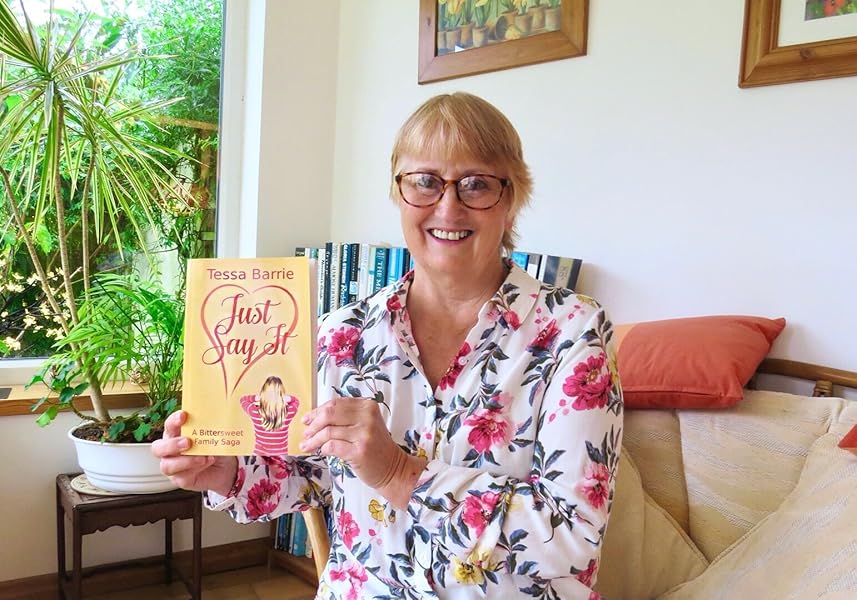
The Secret Lives of the Doyenne of Didsbrook follows the protégée of a former actress who discovers the actress’s hidden notebooks, after her questionable death, revealing a dark past and possible motive for her murder. What was the inspiration for the setup of your story?
All the characters, apart from The Doyenne, were featured in a long-listed short story about a writers’ group in a rural part of the UK. I loved these characters so much, I didn’t want to let them go, so I decided to turn the short story into a novel.
The short story was written as a farce, and I carried on writing the novel in that vein. However, once The Doyenne’s character was introduced and her story became more complex, it was inappropriate to have slapstick scenes going on around her. It is still humorous in parts, but now has more bittersweet undertones.
I enjoyed your characters, especially DCI Middleton. What was your favorite character to write for and why?
DCI Humphrey Middleton was definitely up there. In the first few drafts, he only appeared at the beginning, but a few beta readers suggested that I bring him back later in the story, which I did.
I think those whose jobs involve coming face-to-face with death regularly, doctors, nurses and police officers, are exceptional people. So, it was interesting to get inside Humphrey’s head, and I do believe that being able to find humour, even in the darkest of times, keeps us all going. Edna Fowler and Arthur Boniface were also fun characters to write.
How did the mystery develop for this story? Did you plan it before writing, or did it develop organically?
I will always be a pantser at heart, but I did try to plot The Doyenne. I knew if I was going to turn my quirky little writers’ group short story into a novel, something had to happen that would profoundly affect them all. So I decided to ‘bump off’ the character who was known and loved by all! I am a sucker for telling stories in flashback, but I will try to curb that enthusiasm with my next novel.
Is this the first book in the series? If so, when is the next book coming out and what can your fans expect in the next story?
It was written as a stand-alone novel, like my debut, Just Say It, but, as I am already missing the characters from The Doyenne, it makes me think that I might venture down the road of writing novellas about some of them, but, at the moment, it is a big maybe.
I am nearing the completion of the first draft of my third novel, which I hope will be released in 2026. I am totally out of my comfort zone because it is more of a psychological drama, but I am too invested in the character to bail out on them now.
So, it is fair to say that I am still trying to find my niche, genre-wise. However, without a doubt, I am most comfortable writing bittersweet storylines, because I believe that, however dark a story gets, a smattering of humour is essential.
Author Links: GoodReads | X | Facebook | Instagram | Website
Villagers are appalled to learn that the charismatic Jocelyn died from Hemlock poisoning. Police claim she shot and ate a quail that had ingested hemlock. A theory disputed by all who knew her well. The animal-loving Jocelyn would never kill anything, but due to the lack of forensic evidence, police rule death by misadventure.
Jocelyn’s young protégée, Lucy Fothergill, determined to discover the truth about what happened to her mentor, discovers a hidden stash of Jocelyn’s notebooks, revealing jaw-dropping secrets from Jocelyn’s past. The impression Jocelyn gave the world that she lived a near-perfect life was an Academy Award-winning performance.
Believing the events from Jocelyn’s past may have led to her death forty-eight years later, Lucy begins to piece together the clues that lead to the truth.
The sleepy village of Didsbrook is about to wake up!
Broken Things
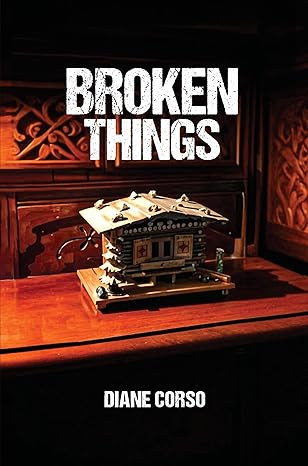

Broken Things is a beautifully raw novel about a woman named Maggie Oliver who’s reeling from the loss of her husband and son after a traumatic accident. Left with little more than a lakeside cabin and a bucket of unresolved pain, she escapes her old life in San Francisco and holes up in the Sierra Nevadas. But this isn’t just a grief story. It’s a sharp, funny, sometimes eerie look at healing, memory, and rediscovering identity when everything else feels gone. The book swings between the very real, like Ambien-fueled breakdowns and late-night sobs, and the surreal, with dreamlike elements and mysterious happenings that might just be her imagination. Or maybe not.
I was genuinely surprised by how often I laughed while reading a novel so deeply rooted in trauma. Corso’s writing carries a dry, cutting wit that never feels forced, it’s a natural extension of Maggie’s voice. Her narration is filled with sharp observations and brutally honest reflections, often delivered with a kind of dark humor that perfectly balances the heaviness of her grief. One moment that stood out occurs during a storm, when she panics and thinks, “I’m not going to die alone at the hands of a cruel, cabin-smashing troll.” It’s absurd on the surface, yet completely relatable to anyone who’s ever spiraled into irrational fear late at night. This blend of levity and pain doesn’t undermine the story’s emotional weight; instead, it makes Maggie feel vividly real, like someone you know well enough to reach out to.
What really got under my skin, though, were the strange, almost ghostly twists. There’s a whole chunk where Maggie sleepwalks and finds furniture rearranged and the pilot light mysteriously lit, things she swears she didn’t do. Then there’s the discovery of a music box shaped like a cabin that feels like more than just a keepsake. These elements creep in slowly, and they’re not loud or gory, they’re unsettling in a quiet way. The mystery is never over-explained, which I loved. It left me with questions that lingered in the back of my mind long after I put the book down. Is it grief? Is it the house? Or is it something else entirely?
The real heart of the book, though, is Maggie’s slow, cautious return to life. Her relationship with her quirky neighbor Zach and his precocious daughter Mina adds so much warmth to the story. There is a moment when Mina simply asks Maggie, “Are you sad?” and the directness of that question is profoundly affecting. Kids don’t dance around grief the way adults do. That moment was simple, but so emotionally honest. I appreciated how Corso let Maggie be messy and weird and not always likable, she’s not some perfect, noble widow. She’s bitter, she’s sarcastic, she cries in her car. And that’s what makes her journey back to writing, and maybe even back to joy, so satisfying.
Broken Things made me feel a lot. It made me laugh. It made me uncomfortable. It made me think about my own griefs, the ones I’ve shared, and the ones I haven’t. I’d recommend this book to anyone who’s been through a loss, or who just loves character-driven fiction with a sharp voice and a touch of weird. It’s for fans of dark humor, haunted houses, and messy healing. It’s one of those stories I’m going to be thinking about for a long while.
Pages: 300 | ASIN : B0F6W5P5H3
The Coldmoon Cafe

The Coldmoon Café is a strange and beautiful book. It’s part gothic fairytale, part fever dream, and part late-night forum thread from the ‘90s. The story follows a rotating cast of mourners, monsters, and misfits who stumble into a mysterious café that only seems to exist for the broken. There’s no central plot in the usual sense. Instead, it’s a collage of scenes, slow-burning conversations, poetic memories, and surreal moments of magic and grief, set against a backdrop of found family, old rites, and quiet hunger. The café, always watching, becomes more than a place. It’s a mood, a threshold, a ritual. And the people who gather there aren’t just characters. They’re ghosts of the internet age, wrapped in myth and melancholy.
The prose is lyrical, atmospheric, and at times so intimate it feels like eavesdropping. It drifts between styles like journal entries, script-like dialogue, and immersive third-person. What surprised me most was how emotional it got. Not loud, not dramatic. Just a steady ache. Like someone humming an old lullaby at the edge of a dream. The author manages to make the supernatural feel deeply human. There are vampires, shifters, witches, and magical scars, but what resonates the most are the quiet admissions of grief, of guilt, of wanting to matter to someone. Some parts made me tear up without warning.
The pacing is uneven, I think on purpose. Some chapters are full of action, others are just two people talking in a room for pages. There’s no traditional story arc, no tidy resolutions. And it leans heavily into its origin as a stitched-together roleplay with references, fragmented lore, insider nods that could leave some readers a little adrift. But for me, that was part of the magic. It feels like a digital séance. A love letter to forgotten usernames and forum ghosts who made stories when no one was watching. There’s a strange honesty in that. A kind of myth born out of message boards and memory.
I’d recommend Coldmoon Café to anyone who’s ever felt like a liminal creature. Folks who grew up online, who found solace in dark fantasy, who know what it’s like to carry sadness in your bones but still laugh with your friends at 3 a.m. It’s for people who miss LiveJournal, who remember the beauty of broken syntax and late-night confessions. This isn’t a book you read fast. It’s one you sit with. Maybe while it’s raining. Maybe while you’re a little heartbroken. Maybe while you’re ready to believe in something weird and beautiful again.
Pages: 583 | ASIN : B0FGW3YTJR
Spear of Lugh: The Witch’s Rebirth Part III
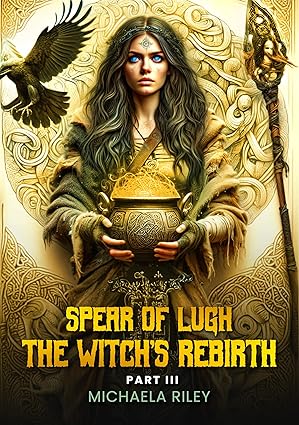
Michaela Riley’s Spear of Lugh is the third installment in “The Witch’s Rebirth” series, a rich, atmospheric tale set in the mythic shadows of 6th-century Celtic Europe. The novel follows Merona, a powerful and timeless witch reborn across centuries, as she confronts an ancient evil, Armaeus, and embraces her destiny as the Keeper of Balance. Armed with relics of the Tuatha Dé Danann, the Spear of Lugh and the Cauldron of Dagda, Merona must navigate not only magical trials but also profound loss, divine expectations, and an aching search for identity, sacrifice, and love. As she chooses immortality and confronts her lineage, she stands poised to guide the world into a new era between the fading pagan gods and the rising tide of Christianity.
I found myself completely pulled into the world Riley has created. The writing is poetic and often breathtaking, especially in how it captures the sorrow and wonder that run through Merona’s journey. There’s a haunting stillness in the way the earth, the gods, and the past seem to breathe alongside the characters. Some passages are stunning. They read like spells themselves. At times, the prose drifts into over-explanation. Riley clearly loves this world and these myths, and the devotion is admirable. The heart of the book, Merona’s grief, her rebirth, her will to love despite endless loss, resonated with me. I was moved. I cared deeply. The final scenes between her and Murdach felt earned and emotionally honest, even amidst the grand fantasy of it all.
Spear of Lugh wrestles with the weight of duty, the seductive nature of power, and the pain of watching people you love fade while you endure. The mythology is dense, but it never loses sight of its human core. Merona is not some untouchable goddess; she’s aching, flawed, and strong because she chooses to keep going. The idea that hope itself can be more powerful than any weapon, that stuck with me. Armaeus felt like a classic villain. His menace is conceptual, not visceral. In contrast, the true tension came from Merona’s internal battles, and those were beautifully done.
I’d recommend this to readers who love lyrical fantasy steeped in myth and feminine power. It’s not a light read, there are layers, histories, and symbols in every chapter, but if you’re willing to dive in and let it wash over you, it’s rewarding. For fans of Marion Zimmer Bradley, Juliet Marillier, or even Diana Gabaldon, Spear of Lugh will feel like a homecoming. It certainly left me thoughtful, a little raw, and deeply curious for what comes next.
Pages: 338 | ASIN : B0DWVZ2CXQ
THE SYMBOL
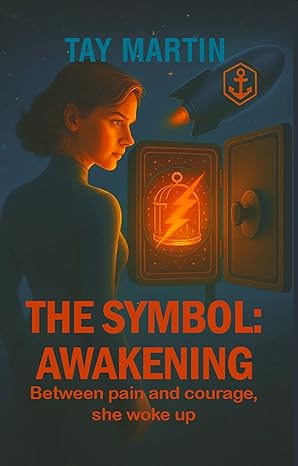
Tay Martin’s The Symbol: Awakening is a futuristic dystopian novel set in a technologically advanced world dominated by a repressive global Council. The story follows Louise Stuart, a fierce prosecutor dedicated to combating violence against women. Through flashbacks and vivid memories, we learn of her tragic past, including the brutal murder of her mother by her abusive father. These events shape her mission to dismantle systemic oppression and bring justice to survivors. Blending elements of science fiction, social commentary, and psychological realism, the novel explores deep emotional scars, the complexities of power, and the enduring human need for connection and hope.
The opening chapters with young Louise and her mother were raw and devastating. Martin doesn’t sugarcoat trauma. Instead, she pushes you face-first into it. Louise’s voice felt personal. Sharp but tender. I could feel her fear, her rage, her exhaustion. What gripped me most wasn’t the flashy futuristic world, though that part was cool, it was the quiet, painful intimacy of surviving and the way that pain echoes years later. Martin weaves together trauma and resistance with such care that you don’t feel like a spectator, you feel like a participant.
Sometimes the narrative leans into exposition, especially when it comes to describing tech or Council protocols. There were moments I wished the dialogue would let the characters speak with more silence and space. But then Martin hits you with lines so real they sting. The pacing could feel uneven, sure. But emotionally, it was constant. One minute, I was furious at the Council. The next, I was holding my breath as Louise tried not to fall apart. I also appreciated the warmth, her friendship with Emma, her complicated bond with Joe, her stubborn, enduring humanity.
I’d recommend The Symbol: Awakening to anyone who cares about justice, trauma recovery, and stories led by resilient, complicated women. If you like dystopias with heart, or character-driven narratives where healing is messy but possible, this is for you.
Pages: 239 | ASIN : B0FGDTR2PZ
Winning is Not Always Winning
MATE takes a unique look at marriage through the lens of a chess match in which each phase of the relationship is examined with play-by-play commentary. Why was this an important book for you to write?
This was my first and, probably will be, my only, relationship book. The challenges were many. I had to restrain myself from judging the couple’s actions. Since “the game” happens on a subconscious level, I didn’t want their behaviors to be extreme. The book revels in making the everyday, seemingly insignificant things said and done to be monumental and epochal. Only they don’t know it. Hence, the use of the commentator, who may get a tad overwrought in the interpretation and importance of their actions. Also, I had to purge myself of caring who was the winner in “the game”. The commentator addresses this early on. Winning may be not be really winning. Winning a game may actually be detrimental, but the players will never see why.
How did your idea to use the chess metaphor evolve as you planned and wrote this book?
I started with the Chess scheme. It had been on my mind for many years. The chess/marriage idea seemed natural. “War” might be extreme. You could call it battles. The conflict and friction that I dwell on was probably influenced my reading the work of R. D. Laing in the 1970s. His book Sanity, Madness, and The Family had an impact on me.
What do you find is the most difficult aspect of writing about relationships?
The most difficult part was trying not to forget to include the many aspects and perspectives on their relationship. Each other, the kids, the friends, parents, the in-laws, not mention the other innumerable sources of conflict. Ultimately, it took a long time to write the book because of the nature of the narrative. There were few opportunities to elaborate on the details of their conflicts except for the times the commentator rhapsodized about certain episodes and the games that were summarized and did not advance move by move.
What is one thing you hope readers take away from MATE?
Because MATE took a long time to write, causing me to think too much about different ways to engage the reader. Two examples: One, leave some blank pages after a chapter and have the reader rewrite how he or she would have the chapter on the children or the living arrangements would go. Second, at the end of the novel, leave eight to ten pages and have the readers write the “game” of their own marriage – it would be interesting to compare the woman’s to the man’s version.
Author Links: GoodReads | Website | Facebook | Amazon



 LITERARY TITAN