Blog Archives
Wolf of the Nordic Seas
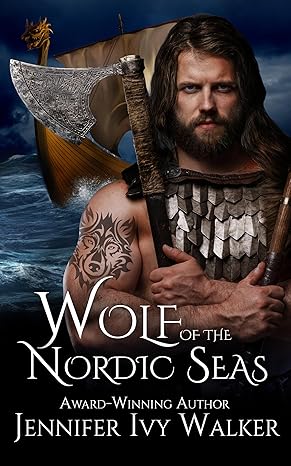

Wolf of the Nordic Seas is a high-stakes romantic fantasy steeped in Norse mythology, Viking lore, and a smoldering enemies-to-lovers storyline. It follows Elfi Thorfinnsdóttir, a fierce shield maiden and heir to the coastal Viking stronghold of Étretat. After her father is captured by a ruthless Frankish count who demands her hand in marriage, Elfi finds herself caught between political alliances and personal vengeance. Enter Njörd Ívarrsson, the massive and mysterious Viking jarl sent by King Harald Bluetooth as a potential suitor and military savior, known ominously as the “Wolf of the Nordic Seas.”
I went in expecting a standard historical romance with Viking window-dressing, but Walker does not play it safe. She throws you straight into Elfi’s blood-soaked world with battle cries echoing off castle walls and an emotional punch that hits early. The writing is raw and cinematic, and the grief Elfi feels over her brother’s death is gutting, and her frustration at being locked away during a siege really sets the tone. I could almost feel the chill of the tower stones under her hands. That kind of visceral writing pulls you in fast and deep.
What stood out most for me, though, was the sharp contrast between Elfi’s strength and the emotional vulnerability Walker lets slip through the cracks. She’s not your typical damsel or stoic heroine; she’s fiery and flawed. When she meets Njörd, there’s this magnetic tension that you feel before either of them says a word. That scene where she sees him from her tower window with white wolfskin, wild hair, and hulking presence is pure electricity. Walker’s prose here is lush and full of heat, and I was hooked. The way Njörd calls her “mine” during their first dance is swoon material.
The pacing occasionally bordered on indulgent. Certain passages adopted a highly poetic tone, which, while contributing to the rich world-building, at times hindered narrative momentum. The skaldic verse battle midway through the novel, though an engaging cultural element, felt somewhat tangential to the central tension. I admire Walker’s willingness to dwell in the details; her descriptions of feasts, sea cliffs, and silk wedding gowns are rendered with a vividness that nearly lifts them off the page.
Wolf of the Nordic Seas is a sweeping, sensual tale of love and loyalty that wears its heart (and sword) on its sleeve. If you’re into Viking mythology, strong heroines, brooding warrior-lovers, and a story soaked in lore and longing, you’ll have a blast with this one. I’d recommend it to anyone who loves historical fantasy with romance turned all the way up. I’m already craving the next book in the Valiant Vikings series.
Pages: 357 | ASIN : B0F22JS3CM

Muunokhoi’s Awakening
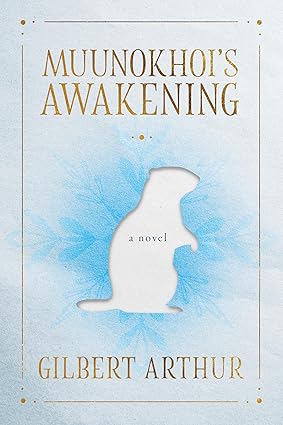
Muunokhoi’s Awakening is a strikingly original tale that follows the unexpected journey of Muunokhoi, a marmot who wakes from hibernation too early, alone, alert, and unable to return to sleep. As he grapples with the isolation and fear of premature awakening in a world still deep in winter, he must confront an existential dilemma: remain and face certain death, or venture into unknown lands in search of food and survival. What unfolds is a rich, anthropomorphic adventure that’s both literal and deeply metaphorical, exploring identity, purpose, and the meaning of community.
Gilbert Arthur writes animals better than most people write people. From the very beginning, Muunokhoi’s inner monologue feels real, relatable, and surprisingly witty. I found myself genuinely amused by his reflections on his consorts, colony logistics, and especially his pride in having the foresight to give each of his consorts their own chambers to avoid drama (smart marmot move). The attention to marmot colony politics, with just a dash of dry humor, makes the story feel lived-in and oddly familiar, even if you’ve never thought twice about a marmot in your life.
What really hooked me emotionally was the owl, Bolor. Their first conversation is gold. When Bolor, who’s supposed to be a predator, instead turns out to be this curious, wise, slightly sarcastic ally, the story takes a lovely turn. The dialogue between the two, like when Bolor says, “How can a marmot not hibernate? It’s the essence of who you are!” is sharp, funny, and somehow very touching. That whole chapter made me stop and think: What happens when you can’t do what your species or society expects of you? It’s a question a lot of us face, and Muunokhoi’s literal awakening becomes this beautifully written metaphor for that kind of existential shift.
The flashback chapters caught me by surprise with their emotional weight. The origin story of Muunokhoi and Sarantuya meeting was a standout. I didn’t expect to get misty-eyed over two marmots bonding over their shared baggage. Sarantuya’s boldness and unfiltered honesty, especially when she pointedly asks, “Am I going to be your consort?” added a refreshing and endearing depth to her character. The scene where she confidently returns to her former colony, openly showcasing her newfound happiness to those who had once belittled her, is particularly striking. It’s a moment rich with quiet defiance and personal vindication. This episode introduced unexpected emotional complexity to the narrative, weaving in themes of romance, resentment, and familial conflict, all anchored by an authentic emotional resonance.
By the end, I was fully rooting for Muunokhoi not just to survive winter, but to figure out who he is now that the rules have changed. The pacing takes its time in places, allowing for a deeper exploration of Muunokhoi’s thoughts and emotions. While some of the internal monologues are more extended, they offer valuable insight into his character. Throughout, the writing remains warm, thoughtful, and sincerely grounded in the emotional truth of the story. It’s not often a book about a marmot gets you to reflect on your own sense of purpose, but here we are.
Muunokhoi’s Awakening is a deeply unique story that somehow manages to be an animal adventure, philosophical fable, and heartwarming romance all at once. It’s perfect for readers who enjoy books like Watership Down or The Wind in the Willows, but want something more introspective and slightly modern in tone. If you’re a fan of stories that blend humor with heart and challenge you to see the world (and yourself) a little differently, this one’s worth waking up for.
Pages: 330 | ASIN : B0DST5M6X2
Humanity At Fault
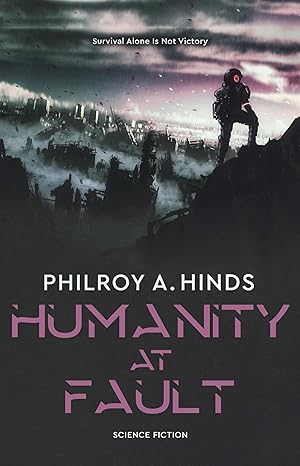

Humanity At Fault is a sweeping and deeply emotional sci-fi epic set in a far-future universe where the remnants of humanity grapple with guilt, memory, and cosmic consequences. The story follows survivors of a catastrophic crash on an alien world called Symphony that eerily mirrors Earth. There, they encounter entities known as The Collective, who deem humanity responsible for unleashing a galaxy-consuming plague. Through surreal visions, temporal dislocations, and interstellar battles, the book dives into themes of redemption, loss, and the staggering cost of survival. It’s both intimate and enormous in scale, often switching from quiet, personal reflections to grand, space-faring action.
Reading this book was like tumbling down a rabbit hole of stars and memories. Hinds’ prose is rich and poetic, sometimes dizzying, but always heartfelt. His writing is thick with emotion. I found myself rereading sentences not because they were unclear, but because they were beautiful. The opening chapter—dreamlike and full of longing—hooked me right away. But then the pace suddenly exploded, hurling me into a nightmarish planetary descent that had my heart in my throat. There were moments when I felt lost in the swirl of names, timelines, and metaphysical spaces, but oddly, that sense of disorientation fit the story’s tone. This is a book about being unmoored—physically, temporally, emotionally.
What truly stayed with me, though, were the characters. Brynn and Kelsey, especially, felt real and raw in a way sci-fi often misses. Their grief, resilience, and haunted love for their pasts made me ache. And the dialogue—sometimes clipped, other times poetic—rang true even in the most fantastical situations. I did feel the narrative leaned a little heavily on exposition in the middle chapters, and the layered timelines could be hard to follow. But that chaos mirrored the existential mess they were trapped in. It felt intentional, even if it slowed the story’s rhythm now and then.
Humanity At Fault is an ambitious story, but one that was entertaining. It’s not your average space opera—it’s more like Interstellar had a baby with Arrival, raised on the emotional weight of The Leftovers. I’d recommend this book to readers who love character-driven sci-fi that isn’t afraid to get philosophical or poetic. If you’re the kind of person who stares out of windows thinking about your mistakes and the stars, this one’s for you.
Pages: 308 | ASIN : B0DZS3NKKQ
The Heart of the Trilogy
El legado de Nahia follows a fairy torn between love for her human-turned-family and her duties in the Soberanía de las Hadas (Fairy Realm). What was the inspiration for the setup of your story?
El legado de Nahia is Book 3 in my Faerie Legacy Series and Nahia is the rebellious faery princess whose story fills in that 200-year gap between books 1 and 2 (Herencia Encantada and Un Don de Cuna). Her strengths and weaknesses lead her to change her family’s genetic footprint and, after a great many adventures, to a bittersweet victory.
What character did you most enjoy writing about? Was there one that was more challenging to write than others?
I loved writing Nahia’s character arc; she matures so much throughout this novel. Not sure why, but I also get a fiendish kick out of writing antagonists, and in El legado de Nahia, it was very satisfying to develop Alaia and Ederne as their own plots threatened our heroine.
Friendship, love, sacrifice, and duty are virtues that are highlighted throughout the story. Why are these important in telling the story?
Beyond the fantasy in this novel (really the whole series) we find a great deal of realism. At the heart of the trilogy is the relationship between women in a family, hybrid though it might be. How mothers and daughters communicate and relate to one another is a critical aspect of this 200-year saga driven by generational love.
Where do you see your characters after the book ends?
At the end of El legado de Nahia we leave the family poised to move forward in blissful interdimensional harmony. Although that has the traditional fairytale happy ending vibe, the thought of a 4th book has been nagging at me. The chronicle of the latest descendant of the Santillán clan is just too tempting to leave alone. As soon as I come up with a proper conflict for young Aintza, I’m sure book 4 will take off.
Author Links: GoodReads | BlueSky | Facebook | Instagram | Website | Amazon
Emotional Free Fall
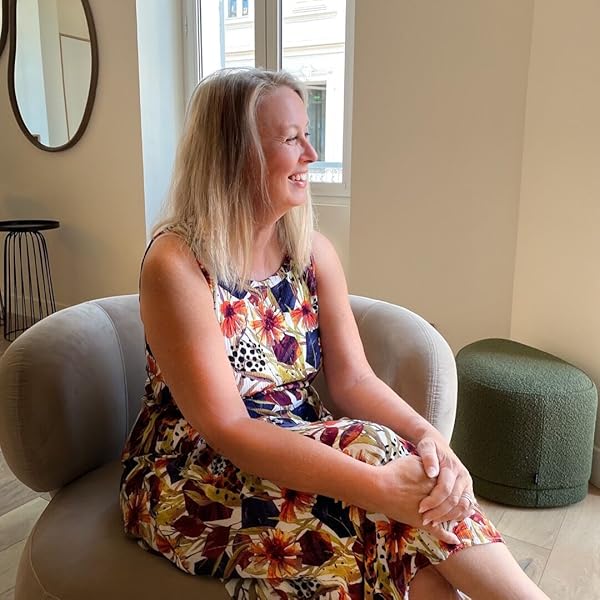
The Scald Crow follows a Canadian news anchor who loses her job and the last of her family, leading her to move to Ireland to claim an inheritance from a man she has never met. What was the inspiration for the setup of your story?
I knew I wanted the story to be set in Ireland—it’s a place that pulses with history, myth, and an atmosphere that feels almost otherworldly. But I also wanted a protagonist who had a compelling reason to go there and never look back. That’s where Calla came in. She’s a Canadian news anchor who loses not just her job, but the last of her family. That kind of emotional free fall gave her the perfect motivation to uproot her life and start fresh. The idea of her inheriting something mysterious from a stranger in Ireland just clicked—it opened the door to secrets, magic, and self-discovery. It was the setup I needed to launch her into a world where reality and myth collide.
In many contemporary coming-of-age fiction novels, authors often add their own life experiences to the story. Are there any bits of you in this story?
Absolutely. I spent ten days in Ireland with my family, and every location mentioned in The Scald Crow is a place I actually stood. The cliffs, the pubs, the winding roads—all of it left an imprint on me. But it wasn’t just the landscape. It was the people. Bits and pieces of the locals—their warmth, wit, and mystery—found their way into my characters and dialogue. So yes, there’s quite a bit of me in this story. It’s woven with real moments, real places, and the kind of magic you can only feel when you’re truly present somewhere that stirs your soul.
What were some themes that were important for you to explore in this book?
One of the most important themes for me was bringing to life the magic of the land, the folklore, and the people. Ireland is rich with stories that feel older than time, and I wanted that deep-rooted sense of myth and wonder to pulse through every page. I was drawn to the idea that the land itself holds memory and mystery and that the people—whether mortal or magical—are deeply connected to it. Exploring how place shapes identity, and how folklore can both haunt and heal, was at the heart of writing The Scald Crow.
Where does the story go in the next book, and where do you see it going in the future?
In the next book, Resurrection, Calla journeys into the otherworld and meets the magical family she never knew she had—including twin sisters who are opposites in every way and a father with a dangerous glint in his eye. As old powers awaken and a ruthless prince threatens the realm, Calla discovers abilities she never imagined—shifting into other beings in moments of fear. Meanwhile, Colm must reach back through bloodlines and legend to save her, even if it costs him everything.
The future of the series? Let’s just say the veil between worlds is growing thinner… and not everyone who crosses it will return the same.
Author Links: GoodReads | Facebook | Website | Amazon
Colm fled from Clonmara seven long years ago, but now it’s his father’s birthday, and the clan has gathered to celebrate the ould one. Each day brings back the memories that ruined him.
Saoirse dwells in the shadows of a lost love, unwilling to move on and unable to forget. The crystals say one thing, but the cold, hard truth tells another.
Ciarán walked away from the woman he loved for the fun, for the craic. He didn’t realize that one rash decision would impact the lives of so many, least of all his own.
Four broken hearts, brought together by the thread of love.
This Book Scared Me
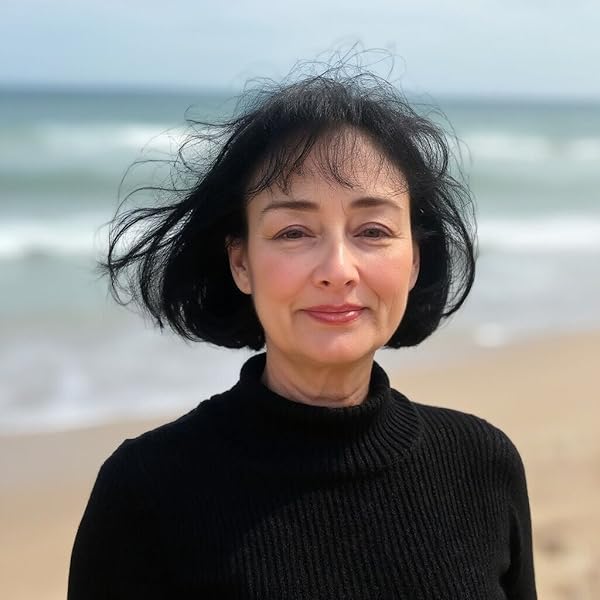
By Dawn’s Early Light follows a forensic pathologist and her assistant as they try desperately to make sense of the utter wasteland in which they have found themselves stranded. What was the inspiration for the setup of your story?
This is an interesting story. I have a summer house in the Adirondack mountains and there is a story or urban legend (don’t know which), there was a CIA black site in the town of Indian Lakes. Rather than tell you the story, you should read it for yourself: Indian Lake Project. I mixed that in with research I did on radiation. There are items that are naturally radioactive: kitty litter, bananas, Brazilian nuts, and a few other items. I mixed it all up and the book was born. I will tell you this book scared me when I was writing it because it could really happen. Also, a couple of months ago, there was a story in the news about a man preparing to plant a bomb under the NYSE. One thing I do is research topics heavily and I am frightened the book I spent a year writing was coming true!
What is it about dystopian fiction that intrigues you?
I am shocked at all the ways humanity can die. This is probably the only genre that doesn’t need a bad guy! It could be a weather phenomenon, earthquake, asteroid, you name it!
What’s the most difficult thing about writing characters who exist in a world so different from our own?
Actually, in most dystopian books, generally, everything starts out normal. I try to get all of my science research on point as much as possible. The one thing I do enjoy in my books is giving the message of hope. Regardless of how life changes, everyone on earth has hopes and dreams. In my books, I relay the message of hope.
Can fans look forward to seeing more releases from you soon? What are you currently working on?
I’ve since released Seismic Eruptions. That has been doing well on Amazon. My latest work that will be coming out in the next two weeks is Utopia. This is the first book of a trilogy about the first manned mission to Mars. I had such a great time learning about what the astronauts go through! This was the most fun book I wrote and it’s also the largest! Book 1 turned out to be 850 pages, but I pared it down to 600 pages. I want to bring it down to around 400 words.
Author Links: GoodReads | X (Twitter) | Facebook | Website | Amazon
With lives hanging by a thread and panic spreading, Sasha and Jake uncover a chilling truth: a shadowy cabal orchestrates the devastation, with their sights set on total annihilation. As they untangle the web of deceit, the sinister figure of Mustafa looms, his hand at the helm of destruction beneath the New York Stock Exchange’s crumbling foundations.
Racing against time and against those who profit from chaos, Sasha must confront the darkness threatening to consume her country. Each step forward is a step deeper into a world where allegiances shift like sand, and trust is a rare commodity. Will Sasha and Jake uncover the forces that threaten to destroy America, or will the darkness swallow them whole before dawn breaks again?
Hatfield 1677
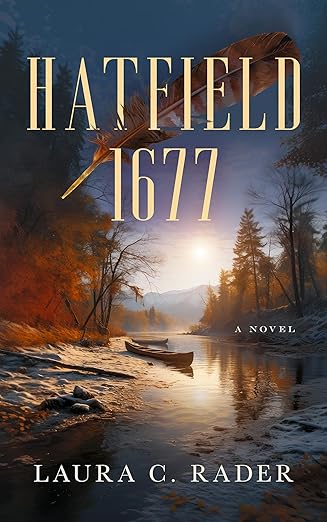
Hatfield 1677 is a vivid historical novel rooted in the real-life events of King Philip’s War. The story centers on Ben and Martha Waite, a Puritan couple whose lives are ripped apart by conflict between English settlers and Native tribes in colonial Massachusetts. When Martha and her children are captured by Native warriors, Ben sets out on a perilous mission to bring them home. Through alternating perspectives, including that of a Nipmuc sachem, the novel explores survival, love, loss, and the brutal toll of war.
From the first chapter, where Ben says goodbye to his wife and children before riding off to war, the writing has this warm, steady heartbeat. It’s historical fiction, but it never feels dry or overly formal. Rader’s prose strikes a compelling balance between lyrical and grounded. She captures intimate, sensory moments with remarkable clarity, Martha rinsing her hair in lavender water, Ben riding through the ruins of Deerfield, the tense stillness before a storm. The detail is immersive without becoming excessive. Even in the opening chapter, as Ben says a quiet, emotional goodbye to his daughters, the writing evokes a tenderness and fear that is both deeply human and hauntingly real.
What really struck me, though, was the moral weight Rader builds into the action. She doesn’t sugarcoat anything. The chapter on the Falls Fight was gutting. When Ben storms a Native camp and ends up sparing a young mother and child, it’s not some triumphant moment; it’s raw and messy. He throws up afterward. His pistol shakes in his hand. He can’t even speak about it when he gets home. It’s that emotional honesty that makes the violence and grief in this book hit so hard. And then you get Ashpelon’s chapter, a Native leader telling a parable about greedy squirrels, and suddenly, the whole war feels even more tragic. It’s layered and thoughtful without being preachy.
One thing I didn’t expect and ended up loving was Martha’s voice. She’s not just “the wife back home.” She’s smart, she’s tough, and she’s trying to survive just like everyone else. Her scene with Hannah, when they talk about love, abuse, and the impossible choices women face, felt painfully modern. There’s one line, when Martha’s holding her daughter and watching her husband ride off, where she says, “Your fair beard will need a trim when you return.” That crushed me. Because it’s not really about his beard, it’s hope, and fear, and trying not to fall apart.
Hatfield 1677 is a love story wrapped in a war story, with sharp writing and real emotional stakes. If you’re into historical fiction with heart and teeth or if you just want a book that’ll leave you thinking about it long after the last page, this one’s for you. Fans of Cold Mountain, The Last of the Mohicans, or even Outlander (minus the time travel) would feel right at home. I highly recommend this book to readers who like stories that are as much about people as they are about history.
Pages: 410 | ASIN : B0CW18FWXS
An Incredible Collaboration
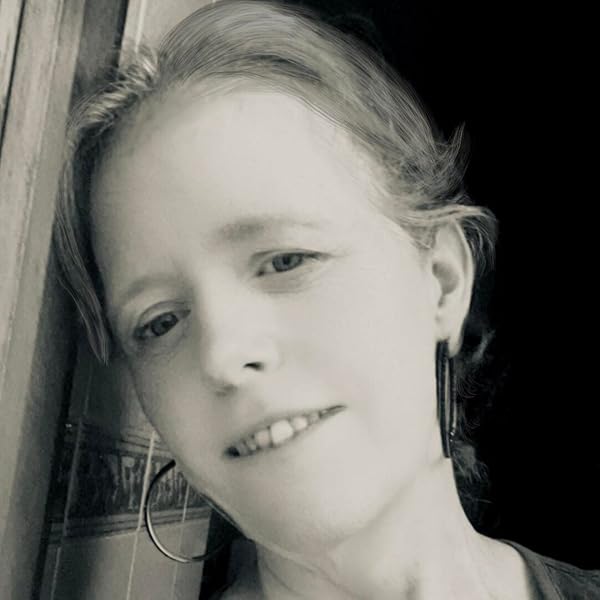
Ghosts: The People That Melt in the Rain #2 plunges Laura into the haunting town of Deluge, where emotional power unlocks eerie mysteries, and reality bends under the weight of the strange. What was the inspiration for the setup of your story?
Years ago, I lived in New York and one summer as I pushed my toddler on the swing in our front yard, a fast-moving thunderstorm suddenly clouded the sky and began to spit rain down upon us. I quickly scooped up my daughter, and as I was rushing her inside the house a title flashed in my mind, The People That Melt in the Rain. It was a shocking moment of inspiration. That afternoon I sat playing with my daughter, staring out at the pouring rain and pondering a cursed town with residents that actually melted in the rain.
Obviously, I had to approach the story with a “stranger comes to town” plot and that is how I began book one, with Laura’s move to Deluge. This book Ghosts reveals more of the mysteries of the town and starts to present Mrs W. as a possible antagonist. I wanted to create a magic realism throughout all the books, and with the help of my husband, Mike Dubisch, we have definitely managed that in this series. He draws these comics and has had a great deal of input on the plot and characters as we go on through the story. I help with layouts and coloring the comics, so it’s become an incredible collaboration.
Laura’s tears play a pivotal role in this volume. What do they symbolize for you?
The term “crocodile tears” comes from the fact that when crocodiles eat, they cry. Why? Why do they shed so, so many tears? Why are these reptiles bawling when they consume their prey? No one knows why but it plagues me, as if they regret their need to hunt and kill.
Tears are more than water. They have hormones and chemicals and serve us quite well. They communicate emotions, clean our eyes from irritants, and help us process and understand our experiences. They are magic in a lot of ways.
In this story Laura’s tears are of loss (her own loss of her home and friends) and of empathy for Huya’s loss and imprisonment. These are powerful emotions and emotions have a profound effect on everything in our lives. This story is a classic “Chosen One” tale, so of course Laura’s tears pack an even more powerful punch.
What were some themes that were important for you to explore in this book?
A sense of feeling stuck or trapped is woven throughout all the books in this series. What I really wanted to convey is a sense of learning to navigate an impossible situation, conquering challenges, and ultimately of Laura and many of the characters becoming very resilient.
Themes of friendship, courage, and mystery are at the very heart of this story.
What is the next book that you are working on, and when will it be available?
The next book in this series is called Rain and it just came out in the last few weeks. It’s already been getting great reviews! The People That Melt in the Rain has an every 8 months publication schedule and Mike and I are currently working on the art for book six.
As an author/illustrator team, we also have a children’s book coming out for the next Christmas season called Crow’s Christmas Star, which is funny and sweet and I hope people will consider it for the child in their life this Christmas.
Author Links: GoodReads | Facebook | Amazon



 LITERARY TITAN