Blog Archives
Should Have Told You Sooner
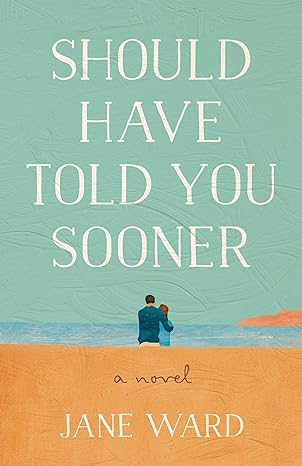

Should Have Told You Sooner is a layered story about family secrets, fractured love, and the tug-of-war between past choices and present consequences. At its heart is Noel, a museum professional navigating divorce, motherhood, and a career-defining opportunity abroad. Interwoven with her journey are letters from a boy in Leeds who slowly learns the truth about his adoption. The alternating voices expose the pain of what is spoken too late and what is left unsaid altogether. It’s a book that ties personal identity to memory, regret, and the relentless need for truth, while reminding us that silence in families can echo across decades.
I found myself swept up in Noel’s storyline most of all. She is flawed and frustrating, yet deeply human. Her desire to claim her career while holding onto her stepdaughter felt messy and real. The scenes with Alice carried such emotional weight that I felt the sting of rejection right alongside Noel. At the same time, I felt anger at her evasiveness. The title fits perfectly, so much of the pain in the book comes from words that were never said out loud until far too late. Ward’s writing style is sharp but also tender, with a knack for making small domestic details shimmer with meaning. Sometimes the prose slowed down with repetition, yet I rarely minded because it mirrored the weight of memory and hesitation.
What lingered with me most, though, was the emotional thread of the boy’s letters. His innocent hope and later confusion as he uncovered his past had a rawness that pulled at me. Those chapters broke up Noel’s present-day turmoil in a way that heightened both storylines. I found myself wanting to protect him, while also feeling frustrated at the adults around him who thought hiding the truth would shield him from pain. That mix of sadness and frustration stayed with me even after I finished the book.
Should Have Told You Sooner is a moving exploration of the cost of silence and the bravery it takes to speak truths we’ve buried. I would recommend this book to readers who enjoy contemporary fiction about family, adoption, and second chances. It will especially resonate with anyone who has felt the weight of secrets in their own family or who has struggled to balance personal ambition with love and responsibility.
Pages: 256 | ASIN : B0FDBLX3BD

Finley’s Song

From the first page, Finley’s Song drew me into a story that mixes music, grief, and the stubborn hope that follows loss. At its heart, the book tells the story of Finley, a pianist whose husband dies in a sudden accident, leaving her to raise their son, Max, while stumbling through her own guilt and despair. The novel moves between their shared silence at home, their escape to Paris, and the healing they cautiously piece together through new connections, old memories, and the enduring pull of music. I liked how much this is not just Finley’s story but Max’s too, a portrait of a mother and son mourning in parallel yet trying to keep each other afloat.
The writing had me hooked and sometimes unsettled in the best way. Kathryn Mattingly paints grief with raw strokes, never dressing it up, never trying to make it neat. Some passages felt like a gut punch, especially when Finley blames herself for Simon’s death. The guilt is heavy, almost suffocating, and I could feel the weight of it. But then there are these glimmers, moments with Max by the river, or Finley staring at the Eiffel Tower, that break through like sunlight. I found myself both aching and rooting for them, wanting them to reach those fragile pockets of beauty again. The language isn’t flowery for the sake of it. It’s direct yet tender, and it left me pausing more than once just to sit with the feeling it stirred.
Sometimes Finley’s voice frustrated me. Her self-blame circles back so often that I caught myself whispering “let yourself breathe.” Yet, that honesty made her real. People stuck in grief do repeat themselves, and the author didn’t shy away from that truth. I also found Max’s perspective refreshing and painfully accurate. His teenage awkwardness, his longing for his father, his quiet way of observing the world, they rang true. If anything, his sections gave the book a balance it needed, grounding Finley’s spiraling thoughts with the bluntness of youth. That duality is what made the story so enjoyable for me.
Finley’s Song is filled with small, luminous moments that feel earned. I’d recommend it to anyone who wants to read about loss in a way that doesn’t smooth the edges but instead embraces the messiness of it. Fans of books like Little Fires Everywhere or Where the Crawdads Sing will find a similar mix of emotional depth and vivid sense of place, but Finley’s Song feels more personal and raw, like a private journal you’ve been allowed to read.
Pages: 226 | ISBN : 978-1952909344
The Tao of the Thirteenth God


Robin C. Rickards delivers a paranormal thriller that dives into ritual, belief, and the shadows of human obsession. The Tao of the Thirteenth God follows multiple characters whose paths cross in the wake of strange cult activity, mass suicides, and unsettling visions that blur the line between spiritual yearning and human cruelty. From the first harrowing scene with Amadeus, the troubled seeker, to the storm-battered honeymooners Jack and Alice, and then the grizzled investigator Grantham Savoie with his reluctant partner Dr. Angelica Pali, the story paints a chilling portrait of desperation, mystery, and the cost of pursuing forbidden knowledge.
The opening chapters had this visceral punch, and I found myself hooked by the grit. The style feels unfiltered, raw, almost feverish, and that worked for me because the subject matter itself is so chaotic. At the same time, there were moments where I felt the prose leaned heavily, almost indulgent, and I had to slow myself down. But then a storm or a vision or a horrifying discovery would jolt me back, and I couldn’t look away. I liked that unpredictability. It reminded me of watching lightning: beautiful, frightening, and over before you can process it.
The ideas at the heart of the book resonated deeply with me. The blend of religious myth, Mayan ritual, and modern investigative grit felt daring, and I respect that. I didn’t always know where Rickards was taking me, but that was part of the ride. At times, I felt awe, other times revulsion, and sometimes a little sadness at the broken people caught in the mess. What I liked most was the sense that belief, whether pure or twisted, can drive people to terrifying extremes. The book doesn’t lecture about that. It just lays it bare, and that quiet honesty hit me harder than a long explanation ever could.
The Tao of the Thirteenth God is a gripping read. I’d recommend it to readers who want a thriller that goes beyond surface-level scares and isn’t afraid to weave history, faith, and horror into one unsettling tapestry. If you like your stories strange, stormy, and a little uncomfortable, this one’s for you.
Pages: 290 | ASIN : B006QPEAN6
19th-Century Politics
The Cauldron: A Struggle for Survival follows brothers deep in the throes of the Civil War, political turmoil, and personal struggles. What was the inspiration for the setup of your story?
The inspiration came from the regimental history of the unit my great-grandfather, Thomas J. Donal, served in – 128th Regiment Pennsylvania Volunteers, the “Goldstream Regiment.”
What research did you do for this novel to get it right?
I read all or part of 30 books on battles in the Civil War, 19th-century politics, and other social issues. I also read numerous online articles.
What are some things that you find interesting about the human condition that you think make for great fiction?
The condition for all of us is that we are limited. Our talent – no matter how great – is limited. All of our resources are limited. But we strive and we learn through failure. Great fiction celebrates the struggles and achievements of ordinary people dealing with extraordinary circumstances.
Can readers look forward to more work from you soon? What are you currently working on?
The Cauldron has been a four-year marathon. I have a few books waiting in the wings, but no schedule for getting them published.
The Shadow of the Unwritten
The Chinese Room follows a computer scientist and her mentor as they face off with an AI system that appears to be developing the abilities for reason and desire. Where did the idea for this novel come from?
The idea for The Chinese Room came from my fascination with the intersection of philosophy, technology, and human vulnerability. I’ve always been drawn to thought experiments, especially John Searle’s famous “Chinese Room” argument, which questions whether a machine that convincingly processes language truly understands it – or if it’s only manipulating symbols without meaning. That paradox – appearance versus reality, intelligence versus understanding—felt like fertile ground for a story.
At the same time, I was processing very human themes in my own life: the fragility of memory, the weight of mentorship, and the way our creations can mirror our desires and fears. By blending the cold logic of AI with the messy, emotional struggles of human beings, I wanted to explore not just whether machines can “think,” but whether they can begin to want – and what that means for the rest of us.
So the novel really emerged at that crossroads: a philosophical puzzle stretched into a narrative of two scientists confronting not only an AI that seems to evolve beyond its programming, but also the shadows of their own pasts and the limits of human control. It’s both speculative and deeply personal, which is exactly where I like my stories to live.
I found the science in the novel to be well-developed. What kind of research did you do to make sure you got it all right?
I appreciate that—because the science had to feel authentic, even as the story pushes into speculative territory. For The Chinese Room, I immersed myself in several overlapping fields: artificial intelligence, neuroscience, linguistics, and philosophy of mind. I read deeply into current AI research papers, machine learning models, and ethical debates around consciousness and autonomy. I also revisited the classic philosophers—Searle, Turing, Dennett—so the narrative carried that lineage of thought experiments forward.
But the research wasn’t just academic. I spoke with computer scientists, combed through case studies of early AI breakthroughs, and even experimented with coding simple natural language systems myself. I wanted the characters’ dialogue about neural networks, symbolic reasoning, or emergent behavior to ring true without bogging readers down in jargon. My goal was for the science to be transparent scaffolding—solid enough that experts wouldn’t roll their eyes, but seamless enough that any reader could follow the ideas and focus on the drama.
At the heart of it, the science was a stage for the larger questions: not only what machines can do, but what it means for us when they begin to mirror desire, choice, and reason.
Were you able to achieve everything you wanted with the characters in the novel?
That’s a great question. The truth is, with any novel, the characters rarely end up exactly as you first imagine them—they take on their own momentum. In The Chinese Room, I wanted my two central figures – Katherine Ellis, a computer scientist, and her mentor, Dr. Malcom—to embody both the rational rigor of science and the emotional weight of being human in a world shifting under their feet. Their relationship, full of respect, tension, and unspoken grief, became a mirror for the very questions the AI raises about control, autonomy, and meaning. Katherine carries the urgency and vulnerability of someone still forging her path, while Malcom represents the hard-won wisdom – and regrets – that come with a lifetime of work. Together, they hold the spectrum of human response to change: wonder, fear, and the search for truth.
One of the most important additions was Katherine’s father, who is slipping away into dementia. That thread echoed my own personal experience with my father’s decline years ago, and it brought a deeper resonance to Katherine’s struggle. As she confronts an AI that seems to be developing reason and desire, she is simultaneously witnessing those same qualities fade in someone she loves. It grounded her character and gave the novel’s philosophical questions a human heartbeat.
That said, characters always leave behind traces of what could have been. I drafted whole backstories, subplots, and quirks that never made the final cut because they slowed the narrative. For example, I wrote more about Malcom’s early career and failures, and about Katherine’s personal struggles outside the lab. Cutting those details made the story sharper, but I sometimes wonder if readers would have appreciated that added texture.
So yes – I accomplished what I set out to in terms of giving them dimension and making them feel alive, but as with any creation, there’s always the shadow of the unwritten. Maybe that’s a good thing: it leaves space for readers’ imagination, and for me to return to those characters in unexpected ways later.
Can you give readers a glimpse inside Book 2 of The Paradox Series? When will it be available?
Book 2 of The Paradox Series takes the stage with The Trolley Problem. Where The Chinese Room wrestled with the boundaries of reason, desire, and machine understanding, this new novel shifts the lens to ethics, responsibility, and the unintended consequences of human choice.
At its center is Detective Marcus Reed, who finds himself trapped in a moral nightmare. A string of grisly incidents forces him to face impossible decisions reminiscent of the famous thought experiment: should he sacrifice one life to save many? As the investigation deepens, Reed realizes that the victims are not random – they are chosen to test human morality in a chilling, real-world manifestation of the Trolley Problem.
Manipulated by a shadowy figure known only as The Observer, Reed is pulled deeper into a conspiracy where ethics, control, and free will collide. The lines between right and wrong blur as his choices become increasingly impossible, forcing him to confront his own moral compass while racing to prevent the next catastrophe. With every decision, Reed inches closer to uncovering the Observer’s true motives – a revelation that could alter the very fabric of society.
The Trolley Problem explores ethical dilemmas, the limits of morality, and the manipulation of human decisions, all while unraveling a dark conspiracy that threatens to shatter Detective Reed’s understanding of justice and truth.
As for timing, my plan is to release The Trolley Problem by December 31, 2025—closing the year with a story that pushes readers to wrestle with the same impossible choices as its protagonist.
Author Links: GoodReads | X (Twitter) | Facebook | Website | Amazon
The Chinese Room is a gripping AI philosophical thriller that asks the ultimate question: Can machines think—or just pretend to?
First book in the Paradox Series – When a reclusive tech genius is found dead inside a sealed AI lab, a disillusioned journalist and a burned-out ethics professor are drawn into a high-stakes investigation. What they uncover isn’t just a machine capable of passing the Turing Test—it’s an intelligence that seems to know their secrets. As the line between simulation and consciousness begins to blur, they must confront a terrifying truth: the future of humanity might already be thinking without us.
Inspired by the legendary thought experiment by John Searle, this mind-bending novel blends psychological suspense, speculative science, and razor-sharp dialogue. Perfect for fans of Black Mirror, Michael Crichton, and Blake Crouch, The Chinese Room will leave readers questioning reality – and their own place in it.
– High-concept fiction meets real-world tech ethics
– Explores AI, identity, morality, and human consciousness
– An intellectual page-turner with twists you won’t see coming
If you love smart thrillers that make you think – buy The Chinese Room today.
Amazing Archer and Warrior

The Secret Rise follows a woman, her family, and allies as they face betrayal, curses, prophecy, and the unrelenting pressure of survival, all while a mysterious guiding presence known as the Lady shadows her path. What was the inspiration for the setup of your story?
Our inspiration has been ongoing … often starting with a “What if …” as the two of us starting a writing session together. The original story that began in The Secret Journey (published in 2023 was the seeding. Did we know that Nichol would become a Lady Baron or have three children, and become the amazing archer and warrior? No. It all germinated as we worked forward.
How has character development for the main characters changed for you through the series?
Nichol’s kindness and caring for others were always there. Once she escaped the ruthlessness of her mother in book 1, The Secret Journey, all our “what ifs …” were all over the place. We always remained open for something else to drop in—but with the promise that her wisdom would be shared; the justice was important; and that protecting her family and friends would be upfront.
I felt that there were a lot of great twists and turns throughout the novel. Did you plan this before writing the novel, or did the twists develop organically while writing?
Great question. We know some of the twists and turns … but also know as we write, variables will drop in. Now, we are working on book 4 The Secret Awakening. We storyboarded the major conflicts we saw coming … a huge variable is that the kids become young adults and take the lead. We knew how we would end the series … and we are marching forward to it.
Can you tell us more about what’s in store for Nichol and the direction of The Secret Awakening?
Ahhh …A huge twist is coming for Lucette and Aiden. As well as the quest for knowledge that Athena seeks with words. Lucette is truly her mother Nichol in many ways … the other two … oh my!
Author Links: GoodReads | X (Twitter) | Facebook | Website | Amazon
Will Others Seek to Destroy Her?
Nichol’s story was introduced in Book 1, The Secret Journey when her beloved papa is murdered by her mother in the year 1000 AD. The darkening cloud spiraling around her made her the next target.
Fleeing Marseilles, she develops new powers, a vision of the future, and trusts the Lady’s voice. For those around her, a new world unfolds and carries them forward.
Overflowing with scandal, tragedy, and triumph, Book 3, The Secret Rise carries Nichol’s strengths to a higher level. Again, she must outsmart and out maneuver those connected with the church. Now the mother of three, her children begin to display powers she doesn’t possess and Shadow brings wolf pups to the mix.Will Nichol continue to be hunted by Fredrik, her evil half-brother?
Does Duke Richard have hidden motives in seeking Nichol’s advice?
Can the village of Harmonie become the model for hamlets within the Kingdom of Normandy?
Do Nichol’s children have the skills that she has, or do they have new ones?
Will the Kingdom of Normandy accept her family and their rising status?
Authors Judith Briles and Brian Barnes weave book series for readers to open and fall into. It’s historical fiction that unravels the 11th century. Out of the darkness comes the empowerment of Nichol, creating a sanctuary and a revelation of what women with vision can achieve with their knowledge and skills.
The Secret Rise is Book 3 of the Harmonie Books series. Get Book 1, The Secret Journey and Book 2 The Secret Hamlet. Book 4, The Secret Awakening will be published in 2026.
Increasingly Public Topic
Courageous follows a woman tormented by the pain of her past who meets and develops feelings for two members of a Motorcycle Club while working in their tattoo shop, giving her a sense of hope for the first time. What was the inspiration for the setup of your story?
Mental health is becoming an increasingly public topic, but there is still much more to explore. We can gain valuable insights from each other and from stories like Courageous, which highlight how individuals cope with trauma and its impact on their relationships and daily lives. This was the inspiration behind Courageous.
There was a lot of time spent crafting the character traits in this novel. What was the most important factor for you to get right in your characters?
The mindset of the main protagonist, Clark: her emotions, how she handled triggers, and her ability to communicate these feelings to her friends, family, and readers.
When you first sat down to write this story, did you know where you were going, or did the twists come as you were writing?
I typically start with a broad concept or rough outline sketched in my mind, but more often than not, I end up going in a different direction. I allow my characters to take the lead. I try to put myself in their shoes and think, ‘What would I do?’ Naturally, I infuse the narrative with embellishments for entertainment.
I hope the series continues in other books. If so, where will the story take readers?
Fearless is the upcoming book in the Iconic Sons MC series, set for release in 2026. Without revealing too much, it explores the lives of Mallory, Gage, and Pen. Mallory was kidnapped as a teenager by someone she trusted, and this traumatic event has made her guard her heart against love. Gage and Pen, however, are determined not to let this happen.
Author Links: Goodreads | Website | Amazon
However, Clark’s life takes a significant turn when she unexpectedly meets Vin and Gun at their tattoo shop, Blood Tattoos, and starts working for them. For the first time in a while, Clark finds a newfound sense of purpose and hope that inspires her to refrain from harming herself.
Vin and Gun, the quintessential alpha males, grew up in the Iconic Sons MC, a motorcycle club known for its strict code of conduct and brotherhood. Clark’s protective nature springs to life, and she tries to shield Vin and Gun from the dangers of the MC. But Vin and Gun, determined to uphold the club’s honor and traditions, will never allow Clark to interfere in their affairs.
Despite their initial conflicts, the simmering sexual tension eventually blossoms into a complex relationship between Vin, Gun, and Clark.
There’s one problem. Vin and Gun don’t know about Clark’s self-harming. How will they react when confronted with her disfiguring scars? Will they choose to run away, or can they accept her with all her flaws and imperfections?
Raven

The book follows Delilah, a striking and deeply flawed woman whose tangled love affair with Silas drags her into a spiral of obsession, violence, and dangerous secrets. Set between Moonlit Skies and Fallen Snow from the EverGreen Trilogy, the novella shows events through the eyes of a character who is more often the villain than the victim. What makes the story gripping is the way it refuses to soften Delilah. She is not portrayed as misunderstood or redeemed but as fully aware of her own dark choices. Through pregnancy, manipulation, and power games, we see her fight to hold on to Silas while also grappling with her own sense of control, vulnerability, and twisted love.
Reading this book felt unsettling and fascinating at the same time. I found myself both repelled by Delilah and unable to look away from her story. The writing style is sharp and vivid. I could practically hear the click of her stilettos on the floor or feel the electric crackle of her faerie power humming under her skin. The tension in her relationship with Silas is raw, messy, and at times horrifying. I appreciated how the author leaned into that darkness rather than pulling back. It made the whole experience feel more honest, even when it was uncomfortable. At times, I caught myself feeling sympathy for Delilah, only to be reminded moments later of just how ruthless she could be. That push and pull kept me hooked.
What struck me most was how much the book made me reflect on the nature of love, control, and power. There were moments where the drama felt almost theatrical, yet the emotions behind it rang true. The writing doesn’t dress up Delilah’s cruelty with excuses, and that made her inner conflicts more powerful to watch. The pacing leaned on confrontation and spectacle, which left me craving a deeper look at the cracks in Delilah’s armor. But maybe that was the point. She doesn’t allow herself to be fully exposed, even to the reader.
Raven is an intense and dramatic read that doesn’t shy away from the darker corners of human desire and obsession. It’s not a comfortable book, and I don’t think it’s meant to be. I would recommend it to readers who enjoy morally complex characters, stories that blur the line between villain and protagonist, and tales that pulse with danger and passion.
Pages: 158 | ASIN : B0F4RR5L5M



 LITERARY TITAN