Blog Archives
Snapshots in Time

Random³ Musings is your candid collection of reflections, rants, and remembrances that blend humor, grief, and unfiltered commentary into a conversation both raw and relatable. Why was this an important book for you to write?
In some ways, it is a therapeutic effort; I look back periodically to review the reasoning and logical thinking, or in some cases, the emotional responses I had recorded. It is important, I think, to encourage readers to engage in their own thoughts and develop their own.
Which section or story was the most difficult for you to write, and why?
In Passing, as it was entirely personal, with some recently passing and the ongoing sorrow of an estranged son.
You admit your biases openly in the book. How do you hope readers with different viewpoints will respond to that honesty?
I don’t have any expectations of a warm reception to some of them, as our current culture is rather explosive and expressed in the worst ways possible. To those who read past the chapter titles and the first few paragraphs, I hope I convey genuine thought or opinion. There are a few chapters I openly poke fun at or poke the bear, as it might be received.
Looking back, do you see Random³ Musings more as a journal of personal growth or as a snapshot of your voice in a particular moment in time?
A little of both, it can be said that all three books in this series are snapshots in time. I do see movement in the three titles, and growth, more growth may come as I review again over time and compare where my thinking has led me to conclude. Thank you for the interview questions, as they most certainly cause me to ponder these things and gather my thoughts that are more current and timely.
Author Links: GoodReads | Facebook | Website | Amazon
As we continue to review, rationalize, and tackle some of what gnaws at us, it is suspect it does to some extent for each of us. It is a worthy effort to go back and revisit these mental exercises in thought when something doesn’t seem to fit or conflicts with thoughts previously resolved. It is healthy and fuel for growth to give weight to questioning such matters of importance. Sometimes these matters evolve, mold, and change. Other times it is our depth of rationalizing and understanding that has changed.
Hidden Meanings

Fists in the Eye that Blinks on a Pin is a collection of poetry that feels both raw and surreal, and moves between moments of tenderness and moments of violence, exploring themes of memory, loss, and fractured identity. What inspired you to write this particular collection of poems?
This collection of poems was actually inspired by a very specific event. I was gearing up to see Billy Corgan perform at the Good Things festival when there was a sudden announcement that he would be performing an intimate acoustic set at a small venue called The Gem. The Gem is a tiny bar in a suburb called Collingwood in Melbourne, Australia. I managed to secure tickets and was huddled in this room of maybe 100 people, watching the legend Billy Corgan perform this unbelievable, stripped-back acoustic set. Truly a dream come true.
He opened up the floor to questions, and I asked how he manages to separate the emotional connection to his songs from the need to view them objectively for release to the world. His answer mesmerised me, as he talked about themes of going back to the freedom of creativity you have in childhood… reminiscing on how we have this creative flare that lets us do anything, we draw rabbits that are red with blue feet, we colour outside the lines; and it’s only once people start telling us that we’re wrong and that our drawing is terrible, that we focus on how we perceive things should be… he advocated for returning to the freedom of creativity before someone told us it was wrong. And so that’s what I tried to do with this book – just write with freedom and creativity, without concern for anything else.
How did you decide on the themes that run throughout your poetry book?
Following on from question one, there really were no preconceived themes or concepts. I didn’t set out to write the book with a particular arc or angle; nor did I know where it was going to go. Everything that was written was just written organically with a kind of spur-of-the-moment enthusiasm for creating something with freedom and enjoyment.
How do you strike a balance between clarity and ambiguity in your poetry?
It’s a good question, but probably not one I can answer. I think each reader would have a different perception of the balance between clarity and ambiguity in the book. For me, I like the idea of poetry that is more on the ambiguous side; that demands a bit of curiosity and a willingness to look for hidden meanings. But I don’t think the wider audiences like to unpack poetry anymore; people don’t want to sit down and read something that doesn’t make sense, and that they have to unravel like a code… but to me that’s what poetry is supposed to be – it’s supposed to be ambiguous, decoded…it’s supposed to challenge the reader to look deeper than merely reading the words. So who knows?
How has this poetry book changed you as a writer, or what did you learn about yourself through writing it?
I enjoyed the freedom of writing for myself first. I think my other poetry works have all been written with somewhat of a plan, a structure, a sense of narrative, and thematic linking points; I had fun writing as a homage to an experience, for the mere outcome of creating something. That was fun.
Author Links: GoodReads | Amazon
This is a rabbit painted red, with colour outside the lines; a blue foot, an orange ear – creative bliss and a child’s mind
If I Had One Wish: I’d Wish That You Were Here


If I Had One Wish: I’d Wish That You Were Here, by August E. Allen, introduces us to Wynter, a snowman whose heart aches with loneliness. One quiet winter’s night, he lifts his gaze to the stars and makes a simple wish, for friends to share the snowy world around him. His wish is answered with gentle magic as a pair of cardinals and a colony of bunnies arrive, filling his days with laughter, warmth, and companionship. Though Wynter delights in this newfound joy, a quiet longing remains. He comes to understand that those he misses are never truly gone; they remain close, tucked deep within his heart, and with friends by his side, he will never be alone again.
Wynter is a character brimming with charm and relatability. His yearning for connection mirrors our own human need for belonging. The story’s closing realization, that love endures across distance and even loss, is both poignant and universal. It speaks to anyone who has felt the absence of a loved one and found comfort in the strength of family and friends.
The illustrations enrich the narrative beautifully. They capture Wynter’s solitude with quiet grace, then burst into joy and warmth as his companions gather around him. The snowy scenes evoke the enchantment of winter nights and the anticipation of the holiday season, adding layers of coziness and wonder to the tale.
If I Had One Wish: I’d Wish That You Were Here is a gentle reminder, cloaked in snowy wonder and touched with starlight. For young readers, it offers a way to understand the complexities of missing someone, whether through loss, distance, or change. For adults, Allen provides a reminder of the healing power of companionship. Heartfelt, tender, and visually delightful, If I Had One Wish is a perfect winter read for families to share.
Pages: 30 | ASIN : B0FNDJ4JQ5

Literary Titan Book Award: Nonfiction

The Literary Titan Book Award recognizes outstanding nonfiction books that demonstrate exceptional quality in writing, research, and presentation. This award is dedicated to authors who excel in creating informative, enlightening, and engaging works that offer valuable insights. Recipients of this award are commended for their ability to transform complex topics into accessible and compelling narratives that captivate readers and enhance our understanding.
Award Recipients














Visit the Literary Titan Book Awards page to see award information.
We Are Not Promised Tomorrow

The Long, Lazy Summer follows a young boy who spends one last summer with his terminally ill mother, which deepens into lessons about love, loss, and the beauty of small moments. What made you write a story about this topic? Anything pulled from your life experiences?
Most of the children books I write are fiction fantasy with a lot of humor. The last few years, I’ve watched the Newbery Awards, and the books that won usually have a more serious tone to them. That really is the main reason I tackled this subject matter. I’ve had friends and family who have died of cancer, so that’s mainly why I focused on this area.
Surprisingly, real life ended up imitating art. My illustrator ended up finding out she had cancer when I was ready to start this book. She’s fine now, but this book almost didn’t happen. Then I faced my own mortality as well when I had heart problems this year. The ending of the book reflects the kind of thoughts running through my head at that time period.
What were some ideas that were important for you to share in this book?
The main ideas that were important to me were:
- Honesty of emotion. How would any adult feel going through that – facing their mortality and how do you explain that to a child?
- Love – what do we leave our loved ones after we are gone?
- Legacy – if you have a limited time left, what would be important to still do before you go? What do you want to be remembered for?
What is one thing that you hope readers take away from your story?
None of us are promised tomorrow. Look around you – are you living the life you truly wish to live? What do you think your loved ones will remember as being the most important part of your life?
I hope the Wonders of Childhood & Beyond series continues in other books. If so, where will the story take readers?
This series is intended to be unusual and perhaps unexpected. If the reader can learn to look at the world in a way different than they have before, then I will have done my job well as a writer.
Author Links: GoodReads | X | Instagram | Facebook | Website
For some of us, the greatest love and memories that we will hold in our hearts our whole lives through are the ones we experience and share with our parents.
They are part of our earliest memories and shape the lives we learn to live. They are our whole world, and when they leave us – when they pass over to the other side where pain and death can no longer touch us, we are left with an emptiness we can never again fill. To lose a parent is like losing a limb – you remember it being an essential part of your life even though it is no longer there. In many ways, you can still feel their spirits nearby, but they have moved beyond this realm where our five senses reign supreme and register into other senses of extraordinary perception we never knew we had.
For Raymond, it’s simple. He spends a beautifully long, lazy summer with his mother that he will never forget. His last one with her.
Nobody is promised forever. Any of us could leave this world at any moment. That being the case, what kind of memories would you leave your loved ones if you had a choice?
The Long, Lazy Summer (Wonders of Childhood & Beyond)

The Long, Lazy Summer is a tender and heart-tugging children’s book told through the eyes of a young boy named Ray, who spends one last summer with his terminally ill mother. What begins as a string of playful, simple days filled with scavenger hunts, zoo games, gardening, and homemade forts slowly deepens into lessons about love, loss, and the beauty of small moments. The narrative captures both the joy of being loved and the ache of knowing that time is running out. The season ends with the mother’s passing, but Ray carries her words, memories, and love into adulthood, forever changed by that golden stretch of days.
The writing is warm and straightforward, but the emotions beneath it are rich and deep. I could feel the sunshine in the happy scenes and the heaviness in the quiet ones. What I loved most was how the story balanced light and shadow. It never wallowed in sadness, but it didn’t shy away from it either. The metaphors, like sunflowers and butterflies, weren’t just pretty images; they stuck with me. And there’s something about the way Sayre writes dialogue between mother and son that’s simple, but the love comes through so strongly.
This is not a picture book you can read with dry eyes. The pacing lingers in places, and at first I thought it might be too gentle for my taste, but that rhythm fits the story’s heart. This isn’t about rushing to a twist or a big finale. It’s about letting each moment breathe, like the last summer evening before school starts again. The ideas like living fully, making memories, carrying love beyond loss aren’t new, but the way they’re told here feels fresh because they come through a child’s eyes. That innocence turns the whole thing into a bittersweet reminder of how fragile and beautiful life is.
I’d recommend The Long, Lazy Summer to parents, grandparents, teachers, and anyone who believes in the power of stories to start conversations about love and loss. It’s especially good for families looking to help children process grief in a gentle way. It’s also for grown-ups who need a reminder that even in goodbye, there’s a kind of forever.
Pages: 113 | ASIN : B0FG23Y128
The Widow Chose Red?: My Journey with Jesus, John, and ALS

The Widow Chose Red? is a deeply personal memoir chronicling the life of Rachel Kerr Schneider, from her whirlwind romance with John Schneider through decades of marriage, parenting, and professional shifts, culminating in John’s heartbreaking battle with ALS. Told through a lens of faith and fierce devotion, the book walks readers through the joys of new beginnings, the messiness of real relationships, and the crushing weight of terminal illness, all while clinging to the hope and grace found in God.
The writing is conversational, often funny, and incredibly raw. Rachel doesn’t hide behind platitudes. She’s honest when things are hard, she laughs when they’re absurd, and she leans into her faith with a kind of vulnerability that feels both courageous and familiar. The structure, split into sections of life stages, reflects how grief and growth aren’t linear. I loved how she wove in reflections after each major chunk of the story. It gave me space to breathe and think alongside her.
There were times when I felt gutted by the emotional weight of it all. Watching John’s health decline through Rachel’s eyes was both beautiful and brutal. Her love for him doesn’t flinch. It holds steady through every stage of ALS, even when things got messy and uncertain. But this isn’t just a moving book; it’s a book about showing up. It’s about surviving with grace when life doesn’t let you plan ahead. I admired how Rachel let us see the struggle to stay spiritually grounded when everything feels unfair. And somehow, even in the grief, she writes with humor.
The Widow Chose Red? is a love letter to John, to her sons, and to the God who walked through every minute of it with her. If you’ve ever cared for someone who’s sick, if you’ve wondered where God is in your pain, or if you just want to feel less alone in your own tough season, you’ll find something in Rachel’s story. I’d recommend it to caregivers, to women figuring out who they are after loss, and to anyone trying to make peace with the messiness of life. You don’t need to be religious to connect with her heart.
Pages: 224 | ISBN : 978-1966561101
Out of the Crash
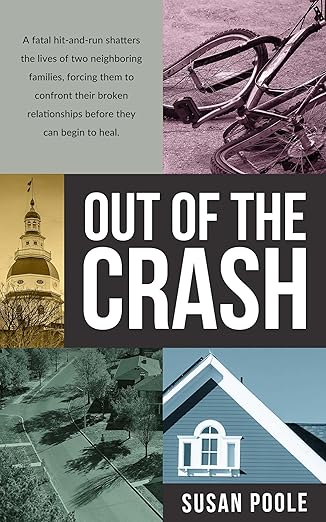

Susan Poole’s Out of the Crash is a riveting novel that begins with a sudden tragedy and spirals into an emotional reckoning for two families in the small town of Shawnee Springs. Caroline Beasley, a breast cancer survivor and bestselling author, returns from a motivational speaking event only to find her son Kyle in a tailspin. At the same time, Ethan Shawver, a high school senior, learns that his beloved mother, Amy, has been fatally struck by a car while biking, a car driven by Kyle. The book follows the emotional fallout, not just from the accident itself, but from the long shadows of grief, guilt, and family strain that it casts. Told through alternating perspectives, it weaves a tense and heartfelt portrait of trauma and how lives can fall apart and rebuild after a single moment.
I was completely pulled in by Poole’s style. Her writing has a natural rhythm, unforced and full of small, familiar details that make the characters feel like people I know. The dialogue felt real, awkward, warm, and messy, and the use of social media and group texts to open the story made it like something from the present day. Caroline’s complicated: resilient but vulnerable, confident but riddled with guilt. Watching her struggle with motherhood, ambition, and marriage felt all too real. Ethan’s side of the story was just as gripping. His pain was raw, unfiltered. The scene when he finds out about his mother’s death actually made me tear up. There’s something honest in how Poole handles grief. Not in a grand way, but in the everyday chaos it causes.
The middle dipped slightly as characters circled the same emotions, and I found myself wanting more movement in the plot. But then again, real grief doesn’t follow a tight arc, and maybe that’s the point. The book is strongest when it focuses on the interior lives of its characters. It doesn’t rely on big twists. It leans into emotional honesty, which is brave and a little brutal. There are moments when I didn’t like the characters much, Kyle’s denial, Jordan’s detachment, Caroline’s self-righteousness, but I never stopped caring about them. That’s the magic. Poole makes it hard to look away even when things get uncomfortable.
I’d recommend Out of the Crash to readers who appreciate layered family stories that don’t shy away from hard truths. If you liked Little Fires Everywhere or Ask Again, Yes, this one will be right up your alley. It’s a book for people who aren’t afraid to sit in the middle of the storm and wait for the quiet to come. And if you’ve ever been a parent, a child, or someone trying to hold it together when your world is falling apart, this story will resonate with you.
Pages: 291 | ASIN : B0F89DSZHM



 LITERARY TITAN