Blog Archives
Literary Titan Book Award: Nonfiction

The Literary Titan Book Award recognizes outstanding nonfiction books that demonstrate exceptional quality in writing, research, and presentation. This award is dedicated to authors who excel in creating informative, enlightening, and engaging works that offer valuable insights. Recipients of this award are commended for their ability to transform complex topics into accessible and compelling narratives that captivate readers and enhance our understanding.
Award Recipients





















Just a Little Witch, Mostly a Mom by Diana Jonas
Visit the Literary Titan Book Awards page to see award information.
The Influence Mindset for Sales Acceleration: The 7 EQ Brain Hacks That Get People to Choose You

Christian Hansen’s The Influence Mindset for Sales Acceleration is a lively guide to bridging the gap between what we think we’re communicating and how others actually perceive us. He builds his case around the idea that success in sales, and really in most high-stakes interactions, is less about raw value and more about how that value lands in someone else’s mind. The book moves through personal stories, neuroscience tidbits, and a framework of seven “EQ brain hacks,” all designed to help the reader stand out as the obvious choice in a crowded field. It’s practical, but it never feels dry. Hansen writes in a way that makes brain science feel like kitchen-table advice.
I enjoyed how much personality was packed into these pages. The tortilla fiasco with his Danish in-laws had me laughing, but it also drove the point home better than a pile of charts ever could. I felt pulled into the message because the stories felt so human. Hansen often leans on tidy acronyms and clear formulas. Far from being overbearing, this structure actually made the concepts easy to follow and apply. The clarity gave me a sense of order in what could otherwise feel like a messy subject. And paired with Hansen’s warmth and confidence, it felt like he was handing me a ready-made toolkit I could start using right away, something I could test on Monday morning and expect to see working by Friday.
What I liked most was how he reframed things I’ve been guilty of myself. I’ve leaned too hard on proving my value, or I’ve tried to charm my way through, and both times I’ve missed the mark. Reading his breakdown of “competence without connection” being just noise hit uncomfortably close to home. I liked how he didn’t just call out the problem but showed how to balance both sides of the bridge. The mix of storytelling and science kept me hooked, even if I sometimes wished he’d dig deeper instead of keeping it all so polished.
This is a book for people who live in the push and pull of convincing others, like salespeople, but also entrepreneurs, job seekers, and even anyone pitching ideas inside a company. If you’ve ever felt like you’re spinning your wheels and not getting chosen, Hansen’s approach will feel like a reset button. I’d recommend it most to folks who are comfortable trying new ways of communicating and want something practical that doesn’t read like a textbook. It’s not a magic trick, but it gives you tools that make influence feel a little less mysterious and a lot more doable.
Pages: 290 | ASIN : B0FDH4LQ7Z

THE LEADER CONNECTION
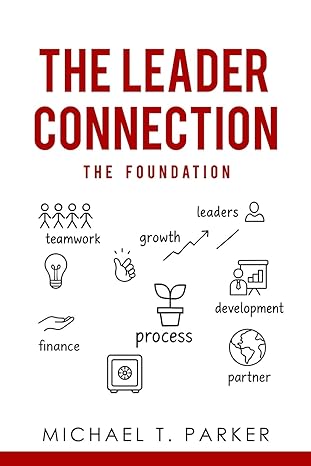
The book dives deep into the human side of leadership. It is part reflection and part manual, weaving together Parker’s personal journey with practical advice. He covers empathy, communication, adaptability, and the nuances of eight distinct leadership styles. The core message is clear. Leadership is not about authority. It is about building trust, connection, and growth within a team. Through stories, frameworks, and exercises, Parker paints a picture of leadership as a living relationship between people rather than a system of control.
Reading this, I felt drawn to Parker’s honesty. He doesn’t pretend to have been a perfect leader, and that humility makes the lessons hit harder. The mix of memoir and guide felt refreshing. Some moments, especially when he shared about his father, his son, or his own missteps, carried a warmth that made me pause. The book sometimes lists traits and challenges like lecture notes. The sincerity behind it kept me engaged, and I found myself reflecting on my own experiences with bosses who inspired connection versus those who drained it.
What stood out most for me was how personal and vulnerable his approach is. I appreciated the balance between theory and story. The chapters on servant leadership and authentic leadership especially struck a chord. They reminded me that good leadership often looks less like grand gestures and more like quiet acts of service. It reads like someone thinking aloud after a long career, eager to pass on everything they’ve learned.
I would recommend The Leader Connection to managers who are tired of dry business texts and want something more human. It’s also a good pick for anyone stepping into leadership for the first time and looking for guidance that feels grounded rather than academic. Parker doesn’t promise easy answers. What he offers instead is a lived-in, heartfelt reminder that leadership is about people, and that connection is what makes the work worthwhile.
Pages: 186 | ASIN : B0FN1VV122
Fairness Is Not Charity

Seeking Fairness at Work is a sharp, compassionate, and thoughtful exploration of what fairness really means in today’s workplace and provides leaders a five-part strategy to embed fairness deeply into workplace culture. Why was this an important book for you to write?
As a business strategist and attorney, frustrated employees have shared their feelings of helplessness and anger with me many times over the years. They were upset about the organization’s willful blindness to management behaviors that torched their dignity, confidence, and psychological safety.
When raising a serious issue about the behavior of a senior vice president with the head of human resources at a large manufacturing company, for example, an employee was essentially shooed away. “It’s worse in other departments,” they were told. In desperation, they consulted a lawyer.
That is but one example of misguided leadership behaviors I’ve witnessed over the years that damage trust and result in unintended negative consequences. No, they didn’t always trigger lawsuits. Although, many could have. But they were always costly in terms of diminished employee engagement, retention, and definitely satisfaction.
We embrace new jobs with excitement about fresh opportunities, but our enthusiasm wanes when it’s met by a workplace climate that raises our defenses instead of our game.
It’s a standoff that won’t improve until managers understand why employees respond negatively to their workplace culture and appreciate how low employee engagement, satisfaction, and retention are symptoms of a suboptimal culture, one that management controls, influences, and can change.
As a result, I wanted to write a book that challenged employer “truths” by examining those unwritten workplace norms – the invisible lines that when crossed, create organizational dysfunction.
This new perspective on employee engagement explains employees’ legitimate frustration and offers management a roadmap to previously missed opportunities that can improve their workplace culture.
How much research did you undertake for this book, and how much time did it take to put it all together?
Seeking Fairness at Work relies on evidence-based science, academic research, interviews, and real-life stories that took five years to assemble and more than forty years of living it.
What were some ideas that were important for you to share in this book?
Too often people think of fairness as a soft, lofty ideal, that can be an Alice in Wonderland whatever someone wants it to be – an entitlement. The fact that fairness is commonly thought of as “unfair” speaks volumes about how positional power is regularly misused in relationships. And that’s the point of Seeking Fairness at Work.
Relationships are implied social contracts where fairness is reflected by acting in good faith and with fair dealing. Seeking Fairness at Work takes a granular look at those objective standards, what they mean for the employees and employers, and how certain unwritten workplace norms betray those expectations, contributing to low employee engagement, retention, and satisfaction.
What is one thing that you hope readers take away from Seeking Fairness at Work?
I’d like employees to know their expectations of fairness at work are reasonable and for managers to appreciate how fairness is not charity, it’s smart business.
Author Links: GoodReads | X | Website
WINNER: 2025 Book Excellence Award (Business)
WINNER: 2025 Axiom Business Book Gold Medal Book Award (Digital Media)
WINNER: 2024 Independent Press Book Award (Distinguished Favorite)
3x WINNER: 2024 Dan Poyner’s Global eBook Awards (Business, Communications, Leadership)
2x WINNER: 2024 Goody Business Book Awards (Business – Management, Leadership – Think Differently)
WINNER: 2024 NYC Big Book Award (Distinguished Favorite)
Seeking Fairness at Work challenges employer “truths” by examining unwritten workplace norms – the invisible lines that when crossed, create organizational dysfunction. This new perspective on employee engagement explains employees’ legitimate frustration and identifies missed management opportunities to improve workplace culture.
Recognized business strategist and Journal of Business Ethics Education editorial board member Hanna Hasl-Kelchner, MBA, JD identifies the five most common workplace norms that betray fairness, leaving employees feeling dispirited, disengaged, and headed for the door by examining the social psychology of how our basic human motivations intersect with the implied workplace social contract.
Clarion Foreward Reviews calls her recent book Seeking Fairness at Work: Cracking the New Code of Greater Employee Engagement, Retention & Satisfaction “pithy and persuasive,” while BookLife Review compares it to Kim Scott’s Radical Respect and Kim Dabb’s You Belong Here.
Using evidence-based science, academic research, interviews, and real-life stories, Hasl-Kelchner merges organizational psychology with the practical aspects of workplace dynamics to offer ethical leadership an actionable five-part framework filled with practical tips to empower more employee engagement and retention, including chapters on how to:Rebuild Trust with More Self-Awareness
Improve Relationship Chemistry with More Empathy
Make Genuine Accountability a Cornerstone
Maintain a Cultural Safety Net
Mend the Structural Safety Net
Seeking Fairness at Work is ideal for executives, managers, and entrepreneurs who want to raise their employees’ game instead of their defenses; the human resource professionals, consultants, and employment attorneys who advise them; and employees wanting a reality check of their own workplace experiences.
Seeking Fairness at Work: Cracking the New Code of Greater Employee Engagement, Retention & Satisfaction
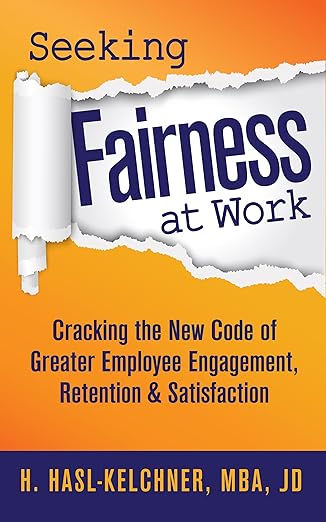
Seeking Fairness at Work by Hanna Hasl-Kelchner is a sharp, compassionate, and thoughtful exploration of what fairness really means in today’s workplace. The book opens with candid, real-life stories of people pushed to their limits by unfair treatment and builds a powerful case for why fairness isn’t just a “nice-to-have” but essential for high performance, trust, and retention. Hasl-Kelchner breaks the topic down in two parts: first, by giving voice to what employees wish they could say out loud, and then by offering leaders a five-part strategy to embed fairness deeply into workplace culture. It’s a mix of research, practical advice, and a wake-up call.
This book resonated with me, as I have worked for a corporation for a decade. I’ve been both an employee and a leader, and I saw myself on both sides of the page. The stories were so real, the writing down-to-earth and smart without being preachy. Hasl-Kelchner doesn’t mince words. She gets to the heart of the matter, like how people are treated, and how easy it is for leaders to become blind to the damage their silence or inaction causes. I especially appreciated how she tied fairness to things like health, motivation, and even workplace violence. It’s not just about equity, it’s about safety and dignity. She makes you feel the stakes. And she does it with empathy, never pointing fingers, just opening your eyes.
What I loved most is how actionable this book is. Each of the five steps: trust, empathy, accountability, cultural safety, and structure, is explained clearly and with examples. The “Fairness Factors” sprinkled throughout make you stop and reflect. This book doesn’t ask you to become a superhero. It just asks you to care, to be aware, and to do better. The book challenged me. I caught myself thinking things like “But we don’t have time for that,” or “That’s just how things are.” Hasl-Kelchner anticipates those reactions and gently calls them out.
I found this book to be one of the most honest and grounded management books I’ve read in a long time. I’d recommend Seeking Fairness at Work to anyone in a leadership role, especially those who think they don’t need it. It’s for HR professionals, team leads, executives, and entrepreneurs who want more than surface-level employee engagement. If you’ve ever felt the tension between doing what’s efficient and doing what’s right, this book is for you.
Pages: 226 | ASIN : B0D1GXVKP1

Like Clockwork: Run Your Business with Swiss Army Precision

Sam Goodner’s Like Clockwork is a pragmatic and well-structured guide to building a business that functions with precision, clarity, and resilience. Drawing on his background as a Swiss Army special forces officer and his experience scaling multiple technology companies, Goodner outlines a systematic approach to operations, leadership, and execution. Each of the book’s 30 concise chapters introduces a core business principle, pairing it with a compelling narrative from his military or entrepreneurial past, followed by clear, actionable strategies. Rather than focusing on grand visions or abstract theories, the book emphasizes building systems that allow businesses to operate efficiently and sustainably regardless of who’s at the helm.
One of the book’s most compelling strengths is its use of personal storytelling to illustrate professional principles. Goodner contrasts his tightly coordinated first day of military training with the disorganized, impersonal experience he had on his first day at Dell. The lesson is clear: a new employee’s first day sets the tone for their entire experience. At Catapult Systems, Goodner made onboarding a priority, introducing structured welcomes, immediate assignments, and even personalized gifts. It’s a simple practice, yet profoundly effective, and one that many companies overlook.
Goodner discusses how he and his team at Catapult codified their organizational wisdom into a set of “Golden Rules,” a compact manual that outlined 60 best practices. He emphasizes the importance of not just creating guidelines, but embedding them in the culture through memorable storytelling. One such story, involving two consultants who damaged a client relationship by arriving late and underprepared, illustrates how even small missteps can have lasting consequences. These stories bring clarity and context to principles that are often treated superficially in other business books.
While the prose is not especially literary or stylistic, it is clear, direct, and well-paced. Goodner writes with a sense of purpose and humility, often acknowledging his own missteps and the lessons they provided. This reflective tone lends credibility to his recommendations and makes the book feel grounded in real-world experience rather than theory. His Swiss Army anecdotes are particularly effective, they serve not as gimmicks, but as thoughtful parallels that reinforce his belief in discipline, preparation, and systems thinking.
Like Clockwork is best suited for entrepreneurs, managers, and business leaders who are actively responsible for building and running operational systems. It offers a highly practical, experience-based framework for leading teams, scaling efficiently, and minimizing chaos through intentional design. While it is not an inspirational read in the traditional sense, its insights are actionable and repeatable. For those seeking lasting operational effectiveness over short-term motivation, this book delivers exceptional value.
Pages: 371 | ASIN : B0F921HN2J
The Edge of Enough

Emma Vallin’s The Edge of Enough is a powerful, deeply personal manifesto for high achievers teetering on the brink of burnout. Part memoir, part guidebook, the book explores how our drive for success, often celebrated, can quietly morph into a self-destructive cycle. Vallin uses her own story, client experiences, and loads of research to paint a vivid picture of achievement addiction, and then hands us a toolkit to reclaim balance, resilience, and a new, healthier definition of success.
Right from the intro, I was hooked. Vallin doesn’t just talk about burnout in theory; she lived it. Lying in a hospital bed while three months pregnant, her body literally shutting down from stress, is a far cry from the Instagrammable “hustle” narrative we’re all fed. I appreciated how she was brutally honest about her perfectionism and how that internal pressure, mixed with toxic corporate expectations, almost cost her her child. That rawness sets the tone for the rest of the book.
What really stayed with me was Vallin’s concept of the “three-headed dog”: self-imposed pressure, corporate expectations, and societal standards. She doesn’t let any of those off the hook, which I respected. She talks about how perfectionism isn’t just about doing everything perfectly, but about tying your self-worth to performance. When she dives into the story of tennis star Robin Söderling, who collapsed under pressure despite global success, it made me think about how normalized burnout has become for “high performers.” You see yourself in these stories, and that’s what makes it so unsettling and important.
I also loved the practical side of the book. Vallin introduces the “Sustainable Performance Framework,” and this was the shift I needed. She doesn’t suggest you give up ambition. Instead, she offers a smarter way to channel it. She urges us to explore our “Achievement Archetype” and recognize patterns that no longer serve us. Her “Edge of Enough” isn’t about settling, it’s about knowing where to stop pushing so you don’t fall off the cliff. The case studies and reflection exercises weren’t gimmicks; they genuinely made me pause and rethink the way I operate day to day.
This book isn’t a pep talk. It’s a nudge (or shove) to stop confusing burnout for success. Vallin speaks to people like me: ambitious, driven, addicted to “doing more.” If you’re leading a team, this book will also show you how your overachievement might be setting the wrong tone. Her writing is smart, clear, and despite the heavy topics, full of compassion and hope.
The Edge of Enough is perfect for high achievers who know deep down that something’s gotta give. It’s for the exec who’s hitting KPIs but can’t sleep, for the parent juggling two calendars and a migraine, and for the leader who wants to build something sustainable.
Pages: 287 | ASIN : B0F7V17JLB
People Are Complex

Maximizing Organizational Performance is a practical guide that delves deeply into the power of performance coaching within organizations, outlining a clear, real-world approach to building coaching systems that help individuals grow and perform at their best. Why was this an important book for you to write?
The driving force behind Maximizing Organizational Performance: A Guide to Effective Performance Coaching was a need to reframe how we see and use coaching. I don’t view it as a profession in itself. I see it as a tool, one of many that come under the wider discipline of organizational development. As an OD practitioner first and a coach second, I am primarily interested in the system, that is, in how structure, process, leadership behaviors, culture, and other factors interplay and serve to facilitate—or sometimes constrain—performance.
Coaching is a means to that end. It’s a way of helping people and teams work more effectively. I wrote this book because I saw a need for more context in the way that coaching is being applied. It’s too often used as a tactical intervention, deployed against individuals without consideration of the broader system they inhabit. But individual performance can’t be elevated in a vacuum. If we want to build real, lasting performance, it has to be intentional and systemic. It has to connect to strategy, talent, culture, and other levers of organizational transformation.
That’s what this book is about. In it, I try to offer a different perspective on how coaching can be used. I try to give leaders and HR professionals a roadmap for weaving it into the DNA of their organizations so it can become a central part of how performance is created and sustained, not a niche service available to a select few.
What were some ideas that were important for you to share in this book?
I think one of the important ideas I wanted to convey is that performance coaching is not this ethereal thing that only happens at the C-suite level or during major life-or-death situations. It’s an everyday practice — a way of thinking, a way of leading, a way of showing up for and supporting one another at all levels of an organization. In my experience, coaching has the most impact when it becomes part of a manager’s normal leadership routine rather than an event that takes place quarterly, behind closed doors, with an external coach.
Another key idea for me was personalization. We often fall into the trap of thinking that performance can be optimized through standardized processes alone. How many organizations today still have standardized KPIs, standardized quarterly reviews, and serve only generic training programs? The hard truth is, people are complex. They bring unique strengths, challenges, motivations, and life experiences to work every day. Coaching works best when it’s attuned to that complexity, when it’s tailored and human. And it is only through that level of personalization that coaching can do more than keep people compliant. It’s only then that coaching can foster true growth and commitment.
And, I guess, if I have to pick the most foundational idea, it is that organizations aiming to sustain their competitive advantage can no longer afford to treat coaching as a discretionary add-on. If you’re serious about adaptability, that is, if you’re serious about building a resilient, high-performing team that can thrive in the conditions we all face today, then coaching is not a frill. It is a strategic infrastructure.
What is one piece of advice you wish someone had given you when you were younger?
If I could send a letter to my younger self, one message would be clear and resounding: “Lead with curiosity, not control.” In the early stages of my leadership journey, I equated being a good manager with knowing all the answers, moving fast, and pushing hard. Hyperfocused on outcomes, I regularly burned out and missed breakthroughs. I didn’t realize, as I do now, that sustainable leadership isn’t about being the best person in the room; it’s about setting the stage for others to be their best selves.
Curiosity makes all the difference. It starts conversations that would otherwise be shut down. It builds trust. It signals safety to experiment and learn. It lets people know that you see them not just as performers but as professionals with potential still to be realized. Shifting my stance from directing to inquiring has been one of the most liberating lessons of my career, one I wish I had learned much earlier.
What is one thing that you hope readers take away from Maximizing Organizational Performance?
If there is one thing I hope readers take away from this book, it is that coaching is a multiplier — not only for everything we do to strengthen and support individual performance, but also for culture, engagement, innovation, and sustainable success. Coaching is not fixing. Coaching is about unlocking what’s already inside and connecting that to the purpose, values, and direction of the business.
The real beauty of coaching is that it moves us away from the reactionary leadership models that lead so many of our organizations to scramble after performance problems, react to disengagement, and attempt to fill talent gaps at the eleventh hour. Coaching allows us to think and act more proactively, to have an intentional framework to develop people in a way that is both strategic and radically human.
I hope that when readers finish this book, they have more than new tools at their disposal. I hope that they will look at coaching and development as fundamental leadership practices and leave this book even more inspired to create work cultures where development is not limited to the chosen few who receive development, but where it is part of the way we talk to one another every day, the way we measure success, and the very DNA of our culture.
Author Links: GoodReads | X (Twitter) | Facebook | Website | Amazon
Dr. Patrick Behar-Courtois, with over two decades of international consulting experience, offers a fresh approach to performance coaching that transcends traditional methods. This practical guide tackles pressing issues such as remote work, diversity, employee retention, and technological integration, equipping leaders, HR professionals, and coaches with strategies to measure coaching effectiveness and build high-performing teams. Packed with immediately applicable tools and real-world case studies, Maximizing Organizational Performance bridges theory and practice, offering insights that resonate in today’s complex business environment.
So don’t let your organization fall behind. Unlock its full potential and prepare for the future with this essential resource!



 LITERARY TITAN