Blog Archives
Beast of Phe’lak


This book throws you headfirst into a world of magic, pain, and tangled emotions. Hele’ne has spent centuries trapped on an alien planet, isolated and broken, under the control of a powerful beast who both saved her life and stole her freedom. When a group of new arrivals shows up on the beach near her prison, something stirs—faint memories, a flicker of purpose, a chance at freedom. What follows is a story that twists through identity, power, and survival, where every choice carries a cost, and every shadow hides something sharp.
What I loved most was how deeply personal it all felt. Beneath the dragons and battles and cosmic stakes, this is a story about trauma, real, raw, and relentless. Hele’ne’s connection to the beast is terrifying in how familiar it feels. It’s a portrait of control disguised as care, and it chilled me. And yet, there are soft moments too, brief flickers of tenderness, humor, even love, that make the heavy parts hit even harder. Elia dives into the darker emotions, showing what it means to fight for your own mind, your own body, your own name.
The writing is lush and dreamlike. The lore runs deep, the world is massive, and if you haven’t read the other books, you’ll probably spend a few pages catching up. But there’s something wild and beautiful about that, too. It feels alive. The characters are vivid, passionate, and impossible to ignore. Some are haunted, some are healing, all are trying to hold onto something in the chaos.
In the end, Beast of Phe’lak is for readers who want their fantasy to cut deep. It’s messy and magical, yes, but it’s also full of heart. It’s for anyone who’s ever felt lost, controlled, or broken and dared to imagine something more. If you want to be shaken, moved, and maybe even changed a little, give this one a shot.
Pages: 309 | ASIN : B0F7FD49NL

One Perfect Daughter: He Was The Perfect Son. Until She Wasn’t
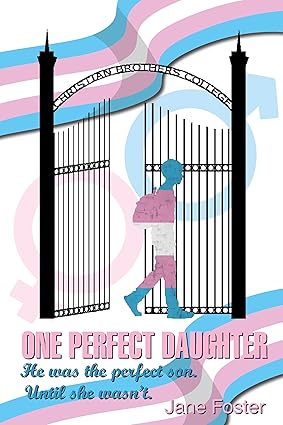

One Perfect Daughter is a raw, intimate memoir chronicling Jane Foster’s journey through parenthood, heartbreak, and ultimately transformation, as her “perfect” son Julian becomes Jules, her daughter. What starts as a tale of maternal pride in a brilliant, sweet, high-achieving child, twists into a deeply personal struggle with change, identity, and acceptance. The book charts Jane’s emotional turbulence as she tries to reconcile the child she thought she knew with the one they were becoming and herself with the mother she now had to be.
Reading this book, I often felt like I was sitting across from Jane as she told her story over coffee, unfiltered, messy, and sometimes uncomfortable. What stood out to me most was Foster’s unwavering honesty. When Jules first reveals she is a girl, Jane’s reaction is devastating: “I want to die,” she writes in a passage that is deeply painful to read but profoundly important. That level of raw vulnerability is uncommon. Foster resists the urge to present her experience in a tidy, resolved narrative. Instead, she exposes every fracture, every contradiction. Even when her words are difficult to read, even when her responses made me uncomfortable, they felt undeniably authentic.
The writing swings wildly between rage, sarcasm, humor, despair, and love, and while that might sound chaotic, it mirrors the emotional rollercoaster she’s riding. One moment she’s joking about calling autism “the tism,” the next she’s sobbing on the kitchen floor while her son, now daughter, is breaking down upstairs. Some parts were so raw they made me tear up, like when Jules says, “I think I need professional help.” Other times, I laughed out loud, like her reaction to the “gluten intolerance” revelation. She is not always gentle in her reflections and at times, her words are harsh, even cutting. Yet she remains unapologetically authentic throughout, and that authenticity gives her story its power.
The way she wrote about her daughter River, who has autism, also resonated with me. Jane is fiercely protective but often overwhelmed. Her love comes with frustration, exhaustion, and even resentment, which, again, makes her story feel all the more authentic. And then there’s Sally, the girlfriend turned scapegoat. Jane blames her for just about everything, and while it’s obvious this relationship triggered deep changes in Jules, I couldn’t help but feel Jane was reaching for control in the only place she thought she still had it. Her bitterness is loud, but beneath it, there’s fear. Fear of losing her child. Fear of not being enough. It’s messy, complicated love, and it’s painfully human.
By the end, I didn’t feel like Jane had wrapped things up or found closure, because life doesn’t work that way. What she offers instead is vulnerability. If you’re a parent, especially one grappling with identity shifts, mental health challenges, or just trying to love your kids through the chaos, this book might just gut you, but in a good way. One Perfect Daughter isn’t for the faint of heart, and it’s not always easy to like the narrator.
Pages: 191 | ASIN : B0DFBMF7LS

One Perfect Daughter: He Was The Perfect Son. Until She Wasn’t

One Perfect Daughter, by Jane Foster, is a raw, candid, and emotionally turbulent memoir by Jane Foster, chronicling her journey as a mother grappling with her child’s gender transition and mental health crisis. The narrative opens with pride and joy as Jane watches her high-achieving son, Julian, graduate. That moment quickly spirals into turmoil as Julian comes out as transgender, becoming Jules. What follows is a painful and intimate account of confusion, grief, love, and resistance as Jane struggles to reconcile her expectations with her daughter’s evolving identity, all while navigating the complex terrain of mental illness, family dynamics, and societal change.
This book hit me like a freight train. I felt gutted, enraged, helpless—sometimes all on the same page. Jane’s writing is so open that it borders on raw nerve. She holds absolutely nothing back, which can be both powerful and uncomfortable. There were times I wanted to scream at her, times I wept with her, and times I just sat in stunned silence. Her pain is real. So is her love. But her reactions—her denial, her blame-shifting, her open contempt for her daughter’s partner—were at times hard to digest. And yet, I kept turning the pages because underneath it all was a mother who was simply lost in a world she didn’t recognize anymore, trying her best to understand a child she no longer knew.
The book doesn’t flinch from portraying Jane in an unflattering light. She’s honest, sometimes shockingly so. Her anger can be vicious. Her judgment–brutal. But that’s what makes this story feel so relatable. Jane is not a polished narrator—she’s confused, contradictory, heartbroken, and often wrong. And that’s what makes her voice linger. There are moments of humor and deep tenderness, too, especially in her memories of Jules as a child. But this is not a comfortable read. It’s messy and often painful, but it’s real.
I would recommend One Perfect Daughter to anyone trying to understand the emotional fallout of identity shifts within families, especially those dealing with transgender issues, mental health, or just the loss of what they imagined their future would look like. This book is not a guide. It’s not politically correct. But it is an unfiltered look at a mother’s love, fear, and grief. If you’re looking for honesty—ugly, complicated, vulnerable honesty—this book will stay with you long after the final page.
Pages: 191 | ASIN : B0DFBMF7LS
No Sugarcoating

Real Aussies: John’s Heartbreak follows a man struggling with family drama and his identity, who finds himself questioning his life choices and their impact on who he is now. What was the inspiration for the setup of your story?
There are plenty of brilliant authors out there, each exploring their own genre, offering their own lens. But something’s always struck me: as readers, we usually watch a story unfold. Whether it’s first or third person, there’s still a barrier — you’re seeing the world through someone else.
My work shifts that. I don’t want you watching. I want you inside it. I want you experiencing everything as if it were your life. No inner monologue distractions. No cinematic distance. Just you, immersed. That’s the goal — that the life unfolding on the page feels indistinguishable from your own.
Where many authors focus on plot, I focus on consequence. Cause and effect. The way people stay stuck in self-inflicted nightmares because it’s all they know. My job is to make it real. That’s why it hits hard. It’s confronting. And yes, it’s designed to be. Not for shock — but to surface what’s buried. I write to draw out the emotional junk most people never look at.
Call me a literary exorcist, if you like. My job isn’t to write pretty metaphors that need decoding — that’s useless to someone having a breakdown at 3 AM. My job is to make a reader feel, viscerally, so they process. It’s therapy without the label. Even Beatrice — when she speaks to John, she’s really speaking to the reader. “Good to see you.” That’s intentional.
The inspiration wasn’t John. It was the reader. My intention was always to unearth something in them — to bring them face-to-face with the parts of themselves they’ve ignored. That’s why the novel has a warning up front, why the blurb literally tells you to have tissues ready. It’s not a story about you… until it is.
That’s also why the novel ends with a poem. By the final page, I shift focus directly back onto the reader. Verse-by-verse, I hold up the mirror. You realise it was never about John. It was always about you. The choices you’ve made. The patterns you repeat. But there’s solace in that. You get to use John’s story as a scaffold — a safe space — to unravel what’s unresolved in your own story.
So far, every review echoes the same thing: “It lingers.” “It hit me harder than I expected.” It’s not a light read, by design. If you’re lying to yourself, this book won’t let you. It’ll show you — cracked mirror and all.
I didn’t write this to win awards. I wrote it for the people who didn’t know they needed it. And the most unexpected part? The reviews don’t reflect me or the book. They reflect the readers themselves. You can watch the healing (or resistance) play out in the reviews. One star, five stars — it’s not about John at all. That’s the art.
Is there anything about John that came from you or your life experiences?
Absolutely — but it’s not about facts, it’s about feeling. Every emotion in the novel is real. I don’t want readers to witness John’s feelings or mine — I want them to sit inside their own. That’s the point. I’ve spent years deconstructing emotion — peeling away the polite language and self-protective narratives we use — until I could write it raw, in its unfiltered form. That rawness is what bleeds through John.
Love, hate, despair, anxiety, disbelief, torture, horror, hope, humour — it’s all there. These aren’t just themes. They’re mine. I’ve lived them in one form or another, and instead of dressing them up in literary robes, I hand them to the reader as they are: messy, confusing, overwhelming. That’s what makes the novel so confronting.
My writing isn’t about literary awards or clever turns of phrase. It’s about impact. I write for people who don’t usually read. People who’ve been through real pain. People who are emotionally constipated and don’t even know it. That’s my audience. That’s who I care about reaching. My job is to make sure the work remains readable in 20 years — 50 years. That means: no sugarcoating. Just as I’ve never had the luxury of a sugarcoated life, as someone who grew up autistic, dyslexic, and an outcast — this work had to be just as honest.
Setting the novel in the past wasn’t just for the killer music (although — quote me — it is the best). I wanted to lull the reader into a false sense of nostalgia. That dream-state safety net. Then — rip — pull them deep into emotional terrain they weren’t expecting. That’s how real healing begins. When you’re least prepared.
The Real Aussies series isn’t fiction in the traditional sense. These are my emotional truths, fictionalised just enough to get under your skin. I make them yours. That’s the goal.
What were some themes that were important for you to explore in this book?
If you’re Australian, you’ll know the complexity of Australian men. From the outside, we’re seen as fun-loving, relaxed, and some of the friendliest people in the world. But scratch the surface, and you’ll find men are often expected to fit one of two emotional lanes: the hard-working provider, or the larrikin who cracks jokes over beers to mask the pain.
That’s the irony of Australia. Real emotional depth is often hidden. Having any feelings outside the intimacy of your bedroom — with your wife, your child, or your closest mate — is quietly forbidden. For me, it was time to show who the Australian man really is. Setting the story in the past allowed me to amplify that unspoken, strictly enforced social code: once you’re boxed in, you’re rarely reclassified. This limits potential — and creates internal chaos when your truth no longer fits the label.
Another core theme is beauty in pain. We don’t always reflect on the quiet glimmers in our darkest moments — the friend who helped, the stranger who saw us. Life can feel like one storm after another, but if we slow down and look closely, we’ll often find there was always a guardrail. Even in disaster, there’s something beautiful — that’s what carries us forward. This was true for John. For Chris. For Stew. For all of them, their “Refuge” was a club full of misfits — a symbol of chosen family in a world that rejected them.
I also wanted to preserve and spotlight community. Specifically, the LGBTQ+ community in Sydney during the 70s and 80s. It really was as intense as I depicted. The violence, the tension, the desperate need for a safe space — it was all real. Today, as society becomes more tolerant, we risk forgetting what community used to mean. I wanted this novel to capture that moment in time, so we remember how people found belonging through pain.
Finally, I wanted to confront the reader with the consequences of accumulated choice. The novel stretches through John’s twenties, showing how each decision either aligns him — or derails him. Life doesn’t punish. It doesn’t reward. It just stacks up your choices until the result is undeniable. You get what you build. If you live for others, lie to yourself, or compromise your truth — that stack eventually collapses. The novel reminds us: we’re born alone, we die alone. Everything in the middle is experience — but how we carry it determines who we become.
Is this the first book in the series? If so, when is the next book coming out, and what can your fans expect in the next story?
Yes, this is the first novel in the Real Aussies series — and also the first novel I’ve ever written. Quite the mountain, especially when you’re someone who reads words wrong, flips similar-sounding ones in your head and constantly fights to stay on the line. It’s exhausting. But I persisted. Because I had to.
The next novel is Peter’s Nightmare. If John’s Heartbreak was about how our choices align or unravel over time, then Peter’s Nightmare is about when you never had a choice at all. When your identity isn’t something you built — but something constructed for you through trauma, projection, and other people’s pain.
It explores what happens when the lessons you’re forced to carry don’t belong to you — childhood burdens, family shame, expectations you never agreed to. It’s a story about how we unconsciously repeat what we hated. How we become the bully, even when all we ever wanted was kindness. Peter’s story doesn’t hold back. It goes into territory most people avoid.
The schoolyard bully who wrecked you? He was likely wrecked too. This novel digs into that truth — that intergenerational cycles of pain can be broken, but not if we stay in victimhood. Not if we keep pretending we’re not part of the problem.
You’ll finally understand who Peter really was in John’s story. What shaped him. Why he was the way he was. And by the end of it, just like with John, you’ll be holding a mirror — not to Peter, but to yourself.
This is a novel about the parts of life we don’t speak of. The moments society can’t language properly. Peter’s Nightmare will give readers that language. And with that, maybe the power to finally change.
I’m aiming to release Peter’s Nightmare in early 2026. I’ve got a few other projects on the go that need to clear first — it’s a bit of a juggling act (especially when you’re navigating it all with disability compensation!) — but hey, that’s life. 🙂
Author Links: GoodReads | X (Twitter) | Website | Amazon
Sydney is thrown back to the late 70s and early 80s in this Aussie epic that sees John navigate the explosive consequences of his ill-thought actions, his wife’s destructive wake, and the unexpected feelings he has for his nurse; his male nurse… oh crap!
Amid drag queens, nightclubs, drugs, and iconic decade-defining music, John struggles with his identity, whilst trying to secure the custody of his two sons. With a batshit crazy family and a chaotic trip to Kiama, John’s life spirals out of control.
This rich multi-decade LGBT quasi-hetero romantic drama, written by an Aussie nomad, is layered with deep emotion and complex relationships. Profound, soul-touching, and reflective, this novel opens questioning the impact of all life’s choices.
Perfect for that weekend curled up in bed with a box of tissues, chocolates, and ice cream.
Real Aussies: John’s Heartbreak

At its heart, Real Aussies: John’s Heartbreak is a raw and emotionally intense dive into the life of John, a 24-year-old car salesman hustling through Sydney’s sun-soaked grit of the late ’70s. The story kicks off with John chasing the Australian dream—buying out the dealership he works for and giving his family a better future. But things unravel fast. There’s infidelity, identity struggles, explosive family drama, a deeply repressed past, and an unexpected romantic connection that challenges everything John thought he knew about himself. It’s set against a vivid Aussie backdrop of drag queens, classic Holdens, meat pies, and church pews. It’s heavy, hilarious, heartbreaking, and, at times, unhinged.
The dialogue snaps with authenticity, the slang hits just right, and the pacing is mad. One minute you’re laughing at a wild Monaro test drive, and the next you’re cringing through John’s brutal Sunday family lunch, dripping with micro-aggressions, classism, and suppressed rage. The scenes with his mum and Beergut Barry was spot on. Horribly accurate. You can feel the suffocation. That kitchen table tension isn’t just writing, it’s lived experience on the page.
But the emotional gut-punches land hard. The twist about John’s biological son genuinely winded me. And then, Jezbon goes further. That deeply disturbing assault scene with Peter was unexpected and so painfully real. It’s handled with unflinching honesty. It doesn’t glorify or overexplain, it just lets you sit in the horror of it. It messed me up a little. That’s powerful storytelling. Still, it’s not for the faint of heart. You have to be ready for it. But it shines a light on the complexity of male trauma, especially in a world that doesn’t give men like John the language or space to process it.
John is messy. He lashes out. He hits. He breaks. But Jezbon doesn’t romanticize it. He forces you to reckon with the choices people make when their lives implode. There’s nuance. There’s shame. There’s that desperate grasping for control when everything’s slipping. And then there’s hope, like a tiny stubborn weed growing through concrete. John’s care for his sons—especially Jason, his “little champ”—grounds all the chaos. The emotional rollercoaster is real, and I didn’t wanna get off.
If you like your stories emotionally charged, a little chaotic, and rough around the edges—this one’s for you. Especially if you’re into queer themes wrapped in raw masculinity, generational trauma, and the realest kind of love—the kind that’s flawed but refuses to give up. It’s not tidy. It’s not polished. It’s real. And that’s exactly what makes John’s Heartbreak stick. Jezbon wrote something that lingers.
Pages: 398 | ASIN : B0F3KDHH9R
Our Deepest Roots: Navigating Past Trauma to Build Healthier Queer Relationships
Our Deepest Roots is a brave and illuminating book about how trauma—especially the kind rooted in queerness and relational wounds—intertwines with the mess and beauty of love. Dr. Jen Towns doesn’t just discuss trauma in the abstract. She lays bare her own experiences, not as case studies or distant theory, but as raw, beating-heart truth. Through her lens as a queer trauma therapist and partner, she unpacks how our “parts” (the internal voices, reactions, and protections we develop) shape, distort, and sometimes save our relationships. She explores this through concepts like attachment theory, the Internal Family Systems (IFS) model, and a blend of hard-earned wisdom from both the therapy room and the kitchen table.
Reading this as a gay man who’s wrestled with his own ghosts, I felt seen in a way that knocked the wind out of me. The opening scene where Dr. Town’s wife (also a trauma survivor and therapist) writes about storming out of a fight, numb to her partner’s sobbing felt uncomfortably familiar. That terrifying push-pull of needing space but fearing abandonment? Yep. Lived it. And the self-loathing inner monologue she transcribes after the fallout was brutally spot on. It’s one thing to read about trauma reactions. It’s another thing entirely to read someone gently dissect their own and realize, oh god, that’s me too.
What sets this book apart is the refusal to shy away from the complicated, layered ways trauma shows up in queer love. Towns doesn’t romanticize healing, and she doesn’t offer cheap fixes. Instead, she walks us through her fights, her therapy, her missteps, and the hard-won tools she now teaches. When she talks about “fawning” in queer identity—where we perform caretaking to stay safe—it hit like a freight train. She describes fawning not as a flaw but as a strategy, born of survival.
Towns also brings a refreshingly down-to-earth voice. It’s not clinical or cold. It’s like a trusted friend walking with you, swearing a little, crying with you, laughing with you when you realize, yes, we’re all a little messed up but still deeply worthy of love. And her exercises, like the PEACE TALKS framework and the “Zhuzh” reminders, are actually doable—not just filler. She brings everything back to the body, the relationship, and the now. It’s healing work you can feel.
I recommend Our Deepest Roots wholeheartedly, especially to my fellow queer men who grew up believing we had to shrink to be loved, who still brace for rejection when things get close. This book isn’t just for therapists or couples in crisis—it’s for anyone tired of repeating old patterns and ready to face themselves with honesty and tenderness. It’s raw, smart, sometimes painful, and deeply human. And if you’re anything like me, you’ll find parts of yourself on every page.
Pages: 268 | ASIN : B0C6FRBKN2
Flew Too High
Louie Mandrapilias offers an intimate and unfiltered look into his past in Flew Too High: A Gay Drug Smuggler’s Transcendent Odyssey. With raw honesty, he invites readers into the turbulence of his youth, transporting us to the late 1970s, a time of self-discovery, rebellion, and excess. That summer, as he put it, he “let the wolf in when he came knocking.” The result was a wild, intoxicating journey through sex, drugs, and an urgent search for identity, all set against the backdrop of a rapidly shifting cultural landscape.
Memoirs often leave readers searching for the author’s flaws, yet Mandrapilias offers them up freely. He does not shy away from his missteps but instead presents them with a level of self-awareness that is both admirable and deeply human. His account unfolds at a time when being openly gay was still fraught with danger and defiance, the echoes of Stonewall still fresh in the air. His story captures not just his own struggle but also the broader, unspoken battles of an era.
One of the book’s greatest strengths lies in its immersive storytelling. Mandrapilias paints his world so vividly that the reader feels transported to standing on the streets of New York, witnessing fleeting glances, whispered exchanges, and electric moments of both connection and isolation. His descriptions bring the 1970s to life, not just in setting but in language. The slang, the cadence of conversation, and the atmosphere all feel cinematic, yet undeniably real.
For LGBTQ readers, Flew Too High resonates on a profound level. The unapologetic portrayal of raw, lived experiences makes this memoir not just a personal reflection but a cultural artifact. It’s a time capsule of love, loss, indulgence, and self-acceptance, capturing both the recklessness of youth and the wisdom gained through it.
Mandrapilias does not present a sanitized version of his past. He acknowledges the mistakes, the missteps, the moments of excess. Yet, none of it diminishes the journey, it enhances it. His story is one of self-discovery, of learning, of stumbling through the darkness in search of something real. Flew Too High is more than a memoir; it’s a reckoning with the past, a tribute to survival, and a testament to the beauty of becoming.
Pages: 284 | ASIN : B0DR2S64LR
Kissing Toads
Danissa Wilson’s Kissing Toads is the kind of book that sneaks up on you. It starts out like your typical coming-of-age tale of a young woman, Annie, wading through the chaotic waters of romance in the ’80s and ’90s, hoping to find her Prince Charming. But as you turn the pages, you realize this is more than just a love story. It’s a messy, hilarious, and sometimes gut-wrenching journey of self-discovery, resilience, and the realization that sometimes, the fairy tale we’ve been chasing isn’t the one we actually need.
One thing I absolutely loved about Wilson’s writing is her ability to balance humor with heartbreak. Annie’s experiences range from laugh-out-loud ridiculous to moments that truly sting. These are the moments that make Kissing Toads feel so raw and real. Wilson doesn’t just give us a woman searching for love; she gives us a woman navigating a world that constantly tells her what love should look like, only for her to realize that maybe she’s had it all wrong.
Annie’s mother is relentless in her belief that her daughter’s ultimate goal in life should be to “fetch herself a man.” That pressure is both maddening and relatable. The contrast between Annie’s youthful determination to fulfill that expectation and her later, painful questioning of whether she wasted her best years chasing a dream someone else planted in her head is beautifully done. One of the most poignant moments comes when she wonders if she failed in getting her “MRS” degree while earning her BA. That single line encapsulates so much about the way young women are conditioned to prioritize romance over self-fulfillment.
And then, there’s the love story at the heart of it all, just not the one Annie expects. The book’s final act brings both a twist and a moment of clarity. After years of chasing after one “toad” after another, Annie doesn’t find a prince, but someone even more unexpected. That’s what makes Kissing Toads so satisfying it’s not about Annie magically finding love, but about her finally seeing herself clearly enough to recognize it.
I’d recommend Kissing Toads to anyone who’s ever been on the wrong side of a bad relationship, struggled under the weight of expectations, or just enjoys a damn good story with characters who feel like old friends. It’s funny, it’s sharp, and it’s got a heart big enough to make you laugh and cry in the same chapter. Danissa Wilson has crafted a book that doesn’t just explore what it means to find love but it questions everything we’ve been told about it.
Pages: 180 | ASIN : B0DGVT1XVC



 LITERARY TITAN