Blog Archives
A Summer in Normandy Started It All

Falcon of the Faroe Islands follows the prophesied Son of the Dragon, as he earns his place as a noaidi and sets off on a destiny shaped by gods, ancestors, and a prophecy. What was the inspiration for the setup of your story?
I’m a former French teacher and language professor, and during my undergraduate program, I spent a summer in Normandy, where I became fascinated by the Viking influences in that region of France. When I recently decided to write a trilogy set in the White Chalk Cliffs of Normandy, I began doing lots of research into Norse mythology and the geography of Norway, where the Vikings came from before settling into France. I discovered the Lofoten Islands of Northern Norway and the Sámi people who lived there during the Viking age, so I decided to have my character Skjöld become a noaidi and spirit walker through water.
What were some ideas that were important for you to personify in your characters?
My male protagonist, Haldor Falk–the Falcon of the Faroe Islands–is a Viking vitki with the ability to transform into a falcon and summon winged creatures at his command. I wanted to include spectacular battle scenes for him to use his this avian magic, bestowed upon him by the goddess Freyja. My female protagonist Úlvhild is a Viking völva, so I wanted her to use seiðr magic and foresee important events which would transpire in the story. And, since Haldor and Úlvhild are lovers, I made sure to include a strong romantic thread between them throughout the novel (and the entire Valiant Vikings trilogy).
What kind of research did you do for this novel to ensure you captured the essence of the story’s theme?
I did extensive research into the history of France, Denmark, Norway, Frisia (a region in the modern-day Netherlands), and the Orkney and Faroe Islands. I also researched the Viking chieftains and kings during the 10th century, since I wanted actual historical events and characters such as Sweyn Forkbeard, Sigurd Hlodvirsson, Richard the Fearless, and King Lothaire of West Francia to interact with my fictional characters. I also did a tremendous amount of research into Norse mythology, the geography of northern Europe and Scandinavia, blending it all together into a Viking historical fantasy.
How do you feel now that this trilogy has ended? Is there anything about these characters that will stay with you?
I am immensely proud to have woven together an epic Viking fantasy blending real history, characters and places, Norse mythology, Celtic legends, and steamy romance. Yes, my characters have a very special place in my heart and always will. They are very real to me.
Author Links: Website | X | Facebook | Instagram
With his acolyte’s training now complete, Haldor intends to return to the Viking stronghold of Normandy. But when a vision reveals an imminent attack on a dwarf guarding a hidden treasure trove in a secret cave, Haldor and Skjöld gain Dwarven-forged weapons and an unexpected, invaluable ally.
Úlvhild, a völva of formidable seiðr magic and Haldor’s lover of nearly twenty winters, foresees that the Dökkálfar Dark Elves will strike to prevent the fulfillment of a prophecy. When the Norns unveil the terrible price of her fate, Úlvhild must confront a crimson-eyed witch to save her beloved Falcon and ensure that the prophesied Son of the Dragon fulfills his destined path.
Falcon of the Faroe Islands is the sweeping, epic conclusion to the award-winning Valiant Vikings trilogy set in tenth century Normandy.
A sizzling blend of historical fiction, paranormal fantasy, Norse mythology, and steamy Viking romance!
Falcon of the Faroe Islands


Falcon of the Faroe Islands sweeps through a world filled with northern lights, ancient magic, Viking rage, and quiet wonder. The story follows Skjöld, the prophesied Son of the Dragon, as he earns his place as a noaidi and sets off on a destiny shaped by gods, ancestors, and a prophecy that ties him to dwarven treasure, dangerous raiders, and a future crown. His journey intertwines with that of Haldor Falk, a falcon-shifting vitki whose past is as heavy as his magic is strong. Together, they navigate fjords, visions, and battles while the story spins between spirit realms and rugged northern shores.
I was pulled into the author’s rhythm. The writing feels lush and earnest, almost mythic at times, and it leans hard into atmosphere. At moments, the prose slows down and swells with detail, which sometimes made me pause, but I liked how it wrapped me up. It felt like the story didn’t rush me. Instead it asked me to settle in and breathe with the land, the gods, and the characters. That kind of pacing made the emotional beats hit harder for me, especially when the story dug into the grief these characters carry.
I also loved how the book blends cultures and mythologies. Norse, Sámi, and Celtic traditions fuse in ways that feel warm and purposeful. I found myself rooting for Skjöld as he wrestled with the weight of prophecy. Haldor’s backstory surprised me with how tender and raw it felt, especially the parts about his bond with Úlvhild. The magic itself, whether tied to water or wings or visions, is written with a sense of reverence that made even quiet scenes feel charged. The mix of spirituality and brutal Viking life gave the book a tone I honestly didn’t expect. It felt both fierce and soft at the same time.
This is the third book in the Valiant Vikings series and is a great pick for readers who enjoy Viking worlds filled with mysticism, lush sensory writing, and emotional weight. If you’re into character-driven fantasy with romance, grief, prophecy, and a whole lot of heart, this one will definitely hit the mark.
Pages: 462 | ASIN : B0FXT8KJCB

Bloodless We Go Buried: An Earth Mother Horror

Bloodless We Go Buried unfolds as an Earth Mother horror story that blends myth, ancestral memory, and a feeling of something old waking beneath the everyday world. The book moves through dreamlike scenes where the natural world feels alive and watchful. Its language carries a poetic rhythm, and the Proto Celtic threading through the chapters adds a strange and ancient pulse. The story works like a long walk through dark woods where every shadow seems to breathe, and where the characters find themselves caught between fear, kinship, and something that feels like a summons from the deep past.
The voice of the book has this raw and intimate quality that made me feel like I had stepped into someone’s private ritual. The writing style is bold and emotional. It plays around with language in ways that sometimes made me pause and reread, not because it was confusing but because it felt like I had stumbled into a hidden doorway. I liked that the horror leans more toward mood and spirit than monsters. It creeps instead of jumps. Every time I thought I knew where the story was going it would slide sideways and make me rethink what I thought I understood about the characters and the land.
At times, the prose leans into its own intensity, and I found myself both loving it and wanting to come up for air. Some passages feel almost like a personal journal or a field notebook. That mix made the book feel alive. I appreciated that the author was not afraid to be weird or tender or blunt. There is humor tucked between the shadows, too. A kind of self-awareness that kept me grounded while the story tried to lift me into stranger places.
In the end, I walked away feeling stirred and a little haunted. I would recommend Bloodless We Go Buried to readers who enjoy literary horror, mythic fiction, poetic language, and stories that feel more like a dream you carry with you afterward. If you like books that make you slow down and sink in, this one might be exactly what you are looking for.
Pages: 324 | ASIN : B0F463PNKY
The Hunger of the Dragon

The Hunger of the Dragon is a brutal and immersive plunge into a grim world of Norse myth reborn in shadow. The story follows Märren, a haunted warrior mother carrying her daughter’s skull through rain-soaked mountains, hunted by trolls and later captured by the Sea Serpent clan. Her desperate quest to find the Dragon people, to claim a god’s scale, intertwines with Caëtin, a Raven berserker navigating shifting alliances and divine magic. It’s a saga thick with loss, myth, and raw survival, where every battle feels like it was written in blood and mud. The book draws from the bones of Norse legend but rebuilds the myth into something darker, stranger, and heartbreakingly human.
Author R.M. Schultz writes with a grim beauty that’s almost hypnotic. The language is visceral, heavy with texture and sound. It’s not a kind story. There’s no bright hero or warm victory, only people scraping meaning from ruin. Still, the characters burned themselves into me. Märren especially. She’s hard, bitter, tender in private moments. Caëtin feels carved from ice and fire, both ruthless and weary. I found myself pulled between them, torn by their choices.
By the time I finished, I felt wrung out. The book leaves you raw, sitting in silence for a while after closing it. Schultz doesn’t flinch from horror or grief. There’s love here, too, but it’s buried deep, found in loyalty and defiance more than tenderness. I liked that honesty. The pacing runs hot and cold, slow scenes steeped in myth and madness, then sudden violence that makes you jump. It’s harsh, yet beautiful. The kind of writing that crawls under your skin and stays there. I didn’t love every choice, sometimes the lore weighed down the emotion, but the ambition is staggering. The world feels ancient and endless, as if Schultz unearthed it rather than invented it.
I’d recommend The Hunger of the Dragon to readers who want their fantasy rough and full of heartache. If you like sagas that smell of smoke and iron, if you want women who fight and bleed and curse the gods, this is for you.
Pages: 574 | ASIN : B0FSYM7GK3

The Savior/Shadow Principle: A Self-Help Technique and Philosophy Using Archetypes
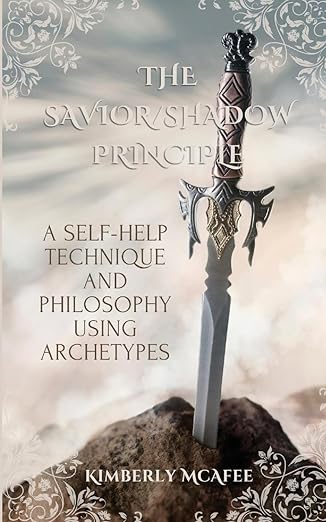
The book is both a personal memoir and a guide to a self-help technique the author calls the Savior/Shadow Principle. It blends mythology, psychology, and spirituality, drawing especially from the figures of Hekate and Jesus. McAfee takes readers through her journey from traditional Christianity into ChristoPaganism, then back into a reimagined Christianity. Along the way, she shares how she developed a meditative practice that uses archetypes of light and shadow to encourage self-honesty, growth, and healing. The book weaves in Jungian psychology, mythological parallels, and personal reflection, while offering readers practical ways to explore their inner lives through story and symbol.
I didn’t expect the writing to be so approachable. The author’s voice is warm, even when she’s discussing heavy topics like shame, fear, or midlife crises. She doesn’t hide behind theory or pretend to be an expert. Instead, she writes like someone who’s been in the dark, stumbled around, and finally found a lantern worth sharing. That sincerity resonated with me. At times, the language wanders, especially in sections heavy with history or myth, but that wandering matches the subject. The whole book is about exploration, so the digressions feel more like trails branching off a main path rather than distractions.
I loved the emotional undercurrent. I could feel the author’s vulnerability, her wrestling with faith, and her refusal to gloss over contradictions. That gave the philosophy weight. When she described Hekate lighting the way through shadow, or Jesus pulling someone into the light, it didn’t read like fantasy; it read like a relatable metaphor.
This isn’t a book for someone who wants a neat formula or a rigid system. It’s for seekers. It’s for people who are tired of shallow answers and who want to dig into the messy mix of spirituality, psychology, and story. If you’ve ever felt caught between belief systems, or if you’re curious about how myth and archetype can help uncover truth about yourself, this book has something to offer. It’s personal, heartfelt, and comforting.
Pages: 174 | ASIN : B0F8PLQMJB
The Wisdom of Wood Volume 1 – Hazelnut


The book unfolds as a mythic tale woven through time, place, and spirit. It follows Samuel Alexander and his descendants as they become entangled with Glastonbury’s mysteries, sacred symbols, and the haunting legacy of a ring unearthed at Bride’s Well. The story moves between dream and waking life, myth and history, layering Celtic lore, Druidic traditions, and Arthurian echoes into a generational saga. Characters are guided by visions, by voices from the otherworld, and by trees themselves, whose spirits carry wisdom and warning. The narrative blends myth with personal struggle, and family with fate, to create a tapestry that is both mystical and relatable.
What struck me most was the style of the writing. It has a rhythm that feels almost incantatory. The sentences often unfold like chants, looping and layering symbols until I found myself immersed in the cadence rather than just the plot. At times, I’ll admit, I felt adrift, as if the story cared less about holding my hand and more about pulling me into its current. Yet I also liked that sense of surrender. It mirrored the characters’ own confusion when faced with forces larger than themselves. Some passages soared with imagery that felt cinematic. Others slowed down, but always with a sense that something sacred was just out of reach.
On a more emotional level, I found myself unexpectedly moved by the family thread running through the myth. Samuel’s death and the passing of his journal and ring to Eleni and Sophie gave the narrative a raw anchor in grief and legacy. The mystical voices, priestesses, and mythic archetypes would have been too abstract for me without those human losses at the center. That’s where the book hit hardest. It made me think about how much we inherit without knowing, and how myths are not just stories but shadows we live under. Still, I sometimes wished for a bit more grounding in the everyday. The dreamlike prose was beautiful, but it could also feel heavy.
I think this book is best for readers who enjoy being swept up in myth and who don’t mind when the line between story and symbol blurs. If you like Joseph Campbell or Marion Zimmer Bradley, you’ll probably find yourself right at home. For me, it was enchanting. I’d recommend it to anyone willing to slow down, sink into layered imagery, and let the wisdom of wood whisper its way through their imagination.
Pages: 381 | ASIN : B06XCPG7W1
Mythical Creatures: The Worldbuilding Guide to Korean Fantasy

Huck Kahng’s Mythical Creatures is a whimsical and insightful guide into the world of Korean fantasy folklore, woven with humor, reverence, and practical advice for writers and worldbuilders. Structured in three parts—Human, Animals, and Monsters—it introduces readers to foundational myths, clever animals, and fearsome (yet often lovable) monsters from Korean tradition. Each chapter blends storytelling with cultural context and concludes with a “Worldbuilder’s Workshop” full of exercises meant to spark creativity and deepen understanding of the lore.
What really won me over was the writing style. Kahng isn’t lecturing here—he’s inviting you into his living room, handing you a warm cup of tea, and telling you tales that have been passed down through generations, all while cracking jokes like someone who knows exactly how to make you care. The tone is breezy but deeply informed. He doesn’t bog down the reader with scholarly jargon or dry history. Instead, he pulls you into each legend with personality and punch. The bear who becomes a woman? Heartwarming and oddly inspiring. The tigers who get tricked by rabbits and scared of dried fruit? Flat-out hilarious. I laughed more than once, and I don’t usually do that when reading reference books.
Beyond the humor, there’s heart. Kahng treats these stories not as museum artifacts but as living tools for creative use. I appreciated how he encourages writers to look at mythology not just as background noise but as a guiding force in story building. His workshops at the end of each chapter are gold—practical, fun, and weirdly motivating. He makes you want to write. I walked away with half a dozen ideas for stories, games, or just odd little creatures I want to sketch.
If you’re a writer, game developer, dungeon master, or just a lover of folklore who’s tired of the same old dragons and elves, Huck Kahng’s Mythical Creatures is a breath of fresh mountain air. I’d especially recommend it to fantasy fans who want to break out of Western tropes and discover something new, strange, and joyful. It’s a toolkit, a storybook, and a love letter to Korean myth all wrapped into one delightful package.
The Ancient Fire

The Ancient Fire is the first in the Triple Goddess series by Ellen Read. It’s a fantasy novel rooted in rich Celtic mythology and filled with lush imagery, suspenseful action, and themes of identity, legacy, and awakening power. The story follows Bree, a young woman raised in isolation with her aunt Áine, who discovers her divine lineage as the daughter of Brigid, the Triple Goddess. When an earthquake shakes their hidden world and the sacred fire she’s sworn to protect begins to change, Bree is thrust into a dangerous journey back to her homeland of Tír na nÓg. Alongside the brash warrior god Lu, Bree must come to terms with her powers, her grief, and the peril threatening her people.
I couldn’t put this one down. Read’s writing is poetic without being too flowery, and the pacing dances between quiet introspection and bursts of action. Bree is a character I wanted to root for—clever, curious, brave, and deeply human even as her godhood awakens. The dynamic between her and Lu had me grinning. There’s tension, banter, and just enough mystery to keep things spicy. What I loved most was how the magic felt sacred and elemental—more myth than wizardry, more essence than spectacle. And the fairies were delightful. The scene where Bree uses fire to chase off trolls? I actually cheered.
The lore, while fascinating, occasionally teetered on overwhelming. There’s a lot to absorb—names, places, histories—and at times I wished for a breather or a bit more grounding. Also, Lu’s macho swagger sometimes grated. I get that he’s a warrior god and all, but maybe chill. Thankfully, Bree holds her own and then some. Her transformation from cave-bound girl to rising goddess is powerful, and her grief for a mother she never knew is heartbreakingly real. Those emotional notes hit hard, and that’s what gave the book its heart.
The Ancient Fire lit something in me. It’s more than a fantasy, it’s about becoming who you were meant to be, even when you didn’t know you had it in you. I’d recommend this to anyone who loves myth-rich world-building, fierce heroines, and the spark of magic hiding in ancient stories. This book’s for the dreamers, the rebels, and those who believe stories shape the world.
Pages: 260 | ASIN : B0DTT2YFYN



 LITERARY TITAN