Blog Archives
The MENtal Fight Of Your Life
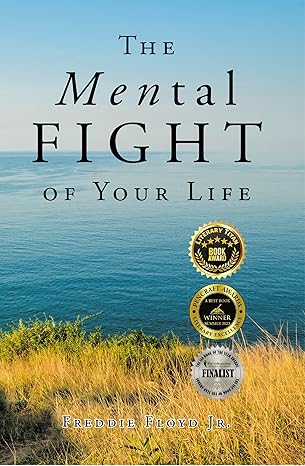

The Mental Fight of Your Life by Freddie Floyd Jr. offers a thought-provoking exploration of relationships through a religious perspective, intertwining principles from the Bible with insights on romantic partnerships. Floyd adeptly navigates the complexities of masculine and feminine roles in relationships, delving into topics such as mutual respect, understanding your partner’s needs, and maintaining high standards within a committed relationship or marriage.
Floyd’s writing style is notably approachable, blending a conversational tone with everyday language and colloquialisms, which enhances the reader’s engagement. His ability to articulate his points clearly, without sacrificing depth, makes the book both accessible and enlightening. The central theme resonates as a call to uphold core moral values in a changing societal landscape, emphasizing commitment, devotion, respect, and effective communication as foundations for enduring, loving relationships. While the book’s religious underpinnings, predominantly based on Biblical references, might not appeal universally, its overarching messages about relationship dynamics stand out more prominently. These insights transcend religious context, offering valuable perspectives on fostering healthy, successful partnerships, whether in marriage or in everyday interactions.
Though Floyd’s work is deeply rooted in religious doctrine, the principles he discusses bear relevance to contemporary relationship dynamics. The Mental Fight of Your Life will likely resonate with those open to considering traditional morals in a modern context, whether they are in a relationship or single. It serves as a reflective guide for evaluating personal values and expectations in a partner, urging readers to embrace qualities that are fundamentally human and vital for meaningful connections.
Pages: 59 | ASIN : B0BRJTH7Q6

Lycan: Solomon’s Odyssey: Chapter 1

In Lycan: Solomon’s Odyssey, Chapter 1, Hive Head Studios introduces us to an intriguing tale penned by Dennis Robinson. Set in 8000 BC in what is now Saudi Arabia, this comic book narrative embarks on the legendary origin story of the first werewolf, woven into the fabric of early human civilization. The central character, Solomon, is a young villager poised to inherit the mantle of leadership and protection for his community. Amidst the burgeoning sense of societal order, Solomon’s journey is not without its perils. The narrative does an exceptional job of portraying a palpable sense of looming threats, ranging from malevolent entities to the natural dangers of the era, all of which encroach upon the tranquility of Solomon’s village.
Robinson’s storytelling is complemented by captivating illustrations, striking a harmonious balance that breathes life into each character and the world they inhabit. The vibrant community and its multifaceted challenges are rendered with vivid clarity from the outset. Particularly noteworthy is Solomon’s character development, whose wit and humor endear him to readers and infuse the narrative with a lighter tone amidst darker themes. The comic excels in maintaining a dynamic pace, skillfully interweaving moments of tension with lighter, humorous interactions. This juxtaposition highlights Solomon’s unique personality and approach to leadership, marked by resilience and a capacity for joy even in the face of adversity. As the story progresses, Solomon’s character is tested through a series of trials that deftly blend suspense and surprise, leaving readers anticipating the subsequent development. The plot’s narrative depth and thoughtful construction raise compelling questions about courage, loyalty, and the struggle against formidable foes.
Lycan: Solomon’s Odyssey, Chapter 1, is more than a mere adventure tale; it is a story of courage, camaraderie, and the complexities of familial bonds set against the backdrop of a burgeoning civilization and an enigmatic, powerful force. It’s a compelling read that quickly captures the imagination, promising an absorbing journey for those who delve into its pages. The initial chapter sets a high bar for the series, leaving readers eagerly awaiting what comes next in Solomon’s Odyssey.
Pages: 78 | ASIN : B0B5RXNY99
Becoming Forever Families
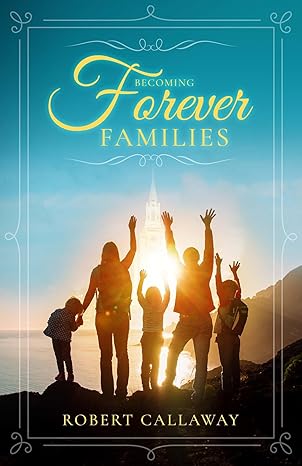

Becoming Forever Families, by Robert Callaway, is a compelling and emotive exploration of faith, resilience, and the bonds of family, set against the backdrop of Latter-day Saint beliefs. Callaway adeptly weaves a narrative that is both personal and universal, delving deep into the lives of the Wilkinson family as they navigate the complexities of modern life while clinging steadfastly to their faith.
At the heart of this narrative is Sarah Wilkinson’s journey, a poignant portrayal of a mother’s strength and vulnerability. Her story of finding love with Wayne Spencer and their subsequent decision to marry in the LDS temple is told with a sincerity that resonates with anyone who has experienced love later in life. The author’s depiction of their spiritual connection and shared values adds depth to their relationship, making it a central pillar of the story.
The character of Ethan Wilkinson, who grapples with Asperger’s Syndrome, is particularly noteworthy. His growth throughout the story is both inspiring and heartening, illustrating the power of familial support and personal determination. The way Callaway addresses Ethan’s challenges and achievements is sensitive yet realistic, avoiding the pitfalls of oversimplification.
Another compelling aspect of the book is its exploration of mortality through the character of David, Sarah’s father. His declining health and eventual passing are handled with a delicate balance of realism and faith. The impact of his life and death on his family poignantly underscores the novel’s central theme of eternal families in the LDS faith. While the book is deeply rooted in Latter-day Saint theology, its themes of love, loss, and familial bonds are universal. However, readers not familiar with LDS beliefs might find some theological discussions and specific practices less relatable. Despite this, the emotional core of the story remains accessible. Callaway’s narrative style is straightforward and heartfelt. His approach to storytelling is unpretentious, which makes the book a comforting read. The dialogues, I feel, sometimes read as a bit didactic, especially when expounding on religious beliefs, but they also provide valuable insights into the LDS perspective.
Becoming Forever Families is a touching and thought-provoking novel that offers readers both within and outside the Latter-day Saint community a window into the joys and trials of adhering to one’s faith in the contemporary world. It’s a testament to the enduring power of family and faith, no matter the challenges life presents.
Pages: 231 | ASIN : B0CHD8RD19

The Importance of Our Self-Discovery

The Philosopher and The Theologian, Through Asceticism, Seekers of God provides readers with an in-depth look at asceticism, its resurgence, and the relevance of its practices. Why was this an important book for you to write?
As a man passionate about philosophy and religion, I was somehow irritated by the way the philosopher was viewed by the theologian, and the theologian by the philosopher.
I realized that in fact, the differences are not that big even if, superficially, the positions seem to be irreconcilable. The ascetic aspect of life has always intrigued me, especially through the character of “self-imposed sacrifice,” and I wondered what intimate springs make certain people seek to desire such a way of life. Studying the lives of the ascetics from early Christianity (Egyptian Patericul, Sinait Patericul, Mount Athos Patericul) as well as the asceticism performed by the Buddhist masters from the East, I realized that the differences are not so great. In fact, I noticed that the similarities are much more numerous. But in fact, the biggest surprise was to find that both the philosophers (starting with those from Greco-Roman antiquity) and the believers sought through asceticism to reach a deep knowledge of their own person.
Through this book, I tried to show and try to demonstrate the importance of an ascetic life (somehow adapted) even today in the somewhat impossible conditions of contemporary society. The existence of contemporary social currents that stimulate an ascetic life correlated with the protection of the environment and a life lived with moderation proves that such a book is necessary not so much by the application today of the ascetic practices of 1500 years ago but by the mental preparation of the members of society for another way of life much more responsible towards nature and towards us.
Today, people feel like they have lost their compass; they can’t find themselves, and they can’t be happy anymore. However, being happy does not necessarily mean having a mountain of money. Being happy means finding yourself, getting to know yourself, and loving yourself and those around you. Man is born with a purpose in life. Man gives meaning to his life as he “becomes” a person.
The common element found in Christian and Oriental asceticism, as well as in atheistic philosophers, was man’s obsessive desire to know himself. There is the key to the discovery of happiness and immortality: self-knowledge, the discovery of the God within us, deep within our Self. And asceticism can help us achieve this.
Can you share a little about the research process involved in putting this book together?
Writing the book involved a huge amount of research. In addition to the normal documentation activity that involved the research of philosophical currents starting from Greco-Roman antiquity to contemporary currents, an important role was also played by the study of the lives of the Ascetic Fathers from the beginning of Christianity. I tried to extract the common element of these thousands of Christians who dedicated their whole lives to an ascetic way of living in order to unite with their God. Studying Pateric was essential. Also, to realize the parallelism with the asceticism practiced by Buddhist monastics, I studied Buddhist asceticism. To properly understand the ascetic essences of Buddhism, I sought to go to the source, and the visit to Japan to the great Buddhist and Shinto Temples in Tokyo, Kyoto, and Osaka was of great help to me.
What is one thing you hope readers can take away from The Philosopher and The Theologian?
I hope that by reading my book, the readers will understand only one thing: the importance of knowledge and self-discovery. This book is not about religion; it neither supports nor criticizes religion. It is an attempt to emphasize the importance of our self-discovery. We live in delicate times in which people have lost hope and resort more and more to different external stimuli in an attempt to “feel good about themselves.” This book wants to tell people that there is no need for anything external to be satisfied with yourself. Through the examples I gave, starting with those from antiquity, I wanted to show that man has always been preoccupied with discovering himself. We don’t need external stimuli not to be depressed. We will find – inside us – everything we need to be happy and discover our path in life.
Can readers look forward to more from you in the near future? What are you currently working on?
I want to start writing as soon as possible on my future book in which I want to treat the problem of “time.” However, I will have to finish the analysis and research phase of the “time” phenomenon. I’m not interested in “physical time,” but especially in the philosophical interpretation of time and how societies relate to “time.” I am interested in the transcendental aspect of “time.” I will start with a brief history of how philosophers have interpreted “time.” Then, I will present my vision of “time” in detail. I will also deal with the transcendental aspect, so there will be theological interpretations of “time and eternity.” I will try to discover if there is a connection between society, religion, and time. For that, I will have to deepen my analysis.
Author Links: GoodReads | Facebook | Website | Amazon
Man has always sought to discover himself and his soul’s “depth” and understand how to relate to divinity.
Man has been looking for methods and means to “improve” himself since ancient times. Asceticism, as a way of life, has existed in secular or religious forms since the beginning of human existence, depending on the areas of manifestation.
In this book, I showed that ascetic practices were not specific only to Christian monks or Buddhist ascetics. It was also practiced by ordinary people through which they tried to get closer to their inner self and God. Asceticism was practiced both by theologians and philosophers who, being atheists, were not looking for God but were looking for “the depth of themselves.” We could name this “deep within us” as God or otherwise; it does not matter.
In this book, I tried to deal with two themes.
The first was that asceticism, in different degrees, can be practiced by both the faithful and the less faithful. Both seek the same thing that they call different. I dealt with the subject of the Holy Fathers of the Desert from the Egyptian Pateric. I have tried to present the variety of ways of manifesting asceticism, from a “harsh” form made by these hermits of the desert to a more “diluted” form that manifests itself today.
The second theme that I tried to discuss was the “attempt to revitalize” the asceticism that can be seen in Western society today dressed in an environmental form.
In this book, I explained how I see the issue of asceticism and the connection with God without turning the content into a religious one. The book is a philosophical book that deals with religious themes, a combination of philosophy and theology in approaching doctrinal themes related to asceticism.
I hope that the reader will discover in the pages of this book an unsuspected universe, a man’s search for the discovery of his own person. Each of us must find himself so that we become responsible individuals in front of history and ourselves.
Each of us was born with a purpose. Let us be an active part in building our destiny to fulfill that purpose.
Break the Chains

In your memoir Trust Yourself to Be All In: Safe to Love and Let Go, readers will find a deeply personal and emotional account of how divorce and personal loss have affected your life. What motivated you to share your story with the world?
I believe we experience loss and other pain in life in order to heal and then help others. We aren’t supposed to keep it for ourselves. I know there are many people suffering the pain of emotional abandonment, grief, and trauma, and I have found healing and a solution that not only sets me free but gives my life purpose. I’m compelled to share this healing with others. It’s as simple as that…something inside pushes me to help others.
I greatly appreciate the candid and transparent nature of the story you have shared. Would you be able to shed some light on the most arduous aspect of the writing process?
Personally, rewriting Chapter 1, “The Catalyst,” about my brother’s overdose, our childhood memories (some pleasant, others, not so much), my anger about his addiction and death, and eventually how his death set me free, was very difficult. I would find myself in disbelief that I was crying, again. It was also challenging to see the truth of my story. Seeing the reality of some painful events, in black and white, was emotionally draining. In general, I didn’t find the writing process arduous. It was a period of divine inspiration and came quite naturally to me. The hardest part was deciding which parts to keep and which parts to toss. I felt much of what was removed was important, but I had to make very honest decisions about if it added or detracted from the main message and the power of the book. It was a humbling process.
What is one piece of advice you wish someone had given you when you were younger that could have helped you deal with personal loss and grow from these challenges?
You are good, worthy, and loved no matter what. Know that other people’s actions and behaviors are not about you, and you are not responsible for anyone else’s happiness.
I understand that your story is important to you and you want your readers to connect with it. Can you please help me understand what message you want your readers to take away from your story?
Healing your personal pain holds the power to heal the collective. It’s the only power we truly have. Finding comfort in all of your emotions by healing your grief and trauma, building an unshakable foundation of self-worth and self-love, and trusting yourself to show up for yourself in good times and “bad” creates an open heart of unconditional love and compassion, for yourself and others. It’s time to break the chains of generational family dysfunction, address your pain, and do the work to heal. Your life, and the lives of others, depend on it.
Author Links: GoodReads | Instagram | Facebook | Website
Everyone leaves you or hurts you. This false myth of generational family dysfunction, compounded through trauma, appeared frighteningly true to Amanda the moment her brother overdosed and died. Devastated, she shined up the emotional armor she wore to protect herself from pain and soldiered on. But a decade of self-reflection and personal growth in 12-step recovery could not save her from herself. Attempting to destroy everything around her, including her troubled marriage, she experienced a spiritual awakening that radically transformed deeply engrained lies about love, loss, and connection. Lies she didn’t even know she believed.
Trust Yourself to Be All In: Safe to Love and Let Go is a pragmatic yet soulful inspirational memoir delivering uncompromising self-love that heals deep wounds. Amanda’s revealing, thought-provoking narrative will guide you to find comfort in your emotions and meaning in your suffering, while organically bridging an inseverable, trustworthy connection with self, others, and the universe.
Daylight Saving Time: The Power of Growing Older

In Daylight Saving Time: The Power of Growing Older, David W. Berner offers a contemplative memoir that navigates the themes of time, change, and self-reflection. This introspective journey begins in the wake of a life-altering heart attack, leading Berner to contrast his youthful experiences with his current perspective. He presents a thoughtful examination of life’s impermanence, weaving together insights on family dynamics, the inevitability of mortality, and the value of living in the moment.
Berner’s narrative style is marked by a tranquil and reflective tone, inviting the reader to join him in his exploration of the evolving nature of existence. His approach to discussing aging and change carries a certain serenity, reminiscent of Zen philosophies. The book’s limited dialogues enhance the focus on Berner’s core intentions, though at times this choice may leave readers pondering the deeper meaning of certain unexplained experiences or scenes. A significant portion of the memoir delves into the practical aspects of aging, such as adjustments in diet and exercise routines, underscoring Berner’s commitment to health and wellness. Each detail he includes serves to reinforce the central themes of his narrative. Berner’s storytelling instills a sense of tranquility and resilience, steering clear of negative connotations and instead offering a calming presence in the midst of life’s uncertainties. One of the most striking aspects of the book is Berner’s candid discussion of death, demonstrating his peace with life’s natural cycle. This is particularly evident in a poignant letter intended for his sons, shared with the readers, adding a deeply personal touch to the narrative.
Daylight Saving Time emerges as a meditative and enlightening read, offering solace and insight into the human experience. Berner’s journey encourages embracing life’s transitions and finding serenity in the midst of change.
Pages: 168 | ISBN : 1803415118
The Philosopher and The Theologian, Through Asceticism, Seekers of God

Vasile Ghiuta’s work, The Philosopher and the Theologian, Through Asceticism, Seekers of God, offers an in-depth and scholarly exploration of asceticism, examining its presence and significance across various philosophical and religious traditions. The book ambitiously sets out to demonstrate the relevance of ascetic practices to both those pursuing spiritual enlightenment and philosophers. It also touches upon the contemporary resurgence of asceticism, particularly in the context of environmental concerns.
Structured in three distinct parts, the book first delves into the Egyptian Pateric, shedding light on the ascetic aspects within philosophy. It extends its scope to include ascetic traditions in Judaism, Islam, and early Christianity. The second section offers a unique perspective on Jesus as an ascetic figure, while also discussing the intersections of philosophical and religious truths and the role of contemplative thought in the pursuit of immortality. The final section draws parallels between the philosopher and the believer, culminating in Ghiuta’s insightful conclusions.
Ghiuta’s narrative is enriched with historical references, highlighting influential figures like Origen, John Chrysostom, and St. Augustine, who left indelible marks on Christian philosophy in Late Antiquity. The book’s comprehensive historical survey extends beyond Christianity, encompassing a diverse array of philosophies and religions. The reader is invited to explore various cultural and historical aspects of asceticism, including lesser-known practices like the Jainist monastic tradition. These explorations offer fresh perspectives on living harmoniously with nature, drawing inspiration from various conservative cultures. Ghiuta skillfully highlights the commonalities across different religious and philosophical traditions, linking them all to asceticism. From biblical figures to Greek philosophers like Aristotle and Socrates, the book weaves a rich tapestry of spiritual and intellectual themes.
The Philosopher and the Theologian, Through Asceticism, Seekers of God is more than just a historical account; it’s a journey that sparks curiosity about asceticism and its relevance in today’s world. The book is a commendable effort to bridge the gap between ancient practices and modern perspectives, making it a valuable read for anyone interested in the evolution of human thought and the sustainable future of our planet.
Take A Step With Him Companion Guidebook: Adventuring With God Into Fresh Beginnings (Be Held By Him Book 6)

The quest for spiritual renewal and a deeper connection with the divine can seem daunting in a world filled with chaos and noise. Take a Step with Him by Karen Brough emerges as a valuable guide for those seeking to strengthen their relationship with God. Central to the book is the concept of keeping God at the forefront of one’s life. Brough presents a series of inspirational ‘love letters’ that showcase the Father’s steadfast love, accompanied by relevant Bible verses and actionable steps aimed at nurturing spiritual growth.
Drawing from her own spiritual journey, Brough writes with genuine empathy and insight. The book invites readers into a journey of faith that promises transformation and a more profound understanding of God’s limitless love. Brough steers clear of cliches and generic advice, opting instead for relatable insights and thought-provoking reflections that cater to the reader’s personal spiritual journey. The book’s format, featuring bite-sized insights, reflective questions, and space for personal notes, encourages self-exploration and growth. Covering a broad spectrum of topics, from managing emotions to understanding God’s legacy, each chapter of this book is thoughtfully enriched with Bible verses and questions for deep self-reflection.
This third installment in the series is a valuable resource yet complements other recommended materials. It serves as an invaluable tool for those aspiring to a richer, more fulfilling spiritual life, offering inspiration, encouragement, and practical tools for finding joy and experiencing Christ’s love in daily life. Brough’s attention to detail and compassion is evident throughout, as she guides readers with understanding and kindness. The book is both intellectually and spiritually nourishing, offering encouragement and wisdom in equal measure.
Take a Step with Him is distinguished by its blend of personal insights, adaptable learning experiences, and practical exercises. This guidebook is bound to have a lasting impact on its readers, making it a recommended read for anyone on a spiritual journey. It’s the kind of book you’d suggest to friends and family looking for guidance in their faith.
Pages: 334 | ASIN : B0CQVSBVP7


 LITERARY TITAN