Blog Archives
Beyond Spoken Words

The Summer Knows is an emotionally layered novel about a single mother who returns to her hometown one sweltering summer to confront buried family trauma, a long-lost love, and the shadows of her past. What was the inspiration for the setup of your story?
I weaved my childhood experiences, growing up on the Southeast shore of Florida, into The Summer Knows. My eccentric and undiagnosed bipolar grandmother co-raised me alongside my mom and grandfather. I also had two best friends who were brothers, and they came to visit their grandparents, who lived down the street from me, every summer from age six until we all went to college. The Atlantic coast was always a backdrop for my childhood memories. It was fun taking elements from my growing up and creating a new fiction story.
Adrienne is an intriguing character. What were some driving ideals behind her character’s development?
I am always fascinated by coming-of-age stories, and so I wanted Adrienne to have that coming-of-age tale, and then we also get to see her return and face the aftermath of her coming-of-age summers. By running away so young, she never gets to resolve and heal until she is an adult. I wanted to capture that feeling of unfinished business that many of us experience as we transition into adulthood. I also wanted her to come to find some understanding as to why her grandmother was such a bitter and controlling person. This understanding allows Adrienne to free herself from the idea that she caused her grandmother’s misery. So many of us go around thinking we are the cause of other people’s problems, and that is a heavy weight to carry, when most of the time this idea is self-imposed. We see this ideal recur with her relationship with Quinn and Lucas, and her struggle to see herself as a chef.
What were some themes that were important for you to explore in this book?
Communication was a big theme I wanted to explore. None of the characters are very good at it, which is the cause of all the trouble in the novel. I wanted to examine different ways of communicating beyond spoken words, such as cooking meals and feeding each other, as a form of communication. Food becomes a mode for coaxing characters to communicate, to share things they have kept hidden, and ultimately a source of healing.
Place was also a theme I wanted to work with. I feel that the town and the natural world surrounding the story are almost characters. Harbor Point, South Road, the Atlantic Ocean, and the Back Bay are all deeply connected to each moment of the story, shaping how we perceive and understand the actions of the plot.
What do you hope readers carry with them after finishing The Summer Knows?
Not everyone is redeemed, and the girl sometimes does not end up with the guy, but we can get what we need when we realize the guilt and shame we have held onto is nothing but our own invention. That food and feeding people is an ancient form of communication with powerful healing properties.
Author Links: GoodReads | Facebook | Website | Amazon
Adrienne’s world is upended again when she gets the call that her eccentric grandmother has nearly burned down the family cottage. Adrienne has no choice but to return, and the town wastes no time in thrusting her back into the harsh limelight. When local fishmonger Christopher Crane offers Adrienne a chance to be the chef at the fish market her grandfather once owned, Adrienne might just figure out how to face the past and forge a new future.
FEISTY: Dangerously Amazing Women Using Their Voices & Making An Impact
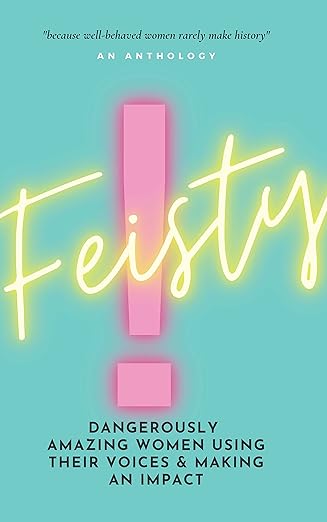

Feisty is a powerful anthology filled with essays, memoirs, and poetry by over twenty women who each share their personal battles with shame, oppression, trauma, and the search for self-worth. From raw, searing accounts of domestic abuse to triumphant awakenings of creative and spiritual freedom, this book presents a vivid mosaic of female resilience. Each story is deeply personal, yet collectively they echo a shared defiance of being called “too much,” “too loud,” or “too emotional.” Through these narratives, the authors reclaim the word “feisty” as a badge of honor.
What I loved most was the book’s refusal to sugarcoat the truth. The writing is honest, even when it’s uncomfortable. Some passages left me gutted, like Adrienne MacIain’s story of surviving assault or Mimi Rich’s slow unraveling and eventual reclaiming of her life after intimate partner violence. These women don’t pretend to be saints. They tell the truth. Their voices, different in style and rhythm, pulse with pain and fire. The range of experiences is striking, covering motherhood, racism, sexual trauma, divorce, and identity, all of which weave in and out, but each tale feels grounded in something fierce and unbreakable. As a reader, I didn’t just learn about their lives; I felt their rage, their heartbreak, and their quiet victories.
The format of the book offers a vibrant diversity of thought and emotion, allowing each woman to speak in her own way, whether through raw poetry or richly detailed memoir. Every story has its own rhythm and tone, and that variety keeps the reading experience fresh and dynamic. I found myself drawn into some pieces, surprised by others, and always curious about what would come next. These women aren’t telling one tidy story. They’re sharing their own truths, in their own style, and that’s what makes the book feel so alive.
Feisty left me both exhausted and inspired. This isn’t a book you read to escape. It’s a book you read to understand. To witness. To honor. I’d recommend it to anyone who wants to hear what courage actually sounds like, not the polished kind, but the scratchy, trembling, soul-shouting kind. This is for readers who are ready to feel something real, who might be grappling with their own dragons, and who need to hear that they are not alone, and that “too much” might actually be just enough.
Pages: 214 | ASIN : B09Q5923Y6

Out of the Crash
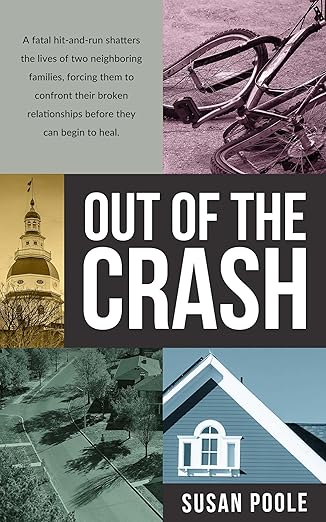

Susan Poole’s Out of the Crash is a riveting novel that begins with a sudden tragedy and spirals into an emotional reckoning for two families in the small town of Shawnee Springs. Caroline Beasley, a breast cancer survivor and bestselling author, returns from a motivational speaking event only to find her son Kyle in a tailspin. At the same time, Ethan Shawver, a high school senior, learns that his beloved mother, Amy, has been fatally struck by a car while biking, a car driven by Kyle. The book follows the emotional fallout, not just from the accident itself, but from the long shadows of grief, guilt, and family strain that it casts. Told through alternating perspectives, it weaves a tense and heartfelt portrait of trauma and how lives can fall apart and rebuild after a single moment.
I was completely pulled in by Poole’s style. Her writing has a natural rhythm, unforced and full of small, familiar details that make the characters feel like people I know. The dialogue felt real, awkward, warm, and messy, and the use of social media and group texts to open the story made it like something from the present day. Caroline’s complicated: resilient but vulnerable, confident but riddled with guilt. Watching her struggle with motherhood, ambition, and marriage felt all too real. Ethan’s side of the story was just as gripping. His pain was raw, unfiltered. The scene when he finds out about his mother’s death actually made me tear up. There’s something honest in how Poole handles grief. Not in a grand way, but in the everyday chaos it causes.
The middle dipped slightly as characters circled the same emotions, and I found myself wanting more movement in the plot. But then again, real grief doesn’t follow a tight arc, and maybe that’s the point. The book is strongest when it focuses on the interior lives of its characters. It doesn’t rely on big twists. It leans into emotional honesty, which is brave and a little brutal. There are moments when I didn’t like the characters much, Kyle’s denial, Jordan’s detachment, Caroline’s self-righteousness, but I never stopped caring about them. That’s the magic. Poole makes it hard to look away even when things get uncomfortable.
I’d recommend Out of the Crash to readers who appreciate layered family stories that don’t shy away from hard truths. If you liked Little Fires Everywhere or Ask Again, Yes, this one will be right up your alley. It’s a book for people who aren’t afraid to sit in the middle of the storm and wait for the quiet to come. And if you’ve ever been a parent, a child, or someone trying to hold it together when your world is falling apart, this story will resonate with you.
Pages: 291 | ASIN : B0F89DSZHM
Living Love of Christ
El Gran Intercambio (The Great Exchange) is a powerful autobiographical account of your life, vividly chronicling your spiritual, emotional, and personal journey from childhood trauma, abusive relationships, false religious systems, to divine healing and restoration. Why was this an important book for you to write?
This book was deeply important for me to write because it gave voice to years of silence. For so long, I carried pain that I didn’t know how to release—and writing became both a mirror and a doorway. I wanted to create a space where others who have faced similar wounds could feel seen, understood, and ultimately, offered hope. El Gran Intercambio is not just my story—it’s an invitation to anyone who has ever felt lost, broken, or deceived to experience true freedom through God’s healing power.
What were some ideas that were important for you to share in this book?
One key idea was the difference between religion and relationship. I had lived much of my life trying to perform for acceptance—by people, systems, and even God. I wanted to show that healing comes not from following rules, but from encountering the real, living love of Christ. I also wanted to address the generational impact of trauma, the dangers of spiritual manipulation, and the beautiful reality that we are not defined by our past—we are transformed by grace.
What was the most challenging part of writing your memoir, and what was the most rewarding?
The most challenging part was revisiting the darkest moments of my life. Writing about abuse, loss, and spiritual deception required deep emotional courage, and there were times I had to step away and allow myself to grieve again. But the most rewarding part was realizing that every page—every painful memory—had purpose. Knowing that my story could serve as a lifeline for someone else made it all worth it. Healing for me came not just through writing, but through the act of sharing.
What do you hope is one thing readers take away from your story?
I hope readers walk away with this truth: You are not alone, and you are not beyond restoration. No matter how far gone life may feel, there is a divine exchange waiting for you—your pain for His peace, your shame for His grace, your ashes for His beauty. Healing is possible. Freedom is real. And God has not forgotten you.
Author Links: GoodReads | Facebook | Amazon
Este libro relata la vida de la autora y su lucha contra la soledad y las falsas comunidades de la iglesia. Criada por sus abuelos sin el amor de Dios, luchó por encontrar amor y conexión. Esto la llevó a Estados Unidos, donde buscó la religión para encontrar la paz. Sin embargo, los sistemas religiosos con frecuencia la alejaron de Dios. A través de sectas, falsos profetas y charlatanes, la autora enfrentó numerosos engaños y manipulaciones, pero, finalmente, encontró el camino de vuelta a casa, como el hijo pródigo, a los brazos de Dios. El relato honesto de su vida inspirará a los lectores a superar sus propias dificultades con un corazón abierto y un compromiso con Cristo.
Genuine Faith

With Mercy’s Eye follows a gay actor several months after his husband is killed in an accident, who is left navigating grief, spiritual trauma, and identity while trying to hide his sexuality from his Christian producer. What was the inspiration for the setup of your story?
Some stories take years to develop. Others arrive overnight. With Mercy’s Eyes was a bit of both. I knew years beforehand that God was directing me toward writing a Christian fiction book whose main character was gay. I had no idea how God was going to help me work with that particular combination of factors. All I knew was that He was pointing me toward writing this particular story. That nudge came quietly at first—a few times here and there. But eventually, God’s direction became louder and clearer, letting me know it was time to start writing.
As for the setup specifically, most of it I knew from the outset. I knew the main character’s name, his profession (actor), and where he lived. From the moment it was time to start writing, I also knew what the opening scene would be. There was no wondering or having to build it from the ground up. It was just already there, waiting for me to write it.
What were some of the emotional and moral guidelines you followed when developing your characters?
As a writer, I have one personal baseline. I choose to show characters the same respect I would show a stranger. For me, that means I don’t write scenes involving personal hygiene that wouldn’t be performed in a public setting. It also means I don’t write sexually intimate moments or the lead-up to those moments 99.99% of the time. And it means there are situations where I don’t convey a character’s personal thoughts for more than a few moments at a time.
As a Christian, I look to God and the Bible for guidance on how to handle any given subject, theme, or incident.
This book shows God’s quiet working in our lives and how He can use even the most awful of experiences and circumstances to bring us to Himself. To honor that truth, I chose to portray both Christians and non-Christians in a genuine, true-to-life way. For the Christian characters, that means the faith contained in this book is an everyday faith that works into all aspects of life. It isn’t a faith that only shows up at the dinner table or when something bad happens. It’s always there, and it’s the foundation for the choices and actions of multiple characters in the book. For the non-Christian characters, that means no one is stereotyped or unnecessarily vilified. There is one character who behaves horribly throughout the entire book. That person has reasons for what they do, and there are consequences for their actions. But they aren’t the only character who makes mistakes or hurts others.
While I wrote With Mercy’s Eyes, there were several very personal moments that needed to be explored. Whenever that was the case, I kept the goal of the story in focus throughout that entire scene. I also chose not to elaborate on details that did not serve the overall goal. Many times, that also meant I had to stop mid-paragraph, or even mid-sentence, and hand my words over to God. Because I was not enough for that scene, but God was.
For example, there is a moment in this book where a character loses a child. First, I chose to leave a clear content warning at the start of the book that marks the chapter containing this moment. Second, I chose not to force the reader to remain in that moment for an extended period of time. Third, I chose to focus on elements that directly serve the scene and the book’s goal. There is a brief, but in no way detailed, description of the deceased child and how the parent responds to what they observe. These moments are not for shock value and are never treated as such.
What were some themes that were important for you to explore in this book?
This is a book about redemption, God’s love, and genuine faith. It’s also about taking a hard look at how we view both others and ourselves. Too many of my fellow Christians hold to an “us vs. them” attitude when it comes to people who live in same-sex relationships. There’s also a tendency to shy away from talking with someone who identifies as LGBTQ. So, With Mercy’s Eyes asks, “What if my fellow Christians could see one of ‘them’ in a different light?”
What is the next book that you’re working on, and when can your fans expect it out?
I have a novella about church hurt that will be published this December as part of a 3-novella collection titled Every Voice Heard. It follows a woman who works at a big-box retail store during the months directly following her departure from the church she’s attended her entire life. When she visits the last church on her list of prospects, she discovers her new employee is the pastor.
To get updates about my novella and the collection as a whole, stay tuned to my Instagram @dtill359 and sign up for my newsletter at dtpowellwrites.com.
Author Links: Goodreads | Instagram | Facebook | Website | Amazon
Six months after struggling actor Lane Harris lost his husband in a tragic accident, he lands a movie role guaranteed to put him on the Hollywood map. But one producer holds the power to shut down his shot at stardom—and she’s a Christian. If she finds out he’s gay, it’s over. Lane is careful not to say too much around her.
When an alcohol-fueled tryst with his co-star ends in humiliation, and his landlord hands him an eviction notice, Lane looks for someone to talk to. He finds a confidant in the Christian producer. After a night of too little sleep and not enough coffee, he lets slip his sexual orientation. Instead of a verbal flogging, the woman recounts recently losing her own husband.
The only Christians Lane knows condemn him upon learning he’s gay. But this one is different. She doesn’t embrace his sexuality, but instead of treating him with disdain, she offers compassion. Christians are supposed to hate people like him. So, why doesn’t she?
– – – – – – –
With Mercy’s Eyes by D. T. Powell is an issue-facing Contemporary novel for adult churched Christians. It addresses homosexuality and same-sex attraction from a Biblical perspective without falling into the trap of the extreme responses we too often see from modern churches. It holds similar views to Jackie Hill Perry, Becket Cook, Rosaria Butterfield, and Christopher Yuan.
Speaking For Those Who Do Not Feel Safe

No Ordinary Love follows several women whose stories reveal the terror and trauma of domestic abuse. Why was this an important book for you to write?
Because it’s my story—and the story of countless other women around the world. Despite how widespread intimate partner violence is, it continues to be treated as though it’s rare or private. It’s an epidemic. As long as that remains true, more stories need to be told. I was inspired by the women who spoke up before I found the strength to do the same. Now, I’m speaking for those who may not yet feel safe enough to share their truths.
I appreciated the candid nature with which you told this moving story. What was the hardest thing for you to write about?
The hardest part wasn’t the writing itself—I had already survived the events. In fact, the process of writing was profoundly therapeutic. What was most difficult was transitioning from that healing space into the often retraumatizing demands of publishing—critiques, edits, legal reviews, marketing, promotion. Writing gave me back my voice, my truth, my agency. But sharing it exposed me to judgment, disbelief, and the need to prove my experiences.
What was especially painful was the fact that I had to fictionalize elements of my own life story—not to protect myself, but to protect the identity of my abuser. After being silenced for over two decades, I finally found the courage to speak out. Yet, I still had to call my memoir “fictionalized” when it’s 98% truth, with only minor changes made to shield the person who harmed me. That’s harder than I can express in 100,000 words.
What is one misconception you believe many people have regarding the aftermath of domestic abuse?
That the abuse ends when you leave. It doesn’t. What I wanted to highlight most in No Ordinary Love is the aftermath—the long shadow trauma casts, the lingering triggers, and the decades it can take to fully disentangle yourself from the psychological grip of abuse. Healing is not linear. It is life-long.
What is one thing you hope your readers take away from No Ordinary Love?
I hope it inspires honest, necessary conversations—about the subtle and insidious nature of coercive control, how it undermines autonomy, the long-term psychological impact of chronic abuse, and the intersection of trauma, mental health, and systemic failure. Most of all, I want to illuminate the barriers survivors face in their search for safety, support, and validation.
No Ordinary Love
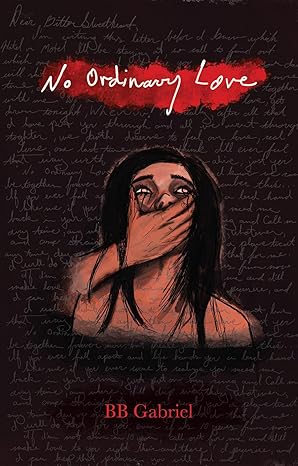
No Ordinary Love, by BB Gabriel, is a searing memoir that threads together the lives of several women grappling with the many faces of intimate partner violence. Through a braided narrative—alternating between Gabbi, Alex, Katee, and others—the book unveils the terror, trauma, and tangled aftermath of abuse while illuminating slivers of healing and resilience. This story stomps, screams, and weeps across the pages, detailing coercion, fear, childhood confusion, and adult reckoning. Told in raw vignettes and memory-soaked prose, it is not just one survivor’s story—it’s a collective mirror for far too many.
Reading No Ordinary Love shook me. There were moments I wanted to put it down and moments I couldn’t look away. The writing, often poetic and stark, pulled me close enough to feel the fear and the fresh heartbreak. Gabriel doesn’t romanticize trauma, and that’s what makes her voice trustworthy. She doesn’t craft her pain into tidy scenes or polished resolutions. Her story spills over in waves—sometimes chaotic, sometimes controlled—and always relatable. The structure, with its shifting timelines and perspectives, felt disorienting at times, but maybe that’s the point. Trauma is disorienting. This book doesn’t offer clarity; it offers truth.
I admired the way Gabriel let silence linger in her writing. Some chapters stopped short, leaving me breathless, the same way trauma interrupts a life. And yet, she also knows when to lean in—when to take us all the way through a panic attack, a memory, a phone call no one wants to make. This book isn’t just about surviving abuse. It’s about what comes after—the guilt, the longing, the ghosts that live in your muscles. And somehow, it’s also about love. Love between sisters. Love that fights back. Love that rebuilds.
I’d recommend No Ordinary Love to anyone willing to confront the brutal honesty of what abuse looks like behind closed doors—and what it takes to speak it aloud. It’s a gut punch for survivors, advocates, and even bystanders who have wondered, “Why doesn’t she just leave?” This book is for those who stayed. For those who left. And for those who still carry the weight of it all.
Pages: 381 | ASIN : B0DRZ5Z51X
How to Find God on the Dance Floor

Marlene Rhein’s How to Find God on the Dance Floor is a soul-stirring collection of poetry that doesn’t tiptoe—it stomps, dances, and rages its way across the messy floor of human emotion. Rhein paints an unfiltered portrait of what it means to crave connection, wrestle with loneliness, and dig through the ruins of trauma in search of joy, self-worth, and transcendence. At its core, this is a book about movement—of body, of spirit, of memory—and the sacred power of music, particularly house and hip-hop, as a lifeline to God, to self-love, to sanity.
This is not the tidy, soft kind of poetry you wrap in a Hallmark card—this was truth with cracked lipstick and a pounding bassline. Rhein’s voice is funny, furious, messy, and sharp as glass. The poems are wild and untamed. They jump from nightclub floors to childhood wounds, from pop culture absurdity to sacred vulnerability, and somehow, it all holds together. There’s something deeply cathartic about the way she refuses to keep it cute. She says what we’ve all felt but were too afraid or ashamed to admit. That sometimes you need to dance to remember you’re still alive. That sometimes love comes in the form of sweat and strobe lights, not church pews and neat prayers.
I loved how she blends humor with heartbreak. One minute I was laughing at a dig about pop music at the dentist’s office, the next I was crushed by the weight of a poem about childhood neglect. It’s a rollercoaster, but one you don’t want to get off. Her writing is vulnerable in a way that makes you want to both cheer and cry for her. She doesn’t flinch from her pain or disguise it in metaphor—she spills it, owns it, dances through it. Her spirituality isn’t the polished, book-club kind. It’s gritty, found in flashing lights and gut-level knowing. She makes you believe that healing is possible, even if it’s slow, sweaty, and filled with bad DJs and loneliness.
This book is for anyone who’s ever felt like they didn’t belong, anyone trying to claw their way out of depression, anyone who finds God not in silence but in the chaotic joy of movement. It’s for the feelers, the survivors, and especially the dancers. If you’ve ever needed a reason to get off the couch and reclaim your magic, this book might just be your anthem.
Pages: 112 | ASIN: B0FBX5PDXZ



 LITERARY TITAN