Blog Archives
Her Sassy Attitude

The Good Pharmacist’s Deadly Secrets follows a fae seeking a quiet life in a small town when she’s accused of murder and must unravel the pharmacist’s secrets before she’s arrested. What was the inspiration for the setup to your story?
I had just finished the last book in a series and wanted to start a new one using the same world but tweak the genre to include one of my favorites—cozy mystery. Sloan, a side character in the first series, was the natural choice as a protagonist for the new series. Readers loved her, and her personality made her perfect to fill the role of amateur sleuth.
As far as the secrets she uncovers—My husband and I owned a Home Care business for years. During that time I came across several examples of adult children treating their parent rather poorly. Those of us in the office would scratch our heads and wonder ‘how could they treat their mother or father like that?’ Well, come to find out, sometimes the parent had mistreated their kids in the past. Most people assume everyone loves their parents, so I thought this would make an interesting story.
Sloan is an intriguing and well developed character. What were some driving ideals behind her character’s development?
Thank you! Sloan is one of my favorite characters. I love her sassy attitude.
She first appeared in Xander’s Folly, the second book of my urban fantasy series, The King’s Jewel. I based my world-building in that series on the Celtic Mythology of the four treasures of the Tuatha de Danann.
I started developing Sloan by researching the mythology around the Irish god Lugh of the Long Arm, whom she represents in the series. Lugh was the master of all arts and came to the Tuatha de Danaan as an outsider.
At first the character was going to be a boy, but I thought switching that up would make her even more interesting. Then I looked at her age, that fact she lived on her own and thought about how that would shape her personality. Although Sloan is in her twenties, the Sidhe are long lived and look much younger and their age compared to humans, so she is often mistaken for a teenager. But, she is an adolescent by Sidhe standards and often acts that way.
I wrote a about her character development in more detail on my website. If anyone is interested, they can read it here: https://www.belinda-gordon.com/readers-questions/where-did-sloan-murrays-character-come-from/
What were some themes that were important for you to explore in this book?
People aren’t always what they appear to be. This is true of Sloan and many other characters in the book. They are keeping secrets—hiding something from the rest of the world.
Another theme that always pops up in my books is family; what makes people family—it isn’t always blood relations—and how do they come together.
What is the next book that you are working on and when will it be available?
A second Findale Fae Mystery is in the works, so Sloan and her cohorts will be back. But it won’t be my next release. My next book, coming out in November, is something totally different. No fantasy or mystery in this one. I would classify it as women’s fiction.
The title is Having It All and that’s kind of what it’s about. Dalia, a career woman in the ‘90s juggling her job, motherhood and marriage, believes she should be able to have it all with no need for give and take. After all, that’s what the women of her generation have been told to expect! Devote 100% to everything and do it all perfectly. And it’s working… until it isn’t. When things begin to fall apart, Dalia needs to decide what’s really important and what she can live without.
Author Links: GoodReads | Twitter | Facebook | Website
Escaping the notoriety she’d acquired in The Otherworld,Sloan Murray packed up her loyal cocker spaniel Max and left her fellow fae to settle in the small town of Findale.Sloan thought her new life in the Pocono Mountains of Pennsylvania would change for the better, become quieter, less unpredictable––if only a small group of fae hadn’t followed her into this new world.
Still,Sloan’s enjoying her relative anonymity untilshe attempts to return alost backpack and ends up accused of murder. Suddenly, not only do half the town think they know who she is, they’re under the misconception she’s a dangerous killer.
Will Sloan and her fae friends unravel the dead pharmacist’s secrets before the obstinate Det. Moody arrests her for murder? Time is ticking, and if Sloan can’t find the real murderer soon, not only will she lose what’s left of her magical anonymity, she will lose her freedom forever.
The Good Pharmacist’s Deadly Secrets is a cozy who-done-it with a little something for everyone––humor, mystery, fae, and even a lovable dog!

Playlist
![Playlist by [Zachary Ryan]](https://m.media-amazon.com/images/I/41i4KC35MLS.jpg)

Zachary Ryan’s book, Playlist, is both heartwarming and sad. It follows the life of Sarabeth Bryant as she navigates college after the death of her father. Apart from her grief, Sarahbeth struggles with nightmares about an assault she is not sure happened. Yet amid all this chaos, she nurtures supportive friendships and even manages to meet someone she thinks could be the one.
Like all protagonists, Sarabeth endures great adversity, and at some point, we even think she won’t make it. But somehow, though scarred, she pulls through, even in the face of shocking plot twists. To call her story tragic is an understatement – it is truly gut-wrenching.
And since it is told from her perspective, it is hard not to get entangled in all the emotions of the book. In this regard, the author does a good job of making it personal and relatable, even if the dialogue sometimes isn’t. Some of the characters exude a coherence and clarity that you don’t expect from someone who has just experienced major trauma.
This is a potent and emotional contemporary coming of age romance novel with an ending that is not at all predictable. The author goes to great lengths to develop and deliver poignant and stirring themes. He particularly puts a lot of emphasis on grief, identity, self-worth, and healing. As such, the characters in this book are fully fleshed out individuals who battle with their demons and try their best to choose themselves.
This is quite refreshing considering that most authors usually follow a unidimensional approach to their character development, refusing to acknowledge that both light and darkness can exist in the same person. Using this multidimensional approach allows the author to create real, complex characters that anyone can relate to. It also makes the story more beautiful and validating. Interestingly, the author pairs this depth with a light writing style that makes the story easy to read. A lot happens in just 200 pages yet you don’t feel overloaded with information. Playlist is a passionate ballad of the heartache we all feel.
Pages: 207 | ASIN: B093YGMH97

Stolen Lives – Book Trailer
Three fourteen-year-old boys are inextricably linked by abduction and murder.
Two of them were just abducted off a safe suburban street. Kelliher and his team of FBI agents have 24 hours to find them or they’ll end up like all the others… dead! They have no leads, no clues, and nothing to go on. And the possibility exists that one of his team members might be involved. A fourth boy, George Tokay, a Navajo, holds a key piece to this puzzle and doesn’t realize it.
Kelliher and his team have been on this case for two years. There isn’t much to go on, and each time he gets a break, potential witnesses are found dead. The stories of these boys are like loose threads on a sweater: pull the wrong one and it unravels completely. Slowly, Kelliher realizes that there may be one or more members of his team behind it all.
A Courageous Young Winnie

Winnie – Daughter of Azania follows a young woman who faces tough obstacles to save her mother and community. What was the inspiration for the setup to your story?
The incident that happened after the passing away of Winnie Madikizela-Mandela- South Africa mother of nation in 2018 is what give birth to the story. Winnie Mandela is the second wife of the South African freedom fighter, Nelson Mandela. After her death, the ruling party which is African National Congress ANC leadership decided to give the woman a deserved iconic burial. This was criticised by opposition political party, EFF leader. The party leader Julius Malema accused the ruling party of being hypocrisy. He said the ruling party could have celebrated the woman better while alive and not after her demise but instead abandon her and made her life full of controversies. Malema said Winnie was never celebrated unlike her husband but only lived a life mauled with scandals despite using all her life to serve the party and the South Africa. The impact of Winnie Mandela during the struggle years made me to think about this iconic woman and I decided to develop a character not only in her name but someone who loved her community which I made to be Azania- the name accolades to South Africa.
Winnie is an intriguing and well developed character. What were some driving ideals behind her character development?
Like I said earlier, I want a well developed young female protagonist that love her people and ready to sacrifice her life for her community and after reading about the pain, the agony, the lies and controversies surrounding Winnie Mandela I believe she is the right character i want. Winnie was one of the few party women qualified to become South Africa president but because of her divorce to the most influential man in the South African history- Nelson Mandela, her political lifestyles was not only silenced but also lived with several compromised life. However, even at this, she expressed her total love to the party and her people till death.
Another thing that contributed to the story development was an outstanding bravery displayed by one of my church members, a lady of 17 who singlehandedly apprehended three hefty men that hijacked a taxi she was travelling with. She even used a gun to break one of the men legs during the fight that ensued inside the taxi until arrested them and hold them down until police arrived. All these contributed towards the development of developing a courageous young Winnie.
What were some themes that were important for you to explore in this book?
One of the main theme in the story is unconditional love especially to all people- both good and evil just as bible commanded us to do. Winnie Mandela’s life might be full of controversies yet she stood firm that she will never form or join any political party apart from ANC even when the stake was high to do so. She reserved her love to the ANC party to grave even when leaders betrayed her love she remained loyal to the people and to the party. She led so many reconciliation team in her personal capacity to implore some who left the party to return to the party including Julius Malema. She show her commitments and submissive to the party and refused to form or join any other political party.
Secondly, the issue of racism which is one of the main issues in South Africa also addressed and that the only way to conquer this is also through love.
What is the next book that you are working on and when will it be available?
I anticipating to release two more books before the end of the year. As an immigrant in South Africa who has witnessed all side of the story- love, hatred, racism, xenophobia and afrophobia including some of the reasons all these exist.
The two books have answers to mant of these. They are not fictions books but answers to some of the immigrants and citizen questions not only in Africa but across the world.
The first book is title “My Brother from Another Mother” and though it is presented as a fiction but has many facts of what an average immigrant faces in South Africa. This is currently in proofreading stage. It expected to be released before October 2021.
The second book title “The Xenophobic State” is a memoir. The book exposes hidden people behind racism, xenophobia in South African and their arguments. It also explained how xenophobia and racism becomes the normal or daily routen. Who are these group of people and what do they want? The book is expected to be released in December 2021.
Author Links: GoodReads | Twitter | Facebook
also get kidnapped?
To save her mother and her community, a 16-year-old Azanian girl embarks on a journey that will make her into a kidnapper. Winnie is the only daughter of the late community hero Nelson Mapuka, a man whose love for Azania led to him sacrificing his life for the community. However, her mother’s weird illness makes her embark on the journey to find help, after all hope disappears.
Along the way she falls into the clutches of Jacky and Kurt, professional kidnappers who are desperately in search of a lady around her age to fulfil the wish of a frantic Mayor, Honourable Dagado, and his witchdoctor. Just when Winnie thinks death is the only way out, the unexpected happens, opening doors for revenge and revealing secrets that will shock the community.
Like her father, the love of her people is built into Winnie, but will her non-racial love and bravery be enough to save her mother, as well as a young white lady, from the community hoodlums and kidnappers?
The Anachronist
![The Anachronist by [Thomas Bauer]](https://m.media-amazon.com/images/I/51zNwdvZoMS.jpg)
The Anachronist by Thomas Bauer is a tragic tale of a man stuck in-between his perpetual obsession with the Civil War period, and the mundane world of modern-age reality. The protagonist of the novel, Charlie Schultz, is living in a failing marriage and is bound to continue a job with no progress, with very little hope at the end of the tunnel.
His only way of purgation is his role as the Confederate soldier Simon Culpepper, a heroic persona he assumes during the mock battles. He wishes to transcend the barriers of his meek personality and become as valorous as his alter ego, but fails to unify the two, and gets trapped in this dangerous loop of anachronism. The tragic end of the novel perhaps puts an end to his mindless obsession but also throws light on the painful realities of his life.
Charlie’s wife Rebecca and son Zack fail to respect him and blame his obsession with the mock battles for their impoverished conditions. Charlie daydreams about his role as a brave fighter and neglects his duties as an employee. As a consequence, he fails to get a promotion year after year, and his family has to suffer. Charlie’s desperate wish to have been born in the 1860s reflect his incessant obsession with the past, an urge so strong that it almost detaches him from reality.
We could also read Charlie’s love for the past as a coping mechanism for his growing depressive state. He fails to find a purpose in his everyday life and lives the life of his dreams through these enactments. He becomes a butt of ridicule to everyone around him, but that doesn’t deter him from his anachronistic desires. In the end, we see him in a state of frenzy, when he goes to a dangerous extent to live in the shoes of his character, Simon Culpepper. Wrought with a smooth flow of language and a dark, ironic sense of humor, the book is a must-read.
I thoroughly enjoyed The Anachronist from beginning to end. Short, crisp, and packed with emotional authenticity, the novel truly strikes a chord in the hearts of the readers, without being dramatically sentimental. The harsh truth of reality, the pain and agony of depression, the inability to find a purpose, and the painful ending, and the dry humor make this novel a great read.
Pages: 145 | ASIN: B09359SSX4
The Walrus: Monster in the Mist

The Walrus: Monster in the Mist by Alan J. Paul, follows the story of the curious and superhero obsessed pre-teen boy Paul A. Tonetti, Jr. Paul is clearly obsessed with superheroes from the DC comics and consistently compares them to the popular Marvel superhero brand. I was pulled in by the deft character development. Right from the beginning, and really even from the title of the book, I was intrigued with the story.
Author Alan J. Paul writes with a unique imagination and creativity, you could compare his writing to the popular late author C.S Lewis. With vivid descriptions of alluring characters, we’re able to imagine how each character looks especially with Paul’s creative metaphors and his use of superhero comparisons. He also brings in the aspect of children using their imagination to run away from their toxic family drama, using the reality vs imagination fantasy concept to great effect. You can also see how the author uses his superhero knowledge to his advantage in this book, as comic fans will appreciate the references.
It has been awhile since I have read a book like The Walrus. This is a story with great depth, but it’s laid out methodically. The ever present sense of something sinister lurking on the fringes seems to permeate the story in a way that make it hard to put this book down, and impossible to forget the pensive feelings it instills in you.
I related deeply with Paul’s mother and his aunt’s relationship, even though it does not play a big part in the book, the author does briefly touch on the sister relationship between Annette and the main character’s mother, mainly because I have such a close relationship with my own sister and believe that your sibling or siblings are the ones that are always there for you. I was a bit suspicious of George B. Albert’s character because of how Paul idolized him, making him seem a bit too perfect to be true. It sets up a riveting character study that evolves slowly throughout the story.
This is a dark urban fantasy novel that goes in unexpected directions. The Walrus: Monster in the Mist is an enthralling horror novel with a premise that utilizes superhero’s in a unique way.
Pages: 218 | ASIN: B09354L47M
The Struggle to Survive
A Sense of Purpose follows a kitten who’s abandoned on the streets and finds a sense of purpose among the various people and obstacles he encounters. What were some sources that formed this novel’s development?
“A Sense of Purpose” is a story about Chester who was an important character in my earlier novel, “Journey Home – A Cat’s Tale”. He was that down to earth, honest and helpful character that we all wish existed in our lives, always there to help, to be a friend, to be a positive influence. Because of those traits, I thought he deserved a story of his own. While I thought about writing a story based upon the character I had created, a lost and lonely cat exited the forest near our home, looking for food and shelter. For over six New England seasons this abandoned cat approached our home ever so cautiously as my wife called him from the forest and placed food outside on a daily basis. The character I had created actually became real; hence, we named our homeless friend, Chester.
While we fed Chester over several New England seasons and attempted to give him a permanent home, my wife also discovered a feral mother cat with her four kittens on another portion of our property. It was Chester who eventually brought her to our front door for us to feed. This feral mother cat with her four kittens and the dramatic incidents that revolved around Chester provided me with the consequential inspiration and resolve to create this story; a story that has relevance to everyone of us.
The struggle to survive, the determination to complete something meaningful, and the intertwining of Chester’s life with the lives of others make this story what it is. Chester’s life has relevance to tragedies and joys for all of us, and I hope this story will make people think about their own lives and how each life can be important to others in so many ways. Each of us affects one another at some point in our lives—to create a purposeful meaning. No matter what we do in our lives, we all have a sense of purpose—a message, I’m sure, Chester would want me to share.
Just so you know—on one early, cold October morning, Chester finally decided to step through our front door on his own volition. He now has a permanent home.
Chester is a stirring character that I enjoyed following. What were some ideas that guided his character development?
When Chester appeared at the edge of the forest near our home, my wife and I wondered where he came from and what his travels might have been like to get here. So I started his story as an orphaned kitten surviving in New York City and then traveling to a coastal town in the State of Maine. After finding a new home in a small town surrounded by forests, I introduced him to an abandoned kitten by the name of Patches, the main character in my previous novel “Journey Home – A Cat’s Tale. When Chester’s new friend disappears in a blizzard, I wondered about what lengths he would go through in order to find him. What might any of us do under unforeseen circumstances? It is during his search and his relationship with other characters involved with the obstacles he encounters that affect his character development throughout the story. The homeless people, the perils of a forest, a blizzard, the friendships, and the resolve to never give up on hope all add to an understanding of himself and what he must do to complete his quest to find his friend.
There were a lot of great scenes in the book. What scene was your favorite to write?
There were actually several descriptive scenes that were a favorite. It’s difficult to pick just one. Please bear with me. Here are six examples:
1) On the first day of being on his own in the city, Chester wandered into a bodega owned by a shopkeeper by the name of Mr. Pettigrew, searching for something to eat. That’s where a nine- year-old girl by the name of Helena first met Chester. The following excerpts are portions from that beginning:
—As I neared an aisle of baking goods, I noticed a young girl shopping with her mother. It didn’t take much time for the little girl to notice me. Perhaps it was the combined appearance of my white feet in addition to the reflection of the florescent light that intensified a bluish color to my eyes that caused me to be the object of her immediate attention. The little girl had curly brown hair, dark brown eyes, and a smile that seemed to make the world take notice, much like my distinctively white feet.
She stared at me for what seemed a very long time, beamed a big smile, then looked up at her mother, tugged on her mother’s coat sleeve, and said, “Mom, we don’t have any pets. You told me that when I got to be nine years old I could have a kitten. I’m nine. Can I have that one?”
“Helena, we’ve shopped in Mr. Pettigrew’s bodega now for many years. Today, we are just picking up some cut flowers and a few items for dinner, not a cat.”
“But Mom, you promised, and I like that one.”
“Well, I don’t think Mr. Pettigrew would like us absconding with one of his cats,” replied her mother as she bent over slightly to take a closer look—
—Pettigrew had overheard the conversation. Distracted from his task of shelving canned goods, he paused and turned to face Helena and her mother. While thoughtlessly snapping one of the red suspenders that stretched across his robust stomach with his one free hand, he quickly responded, “He’s not my cat. He just wandered in here a few minutes ago. Like all the others in the past, he’s looking for a hand out. I doubt if he even has a home. This morning is the first time I’ve ever seen that one,” he said as he lowered his head, peered over the top rim of his spectacles once again, and pointed at me.
Helena’s understanding mother took another look at what she considered to be a somewhat bedraggled kitten, then glanced back at her daughter and remarked, “Well, he looks like he could use a home, doesn’t he?” —
—Helena’s mother glanced at her daughter and paused as she deliberated on what to do. “He certainly is a pocket-sized bundle of fur,” said her mother. “I wonder if that tan and gray fur is color or just plain dirt,” she added. Then she nodded her head approvingly, and said, “Okay Helena. But you’re responsible for taking care of him.”
“I promise. I’ll take really good care of him.”
“We’ll have to take him to a veterinarian and get him checked for fleas, get him a rabies shot, and get him fixed,” said her mother.
“Is he broken, Mom?”
“No honey. I just mean that we should make sure he’s okay,” her mother added with a slight smirk on her face as she turned her attention to Mr. Pettigrew.
Surprisingly to Mr. Pettigrew and Helena’s mother, Helena needed no further affirmation and didn’t hesitate to act. She looked down at me, scooped me up with both hands, cradled me into the sleeves of her warm coat, and said, “I’m going to call you Chester.” —
2) When Chester stayed with Abram, a homeless man in New York City, during below zero degree, pitch-black winter nights, there were a few scenes when they huddled together to keep warm from the cold. Here is an excerpt from a portion of one scene:
—When a gust of wind invaded our space, he quietly looked down at me, while shivering, and apologized for not being able to do better. “We need to stay out of this wind,” he whispered repeatedly. “We could get hypothermia if we’re not careful.” I looked up at him, not understanding at the time what he meant. Then he continued to provide an explanation and tried to remain lucid in our frigid surroundings. “It’s a gradual type of trauma,” he said. “We don’t want to get soaked by this cold wet snow. If we’re not careful, we could get disoriented, tired, not realizing we’re freezing. You huddle in my coat. I’ll keep you warm.” He then removed one of the tattered mittens from his hand and stroked the top of my head with his chilblained fingers, even though they throbbed from the cold.
I stayed with Abram for almost one entire winter, until one early below-freezing morning I awoke to his breath hardly but a whisper. I’ll never forget that moment as long as I live. He stroked the side of my head with a gentle hand, looked down at me with pale blue eyes, half shut, and in a barely discernible voice said, “Storms will come. I’m sorry I can’t be there for you.” I sat there nestled in his arms as he held me close—
3) When Chester was trapped in the back of a moving van and transported to a small town in Maine, he was adopted by the family who moved there. This is an excerpt of his arrival:
—It was the screech of the metal door latch that woke me early the next morning. Both doors to the back of the truck opened wide, simultaneously. Sunlight streamed through the darkness, and the sight of Helena surprised and exhilarated me as she poked her head into the wide opening and peered into the van. But when I emerged from my sleepy stupor, I looked closely at the welcome intruder and realized that it was a girl who only resembled Helena. It wasn’t her. It was the dark brown curly hair both had in common that confused me for one brief, exciting moment. It’s difficult to explain how disappointed I was.
The girl immediately spotted me at the back of the moving van. “Daddy, look what came with our furniture,” she yelled excitedly.
After that excited response to my presence, another face peered through the opening, and an older man’s voice boomed, “How did a cat get in there?”
Quite simply, that’s how I got my second chance at finding a new home. A family of seven, moving from New York City to a small New England town on the coast of Maine, quickly and unanimously decided to adopt me as they carried both me and the couch into their new home. They figured if I had been a feral cat, I would have quickly cowered to the rear of the van or would have been aggressively defensive. Although fearful of what might happen, I decided to remain on the couch, and accepted the ride into the house. I never once thought about fleeing. I figured things couldn’t get much worse; only better. I guess the family figured that if the stray cat came with the furniture, he stayed with the furniture; that’s the way it was supposed to be. Fate had determined a new destiny for one homeless cat. Me. —
4) During the development of the story, there was a point in time when Chester visited a nearby forest, sensing he wasn’t alone. The following is an excerpt as he was leaving the forest late one afternoon:
—Even though it was getting dark, a bright moon lit my way as light glistened from the frosty snow-covered ground. Clouds swirled around a full moon and provided an eerie, otherworldly reflection over the landscape. Just before I exited the edge of the forest, however, I sensed a shadow in the distance, a rustling among the saplings—heard but not seen. The silhouette wasn’t caused by the moon’s reflection or by the stiff breeze that swayed branches through the snow-covered trees. Rather, the shapeless shadow lurked as something sinister, beyond comprehension. Something dark, moving through the snow-ridden undergrowth—quietly. I sensed a danger never before known, an instinct to run, but instead I turned to look in the direction of movement, yet found nothing there. The shadow lurched within the deep recesses of the forest, a silent movement, perhaps a ghost I thought. Fear engulfed my soul. The unknowing made me cower. The wind chattered through the trees and in the distance the cawing of crows diminished until I could only sense the beating of my heart and the freezing whiskers against my face. Snowflakes hushed over the forest till there was no sound except for my own rapid breathing, my chest pounding as if a hand had choked my very breath. I plunged headlong into the coastal driven wind that had changed direction, no longer at my back. Swirling snow from fierce winds punished the air and made it difficult to see any distance ahead. —
5) When Chester started to search for his friend after several days of blanketing snowstorms, he hurriedly headed for home as a new storm strengthened. This is a scene from that experience:
—The walk home was laborious. I sloshed my way along the empty streets while the freezing wind sought to steal my every breath. By the time I arrived home, darkness had swallowed the afternoon. The Anderson’s had been watching for my return and had left the outside lights on. I was glad they had because by the time I arrived I could barely see the house. I made my way up the snow-covered walkway and was happy to see the front door creak open just enough to let me inside. I heard Beth Anderson’s voice before I even got to the front stairs.
“It’s about time you got home. If we had known this storm was gonna turn into a blizzard, I never would have let you out this morning,” she said, talking to me as she would chastising a child. As I entered the house she added, “You look like a walking snowball.” —
6) At a later point in the story, Chester met Tate, a solitary man who kept mostly to himself and spent much of his time quietly walking about the neighborhood, as if he were in his own world. Unlike Abram, Tate didn’t talk to anyone he could find. He was usually quiet and only spoke to a select few. When he did speak, his voice was a low, barely audible mumble about his forecast of the weather. The following is an important excerpt from the story:
—When I proceeded down the granite steps onto the sidewalk, Tate was sitting on the bottom step mumbling one of his not so unusual incoherent rants; to no one. As I casually passed beside him on the last step, however, his left hand gently washed over the top of my head and onto my shoulders. He had never done that before; never had touched me, never had patted me, but this time he did. I stood there for a moment, feeling a calming connection between us; his hand gently rested on my shoulders. I looked up as he continued to mumble something about the cloud cover and saw him staring out across the street, as if he was looking at something. Then he suddenly stopped talking and slightly lifted his hand from me. He removed his baseball cap with his right hand and placed it on the stair beside him while he continued to stare directly ahead. Then, as if he had received some sort of message, he turned his gaze downward, catching my upward glance with his. In a low methodical, distinctively firm voice he warned, “A storm is coming.” It was the same announcement he had made just days before the blizzard in January. I had heard him utter those same four words several times before. This warning was vocalized as it had been previously, but this time it had a sympathetic sound to it. His words seemed apprehensive, yet the tone of his voice was soft and strangely empathetic.
It wasn’t just the tone of his voice, however, that was different. Tate never had much of any kind of facial expression when he spoke. I had never seen him smile, but he did on that day. Perhaps it wasn’t his intention, but there was a slight, asymmetric smile that expressed a deep sadness, as if what he said was somehow painful for him; a smile that turned up ever so slightly at the corners of his mouth and exhibited a kindness I had never witnessed before. He placed his left hand ever so gently on my shoulders once again and paused as if doubting what he knew and didn’t dare say. Then he stood and slowly pulled his hand away. I looked up at him and his eyes drifted downward once again, looking at me. He stared intently into my eyes in a way that made me think he could see into my very soul. That’s when I realized there was a real sadness in his look. Then he stepped down onto the sidewalk, leaving me on the last step, and walked away. He never looked back or spoke another word as the distance between us grew. I watched, sad to see him go from the moment; a simple exchange of emotion, an experience so intense, yet seldom shared. I didn’t know it then, but that was the last time I would ever see Tate. It was as if he had waited all those months I had known him in order to deliver a message that could no longer wait. I returned to the forest that day and thought about Tate’s implicit words. I wondered what he had meant. Winter was over. Even I knew that. —
What is the next book that you are working on and when will it be available?
My fourth novel, “The Path Before Me”, is a Middle Grade Young Reader version of my philosophical adult novel, “Journey Home – A Cat’s Tale”. It should be available in July 2021. I wrote it in hopes that such a story would provide a better understanding of compassion, empathy, and hope for a young reader; a good social aspect addition for schools systems and the in-home library. I am currently working on my fifth novel, a science fiction story about our Earth, our possible connection with other worlds, and the reason why other civilizations have not contacted us. I still have a bit of research yet to do while writing the manuscript. I would expect completion and publication sometime in 2022.
Author Links: GoodReads | Twitter | Facebook | LinkedIn | Website
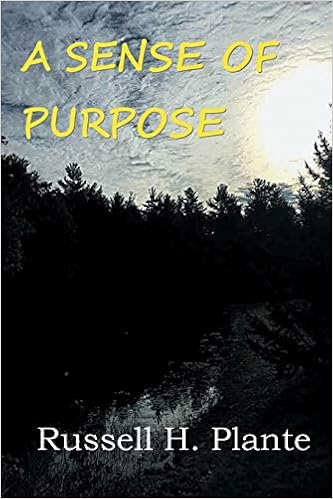
Orphaned as a kitten on the streets of Manhattan, Chester recounts his first home with Helena, a nine-year-old girl, then losing his home two years later. Living on the city streets, he befriends Abram, a homeless man, who warns him about an impending storm, then dies early the following morning after a bitter, cold night. Friendless once again, Chester becomes trapped inside a moving van and finds himself taken to a small town on the coast of Maine. There he meets an abandoned cat named Patches, a compassionate cat named Buster, and Tate, a peculiar homeless man who also warns Chester of an impending storm. Remembering his own past struggles, Chester helps Patches find food and shelter. Becoming friends, they explore an ancient graveyard one day in a nearby wetland forest where Patches tells Chester about his father entering the dark forest but never returning. When winter arrives, the worst blizzard in over a decade strikes the small coastal town and Patches disappears like his father had. Hoping Patches might have sought shelter from the storm in the nearby forest, Chester begins an arduous search into the forest for his friend. There he encounters a young woman in the old graveyard, drawing in her sketchbook, and ultimately learns the truth about the disappearance of Patches’ father. He also discovers a feral mother cat with her four kittens, struggling to survive, not knowing they would change his life forever. When terrifying events happen under the halo of a moonlit night, Chester realizes the warnings from Abram and Tate were about significant events that would occur in his life. His search not at an end, he comes to understand that every life affects another, and that no matter what we do in our lives, every living being has a sense of purpose.

The Narcissism of Small Differences
![The Narcissism of Small Differences: A Noir Detective Novel by [Dennis Dorgan]](https://m.media-amazon.com/images/I/51neYDHHxUL.jpg)

The Narcissism of Small Differences is a riveting detective story with some quirks that make it truly unique and an absolute page-turner. The concept of a serial killer on the loose and ties to the mob is not new, but the author manages to offer new twists and turns that make the narrative fascinating and well-worth a read. Conor Delaney specializes in reading people, partially due to a mysterious spiritual connection from his youth. He is called in to help with a peculiar case of serial killings by the police but the aims of this vicious killer are unknown. Filled with witty one-liners and jokes, The Narcissism of Small Differences is like no other murder mystery.
The Narcissism of Small Differences, in addition to being well-written and detailed, has a lot of neat aspects that make it a one-of-a-kind book. The spiritual and mythological elements blend well with the more procedural aspects to create a new sort of mystery. The book itself opens with an insight into Conor’s past and his uncanny ability to understand human behavior. The reader will experience the thrilling process of toxicology reports and crime scene analysis, but the mere surface facts are not enough to solve the mystery. The interjections from Conor’s brother or subconscious and inclusion of different types of belief systems adds to the sense of ethereal forces working in the background. The author does a fantastic job of keeping the reader constantly guessing and questioning who will be hurt next and who is the killer.
In addition to its eccentric and fascinating blend of both the natural and supernatural, The Narcissism of Small Differences has compelling characters and parts of its plot that mirror real life, making the narrative truly three-dimensional. All of the characters have their strengths and lovable flaws that make them more life-like and intriguing. For example, Conor’s unique abilities are countered by a charming awkwardness that makes him more relatable and realistic. The book also lightly addresses some of the common issues that society faces as they relate to the crimes such as the relationship between race and law enforcement or the cultural genocide of First Nations peoples. One thing I did notice in the book was the somewhat inconsistent capitalization of nicknames throughout, but this does not hinder the reader’s enjoyment of the novel.
The Narcissism of Small Differences is a thrilling mystery novel that will be enjoyed by anyone who likes realistic crime novels with fascinating characters in the trenches of a puzzling mystery.
Pages: 279 | ASIN: B09D2DZSG5


 LITERARY TITAN