Blog Archives
When Eagles Roost


Mara Purl’s When Eagles Roost is a romantic adventure wrapped around an Alaskan journey, with newlyweds Miranda Jones and Cornelius Smith discovering what it means to begin a marriage while both remain fully engaged in the work and interests that define them. Their honeymoon starts with professional commitments at the University of Alaska, then opens into a road trip through Denali, Valdez, Homer, and Sadie Cove before ending aboard an Alaskan cruise. Along the way, Purl folds in several familiar Milford-Haven characters, including Francine and Will, whose relationship takes a major step forward, and Cedric and Ezme Worthington, whose fiftieth-anniversary cruise becomes its own affectionate story. The result feels less like a single straight-line adventure and more like traveling alongside several couples who are each figuring out how love changes over time.
Alaska is really the book’s other leading character. Purl pays close attention to weather, wildlife, glaciers, museums, ferries, roads, small towns, and the strange summer experience of almost endless daylight. Miranda’s curiosity gives the story an especially observant quality because she sees the landscape both as a wildlife artist and as an environmental advocate. The book regularly pauses to explore subjects such as Indigenous traditions, subsistence whaling, the Trans-Alaska Pipeline, the Exxon Valdez spill, glaciers, wolves, whales, and bald-eagle behavior. These passages give the novella a leisurely, travel-rich rhythm, as though Purl wants readers to come home with a fuller sense of Alaska. Some of the most memorable moments come when that factual attention turns almost mystical, particularly when Miranda feels a connection with an orca or watches the eagles as living creatures with their own family drama.
The emotional center is the parallel between the eagles and Miranda and Cornelius. The book periodically shifts into the lives of a mating eagle pair, following nest building, egg laying, hatching, feeding, and the awkward growth of the eaglets. By the time Miranda and Cornelius arrive at Sadie Cove and discover an eagle nest almost outside their window, the connection between human partnership and avian partnership has been quietly building for much of the story. When an eaglet falls from the nest, Miranda’s instinct is to help, but the rescue becomes a lesson in restraint, expertise, and respect for wildlife. She calls her biologist friend Joy Aderyn, and the young eagle is ultimately placed safely on a lower branch where its parents resume feeding it. That sequence brings together several of the book’s strongest interests at once: compassion for animals, responsible environmentalism, Miranda’s adventurous nature, and Cornelius’s steady support of the woman he’s married.
I’d recommend When Eagles Roost most enthusiastically to readers who enjoy romance with a strong sense of place, wildlife and nature writing, travel adventures, and stories about established relationships. Milford-Haven readers will have the added pleasure of seeing continuing characters cross paths in unexpectedly satisfying ways, especially during the cruise, where Francine and Will marry, Cedric and Ezme celebrate fifty years together, and Miranda and Cornelius settle more fully into their new life as husband and wife. New readers can still follow the central adventure because Purl provides enough background to make the relationships clear. By the final pages, when Miranda thinks about the fact that eagles mate for life and hopes for the same lasting bond with Cornelius, the title has gathered a meaning larger than the birds themselves. Roosting becomes an image of choosing a mate, making a home, venturing into the wider world, and knowing where you belong when it’s time to return.
Pages: 230 | ASIN: B0GFY26QJV

Hearing Her Own Voice

When Paris Whispers centers around a young woman from Virginia who leaves grief, a controlling mother, and a cramped sense of self behind for a fresh start in Paris in 1981. What was the inspiration for the setup of your story?
The seed of the story was planted long before I ever wrote a word of it. At twenty-two, I spent a year in France when a Rotary scholarship sent me to the Loire Valley. For the first time, I discovered what it felt like to exist outside the shape my family and my hometown had drawn around me. There’s a particular kind of freedom that comes from settling somewhere no one has known you since childhood, where you get to decide, moment by moment, who you actually are rather than who you’ve always been. I never forgot that feeling, and I wanted to give it to a character who needed it even more urgently than I did.
Catrine grew out of a question I kept turning over after observing a complicated mother-daughter relationship: What happens when a young woman’s grief and her mother’s control become so intertwined that she can no longer tell which one is actually holding her in place? I wanted her escape to Paris to be about more than geography. I wanted the city itself, and the literary ghosts she encounters there, to give her permission to grieve and celebrate honestly and to hear her own voice again after years of hearing everyone else’s.
And 1981, around the time I lived in France, felt right almost instinctively. It’s close enough to the present to feel intimate, but distant enough that Catrine has to be genuinely alone with herself. She can’t simply reach back into her old life with a call or text home whenever she wavers. She has to navigate the city, make mistakes, and sit with her loneliness. That isolation, that forced self-reliance, is essential to who she becomes.
Many stories about Paris focus on beauty and escape, but your novel also explores loneliness, confusion, and personal growth. Why was it important to show both sides of the city?
Paris has been mythologized so thoroughly across the years, as the city of love, of light and instant transformation, that I think we forget the myth can be its own kind of pressure. If you arrive expecting magic and instead find yourself lost, overwhelmed, and unbearably alone, that gap between expectation and reality can make the loneliness sting even more. I wanted to be honest about that gap, because it’s the truer story, and I think it’s the more universal one. Almost no one’s life changes in a straight line toward good fortune. It usually changes through confusion first.
For Catrine, Paris can’t simply hand her a new self. She has to earn it—get lost in unfamiliar streets, misread situations, feel the particular ache of eating alone in a café where everyone else seems to belong. Those moments of disorientation aren’t obstacles to her transformation; they are the transformation. The city’s beauty means something to her only because she’s also felt its indifference. I didn’t want to write a postcard. I wanted to write what it actually feels like to rebuild yourself somewhere far from home, the exhilaration and the terror of it, often in the same afternoon.
There’s also something particular about the literary ghosts she hears, Flaubert, Chanel, Proust and the other voices from the past that inhabit the city for her. They don’t offer her comfort so much as company and suggestion in her confusion. They remind her that beauty and difficulty have always coexisted in this place, that she’s not the first person to feel undone by Paris even while falling in love with it.
Catrine and Freddie’s relationship reflects how some friendships can shape us while also keeping us from growing. Why was that complexity important to include?
I’ve always been drawn to the friendships that aren’t simply good or bad for us, because those are the ones that feel most true to life. Freddie offers Catrine something real: companionship, introductions to other friends, an entry into Parisian life as an expat, someone who is also young and far from home. But comfort and growth don’t always point in the same direction, and I wanted to explore what happens when a person who makes you feel safest is also, whether on purpose or not, the person who keeps you staying small.
Freddie knows an earlier version of Catrine, and there’s something easy about being with someone who doesn’t ask or expect you to change. It’s a relief, at first, not to have to explain yourself or justify who you are. But that same familiarity can quietly become a kind of ceiling or box. I wanted to show how easy it is to mistake the comfort of being known for the comfort of being seen for who you are and how those are actually two very different things. Catrine has to recognize the difference before she can decide what she’s willing to put up with and what she’s outgrown.
I think most of us have had a friendship like that at some point, one we needed exactly when we needed it, and then, eventually, needed to leave behind and grow beyond.
What do you hope readers who have experienced their own transitions—leaving home, starting over, or redefining themselves—take away from Catrine’s journey?
I hope readers who’ve stood at their own threshold of leaving, whatever that looked like for them, see something of their own courage reflected back in Catrine. Starting over rarely feels brave while you’re inside it. Mostly it feels like fumbling, like being unsure whether you’re running toward something or just running away. I want readers to know that both can be true at once, and that it doesn’t disqualify the journey. Or the break.
More than anything, I hope they take away permission, permission to grieve what they left, even if leaving was the right choice; permission to be lonely without treating loneliness as proof of failure; permission to let a new place, or a new season of life, change them slowly rather than all at once. Catrine doesn’t arrive in Paris and become a different person overnight. She becomes herself in pieces, through small ordinary moments as much as through revelation. I think that’s closer to how real transformation works than the version we sometimes get in stories.
And I hope readers walk away trusting that the versions of us shaped by our hometowns, by grief, by the people who raised us, aren’t obstacles to becoming someone new, or better, or stronger. They’re the foundation we build the new self on, even if we reject some of it. Catrine doesn’t leave Virginia completely behind so much as she learns to carry it differently. That felt important to me, that Catrine’s story not be one of escape, but of integration.
Author Website
When a brief romance ends in abrupt eviction, Catrine is left broke and unmoored, suspended between a city that won’t release her and a past she refuses to reclaim. An unlikely friendship with a widowed Sorbonne professor leads to an impulsive road trip to Normandy and everything begins to unravel. What follows is not the Paris she expected, but something more unsettling-and more honest.
Is the City of Light rescuing her, haunting her, or revealing something she’s been too afraid to see?
Vacancy – Secrets and Second Chances in Small-Town Texas


Jann Alexander’s Vacancy is a character-driven novel set in Hartless, a struggling Texas Panhandle town where hardship, gossip, and unexpected kindness bind people together. The story centers on Helen, a widowed kindergarten teacher who becomes deeply concerned about Jillie, a quiet five-year-old in her class, and Charlene, Jillie’s pregnant mother, who’s trying to protect her children from an abusive and unreliable partner. A tragedy announced in the opening pages hangs over the narrative, giving even ordinary moments a sense of urgency. Inspired by real events, the novel explores how easily concern can turn into judgment and how difficult it can be to recognize what another person is surviving.
Alexander tells the story through several perspectives, including Helen, Charlene, Jillie, Jillie’s teenage brother Mick, and Jack, a veteran working to restore his family’s roadside motel. That structure lets the reader see how misunderstandings take root. Helen’s attachment to Jillie comes from genuine compassion, but it’s also tangled with grief, regret, and her longing for the daughter she never had. Charlene’s choices make far more sense once we’re inside her fear and exhaustion, while Mick’s chapters reveal a fiercely protective boy who’s been forced to behave like an adult. The characters don’t simply represent social problems. They have private hopes, blind spots, humor, pride, and complicated loyalties.
The Texas setting gives the book much of its personality. Heat, dust, freight trains, empty storefronts, a secondhand shop, and the glowing vacancy sign at the Jack of Diamonds motel create a landscape that feels worn but alive. Alexander’s writing is especially effective when physical places reflect emotional states, from Helen’s silent house to the cramped spaces where Jillie hides from conflict. The plot occasionally leans hard into coincidence and dramatic revelation, but its emotional movement feels carefully earned. Grief doesn’t disappear when the story turns toward healing, and forgiveness isn’t treated as a simple decision. The novel allows recovery to include anger, accountability, new boundaries, and the acceptance that some losses remain permanent.
Vacancy will appeal most to readers who enjoy emotionally intense small-town fiction, family dramas told from multiple viewpoints, and stories about women rebuilding their lives after abuse, bereavement, and public scrutiny. It’s also a strong choice for book clubs because Helen’s well-intentioned interference, Charlene’s limited options, Mick’s responsibility, and the town’s rush to assign blame leave plenty to discuss. Readers who appreciate hopeful conclusions that still acknowledge lasting damage are likely to connect with it most. This is a compassionate story about people making room for one another after their old lives have been emptied out.
Pages: 365 | ASIN: B0H7XL45TB
Knoxi’s World
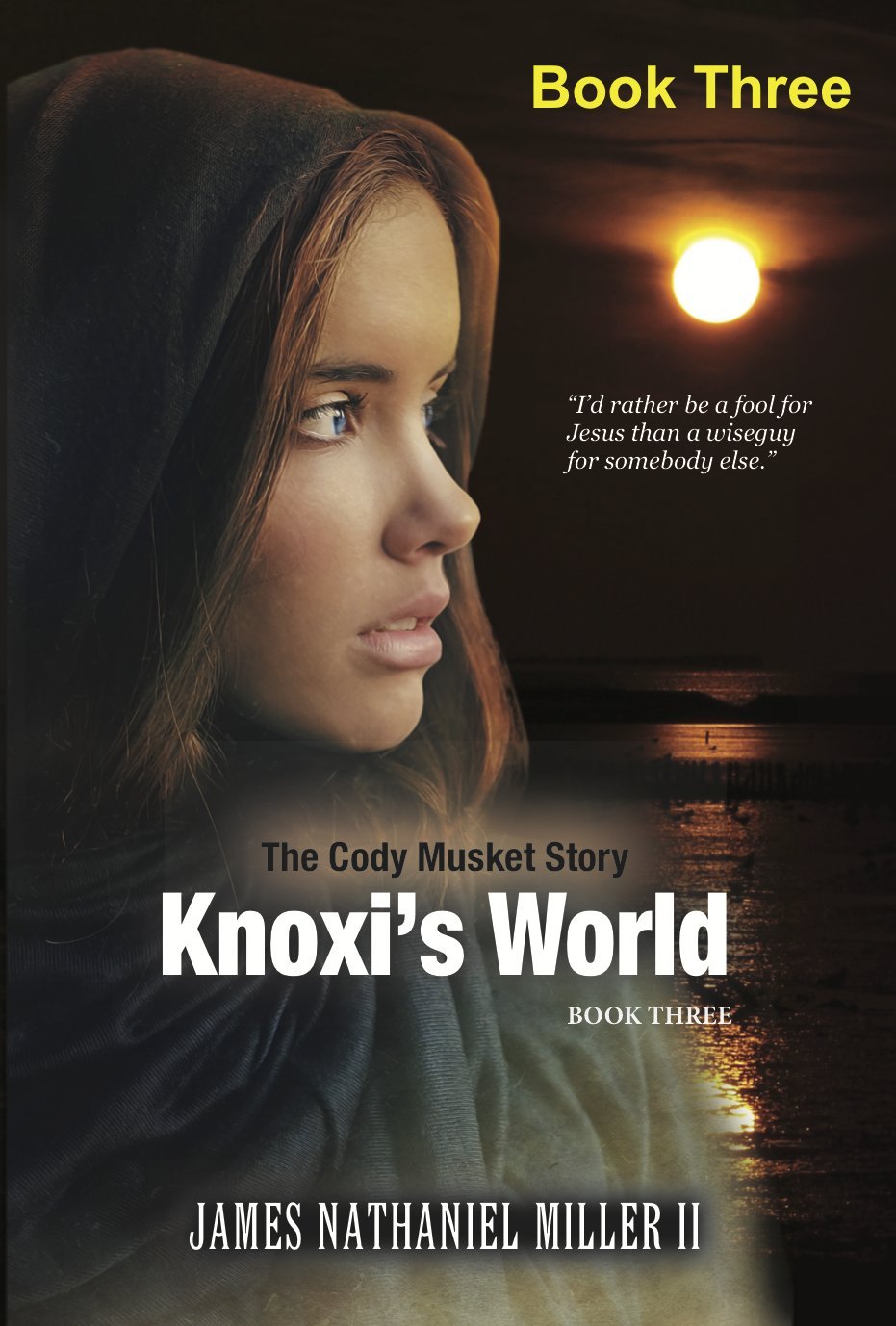
Knoxi’s World by James Nathaniel Miller II is a sprawling Christian action thriller that mixes human-trafficking conspiracies, college basketball, romance, covert rescue missions, political intrigue, and futuristic quantum technology. The story follows Knoxi Musket, an eighteen-year-old University of Texas freshman whose plans for basketball and a future in politics are interrupted when she becomes involved with Alexis Blanca, a trafficking survivor hiding behind the identity of Tejano star Glorietta Zomata. That encounter draws Knoxi and her extended circle into an international corporate scheme designed to protect and profit from forced labor. It’s a big, crowded story, but its central concern stays personal: what happens when someone sees another person suffering and decides that walking away isn’t acceptable.
Knoxi is an appealing lead because her courage comes with fear, confusion, and emotional consequences. She can confront a hostile reporter, fight an attacker, fly into danger, and make hard decisions under pressure, but the book also lets her grieve over the people she can’t rescue. Her faith isn’t simply part of the setting. It shapes her choices, her relationships, and the way she understands responsibility. The strongest scenes often involve survivors such as Alexis, Robbie, and Peaches. Their experiences give the conspiracy a human cost, while the Muskets’ lively family relationships keep the story from becoming relentlessly grim. Humor, romance, sports talk, and affectionate teasing regularly break through the tension.
The novel moves with the restless energy of a television action series. Chapters often end on gunshots, revelations, disappearances, or sudden changes of plan, and the narrative keeps widening until it includes cartels, compromised officials, media corporations, pirates, secret military technology, and a corporate merger with global consequences. Readers of Ted Dekker may recognize the combination of Christian conviction, physical danger, moral confrontation, and heightened reality. Miller’s approach is warmer and more family-centered than Dekker’s darker psychological suspense, though. He’s especially interested in loyalty, marriage, parenthood, and the idea that ordinary acts of compassion can ripple outward. The futuristic inventions occasionally function like narrative wild cards, but they fit the book’s enthusiastic, anything-can-happen spirit.
What I liked most wasn’t the weaponry or the global plot. It was Knoxi’s realization that rescue work leaves wounds even when the mission succeeds. The book gives victory a complicated emotional texture, allowing her to feel relief, guilt, exhaustion, and renewed purpose at the same time. Rolfe Sagan’s surprising role also adds some welcome moral complexity, transforming a hostile media figure into someone whose final actions help expose the conspiracy, although the ending deliberately leaves questions about his fate. Knoxi’s World is earnest, energetic, and openly devotional, with a generous belief in courage, redemption, and the power of stopping for one vulnerable person.
Pages: 297 | ASIN : B0797LYXJN
Honesty is a Virtue

But for Fortune follows a Kentucky medical student whose search for the truth about her institutionalized grandmother exposes the betrayals, medical injustices, and enduring music that bind their lives across generations. What was the inspiration for the setup of your story?
The story stems from my own experience as a medical student doing a month-long psychiatry rotation at Eastern State Hospital, where my grandmother had been a patient from the 1950s-1990s. Like Corinth in the novel, I couldn’t help but wonder what life had been like for my grandmother in that place, and I was struck by the coincidence that both my grandmother and I had arrived at the same place at roughly the same age, but for very different reasons.
Though the story is rooted in a real-life experience, I feel more adept at finding truth through fiction rather than nonfiction. When writing, I am more comfortable making up a story than sticking to a story, so choosing to write a novel with fictional characters in fictional situations was straightforward.
How did you balance the clinical realities of depression and medical hierarchy with the novel’s more lyrical elements, particularly music, nature, and faith?
As a physician and a writer, the clinical and the lyrical are a daily reality and are equally important to me. In fact, I relish moments when I can blend the two rather than hold them in counterbalance. I see beauty in physiology and anatomy and metaphor in disease. Nature is aesthetically beautiful, but also innately scientific. Music is not only an essential form of human expression but also relies on concepts found in math and physics, and faith, whether its faith in a higher power or faith in a shared humanity, is simply a fact of being human. To me, it’s the yin and yang between the clinical and lyrical that breed interest and complexity and lead me to explore a character’s motivations and experiences on a deeper level.
Mary Esther uses numbers, trees, piano music, and scripture to make sense of her world. How did you develop these recurring motifs as expressions of her interior life?
Mary Esther’s character is based on my own grandmother. Unfortunately, I only know snippets of my grandmother’s past. By the time I was born, her brain had been addled by years of institutionalization and outdated psychiatric drugs and treatments. She was unable to tell me about herself. That lack of knowledge gave me a lot of freedom to create the character of Mary Esther without being tempted to include too much of my non-fictional grandmother in the character. However, there are a few things I knew about my grandmother that I wanted to include as a way to honor her history. She played piano and she was an excellent student (hence the fascination with numbers). She was also devout in her faith, and, I imagine when she was well, my grandmother would have recited scripture from memory as Mary Esther does throughout the book.
Trees act as characters in the novel: They’re studied, they’re revered, and, in some instances, they speak. My admiration for trees made their inclusion in the story a natural, unquestioned choice. Trees fascinate me. They offer shelter, shade, and food. They are beautiful to look at, from exposed roots to the ragged bark of their trunks to their variegated leaves and flowering blooms. They are also wise. I like to imagine all that a towering, aged tree has witnessed, what it could tell me if it spoke in a language I understood.
What do you hope readers will reconsider about inherited trauma, family silence, and the act of witnessing after finishing your book?
My novel centers honesty as a virtue. Honesty is necessary. Honesty leads to understanding. It fosters empathy. When we inherit and then perpetuate secrets, we only limit the ability to process traumatic experiences. The act of sharing our stories, the secrets, through fiction or nonfiction is an act of bearing witness, and by bearing witness, we open the door to discernment, connection, and appreciation for the inherited histories that have formed us.
Author Website
It Is About Rediscovering Herself

This Case and My Life follows an attorney whose carefully managed double life unravels in a single turbulent day, forcing him and the women affected by his betrayals to confront the consequences. What inspired Stacey’s journey from heartbreak to independence?
Stacey’s journey begins with denial. For quite some time, she senses that something is wrong in her marriage, but she continues making excuses because accepting the possibility of Chris’s betrayal is more painful than questioning her own suspicions. Eventually, she reaches a point where she can no longer lie to herself. She hires a private investigator because she needs to know the truth, whatever that truth may be.
As painful as the discovery is, knowing the truth also gives Stacey something she had been missing: clarity. She realizes that for months she had been living in a marriage that no longer felt loving or emotionally secure. What had once felt like home no longer did.
I wanted Stacey’s journey to show that sometimes strength begins with the decision to stop accepting a life that is making you unhappy. Divorce is painful, and healing does not happen overnight, but Stacey slowly discovers that there is life after the end of a marriage. She learns to stand on her own, regain her independence, and eventually find peace.
Her journey is not simply about leaving Chris. It is about rediscovering herself and realizing that the end of one chapter does not have to be the end of her story.
What do the red roses symbolize throughout Chris’s unraveling relationships?
The red roses are a small detail with a much larger meaning.
Chris had always bought Stacey yellow roses because yellow was her favorite color. So when he gives her red roses, Stacey immediately knows something is wrong. Those roses were not chosen with her in mind. Red roses are Bridget’s favorite, and in that moment, Chris unknowingly allows one part of his carefully separated life to cross into another.
For me, the roses symbolize how Chris’s double life begins to unravel through the details he has stopped paying attention to. He is so accustomed to feeling confident and in control that he believes he can manage every situation. Professionally, he is a successful attorney who is used to winning cases and solving problems. But his personal life cannot be managed like a case in a courtroom.
The red roses become a symbol of betrayal, but also of carelessness. Chris believes he is still controlling the circumstances around him, when in reality the consequences of his choices have already begun catching up with him.
Why was it important to show the consequences of Chris’s actions from several perspectives?
It was important to me because the consequences of betrayal rarely belong to only one person.
Although Chris is at the center of the story, his decisions affect Stacey, Bridget, Kathy, and ultimately himself in very different ways. By allowing readers to experience events from several perspectives, I wanted them to see that the same situation can look completely different depending on who is living through it.
Chris is confident, successful, and accustomed to being in control. He believes he can handle whatever comes his way. But while he is busy managing his professional life and trying to keep his personal worlds separate, the people around him are experiencing consequences he does not fully see.
I also did not want to tell readers exactly whom they should sympathize with or how they should judge each character. People are complicated, relationships are complicated, and choices create consequences that can reach much further than we expect. Showing several perspectives gives readers the opportunity to understand each character’s motivations and emotions and ultimately form their own conclusions.
That was very important to me when writing This Case and My Life.
Which character changed the most during the writing process, and how did that development surprise you?
Stacey surprised me the most.
At the beginning, much of her identity is connected to her marriage and to the life she built with Chris. She is hurt, suspicious, and eventually devastated by what she discovers. But as I continued writing her story, she became much more than the betrayed wife.
She developed courage and strength. Instead of allowing Chris’s choices to define the rest of her life, she chose to move forward. She gradually regained her independence, found healing and inner peace, and eventually reached a place where forgiveness became possible.
What surprised me most was that her strength did not come from anger or revenge. It came from letting go. Stacey did not need to destroy Chris in order to rebuild herself. She simply needed to decide that her life could continue without him.
In many ways, Stacey’s journey became one of rediscovery. She learned that beginning again does not erase what happened; it means choosing not to allow the past to determine what happens next. She found happiness again on her own terms.
That evolution made her one of the characters whose journey I found especially meaningful to write.
Closing note:
This Case and My Life is the first book in an ongoing series, and the characters’ lives continue to evolve beyond this initial story. Books Two and Three are available now, with Book Four coming in October. Each sequel reveals new layers of these characters, their relationships, their choices, and the unexpected consequences that continue to shape their lives.
Author Links: Facebook | Instagram | GoodReads
Chris has built his career on control—mastering arguments, anticipating outcomes, and believing that with enough preparation, life can be won like a case in court. As a successful attorney, he knows how to fight, how to win, and how to keep emotions at bay.
But when a pivotal case begins to bleed into his personal life, the carefully ordered world he relies on starts to unravel.
Caught between professional ambition and an unexpected emotional awakening, Chris is forced to confront choices no legal training could prepare him for. The harder he tries to maintain control, the clearer it becomes that some truths cannot be negotiated, postponed, or appealed.
Set against the backdrop of law, love, and life’s inconvenient timing, This Case and My Life is a romantic comedy-drama about ambition, connection, and the courage it takes to step away from certainty and into something real.
Some cases are decided in court.
Others are decided in the heart.
It’s complicated… but that is life.
The Stories Of Women In The Past

The Aphorism Club follows a brilliant young Australian woman who, rejected by her family because of her birthmark, finds strength among artists and outsiders as she fights to become a writer and claim authority over her future. What was the inspiration for the setup of your story?
I have always been inspired by the stories of women in the past, and in my own past who have struggled against injustice, rejection, suppressive social norms to become their own person. To find and use the gifts they have to make a life initially denied them. This is not just a thing of the past as young people are swamped by social perceptions of beauty and personal worth based on how they look, or what they wear or how much money they have. I want readers to have a role model who embodies the fact that there is nothing more you need than to be at home in your own skin, to value your talents and build the community you want to be a part of.
Why did you choose the aphorism “Look up and find a light, or build a fire yourself” as a guiding principle for Ruby’s journey?
This is perhaps my own guiding principle. Optimism, self-reliance, problem solving and self-belief are superpowers, much under-valued superpowers, but ones, if mastered allows a life to be built. Ruby is smart, given wise counsel and encouraged to take control of her destiny and shed any thought of being a victim of circumstance. She is led to believe that seeing yourself as a victim is stultifying, seeing yourself as a survivor is empowering.
The novel contrasts “the family you got” with “the family you made.” What did you want Ruby’s chosen communities to reveal about the meaning of family?
Love comes in all forms and at the heart of ‘family’ is respect. Respect for all one is, and what one wants to be. A family is a cheer-squad, a protective cordon that is prepared to kick you in the pants if you need it. The family Ruby has made in the Aphorism Club reveals that connection is not about what makes us the same but how we appreciate and value the uniqueness of individuals.
How did you balance Ruby’s personal coming-of-age story with the novel’s exploration of suffrage, class, sexuality, reproductive autonomy, war, and labor conditions?
Setting the novel in the 1920s meant the key social changes had to be recognised. Ruby’s awakening to injustice in her community gave voice to her writing. In essence, she recognised that she could have had a life of comfort given her family’s wealth and position, but she really only grows out of naivety and perhaps a little self-pity when she comes to understand that life for women, particularly those in the lower socio-economic classes, is bereft of opportunity, potentially violent and utterly miserable. And it is key to women today understanding how our female ancestors fought for the life we now live. While we have a way to go, the privileges of the few in the early 20th century are now for all.
Author Links: Facebook | Website | Instagram
In Melbourne in 1910, Ruby Pearl Hart is born into a family that does not want her. Failing to appreciate her gifts, all they see is the raspberry birthmark on her face.
Cast out, Ruby finds a makeshift family with the colourful misfits populating her Aunt’s home, the Mary Street Terrace. Here, her intelligence, creativity and hope are allowed to thrive.
But when tragedy strikes, Ruby’s ambitions for her life seem dashed. It’s not until she is forced to move from Melbourne to Launceston that she comes to understand the battle for women’s freedom is still being waged – and for some, life is much, much worse.
Exiled in this small town, she meets a group of artists and writers who call themselves ‘The Aphorism Club’. Unique, clever and bohemian, they too are broken and cut adrift. In them, Ruby finally finds a safe harbour where she can dream, dance and reach for a life beyond social expectations.
In Tracey Lee’s The Aphorism Club, there are forces working against Ruby that will take more than hope to overcome. In an unprecedented shift, Ruby is given a choice – but can she hope to make the right one in a world determined to keep her down?
Literary Titan Gold Book Award: Fiction

The Literary Titan Book Award honors books that exhibit exceptional storytelling and creativity. This award celebrates novelists who craft compelling narratives, create memorable characters, and weave stories that captivate readers. The recipients are writers who excel in their ability to blend imagination with literary skill, creating worlds that enchant and narratives that linger long after the final page is turned.
Award Recipients










Restoration by Laura Brooke
Even Angels Wear Leather Jackets and Ride Motorcycles by J.A. McGovern
Visit the Literary Titan Book Awards page to see award information.


