Blog Archives
Thank God I Failed: A Lawyer’s Suicide Attempt and the Case Against Trying


Thank God I Failed by Orlando Da Silva is a deeply personal memoir that traces the making of a life from childhood abuse to professional prominence and a psychiatric ward. Da Silva writes about growing up in an unstable, violent home, learning to disappear emotionally, and carrying that instinct into school, relationships, politics, and a demanding legal career. His outward accomplishments conceal treatment-resistant depression and a conviction that the people he loves would be better off without him. The book’s central event is his 2008 suicide attempt, but its fuller subject is the slow accumulation of experiences that made death seem reasonable to an intelligent, persuasive man.
As a suicide survival memoir, the book is especially strong at showing how professional competence can coexist with severe mental illness. Da Silva builds a successful career as a lawyer, becomes a political candidate, and eventually serves as president of the Ontario Bar Association, yet the habits that help him succeed also let him hide. His lawyerly mind gives the narrative a distinctive tension. He can analyze systems, construct arguments, and perform under pressure, but he can also make a polished case against his own continued existence. The writing is candid, controlled, and frequently darkly funny, with recurring images of weather, buildings, courtrooms, and damaged structures connecting his childhood to his adult life. The chronological structure gives the book room to show how shame becomes a private language and how speaking publicly begins to break its hold.
The psychiatric ward chapters form the emotional and intellectual center of this depression recovery memoir. Recovery arrives through medication, electroconvulsive therapy, professional care, time, and ordinary moments of human presence. There’s no tidy transformation. Da Silva leaves the hospital with the same history and a continuing capacity for depression, but he has begun to question the authority of his darkest thoughts. That distinction matters throughout the book. A nurse asking a sincere question, another patient saving him a chair, or a family member refusing to accept his wish to die becomes evidence that care can interrupt certainty. The practical coda strengthens this theme through journaling, a ten-point safety scale, treatment tracking, and specific ways loved ones can help without pretending they can cure another person.
The memoir ultimately becomes a first-person argument against extending Canada’s medical assistance in dying system to people whose sole underlying condition is mental illness. Da Silva’s case rests on lived experience: depression distorted his judgment, memory, hope, and sense of being a burden while leaving him articulate enough to sound rational. He asks readers to consider what “irremediable” can mean when a recurring illness makes temporary despair feel permanent, and when support is distributed so unevenly. This blend of mental health memoir, law and ethics book, and suicide prevention memoir gives Thank God I Failed its unusual force. It’s the story of a man who survived, found a public voice, and turned that voice toward people still trapped inside silence. Its hope is practical: stay, speak, listen, and create enough time for a suffering mind to discover that it may be wrong.
Pages: 236 | ASIN : B0GX36X5PQ

Listening to Spravato

Listening to Spravato, by Justin Page, is a personal and practical meditation on how music shapes the experience of Spravato treatment for depression. Part memoir, part guide, and part argument for more intentional clinical care, the book follows the author’s journey from years of severe depression and suicide attempts into the fragile, complicated hope offered by esketamine sessions. Page explores the Spravato chair as more than a medical setting, showing how light, blankets, headphones, silence, clinicians, playlists, and even the soft crunch of recorded snow can become part of the treatment environment. At its center is a clear and quietly radical idea: when the mind is most vulnerable, sound isn’t background. It’s structure, shelter, and sometimes a lifeline.
What moved me most was the book’s tenderness toward suffering without ever turning it into spectacle. Page writes about depression with an intimacy that feels earned, especially in the personal note where he remembers being sixteen and feeling that the word “depression” was far too small for the storm it named. That passage gives the rest of the book its emotional gravity. The later chapters on playlists, clinic rooms, and session phases could have felt purely technical, but they don’t, because they’re rooted in the lived knowledge of someone who has needed these tools to survive. I found the “one bad trip” chapter especially striking. The absurd interruption of a Spotify ad, followed by the terrifying intrusion of a screaming solo flute and a rumbling Beethoven passage, makes the book’s central argument suddenly visceral. Page doesn’t merely tell us that sound matters under Spravato. He lets us feel how quickly music can become a menace when the self is unmoored.
The writing is strongest when it trusts its own lyric intelligence. Page has a gift for turning sensory experience into language that feels both precise and haunted: ambient music becomes architecture, a soft piano feels like a hand on the shoulder, public soundscapes offer “the comfort of a crowd without the threat of contact.” I admired the way he balances poetic reflection with practical restraint. He’s skeptical of mystical claims about 432 Hz and “healing frequencies,” yet he’s generous enough to admit that symbolism can matter when the nervous system is open and afraid. Its ideas are persuasive because they are humble. Page isn’t selling music as magic. He’s arguing that care is often found in the smallest, adjustable details.
I came away from Listening to Spravato with a renewed respect for the unseen textures of healing, for the chair, the headphones, the nurse outside the door, and the final grounding track that helps a person return to themselves. This is a compassionate, idiosyncratic, and quietly necessary book, one that makes a convincing case that treatment environments should be designed with more imagination and more mercy. I’d recommend it to Spravato patients, clinicians, clinic owners, music therapists, and anyone interested in how sound can help hold a person steady when language has gone temporarily out of reach.
Pages: 118 | ISBN: 9798256399498

Nurse Dorothea® Presents Depression and Accepting Resources to Help

Depression and Accepting Resources to Help is a children’s informational picture book about a girl named Amisha who visits her school nurse, Nurse Dorothea, because she thinks she may be dealing with depression. From there, the book walks through symptoms, risks, causes, treatment options, warning signs, and ways to ask for help, and it ends with Amisha telling her dad what she learned so they can make a doctor’s appointment before things get worse. It’s very much a health-focused educational story more than a traditional plot-driven tale, and that feels true to what the book wants to be.
I think readers will like how direct the writing is. Author Michael Dow doesn’t circle around the subject or soften it into something vague. He lets Nurse Dorothea speak clearly about sadness, hopelessness, suicidal thinking, medication, therapy, and emergency help, which makes the book feel serious in a way I respected. I kept noticing that the book carries a huge amount of information. Sometimes it reads less like a story and more like a guided lesson inside a picture book. It is worth noting that the emotional arc is a bit thinner than the educational one. Amisha gives the book a human center, but the real engine here is explanation.
I also found myself thinking about the author’s choice to frame all of this through a trusted school nurse. That was smart. It gives kids a clear model for what asking for help can look like, and it makes the book feel steady instead of scary. The illustrations help with that too, almost like the book is saying, sit down, breathe, let’s talk this through. I appreciated that the ideas stay practical. The message isn’t that one brave conversation magically fixes everything. The message is that support matters, treatment can take different forms, and learning the signs early matters. That grounded approach felt honest to me.
I would recommend this genre blend of children’s picture book and mental health education resource most for adults reading with kids, school counselors, nurses, teachers, and families who want a structured way to open a hard conversation. It’s especially useful for children who may be starting to notice sadness, worry, or changes in themselves or someone they love. Kids looking for a playful storybook may not connect with it in the same way, because this book is really built to inform first. But for readers who need clarity, reassurance, and a calm entry point into a difficult topic, I think it has real value.
Pages: 95
What’s Normal Is When the Emotion Matches the Circumstance

William W. Hedrick, MD, author of What’s Normal Is When the Emotion Matches the Circumstance, has spent his medical career wrestling with one stubborn question. What is a normal emotion, and when does it become an illness? He walks through his early training, his unease with the DSM checklist style of diagnosis, and his doubts about simple “chemical imbalance” stories. He then builds his own model of six primary emotions, tied to brain centers and neurotransmitters, and he defines “normal” as when the type and level of emotion match the actual situation on a simple one-to-ten scale. Along the way, he folds in cognitive therapy ideas, brain chemistry, addiction to our own internal chemicals, and many case examples to show how his framework might work in real clinics.
I was genuinely pulled in by his main idea that context and proportion matter more than labels. The notion that anxiety in a grocery store and anxiety on the edge of a cliff are not the same thing, even if the body feels similar, clicked for me right away. His definition of normal emotion as “the emotion that fits the circumstance” feels both humane and practical, and I could picture real patients using that one-to-ten scale to check their own reactions. I appreciated the boldness of some of his stronger claims. For example, he treats major depression as almost entirely a rogue “depression center” that drugs must calm, and he is clear about his doubts that talk therapy alone can fully reach it. I understood the logic, and I saw real compassion in his effort to remove blame from people who are suffering, and his stance pushed me to think harder about biology, medication, and responsibility.
Hedrick’s tone stays calm and professional, and he explains brain chemistry and therapy ideas in plain language, with stories, history notes, and even word origins that give the book an old-school charm. Some chapters slow down to take longer side trips into the DSM or historical theories, which helped me see how deeply his ideas are rooted in the broader story of psychiatry. I appreciated how often he brought things back to real people in real rooms.
I came away feeling this book would suit thoughtful readers who like to sit with ideas and do not mind a slower, reflective pace. Primary care clinicians, therapists in training, and medically curious readers who have lived with anxiety or depression themselves would probably get the most from it. If you want to see how one experienced doctor tries to rebuild our understanding of emotion from the ground up, this is a smart and often moving read.
Pages: 128 | ASIN : B0B193TDVK
Free People Free People

The Lie That Changed Everything is a memoir that blends sharp humour, biting honesty, and painful recollections into a story that feels both chaotic and deeply human. Why was this an important book for you to write?
This book goes right back to the moment that shaped me—a childish lie I swore on my father’s life, followed by his cancer diagnosis. For years, I carried the belief that I had somehow killed him. That single moment of guilt became the thread that ran through my childhood and beyond, influencing how I saw myself, my family, and even my faith.
Writing The Lie That Changed Everything was my way of holding that memory up to the light and finally making sense of it. But it’s not just about trauma—it’s about the absurdity of family life, the strange superstitions that guided us, and the humour that helped me survive. I wanted to show that even in chaos, there’s resilience and laughter, and that being human means carrying contradictions: grief and comedy, shame and love, darkness and light.
How did you decide what to include and leave out in your memoir?
That was one of the most complex parts of the process. Some of my family were opposed to me writing memoirs—both The Hate Game and The Lie That Changed Everything—because it’s difficult to face the dysfunction that runs through our family. But after years of working as a child protection social worker with hundreds of families, I know dysfunction is universal. The difference lies in whether we discuss it or keep it buried.
I chose to write my truth, but I also left things out. Some situations were too private, too sensitive, or simply not mine to tell. Respect was a guiding principle. What’s on the page is my perspective—my memories, my emotions—rather than an exposé. My brother, who is nine years older, helped me fill in gaps from the early years, and between his input and my mother’s knack for remembering everything, I had a wealth of detail to draw from. I’ve been blessed—or cursed—with an elephant’s memory of my own, so much of it was already stored in my brain in glorious technicolour.
In the end, I included what served the story, what illuminated the themes of guilt, resilience, and humour, and what felt authentic to share. A memoir isn’t the whole truth of a life—it’s the truth of a particular journey.
What was the most challenging part of writing your memoir, and what was the most rewarding?
The most challenging part was working through the trauma—breaking the silence I’d carried for decades. I hadn’t told a soul about the grief and guilt that shaped me. Fear and shame kept my story bottled up. Sitting down to write meant opening old wounds, but it also gave me a way to release them.
The most rewarding part has been the liberation that followed. Over the years, I discovered that I could share painful stories and still make people laugh, even in the darkness. Writing allowed me to see my parents in a different light, too. I came to understand how their own trauma defined them, and that gave me compassion instead of just confusion.
Ultimately, the memoir has helped me stop being defined by the same pain. I often say: hurt people hurt people; free people free people. Writing this book was my step into freedom.
What do you hope is one thing readers take away from your story?
I hope readers come away with the sense that it’s possible to carry both laughter and pain in the same story. Life is rarely one-dimensional—grief can sit beside humour, shame beside love, darkness beside resilience. For a long time, I thought my story was only about guilt and trauma, but writing showed me it was just as much about survival, absurdity, and even joy.
I was thrilled with one review that said, “If you enjoyed Angela’s Ashes, you’ll love The Lie That Changed Everything. My late mum’s favourite book of all time was Angela’s Ashes. To be compared with Frank McCourt’s work was very humbling, and my mum would be so chuffed to hear such a compliment.
If readers realise they’re not alone in their chaos: that silence can be broken, that healing can happen through honesty, and that humour can be a lifeline—then the book has fulfilled its purpose.
Author Links: GoodReads | X (Twitter) | Facebook | Website | Amazon
The Lie That Changed Everything is the story of a boy who was made to swear a lie on his father’s life, dreamed of his death, and witnessed it happen.
Trew’s story unfolds with unfiltered honesty and laugh-out-loud British humour as he reflects on a childhood marked by chaos, confusion and unexpected moments of grace. Set in the ’60s and ’70s, across RAF bases, hilarious first kisses and a botched “Ten Pound Pom” migration to Australia, the memoir centers on a mum who could scare the devil with her “scriptures” and a war-hero dad, whose reclusiveness left a heartache that humour alone couldn’t fill.
One little rascal. One very big lie. And one funny, unforgettable ride. Perfect for fans of Sedaris, Angela’s Ashes and The Glass Castle; Trew’s tale is as heartbreaking as it is hilarious.
The Lie That Changed Everything: The Memoir of a Little Rascal
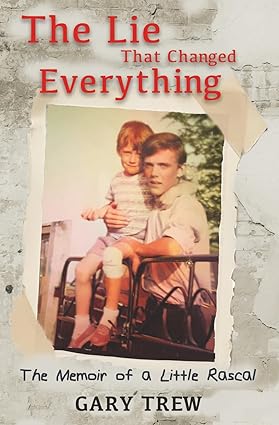
From the first page, Gary Trew makes it clear this is no sugarcoated stroll down memory lane. The Lie That Changed Everything is a memoir that blends sharp humor, biting honesty, and painful recollections into a story that feels both chaotic and deeply human. Trew recounts his early years with a mix of wit and grit, pulling readers through family dysfunction, childhood scrapes, and the bruising aftermath of being raised in a world where love often arrived tangled in trauma. It’s a tale of survival told with an irreverent laugh, even as it shines a light on moments of loneliness, rejection, and heartbreak.
I was taken in almost immediately by Trew’s voice. His writing has a rhythm that swings between wild comedy and gut-punch sadness, and that constant shift kept me hooked. Some chapters had me laughing at his absurd family stories, while others had me pausing to let the weight of what he endured sink in. The mix is unusual, but it works. He doesn’t let the pain take over, and he doesn’t let the jokes cheapen the truth either. At times, I found myself frustrated with the sheer cruelty he describes, but then he’d toss in a line of dark humor, and it felt like sitting in a pub listening to a mate tell a story he can only tell because he survived it.
There were moments where the writing felt a little jagged, but that roughness actually added to the authenticity. It made me feel like I was being trusted with unpolished truths rather than a neatly packaged memoir. I also found myself admiring his willingness to talk about shame, resentment, and fear without dressing them up. His honesty struck me as both brave and disarming. The book reminded me that family histories are rarely tidy, and sometimes the best way to survive them is to laugh at the madness and keep moving forward.
By the time I reached the final chapters, I felt both drained and strangely uplifted. This isn’t a book for someone who wants a gentle or inspirational memoir. It’s for people who appreciate raw honesty, gallows humor, and the messy beauty of a life that didn’t follow the script. If you’ve ever grown up feeling like the odd one out, or if you’re drawn to stories that reveal both the scars and the resilience of childhood, this book will resonate.
Pages: 278 | ASIN : B0FGKN1M47

Overcoming Anxiety and Depression; Practical Strategies for Managing Symptoms, Embracing Well-Being, Achieving Long-Term Holistic Health
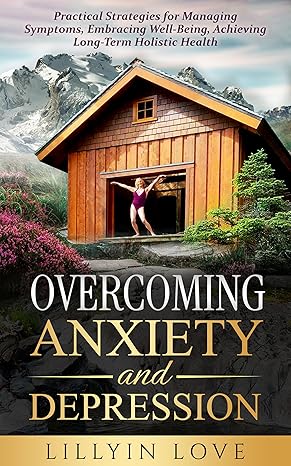

Lillyin Love’s Overcoming Anxiety and Depression: Practical Strategies for Managing Symptoms, Embracing Well-Being, Achieving Long-Term Holistic Health is a self-help guide designed to empower readers struggling with anxiety and depression. The book combines practical tools, such as breathing techniques and mindfulness practices, with a focus on holistic well-being, covering topics like diet, exercise, and sleep. Love offers strategies to build resilience and manage symptoms effectively while weaving in personal insights and evidence-based therapies.
Lillyin Love’s Overcoming Anxiety and Depression takes you on an emotional journey in the best way possible. It is more than just a guide; it feels like an immersive experience. Love’s writing is like sitting down with a close friend who truly gets what you’re going through. There’s no preaching or pretending here, just honest, empathetic storytelling that makes you feel seen and understood. She has a remarkable gift for transforming heavy topics like depression and anxiety into something relatable and even beautiful.
Through Victoria’s story, she weaves in therapy, mindfulness, and the healing power of nature in a way that feels both natural and profound. Readers walk alongside Victoria, experiencing every challenge and victory. The vivid imagery, like the calming clouds of relaxation and Victoria’s unbreakable spirit, stays with you long after you’ve turned the last page. You’re not just a reader; you’re living the journey alongside her. And here’s the best part, Love doesn’t stop at inspiration. She arms you with practical tools, strategies, and motivation to make meaningful changes in your own life. It’s a rare blend of personal development and captivating storytelling, and it works beautifully. It is worth noting that, at times, the prose becomes a bit poetic, and I feel this approach may not appeal to all readers. However, this is a minor detail in an exceptional and impactful book.
If you’re searching for a book that will challenge you, help you grow, and leave you feeling empowered, this is it. Lillyin Love’s Overcoming Anxiety and Depression is a must-read for anyone facing anxiety, depression, or simply in need of some inspiration.
Pages: 316 | ASIN : B0CY5LR7W1
Changing Your Destiny

Depression follows siblings during the Great Depression who leave home and move to New York City in hopes of a better future. What was the inspiration for the setup of your story?
My inspiration comes from my fascination with history. Ever since I was 12 years old, I have been a history fanatic because it has always been an interesting subject to me. To me, it is nice to learn about how past events can affect our current moment in life. In terms of the Great Depression, I felt that it was always a major stepping stone in American history because of its global impact (Ex: World War 2).
What many people tend to forget or leave unnoticed is how the Great Depression impacted those in the southern states. Agriculture was failing so badly for farmers that they needed help from the government but it still wasn’t enough to save their agriculture business. I’ve been wanting to write a story around this idea for 12 years now, but never got around to it until now.
Wade and Ruby both take different paths once they reach the city, struggling in their own ways to figure out themselves and how to get by. What were some driving ideals behind your character’s development?
I believe the idea for Ruby and Wade was to show everyone how even though we want to achieve the same goal in life, we will still go on a different journey to get there. Sometimes it can be a good path or a dark path.
For Ruby, she was always the tough, strong-minded country girl who never wavered from anything and always protected her little brother. Getting to New York City was her way of finally realizing that there was more to life than farming and Wade. Her main thing was finally growing up and stepping out of her Mississippi bubble.
For Wade, even being the ambitious one and wanting a better life for himself and his sister, he quickly learns that dreaming about something is very different than experiencing something. His dreams meet reality which caused a huge character shift for him.
What were some themes that were important for you to explore in this book?
The most important thing that I want readers to take away from this book is hope. Hope for a better tomorrow. We as humans and society have our troubling, depressing moments in life, so sometimes hope is all we need. Overall, If there is anything you can learn from Wade and Ruby’s journey is that you have the power to take a step towards changing your destiny.
Will there be a follow-up novel to this story? If so, what aspects of the story will the next book cover?
Yes. We can expect a sequel to Depression. Ruby’s story is not finished just yet. I won’t spoil too much of the next book, but I will say that Ruby will now learn the true meaning of love, loss, and healing.
Author Links: GoodReads | Amazon
Set in the rustic backdrop of rural Mississippi, our story follows Wade and Ruby, two siblings
who must grapple with a life of impoverishment. Wade and Ruby are introduced to the harsh
realities of life at a tender age, as they toil on their barren land, trying to salvage their father’s
dream agriculture business.
Their parents, trapped in dead-end jobs, paint a bleak picture of their future.
However, their narratives take a turn when the siblings decide to break free from the chains of
their circumstances. They aspire to redefine their destinies and escape the shackles of their
poverty-stricken existence by moving to the bustling, promise-filled streets of New York City:
“The City of Dreams.”
Their journey to New York City will be a transformative one for the siblings, as they will be
forced to step out of their comfort zone and experience a new life beyond the confines of their
old rural lifestyle.
Once Wade and Ruby reach the promised land, they are ready to embark on the next chapter in
their lives, but it won’t be easy.
To survive, Wade and Ruby must quickly learn to navigate through NYC’s cutthroat environment
while also facing the darkness of their family’s past mistakes in a place that can either catapult
them to their dreams or shatter them entirely.
Immerse yourself in a narrative that pushes the limits of emotion and suspense, as “Depression”
peels back the curtain on the darkness of life itself.
The Smiths’ journey will be filled with a whirlwind of emotions while offering you a compelling
narrative that will linger in your mind long after the final page is turned.


