Category Archives: Interviews
Mythology or Comparative Religions
Dead and Buried follows a woman learning to manage her Kitsune heritage and magic, who keeps having curveballs hurled at her from psychic attacks, supernatural creatures, and restless spirits. What was the inspiration for the setup of your story?
If I can quote Aerosmith, “Half my life’s in books written pages. Live and learn from fools and from sages.”
That pretty well sums up my life. Especially my younger years. I was a “surprise” baby, and my siblings were much older than I was. While I was loved, I really didn’t fit in. Then my father died when I was in grade school. By Junior High, my brothers and sister had all married and moved out of the house. So, I learned early to roll with the punches using books as my escape and humor as my armour.
Many of those books were in the Sci Fi/Fantasy realm, and I’ve always had a particular fascination with mythology or comparative religions.
I found Tai’s character to be believable and relatable; her emotions and responses felt real even when dealing with all the paranormal situations she was thrown into. Are there any emotions or memories from your own life that you put into your character’s life?
As I indicated, I had to learn to roll with the punches as a child. I kept Tai as human as she rolled with her punches. She also uses humor as armour, even though she has less of a filter on her mouth than I do.
What were some themes that were important for you to explore in this book?
It is a lesson that we all need to learn – acceptance, resiliency, and personal growth.
Can you tell us where the book goes and where we’ll see the characters in the next book?
There are a planned nine books in the series – literally one for each of the nine tails that a Kitsune can have.
Book three has Tai and friends in New Orleans, where she meets distant family and makes new friends. Of course, there is plenty of growth – and it is not all for her. I hope to have the book available on Amazon in February.
Author Links: GoodReads | Amazon
Join Tai, Nico, and Magoo as they navigate contractors, heartbreak, and the undead.
All I wanted was a moment to myself. Being back in High School was exhausting. I groaned, contemplating the absurdity of the situation. Having to take summer school classes was lame at the best of times. But taking a High School class when you were eight-plus years out of school was even worse. Especially when it was a class I had technically already passed. Technically. By the skin of my teeth. Which, if I am to understand correctly, is a trait of certain gnomes. Not sure which ones, though.
Share and Accept Feedback

The Magic of Imperfection uses stories from real people to show that embracing imperfection helps people make more progress, take smarter risks, and actually enjoy their work without overthinking. How much research did you undertake for this book, and how much time did it take to put it all together?
The Magic of Imperfection is a summary of my work philosophy and approach I’ve honed over three decades – it didn’t require outside research – as my work has been the driver for the book. The act of writing the book was fairly quick, given it was information I’ve used for years – from start to finish it, was a 6-month project.
What is the 3/4 baked philosophy, and how does it help improve people’s quality of work?
The idea is that people hold onto their work too long, and many great ideas don’t get out in the world as a result. The 3/4 baked philosophy asks people to find a sweet spot to share and get feedback from others, precisely when the work isn’t yet perfect – but has enough form and clarity that your intentions are clear – not half baked – and not fully baked…. But 3/4 baked.
Over time, when we are willing to share and accept feedback (good or bad) sooner and more rapidly, we develop tools and an inner compass that makes our work stronger over time. We learn the most from failure – and a willingness to test ideas as widely as possible.
What is one thing that you hope readers take away from The Magic of Imperfection?
Stop trying to be perfect with what you do – and magically – by using the 3/4 baked approaches in the book – your work will get more perfect over time…. But with less effort, stress, and drama – giving you more time to spend on things you love and people you care for – or just getting a lot more shit done!
Author Links: GoodReads | Amazon
Break free from perfectionism and finish your creative projects. This unconventional guide shows you how to overcome creative blocks and finally complete your work through strategic imperfection.
The world is full of creative people. So why do some get their ideas out in the world while others don’t? Why are some incredibly prolific while others struggle with deadlines or can’t complete projects? In this book, Jason F. McLennan-a master in “getting stuff done”-shares secrets to boosting productivity, innovation, and personal success. By adopting his “¾ baked” philosophy and the key lessons that surround it, readers will be able to dramatically increase their output while also keeping their creative juices flowing.
McLennan’s recipe for creative success includes the following ideas:
• Look forward to failure
• Discover the power of feedback
• Learn to become a “trim tab”
• Harness the power of momentum to drive creativity
We’ve all heard the phrase “the perfect is the enemy of the good.” Perfection is often what holds so many people back. Trying to reach it means that nothing much can get completed, and inspiration itself is often blocked as people either procrastinate or endlessly self-edit. By chasing perfection, it remains elusively further away.
The world is full of half-baked ideas-but almost no perfect ones. With The Magic of Imperfection, readers will learn how to seriously amp up what they do, how fast they do it, and simultaneously how well it gets done.
Our Unfinished Selves

The Courage Gap explores fear and courage, walking readers through five steps to help them shift their focus, rewrite the stories they tell themselves, regulate fear, step into discomfort, and learn from the moments when things fall apart. Why was this an important book for you to write?
Because I’ve watched too many capable people—including myself—stay stuck in the space between knowing and doing. This wasn’t because we lacked the ability to take action but because our fear kept us stuck in place, distorting the risk-magnifying the danger of acting, minimizing the cost of staying put, and shrinking our courage to step forward and back ourselves fully.
Over 25 years coaching many diverse people across the world to meet their challenges and navigate change, I’ve heard countless versions of the same story: “I knew what I needed to do, but I couldn’t bring myself to do it.” The woman in the soul-draining job. The parent avoiding a hard conversation. The person with a dream who keeps finding reasons to wait.
What struck me wasn’t that people feel fear—we all do—but how often they mistake its source. They think they’re being prudent when they’re actually protecting their identity in some way, avoiding disapproval, or clinging to what’s familiar because it feels safer and less confronting than making a change.
Finally, I wrote this book because often we end up suffering more over time from not taking the brave action we know we should be taking than by risking what we fear. That suffering shows up in many forms – ongoing tension and hurt in relationships, the quiet ache of unfulfilled potential, roads not taken, words left unsaid. Right now, when everything feels uncertain, that gap has never been wider. This book offers a practical step-by-step path to move through it.
How did you come up with your five-step process for helping people reprogram their patterns of thought and behavior that are self-sabotaging?
By distilling a lot of research and insights from broad spheres as well as watching what actually worked—not just with clients, but in my own life when fear and doubt have grown really loud or when I’ve come to a moment and hesitated for fear of being ‘exposed’ as not wholly worthy of sufficient in some way. The five steps are a synthesis of research, and experience, and observing people who consistently lead brave and meaningful lives.
The people who closed their courage gap followed a pattern: They shifted focus from worst-case scenarios to what becomes impossible if they don’t act. They chose the mindset they would operate from, rewriting their stories—recognizing narratives about risk were often inherited or outdated. They regulated fear instead of waiting for it to disappear (it never does). They braved awkward moments we are wired to steer away from, and stepped into discomfort incrementally through small acts of bravery. And they learned from setbacks, seeing them as information rather than proof they shouldn’t have tried and made some semblance of peace with the fact that they are innately fallible and a ‘work in progress.’ As I wrote in the book, extending grace and compassion inward, forgiving our ‘unfinished selves’ is a foundational act of courage that can be profoundly transformative.
It’s not linear—it’s messy. But the sequence matters because you can’t regulate fear you haven’t acknowledged, and you can’t step into discomfort if you haven’t challenged the story that discomfort equals danger.
How can implementing the ideas in your book help shape better leaders and encourage growth?
The book helps anyone—leaders, parents, people in transition—close the gap between who they are and who they’re capable of becoming.
As I wrote in the book, sharing a story of my childhood on my parents’ farm, “Growth and comfort can’t ride the same horse.” That is, growth doesn’t happen without exertion or discomfort. It happens when you speak up with a shaky voice. When you try something new, knowing you might fail. When you have the difficult conversation instead of letting resentment build.
The book helps people distinguish between real dangers and magnified fears. Your brain evolved to overreact to threats, which kept ancestors alive, but now makes a tough conversation feel as dangerous as a physical threat. It makes starting something new feel riskier than staying in a situation that’s slowly diminishing you.
When you recognize that fear of judgment isn’t actual danger, or that doubt isn’t incompetence, you can take action despite fear rather than waiting for it to disappear.
For anyone leading—a team, a family, their own life—this matters because people become what they’re willing to confront. Those who act despite fear create environments where others feel permission to do the same. That permission to be imperfect while stepping forward? That’s how everyone grows.
What is one thing that you hope readers take away from your book?
That not only can anyone become a braver version of themselves, but that courage isn’t the absence of fear—it’s choosing to act while fear tags along.
Most people wait to feel brave before acting. But courage doesn’t work that way. You don’t eliminate fear; you change your relationship to it. You learn to distinguish between real dangers and magnified fears.
The shift I want readers to make:
When you ask “What’s the risk?” also ask “What’s the cost if I don’t act?”
That reframe—from “What could go wrong?” to “What will definitely go wrong if I don’t?”—unlocks stalled decisions, avoided conversations, deferred dreams.
I want readers to finish with a quiet push toward things they usually avoid. Not because fear disappeared, but because they realize staying stuck hurts more than stepping forward. The courage they think they lack isn’t something you’re born with—it’s something you build, one uncomfortable step at a time.
If readers take even one brave action they’ve been avoiding, that changes something fundamental. Not just for them, but for everyone who would benefit from them showing up more authentically and backing themselves more boldly – toward their bold goals but also in meeting their biggest challenges too. We all have them.
Author Links: GoodReads | Amazon
Fear creates the gap. Courage closes it.
This powerful guide from the bestselling author of You’ve Got This! cuts through the hype to connect the ‘why’ of courage to the ‘how’ of courage. Drawing on cutting-edge research woven together with stories that compel head andheart, The Courage Gap will help you bridge the think/do gap between what you’ve been doing and what you can do; between where you are and where you want to be—in your career, relationships, leadership, and life.
Distilling theory and hard-won wisdom spanning from Margie’s childhood in rural Australia to her decades of living around the world and coaching ‘insecure overachievers’ in Fortune 500 organizations, Margie shares a powerful 5-step roadmap to reprogram the self-protective patterns of thought and behavior that sabotage success to bring your bravest self to your biggest challenges and boldest vision.
At a time when courage seems in short supply, in a culture continually stoking insecurity and anxiety, this book will transform your deepest fears into a catalyst for your highest growth and the greatest good.
Applying the five steps will:
Ignite passion and unlock the potential fear holds dormant
Rewrite the scripts that have kept you stuck, stressed, and living too safely
Reset your ‘nervous’ system and embody courage in critical moments
Transform discomfort as a cue to step forward and expand your bandwidth for bold action
Reset your relationship to failure and make peace with the part of you that wimps out
For leaders, The Courage Gap provides a guide to operationalize and scale the courage mindset across your team and organization to deepen trust, dismantle silos, foster innovation, accelerate learning, and unleash collective courage toward a more secure and rewarding future.
Out Of the Drawer
Stupid Gravity follows a sharp but disgraced software engineer who is on probation, witnesses the abduction of a girl from a homeless shelter, and has to find a way to save her without breaking her parole. What was the inspiration for the setup of your story?
I created Alex/Liliane as a secondary character in my first attempt at writing a novel. That particular Not Ready for Primetime manuscript went into a drawer and never came back out, but the rocky backstory of the strange little hacker girl with the gray-fendered Mustang stuck with me. A few years later, I brought her back in a NaNoWriMo project that morphed into a full first draft, Shadow Girl. A discussion with Hank Phillipi Ryan at a writer’s conference led me to realize that what I had really written was the second book in the series and that I needed to go back and develop the origin story. The result was Stupid Gravity.
Alex can’t seem to catch a break and just wants to get her life back on track, but the universe seems to have other plans for her. What was your inspiration for their characters’ interactions and backstories?
Back in the Nineties and Aughts, I used to hang out at a carriage house on Capitol Hill where first one and then another of my friends lived and sold weed. I’ve sometimes reflected on the irony of that little business operating comfortably and profitably for over twenty years while hundreds of more technically legitimate Denver businesses came and went. Visitors stopping in for pot or just a cup of coffee and conversation included lawyers, college professors, two dominatrixes who lived next door, one published poet, a former Penthouse pet, numerous players in the local recreational pharmaceuticals scene, a PO stopping in to buy weed from his probationer, and many more unique Capitol Hill specimens. The incidents and people from that carriage house still provide a wealth of inspiration.
Do you think there’s a single moment in everyone’s life, maybe not as traumatic, that is life-changing?
I think many people have dramatic changes in their life path due to some personal or shared tragedy. We certainly hear about individuals driven to careers in medicine, law enforcement, religion, etc., by such events. In recent years, it would be hard to calculate how many lives were drastically altered by 9/11. For most of us, though, I think life is a little more like billiard balls caroming about on a pool table. I know I’ve frequently thought back on the way seemingly innocuous decisions changed my life—a college course taken, a chance encounter in a bar, a job offer accepted or turned down, etc.
Can you tell us what the second book will be about and when it will be available for fans to purchase?
Set two years after the series opener, Shadow Girl is in the final stage of beta reads and should be released in early 2026. Still the employee-from-hell at HappyMart, still rooming with Cici, and still on probation, Alex/Liliane has developed a side gig doing what she likes to call street-level detective work. That knife-edge balance of an existence comes under threat when a stalker threatens to expose her litany of probation violations. His price for keeping quiet is a hacking job as liable to land her in prison as keep her out.
Author Links: GoodReads | Website
Disgraced software engineer Liliane Dupuis is genius-level smart, wise in the way of sarcasm, and incurably socially inept. She’s also living in her car, a forty-year-old blue Mustang fastback with one primer gray fender. She’s on probation, having allowed a manipulative ex-boyfriend to drag her into a failed ATM hacking scheme. And she’s unemployed in 2010 when finding a job is tough even for those unburdened with a felony conviction. When Liliane witnesses the abduction of a little girl from a homeless shelter, she doesn’t figure her new bottom-rung reality carries the risk tolerance for getting involved.
With funds dwindling to desperation level, she uses a fake ID to land a job at a convenience store on a seamy stretch of Denver’s Colfax Avenue. Less than a week into her new salesclerk career, Liliane watches as the shelter kidnapper walks into her store. It’s not a coincidence, she knows. Just karma continuing to mess with her. A call to the police might or might not get the abductor locked up, but the exposure of Liliane’s parole violation will absoluely land her on a Sheriff’s bus headed for the state pen. Instead, she must use her resourcefulness, hacking skills, and ruthlessly logical gray matter to track down the kidnapper and rescue the little girl.
The “Hard Question”

The INCARNEX Rebellion follows a scientist and the girl he is raising in hiding as they try to survive the aftermath of a Britain reshaped by mind-transferring technology. Where did the idea for this novel come from?
The idea began with the “hard question” in consciousness theory, which asks where consciousness truly resides. Is it biological, something created by the mind and body working together, or something that exists beyond our physical form? That led me to wonder what happens in the moments after death and when exactly consciousness disappears.
Of course, if we ever discovered exactly where consciousness exists, someone would inevitably try to control it. That idea formed the core of The INCARNEX Compound, where resurrection is possible but comes with consequences.
For The INCARNEX Rebellion, I wanted to take things a step further. A company that could restore consciousness into a new host body would no doubt eventually try shifting it between bodies. Body-swapping is a classic sci-fi trope, but I wanted to explore it from a different angle, asking what happens when consciousness itself becomes something that can be transferred, stolen, or turned into a weapon.
The science inserted in the fiction, I felt, was well-balanced. How did you manage to keep it grounded while still providing the fantastic edge science fiction stories usually provide?
Thank you. That balance was something I worked hard on. My approach was to let the science serve the characters instead of overshadowing them. At its core, the story is about David and Celia and the people they join along the way. Their emotional journey keeps the technology grounded. If the characters feel real, the science feels more believable as part of their world.
I also made sure that INCARNEX had limits and real-world implications. These flaws helped keep it realistic and also added pressure and urgency to the story. The science needed to feel like a step forward from what we understand today, not something so advanced that it loses connection to reality.
What is the most challenging aspect of writing a trilogy?
The biggest challenge for me was developing character arcs that felt authentic across all three books. The events of the first novel have long-term consequences, and I needed to reflect how those experiences shaped everyone’s goals, fears, and choices in the second book. I did a lot of reading on trauma and psychology to help keep those reactions believable.
Another challenge was keeping everything cohesive while still escalating the stakes. I had to blend action, science, and character development into one larger narrative that still allowed the second book to stand on its own. It was a difficult balance but has also been one of the most rewarding parts of writing the trilogy.
Can you give us a glimpse inside the final installment of the INCARNEX trilogy? Where will it take readers?
Certainly. The final book is titled The INCARNEX War. Britain has split apart, and the events of the second book have pushed the country into full-scale civil war. David and the rebels lead the south, while the north is controlled by a regime built on fear, control, and ruthless ambition. It becomes a classic struggle of fascism and corporate power on one side and the hope for freedom and liberty on the other.
But war is not the only threat. A terrifying discovery forces the characters to confront choices far more difficult than they expected. They are no longer fighting only for freedom but for the survival of everyone touched by INCARNEX. A few familiar faces return, old rivalries resurface, and the stakes rise to their highest point.
Readers can expect a dramatic and intense conclusion, with twists, sacrifices, and the largest war dystopian Britain has ever seen!
David Harris has spent years in isolation, desperate to protect his adopted daughter Celia. But when his technology is weaponised in horrific new ways, hiding is no longer an option.
As Celia flees to New London, determined to take vengeance on the man who murdered her mother, David faces an impossible choice: join the rebels’ brutal scorched earth campaign and risk becoming the very thing he’s fighting, or lose Celia and any hope of a normal life.
Hunted, deceived, and pushed to their limits, both are forced towards lines they swore they’d never cross. To defeat a monster, they may have to become something worse.
Etched Into the Magic User’s Flesh
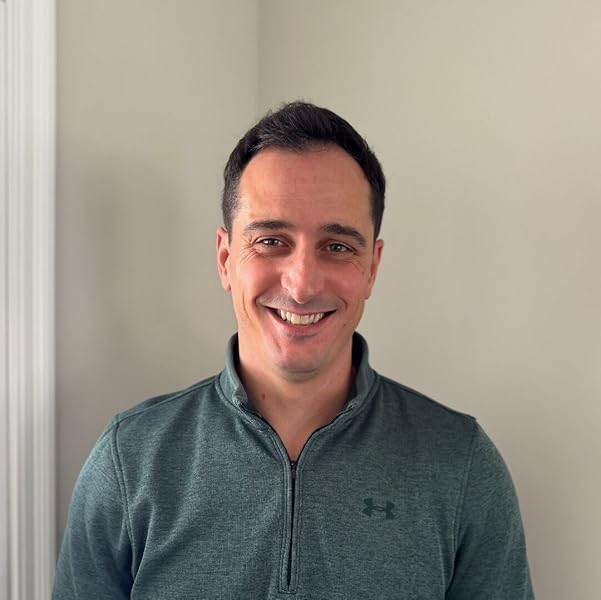
Bathed in Ink and Blood follows two threads: the Butcher of Greenlake’s desire for revenge, and twin siblings, as they undergo the Test that reveals their signamantic abilities. What was the inspiration that drove the development of the world the characters live in?
A large inspiration for me was Brandon Sanderson’s Mistborn and its magic system. I had an idea for a hard magic system built around symbols etched into the magic user’s flesh and took that idea into Dave Wolverton’s Advanced Story Puzzle course, and Bathed in Ink and Blood was born. A caste system grew around the magic system, one that would lend itself well to the darker world I was attempting to craft. Then, I dove into how this magic system would impact the world as whole, and found myself asking a variety of questions. How could the magic users be used for benefit or detriment? How would technological advancement be different with the presence of this magic? This basically a long way of saying, Signamancy was born and the world grew around it.
I felt that your novel delivers the drama so well that it flirts with the grimdark genre. Was it your intention to give the story a darker tone?
I always planned for Bathed in Ink and Blood to be darker. I wanted to explore if a character was pushed too far, what they would do in response. You can call it a spectrum, each of the characters, Brist, Dacre, and Raya, are at different spots at the start of the novel, and move across that spectrum throughout it. For example, with Brist, easily the most morally gray character in the story, he’s on the far side of the spectrum. His objective is all that matters, no action too brutal if it takes him a step closer to his goal. Having a character like that, the darker tone seemed the only choice. Then you are provided the opportunity to push your other characters and explore questions like “What is too far?” or “What will I lose if I do this?”.
What were some themes that were important for you to explore in this book?
The main themes I explored were revenge, coming of age, found family, and belonging/acceptance. Of course, there are other themes, but there were the big four, each one mainly applied to one of the three POV characters. Brist’s main theme was revenge and that is what he becomes, it is his singular focus and he blocks everything else out. With Dacre it is coming of age and found family; we have a teenager with a new found power that destroys his family. He has to navigate a new power and finds himself with Brist and his team. What starts as a need, turns into a family. For Raya it is belonging/acceptance. She wants her father’s approval, but to him, her only use is to form a relationship with a former king through a marriage, a marriage she does not want.
What will your next novel be about, and what will the whole series encompass?
My next novel will be the sequel to Bathed in Ink and Blood and will start directly after the events of the first novel. Readers will find certain characters on a similar path they were previously on, while other characters start new ones. The main theme that will be explored in the sequel will be “war”. The series, Ink, Brand, and Knife, is a planned trilogy and will include at least two novellas, one of which I’m actively working on, before I move to the sequel.
Author Links: GoodReads | Facebook | Website | Instagram
Signamancy opens a world of possibilities for a low-born teen. However, a power that gives can also take away. Dacre Caeinn finds himself in the company of the Butcher of Greenlake. Will the most wanted man in Camoria help Dacre save the one he loves most or will he be another victim buried in the Butcher’s trail of revenge?
The life of the standard noblewoman was one Raya Adan never wanted despite her father’s insistence. Now, she finds herself betrothed and the idea of being shipped across the sea as little more than a commodity does not sit well with her. To gain her father’s approval and show her worth as more than a bargaining chip, she dives into the investigation of recent attacks on the family’s ventures. However, not all is as it seems and Raya slowly unravels truths that will upend the world she knows.
It Became Much Darker

Dark Threads tells three haunting dark-fantasy stories where desperate survivors endure brutal magic and impossible choices in worlds crumbling under their own shadows. What sparked the initial idea for Dark Threads, and did one story come first?
The Breath Borrower was the first dark-fantasy story I’d ever written. I wrote it specifically for the Writers of the Future contest about five years ago. When I first had the idea, I don’t think it was dark, per se, but as the story developed, the weight of it grew, and it became much darker.
It received a Silver Honorable Mention in the contest, and I really loved the story, but after trying for a few years to get it published—and receiving a few quite nice rejection letters—I decided to share it with readers on my own. The other two stories in this volume had also received HM’s in the contest, and since they were also rather grim and dark, I thought they’d work well together.
I plan to continue the series, since I enjoy dwelling dark occasionally, but their release may be erratic since I write across multiple genres, and these types of stories can be emotionally intense to create.
The magic systems are uniquely brutal. How did you approach designing magic that feels both inventive and emotionally costly?
I think because of the depth of magic involved in these stories, the giving or receiving of something from inside the characters themselves, it made the cost automatically become greater and more intimate. Very personal. And because of that, it became a choice for each character. Risking their own life for others. Even in the case of Vapors of Misuse, the twins are seeking revenge, but also an end to the misery their lives are a part of, either for each other, or for the community after they’re gone.
Your characters often operate in moral gray zones. How do you balance empathy with their harsher decisions?
Once I started coming up with the ideas, the characters themselves took over. That often happens in my writing. They flesh themselves out. They become very real, and real people often have far more gray in them than edging toward black or white. And the gray is interesting to explore.
It goes back to the choice thing. Under “normal” circumstances, the main characters would be ordinary people, but I’ve thrown them into some type of chaos, and they have to react while trying to still keep part of themselves…well, themselves.
The endings are powerful but intentionally not tidy. How do you know when a story with this much darkness has reached its conclusion?
Life isn’t very tidy. A lot of my short stories feel like vignettes of the character’s life to me. You know things were happening before this moment, which are sometimes alluded to, giving the reader more background, but you also get the feeling something else will probably come after the story, though perhaps not with the central character.
The vignette ends at a pause, like the end of an exhale. The flow of that particular moment narrows until you break away. It’s not always a clean break. Something might not be fully resolved. It’s a bit like ending on a discordant note in music. It might leave you feeling a little disturbed, but glad it’s fading away at the same time.
Author Links: GoodReads | Facebook | Website | Instagram
In this collection of haunting dark fantasy tales, mortals and spirits alike wrestle with destiny, sacrifice, and the cost of power.
In The Breath Borrower, a sacred thief of breath must choose between duty and mercy in a city where life and death hang on a whisper.
The Withering follows a lone scholar through the dream-infested Underland, seeking a cure for a dying world—even as her own body fades.
And in Vapors of Misuse, a cursed twin races against time to use forbidden magic against a ruthless tyrant—before he is consumed by the very power he wields.
These are not stories of easy victories or neat endings. They are stories of survival, of sacrifice, and of what lingers when hope is gone.
Is the Grass Greener?
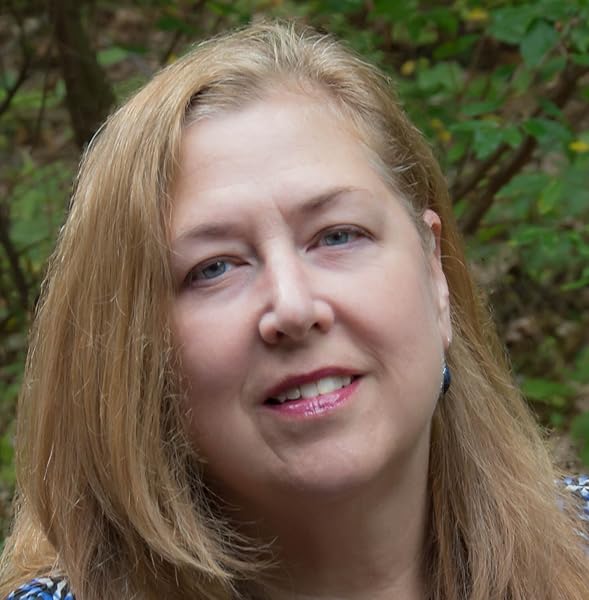
Having It All follows a devoted mother and Wall Street trader, who tries to hold together a demanding career and a family when one disaster after another hits, leaving her to make a desperate decision. What was the inspiration for the setup of your story?
I started out with the idea to show three women with very different lifestyles, a single woman, a stay-at-home mom and a working mother, and show that each was a viable option. And you see these three characters in the book. But the working mother ended up being the focus. Perhaps because that was what I was most familiar with myself.
Dalia is a relatable character that many modern women will see parts of themselves in. Was there anything from your own life that you put into the characters in your novel?
There was plenty! This was originally my first attempt at writing a novel. I gave Dalia a security trader position because that was my job and I figured it would save on the research involved with using an alternative. So, I had the long commute, the stressful day and the child and husband to juggle.
I put the manuscript away for years because I couldn’t resolve some issues with the plot, but five published books later, I knew how to fix the problem. I kept the book set in 1997 because that’s when I started writing it, and if the characters had modern technology, the story wouldn’t work, and the trading details wouldn’t be accurate anymore.
What were some themes that were important for you to explore in this book?
Back in the day, they led women to believe they could have a perfect life as a working wife and mother with nothing having to suffer. That it should all be a simple snap of the fingers. But everything in life has its ups and downs. Also, the grass isn’t always greener on the other side, so be sure to take time to be grateful for what you have.
What is the next book that you are working on, and when will it be available?
I’m working on the second book in my Findale Fae Mystery series with hopes to have it available by the end of 2026.
Author Links: GoodReads | Facebook | Website | Instagram
1997––Dalia Roberts had it all––a successful career on Wall Street, a big beautiful house, a loving marriage, and two fantastic kids. But along with those blessings came the work-related stress, the harried days and sleepless nights, the long commutes, and the constant, never-ending juggle of marriage, children, and finances.
Despite being a two-paycheck family, Dalia and Joel Roberts must juggle to make ends meet. Then disaster after disaster hits, leaving their once-perfect home life, along with the professional persona Dalia had worked so hard to perfect, in shambles. Burnt out and unable to think clearly, Dalia makes a desperate decision. Will this ill-thought-out move be the answer or only cause further heartbreak?
Belinda Gordon’s poignant new contemporary fiction unpacks the complex struggles and financial challenges working women with families face when trying to have it all.



 LITERARY TITAN