Blog Archives
Woody Woodchuck: Lost in the Woods
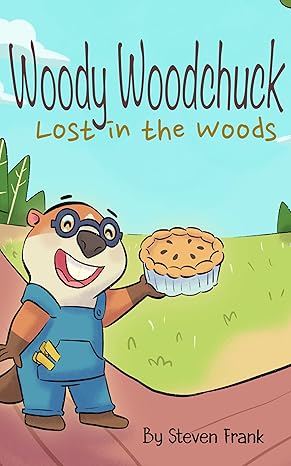

At its heart, Woody Woodchuck: Lost in the Woods is a charming tale about getting lost, finding help, and learning that everyone’s got something special to offer. Woody, a sweet little woodchuck with big glasses and a bigger heart, sets out to surprise his Mama by doing something helpful. But things go sideways when a wild wind barrels through and scatters the laundry and his glasses into the woods. What follows is an adventure filled with new friends, a few scares, and a lovely message about teamwork and acceptance.
One of the most compelling aspects of the story is how relatable Woody’s character feels from the very beginning. His intention to help his Mama is simple and sincere, yet things quickly spiral out of his control, an experience many readers, both young and old, can identify with. When Woody loses his glasses and chooses to press on despite his fear, his determination comes across as both courageous and quietly moving. The moment he realizes he is lost, standing alone in the unfamiliar woods, is especially poignant. The author captures that sense of quiet fear with subtlety and care. It’s not overly dramatic, but it resonates. The tone throughout is gentle and honest, with just enough tension to keep the reader engaged without overwhelming the story’s warmth.
The woodland characters were, for me, the most engaging element of the story. Each animal possesses a uniquely heightened sense alongside a notable weakness. For example, Billy Badger excels at navigating underground tunnels but lacks a sense of smell, while Daisy Deer can see great distances yet struggles with hearing. This dynamic offers a thoughtful and effective way to illustrate the idea that everyone has distinct strengths and limitations. It’s a subtle but powerful message about cooperation and mutual support. I especially appreciated the way each character’s abilities contributed to helping Woody find his way back to Mama’s cabin. Their teamwork felt natural and balanced, with no single character overshadowing the others. The group’s success came from their unity, not individual heroics, which made the moment feel both satisfying and meaningful.
The writing in this book is smooth and accessible, simple in style, yet far from boring. It has a warm, steady rhythm that invites readers into the story, much like a familiar animated tale. I especially appreciated the author’s pacing; the narrative doesn’t feel rushed, allowing space for readers to fully imagine the journey, whether it’s crawling through the tunnel beneath the creek or catching a whiff of Mama’s pies cooling on an old tree stump. The dialogue is natural and believable, particularly during the moments when the animals are working together to solve problems. Through small, well-crafted interactions, each character’s personality becomes clear.
I’d absolutely recommend Woody Woodchuck: Lost in the Woods to anyone with little ones who enjoy gentle, thoughtful stories with a sprinkle of adventure. It’s also a great pick for early readers who are starting to fall in love with storytelling. This book would shine during a cozy storytime or even as a classroom read-aloud. It reminded me that a little kindness, a little courage, and a few good friends can get you through just about anything.
Pages: 29 | ASIN : B0DYWC71FX

Muunokhoi’s Awakening
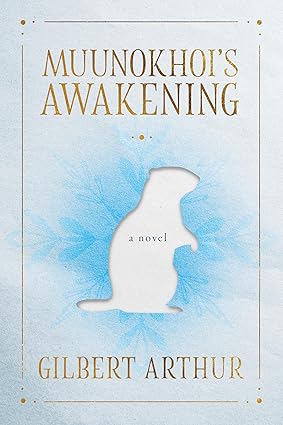
Muunokhoi’s Awakening is a strikingly original tale that follows the unexpected journey of Muunokhoi, a marmot who wakes from hibernation too early, alone, alert, and unable to return to sleep. As he grapples with the isolation and fear of premature awakening in a world still deep in winter, he must confront an existential dilemma: remain and face certain death, or venture into unknown lands in search of food and survival. What unfolds is a rich, anthropomorphic adventure that’s both literal and deeply metaphorical, exploring identity, purpose, and the meaning of community.
Gilbert Arthur writes animals better than most people write people. From the very beginning, Muunokhoi’s inner monologue feels real, relatable, and surprisingly witty. I found myself genuinely amused by his reflections on his consorts, colony logistics, and especially his pride in having the foresight to give each of his consorts their own chambers to avoid drama (smart marmot move). The attention to marmot colony politics, with just a dash of dry humor, makes the story feel lived-in and oddly familiar, even if you’ve never thought twice about a marmot in your life.
What really hooked me emotionally was the owl, Bolor. Their first conversation is gold. When Bolor, who’s supposed to be a predator, instead turns out to be this curious, wise, slightly sarcastic ally, the story takes a lovely turn. The dialogue between the two, like when Bolor says, “How can a marmot not hibernate? It’s the essence of who you are!” is sharp, funny, and somehow very touching. That whole chapter made me stop and think: What happens when you can’t do what your species or society expects of you? It’s a question a lot of us face, and Muunokhoi’s literal awakening becomes this beautifully written metaphor for that kind of existential shift.
The flashback chapters caught me by surprise with their emotional weight. The origin story of Muunokhoi and Sarantuya meeting was a standout. I didn’t expect to get misty-eyed over two marmots bonding over their shared baggage. Sarantuya’s boldness and unfiltered honesty, especially when she pointedly asks, “Am I going to be your consort?” added a refreshing and endearing depth to her character. The scene where she confidently returns to her former colony, openly showcasing her newfound happiness to those who had once belittled her, is particularly striking. It’s a moment rich with quiet defiance and personal vindication. This episode introduced unexpected emotional complexity to the narrative, weaving in themes of romance, resentment, and familial conflict, all anchored by an authentic emotional resonance.
By the end, I was fully rooting for Muunokhoi not just to survive winter, but to figure out who he is now that the rules have changed. The pacing takes its time in places, allowing for a deeper exploration of Muunokhoi’s thoughts and emotions. While some of the internal monologues are more extended, they offer valuable insight into his character. Throughout, the writing remains warm, thoughtful, and sincerely grounded in the emotional truth of the story. It’s not often a book about a marmot gets you to reflect on your own sense of purpose, but here we are.
Muunokhoi’s Awakening is a deeply unique story that somehow manages to be an animal adventure, philosophical fable, and heartwarming romance all at once. It’s perfect for readers who enjoy books like Watership Down or The Wind in the Willows, but want something more introspective and slightly modern in tone. If you’re a fan of stories that blend humor with heart and challenge you to see the world (and yourself) a little differently, this one’s worth waking up for.
Pages: 330 | ASIN : B0DST5M6X2
Guardians of the Cosmic Clocks: The Emerald Tablets
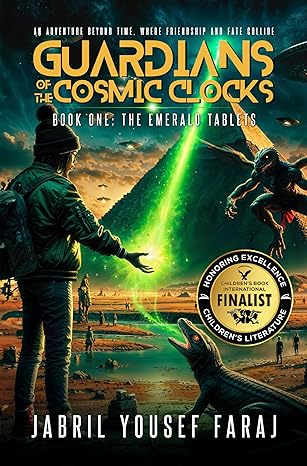

Jabril Yousef Faraj’s Guardians of the Cosmic Clocks kicks off a wild, genre-blending ride through time, space, and soul-searching adolescence. It follows Zya, a spunky, sharp twelve-year-old girl with big dreams and an even bigger heart, and her quieter best friend Elijah, a kid with a mind for circuits and logic. When they stumble upon a mysterious portal in the forest behind their neighborhood, they’re launched into a futuristic yet ancient interstellar conflict. There are aliens, time travel, cosmic watches, and high-stakes missions to recover the enigmatic Emerald Tablets—artifacts of immense power tied to humanity’s fate. All of it is steeped in Afro-futurist themes, social commentary, and enough banter to keep it all feeling grounded.
I honestly fell in love with the way Zya is written. She’s the kind of kid you root for immediately—complicated, headstrong, sweet, and full of fire. Her thoughts about wanting to be free, wanting to be seen and heard, absolutely resonated with me. It’s not just character-building; it’s emotionally real. Her world feels alive even before aliens and spaceships show up. When the science fiction finally kicks in—like when Zya and Elijah first lay eyes on the glowing portal in the forest and jump through it without hesitation—I was hooked. The pacing is snappy, but not rushed. The way Faraj builds out the Lumerian race, particularly through the elegant and mysterious Maroun and the guide Kelven, is slick and satisfying. The Nimrod (their spaceship) is described in such a cool, cinematic way it’s easy to imagine it.
But what surprised me most was how layered the story is. Faraj isn’t afraid to get deep. The Archons—power-hungry lizard-like overlords—aren’t just sci-fi baddies; they’re stand-ins for systemic oppression. The idea that they’ve used Earth’s pyramid structures to send out mind-controlling frequencies is wild, sure, but also kind of genius. It reimagines colonialism and spiritual suppression through a futuristic lens. The Emerald Tablets themselves are introduced with mythic reverence, and their purpose remains just cryptic enough to keep you curious. That said, I think some of the explanations got a little too exposition-heavy—especially in the scenes where Maroun lays out the backstory. It wasn’t bad, just a bit dense for younger readers. Still, the dialogue often balances it out with humor and warmth. Zya and Eli’s dynamic never feels forced. They’re just two kids, caught up in something huge, doing the best they can with sass and heart.
Guardians of the Cosmic Clocks: The Emerald Tablets is a blast. It’s heartfelt and hopeful. It manages to feel epic and intimate all at once. If you love sci-fi with strong characters, real-world metaphors, and a touch of magic, this is for you. Teachers and parents looking for a smart, diverse, adventurous read for middle schoolers—grab this.
Pages: 140 | ASIN : B0DNR18FLZ
Weun Academy: The Shadow Maker

Michael J. Zummo’s Weun Academy: The Shadow Maker is a fast-paced, character-driven sci-fi adventure that follows the journey of Eisah Tanner, a teenager caught between two worlds—Earth-born and Mars-raised—who suddenly discovers he possesses incredible powers. When a violent encounter with a rival Martian faction reveals his mysterious abilities, Eisah is whisked away to a secretive academy in a sprawling alien space station, where he learns he’s not alone in being “different.” As he grapples with grief, identity, and purpose, Eisah finds himself swept up in a vast interstellar conflict and a world filled with complex politics, alien cultures, and high-stakes battles.
I enjoyed the immersive world Zummo built. Mars isn’t just a red rock here—it’s a living, breathing setting with layered tensions between the Redborn and Earthers. And once the narrative jumps into space, it explodes into vibrant colors, fantastical tech, and unforgettable aliens. I found myself feeling both wonder and dread, often in the same chapter. Zummo’s strength lies in his ability to inject emotional depth into action scenes, and I really appreciated that balance. Eisah’s voice feels authentic. His fear, stubbornness, and protectiveness toward his mom resonated with me. There’s a refreshing honesty in his reactions that makes the reader root for him, even when he’s impulsive or defiant.
There were moments where I felt like I was being given a tour of the universe rather than immersed in it. Some of the side characters (especially the academy’s mysterious operatives and fellow students) were so intriguing, but felt slightly underdeveloped given the novel’s hefty length. Still, even in these slower beats, I appreciated Zummo’s passion for this world. He clearly knows his universe inside and out, and it’s fun to be along for the ride, even when the exposition gets heavy.
Weun Academy: The Shadow Maker is a solid pick for fans of young adult sci-fi who love stories about found family, superpowers, and reluctant heroes thrown into extraordinary situations. It’s especially great for readers who want their space fantasy with a bit of heart and a lot of flair. If you liked Ender’s Game, Skyward, or The Expanse but wished they had more emotion, diversity, and cool alien tech, this is for you. I’m absolutely curious to see where Eisah’s journey takes him next.
Pages: 562
Warrior Pose
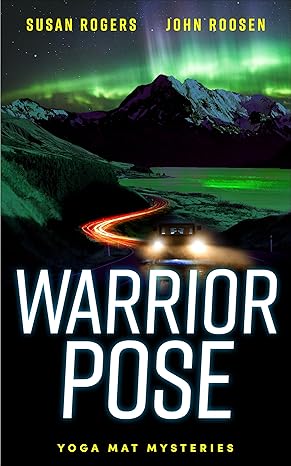
Warrior Pose is a high-stakes international thriller that kicks off with a literal bang and doesn’t let up. The story follows Ric Peters, a gritty intelligence operative juggling perilous missions, personal demons, and a complicated relationship with his partner Elaina. From the chaotic streets of Jakarta to the dripping jungles of Bali and the quieter corners of Sydney and New Zealand, the narrative intertwines espionage, betrayal, and just enough romance to keep things grounded. Along the way, the book digs into environmental crimes, global politics, and the human cost of covert operations.
Right off the bat, I was hooked. The opening scene—Patterson faceplanting into his soto soup after taking a bullet to the forehead—was cinematic and brutally efficient. It set the tone for the kind of world we were diving into: sharp, fast, and dangerous. The writing is vivid and smartly paced. Ric’s inner voice, always half-a-step from cracking, added tension and authenticity.
What I liked most was how the authors didn’t shy away from messiness—emotional or otherwise. The romance between Ric and Elaina felt lived-in and real. Their chemistry wasn’t all candlelit dinners; it was jungle ambushes, missed connections, and half-yelled arguments in sweltering heat. Elaina showing up mid-interrogation with two suspects face-down in the dirt? Wild and gutsy. But also, oddly believable for their relationship. It made me root for them, even while I questioned whether Elaina should really be getting this close to Ric’s world. Her voice added a necessary counterweight to Ric’s hardened lens.
Some parts had me grinning. Like the surprise orange wig at Delilah’s salon—a rare light moment in an otherwise intense story. It reminded me that these characters aren’t just agents and assets. They’re people. They get scared. They crack jokes. They write sweet texts like Ric’s glow-in-the-dark engagement note to Elaina. It made the action scenes feel more meaningful because you cared about who was running from the bullets. That’s not easy to pull off in a thriller.
The story packs a lot. Assassins, flash drives, family trauma, espionage, yoga studios—it’s a buffet. The story switches from Ric’s action to Elaina’s introspection. The ride was fun and rich. And Francis Holms was absolutely unhinged in the best way. His scenes were like a twisted blend of Bond villain and IT guy with a grudge.
Warrior Pose is for fans of spy thrillers who want a bit more than bullets and bodies. It’s got heart. It’s got humor. It’s got complex people doing questionable things for the right reasons—or at least convincing themselves they are. I’d recommend it to anyone who loves stories where action meets character, and where danger is never more than a few pages away. If you like Barry Eisler’s John Rain or the TV show Alias, this one’s going to hit your sweet spot.
Pages: 391 | ASIN : B0F2N8TGDM
Learning Something New

Thomas Edison and the Magi Solution follows Thomas Edison’s former assistant as he finds himself on a journey to investigate allegations that Hitler has made a deal with the devil. What was the inspiration that created the fantastic journey these characters go on?
The inspiration for ‘Magi Solution’ was a piece of history I’d never known before. In the spring of 1941, Deputy Fuhrer Rudolf Hess stole a plane from the Augsburg-Haunstetten airfield and took off on a wildly improbable mission to Scotland to broker a peace between Germany and the Allies. He failed, Churchill and Hitler both deemed him insane and he was confined to the Tower of London. But was he insane? What if he possessed a secret of Hitler’s that no one has dared to imagine? And what if Hess went on to vow that only three men were worthy of this dark knowledge: Edison (who’s been dead for years), Roosevelt, who’s alive but unavailable, and John Dawkins, Edison’s intrepid assistant. And with that, the plot’s afoot!
What research did you do to understand the backdrop for your story?
A lot. When you’re dealing with a period as iconic as WWII you want to make sure you’ve got the underlying details just right so your novel has a historical foundation that allows your high-flying fiction to soar. It was work. It was also fascinating and the parallels to today’s world were startling. As Harry Truman famously said, “The only thing new in the world is the history you don’t know.”
What were some themes that were important for you to explore in this book?
Edison appears in the book as a reincarnated spirit: still feisty, determined and capable, but also diminished. As a modern-day Prospero he sadly observes, “I’m the ‘Wizard of Menlo Park. And I’ve lost my magic.” But he’s only lost his capacity to invent. He’s retained his ability to learn – and in the course of a series of hair-raising adventures, realizes that while the world is too big and too stupid to be saved, sometimes it can be helped immeasurably simply by saving one person. It’s Edison’s swan song and it’s an elegant one that’s worthy of his genius.
Can fans look forward to more historical fiction releases from you soon? What are you currently working on?
Possible. But not for now. My next project is a play and after that, who knows. I think I’ll leave Mr. Edison in retirement. He’s earned a rest. And so has John Dawkins. But John’s 10 year-old son, Josh? There’s a story brewing there. I can’t wait to see what might happen next.
Author Webpage
Delilah Versus The Ghastly Grim

Delilah Versus the Ghastly Grim follows a twelve-year-old girl who, after a life-threatening seizure, finds herself in a strange new world. There, she must uncover her hidden powers and confront a formidable enemy, all while searching for a way home. But her journey is more than just a quest for survival, it’s a path toward self-discovery, courage, and destiny.
Delilah is no ordinary pre-teen. Though her abilities begin to stir quietly, they grow stronger just in time for a battle unlike any she could have imagined. Her adversary, The Ghastly Grim, is a dark, power-hungry force that rebels against the mysterious Kangaroo Council and ventures deep into the forbidding realm of Cora Larn. Within Othersphere, the Grim unleashes a shadowy entity known only as the Sorcerer Dread. Mist takes form. Shadows move. And the fate of more than one world hangs in the balance.
T.L. McCoy’s Delilah vs. the Ghastly Grim is a spirited entry into the young adult fantasy genre, calling to mind the strange charm of Neil Gaiman and the eerie wonder of Ray Bradbury. But make no mistake, McCoy’s voice is her own, and it’s distinct.
At first glance, Delilah might seem like any other pre-teen. That illusion fades fast. Her transformation begins with a subtle unease, triggered by the arrival of a peculiar figure: Mr. Peabody. One moment, she’s in class; the next, she’s swept away to the Garden of the In-Between. From that point forward, reality bends.
The world McCoy crafts is a kaleidoscope of strangeness that is lush, offbeat, and endlessly surprising. Every new character and creature is a delight to encounter, yet beneath the whimsy lies purpose. Delilah navigates this unfamiliar terrain with a blend of grit and grace. Like Alice tumbling down the rabbit hole, she embraces the bizarre with refreshing speed, an asset in a land where logic sleeps and imagination reigns.
Danger, though present, is carefully modulated. McCoy tempers the menace, ensuring the tone remains accessible for younger readers. The emphasis lies more on adventure, wonder, and the quirky pleasures of exploration than on terror. This choice roots the novel firmly within its intended audience: young adults hungry for magic and mischief, not nightmares.
Still, the stakes feel real. That’s largely thanks to Delilah herself, a winsome heroine full of curiosity, courage, and heart. Surrounding her is a colorful cast of supporting characters who bring not only flair but emotional weight. Together, they help elevate the story from a lighthearted romp to something richer.
Delilah vs. the Ghastly Grim is fast-paced, brimming with imagination, and anchored by a protagonist you can’t help but root for. It’s a charming blend of humor, peril, and wonder, an enchanting tale that promises to delight its target audience and beyond.
Paragons of the New Moon (Book 2 of The Last Battlefield for Light and Darkness)
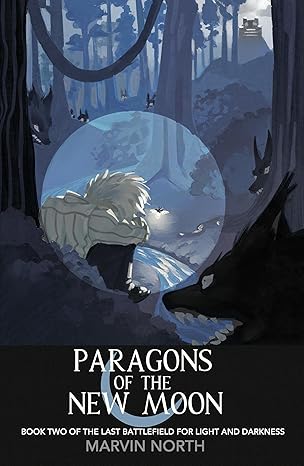
Paragons of the New Moon is a sweeping cosmic fantasy filled with layered lore, celestial politics, and introspective heroes fighting not only monsters but the haunting echoes of their own pasts. This second book in The Last Battlefield for Light and Darkness saga follows Rayeen Beeta—a man brought back from the dead by otherworldly magic—as he’s sent on a mission by the enigmatic Overseer Shamooga to track down a mysterious boy named Kosinki, whose powers may very well rewrite the universe. What unfolds is a bold journey that dances between metaphysical philosophy, epic-scale action, and raw emotion, stretching from the dusty violet dunes of Amethyst Sands to the heart of cosmic archives and long-buried grief.
The opening chapters hooked me right away with their weird, wonderful energy. You get this totally surreal setting—Shamooga in a tower beyond physics, manipulating reality like origami. And then Rayeen’s dropped into a vision quest-style battle with his inner demons and literal monsters. His body is dead, his soul’s in his pocket, and he’s trying to hold onto his humanity through sheer force of will. North knows how to blend high-concept magic with gut-punch emotion, and that combo really shines here.
In the middle of the book, the pace kicks up a notch with Rayeen tracking Kosinki, clashing with pirates, and getting absolutely wrecked by the Black Lake and its Corrupted beasts. The fight scenes are wild—like, anime-level intense—but what I appreciated more was Rayeen’s frustration. He’s powerful, nearly godlike, but he’s constantly told “not yet,” “you’re not ready,” and you can feel his resentment simmer. It’s not just about power—it’s about emotional readiness, and man, that hits harder than any boss battle.
We finally learn about Shamooga’s own past—how he survived an apocalypse, got offered godhood, and became an Overseer almost against his will. These late chapters are steeped in lore, with cool reveals about the higher powers pulling the strings, and even a secret archive Shamooga keeps to remember people the universe has erased. The vibe gets almost melancholic toward the end. By the time Rayeen returns, frustrated and desperate to go home, there’s this shared, quiet pain between the two of them.
If you’re into Final Fantasy, Fullmetal Alchemist, or anything that blends big cosmic ideas with messy, soulful characters—you’ll dig this book. It’s poetic, intense, a little chaotic, and full of heart. There’s some deep stuff in here, and it helps to read slowly to catch all the meaning. But it’s worth it. North doesn’t spoon-feed. He lets you feel lost, like the characters. And that makes the victories—no matter how small—feel earned.
Pages: 299 | ASIN : B0F2SD32FK



 LITERARY TITAN