Blog Archives
“Whatever you’re feeling is okay.”

Carry on Castle is a very personal story for you. How hard was it to put this story out in the world for people to read?
I discovered through my blog that I have the rare ability to talk about death and grief. I can handle it, I guess you could say. So many of my fellow widows have written to say, “This is exactly how I feel!” I had one thank me for sharing my story, because she didn’t feel brave enough to share hers.
I don’t think bravery has anything to do with it, but I am able to talk about death and grief. Not everyone can, but they can read my story and realize that they aren’t alone, that their feelings are normal. That is a strength that I didn’t realize I had in me.
I want to tell the truth. It’s not lollipops and rainbows. It’s death. I wasn’t going to tell people we were fine, because we were not fine. I wasn’t going to gloss over it. That would have been an injustice to Dan, to pretend I was okay with him being gone.
It was also important because I don’t want people to forget Dan. Please don’t forget Dan. Dan wanted to leave a legacy. He wrote,
“Our lives are but mist, or the equivalent of the blink of an eye in all of time. We will not be around very long and we will not be remembered. I want to leave a legacy; I want the time allotted to me to result in more than consumed resources and over-populating offspring. I want said offspring to know me, to know their history through me. I want lives and subsequent generations to be different because I was involved. I want to help people heal and be transformed…”
I want people to know what he did. How amazing he was. How much he loved the world. I am his story keeper now.
What is one piece of advice someone gave you that changed your life?
I was talking to my best friends about possibly dating again, and was ambivalent about it. I knew I would never find anyone like Dan so I didn’t see the point in trying. I wasn’t ready for marriage. I wasn’t sure I ever wanted to be married again. They told me, “You don’t have to try to find another husband. It’s okay just to find someone that you can go to a movie and have a conversation with.”
That changed my whole mindset about dating. I wouldn’t replace my husband, but I could go to a movie with someone. I signed up for online dating with that intention. I managed to get lucky, and found an incredible man who I am deeply in love with. My mother in law goes as far as to say that Dan picked him out for me. He is like Dan and wholly different from Dan at the same time.
What do you hope is one thing readers take away from your story?
“Whatever you’re feeling is okay.”
My best friends told me that a lot. When I messaged them in the middle of the night crying, it was okay. When I told them I wanted to punch Dan in the face, it was okay. When I laid on the floor because I couldn’t do life, it was okay. When I locked myself in my dad’s bathroom on Christmas because I couldn’t stop crying, it was okay. When I started taking antidepressants, that was okay too.
There is no right or wrong way to grieve. You feel what you feel, you do what you have to do to survive. Don’t let anyone tell you you should be acting differently, especially people who have never been through it.
Author Links: Facebook | GoodReads | Blog
What Comes Before

When a group of writers come together In Search of a Happy Ending, they discover the stories they write down are not the stories that need to be told and together they discover their own happy ending? What was the inspiration for the setup to your story?
Actually, the stories they write ARE the stories that need to be told, but not the COMPLETE story. Pi, for example, writes cops-and-criminals stories with no indication that they reflect his own background. Eve is trying to write about the relationship between Fidel Castro and Celia Sanchez during Cuba’s Revolution, but is having difficulty because she has never been either a revolutionary or deeply in love.
What were some driving ideals behind your character’s development?
This is a story about stories. Everybody has one (or several.) Caring enough to find out what other people’s stories are is a way of connecting with people who on the surface seem very different, and there’s much to be gained from those connections. Those too self-centered or judgemental to take the time to learn other people’s stories impoverish themselves unnecessarily.
Another idea this story is meant to dramatize is that of “present-time comparisons;” that is to say, the value of comparing what they are doing right now with what else they might be doing right now, and choosing the activities that are most satisfying, instead of comparing what they’re doing now with things they used to do which are no longer options. When 35-year-old Eve becomes dispondent about no longer having the stamina she used to have, Scott gently points out that if he compared his present soccer skills with those he had when he was 25, he’d never show his bony legs on a field again. But he can still get great pleasure by comparing how much he enjoys seniors soccer with, say, sitting around the house doing nothing.
What were some themes that were important for you to explore in this book?
The importance of finding ways to make life meaningful, regardless of how long we have to live or imagine we have to live. As Eve tells Raynee, who is always insisting that stories be given a “happy ending,” it’s not the end that counts, it’s what comes before.
Because so many elements of modern life tend to isolate us, it’s important to be pro-active about developing connections with others. Not only do such connections enrich our immediate life, they make it more likely that we will have the support of others when we need it–as each of us do at some point, no matter how self-reliant we try to be.
What is the next book that you are working on and when will it be available?
I’m three-quarters through a long “creative nonfiction” biography of the Cuban revolutionary Celia Sanchez, Fidel Castro’s “significant other” throughout the war against the Batista dictatorship, and for the next twenty years when she more than anyone else worked to create a Cuba that conformed to revolutionary ideals of social justice. It has three sections: Clandestina (the years she was working against the dictatorship before she met Castro, Guerillera (the two years she during the war when she lived with him in the Sierra Madre), and Architecta (the twenty years following victory when together they pursued revolutionary goals: his to make Cuba free of US domination, hers to build the infrastructure (homes, hospitals, schools, recreational facilities, and much more) to enhance the quality of life for everyday Cubans. CELIA: THE WOMAN WHO SAVED CASTRO & THE CUBAN REVOLUTION (working title) will be finished by the end of 2022. As for when it will be available, that’s up to the publisher. By now I have enough experience to know that finding a publisher can take several years, and is likely to take two years after that for the publisher to bring it out.
Author Links: GoodReads | Facebook | Vancouver Sun | Nelson Review | Rosa Jordan
Life Lessons For Children
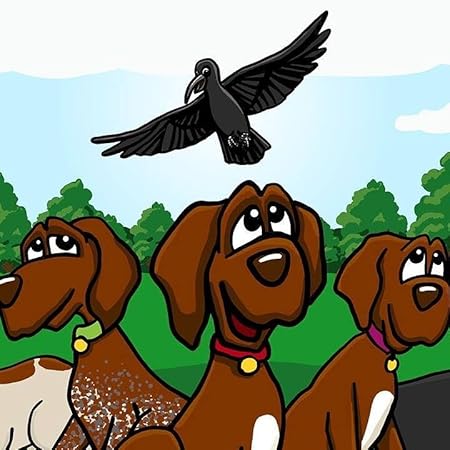
Solitary Toes and Brown-Headed Cowbirds follows a pack of hunting dogs and how they react when a horse is brought to their farm. What was the inspiration for the setup to your story?
The inspiration for Solitary Toes and Brown-Headed Cowbirds began when we lived in Catoosa, Oklahoma. We had horses and many hunting dogs. The memories of all our animals are what I want to record for the next generation of young readers.
The art in this book is fantastic. What was the art collaboration process like with the illustrator Mike Minick?
Mike Minick is a wonderful illustrator. He is an illustrator and a graphic designer in Tulsa, Oklahoma. Mike and I are very compatible. I send Mike my manuscript which he reads and then we talk about his ideas for the illustrations. He makes many sketches, we discuss, and then he lines them up with the text. He will send me colored-in sketches during this process. Then he completes the illustrations with the text and sets it up in book form according to Archway Publishing’s guide lines. Then we send to the publisher. We spend around one hour each week talking with each other until the process is complete.
What were some themes that were important for you to explore in this book?
- Life lessons for children shown through animals—team effort, helping friends, being nice to others, and learning from family members.
- Relationships between different kinds of animals.
- Learning about nature.
What is the next book that you are working on and when will it be available?
Chatty the Hen Pheasant (Travels With The Pack) – It became available 11/11/2021.
Desert Friends (Travels With The Pack) – I’m sending it to Archway Publishing in a couple of weeks.
Author Links: Twitter | Facebook | Website
Solitary Toes and Brown-Headed Cowbirds shares a humorous story depicting the relationships between horses, cowbirds, and hunting dogs. Geared toward first through third grade readers, this young reader’s book helps children improve their reading skills while providing knowledge about animals, nature, and life lessons.
A Poem Which Wanders

Drifters is a diverse collection of poetry that provides readers with rich experiences. What inspires you to write poetry?
I wish I knew. A word, a phrase, a sound, a dream, a memory—one or another pops into my mind and generates a poem. The word “globule” produced “Lingo,” a brief, somewhat nasty poem about my non-existent dog. A chapter in Darwin’s “Voyage” was so elegant and filled with wonderful science that I wrote a poem of 28 tanka which is 90% Silverman but 10% quotation from the book. Reading about footbinding stirred my imagination into inventing a Chinese court lady lamenting her father’s refusal to have her feet bound which, ironically, made her an outcast among the footbound and hidebound ladies of the court. I could add many other and diverse examples.
Did you write the poems in this collection for this book or did you write them over time and then collected them here?
I’ve something like 1500-to-2000 poems on hundreds of pages typed and handwritten filling dozens of boxes. The short answer is that I chose poems already written and wrestled them into a collection. I’ve little appetite for writing a set of poems on “My First Trip To Europe” but much for writing about particular aspects of Hawaii that moved me to thought or left a strong feeling. My imagination takes over and the result is fresh and, at its best, unforced. The result is varied in subject and theme as well as form. I write sestinas and free verse, concrete poetry and prose poems. I find most thematic collections interesting only here-and-there. Poe wrote that a long poem interesting in stretches was tiresome in stretches (and that what was boring might be interesting if read afresh). It seems to me that many poems in thematic collections show the author trying too hard to write something that will fill a space, not because he or she feels the compulsion to create a new poem.
What are some themes you often find your poetry gravitating towards?
Time, certainly, what it is and how it affects our perceptions. Also, color and texture, the way these elements shape our feeling for being. And, very important, the connection between sounds, words, and imagery. Often, a phrase generates a poem which wanders away from the phrase but finds puns or sonic connections that lead the poem into fields far from its origins.
What has been the most impactful poem you’ve read?
A really difficult question for me to answer. Some of Donne’s, e.g., “A Valediction Forbidding Mourning,” or Marvell’s “The Garden.” The Iliad, of course, and Chaucer’s “Troilus and Creseide.” Pope’s “Rape of the Lock” and “The Dunciad” along with Dryden’s “Absalom and Achitophel.” Milton’s Paradise Lost, I suppose, though his Samson Agonistes sometimes seems the better constructed and moving poem. The one that most people might not have any inkling of, and which I think is one of the greatest in the language, is Browning’s The Ring and the Book. It is psychologically compelling and so beautifully constructed that it never flags despite its great length.
Author Links: Amazon | GoodReads
A drift of snow, adrift in a sea of speculation,
turning over the flotsam and jetsam of the macro world,
speaking with Nano rising from and sinking back
into the abyss… . Though I don’t much like Poe’s
The Narrative of Arthur Gordon Pym of Nantucket,
I’m drawn to it, its locked-in adventure in the hold
of a whaling ship, the faithful dog turned savage,
mutiny, the final, fanciful emergence into a false
but beguiling Antarctica, a world that never was,
isn’t, won’t be. Somewhere in there, I’m.
A Key Driver For Change

Teaching Professionals shows how to teach the CAISSEP technique and provides guidance that will improve educators teaching abilities. Why was this an important book for you to write?
I have thirty years’ experience in education, principally in legal education, curriculum development and professional legal practice. Drawing on these experiences, I developed the CAISSEP® technique which is found in the book Teaching Professionals.
Adult education is a key driver for change – globally. There is a vast international teaching challenge and an educational divide exists. Illiteracy among adults internationally is estimated at 770 million, two-thirds of whom are women. To meet this challenge, motivated and motivational teachers are its lifeblood. The COVID-19 pandemic has been the largest disruption to education systems in history – billions of students across every continent have been affected. Given the significant impact of COVID-19 on global teaching and learning, the United Nations has been prompted to call upon the profession to “reimagine education and to accelerate change”.
It is my modest hope that with commitment and care, but with fewer resources at hand, Teaching Professionals and the CAISSEP® techniques may provide positive, practical resources to assist teachers, and those wanting to be teachers, to reimagine and accelerate change for today’s and future generations.
What is a key component of the CAISSEP technique?
The key themes of Teaching Professionals are:
- the key principles of effective adult learning;
- the four elements of experiential learning;
- a variety of practical teaching techniques and approaches using the CAISSEP® technique; and
- guidance on how to develop a teaching plan utilizing the CAISSEP® template.
CAISSEP® is an acronym for each of the teaching and learning techniques which are illustrated in Teaching Professionals – Clarity – Analysis – Inquiry – System – Structure – Emphasis – and Professional! CAISSEP® is also a simple play on words – the French word “caisse” means box or case. CAISSEP® is both a learning and teaching technique and a toolbox (of information, tools, or techniques) with the addition of the key final letter – P for professional! For example, professionalism in teaching emphasises professional and ethical considerations, often integrated with reflective awareness. To enhance this technique, adopting a teaching style which encourages students to act professionally and to develop professional forward-looking ethical perspectives is of paramount importance.
What do you feel is a common misconception people have about educators?
Some people view teaching as simply the process of passing on information. By contrast, I see educators as change agents – as so powerfully illustrated in the following quotation:
“I chose to be a teacher because I believe that education has the power to transform the society we live in. What motivates me to be a good teacher is to be an active agent in this change that is so necessary for my country, to fight against discrimination, injustice, racism, corruption and poverty. Our responsibility as teachers is enormous, and our commitment to provide quality education must be renewed every day.” (Ana, a teacher from Lima, Peru, UNESCO, 2014 Teaching and Learning Global Monitoring Report)
Educators and educational environments need to stimulate the interest of teachers and students globally (whether in education, business, or otherwise). In my experience, by teaching we are given a gift. There is the gift of knowledge in our hands, together with the responsibility to share it; the gift of receiving from our students as they learn and discover with our assistance; the gift that, as we teach, we learn more about ourselves.
What is one thing you hope readers take away from your book?
It is my genuine hope that Teaching Professionals and the CAISSEP® technique will be an enduring gift that enhances and inspires the reader, day by day, to develop, reimagine and renew their art of teaching and mentoring and to become powerful and effective change agents.
Author Links: Twitter | Facebook | Website
In a comprehensive publication, Dr. Nigel Wilson, a seasoned educator, lawyer, and inventor of the CAISSEP® teaching and learning technique, provides insights, guidance, and tools to challenge, inform, and stimulate the desires of teachers globally (whether in education, business, or otherwise) who wish to improve their craft and develop the art (and science) of educating adult learners.
Through his proven methodologies, teachers will learn a variety of teaching and learning techniques based on international best practices that include:
• the key principles of effective adult learning;
• the four elements of experiential learning;
• a variety of practical teaching techniques and approaches;
• guidance on how to develop a teaching plan utilizing the CAISSEP® template; and
• ways in which technology can benefit teaching methodologies.
Teaching Professionals assists educators worldwide to reimagine teaching and accelerate positive change for future generations. A comprehensive working resource, incorporating proven and progressive learning techniques.
Embracing Each Other’s Humanity
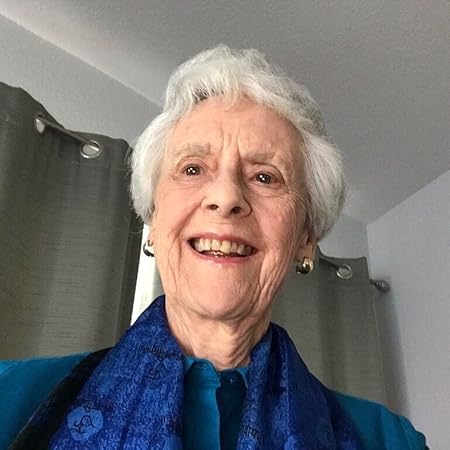
Somewhere Different Now follows two spirited teens struggling to maintain an inter-racial friendship that the world seems to want to tear apart. What was the inspiration for the setup to your story?
Loss is what undergirds the experiences of both Annie and Clydeen. I had developed the Annie character right up to the point where she finds the lean-to on the mesa. I knew I wanted to explore the nature of society in post-WWII America. Who was benefitting from the newfound national pride, optimism, and prosperity, and who was not, but I had yet to formulate a means of exploring that idea.
In terms of white society, Vivian says it best when she wonders why Annie is asking questions about the Holocaust when “everyone else” is just trying to forget about all that and have a nice life. Everyone? Really? I had no idea that a character like Clydeen would show up when Annie returns to the mesa after an absence, but there she was. That opened a way to juxtapose how differently Annie (white) and Clydeen (black) experienced the world, in terms of not only the depth of the tragedies responsible for each of their wounds, but also their fears and the resources available to them to cope and possibly even to survive.
Annie and Clydeen’s relationship is well developed and one I enjoyed following. What were some driving ideals behind the development of their relationship?
Trust is certainly on important one – the difficulty of forging and maintaining trust as Annie and Clydeen become more and more enmeshed in each other’s lives. They must dive deep to find a ground of commonality strong enough to sustain their relationship.
Fully embracing each other’s humanity is undoubtedly the most important and the most touching aspect of their relationship. At first, Clydeen is something of a curiosity to Annie, a playmate, a distraction from her loneliness and depression. For Clydeen, Annie is someone who is willing to sustain her physically while she tries to figure out what to do next. But because they spend so much time together away from other influences, their true selves emerge – even those parts of themselves they may not have known existed, such as Annie’s inner generational racism; Clydeen’s envy of the house Annie lives in and all she thinks it means; and the fears aroused in each of them about the consequences of being discovered together.
What were some themes that were important for you to explore in this book?
Intergenerational racism and its effect on a young mind. In Annie’s case, she had a propensity to turn away from the racism of her father and other extended family members. But when push came to shove, her main goal was to get Clydeen out of her life before anyone found out about her. But she cared about Clydeen too much by then to simply abandon her. Internalized racism was in the driver’s seat. It took Annie a while to realize it, and once she did, she had to find the courage to accept the consequences of turning her back on her cultural conditioning.
Courage. From the beginning of the story, Annie wants to transform what she sees as her lack of courage. Annie finds the courage to choose Clydeen and fully embrace her, despite the consequences she fears from her racist father in particular.
Control. Annie believes she can control how the summer on the mesa will come to a close, if only Clydeen will cooperate. Clydeen, however, lives day-to-day and is unwilling or unable to peer into the future the way Annie does. Until Ulie arrives, she believes she is dependent on the vagaries of a fate she has no control over, so why bother trying to figure it out?
Agency. Ultimately, Clydeen has to disregard what Annie thinks is best for her. Part of her realizes that at least a part of Annie’s agenda is grounded in her fears about her father finding out about the two of them. In other words, Annie’s plans are tainted. Clydeen has to step away from what Annie wants and find a path to her own agency so she can begin to pick up the pieces of her life.
What is the next book that you are working on and when will it be available?
The next book will deal with some of the same issues a few years down the line. This book will be written in third person past tense rather than first person present tense. One of the main characters will be a white woman named Stella whose sheltered suburban life as a homemaker has become untenable. Annie and Clydeen will appear again, as will Imani Jackson. The plight of gay youth who have been rejected by their families will figure into the story, as well as a renegade priest and a young girl with amnesia. At this point, I don’t have any idea when it might be out.
Author Links: GoodReads | Twitter | Facebook | Website
White middle-class Annie Cahill and Clydeen Hollifield, a Black girl recently arrived from the cotton fields of Texas, have taken refuge over the summer in a rocky hideout high on a mesa in rural Colorado. They have grown to care deeply for one another, but as the summer comes to an end, their bond is tested to the max. Annie is terrified that her abusive, rabidly racist father will discover their relationship. She finds herself caught between the dictates of her upbringing and loyalty to her friend. Clydeen, on the other hand, is paralyzed by her deep distrust of white people, even Annie at times, but it appears that finding her missing mother will require her to reach out for their help.
When all seems lost and it’s possible that Annie and Clydeen’s relationship may come to a disastrous and painful end, their secret hideout is invaded by a former World War II resistance fighter. Who is this stranger from out of nowhere, and what does he want? Is he simply the kind, brotherly figure he appears to be, or are there more mysterious dynamics at play?
It Had To Be A Ghost Story

Mystic of the Midway follows a young girl that starts seeing and hearing things no-one else can after an accident. What was the inspiration for the setup to your story?
That’s a great question. The answer is sort of in reverse. Having returned to visit Crystal Beach in the early 2000s you could feel the ghosts of the park still present throughout the town. That experience, as well as subsequent visits, sparked my interest in the area and its history. When I decided I wanted to write a story set in Crystal Beach, I knew it had to be a ghost story, so I worked somewhat backwards to the setup.
What is one of your favorite memories from Crystal Beach? Did this memory influence a particular scene in the book?
My memories of Crystal Beach are actually all recent. Revisiting the area with my young family was what inspired me to write about the area. As part of my research memories of the park came flooding back to me. But the singular moment I recall that had me decide to write was my 8 year old son reading Judy Blume’s Super Fudge on a lazy summer morning at a Crystal Beach cottage we had rented. He was just becoming an independent reader and was beaming, laughing at the antics of Fudge. I decided I wanted to write something that celebrated the area and hopefully inspired reflection and some laughter.
Which character in the novel do you feel you relate to the most?
Definitely Effie. Her character really captures how I saw the world at that age.
What is the next book that you are working on and when will it be available?
Currently I’m working on a dystopian YA novel entitled The Mutant and the Mule. I’m hoping it will be available in 2023.
Author Links: Twitter | Facebook | Website
Effie enlists the aide of her detective brother, Jimmy, along with her long time Crystal Beach buddies Lydia and her mischievous little brother Sniff. The friends race through the old amusement park to try and find answers while trying to avoid a local bully. As their investigation deepens Effie begins to be haunted by dreams that seem to hold the key to everything that is happening. When the investigation falters Effie struggles to overcome self-doubt and the realization that her idyllic vacation spot isn’t what it seems to be. Trying not to lose faith, Effie embraces her new abilities hoping the whispers and signs will lead her and her friends to the answers they need to save her family and discover the identity of the mystery girl.
An Incredible Experience

Paradise Harbour follows a young private investigator on a case that tests his sanity, humanity, and body. What was the inspiration for the setup to your story?
I suppose something like this was a long time coming for me, and inspiration came suddenly. I always liked noir and investigator stories, especially from first person perspective, but always felt I wasn’t ready to write one myself. I am glad that it finally happened, I found my true style of writing.
Luc Nistage is an intriguing and well developed character. What were some driving ideals behind your character’s development?
To get into the proper creation of the character and his surroundings I completely dove into the right atmosphere. I ate some similar things, I drank black tea late at night, only listened to 1920s jazz music, learned a lot about the style and history of those times. It was an incredible experience.
What were some themes that were important for you to explore in this book?
The book is filled with moral questions and dilemmas. I address things such as greed, selfishness, faith, confidence, individuality, loyalty, friendship. Sometimes there is a very thin line between right and wrong, sometimes it is very obvious as well. A lot of the the times questions we must answer in life do not have a simple answer.
What is the next book that you are working on and when will it be available?
I have contracts for both sequels to Paradise Harbour. Paradise Shores and Paradise Symphony, readers can expect those to come their way next year.
Author Links: GoodReads | Facebook | Website
Enter Paradise Harbour, a town where nothing is as it seems. Where cultists, creatures, gangsters, and a serial killer terrify the public, a young private investigator must find a missing woman amidst all the evil barricades surrounding him.



 LITERARY TITAN