Blog Archives
The Truth About God

Is There Evidence for God?: An Economist Searches for Answers examines the question, “is there a God?” and provides readers with a researched-based look at the question. Why was this an important book for you to write?
I always wondered about God. When my ninety-year-old Mom suddenly told me she didn’t think God was real, nor was there anything after death, I had no answers. My belief in God was based entirely on what others had told me. From a logical standpoint, believing in something because others told you it was true, is unacceptable. I felt a need to approach questions about God as I had approached so many difficult research projects. My objective was to seek the truth about God wherever it might lead.
What were some ideas that were important for you to share in this book?
The most important idea is that there is a great deal of evidence for God. The scientific research on life after death, on miracles, and on personal experiences provides a great deal of evidence. More evidence comes from religions of the world and holy books. Evidence since Biblical times strongly points, not only to the existence of God, but to what he is like and what he wants from us.
How much research did you undertake for this book and how much time did it take to put it all together?
I spent over a decade working on this project. After the incident with my mom, it took me a long time to determine how to approach such a unique project, as well as the potential life-changing implications for what I might find. I decided to begin with an examination of atheist beliefs. If their case for not believing in God was strong enough, my project would come to an abrupt end. After reviewing the atheists’ arguments, the magnitude and expanse of the project became apparent. In order to deal with the atheists’ arguments, I would have to study history, philosophy, archeology, science, theology, religions of the world, religious texts and other events in a search for answers.
What do you hope is one thing readers take away from your book?
The main point I hope readers will take away from my book is how there is an overwhelming amount of evidence for God. The more I examined the evidence, the more I sought a closer relationship to God. My great hope is that others will take a journey similar to mine. Search for God. Find Him. Then, experience the incredible love, peace, and serenity only God can provide.
Author Links: Amazon | GoodReads
As an economist who has written five books, I had spent more than half a century researching complex economic issues. I decided it was time to embark on what would become my most ambitious project ever, the search for evidence for God and answers to the big questions in life.
While there are many ways to search for God, my approach had to be different. It would be logical and systematic. I would approach the project as Mr. Spock, the fictional character from Star Trek, who would meticulously examine evidence, weigh the odds, and reach a logical conclusion.
My approach involved examining atheists’ views, looking into evidence for life after death, searching for the evidence surrounding the world’s religions, and exploring post-Biblical evidence for God.
My quest lasted many years. It had all the sensations of an Indiana Jones movie—frightening discoveries, sleepless nights, and fulfilling Ah-ha! moments with background music. There were unpleasant moments when I became terribly discouraged and depressed, times when I wanted to throw in the towel, took time off and even considered quitting. This book takes you through my search for the evidence for God. If you decide to come along, I must warn you—a quest for evidence of God can produce some disturbing discoveries. If you are anything like me, there will be times you will wish you never started, times you question long-held beliefs, times you want to quit, and times you’ll be glad you didn’t.
I invite you to join me on what became the journey of a lifetime, my search for evidence for God.
With Hidden Dreams

Hungry Trails follows a spirited Irish girl as she leads her family through famine and disease on a perilous journey to the New World, where they must face challenges and redefine the bonds of kinship and resilience. What was the inspiration for the setup of your story?
The first seed of Hungry Trails was sown when my poem called Great People of the Irish Famine was published in Vision On, an anthology of selected poetry judged by English poet, Katherine Pierpoint in 2005.
Later, I wrote a short story which was short listed in a couple of competitions. A further three years of research inspired my novel. In my story, the Foley family are evicted from their humble mountain dwelling in the Mayo town of Attymass.
I wanted to write a story in which I could walk alongside the Foleys. To observe Julie, if possible, become Julie, a member of that family, a young girl, aged sixteen, a girl who was bright and ambitious with hidden dreams of becoming a teacher.
Before the potato blight, before Julie and her family were given a lifesaving opportunity to emigrate to North America, I wanted to see, hear, taste and feel what she experienced when she woke on her bed of straw in a tiny cabin every morning to partake in a breakfast of buttermilk and oatcakes before walking to school. A hedgeschool that was situated two miles away in a dilapidated cowshed in a field hidden by hazel trees. A school that opened her simple world to new possibilities. Possibilities, once alive in Celtic Ireland, a country of myth and legend. A country of justice ruled by the Brehon Laws, high kings of Tara, Druids and chieftains. Possibilities that were dashed centuries before, with the implementation of the Penal Laws. I wanted to see Julie’s dormant dreams open like a tiny flower that can take root and thrive between concrete slabs. I wanted that wee flower to blossom, for Julie to grow and become who she was born to be. That was the inspiration for my story.
Julie is an intriguing character. What were some driving ideals behind your character’s development?
Julie’s character was born out of the history and the politics I read about in my research.
I wondered why, if there was an abundance of food available, did Julie and the Foley family quake with fear when the potato crop failed? Because they relied so much on it for survival. Huge quantities of other food supplies were being exported to Britain and other countries leaving the Irish peasants to starve to death.
The Government did import maize from America to feed the starving but this was difficult to cook with and many peasants died from typhus, scurvy and dysentery. The British did set up soup-kitchens, a road works employment scheme and workhouses for the poor but they drastically underestimated the scale of the disaster and many people received no aid at all. To add to the crisis, landlords evicted peasants who could not pay the rent because they had no potatoes to sell.
So, in 1845 when a fungal disease called ‘phytophthora infestans’, or ‘potato blight’ struck and wiped out much of the potato crop, a million Irish peasants in rural areas faced disease, starvation and death.
Fortunately for the Foley family the hedgeschool master and his wife gifted them tickets which allowed them to board the ship to North America.
Also the Catholic Church generated a sense of community at that time that would likely have strengthened Julie’s faith and may have been the lynchpin for her family’s survival.
For Julie, the art of storytelling, poetry, history and Gaelic song provided food for the soul. The practices of reciting the Rosary, sharing what few resources they had with friends and neighbours, provided Julie with decent values for the life that lay ahead on the Elizabeth and Sarah ship as she sailed from Killala to North America and later when she and her family settled in the working-class district of Griffintown in Montreal.
Julie is blessed with a sense of humour and she and her brothers exchange lighter moments when they share their mirth about Julie’s feisty behaviour the morning following the humiliation of their eviction. She is not afraid of the peelers and is prepared to challenge them even as they threaten violence, burn their thatch and tumble their walls.
Julie experiences vulnerability when she feels overwhelmed by appalling conditions in steerage on board the ship, when she is called ‘Bridget’ like so many other Irish immigrant women on arrival in Canada. Julie’s blood boils when the wealthy Northern Irish widow who owns a mansion on Mount Royal makes rash assumptions about her character in the first minutes of their meeting. But Julie’s gift of compassion wins through when she recognises that Mrs. McKinnon is vulnerable too.
Julie is determined. The parish priest of St. Ann’s in Griffintown becomes her champion and assists Julie in her quest to become a teacher. What follows is a sinuous road. Will Julie’s faith keep her dreams alive when time and again further obstacles threaten to extinguish them?
What were some themes that were important for you to explore in this book?
Hungry Trails is about the triumph of the human spirit in the face of adversity. Despite the hardships Julie experiences from family poverty, the death of her wee sister, the loss of her home through eviction, appalling steerage conditions on board the Elizabeth and Sarah ship and several other challenges, Julie manages to cling to her dreams.
The story is also a coming-of-age. Julie experiences tragic loss of childhood innocence from the opening chapters. When Peader, the hedgeschool master, announces the closure of his school due to the calamity of the potato failure, Julie recognises the loss;
‘…that young ones like us were bound to leave school to haul baskets of stones to build roads caused bile to rise from my belly.’
Another loss of innocence is forced upon Julie on the road to the ship when she witnesses corpses of men, women and children who lie strewn across the fields and ditches, having dropped like flies from fever, exhaustion and starvation.
Aside from family and neighbourly relationships, Julie awakens to her first love when she meets a young man, Fionn, on the ship who has his own dreams of life in The New World. We see their tenderness and intimacy blossom in moments of their meeting in the shadows on the ship and later in a series of letters between them when they reach their destinations.
Time and again her dream of being a teacher is waylaid when she is forced to take care of her family. But in the process, she grows up and through a friendship with an Algonquin Indian woman (who has converted to Catholicism) and her continued correspondence with Fionn, her dreams shine once more.
What is the next book that you are working on and when will it be available?
I am presently busy promoting Hungry Trails but my unconscious is working on a sequel to this novel. I may need to travel to the US to research Julie’s story further. Perhaps I will visit New York to follow Fionn’s story. Julie’s brothers, Dermot and Cian are also possible follow up stories. At present, I am content to read, research, make notes about plot and structure and reflect on organising my travel arrangements.
Author Links: Facebook | Website
Since childhood, Julie has yearned to become a teacher. Can Fionn McDonagh, the young Irish rebel and poet, persuade Julie to hold on to her dream despite the squalid conditions on board the ‘Elizabeth and Sarah’? Will Julie’s faith keep her dream alive when her family settle in the working-class district of Griffintown in Montreal, and the only chance of earning a shilling is working in domestic service? Can Julie’s dream of a teaching career survive as she toils under the cruel eyes of her employer, a wealthy Northern Irish widow who owns a mansion on Mount Royal?
As a tiny flower can take root and thrive between concrete slabs, ‘Hungry Trails’ celebrates the resilience of the human condition.
My Supernatural Power

“The Karmatic Way Series: Side Effects” follows four women as they confront the consequences of their past choices and learn to embrace their true selves with the help of Karma’s teachings. What was the inspiration for the setup of your story?
One of my joys is my supernatural power to break down words and learn their etymological origin. “Karma’s a bitch,” is one of the phrases that I’ve bunked to bring light to the positive side of it. Other examples can be heard on The Angelic Expressive Podcast.
Side Effects will help my readers own themselves more, and be more accountable for their actions to get what they deserve, desire, and dream for their life with their connections, powers, and freedom.
Which includes the power and freedom of their words when they speak. Their actions are their karma, and what they want to come back in their life as a result of their words and actions.
That’s the bitch, the loyal dog.
What were some driving ideals behind your character’s development?
Both sides of Karma are the driving idea behind the individual characters’ development in Side Effects. Not to give the story away, two distinctive characters represent the sides of karma, good and bad, and positive and negative. As well as the embodiment of the phrase, “Karma’s a bitch,” without being slowed down by what others say or think about them and their life.
What were some themes that were important for you to explore in this book?
Whew, there are so many. Some of the important themes that I explored in Side Effects were the bond and friction between siblings, friendships along with the saying ‘blood is thicker than water,’ parental relationships with their children, children growing up and going beyond their parent’s expectations even if it looks different, relationships with a significant other, generational wealth, and the beneficial opportunities of homeschooling.
What is the next book that you are working on, and when will it be available?
I’ve got three books in different working stages.
The first book I am working on publishing with the help of an agent is a self-help book sharing how I overcame addiction without traditional means by using my supernatural powers and showing others how they can do the same and acquiring a new perspective of addiction to do so
Not sure when it will be available so stay tuned.
Then my next work in progress is book two in The Karmatic Way Series which continues Karma’s journey on becoming a human by obtaining a vital principle within men and animals for herself, by way of a daughter who seeks revenge on her mother and sister.
My goal is to have it complete and available in a year, however I’ve got hopes for sooner.
Lastly, my eldest son and I wrote a book together and I’m working on the best route to go for him. Stay tuned for that as well.
Author Links: GoodReads | Facebook | Website
Living up to the universal and etymological meaning of the phrase, “Karma’s a bitch,” Karma will take the same universal and humane measures to manifest herself on earth while teaching and reminding those who come along on her journey who they all really are.
In Side Effects, Karma begins her incarnation journey from a phrase to a human being, through narration, by speaking up, an action that would have benefited the four women in this story.
Treesy Sands is a successful club owner but not free to live her own life. Ready to make a change and embrace new love, Treesy must first unbind herself from the vow that she made to her sister and forgive herself for the death of her parents.
Twinkle Sands is a free and independent spirit but her blindness puts a strain on the relationship with her sister Tressy who was raised to take care of her. Being a successful club owner is not enough, Twinkle still feels caged. With the opportunity of a new romantic relationship knocking at her door and a risky eye surgery, Twinkle is hopeful to finally see the perfect vision that she needs for a happy life.
Luci Packens never had her mother’s love like she needed, so that hole in her heart yearned for a sister. Knowing her desire, Luci foolishly allows herself to be a pawn in her mother’s game with hopes of getting both as a reward.
Tracy Wright is a foster child that was turned into an agent after the death of her foster sister, the only real family she’s ever known. Now years later, she is assigned to a case that will shine a light on her mysterious past and the hole in her heart.
These four women will find out how much their parents’ choices affect their life in the now.
Because the power to change their future is within their grasp but will they, before the side effects from the past, make it their last.
A Successful Next Life

“What Is Life About? – Life Is About the Soul” takes readers on a transformative journey of self-discovery and purpose, exploring various aspects of life from a refreshing and accessible perspective. Why was this an important book for you to write?
This was to be the central theme for a six book series that would help people to have a successful next life. People go through life and learn a great deal about many things that in the end do not matter. The things that matter are related to whatever helps them succeed. Nothing is more important than the basics and the most basic thing is that their existence continues past death. Thus life is about the soul since it is forever.
Can you share some insights into your approach to discussing God and how readers can establish a personal connection with the divine?
There is only one way to connect with God and it is His way. It cannot be my approach for what do I know about things outside our realm?
What are some practical steps readers can take to apply the lessons from your book in their daily lives?
The things that are practical may be that there is nothing that would seem practical. The emphasis is on the spiritual and in that sense there are practical everyday things. Such as avoiding sin, seeking God and following th The things that are practical may be that there is nothing that would seem practical. The emphasis is on the spiritual and in that sense there are practical everyday things. Such as avoiding sin, seeking God, living characteristically with these things:love, joy, peace, longsuffering, kindness, goodness, faithfulness, gentleness, and self-control.
What do you hope is one thing readers take away from your book?
Life is short and you need to get it right. God wants you to succeed but you need to overcome what you want from the world and live for Christ.
Author Links: Facebook | Website
Certainly, science has dominated the thinking of much of the world. Typically, that means claiming directly or indirectly that God does not exist and that everything, including humanity, happened naturally. Their allies are the size of the universe and the age of everything. The “apparent” conclusion is God was not required. This is wrong on so many levels, and they will be discussed in their obviousness. It turns out the most significant ally of those who reject God, and particularly the God of the Bible is because they want no God, no rules. Thus we have a nice fit between what science teaches and the people who will not be aggressive in considering anything different. The science story is overwhelming with tremendous graphic displays, movies, grand discussions of DNA-related matters, tons of supposed evidence like the fossil record, and the dedication of thousands of careers devoted to nothing else. However, like all matters, you cannot build a conclusion any stronger than the weakest link. If you can accept the weak link as being true, then the story might seem to be true. As it turns out, the Theory of Organic Evolution and the Theory of The Big Bang has many foundational problems. Although those will be revealed, there is a more powerful way to debunk these theories by providing the truth about our existence, and there are no foundational problems.
The Ideal Location For My Love Story

The Winds of Autumn follows a young woman newly married who accompanies her husband on the Oregon Trail while realizing her feelings for another man. What was the inspiration for the setup of your story?
During my childhood, I remember visiting the fairytale castle, Neuschwanstein, and watching the musical fantasy, Cinderella, on television. Both sparked my imagination and inspired the kind of dream world I would later write about. Jane Austen’s influence would too. The prince becomes the consummate gentleman. The castle becomes a grand mansion. But I also wanted to explore those idyllic notions during the difficult events in America’s past and see how love, like the characters, would find a way to survive the hardships. And, since the city of St. Louis was the starting point of America’s westward expansion, I felt it was the ideal location for my love story to begin.
What were some of the emotional and moral guidelines you followed when developing your characters?
My historical romance novel, The Winds of Autumn, takes place in the 19th century during a tumultuous period in America’s history. This setting allowed me to take readers on a narrative journey set against the backdrop of epic events during that time—the Trail of Tears, the War of the Rebellion (Civil War), and the building of the Transcontinental Railroad. These external events were also important catalysts for creating emotional conflict in my novel and between the characters. So much of a fictional story relies on creating characters that feel real to the reader. I wanted to make that real connection by immersing myself into the mind of my characters so I could feel every emotion they felt and what might happen if they acted on those emotions. Pain is a key motivator that can morph into resentment, or hope and love. I asked myself, what did my protagonist, Mariah, feel when she lost her sister, or Mariah’s mother when she lost her daughter? Those feelings run deep, and my personal experience growing up played a part in developing those characters. My antagonist, Nathan Lawton, faces a moral decision, one he justifies from a traumatic moment in his childhood that fuels his resentment with far-reaching consequences. It was important to raise the emotional stakes by forcing the characters to make choices, right or wrong. But the marriage customs of the 19th century left Mariah no choice when she realizes, too late, that marrying Nathan was a mistake. She suddenly finds herself trapped in her marriage which made me wonder, how was it even possible for a woman to follow her heart? Mariah’s internal struggles propel the story forward, forcing her into unimaginable situations but ones that ultimately transform her into the woman she was meant to be.
What were some themes that were important for you to explore in this book?
The title of my novel, The Winds of Autumn, uses the word “winds” as a metaphor for change, the main theme throughout the storyline. That transformational change is most evident in Mariah’s character, a refined young lady abruptly turned pioneer woman enduring the harsh plains of the American West. The theme, the sins of the father, was important to convey in Nathan’s character, giving the reader a clear understanding of his motivations. I found this to be a powerful theme because of its consequences to carry over generation to generation. After I finished writing my manuscript, I realized how central the meaning of home was in my novel, and how even a relationship can feel like coming home. And since my novel is about happily ever after, I wanted to exploit the theme of forbidden love as much as the hope that readers yearn for with the possibility of second chances.
What is the next story that you’re writing and when will it be published?
I’m researching the Gilded Age, a fascinating period in America’s history. I like the idea of that setting for a love story.
Author Links: GoodReads | Website | Instagram
At the end of the War of the Rebellion, Mariah Renwick is still haunted by the memory of her late sister as she tries to piece together the remnants of an innocent time lost. All she wants is to bring happiness home again. Then dashing Lieutenant Nathan Lawton rushes into her life and becomes her new husband. But Nathan’s dark and tormented past hides revenge and betrayal as he stakes his claim to the Renwick fortune and his future out West.
Railroad magnate, Julian Marquette, has just returned to St. Louis to secure another bank loan from Mariah’s father. A brilliant mastermind, Julian orchestrates the construction of the Transcontinental Railroad, not for the sake of his own vanity but for the people of America. He’s a man borne of conviction for what he believes in, a passionate man who’s secretly been in love with Mariah since he first saw her two years ago. But now it’s too late . . . until an intimate moment together takes them by storm.
“It was there again, in that infinitesimal space between them, the subtle tremor of attraction, at once forbidden but about to collide.”
Torn between desire and duty, Mariah is caught in a crossfire as she faces unimaginable struggles on an epic westward journey that shows no mercy. Can Julian fight against impossible odds for the woman he loves, or is all hope lost?
Sweeping landscapes. Passionate characters. The consummate gentleman is back.
Buy your copy now.
The Fix Your Anxiety Handbook
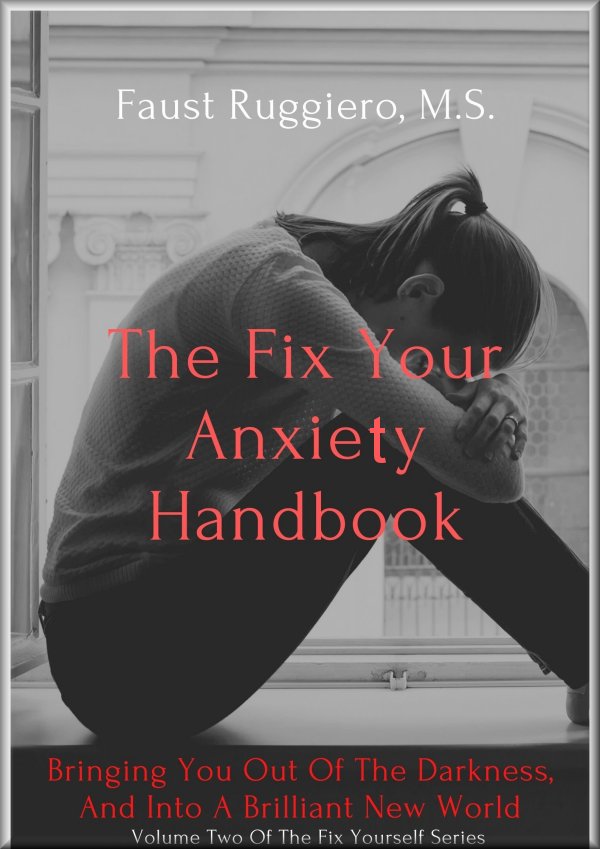

Faust Ruggiero, a renowned therapist, author, and clinical trainer, has garnered numerous accolades for his first book. With extensive experience in various settings, including nursing homes, prisons, and substance abuse centers, Ruggiero offers counseling services to a diverse clientele and serves as the president of the Community Psychological Center in Pennsylvania. He has been featured on numerous television shows, podcasts, and radio programs and has published articles in several research journals. The Fix Your Anxiety Handbook is Ruggiero’s follow-up to his critically acclaimed The Fix Yourself Handbook. This groundbreaking work offers a comprehensive guide for understanding and overcoming anxiety, reshaping perspectives on this pervasive mental health challenge.
Ruggiero’s writing provides step-by-step explanations and guidance for embracing a life free of anxiety, empowering readers to reclaim control and embrace their inner strength. He posits that anxiety is not an inherent aspect of one’s identity but rather a condition that must be addressed on a physical level first. With nineteen distinct processes outlined, the book methodically guides readers through each category and description, offering relatable scenarios that reflect the daily struggles many face.
By breaking the cycle of anxiety and dispelling feelings of inadequacy, readers are equipped with the tools necessary to effect lasting change in their lives. In addition, the book emphasizes the importance of adopting a simple lifestyle, incorporating a balanced diet, exercise, journaling, and self-reflection as the foundation for personal growth. By stepping out of their comfort zone and embracing change, readers can overcome the stagnation and inertia perpetuated by anxiety. The Fix Your Anxiety Handbook is not just for those grappling with anxiety; its insights and strategies are universally applicable. With its well-organized chapters and structured approach, this book serves as a valuable resource for eliminating unhealthy habits and embracing a more positive, fulfilling life.
Having read this book twice already, I am confident that I will continue to revisit its pages for guidance and inspiration. Faust Ruggiero’s transformative insights have profoundly shifted my perception of anxiety, instilling a belief that lasting change is indeed possible for everyone.
The Fix Your Anxiety Handbook demystifies the causes of anxiety and helps readers create an actionable plan in order to manage their anxiety. The step-by-step process is eye-opening and will help those suffering from this condition to understand the cause and work to heal. This self-help book is a valuable resource for everyone, whether they suffer from anxiety, have loved ones that do, or just want a better understanding of themselves and how to improve their mental health.
Pages: 210
Highly Coachable Leaders

Coachability offers readers invaluable strategies for becoming highly coachable leaders and outpacing the competition. Why was this an important book for you to write?
In my corporate role developing leaders, I was curious why talented and hardworking leaders fell off the career track. My investigation of over 100 derailed leaders found a lack of coachability to be a root cause. My research continued for the past five years as an Executive Fellow teaching leadership at the University of Minnesota and in my coaching and consulting practice. I uncovered a strong case for coachability as well as the forces which cause a drift away from being coachable. There isn’t much out there to help leaders understand the importance of coachability and the practical ways to maintain it. So the book is my contribution to help leaders is this overlooked yet critical aspect of leadership
What advice would you offer to individuals who may feel resistant to coaching or receiving feedback, and how can they become more open to the process?
Welcome to the club! Avoiding or resisting “feedback” is a natural defensive. Yet, recognizing the importance of staying curious and open, what do we do? I found highly coachable leaders operate in their “learning zone” with enough confidence to hear what others have to say and also enough humility to recognize they are ‘works in progress’ and not finished products. That mindset helps and also adopting a set of strategies. One example from the book is how professional actors learn to ‘take a note’ in rehearsal. It’s a reframing and practice that builds a strong ‘coachability’ muscle for great performance.
What impact do you hope your book will have on readers in terms of their leadership development?
My wish is for readers to be inspired to reclaim the coachability we had early in life and career; to try out one or two of the strategies of highly coachable leaders; and to tell others they should be more coachable.
OK, just kidding on the ‘tell others’ part. Perhaps by being more coachable in our daily walk as leader, our role modeling can inspire others.
Could you discuss a specific example from your personal or professional life where your coachability helped you to achieve success?
Here’s one from the book: Years ago as a rookie plant supervisor, I had the simple task of handing out paychecks every two weeks. (This was pre-direct deposit days.) On that first payday, I decided to spice up the ritual of going from workstation to workstation passing out pay envelopes. As I met each employee, I would say such things as:
“Hey, Rick, here’s your paycheck. Did you work hard for it this week?”
“Jane, big money in this envelope for you. Try not to spend it all at once.”
I thought I would win the award as the funniest supervisor around. Instead, when I finished my rounds, I found Jim—my senior technical lead—at my little supervisor’s desk.
“Sit down,” Jim began with a half-smile.
“You know, the buzz is that you’ll do OK as the new boss.” Jim said, “But I’ve got to tell you right now, when you pass out paychecks, shut up.”
I was shocked and embarrassed, as I thought everyone would appreciate my paycheck comedy. Jim’s sit-down with me exposed a blind spot that would have annoyed my employees every two weeks. Jim became my first truth-teller and trusted advisor. I checked in with Jim regularly to hear how I was doing. And if I forgot to ask, I would find Jim at my desk, letting me know when I needed to get back on track with the team.
Thanks to Jim, I’ve always sought a trusted advisor in every job, especially in new organizations and tough roles. They’ve kept me out of trouble, learning and staying coachable.
Author Links: Amazon | Website
From this insightful and practical guide, you’ll learn:Five common faulty assumptions that cloud our thinking as we lead and what to do about them.
Compelling research and stories of highly coachable leaders’ habits—from the newly-minted manager to the seasoned senior executive.
A pragmatic framework of coachability.
Four essential practices to strengthen your coachability habit.
Seven strategies highly coachable leaders use to skillfully solicit feedback and improvement.
Professional actors can teach us as a better approach to overcome natural resistance to feedback and coaching.
How five factors stall our good intentions to improve and how “parking downhill” is one of seven enablers to move the odds back into your favor.
Prisons Hold Many People

“Lifeline to a Soul” is an inspiring autobiography of an entrepreneur turned teacher, offering valuable lessons on resilience and determination through a unique perspective on life and success. Why was this an important book for you to write?
This book is about a real life event, my teaching experience inside a minimum-security prison. I spent over twenty years building a business and had a strong desire to teach what I had learned to others. In seven years of applying for a variety of jobs, my only offer was to teach in a prison camp. Although teaching in a prison was never my plan, since it was my only opportunity to teach, I accepted the job and am very thankful that I did.
I took the job to teach and never had any intentions of writing about the experience, but I realized that I had spent time in a place that was very unfamiliar to almost everyone, and by sharing my experience, I could take the reader through the gate with me and let them see what life inside a prison is like and also share the change in perspective I experienced towards the incarcerated and the entire correctional system.
What I learned from the experience is that prisons hold many people who could never function normally in society but they also hold many people with tremendous potential who have made only one mistake. It’s usually a really bad mistake, but many people serving prison terms have learned from their transgressions and are ready and able to move forward in life and leave the prison experience behind them. Unfortunately, when you treat everyone the same, as prisons are designed to do, you deny much needed resources to people who require them to change their lives and break free of the prison recidivism cycle. I want to share this perspective with readers in hopes that they will look at people with felonies as people who deserve a second chance.
What advice would you give to individuals who are struggling to overcome setbacks and adversity in their own lives?
Looking back on what I’ve learned in business and as a teacher, the one common denominator between those who overcome setbacks and adversity and the ones who don’t is determination. First, you’ve got to decide what it is you want to accomplish in this world and then you have to go after it with everything you’ve got. Nothing worth having comes easy and the people who refuse to quit until they get what they want are the people who succeed.
What do you hope readers will take away from your book, and what impact do you hope it will have on their understanding of life and success?
I have a relative who works as a prison guard in a maximum-security prison, and he has shared with me the times he or a coworker was attacked by an inmate, it’s a tough job. The prison system has to dehumanize its denizens in order to work properly. This makes it easy for people outside the system to adopt the same philosophy and consider every ex-offender as someone who can’t be trusted. I want the reader to realize, as I did, that people should be given second chances, despite their mistakes.
I hope that everyone who reads the book is entertained by the story, but also comes to realize that our criminal justice system discriminates against people of color, people with low income levels, and the uneducated. We are making a huge mistake by not providing the tools these people need to be successful when they are released back into society.
What is the next book that you are working on and when will it be available?
Great question and I seem to be getting it a lot lately. Lifeline to a Soul is a book I never planned to write and is likely to be my first and only book. I currently have the good fortune of working with Tavares James, the founder of Lifeline Education Connection. Together, we have a program in place that will help those that have faced obstacles in their lives move forward. We focus on teaching financial literacy and the principles of entrepreneurship and are ready to bring our classes anywhere we can help people make positive changes to their lives. I plan on staying busy with this program, but maybe the writing bug will bite me again, time will tell.
Author Links: GoodReads | Website | LinkedIn
After devoting half of his lifetime transforming his start-up business into a multi-million dollar industry leader, author John McLaughlin set out in a new direction: to teach what he had learned to others.
Due to a lack of teaching experience, his only job offer was to teach entrepreneurship to prisoners at a minimum-security camp in North Carolina. John gradually builds an effective program until a scandal involving prison officials blindsides his progress and threatens to bring his teaching career to an unceremonious end.
Lifeline to a Soul takes the reader inside the fence and chronicles the victories and challenges one man faced as a first-time teacher in the strange world of prison life.



 LITERARY TITAN