Blog Archives
Literary Titan Book Awards October 2023
Honoring the talent of brilliant authors who captivated us with unique writing styles, vivid worlds, and compelling characters. Delve into a universe of original ideas, celebrating books that not only mesmerize us but also stand out with their innovative concepts and extraordinary narratives. Join us in applauding the dedication and hard work of these exemplary authors as we spotlight and praise the magnificent realms they’ve brought to life through their award-winning books.
Award Recipients


66 MINUTES by Jeffrey Arnold
Visit the Literary Titan Book Awards page to see award information.
Unseen Instinct: Resilience and the Search for a Why after Murder-Suicide
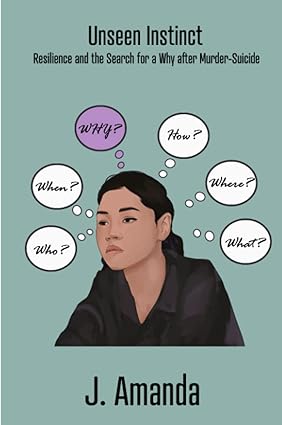

In J. Amanda’s deeply moving work, Unseen Instinct: Resilience and the Search for a Why after Murder-Suicide, readers are taken on a whirlwind of emotions, each page resonating with genuine sentiments and vulnerability. Chronicling her personal experiences with tragedy and adversity, Amanda deftly illustrates that resilience, often imperceptible, is an innate trait within us all, waiting to be unearthed irrespective of our life situations.
Delving deep into the harrowing loss of her mother to murder-suicide, Amanda sheds light on her grief journey and the incremental steps towards healing. She introduces a methodical approach, employing the “5 Ws and the How”, a tool she found pivotal in organizing her thoughts and processing her grief. A distinctive feature of her narrative is the direct conversation with her readers, establishing a powerful, emotive connection that grows with every chapter.
Melding her personal story with practical advice, Amanda not only maps out her healing journey but also extends a guiding hand for those navigating the tumultuous seas of loss. Her insights as a medical professional add depth and nuance, offering both emotional and technical perspectives to the recovery process.
Unseen Instinct stands as more than just a memoir. It feels like a heart-to-heart with a wise, empathetic elder sibling, understanding and validating every ounce of your pain. This book would be helpful reading not just for those grappling with grief but for anyone seeking clarity and purpose in their existence.
Pages: 73 | ISBN : 1943616493

To Choose

Stories of Life: The Nature, Formation, and Consequences of Character is more than just a memoir; it is a journey and a call to readers to examine their lives and souls and to gain a better understanding of themselves. Why was this an important book for you to write?
I’ve always been made of stories, and as I look back I recognize that a lot of these are both good and quite unique. I’ve always taught—as a minister and as just a friend—that “the meaning of life” can be found in having the best answers to two questions:
A. Who, at my very best, am I? (Because that’s who I damned well better be becoming!)
B. How should I live, so that when I look back I can be glad I lived that way?
I think a lot of these stories can help readers address these questions in their own lives. So in that way, this book is a continuation of my 23-year career as a minister.
I appreciated the candid nature with which you told your story. What was the hardest thing for you to write about?
Well, not much was hard to write about. The long-suppressed memory of the effects of our unit misfiring artillery rounds on a tiny hamlet was the most painful when I finally remembered it in a dream/nightmare 40 years later. God, the sight of that mother and her two injured children singing and dancing in front of their thatched-roof house our artillery round had hit! Still hurts. But I don’t mind revealing stories that show my faults, my weaknesses. They’re part of life, as are our strengths, and it can help other people face their own mistakes.
What were some ideas that were important for you to share in this book?
Hmmm. The whole subject of “heresy”—understanding that it just comes from the Greek verb meaning “to choose”. Not bad, not choosing wrongly, but choosing differently from our herd. Yet almost all progress in history has come from our heretics, without whom we’d still believe what the Neanderthals did.
What is one thing you hope readers take away from your story?
The centrality of moral/heretical courage in almost everything important and essential about us. Life is short but sacred. And sacred things deserve the very best that we have and are. So do we.
Author Links: GoodReads | Twitter
Character refers to our basic style of being and behaving. We’re born with much of it, while early experiences, influences, and mentors help shape the rest.
Focusing on the nature, formation, and consequences of character, Davidson Loehr presents a witty, poignant, and brilliant book that has been described as “mesmerizing,” “captivating,” and “life-changing.” The book was designed to help the reader look closely at deep styles in his or her own character and question them. In frequent YOUR TURN sections, the many colorful stories of Davidson’s unusual life are used as windows on the reader’s own life and soul, providing a chance to know oneself and one’s character more intimately, and inviting the reader to find the influences, mentors, negative experiences and people, etc. who helped or hindered the formation of their own character.
The heart of any real religion-and of this book-is to answer our two most fundamental existential questions: Who, at my best, am I? and, How should I live so that when I look back I can be glad I lived that way?
Life Is A Journey
The Unfurling Frond tells your story of self-discovery and shares with readers your experiences with traveling, romance, and finding adventure. Why was this an important book for you to write?
This book all started in a graduate course when a classmate innocently asked, “What treaty, and why is it important?” When I went to respond, I choked up. I didn’t realize until that moment how deeply Aotearoa, New Zealand meant to me. How that big leap to move to the South Pacific changed my life. Also, in that moment, the grief of not understanding so much about the land, the people, the history, and the future of Aotearoa, New Zealand, when I lived there, sent a shock through my body.
That moment when I was asked, “Why is it important?” made me realize I needed to write about my experience, the whole lovely and messy journey of finding myself, learning about settler-colonialism, embracing feminism, and moving into a space of belonging.
What were some ideas that were important for you to share in this book?
At the end of the chapter titled “Awake,” I state: “I travel between my two selves, two moments in time, my histories, two nations’ histories – never knowing where I really belong” (127). I think that quote includes many of the ideas I share within this book. For example, the ways I move through the many versions of myself throughout time. My transnational life and marriage mean that I am always trying to find my place. The way I experience history and want to learn more in these spaces and be part of decolonization.
I recently listened to a podcast ĀIO: a road to peace, where Amelia Butler used the term “reindigenisation” instead of decolonization. And I just loved that so much. I think we all need to join in on this journey. I can recognize my role and place as settler and support and advocate for reindigenisation.
I appreciated the candid nature with which you told your story. What was the hardest thing for you to write about?
The spiritual side of this book wasn’t necessarily the hardest thing to write, but is the hardest thing for me to share. It is a part of myself I rarely share with others, even friends, and so the thought of opening myself up to reveal that with my readers is scary. However, I felt it was so important to my story and key to me embracing who I am.
The chapter that is written as a “Memorandum” was an emotionally charged essay to write, and I tried it in many different shapes and forms. After countless drafts, I realized I needed to use the hermit crab methodology to share that tender, vulnerable space inside me. Then it just flowed, and it was perfect – one draft and done. Sometimes, we need to open ourselves up to the transformation of writing, and the hermit crab essay helps in that space. (The Hermit Crab essay is a term developed by Brenda Miller and Suzanne Paola in their book Tell it Slant.)
What is one thing you hope readers take away from your story?
That life is a journey, and no matter where it starts, you don’t have to be defined by that place. We don’t always understand the “why,” but if we open ourselves up to the journey, it will take us on a wild ride. We can always learn, grow, and evolve. And that sometimes it is important to just say yes/go and see where the universe takes you.
Author links: GoodReads | Instagram | Facebook | Website
Rebecca Beardsall’s transnational narrative between the United States and Aotearoa, New Zealand, The Unfurling Frond, investigates land and place as physical space, home, and moments in time. The collection wrestles with the concept of personal transformation through time with the added complexity of settler colonization.
As she travels between her two selves/two moments in time, her histories/two nations’ histories, Beardsall senses and feels where her physical body aligns with the spiritual, telling her that she is home, that she belongs.
Where We Come From

All That This House Has to Offer is a collection of stories showcasing the heritage of Russian Mennonite immigrants and the struggles they faced moving to a new land while trying to hold onto their traditions. Why was this an important book for you to write?
Some of these stories started out as simple anecdotes, like the one about Jacob and Katie and how they met, quite coincidentally, at the village fountain after the war. The same with the visits back to Austria. Stories that were just fun to recount. And then I found myself fleshing these stories out and as they evolved, it occurred to me that it might be special for my siblings and the next generation to read these and to have them as keepsakes.
There was a sense of urgency to complete the “Jacob and Katie” story, in particular, after the death of my mother in 2016 passed and then the 2022 Russian invasion of Ukraine. When Russia invaded Ukraine in February 2022, the situation was a replay of what my parents had told us over and over again as we were growing up. Fleeing their village, clambering onto trains to get out, people losing sight of one another, losing loved ones completely, and stories of finding one another again. The core of this story was always going to be Jacob and Katie running into each other after the war, but it needed some context.
The quote by Thomas King – “The truth about stories is that that’s all we are” – seemed particularly poignant. I wanted to tell our stories.
What were some ideas that were important for you to share in this book?
The importance of sharing stories, the sense of family and history, where we come from, the importance of remembering and honoring that. The struggle and tension between old and new; how to navigate this and still maintain a sense of family and community and respect for one another’s decisions. The importance of faith and tradition. In the end, family is all you’ve got.
What was one of the hardest parts in All That This House Has to Offer for you to write?
Good question! The hardest part was not writing the stories themselves, but releasing the stories out into the world. Having family members, immediate and not so immediate, reading my personal stories and struggles, revealing things about family that perhaps they would have preferred not to be revealed. And yet, that is what life is. It is not all rosy, all good or all bad. People are complicated and complex, and never more so than the people we love. Nothing is all one or the other.
What were some goals you set for yourself as a writer in this book?
One of my goals as a writer in this book was to portray intergenerational storytelling and the importance thereof. I decided to write some of the stories, specifically, “Jacob and Katie” as told to me by my mother and then in “Happy Birthday”, me telling the story to my own daughter. It seemed a good way to connect with readers as well, both young and old. Writing and seeing events unfold through the eyes of my younger self and then again as an adult was an interesting experience, to find myself right in that moment.
As the stories came together and when it came to choosing the order of the stories, I saw these not only as heritage stories, but really, the circle of life. And the women emerged strong and resilient in all generations! One generation flowing into the other, quite organically.
One thing I set out to do was to make the house a constant in the stories; the house and all that it offers and represents – home and hearth – family, safety, security, culture and tradition; a foundation. I wanted to give it voice.
Author Links: GoodReads | Website
Through vignettes of farm life and travel, the generations of women in the family share their stories, highlighting the struggles between old and new perspectives and spiritual and secular values. Two captivating stories, “Safe Haven” and “The Green Jacket,” explore the challenges faced in navigating the complexities of heritage and identity.
At times both heartwarming and heart-wrenching, All That This House Has To Offer pays tribute to the enduring power of home and family. With humour and insight, this book captures the essence of one Mennonite immigrant experience and the resilience of those who build new lives in foreign lands while still cherishing the traditions of their past.
I Have Never Lost Sight of Who I Am
Child of the 1960s: A Day in the Life follows a 12-year-old boy’s transformative journey through San Francisco’s Mission district, unveiling the societal shifts, multi-generational tales, and vibrant culture of a tumultuous era. Why was this an important story for you to tell?
The primary reason I wrote this book was to show my two grandchildren what the world was like before it was almost completely taken over by our developing technocracy. My maternal grandfather, born in the late-1800s, gave me a good idea what the world was like in the horse and buggy era so I felt like I could do no less for this upcoming generation which carries cell phones and other electronic gizmos as appendages. I grew up without all of that. Secondarily, it was a wonderful trip down memory lane and I relived many amazing experiences in the course of writing it and have been able to share this with quite a few people beyond my immediate family. It is hugely enjoyable and well worth the effort.
How much of the memoir is drawn from personal experience versus historical research, especially when touching on significant events like the Kennedy assassination and the influence of the Mission district’s diverse culture?
The majority of the memoir is based on personal experience, augmented by research done online and from San Francisco Examiner newspaper archives. I would say in about a 70% to 30% ratio. I researched the newspaper for the events of the “Hippie Death of Money March” and for the details surrounding the shooting of my uncle who was a San Francisco cop and game details of the contest between the 49ers and the Colts. I also had access to a ship’s log and a sailor’s journal detailing the events of my dad’s service in World War II.
The Mission district of San Francisco becomes almost a character of its own in your memoir. Can you speak to your connection with this neighborhood and how it influenced your portrayal of its essence and history?
At least in the 1960s, people in San Francisco very much identified with the neighborhood they were raised in. Much of that has been lost because of such a turnover in population, but whenever I get together with people from my high school years that strong identification with neighborhood continues to this day, though most of them have moved away from San Francisco. Beyond that, the Mission District was, excluding the Presidio Military Fort, the first neighborhood developed by the Spanish in San Francisco (nee Yerba Buena) in the 1700s, centering around the Mission Dolores Church and compound developed to convert the indigenous population. So, we had history and tradition. You could call it the beating heart of San Francisco. And in my era, before it was overrun with drugs and a changing economy, we took great pride in a Blue-Collar working-class identity and a no bullshit attitude in a multicultural environment. Though I moved on and went to college and had many experiences overseas, I have never lost sight of who I am and where I came from. This has served me well wherever else I have lived or travelled to on this planet.
What is the next book that you are working on, and when will it be available?
That’s a great question. I wish I could answer it. All I can say is this: I went to the second “Burning Man” at Baker’s Beach in San Francisco back in the late-1980s and I worked for a short time with Larry Harvey, the main founder of Burning Man, and was privy to his original thoughts and plans for this now monstrous event. It certainly wasn’t very big at that time. But anyway, I’m thinking of putting something together along those lines in collaboration with another writer. Our plans are still nebulous but stay tuned.
Author Links: GoodReads
It is also features a good look at the local professional sport teams of the day. With looks at the San Francisco Giants, the then San Francisco Warriors and an especially close look at the San Francisco 49ers and their influence and impact on the youth of the community.
The narrative is constructed upon a single momentous day, Sunday, December 18, 1966, and orbits around the young boy (almost 12) and his father going to an extremely rowdy NFL football game between the San Francisco 49ers and the Baltimore Colts at historic Kezar Stadium located on the edge of the Haight-Ashbury and the foot of Golden Gate Park.
(The game ended in a riot as the fans invaded the field and forced the officials to call the game a few seconds before the final gun.)
The boy’s dad is a World War II veteran of the Battle of Leyte Gulf (The largest naval battle in history.) who came of age during the Great Depression in poverty-stricken circumstances and sees the Sixties through this prism while the boy is feeling his way along and trying to come to grips with an ever-accelerating rate of ethnic and economic change in his Mission District micro-world and the great city beyond.
In the course of this one-day journey, the story of his immediate family of seven, a mother who suffers a nervous breakdown while giving birth, a father, two brothers and two sisters of various ages, is told through flashbacks and leaps into the future. The background of his four immigrant grandparents, Italian and French, is also sketched into the picture.
With special emphasis on the grandfather who survived the 1906 Earthquake and Fire that leveled San Francisco.
The narrative is written in an easygoing vernacular style which reflects the racial and ethnic diversity of the neighborhood with a strong Latin American flavor. As noted in the story, it was a “Rainbow Coalition Neighborhood” long before Jesse Jackson came up with the term.
In the postscript, the author recaps his life of travel and adventure and how his Mission District neighborhood influenced him to make some of the choices he selected.
Half-Caste: Decidedly Brown in a Black or White World


In Half-Caste by Jerome Cranston, readers journey alongside the protagonist as he delves into his family’s history and grapples with his identity as a Brown individual with South Asian heritage in a predominantly white society. Through reflections on his parents’ past, discussions on racial terminology, and the complexities of societal recognition, Cranston weaves an introspective narrative that combines family history, memory, and the challenges of self-acceptance.
Half-Caste offers a profound exploration into personal identity and the sociopolitical implications of race. The strength of the book lies in its nuanced handling of the protagonist’s journey through introspection and external interactions. Cranston skillfully navigates complex themes, emphasizing the protagonist’s internal struggles, from confronting discrepancies in his family’s history to navigating challenging social conversations.
While I enjoyed the book, I felt there were moments where the narrative felt somewhat didactic, particularly in discussions surrounding racial terminologies. While these insights were enlightening, I feel that a more subtle integration might have kept the pacing consistent. Nonetheless, the author’s style is engaging, blending personal reflections with broader societal critiques.
The setting, although not explicitly detailed in the summaries, seems to be a contemporary, Western context. This backdrop amplifies the protagonist’s feelings of being ‘othered’, reinforcing the book’s themes of belonging and identity. Characters such as Hardy, Delilah, and the protagonist’s supervisor provide external perspectives, driving the story forward and adding depth to the protagonist’s introspection.
One of the standout aspects is the book’s emphasis on the fluidity of identity. The idea that identity is continually evolving and not bound by societal constructs is a powerful takeaway, and Cranston’s protagonist beautifully exemplifies this sentiment. By the end, readers are left pondering their perceptions, biases, and the inherent complexities of racial identity.
Half-Caste is a compelling read that offers a deep dive into the intricacies of identity and the quest for self-acceptance amidst societal prejudices.
Pages: 122 | ASIN : B0CD85KJ9D
The Zen of Dancing in the Rain: Becoming one with the storm

The Zen of Dancing in the Rain: Becoming One with the Storm by Aurita Maldonado is an incredibly engaging and inspiring personal life story that weaves together the author’s journey of resilience, self-discovery, and pursuing her dreams. As a U.S. Army veteran and a passionate dancer, Maldonado’s narrative is a testament to her unwavering determination. Maldonado’s life has been marked by numerous challenges and heart-wrenching tragedies, including her time in the army and her courageous decision to relocate to Alaska after retiring. Her remarkable story is a testament to the strength of the human spirit and the power of perseverance, serving as an inspiring example for anyone looking to live life to the fullest.
I found this book to be an absolute gem. Maldonado’s passion and authenticity shine through every page, making it an irresistible read that keeps you glued to its narrative. It’s the kind of book that leaves you feeling elated after each chapter, where you hang onto every word as if it were a cherished melody. The Zen of Dancing in the Rain is undoubtedly a riveting page-turner, a testament to Aurita Maldonado’s compelling storytelling. As you delve into this inspirational memoir, you’ll find yourself reevaluating your own choices and questioning whether settling for the status quo truly serves your deepest desires. Maldonado’s story is a captivating portrait of a Lady Hurricane, both in her literal and metaphorical dance with life’s tempests.
The Zen of Dancing in the Rain is a captivating and inspirational memoir that transcends genres. It’s a must-read for anyone seeking motivation and a glimpse into the transformative power of resilience and determination. Aurita Maldonado’s story is a testament to the human spirit, and I eagerly anticipate more from this talented author.
Pages: 264 | ASIN : B09YM8C4P3



 LITERARY TITAN