Blog Archives
The Cultural Threat
Dollartorium follows a struggling corndog shop owner who chases a too-good-to-be-true business scheme, only for the fallout to expose the hollow promises of hustle culture. Did this novel begin as satire, social commentary, or character study?
The Dollartorium began as a play, inspired by Aristophanes’ Clouds, but instead of satirizing philosophers (not much a target these days), I thought better to take on that new class of hustlers and the culture they have created. Like most satire, it became social commentary and, sadly, even more relevant now than when I began.
The Dollartorium scheme feels disturbingly familiar. How closely did you model it on real-world programs? Were you more interested in exposing the scam itself or the conditions that make people vulnerable to it?
Ha! It is disturbingly familiar to me as well. The Dollartorium is a critique of the many ways our culture, especially business culture, creates a numbness in ourselves and in our relationships with others. The Dollartorium is more about the cultural threat, the scam itself, but of course, the scam would hardly be a threat if we, like Ralph, weren’t vulnerable to it. Fortunately, Ralph and Phyllis recover with the help of a more reality-grounded Stella.
The novel is funny, but there’s an undercurrent of anger beneath the jokes. How do you balance humor with critique?
Without humor, I’d go mad. The heart of the book is in the lectures at the Dollartorium. I use each lecture to ridicule one thing. If the book revealed the totality of living under the culture of uncontrolled capitalism, it would be humorless and unbearable. These little things, from sex in advertising to dilution of food, are pieces we all experience, and up close they are both funny and disconcerting. To see their absurdities enables us to distance ourselves from them a bit. But to be so used, so often, makes me angry.
The book closes on a realistic, not idyllic, note. Why was that the right ending?
I would be gratified if the ending were realistic, that we simply open our eyes and live and work doing what we can as best we can, bearing in mind the needs of others. After a brutal journey for Ralph and his daughter, I hope the ending shows that things do not have to be the way they have become, and that the journey to a saner world is a personal, as well as social, responsibility. Even Phyllis finds pleasure in honest work. Still, the Money Master endures, intent on his own selfish worldview, doesn’t he?
Author Links: GoodReads | X (Twitter) | Facebook | Website | Amazon
Fairness and Equality
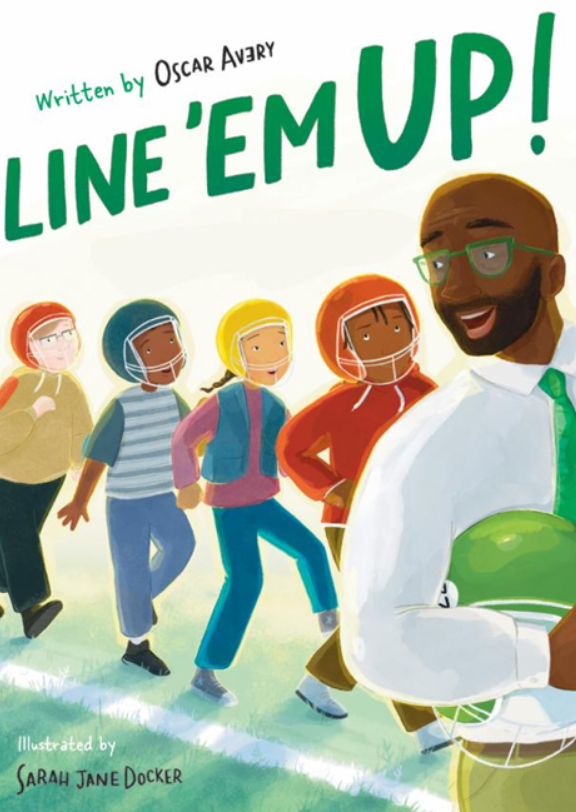
Line ‘Em Up! follows a group of students whose world is changed by a new teacher who shows them how to find the greatness inside themselves. What was the inspiration for the setup of your story?
I was incredibly fortunate to have one of my early stories critiqued by the late James Alan McPherson. He once told me that the most powerful stories are often about ordinary people placed in extraordinary situations. That idea stayed with me, but as a special education teacher, I found myself drawn to the reverse: extraordinary individuals navigating what the world considers ordinary.
My students—many of whom have disabilities—work every day to master skills that others take for granted. Something as simple as forming a straight line can be an enormous triumph. That contrast fascinated me. I wanted to explore the dignity, determination, and quiet heroism embedded in those moments.
So I paired these extraordinary children with a teacher who is extraordinary in a very different way—a former professional football player who once seemed invincible, now facing the realities of chronic traumatic encephalopathy. Placing these two worlds side by side allowed me to explore resilience, vulnerability, and the ways people lift one another up.
Ultimately, I hoped to create a story that resonates because we all know someone who appears larger than life, and we all know someone who faces daily challenges due to disability or illness. Line ’Em Up! brings those experiences together in a way that I hope feels both heartfelt and universal.
Is there anything from your own childhood included in the characters in Line ‘Em Up?
Growing up in Massachusetts in the 1970s, I saw how students in special education were often separated from the rest of the school. I didn’t understand it then, but as I grew older and became a special education teacher, I learned that those classrooms held a wide range of students. Some were there because of genuine cognitive disabilities, while others were placed there due to emotional trauma, unstable home lives, or circumstances far beyond their control.
That understanding shaped the way I think about fairness and equality—two ideas I consider very different. Equality means everyone gets the same thing; fairness means everyone gets what they need. That distinction has guided my teaching and deeply influenced Line ’Em Up!
While none of the characters are based on specific individuals, the emotional truth of the story comes from witnessing how children grow when they’re understood, supported, and included.
The artwork in your book is wonderful. Can you share with us a little about your collaboration with illustrator Sarah Jane Docker?
One of the main reasons I reached out to Sarah Jane Docker is simply because she’s an exceptionally talented illustrator. When I looked through her portfolio, I immediately felt she was the right fit for this story. Her characters didn’t look like the typical, polished industry illustrations you see everywhere—there was warmth, honesty, and a lived‑in quality to her work that felt real.
Representation was also incredibly important to me. According to a 2019 study by the Cooperative Children’s Book Center, only about 3.4% of children’s books feature a main character with a disability. When I saw that Sarah naturally included Black, white, Asian, and disabled characters in her illustrations—not as statements, but as part of the world she creates—I knew she understood the heart of this book. That says a lot about an illustrator.
I also want to highlight the tremendous contribution of our layout artist, Anna Lubecka (and her husband Greg), founder of Banana Bear Books. The collaboration between Sarah and Anna elevated the entire visual experience. Without their combined talents—the illustrations and the thoughtful layout—the artwork wouldn’t resonate with readers in the memorable way it does now.
What were some ideas that were important for you to share in this book?
Several ideas were especially important for me to explore in Line ’Em Up! One is the distinction between fairness and equality—a theme that runs through both my teaching and my writing. Equality means everyone gets the same thing; fairness means everyone gets what they need. That difference matters deeply in classrooms and in life.
I also wanted to play with the contrast between the extraordinary and the ordinary—how children who are often overlooked can show remarkable strength in everyday moments, and how something as simple as forming a straight line can become a powerful act of growth and pride.
And finally, the idea of “Champions” versus “Champeons” is woven into the heart of the story. Readers will understand the meaning once they experience the book, but it speaks to the difference between looking like a champion and truly becoming one.
These themes guided me as I wrote, and I hope they resonate with readers of all ages.
Author Links: Instagram | Email
Physiologic Disruptions

In The Shift Worker’s Paradox, you present an unsettling picture of the grim reality of shift work and its biological impact on the human body. Why was this an important book for you to write?
A friend of mine used to say that self-help books are often written for the author. I suppose the ultimate motivator for this book is my own narrowing mortality. Watching a decade of night shift slowly peel away the resilience and strength I had built over the years has a way of sharpening perspective.
I also saw this as a personal responsibility. I devour podcasts and have listened to countless discussions on sleep, health, and wellness, always waiting for someone to meaningfully address shift workers. Many made a passing nod to the risks, but I wanted a deeper dive, one that helped address what I felt was a clear gap in the conversation.
The truth is, this topic has been on my mind for a long time. As a perpetual biohacker, I’ve spent more than twenty years trying to find ways to improve my own health and well-being. The subject also has broader relevance. We are now a 24/7 society, with a large swath of the workforce engaged in shift work. Add the physiologic disruptions outlined in this book to an already unhealthy American population, and you have a recipe for long-term, often informing sequelae.
I recognize that this is not a “sexy” book. Because it addresses a niche topic, I never expected it to be a bestseller. What I did hope was that someone, somewhere, would find value in it. I believe it is the most comprehensive book on shift work ever written, and I am proud of that.
Can you share with us a little about the research process that went into putting this book together?
I write several hundred thousand words a year as a freelance writer across a wide range of medical topics. During that time, I routinely encounter information that informs the pieces I am working on and often proves relevant to this book, so I make careful notes along the way. The eighteen months spent writing the book were largely devoted to organizing that framework and properly referencing the accumulated material.
I tend to approach writing from the perspective of a project manager: planning, executing, and monitoring progress. The actual writing, however, is less about production and more about building a narrative—telling a coherent story by fitting the right pieces of the puzzle together.
As an avid reader, I know that an over-referenced book can be difficult to read, and as a fiction writer prior to this project, references were not part of my usual process. Moving back and forth between fiction and nonfiction, I found that transition particularly challenging.
Your book takes a deeply emotional turn with personal stories. Why did you choose to blend science and moving narratives?
As I mentioned, prior to this book, my only published works were literary fiction. My academic and freelance writing does not require an emotional component. As I continue to grow as a nonfiction writer, I want my work to be narrative nonfiction—using dialogue and scene setting to drive the story. That is what I appreciate as a reader, and I hope others do as well. This is an important topic with significant consequences, and in the opening pages, I allude to why this information matters. In some cases, it can be a matter of life and death.
What is one thing you hope readers take from The Shift Worker’s Paradox?
That all is not lost. In truth, many people who are not shift workers can also benefit from this book and understand that burnout, fatigue, and health decline in shift work—and in general wellness—are not personal failures; they are predictable physiological outcomes of working against human biology. Even if you are not a shift worker, give yourself some grace as you approach your health challenges.
I hope readers understand that exhaustion is a systems problem, not a character flaw, and that they use the language and evidence provided to stop blaming themselves. If the book does one thing, I hope it replaces guilt with clarity and empowers readers to make informed, realistic decisions about their health, careers, and lives.
Author Links: GoodReads | Facebook | Instagram | BlueSky | Amazon
Medics, factory workers, and police officers-shift workers-are going against what their bodies are designed to do. The Shift Worker’s Paradox is a must-read for anyone living this reality, and a powerful refresher for those who have lived it before.
There comes a point where biology and exhaustion collide, where functioning and the body’s natural rhythms are at odds, and survival depends on understanding what constant disruption does to the human system and how shift workers can push back.
This book is the ultimate survival manual for those who don’t get the sleep they need. We were not born to live in a state of perpetual rush, yet millions do. Through science and real-life stories, The Shift Worker’s Paradox exposes how shift work disrupts internal clocks, metabolism, and aging, and pulls back the curtain on how small, rhythmic changes can begin to repair the damage.
From light therapy and tailored nutrition to adaptogens, precision supplementation, and pharmacological nudges, it offers research-backed, deeply human strategies for those desperate for sleep at 3 a.m. and racing to feel rested by noon.
Empathetic and unflinching,
The Shift Worker’s Paradox reminds us that biology is not up for debate, and that resilience is not a product of willpower, but of rhythm.
Taking Control of Your Health

When East Meets West offers readers a self-care toolkit derived from both Eastern and Western practices. Can you share with us a little about the research required to put this book together?
I have spent many years learning about complementary care, alternative medicine, and integrative healthcare. I completed a course on Complementary Therapies in my graduate program and a class on Hypnosis in my doctoral program. In preparing to write this current edition of the book, I spent months reviewing the literature on every topic in this book. Although many of the topics do not have strong research evidence, there are many anecdotal articles about the potential benefits and harms of the various self-care practices. This book serves as an introduction to the various practices and readers are strongly advised to consult with their healthcare providers and do their own research before incorporating these practices into their health and wellness plan.
What is one misconception you believe many people have regarding self-care?
One misconception regarding self-care is that it can replace modern medicine which can result in harm to self or others. I think it’s important to integrate self-care practices into your daily health and wellness regimen. For example, if you have hypertension (high blood pressure) it is vitally important to treat it with antihypertensives that are prescribed by your healthcare provider. However, it is also important to eat healthy, exercise, and reduce stress. The use of meditation, essential oils, and journaling can help to decrease stress levels. This is an example of how to integrate self-care practice.
What is one thing you hope readers take away from When East Meets West?
I hope readers will understand the importance of taking a holistic approach to their health and well-being and that reading this book will serve as a starting point in this journey. Taking control of one’s health and knowing you have the power to do so is so important. You may not be able to prevent certain illnesses but you can manage them betterwith a holistic/integrative approach.
Author Links: GoodReads | X | Facebook | Website
Discover the empowering world of complementary and alternative medicine in this approachable, informative guide to enhancing your health and well-being. Drawing on personal experience as a critical care nurse and lifelong learner, the author blends scientific understanding with holistic wisdom to offer a balanced, practical path toward integrative care.
Inside, you’ll explore the benefits, uses, and precautions of:
Essential oils and custom blends for mood, relaxation, and vitality
Herbal teas and tinctures that nourish the body and soothe the mind
Superfoods that can help optimize wellness from the inside out
Mind-body practices like meditation, journaling, therapeutic touch, and self-hypnosis
Energy work techniques to help restore balance and harmony
Whether you’re looking to complement traditional (Western) medical treatments or explore Eastern-inspired wellness methods, this book provides both the knowledge and inspiration to create your own personalized self-care plan. You’ll also find real-life stories-ranging from easing anxiety with meditation to surprising experiences with therapeutic touch-that illustrate just how transformative these practices can be.
This book is not a replacement for medical care-it’s an empowering companion for those who want to take a more active role in their health. With a “best of both worlds” approach, you’ll learn how to blend the precision of modern medicine with the timeless wisdom of holistic practices-helping you not just manage illness, but truly thrive.
It Feels Personal

The Stanton Falls Mysteries: Promotion to Peril follows the newly appointed Police Chief and his team as they navigate the murky waters of corruption and injustice. Why did you choose to tell this book as three interconnected short stories rather than a single continuous mystery?
I chose three short stories because the trouble in Stanton Falls doesn’t show up all at once. It comes in pieces. Each story lets the new Police Chief face a different problem, and together they show how the corruption connects underneath it all. Breaking it up kept the pace tight and let me focus on one challenge at a time while still building the bigger mystery.
What drew you to exploring betrayal from inside the system?
Betrayal inside the police force hits harder than anything coming from outside. When the people who are supposed to protect and serve the town become part of the problem, it changes everything. It forces the Chief to question who he can trust and how deep the damage goes. That kind of betrayal affects the whole community, and that’s why I wanted to explore it.
What aspects of small-town life make it effective for exploring secrets and corruption?
Small towns are perfect for stories about secrets because everyone knows everyone, or thinks they do. People have long memories, old grudges, and close ties that make problems harder to spot and harder to fix. When something goes wrong in a place that close‑knit, it feels personal. Secrets spread quietly, loyalties get messy, and corruption can hide in plain sight.
Can you tell us more about what’s in store for Stanton Falls and the direction of the third book?
The third book, Undercurrents of Betrayal, came out last year. I held off on releasing Promotion to Peril for a while because the cover wasn’t finished, but once that was taken care of, the book was ready. This story takes Stanton Falls in a new direction with a fresh storyline. I didn’t want to repeat the same conflict fromPromotion to Peril. I wanted to show how the town moves forward and how new problems can rise up even after old ones are settled. There are new characters, new challenges, and a different kind of trouble working its way into the town. It opens the door to the next phase of Stanton Falls and shows that the town still has plenty of secrets left to uncover.
Author Links: GoodReads | Facebook | Website | Amazon
In the quiet town of Stanton Falls, danger lurks beneath the surface. Chief Dan Ross and his dedicated team are back, determined to bring justice to those who have wronged the innocent.
When Chief Ross’s home is ravaged by a mysterious fire, the stakes are raised. As the team delves deeper into the investigation, they uncover a web of deceit and corruption that threatens to engulf the entire town. With unwavering support from each other, they must navigate a perilous path to uncover the truth.
As secrets are revealed and alliances are tested, Chief Ross and his team face their most challenging case yet. Will they be able to bring the culprits to justice, or will the darkness of Stanton Falls consume them?
“Promotion to Peril” is a gripping tale of suspense, loyalty, and the relentless pursuit of justice. Join Chief Dan Ross and his team as they battle against time and treachery in this thrilling continuation of the Stanton Falls Mysteries.
Telling The Prince’s Tale

Asterios and the Labyrinth follows a grieving prince of Knossos as he battles political treachery, invading powers, and ancient prophecy, risking his crown and life to fight for the man he loves and the legacy he must protect. What inspired you to tell this story?
The myth of the Minotaur and King Minos’s Labyrinth has enchanted me since I was six years old. Decades later, while standing before the Prince of the Lilies fresco in the Heraklion Archaeological Museum, the idea of telling the prince’s tale came to me with surprising force. It lingered and followed me through repeated visits to Knossos, where I could see, touch, taste, and breathe his world.
At the same time, I am on a revisionist quest to restore Classic literature with LGBTQ+ characters whose lives were erased or silenced across the last two millenia. In this novel, I envisioned Asterios and Phaistos as a ruling couple in the Late Bronze Age, a union that the archaeological record documents as plausible. Yet I longed to craft a pair whose love could rival or exceed our most treasured romantic archetypes: Helen and Paris, Penelope and Odysseus, Cleopatra and Marcus Anthonius, Juliet and Romeo. By appealing—and bending—The Judgment of Paris, I believe I have done so.
And so I pose the question to the reader: given the chance in today’s world, upon whom would you bestow the Golden Apple?
How did you balance mythic inevitability (prophecy, gods, fate) with the characters’ emotional agency?
The ancient Greeks understood that fate determines what happens, but character determines how we face it. I never allow prophecy to rob my characters of their emotional reality. Asterios cannot escape his destiny, but he can choose how he loves Phaistos, how he rules Knossos, how he confronts his enemies. These choices—made under constraint but made freely—reveal character and generate genuine dramatic tension.
The key is dual consciousness: my characters know (or suspect) how their stories must end, yet they act as if their choices matter—because emotionally and morally, they do matter. But I also resist having gods manipulate events like puppet masters. Divine will operates through human actions and the characters’ own psychology. When gods do intervene, they work within the emotional logic of the narrative.
Ultimately, we’re most human not when we escape fate, but when we face it with courage. That’s the balance I seek: characters who are fated but never passive, shaped by forces larger than themselves yet retaining the dignity of choosing how they’ll meet what’s coming.
Phaistos is both a warrior and a source of tenderness. How did you shape his role alongside Asterios’s authority?
To begin with, Phaistos is a prince in his own right, the Prince of Archanes, a house aligned with the House of Minos, and even before Asterios ascends to the throne, the post of Chief Commander of the Kingdom’s Warriors was already his. Though Phaistos is five years older than Asterios, they have grown up together. However, before they expressed their romantic feelings for each other, Asterios thought that Phaistos was enamored of Ariadne, his sister, which was not true.
In the novel, Phaistos is also recognized as the King’s Consort. But their status as a royal couple does not excuse either one of fulfilling his dynastic obligation; thus they both marry the Egyptian princesses, Meritamen assuming the title of Queen Consort, Princess of Archanes for Iset.
In their public life, Phaistos defers to Asterios’s authority as King in public, yet in private they defer to each other as equals and enjoy their time as two souls devoted to one another. Before all things, even if it they must face grave peril, they act to protect the ones they love and to keep the folk safe from foreign invaders and tyrants.
What is the next book that you are working on, and when will it be available?
Atalanta of the Wild is slated for publication in April of 2026. It follows the huntress’s complete arc, from the Calydonian boar hunt through the footraces and her wretched marriage and transformation, supplying the psychological depth and dramatic scope that Ovid’s compressed epic narrative could not provide.
I also reimagined the ending to honor both the myth’s power and contemporary readers’ expectations for female agency. Think of it as Ovid’s structure meeting the emotional intensity of Greek tragedy and the intimate character work of literary historical fiction. My hope is that readers will see themselves in Atalanta’s struggle between autonomy and constraint—a tension that remains painfully relevant to this day.
Author Links: GoodReads | X | Website
A KINGDOM ON THE BRINK.
A LOVE UNYIELDING ‘GAINST STRIFE.
UPON KING MINOS’S DEATH, HIS SON, ASTERIOS, MUST ASCEND THE THRONE of the Kingdom of the Labrys, willing or nilling. Elsewise Krete shall sink into chaos under the rebel lords’ sway. The lives of his kin would be forfeit or cast into thralldom. His fellow, Prince Phaistos of Archanes, he that keeps his heart and leads his great host, would be lost to him without hope. ‘Twould be the end of the House of the Divine Bull and Europa.
The sorcery of his mother, elder sister, and mighty aunt grants him vantage o’er his enemies. Theirs is a dreadsome ally from Tartaros, the Mother of All Monsters. Yet he must prove his worth by leading his men in the sieges of Kydonia and Zakro. And ere lords Koronos and Lykosander spill further blood, he must rescue his captive beloved and those he cherishes.
Yet new perils arise. Argive invaders conspire with Lykosander, and the crown demands a marriage of state. But can such bonds safeguard his kingdom without sundering the love he bears Phaistos? As men and women contend each in their own sphere, only the Fates may tell what shall betide.
Angel of Ashes


Angel of Ashes tells the story of Audie, a rare Phoenix Angel who is born from the ashes of her dying mother and raised by her human father on a Kentucky distillery farm. Her quiet life cracks open when strange forces break through the barrier meant to protect her. From that moment on, she is pushed into a hidden world of angels, demons, and breathtaking celestial places. The book traces her journey from a sheltered child to a young angel discovering her destiny. It does this with a mix of heartfelt family moments, wild mythical adventures, and a whimsical cosmic logic that shapes everything around her.
I felt completely swept up by the emotional core of the story. The opening chapter, where Evangeline dies and Audie hatches from the ashes, was very emotional for me. It felt tender and cinematic. The writing has this earnest charm that kept tugging at me. Even simple scenes shine with feeling, like August trying to raise a winged toddler who burps fire and floats out of bathtubs. The book often feels like a fairy tale that comes straight from their heart. The pacing shifts from soft emotional beats to frantic supernatural chaos, yet I found that unpredictability engaging. I never knew what corner the story would turn next, and that sense of surprise kept me turning pages.
I also found myself grinning at the creativity of the worldbuilding. The Tunnel of Delulu made me laugh. A pastel sewer full of scarecrows, glass spiders, cauliflower brains, and a giant furry mouth waiting to be fed. It is ridiculous in the best way. The Windmill Farm acting as a doorway into Heaven felt inventive and strangely beautiful. The angel culture is whimsical and full of personality, like the Cloudwalkers greeting each other with Haloha. The sheer amount of quirky ideas kept the story moving with an exciting energy. I loved how the author constantly surprised me, shifting from emotional moments to bold new landscapes that made the world feel vibrant and alive.
This book is a great pick for readers who enjoy heartfelt fantasy with a strong emotional center, younger teens who want adventure mixed with coming-of-age stories, and adults who love stories that feel like bedtime tales grown into something grander. If you want a read that mixes sweetness, chaos, magic, and genuine heart, Angel of Ashes will absolutely be your thing.
Pages: 256 | ASIN : B0FTYDTTLD

Remembering the Storm


Remembering the Storm by Lucy Davila Hakemack is a historical novel that moves between the devastation of the 1900 Galveston hurricane and the quieter years of 1970s memory and activism. We follow Ellie McLean from her youth as an idealistic new teacher and young woman in love, through the chaos of the storm, into her nineties as she fights to preserve the stories of survivors and the history of Black Galvestonians. The book braids personal loss, civic rebuilding, and local politics around race and memory into one long life story. At its heart, it is a love letter to Galveston and to the stubborn people who try to make that city more just.
The book feels warm and earnest, and I found that really moving. The prose leans descriptive and old-fashioned, which fits the period setting. I liked the vivid sense of place, from the smell of the Gulf to the streetcars and the old hotels, and I could picture the seawall, the storm surge, the ruined buildings, the quiet library tables stacked with letters. The dialogue between Ellie and her friends in the 1970s had charm and humor, and I enjoyed their teasing, their toasts, and their small complaints about modern life. The pacing felt gentle, even slow, and that gave room for the emotional weight of the storm and its aftermath.
I appreciated how the story keeps circling back to whose stories are remembered and whose are ignored, especially the Black citizens who buried the dead, built the seawall, and still got pushed off the page. Ellie’s push for markers, plaques, and school equity felt honest and sometimes uncomfortable, and I liked that the book does not paint her as flawless. Her position as a respected white teacher gives her power, and the narrative shows both her courage and her blind spots. The sections about Juneteenth, segregated schools, and the small acts of defiance around books and beaches were thought-provoking.
I would recommend Remembering the Storm to readers who enjoy character-driven historical fiction, especially stories tied to real disasters and to questions of memory, race, and local history. If you like novels that feel like oral history, that take their time, this will be right up your alley. For anyone curious about Galveston, about the 1900 hurricane, or about how an ordinary woman can push for change over decades, this book is a thoughtful and heartfelt choice.
Pages: 435 | ASIN : B0G3QQY9X8



 LITERARY TITAN