Blog Archives
The Deficit of Critical Thinking
The Ascent of Greed and the Audacity of Mind Stealing follows a young graduate who enters the corporate world with high hopes, only to encounter greed, manipulation, and the unsettling rise of artificial intelligence. What was the inspiration for the setup of your story?
The inspiration came from my observation that many young graduates leave college with little critical knowledge about the rapidly developing transformative technology of artificial intelligence. Certainly, this technology is giving a helping hand to different sectors of society, resulting in improvements in people’s well-being. However, drawbacks are also emerging from its application. My observation is that young graduates are rightly enthusiastic about the positive aspects of this technology, but they pay little attention to its impending negative effects. That is why Adam, the main character of the book, was shocked when he learned from a layman in a café about the dangers of brain-reading technology. Does this mean that our teaching institutions are failing to instill critical thinking in their students? Or have the latter become so venal that they only focus on securing employment and earning good money? Some of these graduates, like the book’s protagonist, appear to have left college with little awareness of the consequences of the indiscriminate use of AI.
Yet our planet is full of news about unwanted initiatives driven by AI. The most critical issues raised by the media concern the destabilizing nature of fake news, as well as the threat posed by the excessive replacement of human jobs by machines. Obviously, there are many other sophisticated applications of this technology—such as in strategies for war games—about which we have little information.
In the past, we were used to seeing the younger generation fighting against perceived or real threats to society. Nowadays, however, despite the warning signals from subject matter experts and intellectuals about the unchecked development of AI, there is little outrage directed at those who push for its unregulated expansion. Why is the younger generation not outraged by this fact?
The book narrates a successful remedy to the deficit of critical thinking regarding AI development: the formation of an Action Group aimed at creating awareness about the dangers of unregulated AI within society. The Group was organized by a few enlightened young men and women who decided to act together in sensitizing the wider population about this impending danger. In a way, consciously or unconsciously, the Group was striving to instill in people’s minds a critical perspective on the unchecked development of AI, thereby compensating for the deficiency they had suffered at school. Eventually, they managed to raise awareness across entire populations, who fought for the regulation of AI and ultimately convinced policymakers to accept it.
Some events in the book were chillingly like real-life events. Did you take any inspiration from real life when developing this book?
Some of the chillingly realistic events are indeed based on real-life experiences, most notably those related to fake news. I took inspiration from a true story about a politician from a small locality whose reputation was tarnished by fake news, ultimately affecting his eligibility for public office. Likewise, the harmony of an extended family I knew was destroyed by false news created by certain individuals.
It is unfortunate that in such instances, the effects of fake news continue to linger even after the news has been exposed as baseless mendacity. Victimized people no longer seem as spontaneous as they once were. That is why Chapter 12 of this book, a product of my creative writing, is dedicated to the devastating impact of fake news.
What were some themes that were important for you to explore in this book?
Three important themes have inspired this book. The first is the wickedness of fake news, which I mentioned above. The second theme is the news about research in some Asian universities regarding their advancements in reading the human brain. Apparently, this research has progressed to the point where scientists expect to be able to scan people’s thoughts and convert them into text. The possibility of such an occurrence blew my mind and compelled me to deliberately create a state of confusion between reality and fantasy, so that due attention would be given to this sensitive issue of tampering with the most important human organ.
The third theme is the loss of jobs, as many tasks are being replaced by AI. This process is happening right in front of us. Simple examples include the replacement of cashiers by self-checkout machines; the introduction of chatbots in place of customer service representatives; and the replacement of bank tellers and loan officers by ATMs and online banking. Of course, even more significant job replacements—less visible to the public—are taking place in the industrial and transportation sectors. The book focuses on this issue, and explores the darker aspects of unemployment by imagining the disaster it could unleash in a once-happy community.
Will this novel be the start of a series, or are you working on a different story?
At present, I am busy developing a story about the misfortune of an African migrant family that almost made it to Europe, but in the end did not, because the boat on which they were traveling was swallowed by the hungry Mediterranean Sea. The book is, once again, a product of my imagination, but it closely follows the true experiences of thousands of individuals and families. Although the reasons for emigration to Europe are numerous, the book will focus on political themes related to the lack of freedom and democracy in the migrants’ countries of origin.
Author Links: Amazon | GoodReads
Driven by an insatiable greed for profits, the corporation prioritizes sales above all else, disregarding cultural values, beliefs, and ethical boundaries. Employees are trained to focus solely on increasing revenue, with little regard for the moral implications of their actions. To achieve their goals, the corporation deploys advanced AI systems that not only replace human ingenuity but relegate staff to subordinate roles beneath the machines.
In its quest for dominance, the corporation ventures into a controversial new realm: brain-reading technology. By accessing the minds of two young individuals, it seeks to uncover consumer preferences at an unprecedented level, triggering widespread outrage over the invasion of privacy and the potential for exploitative mind control. This reckless experimentation not only exposes the dark side of AI but also raises profound ethical and legal questions.
As the societal backlash intensifies, activists and thought leaders rally to expose the dangers of unregulated AI development. They document the devastating impacts of these technologies and demand immediate action from policymakers to prevent further harm. Public outcry ultimately forces governments to enact strict regulations, averting the catastrophic consequences of an unchecked AI future.
Through a thought-provoking narrative, AI and the Ascent of Greed explores the collision between humanity’s ethical values and the rapid advance of technology. With a powerful blend of corporate intrigue and societal critique, Pietros Kidane crafts a cautionary tale that challenges readers to consider the implications of technological progress on our collective future.
Terra Tamers: Alpha
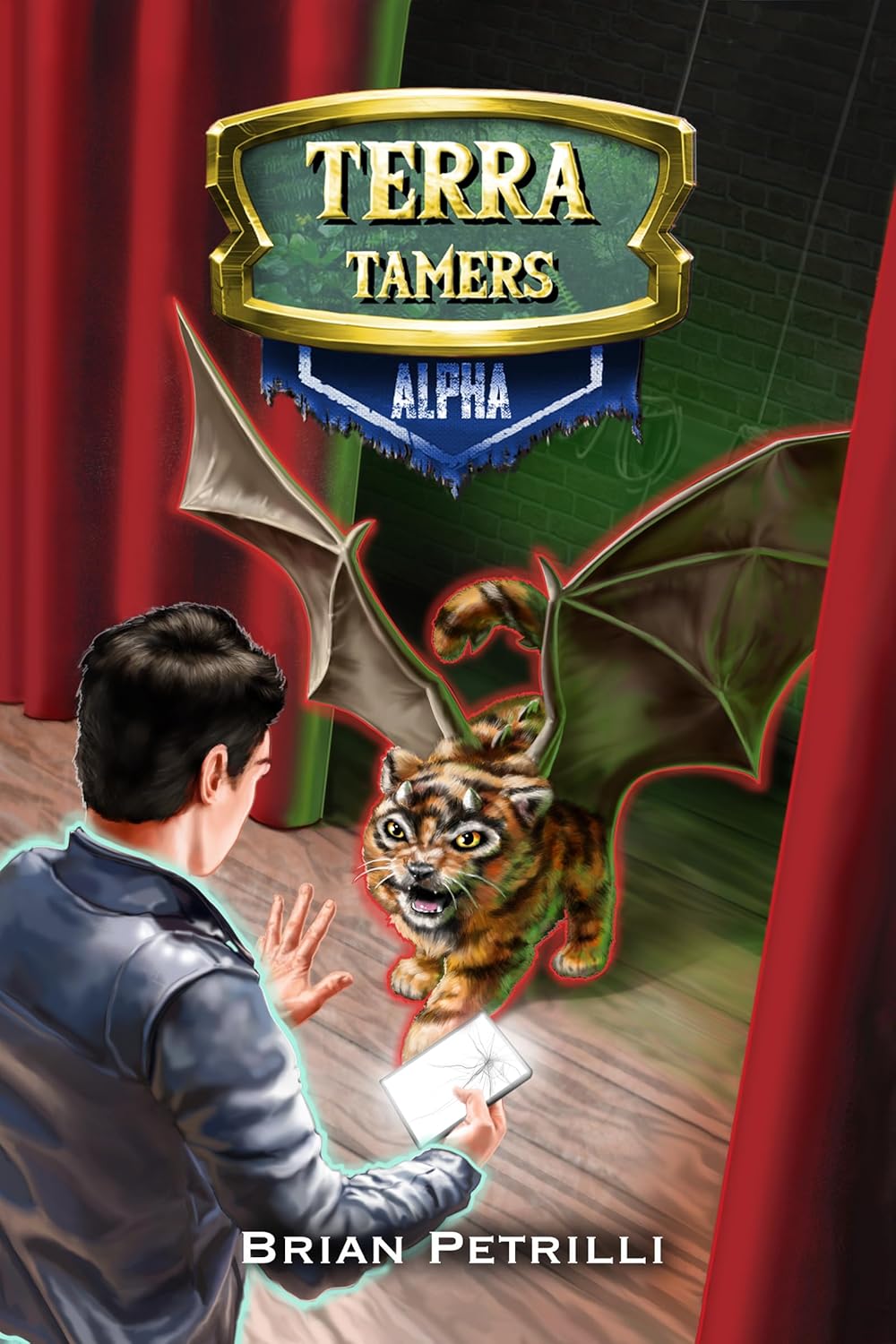

Terra Tamers: Alpha is a sprawling young adult sci-fi adventure set in a post-apocalyptic future where humanity clings to life aboard floating cities after a cataclysm known as “the Hollowing.” The story follows Matthew Wong, a teenager under house arrest in Sojourn, a massive city adrift at sea. Alongside his younger brother and a group of friends, he ventures into a dangerous world filled with sentient machines called Holos and mysterious remnants of the old world. The book is a blend of futuristic technology, human resilience, and the kind of awkward hope that only a young hero can carry. It’s part survival story, part coming-of-age tale, and part philosophical dive into what it means to remain human when the world has been remade by its own creations.
Reading this book felt like watching a vivid dream unfold. There’s an undercurrent of pain and perseverance that runs beneath the action, a quiet heartbeat that says, “keep going.” The writing isn’t always clean or polished. But it feels alive. I found myself drawn in by the rhythm of the dialogue and the scrappy, sarcastic charm of the narrator. The world-building is detailed without becoming overwhelming, and the emotional core, this bond between siblings trying to find their place in a crumbling world, hit me harder than I expected.
What really stood out to me were the quieter moments, the human ones tucked between the chaos of combat and survival. The book isn’t afraid to be sentimental, and I kind of loved that. It wears its heart right on its sleeve. There are bits where the pacing slows, or a joke lands flat, but the sincerity never does. You can tell Petrilli poured himself into these pages, and that makes the story resonate in a way that feels more honest than many perfectly edited novels.
I’d recommend Terra Tamers: Alpha to readers who love stories about grit and heart more than perfection. Fans of Percy Jackson or The Maze Runner will feel at home here, though this book carries a quieter, more introspective tone beneath the adventure. If you’re looking for a story that blends science fiction with emotion, or if you simply want to be reminded why hope still matters even when the world feels broken, this one’s worth your time.
Pages: 524 | ASIN : B0F9DBXR8H

American Entropy

Travis Hupp’s American Entropy is a gut-punch of a poetry collection that straddles rage, revelation, and redemption. The book unfolds across sections named for emotions, Anger, Politics, Metaphysical, Despair, Hope, and Love, each one a pulse of raw feeling. Hupp writes from the jagged edge of personal struggle and cultural collapse, his voice cracking with both fury and faith. The poems swing from political outcry to spiritual yearning, from queer love to existential doubt. It feels like watching someone fight off demons with words, sometimes literally, sometimes metaphorically, until the language itself starts to shimmer like something divine.
Reading Hupp’s work shook me up in the best way. His writing doesn’t just tell you what he’s feeling, it makes you feel it too. The anger is real, the despair palpable, and the hope stubbornly alive. His author’s note alone hit me hard. It’s this mix of confession and confrontation that sets the tone for the entire collection. There’s no pretense here. He talks about hearing voices, about spiritual warfare, about the cruelty of politics, and yet there’s a strange humor threaded through it all. The poems rage against Trumpism, systemic hate, and hypocrisy, but they also reach for angels and grace. His faith isn’t clean or easy, it’s a messy, miraculous survival instinct. That duality is what makes it powerful.
What I enjoyed most was how relatable it all felt. The writing doesn’t hide behind polish or perfect meter. It’s rough and raw and full of bite. Sometimes the rhythm stumbles, but that only makes it more alive. You can hear the exhaustion in his lines, the defiance, the flashes of tenderness. His metaphysical poems, especially, have this haunting, electric pulse that made me stop and reread. It’s poetry that talks back to God and politics in the same breath. I could feel his mind running hot, reaching for meaning in a country and a body both cracking under pressure.
I’d recommend American Entropy to anyone who’s ever felt overwhelmed by the noise of modern life and still wanted to believe in something good. It’s for readers who crave honesty over polish, for those who don’t mind poetry that bleeds on the page. Hupp’s voice is that rare mix of furious and forgiving, and by the end, I felt like I’d witnessed someone claw their way toward the light.
Pages: 231 | ASIN : B0FCD51KZG
Washington Post Is Switching Off Lights

Piotr Bardzik’s Washington Post Is Switching Off Lights is a strange, witty, and razor-sharp collection of aphorisms that reads like a cocktail of philosophy, satire, and self-therapy. It’s not a novel, not quite poetry either, but something in between, an endless stream of short, punchy reflections on politics, ego, human nature, and absurdity. The book feels like flipping through the diary of a man who sees the world too clearly to take it seriously. From politics to death to dopamine, Bardzik fires off truths and contradictions at lightning speed. You don’t read this book to follow a story. You read it to be jolted awake.
I’ll be honest, reading this felt like watching fireworks. Every line bursts for a second, then vanishes, leaving an echo. Some aphorisms are funny and wickedly sharp, others hit hard because they’re too true to laugh at. The writing is stripped bare, almost surgical, but it carries an undercurrent of despair and amusement that feels very human. I loved that it didn’t try to be lofty. It’s smart but never pretentious, bitter but never cynical. There’s something deeply personal here, too. Bardzik pokes at himself as much as he pokes at everyone else, which makes it feel authentic and weirdly comforting.
Still, it’s not a book you can swallow in one go. The tone swings from irony to sadness to hilarity in a heartbeat, and that constant shifting keeps you on your toes. There are a lot of ideas in this book. Yet that’s part of its charm. It’s a modern kind of chaos, crafted into small, perfect fragments. The language crackles with energy, and the humor often cuts deep enough to sting. It made me laugh, then wince, then think, and that’s not something I can say about many books lately.
I’d recommend this to anyone who loves wordplay, irony, and truth disguised as jokes. It’s perfect for readers who enjoy thinkers like Wilde, Cioran, or Vonnegut, but want something more contemporary and raw. It’s one of those rare reads that makes you want to put it down every few pages just to let the thought sink in, and maybe laugh at how much it hits home.
Pages: 59 | ASIN : B0FSYG8G8C
A Confluence of Factors

Father Lost Child Found follows three amateur sleuths — one searching for answers about her father’s death, one searching for a mystery woman who left a child in her basket, and one searching for extraterrestrials. What was the inspiration for the setup of your story?
As is often the case, a confluence of factors shaped the development of the story. Some ideas were sparked by things I’d heard or experienced personally, while others came from readers of Alone with a Tasman Tiger.
The opening scene of Father Lost Child Found was directly inspired by a conversation I overheard at Brisbane railway station while waiting for a train. A young man, freshly released from jail, was talking about his experiences. He mentioned that his father wasn’t in the picture anymore. I felt for him — his honesty, his observations — and thought he’d make an interesting character. He became the unlikely hero of my opening chapter.
I also received feedback from readers who wanted to know what happened next to Galina, the heroine of Alone with a Tasman Tiger. She wasn’t (spoiler alert!) the winner of the survival competition, but she won readers’ hearts. That encouragement got me thinking about her future.
Around the same time, I heard a radio segment about eulogies — those speeches at funerals where people sometimes say things they perhaps shouldn’t. I had great fun researching this and knew I wanted to weave a scene like that into the book.
Expanding the synopsis a little… Galina’s father died in an accident on an oil platform twenty-four years ago — on September 11, 2001, in fact. During a eulogy for one of his former colleagues, doubts are raised about the true cause of Aleksandr Ivanov’s death, setting Galina on a dangerous search for the truth.
I was also reading two brilliant novels by Terry Hayes — I Am Pilgrim and The Year of the Locust. Both are fast-paced thrillers, the latter edging into science fiction. They made me want to write something equally pulse-pounding.
Then there was an interview I heard on ABC Radio’s Conversations, where Sarah Kanowski spoke with a radio astronomer about the possibility of life on other planets. That definitely fired the neurons. And, over coffee one day, a friend and I started talking about the mysterious crop circles near Tully, first reported sixty years ago — circles that can’t easily be explained away by pranksters. That conversation sealed it.
What aspects of the human condition do you find most interesting — the things that make for great fiction?
Loss is something most of us experience at some point. You never really get over it — you just learn to manage it, if that’s the right word. Certain triggers can bring the pain rushing back.
Loss often leads to vulnerability, which is another universal theme. When we feel vulnerable, we become risk-averse — but without risk, it’s hard to escape an unhappy or stagnant situation.
And then there’s forgiveness. When someone wrongs you, the question becomes: can you forgive them? That decision always carries consequences for both sides.
What themes were important for you to explore in this book?
Identity – Who am I? I even toyed with calling the book Daughter. Drummer. Sailor. Spy. — a nod to John le Carré’s Tinker Tailor Soldier Spy.
Spying – What it requires, what it costs, and what it demands of a person. The secrecy, the deception, the time away from home — and the toll that takes.
Secrets – Discovering that someone you thought you knew was living a double life. Perhaps they weren’t an oil worker after all, but a spy.
Connection and relationships – With family, and with doing what you love. Galina leaves the survival competition in a new relationship forged under extraordinary circumstances. Can it survive the real world? Seb has already taught her to swim — now he wants to teach her to sail.
Motherhood – For Charlotte, it’s about what it truly means to care for a child, and the sacrifices and choices that come with that role.
Where do you see your characters after the book ends?
Each of the three amateur sleuths undergoes a profound transformation through the events of Father Lost Child Found. They’ll each carry those experiences into their futures — but you’ll have to wait for the next book in the series to see how those changes shape their careers and their lives.
Author Links: GoodReads | X | Facebook | Bookbub | Website | Pinterest
Charlotte Wyatt-Harmon has taken a break in cycling from Hua Hin to Phuket. While shopping at markets near the border with Myanmar, someone leaves a child in her basket, sending Charlotte on a frantic search for the mother.
Mason Murray is a journalist with a personal interest in crop circles. Some believe these patterns were created by extraterrestrials and Mason is determined to find out for himself.
These amateur sleuths learn that everyone is hiding something: a secret, a spy, even an alien presence.
FATHER LOST, CHILD FOUND delivers a twisty-turny plot until the very last page.
Human Nature
The Great Hunter follows a young hunter living in Mesolithic Britain about 10,000 years ago who is determined to wed the woman he loves, but to earn her hand, he must kill a rare and dangerous giant stag. What was the inspiration for the setup of your story?
I’ve always been a big fan of ancient myths and legends. The GREAT HUNTER is written in that style. It is a classic tale, a quest in which the hero must kill a dangerous beast in order to marry the woman he loves. A re-awakened family feud, subsequent betrayal, and long-awaited revenge are essential parts too.
What were some themes that were important for you to explore in this book?
I know a lot of authors would probably say this, but it’s the age-old theme of human nature. I don’t think it has changed very much since humans first appeared on this planet.
What intrigues you about this time period enough to write such a thrilling period piece?
I have always been into history – and prehistoric times in particular. I like the mystery of it.
But there was another reason too. Many years ago I started to experience these images – recurring images in my head. They were of ancient people who wore clothes made from animal-skins, lived in what looked like wig-wams, travelled on foot or by canoe and used tools of stone, wood, bone and antler. These images kept coming to me over several years. They really were vivid and after a while I could tell certain individuals apart. Many of the places I saw, too, looked somehow familiar.
Research led me to believe these people were part of a hunter-gatherer tribe who lived in what is now England about 10,000 years ago. I knew I had to give them a voice.
What is the next book that you are working on, and when can your fans expect it to be out?
If The Great Hunter does well, there will be a sequel: THIRTEEN MOONS – which follows on from where the first book ends.
If that does OK too there could be a series: TALES FROM THE DREAMTIME. Another two or three books about Garetto and the Nahan tribe. But also other people, other hunters and gatherers in different times and places.
I have a long-term medical condition which, though not deadly, does slow me down a bit. I have to work at my day job too. So it would probably take me about 2 1/2 years or so to write another book.
Author Links: Facebook | Website
Powerful spirits and other supernatural beings influence everything in the minds of these people, from the weather to illness, to childbirth and success in hunting or courtship.
Life is not without its challenges, but the real hardships of the Ice Age that ended over sixty generations before are becoming a distant memory. There is an abundance of game animals, fish and plant foods too, in season. Rich pickings for the numerous bands of hunter-gatherers. Yet the country is as hazardous as it is bountiful. Bears, wolves, aurochs and other wild animals that could kill a man roam the landscape. Floods, blizzards, wildfires and tree-felling storms may strike with little or no warning. Still more danger comes from the tribal wars that might suddenly flare up, with their brutal raids and counter-raids. Destruction may also come from enemies within.
A young hunter, Garetto, is determined to wed Harenshi – a woman of another camp, who he loves. True, there was trouble between their families many winters before, but all they want is to stay together, and stay with their own people.
Challenged to go away from the gathering to kill a very rare – and very dangerous – giant stag, Garetto travels far from the camps, with only his dog for company. It is the middle of a freezing, snowy winter, and the hunting-ground is a hostile one.
It seems an impossible quest, but only when Garetto returns with the sacred antlers will the ox-chief Haranga – Harenshi’s father – allow him to wed his daughter.
But the past is far from forgotten, or forgiven. Haranga breaks his promise, resolved Garetto must never return to his people. This act of betrayal – and the sudden appearance of a mysterious and powerful shaman – will have fateful consequences for the whole tribe…
Washington


The book Washington tells a gripping, slow-burning story of Evan, a ninth-grader navigating the chaos of high school life while a darker tragedy brews beneath the surface. It’s a novel that moves between ordinary teenage moments like awkward conversations, new friendships, and lunchtime hierarchies, and shocking violence that tears through that fragile normalcy. The shifts in time and tone build a picture of youth that feels raw and real. It’s part coming-of-age story, part psychological drama, and part social warning. Through quiet, honest scenes, the author shows how loneliness, cruelty, and silence can twist into something explosive.
Reading this book hit me hard. The writing feels unfiltered and close, like you’re sitting in Evan’s head, watching him sink and resurface with every scene. Author Thomas J. Gebhardt III’s prose is simple but charged, almost cinematic. He writes with an eye for small, human details, the twitch of a hand, the blur of light across a hallway, the weight of a single choice. That’s what makes it so effective. You can almost feel the tightness in Evan’s chest, and remember what it was like to be young and lost. At times I wanted to shake the characters, to stop what I knew was coming, but the story keeps you trapped in its slow inevitability. It’s haunting. It’s frustrating. It’s heartbreakingly believable.
I found myself angry, sad, and quiet all at once after finishing it. The book doesn’t offer neat answers, and I respect that. Gebhardt doesn’t preach or dramatize; he just lays it all out and lets the horror of it unfold through real people. The tension builds so naturally that when the violence erupts, it feels both shocking and inevitable. It’s the kind of story that stays with you, not because of the event itself, but because of the way it makes you look at all the moments that led up to it like the ignored signs, and the missed chances for kindness.
Washington is not a light read, but it’s an important one. I’d recommend it to anyone who wants a story that makes them feel something real and uncomfortable, especially teachers, parents, or anyone who’s ever felt out of place in their own life. It’s for readers who want truth over polish, emotion over perfection. It’s a book that reminds you that people are complicated, that pain hides in plain sight, and that silence can sometimes be the loudest sound of all.
Pages: 354 | ASIN : B09VN18DDF



 LITERARY TITAN