Blog Archives
Romantic Renderings

The Empathy of Rain is a lyrical collection of poems that uses rain, in all its moods and forms, as a mirror for human feeling. What inspired you to write this particular collection of poems?
When I finished my first book, Turbulent Waves, which explores the human condition under conditions of emotional turbulence (think of the global pandemic and the change in American politics), I wanted to move away from turbulent conditions to one more in step with nature, so I picked the various forms of rain as a conduit for the empathy that surrounds us.
How did you decide on the themes that run throughout your poetry book?
This was actually the easy part; as I used all of the various types of rain as the overall themes, and once I had my content, I matched each poem to the specific form of rain, including “coronal rain,” which is rain that falls onto the photosphere of the sun.
Do you have a favorite poem in the book, and if so, why does it hold special meaning for you?
“Melancholy’s Ghost”
January’s angel touched me with an afternoon kiss
As she spied Melancholy’s ghosts dining on my mind
Like lost desert rain that never finds the ground here
She weeps as they huddle together waiting in the sky.
We met one day as a lover’s glance bid me farewell
You will learn to sleep with me as my dreams are yours
And as the days fall in love with years, I will never leave
Let me fill the rooms of your mind with my children.
Her eyes implored, why do you love everyone, darling?
Desert sand covered a blue sky as lips prayed to answer
Yet only the sun could taste my desolate reply to her
Like the rain, my words stolen away by her sweet breath.
Most of my poetry is essentially enigmatic, melancholic, and romantic renderings. If there’s a common denominator that courses through our minds, it’s our emotional dialogue regarding love: lost and found. This poem considers such musings as a ghost of our electricity, which never quite fades away.
How has this poetry book changed you as a writer, or what did you learn about yourself through writing it?
I began writing poetry six years ago when the global pandemic began. It would take me over an hour to write a poem that would work in a Twitter “tweet” back then. Prior to that, I had written software technical documentation for thirty-five years, so I was completely comfortable using language as a tool to express difficult conditions or situations. Since then, I have written 2500 poems, self-published my first book, published #2 & #3 via two publishing houses, and I am well into finishing #4. As I look back over the evolution of my poetry, I can easily see how my thoughts have matured and deepened regarding how to express the enigmatic melancholy that comes to mind when my muse, Calliope, shares a thought. I write listening to music via vinyl records, and it’s the vibe rather than the lyrics that creates the river for my poetic meanderings, and now the entire process takes half the time to complete compared to my initial poems.
Author Links: GoodReads | X (Twitter) | Facebook | Website | Amazon
The Dangers of Time Travel

Furniture Sliders follows a former intelligence officer who is pulled back in to discover what has happened to a classified project and the people working on it, which controls time, memory, and identity, and is now missing. What was the inspiration for the setup of your story?
I have always been a fan of both film noir and espionage novels plus I have a tech background and a fascination with quantum mechanics. I wanted to write a story that felt like a 1940s Cold War spy thriller written in noir style—then break it wide open with the addition of speculative science fiction. I had a question: what if you take the characteristics of quantum mechanics such as superposition and entanglement and instead of applying them to atomic particles, you applied them to human beings? To spies? Can you be in two places at once or two timelines at the same time? Firstly, apply the ability to manipulate space and time and then take it even further by playing in panpsychism – the concept that every inanimate object can be sentient. Of course, you would have to have some form of technology to do all of this – the Mirror is exactly that inspired by the one in my hall at home. The title literally came from a box of plastic furniture sliders that were on the table at home with the box looking like a paperback book – Furniture Sliders on the spine! Sliders was a perfect description for agents moving through space and time and their organization is called the Bureau, along with the Mirror, giving the initial tongue-in-cheek furniture connection.
I found Max Calder to be an intriguing character. What was your inspiration for this character?
Max Calder is the kind of character I love; deeply broken but still pushing forward through the fog. It isn’t about a single character or character flaw but about weaving influences together. I guess Max carries echoes of Raymond Chandler’s Philip Marlowe and Graham Greene’s morally ambiguous operatives. He isn’t polished like Bond, but weary, suspicious, and prone to moral compromise – a man affected by the machine he serves. I tried to deliberately write against cliché by grounding him in history and psychology. His gaps, duplications, and doubts reflect not only the dangers of espionage but the fragility of identity itself. Unlike many spy archetypes, Calder isn’t defined by conquest or success, but by survival, mistrust, and fear of irrelevance — hopefully making him come across as human, flawed, and complex. In many espionage novels, agents and spies are unaffected by what they do and are amazing at executing their role. In the case of Max, I wanted him to be very affected. Remorse, regret, and inner demons.
What themes were particularly important for you to explore in this book?
Primarily the consequences of messing with time and how doing so can also mess with you physically, potentially drive you insane and affect your memory while creating echoes or even doppelgangers as time threads overlap. All caused by, or underpinned by, the human-applied characteristics of quantum mechanics. It was important to explore relationships especially between protagonists and antagonists and between espionage agents and technology pitching various spy agencies against each other – even if they are supposed to have great relationships. I also wanted to introduce fictionalized real-life characters to the storyline which in this book includes Alan Turing, Hugh Sinclair and William Stephenson.
Where does the story go in the next book, and where do you see it going in the future?
There are two more books coming in the series. Angus Sliders and Cuban Sliders. Angus Sliders is planned to publish on the 15th December. One of the challenges with quantum-based technology like the Mirror is that many want to get their hands on it in many cases for various nefarious reasons. In Furniture Sliders it was the Russians and ex Nazis. In Angus Sliders, Max Calder discovers that some major occurrences in Furniture Sliders didn’t really happen and that MI6 is very involved. Even a fictionalized Kim Philby is involved as is Charles Fraser-Smith who was the inspiration for James Bond’s Q. Max Calder is more and more affected by what the Mirror can do to you. In Cuban Sliders the Russians are back in the game and so is the CIA. Through all of this the Mirror becomes even more difficult to control or destroy. The big question is – can it be destroyed at all or even stopped and who gets to control it? Are there more storylines past the initial trilogy? Yes indeed!
Author Links: Facebook | Blog | Website | Amazon | Barnes & Noble
The Bureau is chasing a secret called the Mirror—a project so classified that even its architects have vanished or been silenced. It’s said to control time, memory, even identity itself. As Calder tracks the Mirror’s echoes across empty safehouses and wartime graveyards, the lines between hunter and hunted begin to blur.
Artemis may be an ally. Or she may be a weapon. And Calder? He may not even be who he thinks he is.
As bodies pile up and truths unravel, Calder must navigate a world where nothing stays still—where every room slides just a few inches sideways when you’re not looking. In the end, he’ll face one impossible choice:
Burn the truth… or become it.
Avoiding the Scam Artists
Seniors vs Crime is a collection of real-life stories set in The Villages, Florida, where elder citizens find themselves targeted by a range of con artists, shady contractors, and even predatory loved ones. Why was this an important book for you to write?
I am an other-oriented person, meaning I tend to care about other people and their situations perhaps more than most people. My career as a wealth advisor afforded me an opportunity to help other people retire. When I retired in 2008 in The Villages, FL. I looked for a way to help people. Seniors Vs. Crime was that perfect opportunity. I wrote the book to provide the elderly with an opportunity to learn about scams and their artists to help them avoid possible harm.
What were some ideas that were important for you to share in this book?
One of the ideas I wanted to share was how easy it is to be duped by scam artists who credibly seem to care about you. The doctor’s wife, who befriended the Doctor’s patient and then captured the patient’s widow’s entire estate, is a good example.
I also wanted to try to urge victims to report the scam. Many people are embarrassed that they were “stupid” enough to fall for the scam. I wanted them to know that we all make mistakes, but to not report the scam is a bigger “mistake.”
Could you share more information with us about the Seniors vs. Crime program? Is it something that is still running?
Seniors vs Crime in Florida is not only still working but growing every year. It was started by the Attorney General back several decades ago as a speaker’s forum and developed into what it is today… a functioning arm of the Attorney General’s Office fighting scams and harms to seniors. It has offices all over Florida. When a senior is scammed or otherwise harmed, they can come to any of our offices to make a claim. They can also enter a claim online at Seniorsvscrime.org. The claim is entered into our system and resides at both the Attorney General’s Office as well as the local SVC office. My office is located in Brownwood, Florida in the police annex building. Once a claim is submitted the voluntary “sleuths” will begin to help the senior recover their loss.
What is one thing that you hope readers take away from Seniors vs Crime?
Many seniors feel their loss is irreparable. I want them to know that most of their losses are recoverable.
The Gift


The Gift follows Emery, a young woman pulled into a strange dimension where voices, shadows, and visions drag her into a fate she never asked for. The novel is about her journey to rescue her mother, uncover hidden truths about her powers, and navigate an ancient and perilous world that teeters between myth and science. There are black holes that bend time, creatures that lurk in slithering shadows, and tribes that live by instinct and survival. But underneath the cosmic spectacle, it is really about one woman’s fight to hold on to family, identity, and purpose in a reality that constantly shifts beneath her feet.
The writing surprised me. It has a dreamlike quality in places, flowing almost like waves, then suddenly crashing into moments of raw grit and pain. The descriptions of the void, of light turning into memory, of bodies disintegrating and reforming, made me pause and reread because they were so vivid. But then the author would drop Emery into the dirt, into hunger and thirst, into stumbling mistakes, and it grounded everything. That combination kept me engaged. Sometimes the prose was a little heavy, but the emotional weight pulled me through. I found myself caring about Emery’s stubbornness, her doubts, her messy humanity, even as she was tasked with saving more than just herself.
What really stayed with me was the emotional pull of Emery’s relationships, especially her bond with Visla. Their friendship felt tender and real, the kind of connection that lights up even the darkest setting. I loved how their language lessons became a bridge between two worlds. I felt warmth reading their moments together, and sadness knowing Emery’s destiny might tear them apart. Emery’s constant second-guessing sometimes slowed the story, and I wished she trusted herself more. But then again, maybe that’s what made her believable. She wasn’t some perfect heroine. She was clumsy, scared, and hopeful, and that made me root for her all the more.
I felt like I’d been on a strange and exhausting journey right alongside Emery. The Gift is not just for fans of science fiction or fantasy. It’s for readers who want to feel the clash of fear and hope, who enjoy sci-fi stories where survival is as important as destiny, and where the heart matters as much as the universe. I would recommend it to anyone who likes their adventure raw and relatable, layered with both cosmic wonder and everyday struggle.
Pages: 381 | ASIN : B0FM77FD39

Penny Pangolin and the Missing Ant Cake
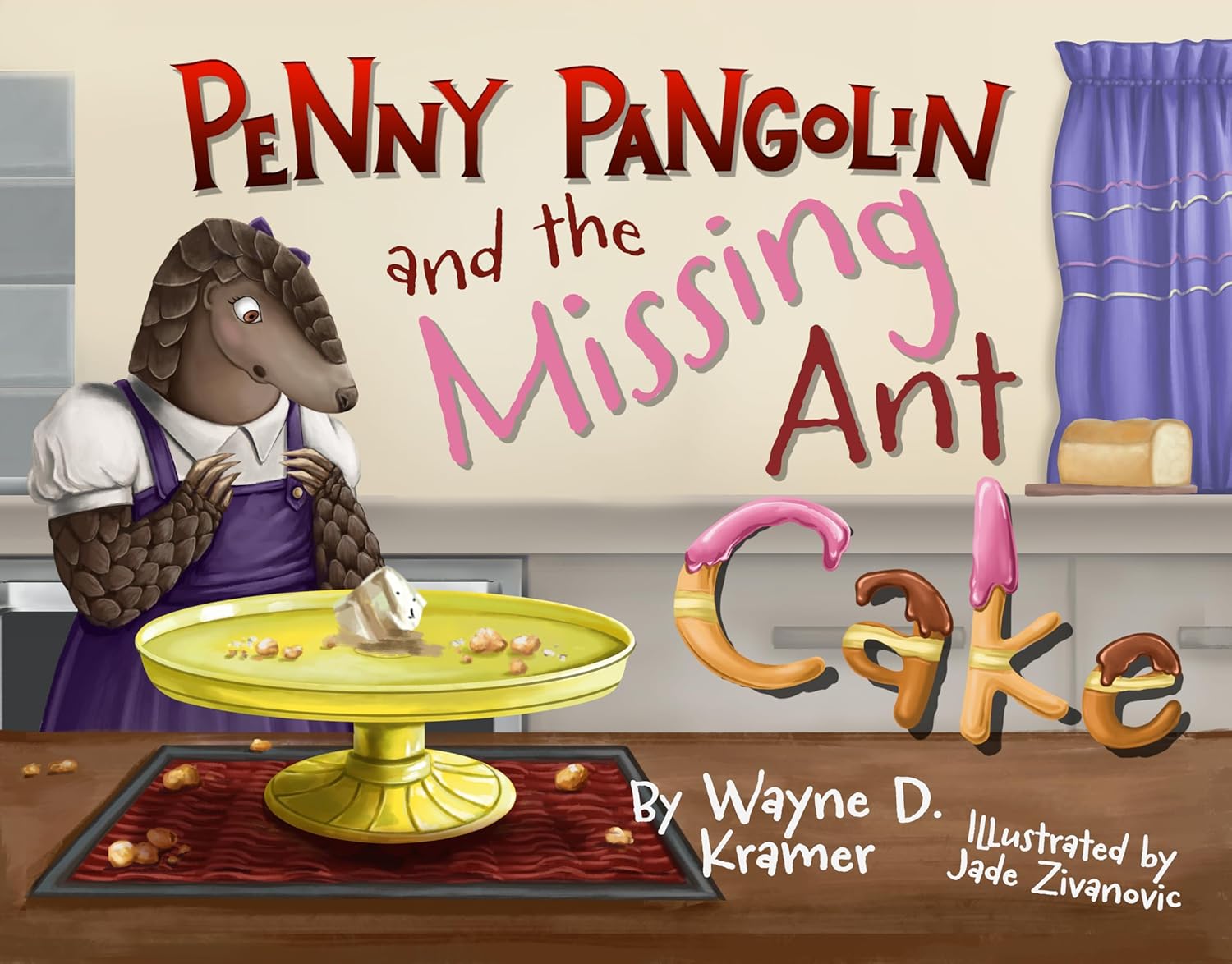

Penny Pangolin can hardly contain her excitement; her dear friend Vin is on his way for a visit. To mark the occasion, she decides nothing could be more fitting than serving one of her mother’s celebrated lemon-ant cakes. The plan seems perfect, until disaster strikes: just before Vin’s arrival, the cake mysteriously disappears. What follows is a lighthearted mystery as Penny and Vin embark on a search to uncover the culprit. Along the way, they encounter a colorful cast of suspects, each with a possible motive, all within the lush setting of the jungle. Beyond the playful suspense lies a gentle message about friendship and sharing that resonates with young readers.
Kramer’s tale feels both familiar and fresh. There are echoes of Kipling’s Jungle Book in the wild setting, yet the warmth and moral clarity recall the charm of the Berenstain Bears. Penny herself is a delightful protagonist, brave, kind, and endlessly curious, while Vin serves as an ideal companion for her adventure. The story avoids real peril, making it best suited to children at the younger end of the spectrum. For ages 3–8, however, it offers exactly the right balance of fun, imagination, and heart.
The illustrations elevate the book even further. Several stand out, particularly those depicting Penny engaged in traditional pangolin activities, which both entertain and educate. An additional section at the end, highlighting the endangered status of pangolins, underscores Kramer’s dual commitment to storytelling and conservation.
Penny Pangolin and the Missing Ant Cake is more than a whimsical jungle caper. It is a cheerful blend of art and narrative that introduces children to an extraordinary animal, all while reinforcing timeless lessons about generosity and friendship. Light, lively, and instructive, it has all the makings of a story that young readers will want to revisit again and again.
Pages: 34 | ASIN : B0BYQPM686
Deep Freeze
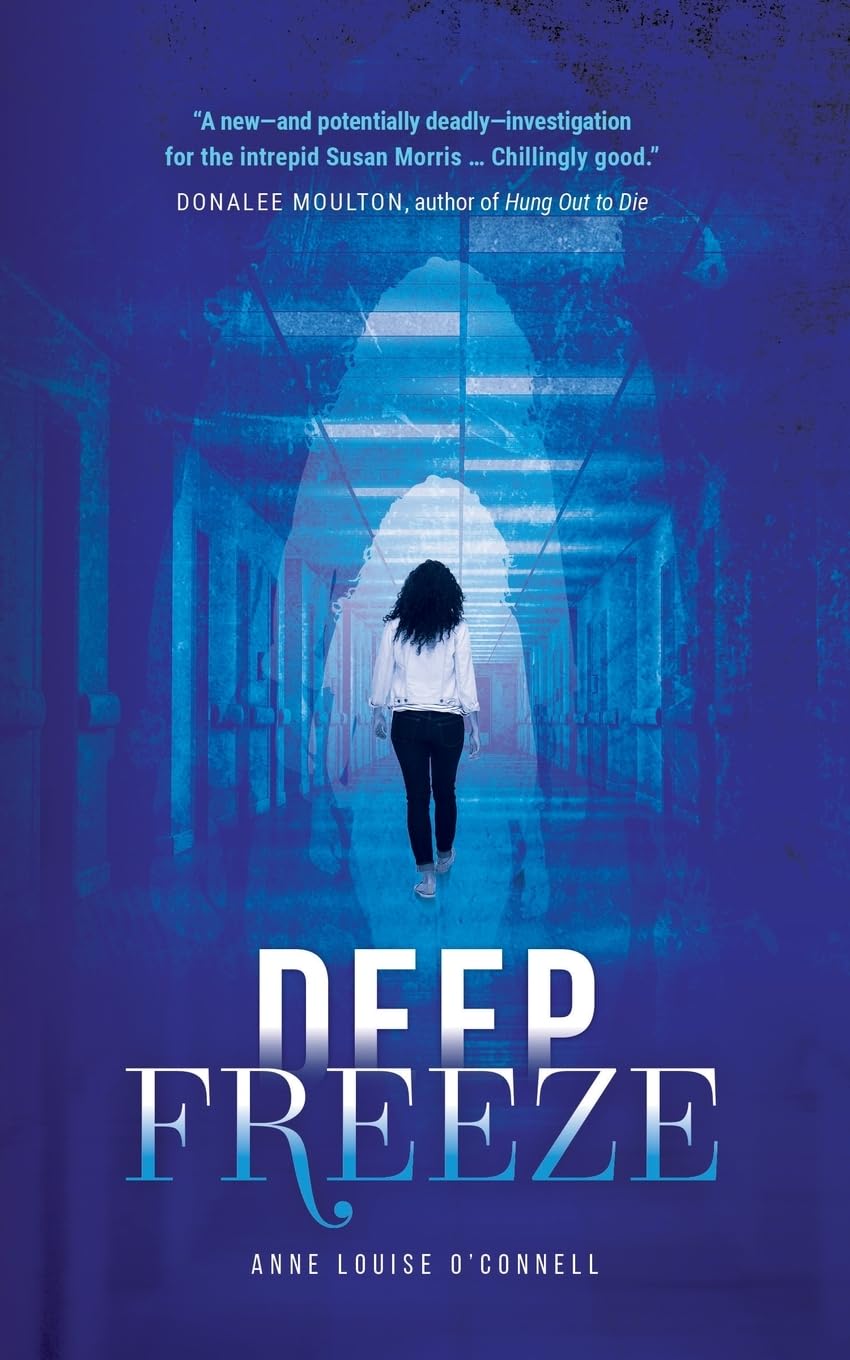
Anne Louise O’Connell’s Deep Freeze is a suspenseful mystery set against the unlikely backdrop of Dubai’s indoor ski slopes, posh neighborhoods, and glossy hospitals. At the heart of the story is Susan Morris, an American ex-pat nurse whose curiosity and compassion pull her into the chaos following a tragic ski lift accident that nearly kills her friend’s husband, Dr. Barry Thornton. What begins as a personal favor to comfort a friend quickly spirals into a dangerous investigation involving hospital coverups, cryogenic experiments, and the exploitation of domestic workers. The book moves briskly, balancing cultural detail with medical intrigue, and it doesn’t take long before Susan realizes she’s in over her head.
I was hooked from the start. The writing has a straightforward flow that makes it easy to slip into Susan’s world. What really grabbed me was the way O’Connell built tension through ordinary settings. A shopping mall ski slope or a hospital hallway doesn’t sound like a thriller, but the unease creeps in, and before you know it, you’re bracing yourself for the next turn. I found myself both frustrated and impressed with Susan. She’s stubborn, she pushes too far, but she’s also brave in a way that feels relatable rather than superhero-like. At times, the dialogue felt a little stiff, but the energy of the plot kept me flipping pages late into the night.
Emotionally, the book hit me harder than I expected. The parts dealing with exploited domestic workers left a knot in my stomach. It’s not just about crime or corruption, it’s about people living in the shadows of luxury and power. That gave the story real weight. I also felt for Susan as her marriage slowly unraveled in the background. Those quieter moments balanced out the faster-paced mystery, and I found myself caring as much about her personal struggles as the central investigation. The suspense had my pulse up, but the human side of it tugged at me even more.
Deep Freeze is a gripping read that I’d recommend to anyone who enjoys mysteries with both heart and grit. If you like thrillers that blend cultural insight with medical drama, you’ll find a lot to love here. It’s especially for readers who want a strong but imperfect female lead, someone who feels like a real person caught in extraordinary circumstances.
Pages: 244 | ASIN : B0DTLY26YZ
The Unearthing
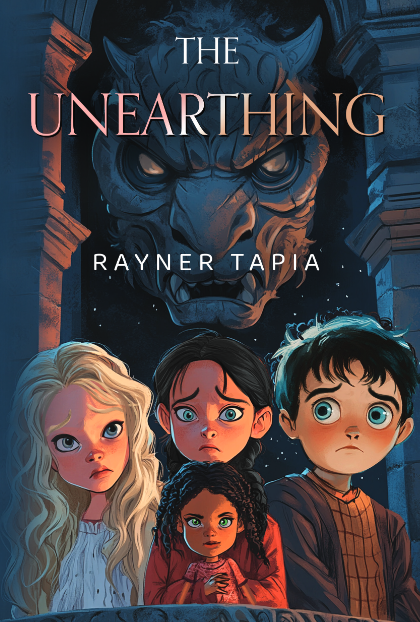
The Unearthing follows the Krigga family as they leave their suburban life behind for an old Georgian house in the countryside. The story is told mostly through the eyes of Anna, the middle child, who resents the move and resists every change. Her brother Rupert and sister Clara add their own voices to the chaos of sibling rivalry, while their parents try to hold the family together. Soon, the house itself begins to reveal secrets. Hidden staircases, strange rooms, eerie discoveries, and a foreboding tower nearby push the children into a world of mystery and unease. What begins as a family drama slowly shifts into something more shadowed, blending everyday struggles with a creeping sense of the supernatural.
The writing swings from tender to dramatic, sometimes even over the top, but that’s part of its charm. I could feel Anna’s anger like a living thing, the way she stomped and sulked and held on to her grievances. At times, I wanted to shake her. At other times, I wanted to comfort her. Tapia captures that messy middle-child energy perfectly, and while it could be grating, it also felt real. The imagery is thick and vivid, and I loved how it painted the old house as if it were alive, breathing with history and menace.
There were moments when I laughed at the squabbles between the siblings, then felt uneasy when the story leaned into shadows and whispers. The pacing could be uneven, lingering on moods a bit too long before getting to the action. Yet, when the eerie attic scenes or the crumbling gargoyles came into play, I was hooked. The book feels like a blend of family diary and gothic adventure.
I’d recommend The Unearthing to readers who enjoy stories about families in transition, especially when everyday life collides with something darker. Young adult readers might see themselves in Anna’s moods, while older readers may smile knowingly at the chaos of siblings and the weight of growing up. If you like your mysteries tinged with domestic squabbles, eerie houses, and a touch of the uncanny, this children’s fiction novel will speak to you.
Pages: 399 | ASIN : B08NCB4XKX

What We Hold No Longer
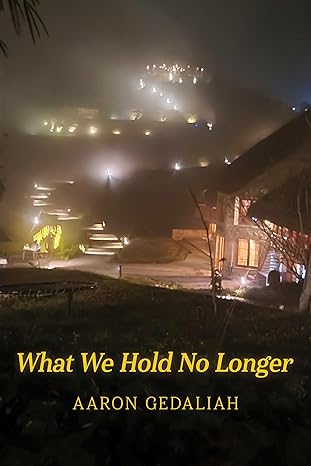
Aaron Gedaliah’s What We Hold No Longer is a collection of poems that circle around memory, aging, identity, and the haunting void that lies beneath it all. The book moves through phases of transformation, wrestles with the Lacanian “Thing,” looks at the unraveling of society, and then slips into reflections on love, loss, desire, and imperfection. It blends the deeply personal with the philosophical, balancing childhood recollections with meditations on mortality, politics, and the quiet strangeness of being human.
Some of the poems struck like sudden jolts. They’re raw, unfiltered emotions that left me uneasy in the best way. Others drifted, slow and lyrical, catching on the edges of memory. Gedaliah doesn’t shy away from pain, whether it’s private grief or public horrors, and I respected that. I thought the psychoanalytic undertones and references added a fascinating depth to the collection. They gave the poems a layered richness that invited me to think as much as feel. What made the book especially strong, though, was the way those ideas blended with moments of plain vulnerability. The balance between theory and raw emotion kept the work dynamic, and the times when the language leaned into honesty and looseness stood out all the more because of that contrast.
The book feels like someone holding a mirror up to both his own past and the chaos of the present world. He talks about adolescence with brutal honesty, aging with rueful wit, and political violence with fury. I connected with the tenderness in “Birds on a String,” the ache in “Paradise Lost,” and the weary warning of “When the Shelves Are Empty.” There’s something relatable in the way he lets contradictions live side by side, rage and love, despair and beauty, the personal and the universal. It made me stop more than once and just sit with my own ghosts.
I’d say What We Hold No Longer is best for readers who like poetry that wrestles hard with ideas yet still finds room for confession and story. It would suit anyone interested in memory, loss, or the philosophical edges of spirituality.
Pages: 85 | ASIN : B0FPG8MLQ9



 LITERARY TITAN