Blog Archives
What We Hold No Longer
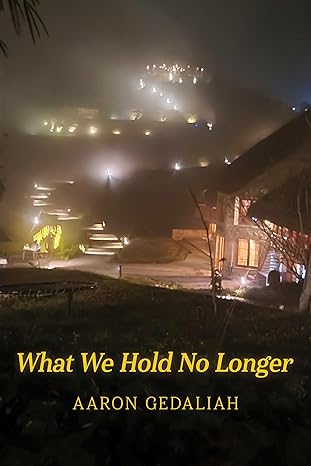

Aaron Gedaliah’s What We Hold No Longer is a collection of poems that circle around memory, aging, identity, and the haunting void that lies beneath it all. The book moves through phases of transformation, wrestles with the Lacanian “Thing,” looks at the unraveling of society, and then slips into reflections on love, loss, desire, and imperfection. It blends the deeply personal with the philosophical, balancing childhood recollections with meditations on mortality, politics, and the quiet strangeness of being human.
Some of the poems struck like sudden jolts. They’re raw, unfiltered emotions that left me uneasy in the best way. Others drifted, slow and lyrical, catching on the edges of memory. Gedaliah doesn’t shy away from pain, whether it’s private grief or public horrors, and I respected that. I thought the psychoanalytic undertones and references added a fascinating depth to the collection. They gave the poems a layered richness that invited me to think as much as feel. What made the book especially strong, though, was the way those ideas blended with moments of plain vulnerability. The balance between theory and raw emotion kept the work dynamic, and the times when the language leaned into honesty and looseness stood out all the more because of that contrast.
The book feels like someone holding a mirror up to both his own past and the chaos of the present world. He talks about adolescence with brutal honesty, aging with rueful wit, and political violence with fury. I connected with the tenderness in “Birds on a String,” the ache in “Paradise Lost,” and the weary warning of “When the Shelves Are Empty.” There’s something relatable in the way he lets contradictions live side by side, rage and love, despair and beauty, the personal and the universal. It made me stop more than once and just sit with my own ghosts.
I’d say What We Hold No Longer is best for readers who like poetry that wrestles hard with ideas yet still finds room for confession and story. It would suit anyone interested in memory, loss, or the philosophical edges of spirituality.
Pages: 85 | ASIN : B0FPG8MLQ9

THE BROKEN MIRROR (A transition from military and civilian lifestyle and beyond
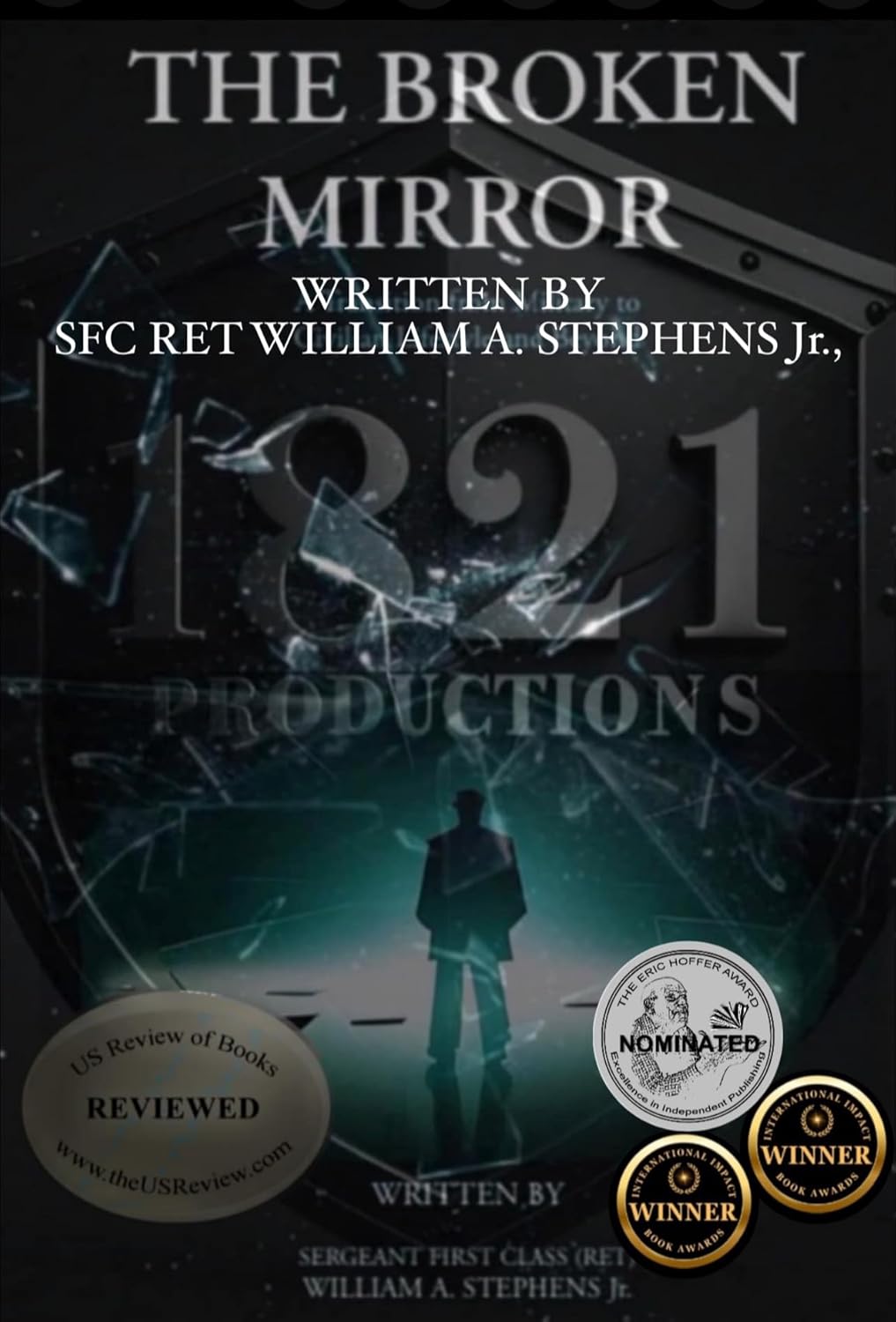

The Broken Mirror is a raw and unflinching account of a soldier’s life after war. It begins with his transition from military service into civilian life, tracing the jagged path of PTSD, broken family ties, and personal battles that stretch across decades. He writes about his service, his divorce, the loss of his parents, the distance with his daughter, and the constant shadow of invisible demons. This isn’t a straight line memoir. It’s more like a series of entries pulled directly from his mind and heart, sometimes sharp, sometimes wandering, always honest. This is a story about survival, regret, and the hope that love, especially the love between a father and daughter, can outlast the damage of war.
Some passages were tough to get through because of how blunt he is. I could feel the pain dripping from them. I admired his bravery for putting it all out there. He’s not pretending to be a hero. He’s showing the ugliness and the shame alongside the small moments of healing. His style jumps around, which mirrors the chaos of PTSD. It was hard to follow at first, but then I realized it pulled me closer to his state of mind. It felt less like I was reading a neatly packaged book and more like I was sitting across from him while he unloaded years of grief and rage.
There’s also a tenderness in these pages that surprised me. His love for his daughter is obvious and heartbreaking. I could feel his desperation to make sure she knows he tried, that he never stopped caring, even when he fell apart. Those parts made me pause and think about the weight kids carry when parents stumble. His reflections on family, loyalty, and betrayal were heavy, but they were also deeply relatable. He doesn’t ask for pity. He just wants someone to hear him out, to acknowledge that the fight doesn’t end when the uniform comes off.
I walked away from this book feeling grateful. I’d recommend this stirring memoir to anyone who wants to understand what living with PTSD feels like from the inside. It’s especially important for family members of veterans because it shows the ripple effects of war long after the battlefield is gone. And for veterans themselves, it might feel like sitting with a brother-in-arms who isn’t afraid to tell the truth. The Broken Mirror is powerful, and it left me with a deep respect for the fight he continues every day.
Pages: 142 | ASIN : B0DLLD2CXC

The Great Flood in Legend, Science and History
The Great Flood in Legend, Science and History takes on one of the world’s most enduring legends, the Great Flood, and treats it with the seriousness usually reserved for scientific debates. The author sifts through stories from Mesopotamia, the Bible, and cultures across the globe, and places them alongside geological evidence and academic theories. From Noah’s ark to ice dam failures, from the Epic of Gilgamesh to modern geomythology, the book asks a simple but difficult question: could there have been a real event behind these myths? It is both a history of ideas and a challenge to the conventional dismissal of flood legends as nothing more than fireside exaggerations.
What struck me most was the author’s tone. He is not afraid to poke at the arrogance of academic orthodoxy, and I found that refreshing. At times, he writes with the zeal of someone who wants to set the record straight, almost daring the reader to scoff and then proving that scoffing is lazy. I liked the way he pulled in evidence from Greece, Mesopotamia, and even Native American legends, weaving them together into a bigger pattern. There were moments where I felt swept along by his confidence. His criticism of scholars who explain away everything as just a local flood felt a bit sharp, but also honest.
One thing I appreciated most about the book was the author’s insistence on treating flood legends as more than just colorful folklore. Too often, stories like Noah’s Flood or the Epic of Gilgamesh get brushed aside with a shrug, but here they’re examined against real geological evidence, from sediment layers to flood deposits in Mesopotamia and beyond. I liked how he challenged the uniformitarian mindset that dominates much of geology, pushing us to consider that catastrophic events may leave behind signatures we sometimes explain away too quickly. It reminded me that geology is not just about rocks and strata but about human memory etched into story, and the bridge he built between science and myth felt bold and necessary.
What I thought was especially bold was the author’s conclusion about the cause of the Flood. After carefully weighing and rejecting explanations like tsunamis, local river floods, or even an asteroid impact, he argues instead for a close fly-by of a comet whose gravitational pull disturbed Earth’s oceans and atmosphere. It’s an audacious idea, yet he builds his case by showing how this scenario better matches both the geological evidence in Mesopotamia and the recurring themes in ancient legends. I found the apparent alignment between mythic descriptions of overwhelming waters and the physical consequences of such a cosmic encounter fascinating. It gave me the sense that science and legend, so often kept apart, might actually be telling two sides of the same story.
This book is best suited for readers who like their history mixed with geology, myth, and a touch of argument. If you’ve ever been curious about whether Noah’s Flood was just a tale or a memory of something real, you’ll find plenty to chew on here. It’s not a light read, but it is a rewarding one. I’d recommend it to anyone who enjoys questioning official answers and who doesn’t mind following a passionate writer into the deep waters of science, story, and belief.
Pages: 421 | ISBN: 979-8-31780-432-9
Creative Non-Fiction

Leftwich Blues/Elfwitch Rules follows twin twelve-year-olds from a broken home who are abducted by the Elfwitch and taken to another world, where they must now find a way to get back home and heal their broken home. What was the inspiration for the setup of your story?
The idea started with the title. I like to make lists of titles from time to time. The title made me think who is Leftwich? Why does he have the blues? Who is the Elfwitch and why is she trying to rule? This image came to mind: a witch travelling through the air with twins she had kidnapped. One twin gets away, but the Elfwitch tricks the other twin into serving her. The escaped twin finds an oppressed people who need encouragement in fighting against the Elfwitch. So, the twin has to lead an uprising against the Elfwitch and try to free the other twin who turned against their original selves.
The idea reminds me of the many Saturday morning TV shows by Sid and Marty Krofft: H.R. PufnStuff or Lidsville plus other portal fantasies or science fiction movies like Alice in Wonderland or Planet of the Apes (the original from 1968, not the watered down remakes/reboots) where a stranger ends up in a strange land and has to keep their identity intact while turning from fugitive to hero/heroine to survive in a harsh new reality.
Your characters are wonderfully emotive and relatable. Were you able to use anything from your own life to inform their character development?
The twins’ first names I borrowed from my cousins. Their last name also belongs to distant cousins. I find that the more real or personal I can make the character or backstory, the more I can dig into it to adapt and change it according to how the story dictates. I was a mental health paraprofessional for a few years (so I have been to family court a few times) and worked at a charitable thrift store as well as conducting a twelve-step program and now I am a public educator. I have had ex-clients as my students and have come to know the families. I understand better the dynamic in households and the problems children bring to the classroom.
My writing has been called “creative non-fiction.” I never thought of it like that, but it’s true as I need a heavy dose of realism in my fiction before I introduce the weird and fantastical.
What themes were particularly important for you to explore in this book?
The idea of twins separated and working against each other and having to reconcile was the starting point. Then it became a study of duality: two sides or polar opposites that feed or synergize entities or issues: tyranny and freedom, good and evil, lies and truth, night and day, family/friends and foes, forgiveness and unforgiving.
Is this the first book in the series? If so, when is the next book coming out, and what can your fans expect in the next story?
This was written as a stand-alone. However, I am brewing ideas for a sequel (which I would make into a cliffhanger for a duology). That project will have to wait as I have two other current projects I am working on plus I am currently promoting my first collection of short stories: ghostly shudder tales.
Author Links: GoodReads | Website | Substack
Meaningful Improvement

One Percent 365 lays out a simple but powerful idea: small daily efforts, as little as one percent, can add up to huge changes over time without feeling overwhelming. Why was this an important book for you to write?
To share what I have found to be useful in improving outcomes and personal perspectives in my life. TO break it down to be manageable, no matter the stress endured, real or perceived.
What were some ideas that were important for you to share in this book?
To show the possibilities and value of applying this to many aspects of our day-to-day living.
What is one thing that people point out after reading your book that surprises you?
That I have revoiced a known one percept concept and shown how applicable it can be to many aspects of our lives besides weight loss and work metrics. Kindness and forgiveness, as applied, appear to impact my readers.
What is one thing that you hope readers take away from One Percent 365?
This concept can be tailored to each of us in a way that is palatable and shows a meaningful improvement over time.
Author Links: GoodReads | Facebook | Website
The author takes the reader on a journey to illustrate the possibilities of change that we can examine, address, and begin to make progress one percent at a time, each day. The simplest truth will become evident that each of us can tackle any aspect of our lives and work toward a desired goal with small incremental efforts while making steady, daily gains.
Heir of Flame and Shadow
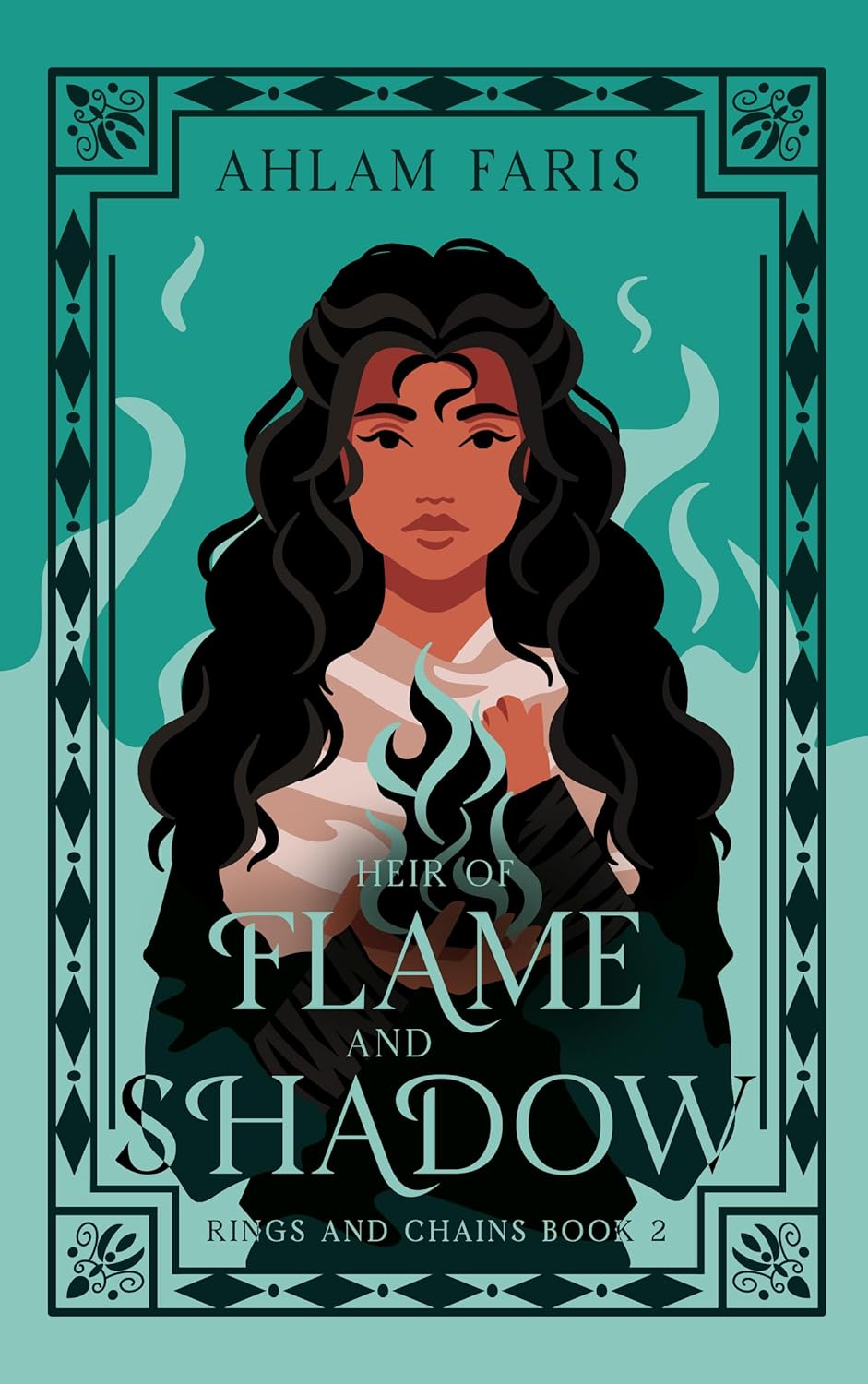
Heir of Flame and Shadow picks up where Daughter of Light and Dark left off, continuing Mina’s journey through a world steeped in shadow, betrayal, and dangerous magic. At its heart, this story is about survival and self-discovery in the face of unbearable odds. Mina struggles with her cursed gift, torn between the burden it places on her and the hope it brings to others. Alongside her, a cast of allies and enemies twist the path forward, pulling her into battles that are both physical and deeply emotional. Themes of identity, family, sacrifice, and the fragile line between love and pain shape the arc of this sequel, while the backdrop of supernatural powers and dark kingdoms raises the stakes to life-or-death levels.
I enjoyed how raw the writing felt. The prose is not polished to perfection, but that roughness gave the book a pulse, like the words were breathing with Mina. The imagery is often harsh, almost jagged, and it fits the tone of the story. I found myself swept along by the energy, even when the pacing slowed. The dialogue carried weight, sometimes heavy with pain, sometimes sharp with betrayal, and occasionally softened by fleeting moments of tenderness. At times, I wanted more quiet space to sink into the characters’ hearts, but the relentless drive of the narrative made sure I was never allowed to get too comfortable. I liked that. It kept me unsettled, the way Mina herself was.
The exploration of trauma and control felt unflinching, and it stirred up emotions that weren’t easy to brush aside. There were moments when I had to pause, not because the writing faltered, but because the weight of what was happening pressed too close. That’s a rare thing for me, to feel almost winded by a book. At the same time, the bond between characters, even when fractured, reminded me of how messy and stubborn love can be. It isn’t always gentle or safe. Sometimes it’s sharp enough to draw blood. And that messy truth gave the fantasy world a raw humanity that made it believable.
I’d recommend Heir of Flame and Shadow to readers who aren’t afraid of dark themes and emotional turbulence. If you like your fantasy with teeth, if you want magic tangled with pain, and if you enjoy characters who are complicated and scarred, this book will speak to you. It’s not for someone looking for a lighthearted escape. It’s for readers who want to be rattled a little, who want to sit with shadows and still see the flicker of flame inside them.
Pages: 262 | ASIN : B0FKZJDW49
Harry the Hedgehog and the Lost Eggs

Harry the Hedgehog wakes to an unexpected problem on Easter morning. The forest animals are buzzing with holiday excitement, yet a mystery casts a shadow over the celebration, all the decorated eggs have vanished. Determined not to let Easter be spoiled, Harry embarks on a search. Alongside his loyal companions, Russell the Rabbit, Clara the Chicken, and Milo the Teddy Bear Dog, he races against time to uncover the truth behind the missing eggs. Without them, Easter simply won’t feel the same.
Harry the Hedgehog and the Lost Eggs, written by Rayner Tapia, is designed for children ages 2–7. The book is brief, easy to follow, and filled with bright pastel illustrations that bring each page to life. The artwork does more than decorate; it carries the action, introducing young readers to Harry and his woodland friends in a way that feels both playful and vivid.
The narrative itself is intentionally simple, perfectly suited to its audience, though likely too light for older readers. Its charm lies in the whimsical images and the gentle personalities of the animal characters. Each creature is rendered with human-like traits, making them instantly relatable. When the culprit is revealed and the animals spring into action, Tapia underscores a familiar but valuable lesson: teamwork makes challenges easier to overcome than going it alone.
That message resonates clearly without ever feeling heavy-handed. The adventure concludes neatly, with no sense of peril to unsettle young listeners. The absence of villains or darker tension makes the story especially well-suited for children just beginning to explore stories on their own. With its gentle pace and cheerful resolution, this tale has all the makings of a bedtime favorite, one likely to be requested night after night by eager little readers.
Pages: 35 | ASIN : B0FMYB1KH6
The Interchange
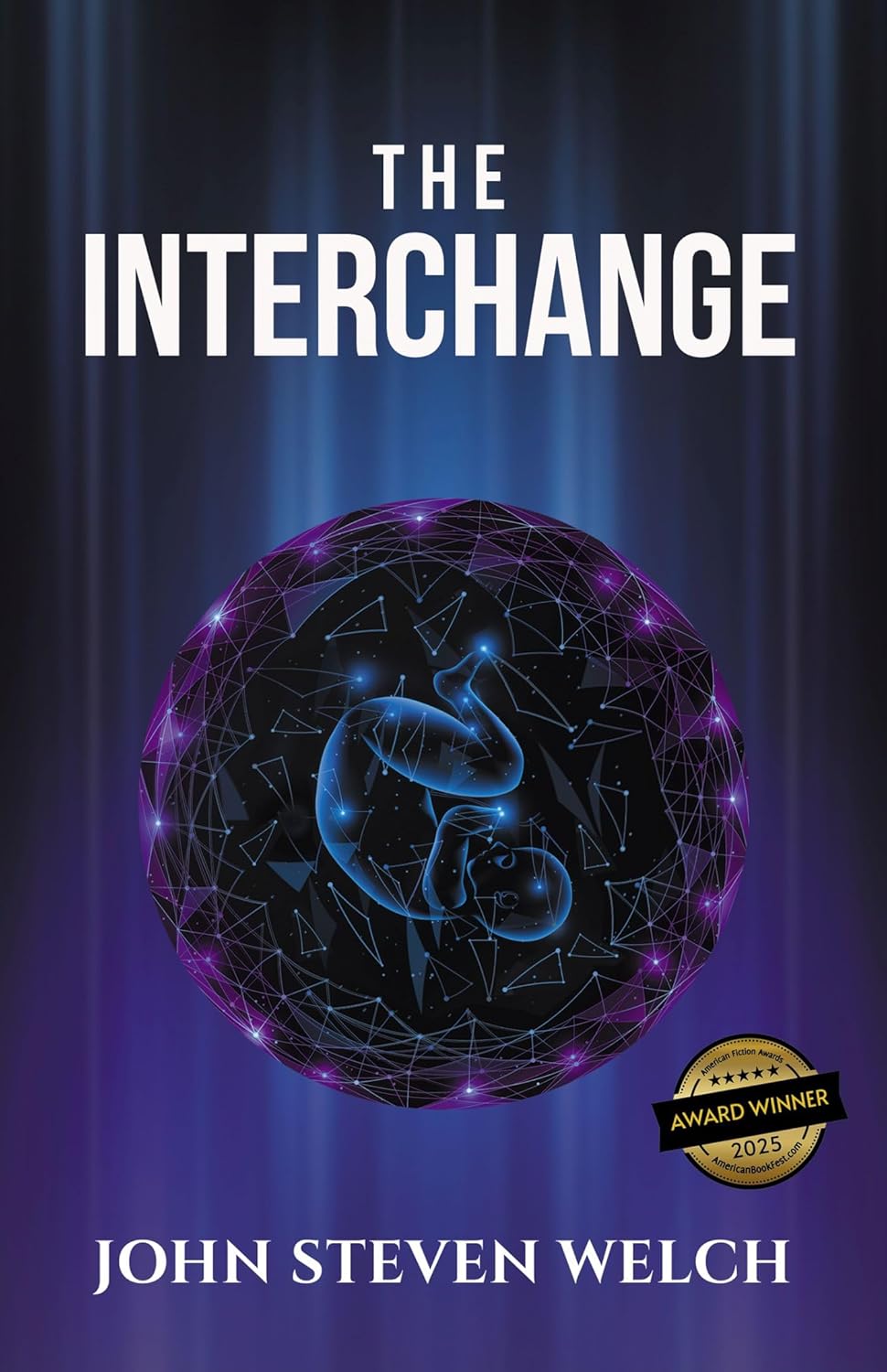
The Interchange imagines a future where identity, family, and power collide in a society rebuilt from catastrophe. It follows Manx Aureole Agnor, a formidable warrior and state leader, as she wrestles with her role in a rigid social order defined by “The Interchange,” a system that categorizes people not by sex but by inherent nature. Against the backdrop of political rituals, national pride, and underground resistance movements, Aureole finds herself torn between her public duty and private doubts, especially as she confronts forbidden desires for motherhood in the “Old Ways.” The story weaves battles both physical and emotional, building a world that is at once grand in scale and deeply personal.
The writing is bold, vivid, and often unflinching, painting scenes of spectacle and violence with almost cinematic flair. Yet the real tension lives in the quieter spaces, where Aureole questions her bond with her son or feels jealousy toward her brother’s easy grace. Those moments struck me harder than the boxing matches or military intrigues. At times, the prose leaned into exposition, explaining the rules and history of New America in detail, but I found myself forgiving it because the ideas were fascinating. The balance between action and introspection kept me engaged, even when I felt the narrative tugging me in too many directions at once.
Emotionally, I went back and forth. Sometimes I admired Aureole’s strength, her drive, her pride. Other times, I felt an ache for her vulnerability, her longing for something she could never fully claim. That push and pull made the book feel alive to me. The ideas here about gender, control, science, and rebellion aren’t just intellectual exercises. They play out in flesh-and-blood relationships, in a mother’s coldness, a grandmother’s pride, a child’s distance. I’ll admit, I got frustrated with the world’s rigidity, and at times even with Aureole herself, but maybe that’s the point. The book isn’t about offering comfort. It’s about showing what happens when systems try to define the deepest parts of who we are.
I’d recommend The Interchange to readers who enjoy dystopian or speculative fiction that asks hard questions rather than giving easy answers. The Interchange reminded me of the sharp social critique in The Handmaid’s Tale and the futuristic ambition of Brave New World, though it carries its own distinctive blend of raw emotion and political spectacle. If you’re drawn to stories of power, family, and identity, and you don’t mind sitting with some discomfort, this book has plenty to offer.
Pages: 238 | ASIN : B0DTZJ3SLP



 LITERARY TITAN