Blog Archives
Conflict & Peace: At Home with Jesus
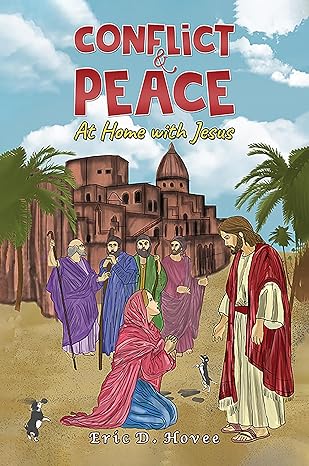

When I first opened Conflict & Peace: At Home with Jesus, I expected a familiar retelling of biblical stories, but instead I found something far richer and more layered. The book walks through twelve figures ranging from Matthew and Mark to Constantine and Luther and explores how each shaped, struggled with, or even fractured the Christian story. Eric D. Hovee doesn’t shy away from pointing out contradictions, tensions, and the uneasy balance between faith and evidence. What emerges is less a polished theology and more a raw chronicle of pioneers wrestling with belief, doubt, politics, and power. The book argues that Christianity has always lived at the crossroads of conflict and peace, heresy and orthodoxy, struggle and hope.
The writing style surprised me. It’s not slick or overly academic, and that’s what makes it work. Hovee mixes scholarship with a kind of candid storytelling that feels personal and searching. He admits where his own faith has faltered, where scholarship has raised more questions than answers, and where interpretations may lean too heavily in one direction. I appreciated this honesty. The detail can be overwhelming at times, with deep dives into language debates or church history that slow down the flow, but even then, I never felt the effort was wasted. It gave weight to his central claim that truth isn’t always clean or easy.
What I liked most, though, was the emotional undercurrent. This isn’t just about doctrine, it’s about Hovee’s father, about legacy, about the ache of wanting faith to feel real in a world of contradictions. I felt that ache with him. When he points out Matthew’s overreach on prophecy, or the way Constantine’s empire-building warped Christianity, I didn’t just learn facts, I felt the tension of a man trying to reconcile devotion with doubt. The book left me inspired. It made me look at my own beliefs with sharper eyes and a softer heart.
I think Hovee’s work is best for readers who want faith that is not easy, neat, or dogmatic. It’s for Christians wrestling with the weight of history, skeptics curious about the roots of belief, and anyone who values honesty over certainty. If you want a book that stirs you, challenges you, and leaves you thinking long after you close it, then Conflict & Peace: At Home with Jesus is well worth the read.
Pages: 401 | ASIN : B0F5641XR1

The Hope of Heaven

Singing Through Fire shares with readers how your life took an unexpected turn when you developed a chronic illness, leading you to cross paths with a youth pastor facing terminal cancer, and falling in love even though you knew your time together was limited. Why was this an important book for you to write?
Singing Through Fire was important for me to write because I knew God was calling me to share my story to encourage other sufferers. Walking through illness and loss was never the path I would have chosen, but it became a place where God’s presence and grace shone most clearly. Writing the book was an act of obedience, a way to testify to His goodness even in seasons of deep suffering. My hope was simply to be faithful with the story He entrusted me with.
What is one piece of advice someone gave you that changed your perspective on God and faith?
One of the most life-changing truths someone shared with me was that our present suffering, as heavy as it feels, is not the end of the story. Scripture reminds us that the eternal glory awaiting us far outweighs the pain we endure now. That perspective shifted my focus from asking “why me?” to lifting my eyes toward the hope of Heaven. It doesn’t erase the grief, but it gives it meaning and frames it in light of eternity.
What was the most challenging part of writing your memoir, and what was the most rewarding?
The hardest part was returning to memories that were still raw with grief and pain. Writing about them meant reliving them, and at times I wondered if my heart could handle it. But the most rewarding part was seeing how God had been present through it all, and how He wove beauty and love even into suffering. Putting it on paper gave me perspective, gratitude, and a way to honor the people and moments that shaped my story.
What do you hope is one thing readers take away from your story?
I hope readers come away with the assurance that even in the darkest seasons, God has not abandoned them. Life may not unfold as we expect, and suffering may come in ways that feel unbearable, but God is still faithful. If my story encourages someone to hold on to hope and to trust His heart, even when His plan feels hidden, then the book will have done its work.
Author Links: GoodReads | X (Twitter) | Facebook | Website | YouTube | Instagram | Amazon
Enter Matthew Silverman: a witty, wise, and impossibly joyful youth pastor and professor facing terminal cancer. What begins with a few random encounters soon ignites an extraordinary, God-written love story that neither of them saw coming.
As their unlikely romance unfolds between medical crises, late-night laughter, and unexpected musical performances, Matthew’s unshakable faith challenges everything Lara thinks she knows about God’s goodness—and what it means to walk with Christlike faith, resilience, and joy in the face of overwhelming grief and suffering.
But with time against them, one question looms louder than the rest: What if this gift is only for a moment?
Surprisingly funny and spiritually rich, Singing Through Fire is a modern-day “Job meets Lucille Ball.” It explores what it means to suffer, love, and even laugh and make music while your life is burning down around you. It eloquently gives voice to the aching questions many sufferers quietly carry—then takes readers inside the breathtaking story of two people who found miraculous love and defiant joy amid heartbreaking loss.
It reveals how God can use even our deepest pain to write the most beautiful love stories—even on the cusp of eternity.
Life’s Transience

Exits is a collection of poems that moves in and out of nature, memory, and mortality with a sharp eye and an unflinching voice. What inspired you to write this particular collection of poems?
Nearly all of the poems in Exits were written between 2003 and 2021, before the idea of authoring a book ever came to mind. Three years ago, I decided to incorporate what I considered to be my best work into a book entitled Line Drawings. However, during the process of selecting poems, I noticed that a substantial number were related to various aspects of mortality. This led me to curate a more concise, themed collection, and Exits was born.
How did you decide on the themes that run throughout your poetry book?
I think my focus on life’s transience — the finite nature of our biological selves — derives from three sources. First, I was raised without any religious training, so from a very young age, I was left on my own to ponder the enormity of the universe, time and eternity, and the meaning of existence. I remember being cognizant of death as early as age five. Second, as a physician and neuro-ophthalmologist, I’ve cared for numerous patients with serious and/or life-threatening diseases. And third, since 1999, I’ve had to deal with the spinal cord variant of multiple sclerosis and the ramifications of that disease.
Did you write these poems with a specific audience in mind, or was it a more personal endeavor?
During the writing process, the intended audience was always me, or, to be more precise, the facsimile of me that constantly looks over my shoulder and critiques every word I draft. The word ecstasy comes to mind. It captures the elation I feel when a line finally comes together, but it derives from the Greek ek stasis ― to stand outside of oneself.
There’s certainly nothing wrong with writing for a defined audience, or respecting the conventions of a particular genre, or exploring themes and issues that are currently in the public eye. My approach happens to be different. What matters most to me are the words on the page, how they sound in air, and meeting the standards I set for myself.
What did you learn about yourself through writing this book?
The lessons I learned while writing the poems and designing the book (which are outlined below) may be of benefit to other debut authors and/or emerging writers:
- Write poems that reflect your unique aesthetic sensibilities. Try not to be overly influenced by prevailing trends or by contemporary poetic styles.
- Edit mercilessly over an extended period. Satisfying first drafts often begin to show their flaws only after sufficient time has elapsed to afford an objective assessment.
- Begin your foray into publication by submitting poems to literary journals. This will help you determine which of your poems resonates with experienced reviewers. Before each submission, make sure that your poem is a good fit for the journal.
- Be patient. Practically every aspect of the publication process moves more slowly than expected.
- Be persistent. Exits went through twenty-two revisions over the course of a year before I felt it was ready for publication.
Author Links: GoodReads | Website | Amazon
We live our lives counting moments, those we hope will last forever, and those we fear. In Exits, award-winning poet Stephen C. Pollock transforms these moments into sublime and magical music. With language both intimate and powerful, he explores the fragility of life, the cyclical truths of nature, and the mysteries of renewal that arise from even the darkest places.
Each poem is paired with evocative artwork, creating an immersive reading experience that lingers long after the final page. From myth to mourning, from dreams to decline, and from flora and fauna to the warming of our world, Exits reminds us that beauty is never far from loss, and that every departure leaves a door ajar.
Winner of the 2024 North Street Book Prize for Poetry, the 2023 Readers’ Favorite Gold Medal, and seventeen other literary honors, Exits is a masterful collection for those who believe that poems should move you, stay with you, and change the way you look at life.
Step into these pages. Lose yourself in poetry that’s both technically exquisite and emotionally arresting. And discover why every exit is, in its own way, an entrance.
Authenticity and Spirituality

Grand Illusion follows a gifted Balinese fabric artist who meets a wealthy heir from the Emirates, who introduces her to a world of opulence and power, far from her roots and heritage. What was the inspiration for the setup of your story?
The setup began at the ending of Moroccan Sunset. Zayn Al Farooq was introduced as the youngest of Elena’s older brothers. We saw that he was into the privileges his family’s wealth provided. Yet he was fascinated by Mara’s ethereal beauty and creative talent.
When I began Mara’s book, I felt like I knew her character by now and could envision her unease in falling into Zayn’s lifestyle. Her cultural beginning was always about authenticity and spirituality. The cultural and religious barriers soon followed, making Zayn and Mara’s romantic connection next to impossible.
The entrance of Wayan, with a similar background, brought home the importance of her roots.
It seemed like you took your time in building the characters and the story to great emotional effect. How did you manage the pacing of the story while keeping readers engaged?
To allow Grand Illusion to be read as a standalone, I had to walk a balance between readers who knew the characters intimately and those who were first being introduced. That required just enough backstory for new readers to catch up.
Basically, I had to focus on speeding up the less important moments between the characters, yet slowing down the primary moments. A good example is with Annie and Mara on the sailing yacht. Throughout the series, readers learned how much Annie loved that moment when the sail is hoisted. I have written it multiple times, so it was easy for me to speed through it. However, in this case, my editor, who had not read the other books, told me to write it like it was the first time, but now seeing it through Mara’s eyes. It completely changed the scene.
Now that you have finished your Annie’s Journey series, have you discovered anything about yourself while researching and writing these women’s stories?
I have a wide circle of friends, many of whom have faced serious stumbling blocks in their lives. The same applies to me. Personally, I believe in the ‘angels among us’ theory. In my writing, there is always someone who comes along to impart wisdom or insight. It can come from typical sources like a relative or close friend. But sometimes it is from a stranger, like the little old woman in the Bali market who cryptically told Annie, “The time to be happy is now.” Or it could be a stone like the one Annie gave to Sarah before her first art exhibition, or the blue diamond ring that Ramone gave Annie.
I finish each of these books with a sense of hope and anticipation about the future. Hopefully, readers experience that as well.
What is the next book you are working on, and when can fans expect it to be released?
Grand Illusion is being referred to as the 5th and final book in the Annie’s Journey series. Currently, I am taking 2 months as an author-in-residence in Blueridge, GA, to find inspiration for a new series. Although there is much to draw from here, I have to admit there are two characters from the series who keep whispering in my ear that their story hasn’t been told. Would it be so horrible if there were a sixth book???
Author Links: GoodReads | Instagram | YouTube | Facebook | Website | Pinterest | Amazon
The 5th and final book in the ANNIE’S JOURNEY series, Grand Illusion: Lesson of a Balinese Lotus, finds young Balinese fabric designer, Mara, at the pinnacle of the fashion world! Her success is bolstered by the charming and enigmatic Zayn, an Arab financier whose influence opens doors to a world of opulence and power. Yet, behind the glittering façade, Mara’s identity is lost in a labyrinth of illusions.
One fateful night, Mara meets Wayan, a fellow Balinese soul and costume designer to the legendary opera diva, Antonella Rossi. Both Wayan and Antonella are entangled in their own webs of deception, struggling to maintain authenticity amidst the pressures of fame and fortune.
As Mara and Wayan’s paths intertwine, the echoes of their homeland call them back to Bali, where the roots of their heritage await to ground them once more. But even if the wisdom and symbolism of their ancestors offer clarity, can they find the courage to redefine their paths?
A Heavy Theme

Weun Academy: The Shadow Maker follows a teenager caught between two worlds—Earth-born and Mars-raised—who suddenly discovers he possesses incredible powers and is whisked away to a secretive academy in a sprawling alien space station. I find the world you created in this novel brimming with possibilities. Where did the inspiration for the setting come from, and how did it change as you were writing?
The original locations of New Eden space station, Rinow City, and Weun Academy first appeared in my D’mok Revival series, but Weun Academy is the first book (and now side-series) to focus on the students and faculty at the academy. While a few existing characters made appearances—or even became permanent faculty—the majority were brand new. To bring these places and people to life, I dove deep into research: conducting “interviews” with each character (my journalism background helped here) and writing numerous backstories about life on the station, Rinow City’s districts, and every building and feature of the school.
The core inspiration came from my son’s experiences in school, my parents’ backgrounds as educators, and my own views on effective teaching strategies. Those influences shaped how the academy operates, the dynamics between faculty and students, and even how superhuman aliens approach learning.
As a “pantser,” I let the world grow through the characters’ actions. Sometimes they wandered into places I hadn’t planned, or a moment in the story demanded more history for a location or alien race. When that happened, I’d pause to explore—often by writing a new short story—so that by the time readers visit these settings, they feel authentic, layered, and full of possibilities.
What were some themes that were important for you to explore in this book?
The core theme of the book is gun violence, inspired by real incidents in U.S. schools. My own son experienced three lockdowns during his school years, the most recent just this past year. I saw firsthand how parents, kids, and educators felt—scared, powerless, and unprepared.
I wanted to make that reality tangible for adult readers, while also giving young readers something they could relate to—validating their feelings and showing them they’re not alone. Most of all, I wanted to offer hope: to show how we can support one another, and how fear, depression, and even trauma can be channeled into something that helps us move forward. It’s a heavy theme, but one I believe is deeply important.
Where does the story go in the next book, and where do you see it going in the future?
Weun Academy will absolutely continue, with Eisah and his crew remaining at the heart of the story. Future books will explore the lasting impact of the first book’s events—on the school, its staff, the students, and their families.
I’m already halfway through writing a novella that bridges the first and second books. A full trilogy is planned, along with a prequel that reveals how the academy was founded. And there’s room for even more.
Each book connects to the greater D’mok Revival literary universe—deepening readers’ understanding of events that shape a much larger storyline, while giving the academy its own unique and memorable place within that world.
Author Links: GoodReads | X (Twitter) | Facebook | Website | Dmok Revival | Amazon
As an Earther on the fringes of a Martian colony, he keeps to the shadows, evading bullies who stalk his kind for sport. But when their cruelty explodes into violence, a dangerous power ignites within him—one that can’t be hidden—drawing unwanted, extra-terrestrial attention.
Torn from Mars, Eisah is conscripted into Weun Academy, an alien school for gifted outcasts. With an uneasy start, he struggles to master his superhuman powers—and finally belong. This alien realm proves just as treacherous.
When a brutal strike shatters the academy, shifting loyalties and hidden agendas drive Eisah and his friends into a fight for answers. Learning who to trust is the deadliest lesson.
As enemies close in, they must untangle a web of lies, betrayal, and something far darker—before shadow consumes them all.
Step into Weun Academy—where mettle is tested, chosen family secures, and the fight to step into your power begins.
Vulnerability and Questions
On the Edge takes the reader through your past lives, telepathic experiences, encounters with entities, and moments of stark human vulnerability. Why was this an important book for you to write?
On the Edge serves as a complement to my two previously published books: On the Other Side. Memories of a Past Life and Conversation with Xenex.
In the first book, I detail how I accessed the memories of a past life and explore the historical context surrounding them. In Conversation with Xenex, I take a more technical approach, speaking about contact with non-terrestrial entities, the role of guides, and the mission I received—sharing as much information as I could from those communications.
However, neither of these books truly captured what the spiritual awakening journey feels like.
With On the Edge, I wanted to explore the human side of this path, including how challenging it is to maintain balance between everyday life, with all its trials, and contact with other realms. I aimed to show the moments of fear, the ecstasy these experiences can bring, and the vulnerability they expose us to.
The path hasn’t been easy. I still experience moments of doubt and distress. But my life has been deeply enriched, and each step forward brings more clarity and motivation to keep going.
What were some ideas that were important for you to share in this book?
Since childhood, I’ve had various experiences that I ignored at first. But as the intensity of these visions grew, I could no longer dismiss them. I chose instead to accept that I had the ability to connect with other realms and non-terrestrial entities.
The parallel between my daily business life and these otherworldly experiences—along with the constant questioning of whether they were real and how I should face them—transformed me both inside and out. I watched myself grow and evolve into a completely different person.
I stepped onto this path with both fear and hope, and in the end, I found myself—at once, the same and entirely changed.
I believe everyone experiences moments of vulnerability and questions their life and purpose. This book aims to be a companion during those times—like a friend who speaks to you when you feel lost, and who shares in the extraordinary moments.
The memoir offers a unique perspective on out-of-body experiences, astral travel, telepathy, and parallel universes. It makes no claim to expertise; instead, it conveys how these phenomena are felt when experienced firsthand.
What was the most challenging part of writing your memoir, and what was the most rewarding?
The most challenging part was speaking about myself. In this memoir, I share stories from my country under Communism, along with some deeply personal and dramatic events. It wasn’t easy to open up completely to readers and bring to the surface moments that were painful for my family and me.
However, I discovered that the process of sharing parts of my life had a therapeutic impact, allowing me to close old wounds and find healing.
I hope readers will feel inspired to look within themselves, revisit their own past, and begin to heal the difficult moments that may have shaped their lives.
What do you hope is one thing readers take away from your story?
Nothing is final. We are so much more than just a body and the roles we play in this lifetime. We are as complex as the level of our soul’s consciousness—which has experienced far more than a single lifetime, a single planet, or even a single universe.
Even if we only catch glimpses of our soul’s evolution while remaining grounded in our 3D realities, there is so much more beyond what we can perceive.
With On the Edge, I want to offer a new perspective on the mysteries of the universe. My hope is to open both the minds and hearts of readers to a whole new world of possibilities.
Author Links: GoodReads | Facebook | Website
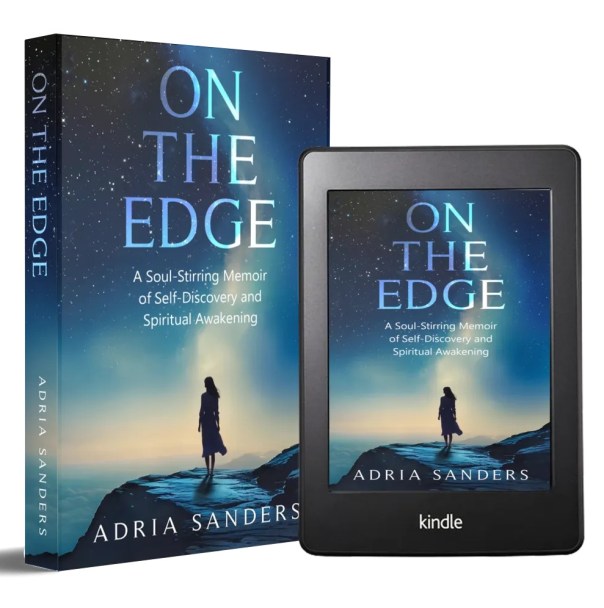
On the Edge is Adria Sanders’ most profound and transformative work—a spiritual memoir chronicling her lifelong journey between the seen and unseen worlds. From childhood visions to encounters with non-terrestrial beings, Adria’s story is one of deep inner conflict and awakening. Initially overwhelmed by her metaphysical experiences, she struggled to reconcile them with everyday life, often questioning her sanity and purpose.
Through out-of-body travels where she perceived herself as a ball of energy, telepathic connections with non-terrestrial entities, and glimpses into parallel universes marked by objects mysteriously disappearing and reappearing within minutes, Adria gradually embraced her spiritual gifts. Her path was not easy, it was marked by fear, isolation, and the challenge of accepting truths that defied conventional reality. Yet, in choosing to walk the edge between worlds, she found clarity, courage, and connection.
This memoir is more than a recounting of extraordinary events; it is a guide for those navigating their own awakening and the vulnerability that often accompanies it. With vivid storytelling and heartfelt insight, Adria invites readers to explore the mysteries of existence and discover the power within themselves to transform confusion into wisdom.
Live Through Grief and Trauma
The Coldmoon Café follows a rotating cast of mourners, monsters, and misfits who stumble into a mysterious café that only seems to exist for the broken. What was the inspiration for the setup of your story?
The inspiration was simple; to share the experiences that our close group of friends had. Not only for each other, but with the world. Before it was all forgotten forever.
The supporting characters in this novel, I felt, were intriguing and well-developed. Who was your favorite character to write for?
While it’s hard to pick just one character (as each added their own voice), for me personally, Simon, Mourns and Charity will always share a special place in my heart.
What were some themes that were important for you to explore in this book?
The most important themes in The Coldmoon are the same ones that every being faces in life. Finding a way to live through grief and trauma, finding love/friendship, and perseverance. Even when the odds seem insurmountable.
Is this the first book in the series? If so, when is the next book coming out, and what can your fans expect in the next story?
The Coldmoon Cafe took place every night, over many years, but was never intended to survive the test of time. Logs weren’t even recorded for the first 1/2 of its time, and most of the rest became lost to the digital graveyards of floppy and Jazz disks. In this first book, I was able to present some of the most important storylines. While there were many not touched from which a second book could be done, they would all be from after the decline of the Cafe. I could definitely do a follow-up short book to address and wrap things up for the readers if there’s a call for it later. But for now, I’m just happy that The Coldmoon is published and out there to share a part of the darkness most people would never get to experience otherwise.
With this project behind me, I’m currently working on my next books, which will be part of a high fantasy adventure series, comprising at least 3 books. I greatly appreciate your time and attention toward my book, and can’t wait until its release date on Oct. 7th!
Author Links: GoodReads | Amazon
In a town where magic simmers just beneath the skin, the Coldmoon Café offers a liminal sanctuary—for monsters, misfits, and haunted hearts that refuse to disappear.
☕ The coffee’s always hot.
💀 The regulars don’t ask questions.
🫀 And if you sit long enough, you might hear a heartbeat that isn’t yours.
Inside This Book
✔ Found family
✔ Vampires and supernatural drama
✔ Grief, memory, and slow-burning healing
✔ Shapeshifters, secrets, and cozy horror
✔ Sad immortals with great boots
Just be careful what you order. Some hungers can’t be satisfied.
Recommended for mature teens and adult readers.
Contains emotionally intense themes and moments of intimacy—nothing explicit.
Communicate Like a Champion
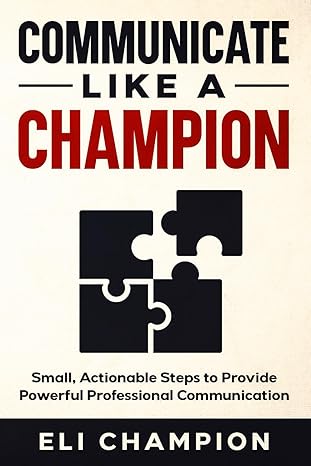
Eli Champion’s Communicate Like a Champion is a straightforward, practical guide to improving professional communication. The book breaks down why communication matters, how intentions shape interactions, what factors influence the way messages are received, and how to put strategies into practice with clarity and empathy. It’s full of simple, actionable steps, like clarifying your purpose before a meeting, checking tone in emails, and following up after conversations, that aim to make anyone a more confident and respected communicator.
What stood out to me initially was the book’s emphasis on practical application rather than abstract theory. Champion illustrates this with the example of a manager calling for “a quick meeting” without providing context. As he explains, such ambiguity often leaves employees uncertain and anxious, unsure whether they have erred or whether the meeting is merely routine. I found this example particularly resonant, having experienced the situation from both perspectives as the uneasy employee and as the manager who failed to provide sufficient clarity. The recommended adjustments, such as stating the purpose of the meeting at the outset or clarifying next steps before closing, are deceptively simple yet highly effective. I could immediately envision how these practices would have alleviated unnecessary tension and improved understanding. This emphasis on directness and transparency exemplifies the book’s core message: communicate with precision to minimize confusion and foster confidence.
I found the chapter on the “7 Components of Communication” particularly instructive. While the framework, clarity, confidence, respect, listening, tone, empathy, and follow-up may appear familiar, Champion’s illustrations prompted meaningful reflection on my own communication practices. One example contrasted the response “I don’t think that will work” with the more considerate phrasing, “I see your point, but can I offer another perspective?” The distinction is subtle yet powerful, highlighting how word choice and tone can determine whether a message is received as dismissive or constructive. Confronted with this comparison, I recognized moments when I have defaulted to the blunt response, often unintentionally undermining collaboration. The example served as a useful reminder of the value of consistently striving for a more respectful approach.
Another notable feature of the book is the 28-day communication challenge. Organized around weekly themes, such as clarity, listening, empathy, and follow-up, it provides daily prompts that encourage practical application, including exercises like restating a colleague’s point to confirm understanding or sending a follow-up email after a meeting. I appreciated that this section moves beyond theory to establish a structured practice routine. When I applied one of the suggested exercises, clarifying my intention at the beginning of a meeting, I was struck by how much more effectively the conversation unfolded. The challenge, paired with the book’s approachable tone, created the sense of being guided by a mentor offering encouragement, rather than being instructed by a prescriptive voice.
I found Communicate Like a Champion to be highly practical and accessible. Rather than relying on jargon or overly complex frameworks, it presents straightforward tools and encourages consistent application. I would recommend this book to early-career professionals seeking to develop confidence, to managers aiming to strengthen their leadership presence, and to anyone who has left a conversation feeling uncertain about its outcome. With reflection and deliberate practice, the strategies outlined here have the potential to significantly improve the way one engages in meetings, correspondence, and professional interactions more broadly.
Pages: 65 | ASIN : B0FG71T9MZ



 LITERARY TITAN