Blog Archives
Dorm to Doorstep – Tips, Tidbits & Tales Every Young Woman Will Want to Read


Dorm to Doorstep is a lively mix of advice, stories, and straight talk aimed at young women stepping into adulthood. Author Hilary Afshary blends motivational tips, cautionary tales, and personal lessons into a bright, fast-moving guide. The book moves through themes of confidence, safety, health, relationships, and self-discovery, and it uses short chapters, bold reminders, and striking visuals to keep the messages clear and easy to absorb.
Reading this book felt like sitting with someone who genuinely wants you to do well. I found myself surprised by how open the writing is. Some moments made me smile, and others stopped me cold, especially the tougher stories about fear, loss, and mistakes. The honesty worked for me because it made the advice feel earned. I also loved how often Afshary circles back to choice. She keeps reminding the reader that you control you. That simple idea hit harder than I expected. The writing is plain spoken and warm, and at times I felt like she was nudging me gently in the ribs and telling me to get my act together in the kindest way possible.
There were moments when the book felt more like a pep talk. Still, the personal stories kept things grounded. The camping mishap, the chipped tooth saga, the warnings about safety and substances, the fashion flubs that turn into life lessons. They all gave the book texture. I appreciated how she admits flaws openly. I found myself trusting her more because of that. The mix of humor, vulnerability, and big sister energy kept me turning the pages even when the advice was something I had heard before. It felt fresh because it was hers.
I would recommend Dorm to Doorstep to young women heading into college or early adulthood and to anyone who wants a boost of clarity and confidence. It is quick to read and full of heart. It would also be a great pick for parents who want something positive to hand off to their daughters. The advice is simple and actionable and delivered with a mix of love, caution, and cheer that makes it easy to take in.
Pages: 282 | ASIN: B0F5HYW9CD

Comfort and Risk

In Dead Reckoning, a group of detectives and their families find themselves embroiled in a mystery complete with missing passengers and eerie mysteries on what should have been a relaxing Mediterranean cruise. Where did the inspiration for this mystery come from?
I’ve always been interested in how a normal setting can suddenly turn dangerous. Cruises are supposed to be fun and relaxing, but they’re also closed‑off worlds where people can’t just walk away. That mix of comfort and risk gave me the idea for Dead Reckoning.
How do you balance story development with shocking plot twists? Or can they be the same thing?
For me, they go hand in hand. A twist works best when it grows naturally out of the story. I like to drop little clues along the way so readers feel surprised but also realize the twist makes sense.
What do you find to be the most challenging aspect of writing a trilogy? What is the most rewarding?
The hardest part is keeping everything consistent from book to book — characters, details, timelines. The best part is being able to spend more time with the world and the people I’ve created. It lets me go deeper and give readers more to enjoy.
Can fans of The Stanton Falls Mysteries look forward to more work from you soon? What are you currently working on?
Yes! Dead Reckoning is a stand‑alone mystery, separate from the Stanton Falls trilogy. I wanted to give readers a fresh story with new characters and a different setting. At the same time, I am continuing to develop future projects — including more mysteries — so fans of Stanton Falls can look forward to new work from me soon.
The Leader Connection

The Leader Connection lays out a clear and heartfelt blueprint for what leadership can look like when connection sits at the center. The book moves through personal stories, reflections, and structured explanations of leadership styles, communication, emotional intelligence, inclusivity, and the daily habits that shape teams. It blends storytelling with guidance in a way that feels both instructional and personal. The author returns again and again to one central idea that leadership is not about authority. Leadership is about people, relationships, and the courage to show up with empathy and clarity.
The writing has an honesty that makes the lessons easier to take in. It feels like sitting with someone who has lived through the highs and lows of leadership and wants to save you a few hard knocks. Some sections moved quickly and carried a lot of detail. Still, the personal moments resonated with me. The porch conversations with family, the reflections on being only “30 percent” at times, and the admission that leadership is a lifelong balancing act. These parts made the book feel warm, real, and grounded. I appreciated that it did not pretend that leadership is neat or simple. It showed the mess. It showed the growth. It showed the heart behind the concepts.
The breakdown of the eight leadership styles was one of my favorite pieces. The explanations were straightforward and avoided the kind of buzzwords that often bog down leadership books. The author talked about transformational leadership in a way that made me feel energized. Then he moved to servant leadership and cracked it open through lived experience rather than textbook definitions. I also liked how he admitted the limitations of each style. Nothing was presented as perfect. Everything had a cost and a reward. That honesty added weight to the guidance. At times, I wished for more story and fewer lists, but even then, the content stayed practical and easy to follow. The tone felt approachable, like a mentor showing you notes from a career full of lessons, some earned the hard way.
I feel that this book would be a meaningful fit for new leaders, seasoned managers who want to reconnect with their purpose, and anyone who feels the weight of responsibility and wants a clearer path forward. It is especially fitting for people who lead with heart, or who want to. The book’s message is simple. If you focus on people, if you stay honest, if you listen, if you stay willing to grow, you can make a real difference.
pages: 186 | ASIN: B0FN1VV122
Secrets from an Older Generation
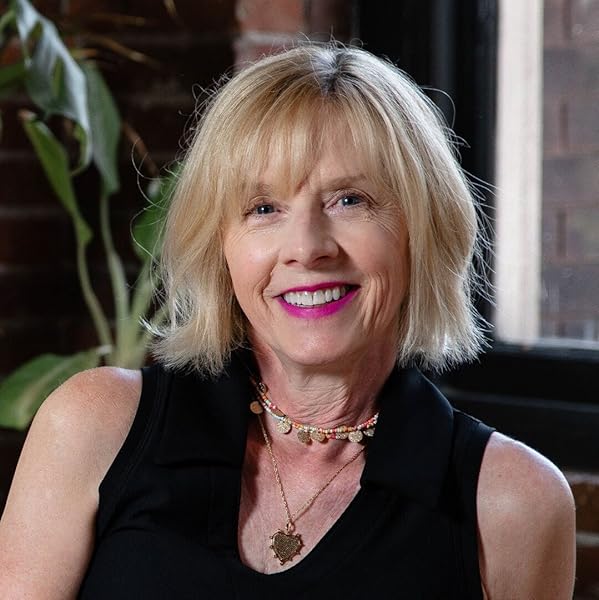
All Fired Up follows two strangers who meet on the way to a small island in the Pacific Northwest and discover a shared history while trying to solve an old mystery shrouded in dangerous secrets. What was the inspiration for the setup of your story?
Secrets that can’t stay hidden forever. Once they are discovered, they can trigger an avalanche of trouble, including rekindling long-held resentment. In my story, these are secrets from an older generation. My main characters, Jack and Marianne, discover that their grandfathers knew each other and did something long ago that now has repercussions, and another individual feels it’s time to get even.
I enjoyed the slow-burning romantic relationship between Marianne and Jack. How did their relationship develop while you were writing it? Did you have an idea of where you wanted to take it, or was it organic?
It was very organic. Although I knew that in the end, I wanted them to be together, I didn’t want it to be easy or rushed, and I didn’t always know what would happen next. I understood each of my characters, but I didn’t always know how their personalities would respond to each other. I would write a scene and initiate some action, and see how each personality responded to it and to each other. They became real people to me. But I did have some control. 😊 I wanted them to be tempted, but I didn’t want them to play around with each other. They are two mature adults with responsibilities, and they led two very different lives. So, I tried to write about their relationship as it might be in real life, with two people circling each other cautiously, feeling that there is a connection, but also reeling a bit because this came at them out of the blue: this connection. I also wanted them to be aware that it might not work with the others’ lives being incompatible with theirs at present. Jack is used to life in special ops, never being home and he wants to return to the army because it’s a life he is familiar with and one he does best. Marianne is realizing she wants a home life and her own family. I used the comforts of a home, meals together, and a homeless teenager to further connect Jack and Marianne, giving them both another purpose in life other than what they each currently pursue. It’s what could happen in real life for two people, life showing them what really matters and what truly fuels the heart.
Was there a reason why you chose this location as the backdrop for your story?
Yes. I love the San Juan Islands, and Orcas Island is one of those in that chain of islands in the Pacific Northwest. When I was young, my family would go boat camping around these islands. We would go into the Deer Harbor marina on Orcas to use the laundromat and buy supplies. To this day, I still visit Orcas Island for hiking or a weekend getaway. The ferry ride from Anacortes takes just over an hour to get to Orcas, and during that time, the world just slows down, and you are transported to another pace of life. It’s magical. It’s also beautiful with the wildlife, the evergreen trees, and the rocky beaches. I also like the idea that a serene-looking island can have its secrets.
I hope the series continues in other books. If so, where will the story take readers?
The series will continue. There are currently four friends in The Barefoot by Moonlight writers’ group, and each gets their own story. The next book, All You Desire, is set in LaConner and is due out in 2026. In book 1, you met Marianne’s brother Ian Dunaway and her best friend Fiona Sanchez, who is also a member of The Barefoot by Moonlight writers’ group. Ian and Fiona had their eye on each other in book 1, and we’ll see what happens next when a mystery brings them together in the idyllic town of LaConner. Books 3 and 4 are in development, where you’ll meet the other 2 writers in the group, where they, too, will discover a romance and a mystery.
Author Links: GoodReads | Instagram | Website | Amazon
When Marianne and Jack meet on the ferry to Orcas Island, it couldn’t be more awkward—for Marianne, that is. Jack has no problem with a woman landing on top of him. It’s a case of opposites attract. But they each have their reasons not to get involved.
But on this small island, avoiding each other isn’t to be.
An old tale of stolen jewels has resurfaced, revealing a dangerous secret kept by both of their grandfathers. It will take Marianne and Jack together to uncover the truth before one of them gets hurt. But solving the mystery means working out an arrangement. Jack needs a place to stay. Marianne has rooms to spare.
In close quarters, it’s soon apparent that solving the mystery might be easier than trying not to fall for each other as they realize that they both long for the same thing.
Who says nothing ever happens in a small island town?
Romance and mystery readers alike will love this page-turning romance set in the ruggedly beautiful Pacific Northwest where an island slowly gives up its secrets.
Racing Against Time: On Ironman, Ultramarathons and the Quest for Transformation in Mid-Life

Racing Against Time follows Jeffrey Weiss as he moves from a late start in endurance sports to an astonishing personal transformation. The book traces his path from a worn-out teenager chasing a free t-shirt in his first 10K to a fifty-six-year-old pushing himself through ultramarathons, Ironman races, and long nights of doubt and grit. The early chapters set the tone clearly. Weiss frames running, triathlon, and extreme endurance not as sports alone but as a way to reshape the aging curve and reclaim a sense of purpose. His story grows from a simple memory of walking the last miles of a teenage race to the vivid description of cramping through the Valley of a Thousand Hills in the Comrades Marathon. It is a story of stubbornness. It is a story of self-reinvention. It is a story of learning to push past what you thought your body could do.
When I read Weiss describing that first failed 10K and how it gnawed at him for thirty years, I felt that sting in my own gut. The writing is not dressed up with fancy literary tricks, and that works. His voice is honest. He talks about fear, pride, ego, and the weird little lies we tell ourselves when we are chasing a goal that scares us. I like how he lets the reader sit with his uncertainty, especially as he deals with injury, aging, and the emotional toll of training alone. The chapter where he stands in the Marine Corps Marathon start area, wrapped in old sweats while surrounded by thousands of runners, has this intimate energy. I found myself rooting for him, even when he doubted he should be out there at all.
I also enjoyed how Weiss talks about the messy parts of chasing big goals. There is no glamor here. He describes feeling awkward in his first triathlon swim. He admits he hated running at first. He talks about the grief after his father’s death and how that loss pushed him to confront his own decline. The way he connects exercise to identity hit me hardest. It’s not a lecture. It’s more like listening to a friend unpack years of mistakes and tiny wins and then laughing a little at himself. I appreciated the warmth with which he writes about the people who pushed him along, like his coaches, his brothers, and his wife leaving encouraging notes during races. That tenderness snuck up on me, and it made the whole story feel fuller and more relatable.
This book would hit home for anyone in mid-life who feels stuck or who worries that their best years are gone. It would be great for new runners who want a companion who admits every fear they are feeling. It would be even better for people who have always wondered what it might feel like to chase a ridiculous dream just to see if you can do it. Weiss makes the case that it is never too late to change your curve, and he does it with heart.
Pages: 279 | ASIN: B0FC5MVLRM
Refuge for Human Civilization
Fragments of Light follows a young Archivist named Keela as she uncovers relics of a forgotten civilization while ancient machines awaken beneath the ice. What was the inspiration for the setup of your story?
Winter. It all started with that. I live where winter is a VERY present concept, and as much of an avid reader as I am, rarely did I ever find a compelling SciFi story that took place in winter or somewhere where winter was the norm. So I figured that starting everything there would be something that could generate a different type of texture to the narrative. And one of those threads is the impact – or I should probably say “impacts” – of climate change. As harsh an environment as the Arctic is, climate change has a disproportionate effect on it; everything seems magnified. So to me, that area would likely be a natural refuge for human civilization should the World go to Hell in a handbasket…
Keela’s emotional journey feels incredibly intimate. Was her character shaped by any personal experiences or themes you wanted to explore?
No personal experience per se. However, being a parent, I see that many young people – and having been one myself – are unsure of the potential in them; of the strength that inhabits them. Sometimes it’s easier to wait for someone else to do what needs to be done, but most of the time, YOU could do it, and you could probably do it better. As for the archivist part, that’s purely projection: I’m a big history nerd! I just find it fascinating – good and bad – how technology throughout the ages shaped humans; how it creates a virtuous (or perverted, depending on where you stand) cycle where humans create technology that changes them and allows them to create more “advanced” or different technology that in turn changes them again, and so on and so forth.
What were some themes that were important for you to explore in this book?
Resilience. Ambiguity. Adventure. Friendship. And as corny as it sounds, humor. Because I really do not want to live in a world where even during the worst of the worst we are not able to smile or laugh. Maybe not at what’s happening, but surely at how we deal with ourselves and others.
The machines beneath the ice feel both mythical and scientific. What was your process for designing their nature and purpose?
Well, in Fragments of Light, machines are not generally “under the ice.” Some are, but it’s more because of their purpose, really. In the subsequent books, we see that Keela and Anina need to go outside the safety of their known world – the Arctic – and cross entire continents to continue their quest and get to interact with many different societies, machines, and people.
.
Without spoiling too much, let’s just say that machines are left over from a technologically advanced world that existed pre-Fracture. One where geo-engineering was seen as the way to stop/reverse/curb global environmental collapse. Think huge sun reflecting mirrors, carbon catchers, water purifiers, methane gas processors, etc. These would need to be massive, on a scale that would blow your mind, in order to affect the climate of a system as big and complex as the Earth. And you are right, as with anything that is old, eventually they did drift into mythology or quasi-myth.
Author Links: GoodReads | Amazon
Keela was meant to guard the past, not be claimed by it. In the frozen city of Lumik, she touches a relic that hums with memory, and nothing stays buried. Her quiet life shatters, pulling her into a truth no one else will face.
With Anina, a gifted technician who reads machines like language, Keela follows its call across a fractured Earth. Engines stir beneath snow. Salvage-built cities whisper of healing long abandoned. Wonder ignites, but so does danger, as rivals twist awe into power.
This is not destiny. It is choice. And when no one else steps forward, Keela must.
For fans of Skyward, Scythe, The 100, and Ship Breaker. Discovery-driven sci-fi with brave heroines, hidden tech, and the courage to do what must be done. Scroll up to begin.
Assimilation

Assimilation tells the story of Kercy, a fragile and often isolated young woman whose life is split between the harshness of her family and the eerie beauty of the Soshone Islands. The calm of her summers fractures when she hooks a grotesque, severed limb in the lake, only to be visited that same night by strange beings who invade her room and her body. That moment becomes the axis of her entire life, leading her toward hidden truths about her parents, her own biology, and the horrifying forces lurking beneath the water. The book follows her journey from isolated child to self-possessed adult as she navigates love, danger, loss, and the long shadow of whatever visited her that night.
Reading it pulled me around emotionally in ways I didn’t expect. Some sections felt tender and slow, almost sleepy with the warmth of summer afternoons, then suddenly the story lurched into fear and chaos. I kept feeling this knot in my stomach because the writing toys with dread in such a quiet way. Busch’s descriptions of water and landscape are gorgeous and simple. They gave me a sense of calm. Then he ripped it away with scenes so bizarre I actually had to pause. The alien encounter scene hit me hardest. It felt weirdly intimate, almost like watching someone relive a trauma they barely understand. It made my skin prickle because it blended dream logic with physical detail in a way that felt too real.
But the part that stayed with me most wasn’t the creatures. It was the messy and painful bond between Kercy and her parents. Her father’s coldness stung every time he appeared. Her mother’s love felt too thin in some moments and heartbreakingly fierce in others. The whole time, I felt this quiet anger building under the surface. He disappears early in the book, yet his absence keeps shaping her life like a bruise that never fully heals. By the time the story reaches its later chapters, where Kercy reflects on the ruins of her past from adulthood, I felt this soft ache for everything she carried that nobody helped her set down.
Assimilation struck me as a story for readers who love emotional tension mixed with strange, unsettling mystery. Assimilation blends the emotional depth of The Girl with All the Gifts with the eerie, slow-burn dread of Annihilation and the intimate character focus of Room, creating a story that feels both tender and terrifying. If you like atmospheric fiction with sci-fi elements woven into human pain, or if you enjoy stories that linger in your mind, this one will absolutely grab you.
pages: 335 | ASIN: B0FSSJP5CP
Creation Unfolding

Nothing and Blank Save the World and Other Tiny Works follows a constellation of poems and stories that intertwine cosmic creation, human vulnerability, and the beauty of connection into a single, awe-filled tapestry. How do you balance scientific wonder with emotional truth in your writing process?
As the second-to-last poem, “A Scientist with an Arts Degree” hints—or, rather, outright states—I have both a science (Biology) and arts (English and Creative Writing) degree, obtained in that order. I think the order matters. For as long as I can remember, I have always been fascinated in the sciences; the theories and explanations of the unknown, and the possible answers to impossibilities. That curiosity, and perhaps a tiny bit of staring at and learning about the night sky, is what fueled many of the works in the collection. The physical world can be explained in complex terms that people read in textbooks or academic journals. Elements of the human experience, much like atoms, chemical compounds, and even space dust, are also tangible, universal (no pun intended), and can be explicated.
But what if, I thought, it was more than that?
As a person of faith, one of my favorite things in the world is things that are unseen. Faith is the evidence of it. Evidence of the unknown, the not yet, the maybe. How can we as humans answer unknown questions or give unknown answers? That, I believe, is the vehicle of this collection that the fuel powers. There is what we know, there is what we don’t know, and then there’s us, smack in the middle of the two. I wanted to write about both together—to form that ever-so-peculiar balance. I pick an idea or concept or person and just… think, and write down my thoughts. Take, for example, a star. We know it’s there. We know what it’s made of, we think. But… how did it get there? What is it, really? Can it think like we can? What if it could? How does it spend its life? What if, what if, what if? The exact same thing goes for people. Everything is a wonder, and, with the right words, they can be explained further or explored from different angles. I’ve, as someone I talked with recently put it, “allowed myself to feel” this sense of wonder and curiosity, and the very human emotions behind them. Writing them down was the next logical step. Somehow, it all fits into two hundred thirty-six pages. And curiosity fuels the cat.
The title story feels allegorical and foundational. What inspired the beings who created the world out of light and darkness?
The characters Nothing and Blank are probably the earliest concepts that have come from this book. Over a decade before the publishing of the book, I wrote a little bit about the two in a smaller version of the final poem. In the early stages of my fixation on space, I fashioned small beings in my brain made of stardust, just floating somewhere in the universe with nothing to do but play around. I came to the conclusion that the two were children, curious about the world around them. So curious, in fact, that they would want to participate in their surroundings after watching it all happen for some time. Nothing and Blank simply watched creation unfolding. At some points in life, that’s all we as humans can do. Watch beauty form. Watch things change and grow. And, when given the opportunity to make something of our own, we use what we have and what we know to mold something else. Nothing and Blank are the embodiment of cosmic inquisitiveness—in many ways, my cosmic inquisitiveness, and my own quest for creation from childhood to adulthood.
It’s not easy for me to describe what exactly the light and darkness are in the poem, and what connotations are connected to them. They are both powerful forces coexisting. But I think it was important that the two characters were not one-hundred percent light or dark, and that there was a little bit of each other within. Balance. Equilibrium. Order. A more neutral version of yin and yang. I think writing “the balance thereof is life” was the moment I reached an epiphany concerning the ideas of the poem. The two beings, with their light and darkness, worked together to make a world, to save a world.
The balance of light and darkness as a concept is present in many beliefs and symbols on Earth. Neither can exist without the other, so to speak. There is good in bad; there is bad in good. The balance thereof is life. Everything that was created, I think, is a result of that concept. In my own life, I’ve had to sort of come to terms with this, more especially the good in the bad. Maybe I longed for the balance when creating the poem, or I wanted to know where the balance came from, or what it felt like. Both light and darkness were used to create in the poem. It gives me assurance in a weird sort of way.
Your imagery is vivid and recurring. Are there particular symbols you return to intentionally, or do they emerge organically as you write?
Sometimes I look back at my own work and, while laughing, I notice quite a few recurring ideas: life, death, space, and the unknown human experience. All things I love writing and learning about. All things I have never fully understood or participated in myself, save for a few decades on Earth. I look at my surroundings, again with laughter, and find that I am bombarded by these ideas every single day. I know of life. I know of death. I read about space all the time. I hear stories from people I could never be doing things I could never do.
Sometimes, I come up with thoughts and scenarios about these ideas in hopes that I am close to an answer for them, or at least something that makes sense to me. I’ve never died or stepped outside of our galaxy. I’ve never gotten married (yet?) or been to Washington state. I’ve never seen a constellation up close or run away from home.
What would it be like?
It’s really convenient that these ideas are, in many ways, both constant and changing continually. I think they’ll stick with me for a very long time.
What part of this collection challenged you the most to share with the world?
Though most of the poems and short stories are fictional, there is a little piece of me laced in some of the letters. I was most afraid of… doing that. A good writer will place themselves somewhere in their work to make it more relatable, either through characters, plot, or other story elements. But me? The hardest thing to write about is myself. If I were to place myself in this book, what would happen? Would people understand? Would people get it? Would they paint a picture of me and pass some sort of judgment? I was afraid of writing about my experiences and thoughts in their raw form. I was afraid of revealing so much about me, even in subtle ways. I didn’t want people to know (the real) me. For months, I struggled with pouring out my heart into the pages as I typed and being honest and open about myself. But I realized that it was the only way to breathe life into the poetry and stories and make the language authentic. Short stories like “Coffee Stains” and poems like “6/8” or “Sussan’s Sonnet” became much easier to craft.
The review of my book called me “brave.” I think that’s the word for it. It took a lot for me to be as vulnerable as I was, allowing myself to be myself. Allowing myself to be. It was okay to be honest and expressive. I didn’t have to limit my emotions or interweave my diction with superficial statements or imaginary sentiments. I could be genuine. It sometimes feels, in real life, that I can’t. But on paper, I can.
Now that this book is out, readers can catch a glimpse of my mind, of me as a person. And, ultimately, it was a great decision to make.
Author Links: GoodReads | Website | Amazon



 LITERARY TITAN