Blog Archives
Spiritually Homeless: Finding our way beyond religion
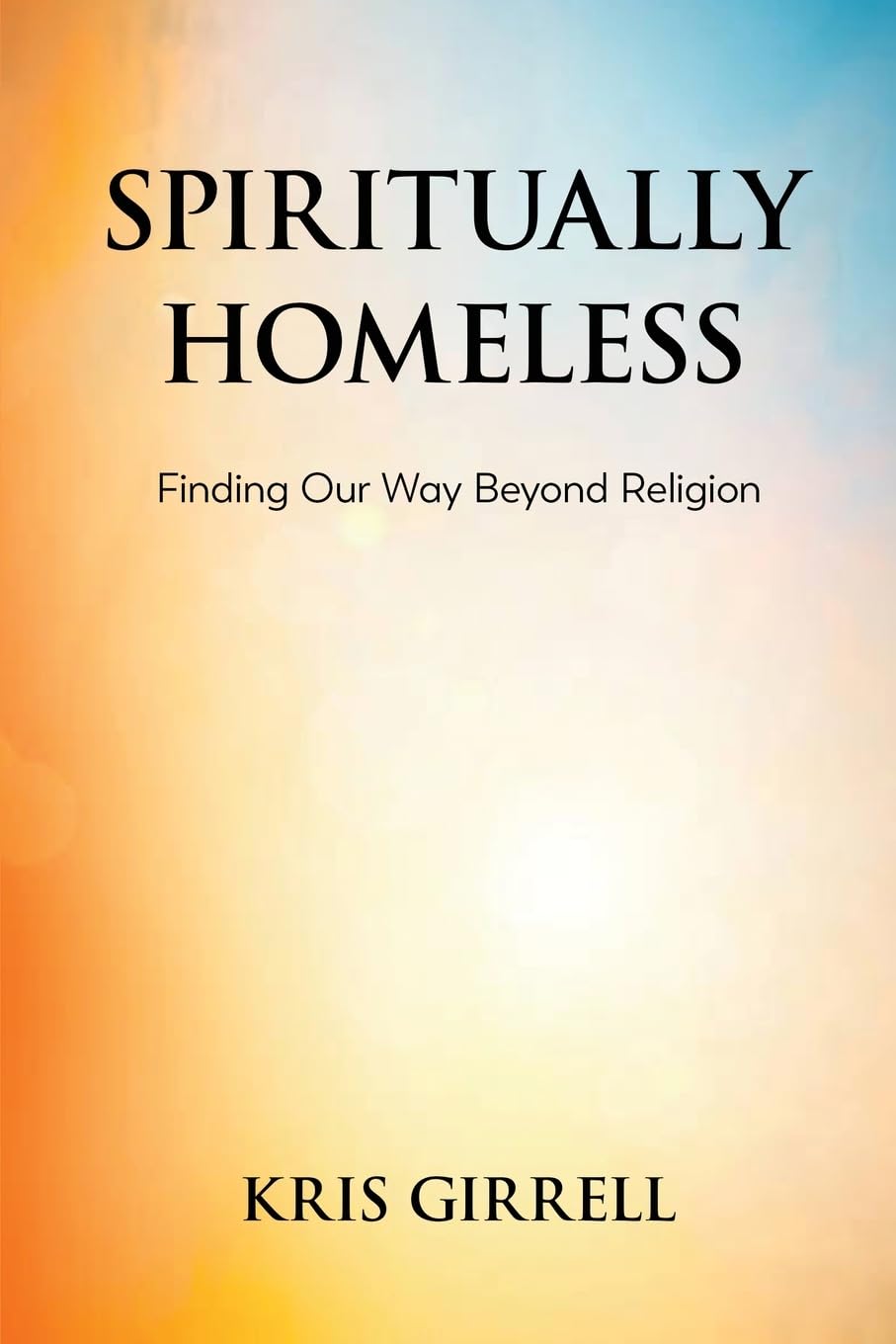

Spiritually Homeless is Kris Girrell’s heartfelt guide for anyone who’s ever felt unmoored from organized religion yet still deeply drawn to the sacred. Girrell explores what it means to be “spiritual but not religious,” weaving his own journey through reflection, loss, and rediscovery. The book moves from intimate personal stories to broader discussions about mysticism, spiritual development, and the hunger for community. It’s both a memoir and a map, a compassionate invitation to those wandering between faith and freedom to find meaning in their own way.
Girrell’s voice is calm, wise, and refreshingly unpretentious. He doesn’t preach, and that’s what makes his message land so well. I could feel his years of wrestling with religion, that ache of trying to make sense of old beliefs that no longer fit. There’s warmth in the way he writes about people who feel left out of traditional faith, as if he’s offering them a seat by the fire. The stories about his hikes, his tears in cathedrals, his moments of awe, they ring true. The writing is honest, the tone gentle, and the ideas, though deep, are never heavy-handed.
I felt the pacing lingered a bit, especially when the author unpacked historical or theological context. But I didn’t mind much. Those parts gave me room to catch my breath and think about my own path. What I loved most was how Girrell connects everyday moments, like walking through grass or looking at the stars, to something holy. He makes spirituality feel approachable, like it’s always been right there, waiting for us to notice. His belief that being “spiritually homeless” is actually a stage of growth struck me hard. It turned what I’d always seen as loss into possibility.
I’d recommend Spiritually Homeless to anyone feeling adrift after leaving religion, or to anyone curious about what spirituality looks like beyond dogma. It’s a great companion for those who want to rebuild their connection to the divine without returning to church walls. This isn’t a manual, it’s a conversation, and a kind one at that.
Pages: 235 | ASIN : B0FR3T9KBF

Marcus Douglas Presents Dimensions of the Soul part 1
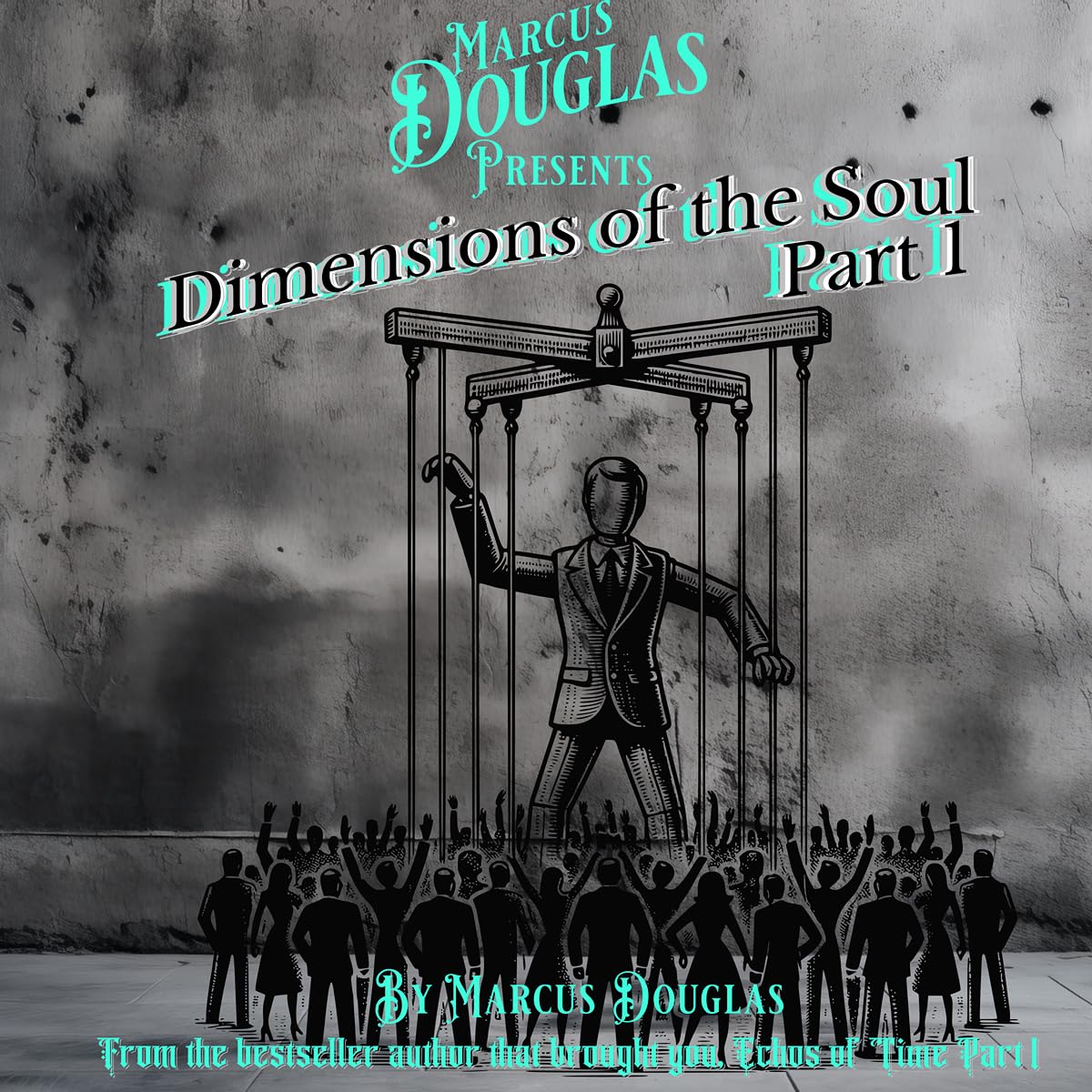

Marcus Douglas Presents Dimensions of the Soul is a fascinating mix of spiritual philosophy and high-stakes political thriller. The book dives deep into what defines the human soul, breaking it down into the mind, emotions, and will, and then wraps those ideas into a complex narrative about psychic government agencies, prophetic dreams, and the rise of a new U.S. president burdened with destiny. The story’s structure moves between theological meditations, called “Overtures,” and cinematic chapters filled with intrigue and danger. It’s both a metaphysical exploration and a modern myth, questioning how our inner selves shape the outer world and the consequences that follow when that balance is disturbed.
I found myself pulled into the book’s rhythm, first by its ideas, then by its characters, especially Natalie Massey and President Kirklin Adams. The writing is earnest and unfiltered, sometimes poetic, sometimes raw. There’s a moral sincerity that runs through every chapter, even when the dialogue leans toward melodrama. The theological reflections are surprisingly personal. I could sense Douglas’s own wrestling with faith, destiny, and the tug-of-war between spirit and flesh.
Emotionally, this book hit me in unexpected ways. There were moments when I had to pause just to think, especially during the scenes where the characters confront their inner demons or divine purpose. Douglas’s imagery, like the soul as a mediator between body and spirit, stayed with me. Some of the political plotlines felt far-fetched, yet the underlying message about corruption, faith, and the unseen battles of conscience made them strangely believable. The fusion of faith-based allegory with science-fiction ideas like “Dream Walking” is bold, and though not every concept lands cleanly, I admired the audacity.
I’d recommend Marcus Douglas Presents Dimensions of the Soul to readers who enjoy stories that challenge both heart and mind. It’s ideal for people who like their fiction thoughtful but not pretentious, and who appreciate a spiritual twist on classic suspense. If you’re drawn to tales where faith, science, and the human psyche collide, and you don’t mind a few wild turns along the way, this book will stay with you.
Pages: 245 | ASIN : B0F336CF1J
Cancer Chronicles: Veilwalker Volume 2
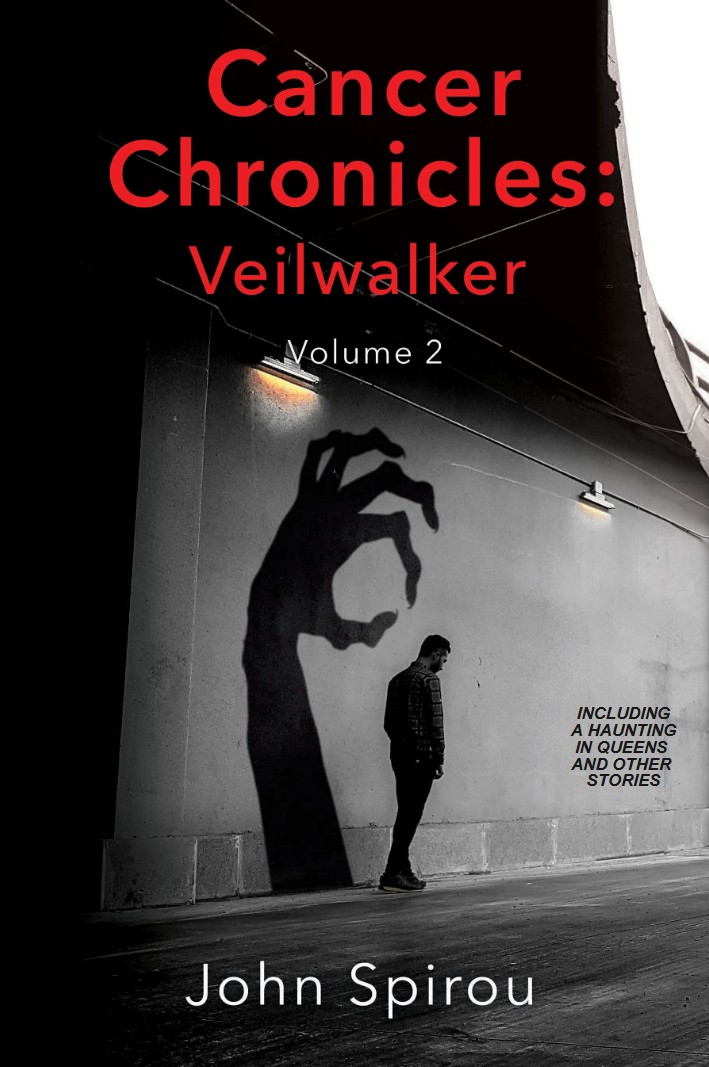
Cancer Chronicles: Veilwalker is a haunting and deeply personal tapestry of suffering, endurance, and faith. The book weaves together memoir and allegory, faith and despair, hope and the supernatural. It begins as the story of a man’s grueling double life, working endless shifts and ignoring the quiet signals of collapse, before spiraling into a battle with cancer, loss, and spiritual rebirth. What makes it remarkable is not just the detailed recounting of treatment or trauma but the unflinching honesty with which it faces death, fear, and redemption. The writing slips easily between the physical and the spiritual, between gritty realism and ethereal reflection, until the two blur completely.
Reading this book hit me in ways I didn’t expect. The rawness of it, the exhaustion, the hospital lights, the cracked fingertips, the taste of blood, made me feel like I was sitting in that sterile room beside the author. There’s a rhythm to his storytelling, almost like breathing through pain, where sentences stumble, pause, then push forward again. The voice is weary but stubborn, defiant even. I admired that. Sometimes, the narrative drifts, repeating memories like waves that refuse to settle, but that feels honest too. Recovery, after all, is rarely tidy. What stayed with me most was not the sickness itself but the deep tenderness in his relationships. The way his wife and children orbit his struggle feels achingly human. The love there isn’t dressed up, it’s messy, awkward, and real.
I also found myself torn between awe and heaviness. The spiritual elements like the visions, the moments of surrender, and the sense of divine purpose, are written with sincerity and conviction. Whether or not one shares the author’s faith, there’s something deeply moving about the way he turns agony into revelation. At times, it leans into religious metaphor. Yet that very fervor gives the story its pulse. It’s not polished in the traditional sense, but it’s alive, pulsing with heart and hurt.
By the time I reached the end, I felt like I’d walked through fire with him. This isn’t a book for someone looking for neat resolutions or easy inspiration. It’s for readers who want to feel everything, the fear, the faith, the fatigue, and still believe there’s light somewhere in it all. I’d recommend Cancer Chronicles: Veilwalker to anyone standing at the edge of something hard, anyone who’s lost faith and wants to find it again in a voice that refuses to quit.
Pages: 380 | ISBN-13: 979-8-86852-165-2
Apples of Gold in Settings of Silver

Apples of Gold in Settings of Silver is a heartfelt collection of personal stories, memories, and reflections, tied together with faith, family, and the rhythms of everyday life. Author Deborah Off shares vivid snapshots from her childhood, her marriage, her role as a mother, and her deep belief in God’s presence in both ordinary and extraordinary moments. From tender recollections of her grandmother to humorous tales about raising children, each piece carries warmth and sincerity. The voice is conversational, sometimes playful, sometimes somber, but always rooted in gratitude and wonder.
I felt a strong sense of intimacy while reading. The stories feel like being invited into a family living room where laughter and tears are both welcome. At times, the language is plain and unpolished, yet it fits the spirit of the book. There’s no artifice, only honesty. Some stories, especially those about her faith and prayers, struck me as deeply moving. Others, like the playful tales with her children, made me smile and think about my own family. The flow meandered now and then, and a few stories felt more like personal notes.
What stood out most to me was the emotional openness. Off doesn’t shy away from loneliness, doubts, or hurt, but she consistently circles back to hope. That resilience, paired with humor in the smallest details, made the book memorable. I admired the way she wove faith into everyday struggles without preaching. It felt real, like someone quietly leaning on God rather than loudly declaring Him.
I’d recommend this book to readers who love memoirs centered on faith, family, and small yet powerful moments of life. It’s not a book to speed through but one to read slowly, a story or two at a time, the way you’d enjoy a long conversation with a trusted friend. If you want something raw, heartfelt, and rooted in gratitude, this book is for you.
Pages: 185 | ASIN: B0FWMT6XKG

Emotional Timing

Resonance of the Soul – Flowers and Harmonics is a heartfelt and unfiltered collection of poems that dives into the human condition, exploring themes of love, identity, culture, struggle, healing, and faith. What inspired you to write this particular collection of poems?
I was inspired by a love story—one that stirred memories of what truly matters in life. That experience, along with moments spent with patients nearing the end of their lives in hospice, reminded me how fragile and sacred our time is. A mentor also nudged me to complete my writing, reminding me that unfinished words can become unfinished healing. This collection became a way to honor those stories, those lives, and the emotional truths that often go unspoken.
Did you write these poems with a specific audience in mind, or was it a more personal endeavor?
I wrote for those without a voice—those caught in the throes of indecision, those marginalized by circumstance, and even those who seem entitled or indifferent but are quietly searching for meaning. While the journey began as personal, it quickly became communal. I wanted these poems to reach anyone who’s ever felt unseen, unheard, or underestimated. It’s a companion for the lonely, the faithful, and the quietly resilient.
What was the biggest challenge you faced in putting together this poetry collection?
Time. Not just the literal hours needed to write and revise, but the emotional timing—knowing when I was ready to revisit certain memories, and when the world might be ready to receive them. Balancing my clinical responsibilities with the vulnerability required to write was also a challenge. But I learned that when something truly matters, you make time for it.
How has this poetry book changed you as a writer, or what did you learn about yourself through writing it?
I’ve come to appreciate the effort and emotional discipline it takes to create something meaningful. Writing this book taught me that poetry isn’t just about language—it’s about listening, about honoring silence, and about crafting space for others to feel seen. I learned that my voice carries weight not because it’s loud, but because it’s rooted in truth. And I discovered that healing—whether clinical or poetic—requires presence, patience, and grace.
Author Links: GoodReads | Amazon
Each poem reflects the delicate interplay of life’s harmonics—the highs and lows, struggles and triumphs—capturing its essence with thought-provoking depth and emotional resonance. With a voice that is both evocative and intimate, the anthology invites readers to embark on a transformative journey through the intricate beauty and complexity of existence.
“Resonance of the Soul – Flowers and Harmonics” showcases Dr. Edwards’ ability to infuse profound truths into his work, creating moments of reflection and celebration that resonate universally. It is a collection that bridges the personal and the universal, making it an unforgettable literary experience.
Find a Balance

Journal of a Black Man is a lyrical exploration of Black identity in British Columbia, weaving together themes of love, faith, family, and resilience against systemic inequities. Why was this an important book for you to publish?
It was an important book for me to publish because Black people in Canada, especially in British Columbia, make up a very small proportion of the overall population. Therefore, I had to inform people about the things that we truly face. Visitors are often sold the glitz and glamor of the country, and while Canada is definitely beautiful, there are many dark moments. Also, there are a lot of things that I personally experienced, such as love. Overall, the start of the year had been tough for me, and I only made it through with family, faith, and resilience, which is why I highlighted those themes.
Many poems balance vulnerability with strength. How do you navigate writing about pain without letting it overshadow joy?
I navigated between the themes of joy and pain by understanding that there will be bright moments and there will be dark moments. Life isn’t perfect, but I know that I had to find a balance that I was truly happy with.
What were some themes that were important for you to explore in this book?
Some themes that were important to me in this book were migration, love, the nuclear family, faith, and resilience.
What do you hope readers carry with them after sitting with your words?
I hope that readers truly enjoy the book, but what I really want them to understand is that nothing is truly what it seems. Be careful with each opportunity.
Author Links: GoodReads | Amazon
I allow you to see my feelings,
I am vulnerable…
This powerful fifth collection from prolific poet Marlo Browne is an exercise in vulnerability. He
exposes personal feelings about the Black experience in Canada, his adopted home.
Topics touched on in this work include the high incidence of missing youth in provinces like
Ontario, prevalence of drug use and abuse in Ontario, exploitation within the migration process,
biases in the workplace, and more.
Experience vulnerability in a bold new way within the pages of JOURNAL OF A BLACK MAN
today!
Faith Through the Fire, Walking With God in My Storms

Faith Through the Fire is a deeply personal memoir chronicling the journey of Adrien and Beverly Chablal through Adrien’s unexpected cancer diagnosis and their unwavering determination to pursue healing, physically, emotionally, and spiritually. The book opens with a son’s heartfelt letter to his father and then shifts to a dual narrative, combining Adrien’s reflections with Beverly’s “Chronicles.” Together, they recount their childhoods in Trinidad, marriage struggles, migration to the UK, and ultimately, their decision to face a stage IV Non-Hodgkin lymphoma diagnosis using both conventional and natural methods. Interwoven throughout are scriptural meditations, nutritional advice, and practical insights born from faith, family love, and fierce resilience.
Reading this book felt like sitting across the table from an old friend, coffee in hand, listening to someone pour out their heart. Adrien’s writing is raw and gutting at times. The disbelief at his diagnosis, the guilt over family strain, and the sense of helplessness are portrayed vividly. I found myself clenching my jaw during some passages, especially when he wrestled with the idea that a health-conscious lifestyle couldn’t shield him from cancer. His vulnerability is striking, and that makes the hope that follows even more powerful. Beverly’s side is equally gripping. Her determination to be her husband’s anchor, her fearless research into holistic health, and her ability to dig into her past for strength are as moving as they are inspiring. Her voice comes through as calm and relentless.
What really got me, though, was how the book doesn’t try to hide the messiness. Their marriage was tested, their children drifted, and their faith was, at times, hanging on by a thread. But it never read like a sob story. It felt like a love letter to persistence, not perfection. The inclusion of wellness plans, herbal regimens, and even their frustrations with housing in the UK could have felt like filler, but instead, it all tied into the bigger theme: survival isn’t just physical. It’s mental, spiritual, and relational. I loved that balance. On the flip side, I occasionally felt the pacing slow during extended reflections or lengthy nutritional breakdowns, but even those had a purpose if you’re reading with healing in mind.
This book isn’t just about beating cancer. It’s about choosing faith when you’re flat on your face, and finding a way forward even when the path disappears beneath your feet. I’d recommend Faith Through the Fire to anyone facing serious illness, especially caregivers and spouses who are walking through someone else’s storm. It’s also a solid pick for people of faith who want a reminder that miracles don’t always come wrapped in flashing lights. Sometimes, they look like a juicer on your kitchen counter and a Bible verse that keeps you going. It’s an emotional read, but one that left me feeling full of gratitude.-
Pages: 114
Do We Really Trust God?
Trust on Trial explores the complexity of human faith, betrayal, and redemption by staging a trial where “Earnest Trust” is accused of fraud, betrayal, and breach of contract. What was the inspiration for the setup of your story?
Honestly, it started with a question that hit me in the gut: We all have trust issues and how often does our trust issues impact our ability to trust God? Do we really trust God…or just say we do? From there, the courtroom idea took shape. I imagined Trust not as a concept, but as a character. Tired, beat up, misunderstood; and then put him on the trial of his life. Because let’s face it: we all have trust issues. Not just with people. With God. And until we drag those doubts into the light and interrogate them, we’re stuck spiraling and repeating the same cycle of misplaced trust.
The legal drama was the perfect lens. It’s structured, intense, and emotionally charged; almost like spiritual wrestling. It gave me the space to let readers become jurors in their own faith journey. And it gave Trust a voice we rarely give him.
What were some themes that were important for you to explore in this book?
Oh, we’re going deep. This book is about more than just faith; it’s about what happens when faith fractures. Themes like betrayal, disappointment with God, spiritual deconstruction, and church hurt are front and center. But more than that, I wanted to explore redemption. Not the clean, polished kind, but the messy, bloody, uncomfortable kind where people have to face their own reflections in the courtroom mirror. I also wanted to tear into the myth that doubt means failure. Because sometimes, doubt is just the doorway to deeper trust.
I find that, while writing, you sometimes ask questions and have the characters answer them. Do you find that to be true? What questions did you ask yourself while writing this story?
Absolutely. The entire book is one giant interrogation—of Trust, of faith, of myself. Every character is either asking or answering hard questions we usually avoid and lock away in the recesses of our minds.
Questions like:
What does it mean to trust when nothing makes sense?
Is God still good when the world isn’t?
Can I forgive the people who shattered my trust; and still trust again?
Am I holding onto control instead of trusting in the God I say I believe in?
So yes, the characters were answering questions I didn’t always have the courage to say out loud. That’s what made the courtroom setting so powerful. It gave me permission to go there.
What were some goals you set for yourself as a writer in this book?
I had two goals, and neither involved playing it safe.
Tell the truth, even if it’s ugly. I didn’t want to sanitize doubt or pain. I wanted readers to feel seen in their mess, not shamed by it. I wanted them to be confronted head on with the various ways they have had their trust broken in their lifetimes and examine if they have been misplacing their trust.
Start a conversation that keeps echoing after the last page.
I wanted readers to walk away wrestling with their own verdict. This isn’t a book that gives you answers on a silver platter. It asks you to decide. To confront your trust issues and look at broken trust, trust itself, and faith through a fresh, unfiltered lens.
My mission has always been to blend chaos with meaning, comedy with conviction, and absurdity with truth. Trust on Trial is all of that…and then some.
Author Website
What if Trust were dragged into court, charged with fraud, betrayal, and breach of contract? What if your own experiences with broken promises, lost faith, and second chances became the evidence? Trust on Trial isn’t just a book. It’s a courtroom battle for the ages, where Trust himself is on trial and readers hold the power to decide his fate. Through witness testimonies from history, the Bible, and real life, this gripping narrative challenges everything you believe about Trust, faith, and redemption. Can Trust be restored, or is he beyond saving?
As the prosecution and defense build their cases, readers will wrestle with questions like:
•Can Trust ever be fully rebuilt after betrayal?
•Is Trust dangerous, or is he necessary?
•What does it mean to put Trust in something greater than yourself?
The evidence is presented. The testimonies are compelling. Your verdict will define what Trust means in your life. Step into the courtroom, examine the evidence, and render your verdict. The stakes have never been higher.



 LITERARY TITAN