Blog Archives
Barely Visible: Mothering a Son Through His Misunderstood Autism


Kathleen Somers’ Barely Visible is a raw and often gut-wrenching memoir that tells the story of her journey as a mother navigating the heartbreaking loss of a daughter and the challenging road of raising a son with autism. The book begins with a detailed account of the late-term abortion she and her husband chose after discovering a severe chromosomal disorder in their unborn child. What follows is the story of their second chance at parenthood, a son, Jack, whose development is anything but typical, and whose autism remains invisible to many who interact with him. With honesty and grit, Somers invites readers into the daily struggles, small wins, crushing doubts, and fierce love that shape her life as a mother.
The writing is plainspoken and real, never dressing up the pain or dressing down the joy. Somers doesn’t flinch when describing her darkest moments and emotions like grief, rage, and guilt, but she also doesn’t wallow. Her voice is steady and direct. What I liked was her description of being caught in a kind of no-man’s-land with Jack: not disabled “enough” for sympathy, not neurotypical enough to be understood. That tension runs through the whole book, and it’s heartbreaking. She captures the loneliness of parenting a child who doesn’t fit the mold and the silent battles she fights in parking lots, classrooms, and her own mind.
What I appreciated most was that this isn’t a story wrapped up with a bow. Somers doesn’t pretend to have all the answers. She admits to losing her temper, to doubting her decisions, to questioning herself constantly. But she also shows up for her son, over and over again, even when it’s hard, even when it’s thankless. There’s a quiet bravery in that. And her reflections on how people perceive disability, how a child’s challenges are judged based on how visible they are, stayed with me. She writes with a dry wit at times that cuts through the heaviness, which I found refreshing and relatable.
I would recommend Barely Visible to any parent, especially those who feel like they’re walking a path they didn’t expect. If you’ve ever struggled to make sense of a diagnosis, to advocate for a child who’s misunderstood, or to stay afloat when life doesn’t look the way you thought it would, this book will speak to you. It’s not just about autism or motherhood or grief. It’s about resilience and love and the messy, beautiful, brutal work of showing up.
Pages: 312 | ISBN : 978-1647428822

Intervention in Church Conflict

In Intervention in Church Conflict, Dorothy R. Dann shares her personal and professional journey of navigating congregational conflict using a blend of narrative therapy and family systems theory. Rooted in her doctoral work and lived pastoral experience, the book recounts how she developed and applied a model for healing a divided church community. Through a series of phases, listening, externalizing, deconstructing, and rewriting, the intervention unfolds with theological grounding, leadership development, and a commitment to wholeness. The book is part memoir, part field guide, and part theological reflection.
This book was a surprisingly emotional experience for me. I expected an academic treatment, something heavy with theory and light on humanity. But Dann writes with a raw honesty that caught me off guard. Her vulnerability and deep compassion for the congregation she served shine through every page. I could feel her struggle to hold steady as a new pastor, tasked with helping a broken community rediscover itself. The writing is accessible, even when she’s discussing dense theoretical concepts. What really struck me was her belief that healing begins with storytelling, not fixing, not diagnosing, but listening. That resonated with me. It reminded me that leadership isn’t about having the answers but about being present in the hard moments.
Some chapters, particularly those summarizing academic sources, felt like detours from the gripping story of the actual church intervention. I found myself craving more narrative and fewer summaries of systems theory. Still, the theory has its place, and I get why she included it. For a pastor or counselor walking into their own conflict zone, those resources might be lifelines. The blend of scholarship and heart is ultimately what gives the book its depth. I just wished for more moments where the personal story took center stage, because when it did, it sang.
I’d wholeheartedly recommend this book to pastors, seminarians, church leaders, and anyone trying to navigate messy group dynamics, whether in faith communities or elsewhere. It’s especially valuable for those who feel in over their heads but want to walk with integrity and love through tough seasons. This book doesn’t offer quick fixes. It’s not a how-to manual with step-by-step guarantees. But what it does offer is wisdom, humility, and hope, and sometimes that’s exactly what you need when all you see is conflict.
Pages: 97 | ASIN : B0CW1L7FG2
The Love of a Dog
Sixty Seconds with My Dog is a moving middle-grade novel about a grieving twelve-year-old who gets a magical chance to talk to her dog for sixty seconds, forcing her to confront what truly matters. What was the inspiration for the setup of your story?
Like many Americans, our family got a dog during the 2020 Covid pandemic. I was not working at the time so training largely fell to me. I was not very good at it and I would often look into the big brown benevolent eyes of our dog and think to myself how great it would be if we could talk to each other. From there it evolved into thinking that it’d be an interesting book idea if you constrained the time period to just one minute.
Dudley is a fantastic character. Were there any real-life dog inspirations or specific Goldendoodle traits that you drew upon to create him?
The inspiration was largely my Havapoo Phoebe, but also from other dogs such as the Bernese Mountain Dog I grew up with, who very much reminded me of the Saint Bernard used in Beethoven. The goldens I’ve known have always been big, friendly, and loving dogs which is why I selected the breed for the story.
What were some themes that were important for you to explore in this book?
I really wanted to focus on the importance of “needs” vs “wants.” I believe that this is a struggle people deal with their entire lives and never fully master. Generally, adults are better than children at recognizing the importance of focusing on getting what they need over what they want but it’s a lesson worth repeating. Ultimately there is no greater need in life than the love of family and friends and I wanted to show that when times are tough and everything is seemingly going against you, you can always turn to your family and friends for support to see you through.
I also wanted to get people thinking about their loved ones and what they might say to them if they had just one more minute to speak with them.
What message or feeling do you most hope readers take away from Sixty Seconds with My Dog?
I want them to root for Phoebe and her redemption. To remember that family will always be there for you. And of course, to remember that there’s little better than the love of a dog.
Author Links: GoodReads | Amazon
Sixty Seconds with My Dog tells the story of young Phoebe, who is struggling with the loss of her father and the trappings of teenage life. When her wish comes true, she wrestles with how to spend those sixty seconds with Dudley. Does she spend the time telling Dudley how much he means to her? Does she use it to let Dudley ask her questions? Ultimately, she decides to use that minute to teach Dudley a trick that can be used to generate her own fame.
Only after nearly losing her best friend Dudley does she come to realize what truly matters in life. This story of friendship and family will appeal to kids and parents alike, as well as to anyone who’s ever thought about how great it would be to be able to speak with their dog.
Caregiving Chaos

In The Funny Side, you share the ups and downs of parenting in a collection of anecdotes that range from humorous and lighthearted to those that tug at readers’ heartstrings. What inspired you to share your stories with others?
I enjoy it when I share one of my parenting experiences with another caregiver, and it triggers their memory, and they share too. It feels good to laugh together.
In addition to that, being a parent is my greatest accomplishment and grandest adventure. I wanted to write a book for my boys. It ended up being a book about them and some of my favourite memories. I laughed while remembering. I laughed while writing. And I laughed while re-reading. I realized I could share my humorous view of parenting (on a larger scale) and bring smiles to others’ caregiving chaos, and let them know they aren’t alone. Hopefully, my stories can lessen the stress.
Like I say in The Funny Side, “Parenting is messy,” and that’s okay.
I appreciated the candid nature with which you share your parenting experiences. Do you have any stories that you didn’t include in this book?
I live stories every day. But, yes, some adventures didn’t get included in The Funny Side. Body parts and bathroom incidents are discussed in The Funny Side, and as I completed my final proofread, I remembered one of those “Are you kidding me?” parenting moments.
Originally, I called this story “Three words sum it up: Boys are gross!” It started with a fleeting thought about life as a queen surrounded by sunshine and rainbows and stories about love and romance. A queen whose children played games with dolls and stuffed animals, and cleaned their bedrooms, used their manners, and talked about tying bows and braiding hair . . . However, my life was not queenly. My life went like this:
A small, blurry human ran past me down the hall and slammed the door to my oldest son’s room. My subconscious mind screamed, “Oh no! He’s up to something!” Before I could process further, the child zoomed by me and out the back door.
My husband’s voice boomed with the same questions swirling in my mind. “What do you have? What are you doing?” As a response, my fast-moving son pivoted to avoid my husband, who was coming up the deck stairs. My son was now headed my way. I stepped into the doorway, trapping him between me and my husband, who was now positioned at the top of the stairs. My son froze.
“What do you have?” I asked in a low tone. I crossed my arms and narrowed my gaze as I observed my son’s eyes darting back and forth, searching for an escape path. Two looks slid across his face: a smirk of defiance and the relaxed facial expression of acceptance.
There was a brief pause before his shrill announcement. “He threw pee on me!”
I can’t stop the small intake of air or the widening of my eyes. “He what!”
The accused (my younger son) spoke up then. His voice was flat. “He threw it on me first.”
“He did not.” This was the only comment I could muster, monotone. As I looked around for my husband, who had perfected his ability to disappear into thin air, my boys scrambled past me into the house. I was alone and staring slack-jawed at a small square container with the telltale signs of urine. It was sitting on a splotchy, wet deck. I closed my eyes and massaged the bridge of my nose.
Still out of sight, the disembodied voice of my husband floated up from somewhere near the base of the deck. “Gross!”
What is the most valuable piece of advice you’ve been given about writing about your experiences?
Valuable advice about writing about my parenting experiences came to me inadvertently. One reader told me that if they’d read my book or something similar before becoming a parent or near the beginning of caregiving, they would have purchased a notebook to write those messy moments to share and laugh at later. It was a lovely compliment and not meant to be advice, but it made me think. I have a teen and a pre-teen now. The funny stuff is rampant; why am I not writing it down? The comedy gold (sometimes still in hindsight) is happening every day. So, why not capture it in writing?
What is one thing you hope your readers take away from The Funny Side?
The parenting journey is about learning, and it’s unique. Certain things come with the parenting territory. The less talked about stuff and the unexpected events (the ones that sometimes embarrass or horrify) stand out. And they can stand out as having a strange child or as bad parenting—the toddler that strips on the playground or smears boogers on the wall during a playdate—but it doesn’t mean there is anything wrong or that we, as parents, are doing it wrong. Certain things are just part of it. And, even in those challenging moments, there’s value and a nugget of humour.
Author Links: GoodReads | X (Twitter) | Facebook | Website | Amazon
It’s priceless, all of it.
From heartwarming to smiles and laughter, The Funny Side looks at precious—or questionable—parenting moments. It’s a compilation of relatable anecdotes that caregivers everywhere can enjoy. The Funny Side is a collection of raw and comical tales, reminding you that you aren’t alone and that laughter is sometimes the best response.
The Funny Side entertains, but it’s also meant to lessen the stress of feeling like your parenting has gone wrong or your child is stranger than average. Certain things come with the parenting territory whether we know it, and whether we like it. So, sit down and prepare to laugh because parenting is topsy-turvy, awry, and farcical. You’re going to love it—eventually.
The Good Daughter Syndrome: Help For Empathic Daughters of Narcissistic, Borderline, or Difficult Mothers Trapped in the Role of the Good Daughter

Katherine Fabrizio’s The Good Daughter Syndrome is an eye-opening exploration of the often fraught mother-daughter relationship, specifically focusing on empathic daughters of difficult, narcissistic, or borderline mothers. The book dives deep into the concept of “Good Daughter Syndrome,” explaining how these dynamics trap daughters in cycles of guilt, self-doubt, and emotional dependency. Fabrizio combines her professional expertise as a psychotherapist with personal anecdotes, offering practical exercises and thoughtful advice to help readers navigate and ultimately heal from these patterns.
Fabrizio’s writing is empathetic, clear, and refreshingly direct. I appreciated how she balanced psychological insights with actionable steps. For example, her discussion of the “Never-Good-Enough Trap” in Chapter 5 resonated deeply with me. She doesn’t sugarcoat the emotional toll of being caught in this role but pairs her observations with gentle guidance on setting boundaries. Her ability to address these painful realities without becoming overly clinical makes the book engaging and approachable.
One thing I liked most about the book is Fabrizio’s explanation of how unresolved maternal trauma can be passed down. Her example of a mother unconsciously reacting to her child’s needs as if facing her own unresolved childhood wounds was both heartbreaking and enlightening. It felt like a lightbulb moment, illuminating how these dynamics aren’t about blame but understanding and breaking harmful cycles.
I also found Fabrizio’s use of real-life scenarios and scripts especially helpful. The exercises in Chapters 12–15, where she outlines how to rewire emotional responses and escape common traps, are practical and empowering. These sections make the book feel like a toolkit for change, not just a collection of reflections. However, I would have liked more examples of daughters successfully transforming their relationships with their mothers, as most of the anecdotes highlight the challenges rather than the victories.
The Good Daughter Syndrome is a must-read for women who find themselves overly enmeshed with a difficult mother and are seeking a way to reclaim their lives. It’s especially powerful for those who feel stuck between resentment and guilt. This book would resonate with anyone who values self-help with a compassionate, relatable voice and isn’t afraid to confront the complexities of their family dynamics.
Pages: 272 | ASIN : B0C9G4MZJY
Let It Out!
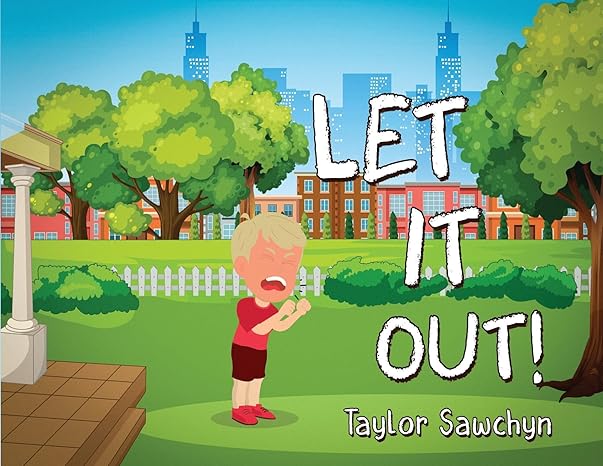
Let It Out! by Taylor Sawchyn offers a heartwarming and approachable way to help young children navigate their emotions. Kids often feel things deeply but struggle to understand or express those feelings. This story centers on a close-knit family with two children. When one child feels upset, the parents gently step in, offering reassurance and love. They model calming techniques, encouraging their child to relax and process those intense emotions. Along the way, the book explores a spectrum of feelings—anger, sadness, fear, boredom—balanced with joyful moments, like a trip to the park filled with laughter, fresh air, and family fun. It’s a tender reminder that positivity and creativity can help shift emotional energy into something beautiful.
One of the standout elements of this children’s book is the perspective. It’s told from the parents’ point of view and the story exudes warmth. It makes children feel safe and understood while reinforcing that the guidance is for them. The language is simple and clear, with short sentences that are perfect for young readers to follow independently. Beyond teaching emotional awareness, the story subtly instills lessons in good manners and behavior. Family trust and bonding flow naturally through the pages, whether it’s during playtime at the park or quiet moments sharing a meal at the table.
The illustrations bring the story to life, brimming with emotion and character. Each drawing feels expressive and relatable, capturing both the children’s upset moments and the parents’ calm, positive responses. Their demeanor sets an excellent example, showing how patience and kindness can make all the difference. The visuals are engaging and fun to look at.
Let It Out! is a beautiful and meaningful picture book. It reminds children and their caregivers that emotions are natural and powerful, but expressing them in healthy ways leads to understanding and growth. This is a must-read for families looking to strengthen emotional communication and create moments of connection.
Pages: 26 | ISBN : 978-1787881518
Brotherly Bond
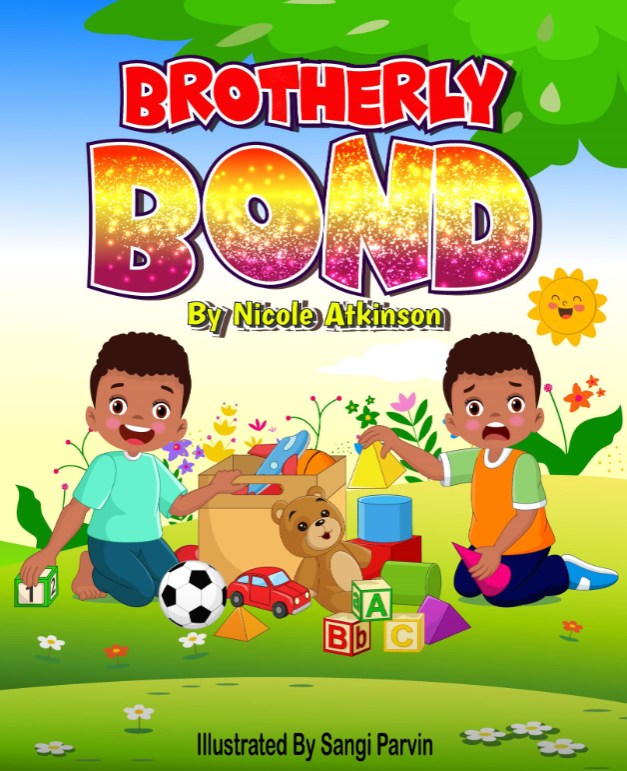
In Brotherly Bond, by Nicole Atkinson, the adventure begins with five-year-old twins, Alex and Tristan, eagerly asking their mother to visit the bookstore. Their mother agrees, but only after she has put away the groceries. The bookstore is depicted as a magical haven filled with books, toys, and other delights, capturing the twins’ imaginations. Upon arrival, their mother allows them time to explore and discover treasures that spark their interest. Ironically, both boys are drawn to the same farm puzzle, a choice that frustrates Alex because Tristan has a habit of imitating his every move. This leads to a minor conflict. Back at home, Alex’s patience wears thin, resulting in a fight with Tristan. The story then explores whether Alex can empathize with Tristan’s feelings and whether they can resolve their differences and enjoy playing and reading together.
This touching narrative resonates deeply, particularly in its portrayal of sibling dynamics. Tristan’s belief that Alex doesn’t love him, leading to his solitary play, is heart-wrenching. Atkinson adeptly addresses these complex emotions, allowing young readers to relate to the characters’ experiences. The story encourages children to empathize with Alex and Tristan, guiding them through their emotions and fostering understanding and compassion.
Nicole Atkinson’s background as an Early Childhood Educator shines through in her storytelling. Her expertise in engaging and teaching children is evident, making Brotherly Bond both educational and entertaining. She skillfully crafts a story that resonates with young readers, encouraging them to reflect on their own sibling relationships. The vibrant illustrations by Sangi Parvin enhance the narrative, bringing Alex and Tristan’s experiences to life. The detailed and colorful artwork immerses readers in the twins’ world, effectively complementing Atkinson’s storytelling. Parvin’s illustrations capture the essence of the boys’ playful and occasionally contentious interactions, enriching the overall reading experience.
Brotherly Bond is a delightful and insightful story that will captivate both young readers and adults. Atkinson’s ability to weave a compelling narrative while addressing important emotional themes makes this book a valuable addition to children’s literature. Readers will find themselves engrossed in Alex and Tristan’s journey, gaining valuable lessons along the way.
Confidence to Speak Openly
Shadow-Claimed: Twisted Bargain with Nefarious Shadow Godlets explores the unnatural shift in humanity that has caused it to stray from its natural course and the truth as to the cause of this shift. What were some goals you set for yourself as a writer in this book?
My goal was to help people regain the freedom, confidence to speak openly about what is interfering with our ability nowadays to be genuine full human beings able to achieve happiness on our own terms.
What experience in your life has had the biggest impact on your writing?
As a foreigner who arrived in America thinking that success was a matter of hard work and merit, I was able the first few years to almost get there until I met evil. That is the experience that uncovered for me the realities that I describe in the book.
What is one thing that you hope readers take away from Shadow-Claimed?
I hope that readers heed the alarm that I look to sound in order to make the adjustments that will protect their lives from the adverse influences while preserving their humanity.
Author Links: GoodReads | Amazon
The book introduces ‘Shadow Godlets’ that exert control over every facet of our lives – our homes, relationships, careers, and even our thoughts. These unseen rulers are unfolding a grand plan to give a makeover to the human race, a plan to which many have willingly or unwittingly submitted, leading to a rise in evil.
The narrative revolves around characters who are targets of this malevolent force. It also introduces ‘Nefaros’, individuals who willingly embrace evil, and ‘Portunus’, opportunists who exploit evil for personal gain. The narrative is further enriched by the presence of ‘Involunots’, involuntary participants in this grand scheme.
By delving into this book, readers will gain a deeper understanding of the patterns of evil prevalent in today’s society. Armed with this knowledge, they will be better equipped to make informed choices, preserving their freedom wherever possible.



 LITERARY TITAN