Blog Archives
The Price of Freedom
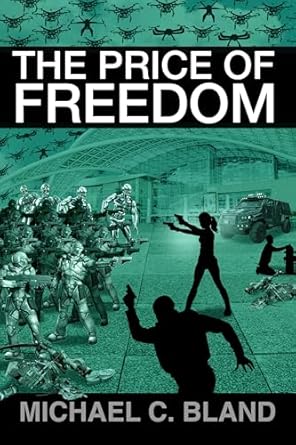

Michael C. Bland’s The Price of Freedom grabs you by the throat from the very first sentence and doesn’t let go. It’s a futuristic thriller that weaves technology, government control, and rebellion into a high-stakes story of survival. Dray Quintero, once an engineer responsible for a nationwide surveillance network, is now the most wanted man in America. The government he helped strengthen has twisted his creations into tools of oppression. Branded a traitor, hunted, and broken, Dray fights to reclaim his family and the truth. The novel spans years of technological advancements and political manipulation, leading to a world where implanted neural tech controls everything, including people’s very thoughts. Dray’s story is one of regret, defiance, and an unyielding need for justice.
Bland’s writing is gripping, filled with gut-punch emotions and relentless action. The opening pages make it clear, this isn’t just another dystopian novel. The way Dray is mentally and physically tortured, forced into mind-altering simulations, and stripped of his agency is brutal. It’s not just the world-building that’s impressive but the raw humanity beneath it all. The author manages to weave David vs. Goliath moments into the narrative that make you want to cheer. Bland nails the emotional weight of a father’s guilt and love, making every desperate choice hit that much harder.
The tech-driven oppression in The Price of Freedom feels terrifyingly possible. The government has weaponized implants, rewriting reality for its citizens while tracking every thought. Bland’s world-building is seamless, never bogging down the story with unnecessary exposition. Instead, he lets the horror of the surveillance state unfold naturally, making it all the more disturbing. The way the book handles moral dilemmas is another highlight. Dray isn’t some untouchable hero; he’s made big mistakes. He faces internal struggles that add layers to his character, making him more than just a rebel leader.
What makes this book stand out is its pacing. The action doesn’t let up, but it’s not just about explosions and fight scenes; it’s the tension, the feeling that every decision could be the wrong one, and that betrayal is always around the corner. Even minor characters have weight. Kieran, the cold and brutal Agent who torments Dray, isn’t just a stock villain. There are moments when you sense something deeper, something unresolved. Then there’s Zion Calloway, the man at the top, the former friend turned dictator. His conversations with Dray are dripping with the kind of restrained menace that makes you hold your breath. The book keeps you second-guessing, keeps you hoping Dray can find a way out, even when it seems impossible.
The Price of Freedom is for readers who love near-future thrillers packed with action, high emotional stakes, and a protagonist who refuses to break, no matter how much the world tries to shatter him. If you’re into books like 1984, Brave New World, or modern sci-fi thrillers like The Peripheral, this one’s right up your alley. It’s intense, it’s smart, and it leaves you questioning just how far technology and government control could go. Highly recommended.
ASIN : B0DSSVL8MQ

Using Your Superpower
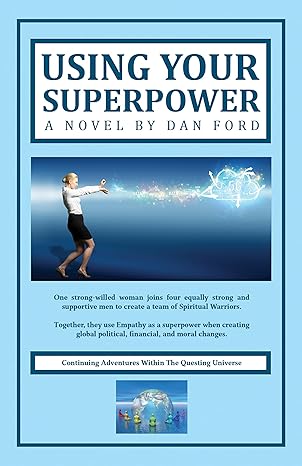

Dan Ford’s Using Your Superpower is a wild ride through politics, spirituality, and human resilience. It follows Amelia Castro, an accomplished woman who is suddenly thrust into a new reality as the U.S. Secretary of State. What starts as a personal struggle with self-doubt quickly turns into an action-packed adventure, complete with abductions, political intrigue, and a deeper journey into the nature of empathy as a “superpower.” Alongside her trusted team, dubbed the Fearless Five, Amelia navigates a world where diplomacy is just as dangerous as battlefields, and where empathy, not force, might be the greatest weapon of all.
One of the most engaging aspects of the book is how it portrays Amelia’s growth. At first, she’s unsure if she can handle the job. She’s a powerful businesswoman, sure, but politics? That’s a different beast. Her initial doubts manifest in some self-destructive behavior. It’s a low moment, but also a relatable one. Who hasn’t felt overwhelmed by the weight of expectation? Ford does a great job of making Amelia feel human, rather than some untouchable, hyper-competent protagonist.
The book’s spiritual angle is both thought-provoking and I felt, at times, a little heavy-handed. The idea that empathy is a “superpower” is compelling, Amelia and her team tackle conflicts not through brute force, but through understanding. This isn’t just feel-good rhetoric; it’s an active strategy. The novel weaves this idea into global politics, showing how traditional diplomacy often fails because it lacks real human connection. However, there are moments where the message overshadows the plot somewhat, making the dialogue feel more like a philosophical lecture than an organic conversation. That said, when it works, it works well. The discussions between Amelia and her team, especially with David Stanford, are some of the best moments in the book.
The action and suspense keep the story moving at a brisk pace. From assassination attempts to covert missions, Using Your Superpower doesn’t lack excitement. There’s even an element of science fiction and metaphysics, with characters experiencing time travel-like events and spiritual awakenings. This blend of genres is ambitious and successful, though at times it stretches believability. If you’re someone who likes their political thrillers grounded in realism, this might not be your cup of tea. But if you enjoy stories that push the boundaries of reality, you’ll be hooked.
Using Your Superpower is a fascinating blend of political thriller, self-discovery, and philosophical exploration. It’s a book for readers who enjoy high-stakes diplomacy, strong female leads, and a touch of the mystical. If you liked The West Wing but wished it had a bit more metaphysical depth, this book is for you. The core message, empathy as a powerful force for change is one worth exploring. Would I recommend it? Absolutely, especially for readers who enjoy a mix of action, reflection, and a touch of the extraordinary.
Pages: 317 | ASIN : B0DWZ695Z3
Rustlers, Renegades, and Rogues
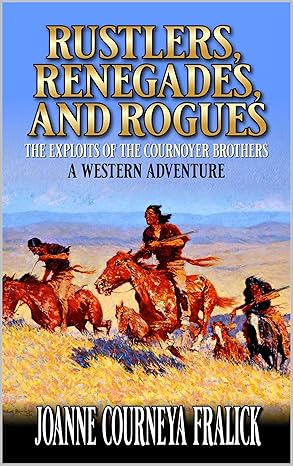
Joanne Fralick’s Rustlers, Renegades, and Rogues: Cournoyer Brothers Book 1 is a gripping Western novel that pulls you straight into the rugged landscapes of South Dakota in the late 19th century. The story follows Leon Cournoyer, a half-French Canadian, half-Lakota freighter and rancher, as he navigates the challenges of frontier life. From battling brutal storms to outsmarting cattle rustlers, and facing the slow, creeping grasp of government control over Indigenous lands, the novel doesn’t hold back in immersing readers in a world that is both harsh and beautiful. Family, identity, and survival lie at the heart of the story, as Leon and his sons try to hold onto their Lakota heritage while adapting to an ever-changing frontier.
What I really enjoyed about this book was how Fralick’s writing brings the setting alive. Right from the opening chapter, where Leon trudges home in a relentless rainstorm, drenched and weary after weeks on the trail, I could feel the weight of his exhaustion. The way the environment is described, the sticky, muddy roads, the storm beating against his oilskin, and the smell of woodsmoke promising warmth make the book feel vivid and immersive. The prairie is as much a character as the people, and every description of the land and weather sets the perfect mood for the scenes that unfold.
The characters in this novel stand out as its strongest feature. Leon is a tough, hardworking man, but he’s also a father, and you can feel the deep love he has for his family. One of the most powerful moments for me was when he reassures his son John during Sarah’s childbirth, trying to remain composed even as his own nerves are frayed. The interactions between the brothers, John, Claude, and Philip, are filled with the kind of rough teasing and camaraderie that makes them feel real. Fralick is adept at interweaving deep undercurrents that add a rich layer of complexity to the story.
The action in this book keeps readers on their toes. The cattle roundup scenes, the run-ins with land-hungry settlers, and the tension of frontier justice all build an atmosphere of uncertainty and danger. The anger, the frustration, and the unfairness of some situations made my blood boil. And then there are the quiet but powerful moments. The contrast between action-packed sequences and deeply emotional reflections makes this book a page-turner.
Rustlers, Renegades, and Rogues is a fantastic read for anyone who loves Westerns with depth. It’s not just about cowboys and cattle, it’s about family, resilience, and the painful history of Indigenous displacement. Fans of historical fiction, especially those interested in stories that balance action with rich character development, will find a lot to love here. If you enjoy books with strong, morally complex characters and an authentic sense of place, this one’s definitely worth picking up. I can’t wait to see what happens next with the Cournoyer brothers.
Pages: 226 | ASIN : B0D96D2B33
A Recurring Dream

The Prometheus Engine follows three siblings who band together to fight an evil tyrant who has taken over the land and join forces with Elven warriors to restore the rightful ruler to the throne.
I find the world you created in this novel brimming with possibilities. Where did the inspiration for the setting come from, and how did it change as you were writing?
I have always loved the King Arthur legend. I think it is the first true fantasy story written. It was the inspiration behind the FOREVER AVALON Series. The series came from my time as a sailor in the U.S. Navy playing Dungeons and Dragons in my off duty time while deployed. In the 80s, we didn’t have the internet, video game consoles, or satellite TV. So, I played a lot of D&D. Add to that missing my wife and newborn baby, I started having a recurring dream about being with them on an island of fantasy. That dream stuck with me whenever I deployed. Finally, during my last deployment in 2001, I decided to turn my dream into a novel and in that deployment, I wrote my first draft of FOREVER AVALON. After I finished writing it, I stopped having the dream.
THE PROMETHEUS ENGINE is the fourth book in the series. It tells the story of the reign of Mordred the Immortal. After years of suffering and torment, Mordred finally ascended the throne of Avalon through deceit and a coup in the face of despair. The resistance against Mordred is led by the MoonDrake family, a modern family from the outside world stranded on Avalon. They discover Mordred is building a mysterious device called the Prometheus Engine to secure his reign. Hunter MoonDrake, the Gil-Gamesh and Eternal Champion of Avalon, searches for clues to this magical machine while a traitor lurks within their ranks.
What were some themes that were important for you to explore in this book?
The most important themes of THE PROMETHEUS ENGINE are family bonds and good vs. evil. The MoonDrake family is the heart of the entire FOREVER AVALON series. This family is based on the traits and characteristics of my own wife and children, so I feel very close to these characters. The determination and sacrifice this family has made for their adopted home is evident throughout the novel. Lastly, I am a big proponent of good vs. evil. There is no gray zone here. You are either on the side of life or death. Mordred is a villain with no morals, a selfish bastard who only cares for the power he wields. He will do whatever it takes to hang onto that power, even if it means killing anyone and everyone around him. On the other side, the MoonDrake family fight for life, liberty, and love. They have suffered tremendous loss in Mordred’s ascension to the throne, but they fight on for the people of Avalon. Their drive and passion are the polar opposite of Mordred.
Will there be a follow-up novel to this story? If so, what aspects of the story will the next book cover?
The fifth and final book of the FOREVER AVALON Series is called ARCADIA DAWN. This will bring the entire saga to a conclusion as the resistance against the reign of Mordred fights the war on two fronts. The Gil-Gamesh and his siblings invade Purgatory to rescue the Lady of the Lake from the clutches of Abdel ben Faust while King Bowen and the Army of Avalon fend off Mordred and his forces in the ancient elven city of Alfheimer until their return with the sainted lady. This book will end twenty years of work in the first book series I’ve written. As sad as it is to end this story, it is time to move on to some new ideas.
Author Links: GoodReads | X | Facebook | Website
Standing in his way are the children of the Gil-Gamesh: Hunter, Rose, and Ashley. Since their father’s death during Avalon’s Reclamation, these three have resisted Mordred’s reign at every turn from their new home in the ruined Elven city of Alfheimer. Along with the Holy Order of Shield Maidens and the Hîldrägo Boquè, an elite corps of Elven warriors, they fight back to reclaim the throne for the rightful heir, King Bowen, and to restore Avalon to the people.
But even now, Mordred schemes to bring down the resistance by constructing an ancient magical artifact…The Prometheus Engine. Only the immortal king knows its secrets and the power it will bring him, no matter the cost. Hunter and his siblings must race across the archipelago to uncover the engine’s secrets and discover the truth behind Avalon’s
Reclamation.
The story continues in THE PROMETHEUS ENGINE: Book 4 of the FOREVER AVALON
Series!
Visage of Moros
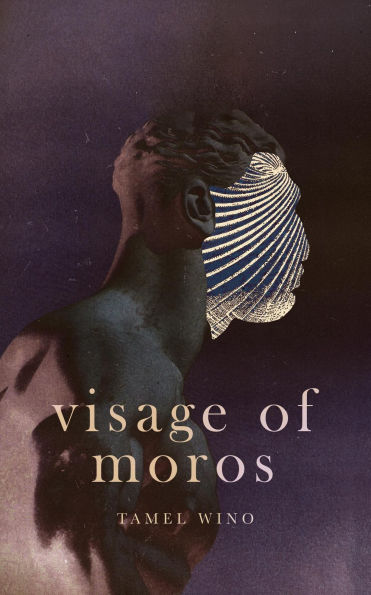
Tamel Wino’s Visage of Moros is a gut-wrenching descent into grief, obsession, and vengeance. It follows Drystan Caine, a man hollowed out by the loss of his daughter, Alba. What starts as a desperate search for answers turns into an all-consuming need for justice, leading Drystan down a path of paranoia, violence, and, ultimately, self-destruction. Told through fragmented, time-jumping entries, the novel blurs the lines between past and present, sanity and madness, memory and reality. Wino doesn’t hold back. The prose is haunting, poetic, and unrelenting, making the reader feel every ounce of Drystan’s pain and fury.
What stood out to me immediately was the sheer rawness of Wino’s writing. There are no clean edges here. Every sentence drips with anguish and exhaustion, pulling you into Drystan’s unraveling psyche. One of the most powerful moments comes when Drystan, at the police station, sees another missing person’s flyer and is momentarily convinced it’s Alba before realizing it isn’t. It’s a simple, brutal moment that encapsulates his denial and desperation. The writing has an almost cinematic quality, immersing the reader so deeply that it’s hard to step away.
Another thing I liked was the book’s structure. The shifting timelines and diary-like entries make it feel like a jigsaw puzzle, with pieces missing and some jammed together forcefully. It’s disorienting, but that’s the point. This isn’t a straightforward story about grief; it’s a chaotic spiral into obsession. One chapter, Drystan is reliving a happy memory of Alba and the next, he’s drinking himself into oblivion while fixating on a potential suspect. There’s an especially harrowing scene where he attacks a sculpture he and Alba once worked on together, as if physically trying to destroy his own memories. It’s these moments of self-inflicted violence that make the book so emotionally exhausting and so powerful.
The novel is unrelentingly bleak. There’s no reprieve, no light at the end of the tunnel, just a slow, steady march toward devastation. That’s not a criticism of the writing itself, but it does mean that this book isn’t for the faint of heart. It reminded me of The Road by Cormac McCarthy in that way, beautiful but punishing. There are no easy resolutions, no catharsis, just a man drowning in sorrow. Some readers might find that frustrating, but for me, it made the book memorable.
I’d recommend Visage of Moros to readers who appreciate dark, psychological fiction and don’t mind stories that leave bruises. If you’re drawn to character studies about grief, trauma, and revenge—think Sharp Objects meets Prisoners—this book is right up your alley. Just be warned: Wino doesn’t let you off easy, and neither does Drystan.
Pages: 463 | ISBN : 9781069182401

Dancing to Her Own Music

Dancing Valley follows a grieving woman seeking solace in nature who gets lost and winds up in a mystical valley where magical beings she once thought imaginary are not only real but deeply connected to her. What was the inspiration for the setup of your story?
I have a friend who dances through life to music only she can hear. There’s something a bit mystical about her. I expanded on that magic by creating Anita, a woman who can talk to elves and faires, but who has been convinced the little people exist only in her mind.
I find the world you created in this novel brimming with possibilities. Where did the inspiration for the setting come from and how did it change as you were writing?
As Anita evolved, I realized she would have fit into Goldfield Forest, a book I’d recently published. I hadn’t intended to write a series,but Anita’s character demanded it. She led me to Dancing Valley which became Book Two in the Unmistakably Mystical series.
Your characters go on a deeply emotional and transformative journey in your novel. Is this intentional or incidental to the story you want to tell?
It is intentional. My stories are always character-driven. I want the readers to relate to them. In Dancing Valley, loyalty, adventure, strength and a touch of romance combine to allow the characters to confront the challenges that ultimately show good prevailing over evil.
Will there be a follow-up novel to this story? If so, what aspects of the story will the next book cover?
Yes. Heritage Mountain, set in the Adirondack Mountains, is book three in the series. My intention is to have it ready for publication by the end of the year. Like the first two books, some characters will carry over, but it is also a standalone, filled with adventure and magical realism.
Author Links: GoodReads | X | Facebook | Website
Abandoned by her mother, when she was hours old, Anita’s only clue to her history is an emerald pendant tucked into the pocket of the shirt she’d been wrapped in. After the unexpected death of her adoptive parents, Anita sells everything and heads to the wilderness. During a week of hiking unmarked trails, she becomes lost and roams for days until she sees a fairy, a creature she’s been convinced doesn’t exist. Anita follows the tiny creature, who leads her to Carolyn, who leads her on a journey to learn about her past and discover her destiny.
When Dancing Valley is threatened, Anita stands beside Carolyn, risking her life to fight for her new home and her mystical family.
Walking by Your House: A Wholesome Christian Romance

Walking by Your House by A.W. Anthony is a gentle, heartwarming story about love, faith, and the unexpected paths life takes. The book follows the journey of two characters, both navigating their own struggles and beliefs, who find themselves drawn together by fate (or perhaps something greater). The story unfolds with slow-burn romance, personal reflection, and moments of quiet beauty, making it a comforting read for anyone who enjoys stories grounded in faith and genuine emotion.
What I loved most about this book was its simplicity. The writing doesn’t try to be flashy or overcomplicated. Instead, it focuses on real, everyday emotions. The dialogue feels natural, like something you’d overhear at a coffee shop or after Sunday service. One scene that stood out to me was when the protagonist takes a long walk, lost in thought, questioning their purpose. That moment felt so real, like something we’ve all experienced at some point. The book doesn’t rush these moments. It lets them breathe, which makes them hit even harder.
That being said, there were times when the pacing felt a little slow. The characters spend a lot of time thinking, praying, and reflecting. That’s not a bad thing, but if you’re looking for a romance that’s full of dramatic twists and turns, this isn’t that kind of book. The romance itself is quiet and unfolds in a way that feels true to life, with small conversations, fleeting glances, and little moments that add up over time. Some of the most touching scenes are the simplest ones, like when the love interest leaves a note with a Bible verse that perfectly speaks to the protagonist’s worries.
The faith element is woven in naturally. It doesn’t feel preachy, which I appreciated. Instead, it’s just a part of the characters’ lives, influencing their choices, their relationships, and the way they see the world. If you enjoy books that explore faith without feeling like a sermon, you’ll probably connect with this one. There’s a sincerity to it that makes the story feel personal, like reading a friend’s journal.
Walking by Your House is a cozy, introspective read that will appeal to fans of clean romance, Christian fiction, and heartfelt storytelling. If you love books that focus on character growth, faith, and the quiet beauty of everyday moments, this one is worth picking up. It’s not for readers who crave fast-paced drama, but if you’re looking for a book that feels like a warm cup of tea on a rainy day, this is it.
Pages: 240 | ASIN : B0DTGC5WGJ
The Hatbox Letter: Based on a True Tale of a Lost Love
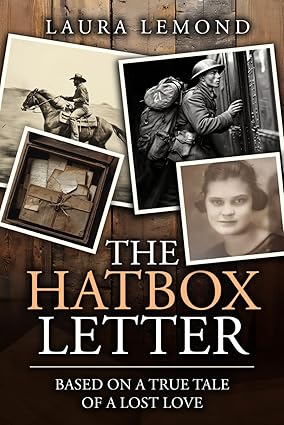
Laura LeMond’s The Hatbox Letter is a nostalgic, heartfelt journey through love, loss, and the echoes of history. Based on true events, the novel revolves around Gladys Charlesworth, a young woman in early 20th-century America, and her unexpected romance with Johnny Fry, a man with a deep, complicated heritage and ties to the legendary Pony Express. As their story unfolds, we are taken through moments of youthful passion, family expectations, and the weight of historical circumstances. The book explores themes of tradition, self-discovery, and societal change, making it both an intimate romance and a reflection on an era in transition.
LeMond crafts a world that feels lived-in and rich with the details of early 1900s Missouri. The opening scene, where Gladys is exhausted from a long, sweltering Sunday, sets the tone beautifully, painting a picture of a time when family rituals and social propriety dictated much of daily life. The descriptions of the Charlesworth family’s English traditions, especially the Sunday meal with its Yorkshire pudding and Victorian sponge cake, gave the story an authentic, tangible feel. LeMond has a way of making you feel like you’re sitting right at the table with them.
One of my favorite aspects of the book is Johnny Fry’s character. His backstory and his connection to the Pony Express, his Cree heritage, and his struggle to navigate both white and Native American cultures adds so much depth to the novel. His moments of introspection, such as when he rides home cataloging the flora around him, give him a quiet strength that is incredibly compelling. And yet, he’s also a young man in love, stumbling through the excitement and uncertainty of his feelings for Gladys. The scene where he is startled and hurt after Gladys brushes him off in favor of her sewing project is particularly well done because it captures that universal feeling of unexpected heartbreak, and I genuinely felt for him.
Gladys, on the other hand, is a wonderfully stubborn and ambitious protagonist. Her obsession with Coco Chanel and fashion gives her a modern, forward-thinking edge that contrasts with the traditional expectations of her family and small-town life. Her excitement over new fabric shipments and her dreams of moving to Chicago make her feel real and relatable. I loved how she and Johnny challenged each other. Their romance isn’t just about sweet words and longing glances, it’s built on conversations, moments of tension, and the push and pull of two people figuring out what they want. The fig-picking scene, where Johnny playfully teases her on a ladder, is such a perfect example of their chemistry, lighthearted, flirtatious, but layered with deeper emotion.
By the time the novel reaches its later chapters, the stakes feel real. War is looming, societal changes are creeping in, and the carefree days of courtship start to give way to difficult decisions. The historical context of the book is subtly woven in, never feeling like a history lesson but always present enough to remind us that these characters are living in a time of great upheaval. The final moments, where love and fate collide, leave a bittersweet impression that lingers long after the book is closed.
I’d highly recommend The Hatbox Letter to readers who enjoy historical fiction with a strong emotional core. If you love books about family secrets, passionate yet complex love stories, and the beauty of everyday moments, this novel is for you. It has the charm of The Notebook, the historical richness of Atonement, and the heartfelt authenticity of a story passed down through generations. LeMond has written something special, a love letter to the past, wrapped in the tender mystery of a forgotten romance.
Pages: 122 | ASIN : B0DTLFFNTR



 LITERARY TITAN