Blog Archives
The Other Side


Timothy Palmer’s The Other Side is a supernatural thriller told through the eyes of Mitch Parker, a young detective killed in the line of duty. Instead of peace, Mitch awakens in a strange in-between world called the Veil, where angels, demons, and lost souls struggle in a realm that is neither heaven nor hell. The story follows his journey through this haunting place as he confronts terrifying creatures, finds unlikely allies, and battles with the pull between family, faith, and survival. It’s part ghost story, part horror, and part meditation on what it means to carry duty beyond death.
This book was a wild ride. I loved the fast pace and the blunt honesty in Mitch’s voice. He feels like a flawed but real person, someone who is both arrogant and vulnerable, and that makes his descent into the afterlife all the more gripping. Palmer doesn’t shy away from raw emotions, and I could feel Mitch’s pain when he thought about leaving his wife and children behind. At the same time, the book hits with pulpy fun. Vampiric monsters, hellish visions, and wild chases through hospitals and city streets kept me turning pages. It’s not a quiet or subtle book, and I liked that. It leans into spectacle and dread, and I could almost hear the soundtrack of a horror film playing in my head as I read.
The writing style has a raw energy to it. Some of the dialogue leans dramatic, and a few scenes reminded me of action movie moments. At times, I wished the story would linger a bit longer to let the tension build before moving on to the next big encounter. But even with those bumps, I admired how unfiltered the story was. It has heart. It made me think about regret, choice, and the messy gray area between right and wrong. More than once, I caught myself imagining what I’d do if given the same choice Mitch faced, step into the light or stay behind for the people I love. That moral tension gave the story weight beyond its horror trappings.
The Other Side is a bold, strange, and emotional book. If you enjoyed the gritty supernatural battles of Jim Butcher’s Dresden Files or the chilling suspense of Stephen King’s The Outsider, you’ll find The Other Side delivers a similarly gripping mix of horror, heart, and high-stakes thrills.
Pages: 294 | ASIN : B0DNRHT6HP

Son of Osivirius
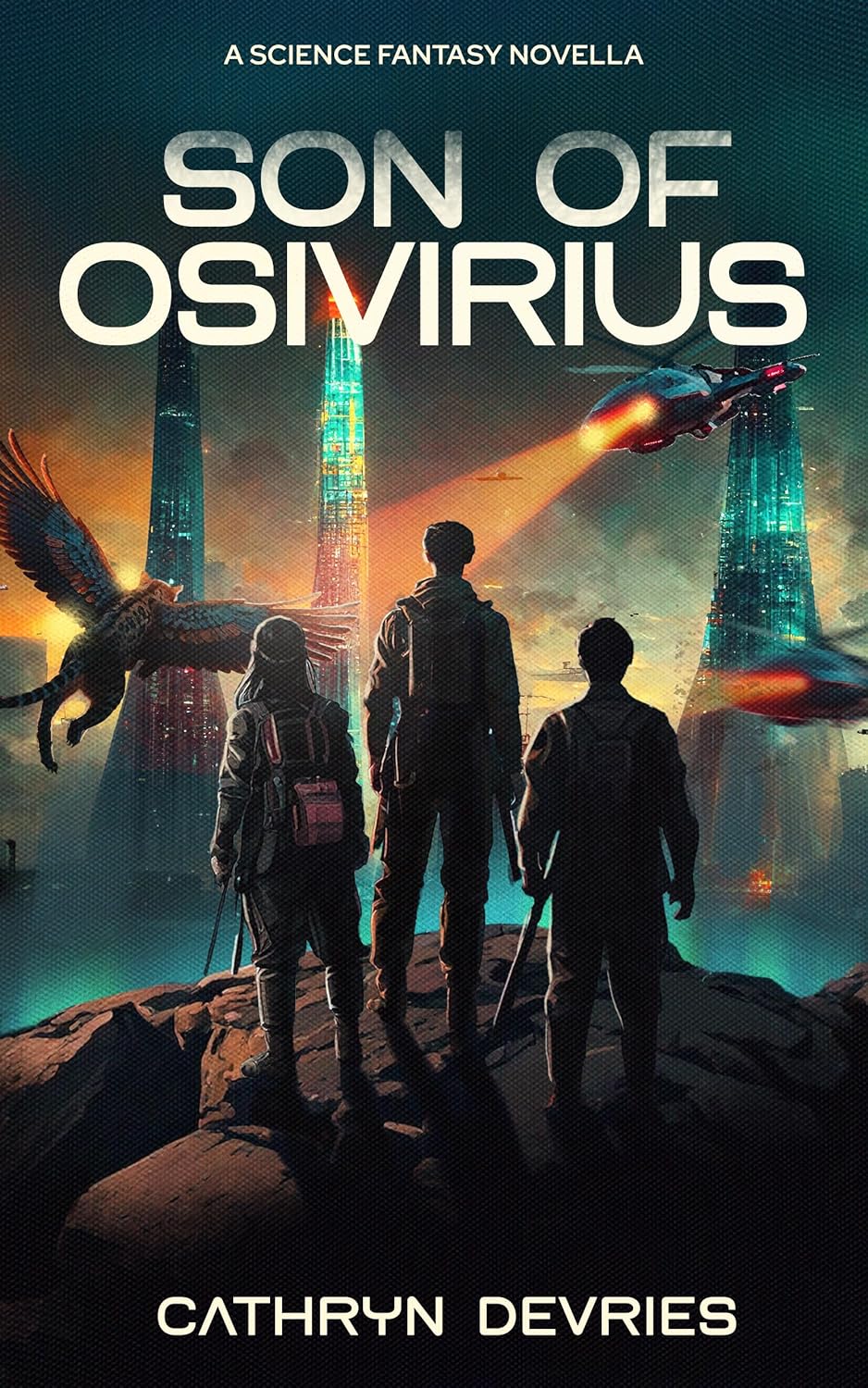

Son of Osivirius is a science fantasy novel set on the lush, dangerous planet of Osivirius, where electromagnetic “dead-zones” and rebellion complicate humanity’s survival. The story follows Jayden, a young pilot who crashes into a rebel stronghold, and Nettle, a fierce and distrustful woman who sees him as a threat. As Jayden struggles to heal and find a way back to his family, he becomes entangled in the rebels’ world of harmony with nature, flying cats called Masu, and a philosophy centered around balance. The narrative alternates between Jayden and Nettle, pulling readers into both perspectives and building a tale of survival, mistrust, slow-burning connection, and the search for peace in a world fractured by exploitation and greed.
I was hooked almost from the first page. The opening crash sequence was tense and immersive, and from there, the story barely let up. What stood out most to me was the vivid world-building. The descriptions of the valley, the rebels’ way of life, and especially the Masu, those awe-inspiring winged felines, gave me that rare feeling of stepping into a completely new world that still felt alive and believable. I loved the contrast between the sterile, suffocating colony and the lush, self-sustaining rebel enclave. It made me think hard about our own world and how we treat the natural environment, but it never felt preachy. Instead, the themes came through naturally in the characters’ choices and conflicts.
My feelings about the characters were complicated, and that made the experience all the richer. Nettle frustrated me at times with her hostility and refusal to soften, yet I understood why she was like that, and I respected her strength. Jayden, on the other hand, walked a tricky line between being sympathetic and being manipulative, and I often found myself both rooting for him and distrusting him. That tension gave the story its bite. There were also moments where I felt the romance threads were a bit predictable, but the emotional undercurrents of family loyalty, grief, and the fear of betrayal kept me engaged.
Son of Osivirius surprised me with its heart. Beneath the adventure and the danger, this is a story about belonging and trust, and how hard it is to let go of fear in order to live freely. I would recommend this book to readers who enjoy science fiction that balances action with deeper themes, especially fans of Avatar or The Left Hand of Darkness. It’s also a great pick for anyone who wants an adventure with strong characters, a lush setting, and deep ideas.
Pages: 188 | ASIN : B0FMXQ3C85
The Incredible Adventures of Casper the Cat Who Got Lost in Africa: Book 4: The Baboons
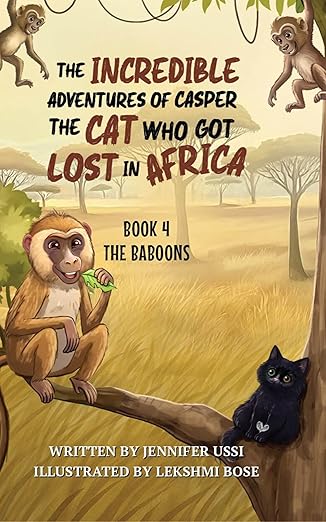
Casper the Cat embarks on a heartwarming and eye-opening journey through the African jungle in Jennifer Ussi’s The Incredible Adventures of Casper the Cat Who Got Lost in Africa. Surrounded by her jungle friends, Casper learns how animals coexist, communicate, and care for one another. When Evelyn, a brave young baboon with only one arm, attempts to comfort a crying leopard cub without its family’s consent, chaos ensues—sparking an unexpected conflict between the baboons and leopards. Amid the tension, Casper is puzzled. Why should compassion lead to such turmoil? Can understanding bridge the divide between two angry tribes, or will the jungle descend into battle?
What makes this story shine is its message of empathy and perspective. Through Casper’s calm reasoning and Evelyn’s pure-hearted actions, children see that kindness can change how others view a situation. Even when danger looms, Casper puts aside fear to help others see that Evelyn’s gesture came from love, not defiance. The story beautifully reminds readers, young and old, that seeing the world through another’s eyes often leads to peace and understanding.
Adding charm to the narrative is a playful dose of humor. Henry, the mischievous elder baboon, and his spirited twin sons fill the pages with laughter and light moments. Their antics offer children a joyful reminder that humor can strengthen bonds and lift spirits, even in tense times. The vibrant personalities of the jungle’s inhabitants make this tale not only educational but utterly delightful to read.
Illustrator Lekshmi Bose brings Ussi’s vision to life with artistry and care. Her detailed, neutral-toned illustrations enhance the natural beauty of the African wilderness. Every page feels alive, each animal expressive, each scene immersive.
The Incredible Adventures of Casper the Cat Who Got Lost in Africa is far more than a children’s tale; it’s a celebration of empathy, curiosity, and unity. Readers of all ages will not only enjoy its adventure and humor but also gain insights into African wildlife and conservation, meeting creatures such as leopards, baboons, helmeted guineafowl, and even playful squirrels.
Pages: 82 | ASIN : B0FNR626PT

Christianity and Global Civilization

Conflict & Peace explores the struggles of twelve Biblical figures and their contributions to Christianity as it is known today. Why was this an important book for you to write?
Growing up as the son of a pastor, my Christian faith came to me as a young child. Growing into early adulthood, like many I came to question my faith. Seeing obvious (and less obvious) seeming inconsistencies in the Bible, I focused in on the often accepted but unspoken assumption that there is a complete harmony of the various gospel and other biblical accounts. For me, the breakthrough came when I realized that “harmonization” is nowhere mentioned in the Biblical text. Rather, I could take the approach of taking in whatever each biblical author has to say in that individual’s own voice. Accept and explain the conflict where possible. And where not, just let it be.
How much research did you undertake for this book, and how much time did it take to put it all together?
I have been at the research off and on for about 30 years – reading a wide range of authors, interacting as a teacher in a variety of one-on-one and group settings.
What were some themes that were important for you to explore in this book?
Once I got past the issue of forced harmonization, my next question and key theme for the book was the divine and earthly roles that Jesus of Nazareth played in observing, creating and/or resolving conflict. And then tracking how these conflicts of personality, theology and mission were experienced by the diverse characters that helped shape Christianity and global civilization.
What is one thing you hope readers take away from Conflict & Peace?
I hope that readers can draw from the experience of inevitable conflicts driving Christian pioneers to search out pathways for renewed peace. Day by day and at home with Jesus.
Author Links: X | Facebook | Website
In this book, author Eric Hovee traces a seemingly never-ending Christian dialogue and practice that may espouse peace but often engages in conflict. The author explores this interplay through the lives, beliefs, and practices of 12 pioneers who helped shape Christianity as it has been handed down to us today. We begin with the contrasting perspectives of the four gospel writers – Matthew, Mark, Luke, and John – and continue with pivotal, yet sometimes conflicted, early church leaders such as Paul, James, Peter, Thomas, and Mary Magdalene. The journey then skips forward three centuries to the Roman Emperor Constantine, who sought to marry church and state, before moving another millennium ahead to Martin Luther, who sought to radically reform it all, and finally circles back to our starting point: Jesus, as the one who intended it all.
How best to experience conflict, and yet find peace? Every day and through every phase of human existence, there is an opportunity for resolution and partnership, in step and at home with Jesus. We seek a Jesus who consistently demonstrates that, just when we think we have the answers, new questions arise. When we feel we’ve run the race, we find we’ve only just begun.
Guilt and Solitude

Where Despair Comes To Play follows a man consumed by the voices in his head who is convicted of murder and sentenced to prison, where the isolation drives him deep into paranoia, delusion, and dissociation. What was the inspiration for the setup of your story?
The inspiration for Where Despair Comes to Play came from a fascination with the fragile boundary between the mind and reality—how isolation, guilt, and fear can twist perception until the world itself becomes an echo of one’s thoughts. I wanted to explore what happens when a person is left alone with their own darkness, with no distractions, no noise—only the voices that feed on doubt and memory.
The prison setting became a metaphor for internal confinement. I wasn’t as interested in the crime itself as in what happens afterward—how a mind begins to fracture when trapped in silence and shame. Each of Malcolm’s voices—Paranoia, Delusion, and Dissociation—represents a piece of his psyche trying to survive the unbearable weight of guilt and solitude.
I always start my books with a well-refined thesis statement, similar to what I did for my doctoral dissertation. In many ways, the story was inspired by the question: If you can’t trust your own mind, where can you hide?
Malcolm is a fascinating character who draws readers into his mind and the horrors that reside within it. What scene was the most interesting to write for that character?
The most intriguing scene to write for Malcolm was the one where he finally stops resisting the voices—when Paranoia, Delusion, and Dissociation stop feeling like intruders and start feeling like his only companions. It’s the moment where his isolation becomes complete, and instead of fighting for sanity, he begins to negotiate with his madness.
Writing that scene felt like walking a tightrope between horror and heartbreak. I wanted readers to feel both fear and empathy—to see that Malcolm isn’t a monster but a man slowly breaking under the weight of his own thoughts. Capturing the moment when his inner voices start making more sense to him than reality itself.
What were some themes that were important for you to explore in this book?
My key theme was the personification of mental illness—turning Paranoia, Delusion, and Dissociation into living entities. It allowed me to explore how mental struggles can feel external and invasive, like something whispering just behind your thoughts. My ultimate goal for the book was to explore what happens when the mind becomes the battleground—and whether redemption is possible when your worst enemy is yourself.
What is the next book that you are writing, and when will that be published?
My next book is actually a love story, Framed in Love, that is steeped in fantasy and explores the psychological condition of “How far will you go, and what are you willing to do to keep that love alive?” In a world where love can be bound by spell and sacrifice, a devoted lover discovers that devotion has no bottom, and is preserving love worth losing everything that makes a person human?
Author Links: GoodReads | Amazon
As Malcolm struggles to separate reality from nightmare, every letter etched on the wall draws him closer to a final word he may not survive. The line between guilt and madness blurs, and the only question left is chilling: is he haunted by his own mind—or by something far worse that feeds on silence itself?
A Beautiful Ending
Jake and Zena’s family is stitched together by hope and haunted by ghosts. Ronnie and Amina chase the sparks between them, Carolyn and Jesse launch Southern Comfort, Charlotte’s newest soul food haven, Jordan dazzles the fashion world in D.C. alongside Miles, and Jessica juggles college life and motherhood in Atlanta with Bryce. Yet, even as they embrace the present, shadows from their past are, waiting to unravel their future. In this gripping trilogy conclusion, the Alexanders face their final reckoning: will the gathering clouds tear them apart —or will they find the beautiful ending they truly deserve?
Deserving of Grace
Should Have Told You Sooner follows a museum professional navigating the complexities of motherhood, the aftermath of divorce, and a career opportunity that leads her abroad. Where did the idea for this novel come from?
The idea for Should Have Told You Sooner came to me while I was immersed in a book of Welsh folk tales. One story in particular, “The Lady of Llyn Y Fan Fach,” captivated me and set my imagination racing. In it, a young farmer named Gwyn visits the lake named in the title, and while he is there, a most beautiful fairy rises from the water and speaks to him. She is Nelferch, and in an instant, Gwyn is in love. Nelferch agrees to marry him, sacrificing the watery world she knows for a life with him on dry land, but their union ends in disappointment and pain. Long after finishing the story, I kept thinking about Nelferch and Gwyn and all the ways we might harm those we profess to love. It wasn’t long before I stopped thinking about the folk tale characters and began imagining a more contemporary pair.
What is one pivotal moment in the story that you think best defines Noel?
After Noel leaves a heart-to-heart talk with Henry, the young artist she’s been working with, she makes a side trip to an art museum instead of returning right back to work. Their conversation has shaken her – and I won’t say why because spoilers! – and as she’s walking through all the London neighborhoods that were her haunts while she was a student, both Henry’s words and her memories are running through her head, and she’s letting them. Until this moment, she’s been the person who put her memories in a box and closed the lid tight on them because the idea of revisiting that part of her life was too painful. I think it becomes clear here how hard it’s been for her to live with the memories and also how hard it’s been to live without acknowledging them, and not only for herself. She realizes something has to change.
Is there any moral or idea that you hope readers take away from the story?
I always hope my stories make readers think about how complex and flawed and yet deserving of grace we all are. That living is all about change and growth and doing the work that helps us heal both ourselves and our relationships with others.
What is the next book you are working on, and when will it be available?
I’m currently working on the sequel to Should Have Told You Sooner, and I have two other novel projects that are in early planning stages. If the sequel is finished within the year, it could be out as early as 2027.
Author Links: GoodReads | Facebook | Instagram | Website | Amazon
While studying art history at a London university, Noel Enfield falls passionately in love with aspiring artist and art school student Bryn Jones. Shortly after Bryn leaves for a five-month painting trip through Italy, Noel discovers she is pregnant. She is ecstatic and believes Bryn will be too—they have plans to marry, after all. But mishaps part the two lovers, and a desperate Noel makes a split-second choice to move forward in a way that will change not only her life but also the lives of everyone she loves.
Three decades later, when she is offered a six-month secondment to a London museum, Noel decides it’s time to prove she really has moved on from that difficult period by returning to the city where she met and lost Bryn. But rather than proving she has persevered, the move lands Noel in the thick of London’s insular art world, with only one or two degrees of separation from her past and the people she once loved. After she reconnects with an old, dear friend and learns finally what kept Bryn from returning to her all those years ago, the very underpinnings of her life are rocked to their core. Some decisions made in the past can never be put behind her, she realizes, and armed with this new understanding, she sets out on a journey to reclaim what—and who—she left behind.



 LITERARY TITAN