Blog Archives
The Hope Not Plot: A Novel of Churchill’s Final Farewell
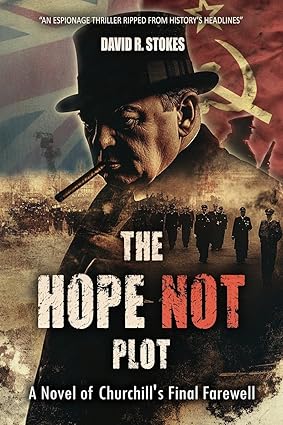

From the very first chapter, The Hope Not Plot swept me into a moment in history that I thought I already understood. But author David R. Stokes brings it to life in a way that feels fresh and immediate. The book opens on the eve of Winston Churchill’s death and quickly builds a riveting narrative that blends fact and fiction with surprising grace. As the British government prepares for the looming farewell of one of its greatest statesmen, the novel introduces a shadowy plot that threatens not only Churchill’s legacy but international stability. It’s part historical drama, part espionage thriller, and part quiet tribute to the man at the center of it all.
The writing is cinematic. Every room, every face, every foggy London street corner is drawn so clearly I could almost hear the hush of the crowd gathered outside Churchill’s home. Stokes has a gift for pacing. The dialogue is believable and loaded with character, whether it’s the gruff authority of Prime Minister Wilson or the nervy conscience of David Ormsby-Gore. There’s also something haunting about how he weaves in the paranoia and geopolitics of the Cold War without turning it into a lecture. It felt smart without being smug. The emotional weight hit me hardest in the quiet moments like Churchill’s final appearance at the window, the whispered memories of wartime sacrifice, the reluctant plotting in smoke-filled rooms.
But what really stayed with me was the central idea behind it all. The way a death, especially a death this big, can send ripples far beyond grief. Stokes plays with that idea masterfully. Churchill becomes not just a man, but a symbol of greatness, of tradition, of defiance, and everyone around him must figure out what to do when that symbol fades. The sense of loss is personal and political, and it made me think a lot about how we handle the passing of giants in our own time.
I’d recommend The Hope Not Plot to anyone who loves historical fiction with teeth. If you’re into John le Carré or Alan Furst, you’ll feel right at home. It’s also a solid pick for readers who want more than just facts, they want the heartbeat behind the headlines. It’s a book that respects history but isn’t afraid to imagine the “what ifs.” Smart, moving, and genuinely thrilling.
Pages: 410 | ASIN : B0FJZYXJL1

That Such Men Lived
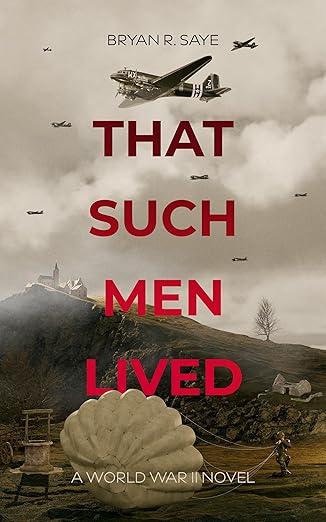
That Such Men Lived tells the story of Johannes Schmitt, a young German Jew whose life is torn apart on Kristallnacht and who is thrust into the chaos of World War II. From the loss of his father to the pain of leaving his mother behind, Johannes’s journey takes him from Europe to America and eventually back again into the war that claimed everything he knew. The book blends historical events with a deeply personal narrative, capturing the fear, the anger, and the small rays of hope that kept people alive during the darkest of times.
I liked the writing style. It’s vivid without being overworked, and it has a rhythm that keeps pulling you forward. The dialogue feels alive, like conversations overheard rather than scripted, and that makes the heartbreak hit even harder. There are moments where I found myself smiling at the playful teasing between characters, only to be gutted pages later by violence or loss. That unpredictability gave the story weight. The author doesn’t shy away from horror, but he doesn’t revel in it either. It’s honest, sometimes painfully so, but never gratuitous.
This is an emotional novel. I felt Johannes’s fear of being powerless, his shame at leaving loved ones behind, and his stubborn determination to carry on anyway. I related to his anger, too, that blend of grief and fury at injustice that has nowhere to go. Some passages made me put the book down just to breathe. Others I read twice because they carried a beauty that didn’t quite sink in the first time. The author doesn’t just tell you what happened, he makes you feel it, and that’s the kind of storytelling I admire most.
I’d say this book is for readers who want more than dates and battles in their World War II stories. It’s for people who care about the human side, the quiet moments in kitchens and churches and letters home, as much as the grand sweep of history. If you’re drawn to novels that are raw and heartfelt, that let you walk in someone else’s shoes, this is a book you shouldn’t miss.
Pages: 374 | ASIN : B0FP3W98J6

Literary Titan Gold Book Award: Fiction

The Literary Titan Book Award honors books that exhibit exceptional storytelling and creativity. This award celebrates novelists who craft compelling narratives, create memorable characters, and weave stories that captivate readers. The recipients are writers who excel in their ability to blend imagination with literary skill, creating worlds that enchant and narratives that linger long after the final page is turned.
Award Recipients
























Wednesday Night Whites by Marci Lin Melvin
Visit the Literary Titan Book Awards page to see award information.
Literary Titan Silver Book Award
Celebrating the brilliance of outstanding authors who have captivated us with their skillful prose, engaging narratives, and compelling real and imagined characters. We recognize books that stand out for their innovative storytelling and insightful exploration of truth and fiction. Join us in honoring the dedication and skill of these remarkable authors as we celebrate the diverse and rich worlds they’ve brought to life, whether through the realm of imagination or the lens of reality.
Award Recipients




















Just Play Like You Do in the Basement: Coming of Age as The Drummer for The Greatest Entertainer in the World by Rick Porrello
An Inconvenient Witness: The Weight of Ordinary Things by Kevin Casebier
Visit the Literary Titan Book Awards page to see award information.
The Children of the Children
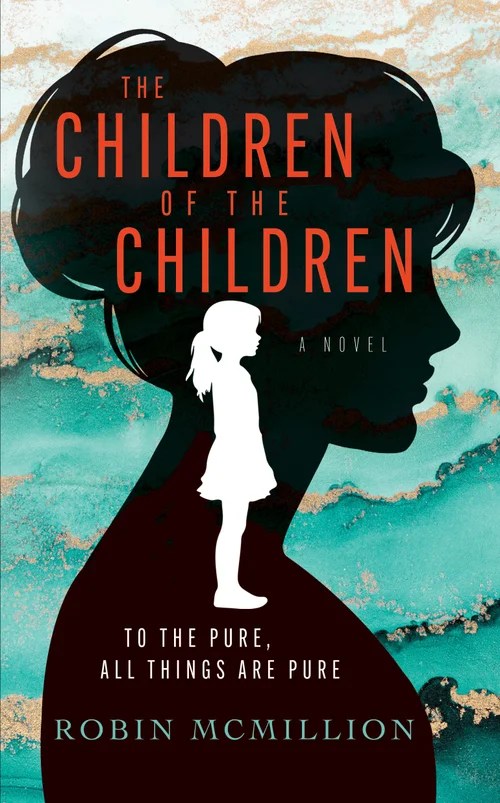

The novel begins in Prague in 1989, just as the communist world is unraveling. A boy without a country insists he is American, though he has never set foot on U.S. soil. From there, the story peels back through decades to reveal the world of the Fishermen, a cult that swept up young seekers during the Vietnam War era and carried their children across borders and generations. We meet Danny Calvert, later known as Jacob, and trace his fall into the group’s grip. Through family ties, betrayals, faith, and disillusionment, the novel lays bare the long shadow of belief systems built on control, secrecy, and survival. It is as much a story about America’s restless search for meaning as it is about the people trapped within one man’s vision.
Reading this book pulled me into an emotional whirlwind. The writing has a plainness that makes the events feel raw and real. The characters stumble into mistakes, get swept up in causes, and try desperately to make sense of their lives. At times, the prose feels almost documentary-like, which adds to the authenticity. But what struck me hardest were the emotional beats. The despair of losing friends, the pull of a community that feels like love until it is revealed as control. The book made me angry and sad, sometimes within the same page. I found myself wanting to shout at the characters to run, while also understanding why they stayed.
The ideas in the book stirred up a lot for me. It’s about more than just a cult. It’s about how easily people can be convinced to give up their freedom for belonging. It asks how much of ourselves we’re willing to sacrifice for an answer to our confusion. The story lingers on faith, not just religious faith but faith in movements, in leaders, in utopias. And it questions whether that hunger for truth and certainty is ever really satisfied. The way the children carry the weight of their parents’ choices made me think about inheritance, not of money or property, but of wounds and beliefs.
The Children of the Children is not for someone looking for light entertainment. It’s heavy, sometimes heartbreaking, and often unsettling. But it’s powerful. I’d recommend it to readers who are drawn to history, who want to understand the human cost of movements that promise salvation, and who aren’t afraid to sit with discomfort. If you want a story that makes you feel, reflect, and maybe even question your own certainties, you’ll enjoy reading this book.
Pages: 368 | ASIN: B0FSSVGMWV
The Glass Pyramid
The Glass Pyramid by Vesela Patton follows the journey of Ahamoset, a young girl in ancient Egypt whose fierce ambition and vivid dreams set her apart from those around her. She longs for love, respect, and ultimately power, while navigating a dangerous world of family conflict, betrayal, and mystical encounters. At its heart, the book weaves together palace politics, sibling rivalry, and encounters with a strange otherworldly figure named Sekhem, who guides her toward a destiny larger than herself. The story blends history with myth and imagination, creating a sweeping tale that shifts between daily life in the New Kingdom and spiritual journeys through dreamlike realms.
The imagery is often stunning. Scenes of gardens, palaces, and feasts are rich and sensory, making me feel like I was walking alongside Ahamoset. Her mystical visions, especially those with Sekhem, pulse with strange beauty and unsettling wonder. At the same time, the cruelty of her brother Wajmose left me shaken. His violence made me angry, even sick at times. This clash between brutality and beauty gave the story a raw energy, but it also made the reading experience jagged, almost exhausting in places.
I admired the ambition of the book. It doesn’t just aim to tell a simple historical drama; it tries to marry myth, philosophy, and morality with personal struggle. This works especially well when Ahamoset pushes against the limits of her world and dreams of a future she is told she cannot have. At times, the writing leaned toward the reflective, with stretches of dialogue that carried a lesson-like tone, slowing the pace of the story. I wanted more chances to see Ahamoset simply as a young girl before her destiny pressed in. Still, the richness of the prose and the author’s clear passion for the story shone through. That dedication gives the book its strength and keeps the reader engaged.
The Glass Pyramid is a story I would recommend to readers who enjoy lush detail, mythic overtones, and tales of young women striving against the odds in rigid societies. If you like a mix of history, fantasy, and moral struggle wrapped in vivid storytelling, this book is worth your time.
Pages: 234
Ramparts of Winter Iron: When Frost Hammers the Gate
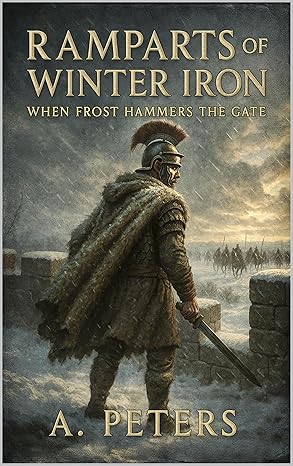
Ramparts of Winter Iron is a gritty and tightly woven historical fantasy set on the snowy fringes of a fading Roman frontier. The story follows Flavius Marcellinus, a seasoned Roman officer tasked with holding the fortress city of Caesarea against a rising tide of nomadic Alan invaders. With only raw recruits, improvised weapons, and the bitter cold at his back, Marcellinus must forge discipline out of desperation. The novel tracks his struggle through military drills, political tension, and a climactic night raid meant to cripple the enemy’s supply line. It’s both a tale of war and a meditation on duty, leadership, and the endurance of civilization under siege.
What I loved most was the sheer sense of place. The cold felt like a character all on its own. It was biting, unforgiving, and always present. Peters’ writing style is direct and powerful. There’s no fluff here, no purple prose. Every sentence pulls its weight. I appreciated how the author balanced action with introspection. Marcellinus isn’t a superhero. He’s tired. He doubts himself. But he pushes on. That kind of worn determination struck a chord with me. The battles are gripping, the tactics believable, and the stakes always feel real.
The book asks a lot from the reader. You’re dropped right into a cold and crumbling world with little time to catch your breath. At times, I found the sheer amount of logistical detail overwhelming, especially regarding the tactics. It’s clear the author did his homework, and I admire that. This book is a great pick for readers who love diving into the gritty, boots-on-the-ground details of Roman combat, from shield formations to siege engines and everything in between. But the details slow the story in moments when I wanted the story to move. Still, those slow patches are outweighed by the raw emotional honesty of the characters. Antonus, the reluctant farmer-turned-soldier, especially stood out. He gave the story a human core beyond all the spears and orders.
Ramparts of Winter Iron surprised me with its depth. It’s about building something worth protecting when the world seems bent on tearing it down. I’d recommend it to readers who enjoy Roman-era fiction, military history buffs, and anyone who’s drawn to stories of quiet bravery and stubborn hope.
Pages: 259 | ASIN : B0F71QK934
Interior Demons

The Reluctant Womb is an emotional novel about three women whose lives are shaped by love, loss, and the brutal lack of reproductive freedom in the decades before Roe v. Wade. This seems like a very personal story for you. How hard was it to put this story out in the world for people to read?
It wasn’t hard at all. It just seemed the right story to tell. Roe v. Wade had just been overturned, and women were facing the same problem today that women faced when the events in this story took place. One of the women, on whom the character of Thea is based, had recently sent me copies of the letters she’d received from Chris in 1963, and I felt compelled to include some of them in the story, so Chris’s actual voice could be heard. I began to see parallels—how the three women’s (“girls” in those days) own birth stories influenced who they became as young women, and the choices they made. The actual stimulus for writing it came from someone in a movie group I belong to. We’d just watched a film about a 17-year-old girl who seeks an abortion. One woman thought it was unoriginal. I began telling her the story of my two friends who got pregnant in 1963, and by the time I’d told her a few facts about their situation, the woman broke in saying, “Now that’s a movie I’d love to see!” I couldn’t write a script, but I could tell the story, fictionalized. That’s actually what pushed me to begin writing. Most of the story is fiction, built around facts and educated guesses.
There was a lot of time spent crafting the character traits in this novel. What was the most important factor for you to get right in your characters?
The most important thing for me was to get right was how much these three women cared about each other. After that, I wanted to distinguish them by other characteristics—the type of family they grew up in, what they looked like, their values, their various strengths, their interior demons. Having known them both, this wasn’t difficult.
What were some themes that were important for you to explore in this book?
Obviously, the main theme is the difficulty of unwanted pregnancy presented for women pre-Roe v. Wade. But also the central themes facing young adults in the 1960s: the Bomb, Civil Rights and interracial relationships, the Vietnam War, and the widespread appearance of drugs. Also, the Pill, which presented a struggle for many young women who’d been taught to remain a virgin until their wedding night.
What is one thing that you hope readers take away from The Reluctant Womb?
I think the one thing I want readers to take away is that, although abortion should be legal, it is not a simple solution. And neither is adoption. I tried to show this in the character of Chris, who was tormented by not knowing who her birth parents were and choosing abortion to end her pregnancy rather than having her child adopted. With Thea, I tried to show it with the daughter she reunites with nearly fifty years later, when she hears her daughter’s story. But primarily, I tried to show it when Cilla learns she was nearly aborted (which is my own story), and has to struggle with her pro-choice stance and the fact that she helped Chris through her abortion. It brings home to Cilla that her life would have been destroyed if her mother had succeeded. This is, in my opinion, the moral core of the story. Her resolution, that, because it’s impossible to choose between the rights of the mother and those of the fetus, that neither has more “rights”—means that the government has no business making a law making abortion illegal. But this also means that, if fully realized, it’s the most painful decision a pregnant woman will ever make. My more grandiose hope, I suppose, is that this book will help to narrow the chasm between those rigidly opposed to abortion and those who feel it is a woman’s right to choose.
Author Links: GoodReads | Facebook | Kirkus | Website | Amazon
In 1963, three college friends at the University of Michigan are on the cusp of adulthood, full of dreams and discovering their place in the world. But when two of them become pregnant, they face an impossible reality: abortion is illegal, birth control is hard to come by, and society is quick to judge.
Set in the years before Roe v. Wade, The Reluctant Womb follows these young women as they grapple with love, shame, secrecy, and the consequences of choices no one should be forced to make alone. Against the backdrop of the sexual revolution, shifting gender roles, and political unrest, their stories illuminate the emotional and societal weight of unplanned pregnancy in a time when women had little agency over their own bodies.
Based on true events and written by one of the women who lived them, Pamela Blair’s novel is both a poignant coming-of-age story and a timely reminder of how much—and how little—has changed.
For readers of historical fiction, women’s fiction, and memoir-style novels, The Reluctant Womb is an unforgettable story of resilience, friendship, and the fight for reproductive freedom.
A CHOICE THAT WASN’T A CHOICE



 LITERARY TITAN