Blog Archives
The Perspective of the Marginalised

False Bay moves through the lives and deaths of a wide cast of characters whose stories overlap through love, trauma, faith, race, sexuality, apartheid, memory, and the sea. I find the novel’s setup entertaining. How did this idea start and develop as you wrote?
I wrote a screenplay 25 years ago and while the industry loved it, no film was made of it. So, I eventually converted it into a novel, updating it and fleshing out the many characters. I used my own life experience for parts of it and invented the rest. It is not auto fiction though. My life has not been that interesting!
The supernatural elements never feel separate from ordinary life. Ghosts, visions, and saints exist alongside braais, gossip, and family fights. Why was it important for the magical and the mundane to coexist so naturally?
Cape Town is a magical place. The story extends beyond reality to the mystical and I wanted to cover these elements in a way which seemed routed in reality but also encompassed the supernatural. By being very specific about the locations, this reinforces the reality element so I could get away with the magical and still tell a “believable” story.
So many characters carry only fragments of the truth. Were you interested in the idea that no single person can fully narrate collective trauma?
Absolutely. As one of the characters says, “what is truth?” So, I wanted to look at the many sides to a narrative and a variety of worldviews. I also wanted to look at the world from the perspective of the marginalised.
What do you want a reader who has never been to South Africa to take from this book — and what do you hope a South African reader finds that they didn’t expect?
Readers who have never been to South Africa will hopefully get a better perspective of the history of colonialism and apartheid and its effects on South Africa today. Also, the themes are universal regardless of where you live. The LGBTQ element speaks to a community often marginalised as well. Sexism and racism are also huge issues internationally. Locally I hope South Africans recognise the legacy of the past injustices and the marginalisation due to race, sex, sexual orientation, economic status, class and diversity in general. Also, I hope they recognise Cape Town and its magical elements.
Author Links: GoodReads | Website | William Dunn | Amazon
Raising Awareness

Jackdaw Affliction follows Billy from a rough-edged 1980s English childhood into adulthood, where grief, love, and the advancing grip of ataxia turn survival, dignity, and endurance into the heart of the story. What drew you to tell Billy’s story across such a long emotional and physical arc?
My desire in writing this novel was to keep things real and plausible. I have lived experience of Ataxia and strong connections with peers across a wide range of disabilities. To stay truthful to what many folk experience, it was necessary to have an arc where Billy loses everything. Or at least perceives he loses everything.
The beginning of the novel – Youth – is about the growth and making of the man. The second half of the novel is about diminishing abilities and the effects on the mind. The frightening thing about ataxia and all degenerative conditions is that they slowly chip away at you until there is nothing left. Often, the mental health side of this is not explicitly discussed. I wanted to change that.
How did you balance the intimacy of Billy’s voice with the wider family-saga feel of the novel?
I wrote this book with the aim of raising awareness of a rare condition. But also, I wanted to give readers an insight into the mind of someone who slowly loses all that made them who they are. Mental health is a real and delicate thing. It is for me, and it is for many people with debilitating conditions.
The book was always about Billy’s story. Always predominantly his narration. After my first draft, it became apparent that I needed more structure and readability. This is when the vignettes from his family members came in. Both to tell the story from other perspectives, but also to offer some unquestionable truth and reliability to the manuscript. The family was always a vital cog in Billy’s wider story, even when they were no longer present in his life.
Music feels like a quiet current running through the book. What role did it play for you while writing?
Music helps set the theme, feel, and time stamp this story. Almost by chance, I had found myself listening to certain tracks whilst writing and developing the book. Each track helped me set the scenes and characters to a specific point in time. Whilst not a historical novel, it is set over 35 years, so being accurate on the recent past was a necessity.
Also, if you pay really close attention to each song in the book, you can almost see a story told by the track listings.
As important as music is, it was also important to have an absence of music during Billy’s darker times. For this reason, almost all of part 4 is devoid of music.
When writing Billy’s experience of ataxia, how did you approach portraying disability, humiliation, and endurance without slipping into sentimentality?
The aim from the outset was to portray a plausible, real character. Inspiration porn was not the goal. By this I mean it was important that all characters made mistakes, had flaws, and had mischievous thoughts, rather than paint them as some kind of saint or martyr. Hopefully, the book balances vulnerability with agency. The idea was not to have characters as symbols or lessons, but to present flawed, authentic human beings. As mentioned, it was great to draw on my experiences and those of my peers to keep the story feeling as genuine as possible.
Author Links: GoodReads | Facebook | Website | Instagram | Amazon
From bike rides through the suburbs of 1980s Hampshire to the claustrophobic grind of adulthood, Billy Cooper’s life is shaped by loss, fractured family ties, and the creeping onset of a degenerative disease. As his body betrays him and grief corrodes what remains, Billy turns inward—into recollections that blur, narratives that contradict, and personas that may never have existed.
Jackdaw Affliction is a descent into memory’s labyrinth, where trauma, illness, and longing distort the line between truth and invention. Told with brutal honesty, warped humour and hallucinatory edge, S. G. Hyde’s novel explores what it means to live when the ground of reality keeps shifting beneath your feet.
At once harrowing and tender, it is a story of survival through imagination, self-deception, and the desperate human need to stitch meaning out of chaos. A haunting meditation on identity, illness, and loss, sprinkled with dark comedy, this is fiction at its most unsettling and raw.
The Arts Council


When I finished The Arts Council, a satirical novel by Dolly Gray Landon, I felt like I’d been dropped into a carnival mirror version of the arts world. The book follows Honorée Oinkbladder, a gifted young artist raised inside a family business that quietly manufactures the physical tokens of achievement for institutions everywhere. Through her eyes, we watch a small city’s arts ecosystem twist itself into a tangle of ego, corruption, favoritism, and theatrical self-importance. Her tense rivalry with Modesty Greedance unfolds against a backdrop of inflated awards, misused donor funds, and a once-noble arts council that has drifted far from its original ideals. The result is a story that sits squarely in the literary satire genre, though it often reads like a character-driven dramedy with teeth.
The writing is lush, verbose in a way that feels deliberate, like Landon wants the excess itself to be part of the joke. There are long, winding sentences loaded with wordplay and invented terms, and then sudden needle pricks of clarity. It’s funny, but also strange, because the humor is threaded through moments that cut close to the bone: the way Honorée hides her beauty so she won’t attract the wrong kind of attention, or the way Modesty relies on spectacle instead of craft because spectacle is what the system rewards. The satire bites hardest when the book peels back the arts council’s history, revealing how a once-merit-driven institution slowly rotted after a leadership collapse. The contrast between past ideals and current dysfunction is one of the book’s most memorable tensions.
What I liked most was how much the novel asks us to think about value. Who gets to decide what counts as art. Who benefits from the illusion of fairness. Who learns to play the game and who refuses. Even the absurd elements feel purposeful: Honorée’s family literally manufactures the symbols that feed inflated egos, yet they see through them more clearly than anyone else. That irony gives the book a reflective core I didn’t expect. The novel also manages to be playful without losing its edge. It mocks the arts world, yes, but it also mourns what the arts can become when honesty gives way to self-interest. I found myself chuckling at one page and nodding in recognition on the next.
The Arts Council is a bold, brainy satire with a lot on its mind. I’d recommend it to readers who enjoy literary fiction that doesn’t mind being a little unruly, especially anyone curious about the messy intersection of art, ego, and institutions. If you like stories that mix humor with critique and aren’t afraid of dense, stylized prose, this one will keep you thinking. For readers who enjoy sharp, offbeat takes on creative culture, it’s a fascinating ride.
Pages: 558 | ASIN : B0G2TFBLHZ

Layer of Tension

Born on Monday tells the story of two people with a shared history and whose lives are both scarred by heartbreak, who reunite under less than ideal circumstances. Where did the idea for this novel come from?
Born on Monday began as a short story called “Time Capsule,” which was published in my debut collection, 50 States. The original story was very much about how those who leave a place after high school are changed, whereas those who stay behind remain the same. Billy Stevens stays in Augusta, whereas the love of his life escapes to New York City. When I started exploring this aspect of the story —wondering whether they would ever reconcile their differences —it became increasingly clear that they would have to overcome a past mired in tragedy. More than that, they would have to face several present-day threats, including someone sinister who follows Jessica Michaud home. It was in discussing the progression of this story with a close friend that her real-life experiences and my own research into stalkers would inform much of the novel’s direction.
What do you find to be the most challenging aspect of writing a thriller?
For this thriller, it was very much a matter of who knew what and when they knew it. All the characters have different perspectives on their shared past, which not only dramatically shapes how they interact with each other but also how they perceive themselves. The same can be said for the reader, too. They inevitably know more than any one character, creating an additional layer of tension, but never know enough to predict the end. Born on Monday is very much a story with secrets within secrets, and the consequences of keeping them.
Do you have a favorite scene in this book? One that was especially satisfying to craft?
There were several, and the two that stand out for me may be among the most overlooked by readers. I very much enjoyed crafting the chapter where Billy and his current girlfriend, Autumn, reconcile their differences. It’s a tender, heartfelt moment amid the chaos surrounding them. The immediacy and intimacy of their reunion run deep. The second is Andrea’s visit to the Kennebec Journal. She meets with her boss and mentor to discuss the story she is working on, which also touches on what journalism means in a small town like Augusta. Having worked as a journalist, this chapter allowed me to rehash some old conversations with colleagues in a contemporary setting. More than that, it underscores why I was so thrilled that Andrea, who was initially meant to be a supporting character, grew to become such a strong protagonist.
What is the next book you are working on, and when will it be available?
My next work in progress (WIP) can best be described as a speculative thriller, blending and bending science, metaphysics, and something akin to the supernatural. It’s a continuation of the short story “Dead Ends” from 50 States. “Dead Ends” was one of the most called-out stories from the anthology and involves a young couple who take a reckless turn off a state highway in Utah and find themselves in a nightmarish government biohazard area. I’ve been relatively consistent in releasing a new book every other year, but I’m hoping to accelerate my pace so this novel is something readers can look forward to toward the end of 2026!
Author Links: GoodReads | X (Twitter) | Facebook | Website | Amazon
In Augusta, Maine, a historic nor’easter unearths sins and secrets buried deep in the town’s past. Billy Stevens, a quarry worker haunted by loss, is drawn into a web of betrayal when a brutal crime pins him as a suspect. Jessica Michaud returns to care for her ailing mother, only to find herself hunted by a vengeful ex whose chilling threats awaken old wounds. And journalist Andrea Kearney digs into a local dynasty’s corruption as the storm’s fury mirrors the rising tide of violence.
With time running out, three lives collide in a desperate fight for survival, where truth becomes a casualty and redemption comes at a cost. Eleven-time award-winning author Richard R. Becker delivers a gritty literary thriller that digs into identity, perception, and the human condition.
Hard-Won Epiphanies

Secret Seeds follows a young girl and her mother who are trapped in an abusive home as they break free and wind up in an uncertain world of strangers in a cult-like community. Were you able to achieve everything you wanted with the characters in the novel?
My five novels center on redemption through courage and perseverance, which bring hard-won epiphanies. In Secret Seeds, I was satisfied with the character development, which also brought me personal insights on the plight of the undocumented.
What were some themes that were important for you to explore in this book?
When I began the novel, the headlines were filled with stories of aliens – both human and otherwise. Illegal immigration is an emotional topic, and I wanted to craft a heartfelt portrayal to cast the issue in human terms. We also took a trip to Alaska, and the lifecycle of sockeye salmon and how they fight to make the journey home to spawn resonated with me. Only a small percentage make it home, but none get lost due to their perseverance, and I incorporated this theme in the story.
What is the next book that you are working on, and when can your fans expect it to be out?
I am currently working on a medical thriller and hope to have it scheduled for release in the next year or so.
Author Links: GoodReads | Amazon
Gabrielle Ruiz, an undocumented migrant farm worker, follows the harvest until she and Luis leave the fields to give their unborn child a better life. But after tragedy strikes, Gabrielle finds herself alone and renounced by her father. Adrift, she meets Dale, a beacon of hope who offers her and her infant daughter, Olivia, a chance at a new beginning. After following him to Maine, they welcome a son. But over the years, Dale’s abuse traps Gabrielle and Olivia. Salvation appears in the enigmatic Rezi, who proposes a daring escape — a plan shrouded in secrecy, promising sanctuary for Olivia within a hidden community. As Gabrielle places her trust in Rezi, she ignites a tempest with Dale and has Olivia questioning whether her protectors are from a twisted cult or messengers from another realm.
In a world where freedom is fragile, Gabrielle’s tenacity and her children’s coming-of-age journeys lead them to question what truly defines “home.”
The True Nature of Hauntings

A Ghost Chases the Horizon tells the story of the Trans-Allegheny Lunatic Asylum from the perspective of the building, exploring mental health, time, memory, and the invisible scars passed from person to person and place to place. What was the inspiration for the original and fascinating idea at the center of the book?
The flashpoint for this story came from a paranormal encounter my friends and I had while we were doing an overnight tour of the Trans-Allegheny Lunatic Asylum campus. I was alone in a large area once used as a women’s ward. My friends went outside to find a bathroom, and as they came back, they heard what sounded like a group of women screaming (it was caught on a recording, too). A week later, I was watching a TV program about the asylum. The show told a story from the 1960s about how the women in the ward all started screaming at once. When the attendants arrived, the women said they saw a man standing in the corner of the room. Remembering that was where I was standing when my friends heard the screams, I had to ask myself, Do hauntings work both ways? Was I their ghost? The origin of the story came from those questions. The idea for the Kirkbride building to be the narrator originated later from a friend’s suggestion about another book idea. The new story did not develop, but the idea was worked into later drafts of this book.
Your story explores the lives of four people who resided in the hospital from 1905 to 2063. What are some things that you find interesting about the human condition that you think make for great fiction?
Melancholy is the feeling I most wanted to convey throughout this story. I think it is one of the more underappreciated emotions. The times when books and films have successfully employed that tone are the stories that have stuck with me the most. There is a natural loneliness to the Kirkbride that emanates from it to this day. Along with its gothic architecture, it is the perfect place to convey such a mood. There needed to be a hopefulness to the stories as well, so the loneliness would not become overwrought and depressing.
What were some themes that were important for you to explore in this book?
The relationship between time, spirit, and the true nature of hauntings was my first priority. I also wanted to address socially relevant themes like false allyship, neglect of the mentally disadvantaged, and the perils and responsibilities of using a historic site as a playground.
What were some goals you set for yourself as a writer in this book?
I wanted the structure to be experimental. I looked at it as a braided narrative, where each character’s story overlays in order, so one character is inadvertently filling in another character’s backstory from their position in the timeline. All four characters have a direct effect on the other four in some manner. I also wanted to layer each character’s backgrounds so much that there are hidden stories within the story. In one particular example, there is an intentional continuity error, but if the reader were to run the narrative backward, they would realize that time had been altered without anyone in the story realizing it. I didn’t just want this story to be read. I wanted it to be studied.
Author Links: GoodReads | Facebook | Website | Threads | Amazon
What part of ourselves do we send into the future? These stories explore the relationship between time and spirit through the lens of the community surrounding the Trans-Allegheny Lunatic Asylum. The hospital has gone by many names throughout its history, and its troubled past is retold from the memory held by its thick, limestone walls.
The Complexities of Humans

In this is my worst nightmare: please be nice to me, a young high school teacher is confronted with losing her best friend and must come to terms with the trauma bond the two have formed. What was the inspiration for the setup of your story?
The inspiration for this story came to me organically, as it started from a poem. I wanted to delve deeply into human relationships, and I find that people often don’t solve their problems and battle their ghosts unless they’re in a desperate situation, like the one in the novel, which is why I wanted to have a somber setting, like a hospital for instance.
Is there anything from your own life found within the characters of Sunny and Charlie?
I think whenever we write we always take something from our lives. Everyone I’ve ever met, every book I’ve ever read and every film I’ve ever seen are in this book, as well as some of myself. But I do think that building these characters and getting to know them as the writing process continued was wonderful, and they definitely didn’t just come to me ready; I had to slowly meet them and find out more about them.
What were some themes that were important for you to explore in this book?
I wanted to explore the complexities of humans and the way they relate to each other, all the joys, pains, and grief. But ultimately, I hope that what readers take away is that it’s a story about love and its power, for good or bad.
What is the next book that you are working on, and when will it be available?
I can’t say much about my next book other than it’s a big shift from this one, something a little more mysterious, and in an entirely different genre. Other than that, I’m working on plenty of films, and writing a lot of screenplays! I’m currently focused on food writing, and a couple of my next projects are about food and cooks.
Author Links: GoodReads | Website | Amazon
Sunny is a high school teacher in her late twenties navigating the hospitalization of her best friend Charlie. As a narrator who feels like an observer in her own life, Sunny examines what her life without Charlie might have been like and what life with him has meant for her. The story moves through time non-linearly, exploring Charlie’s family, his and Sunny’s mutual friend Louis, and Sunny’s past and present.
Mourning for someone who is still alive and a past that has been left unresolved, Sunny tells her story, straying away from the darkest aspects of the past with witty comic relief. this is my worst nightmare, please be nice to me is a tale of love, its pains and joys, belonging, and finding trouble in one’s brain, whether literally or figuratively.
The Good Samaritan
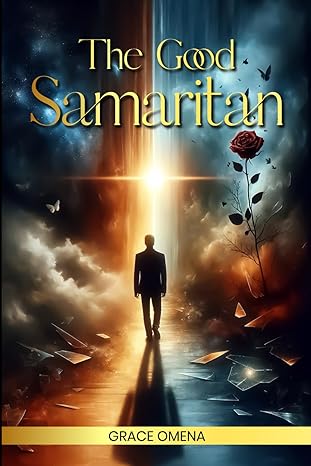
The Good Samaritan by Grace Omena paints the portrait of Tom Appleton, a Harvard Business School graduate stepping into the high-stakes world of Wall Street. Everything seems to be going his way, and he’s primed for success until 9/11 happens. The terrorist attacks not only shatter New York City but also upend Tom’s sense of purpose. Though he narrowly escapes physical harm, the psychological aftermath throws him into a state of confusion and self-doubt. In the face of economic instability, Tom begins to question whether his idea of success even matters anymore. Can he redefine himself, or will he be trapped in the shadows of his former ambitions?
This novel, though relatively short, packs a heavy punch as a contemporary character study. Omena digs deep into Tom’s psyche, exploring his crisis of identity with a careful, thoughtful hand. The entire narrative remains glued to his perspective, capturing the raw, disoriented emotions of a man who’s lost his compass. It’s a fascinating unraveling, and Omena portrays Tom’s unraveling with an authenticity that resonates, particularly for anyone who lived through the uncertainty of the post-9/11 era. The exploration of survivor’s guilt feels particularly powerful. Tom’s struggles echo the collective sense of vulnerability that many felt during that time. The novel taps into the idea that 9/11 marked the real start of the 21st century, erasing a certain brand of pre-attack idealism. Tom symbolizes that lost naivety—an embodiment of a shaken America, reeling from the loss of its perceived invincibility. The attack hits both his personal and professional life, forcing him to confront a new world that refuses to accommodate the dreams he once held. Omena excels at drawing parallels between Tom and the wider sense of national disillusionment. His journey from denial and despair to a fragile hope mirrors America’s own attempt to recalibrate. The realization that everything he believed in may be irrelevant hurts deeply, but Tom’s path toward reinvention brings a silver lining. There’s a strength in his gradual acceptance and an uplifting message of renewal. Omena doesn’t overdo it as she weaves in humor and moments of introspection that feel grounded, never preachy.
The Good Samaritan is an engaging, introspective read that captures the emotional upheaval of a post-9/11 world through the lens of one man’s experience. It’s for readers who appreciate contemporary fiction with emotional depth and complex character development. Omena’s novel invites us to reconsider what it means to succeed, fail, and rebuild. It’s a compelling story of rediscovery, and Tom’s journey will stick with you long after the last page.
Pages: 256 | ASIN : B0D78138Q4


