Blog Archives
Gracie & Aero Wallet Business Venture
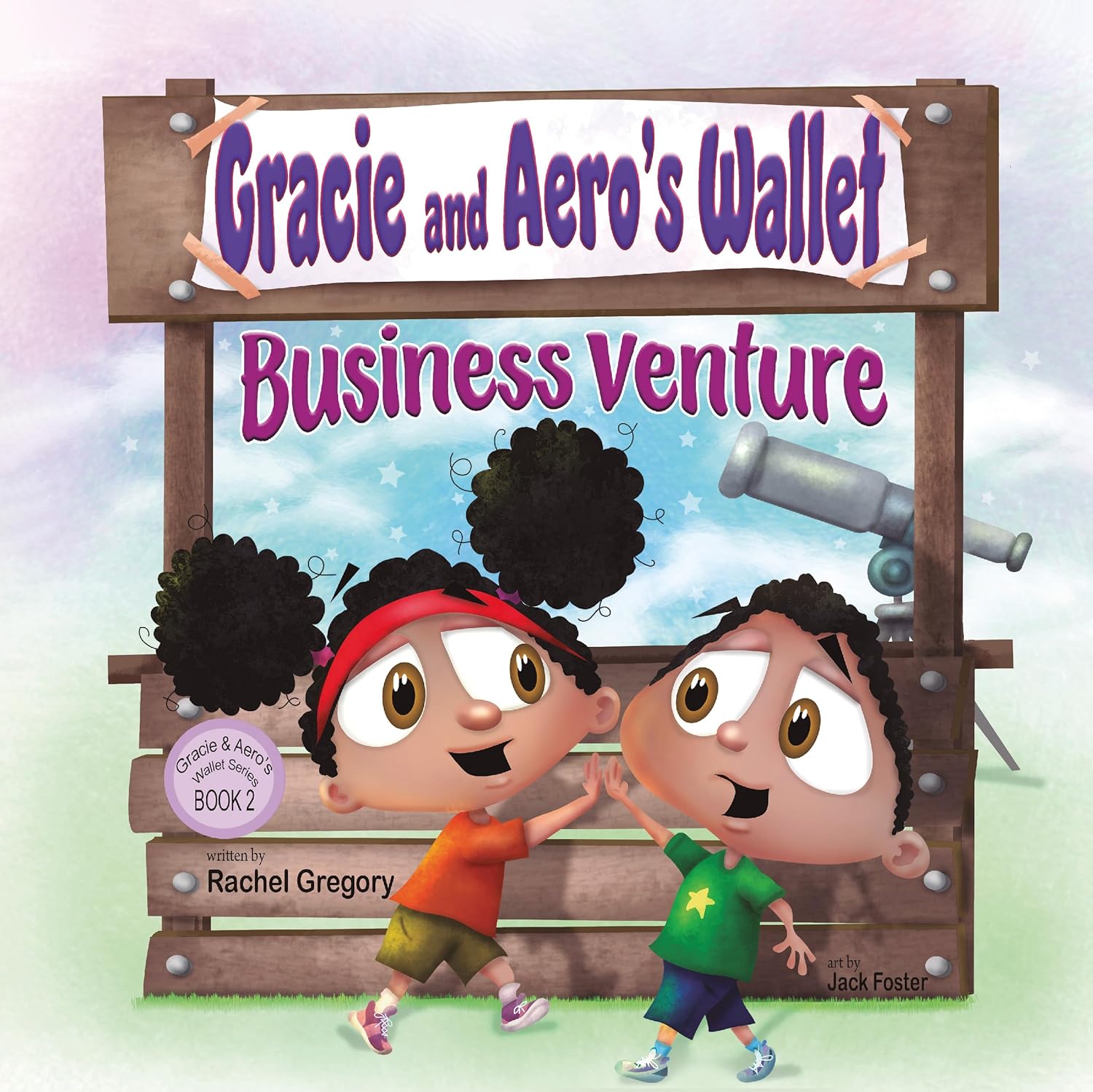

Gracie and Aero dive into summer with big dreams and even bigger plans. What starts as a simple idea tossed around the dinner table turns into a full-blown neighborhood market. The kids hustle through chores, save up their capital, map out a business plan, create crafts and snacks, and even offer telescope views. Their front yard becomes a lively space market filled with kids, laughter, and stargazing. By the end, the whole community has come together to celebrate the siblings’ creativity, teamwork, and growing business skills.
I found myself smiling at how warm and upbeat the writing feels. It has this easy flow that pulled me along like I was tagging behind Gracie and Aero as they dashed from one idea to the next. The simple explanations of words like capital and invest made me feel like the book was giving kids a gentle pat on the back and saying you can learn this too. I loved that the story never talked down to the reader. It just kept everything bright and hopeful, and it felt like a real family cheering on their kids.
I also enjoyed the whole vibe of the story because it made starting a business feel fun instead of scary. I kept thinking about how much joy the kids put into every small task. The flyers, the lemonade, the decorations, the telescope. It all felt so full of heart. The illustrations helped a lot, too. They are colorful and playful, and they made the market scenes burst with energy. I felt a little proud of the kids when the neighborhood showed up, and everything came together. It was sweet and kind of uplifting in a way I didn’t expect.
All in all, I think this children’s book is a great fit for kids who love hands-on projects, kids who get excited about making things, or kids who just enjoy stories about families working as a team. It would also be awesome for classrooms or parents who want to sneak in early lessons about money and entrepreneurship without making it feel like homework. It is cheerful, encouraging, and packed with ideas that spark curiosity. I would definitely recommend Gracie & Aero Wallet Business Venture to young readers who dream big and love adventures that start right in their own backyard.
Pages: 32 | ASIN : B0DJ4SWZJD

The Weekend Gumboots
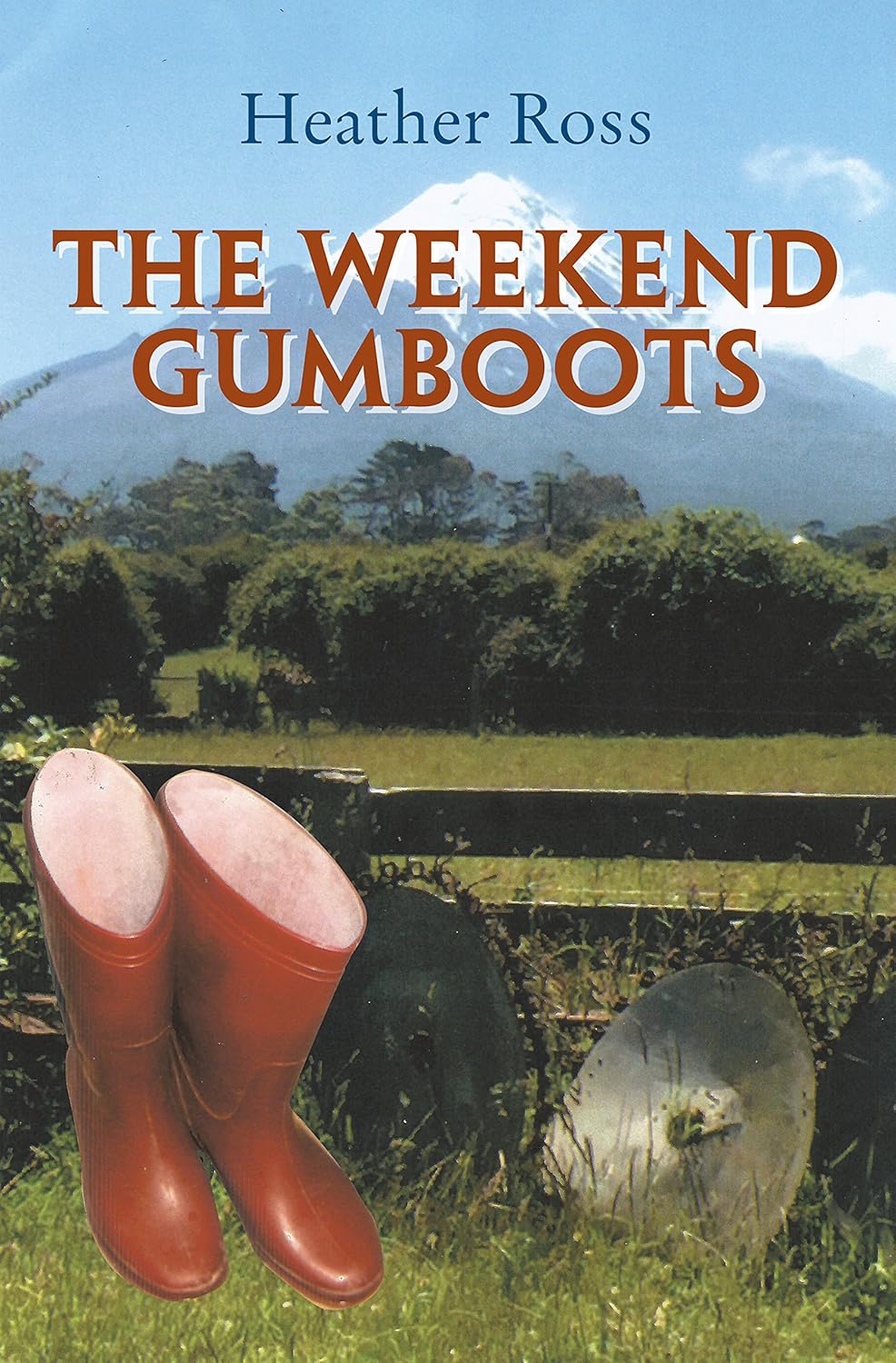

The Weekend Gumboots tells the story of a farming family weathering storms that are far more than literal. Across chapters that swing from wild weather to runaway cows to old wounds reopening, the book follows Targe, Kate, and the three sisters who never hesitate to jump in boots first. Their efforts to keep the farm standing, protect family ties, and fend off the chaos stirred by Wicked Wendy create a tale full of noise, mud, heartache, and laughter. It moves fast and often feels like a diary of disasters, rescues, and small wins that stitch a family together.
The writing has an earnest, homemade quality that made me smile. The scenes are vivid and often funny, especially when the sisters barrel into trouble with nothing but stubborn energy and shiny gumboots. Sometimes the prose wanders, but that wandering also gives the story its charm. It reads like someone talking to you over a cup of tea while pointing out every detail they remember, and I found myself leaning in. There were moments when I wished for tighter pacing, yet the rawness of the storytelling helped me stay connected to the people rather than the plot.
The ideas running through the book hit me harder than I expected. Loyalty, resilience, and the weight of family history sit under every chapter. I felt frustration when the sisters battled storms or stubborn bulls or, worse, Wendy’s scheming. I felt a kind of quiet pride as they kept showing up anyway. The book reminded me how exhausting real life can be and how love often looks like doing the unglamorous work, even when no one sees it. There were times I laughed out loud and others when I felt a pinch in my chest for how close this family came to breaking under pressure.
I also really liked the hand-drawn artwork and the photos scattered through the book. They gave the story a homely feel and made the whole thing more personal. I kept pausing to study them because they pulled me closer to the world on the page. The drawings felt warm and a bit cheeky, and the photos grounded everything in real life.
This book would be a lovely fit for readers who enjoy personal, memory-driven storytelling and who don’t mind a narrative that wanders the way real life does. It is ideal for anyone who likes heartfelt rural tales, true-to-life messiness, and family stories that feel lived rather than crafted.
Pages: 148 | ASIN : B07F1KKSSJ
Carnage in D minor
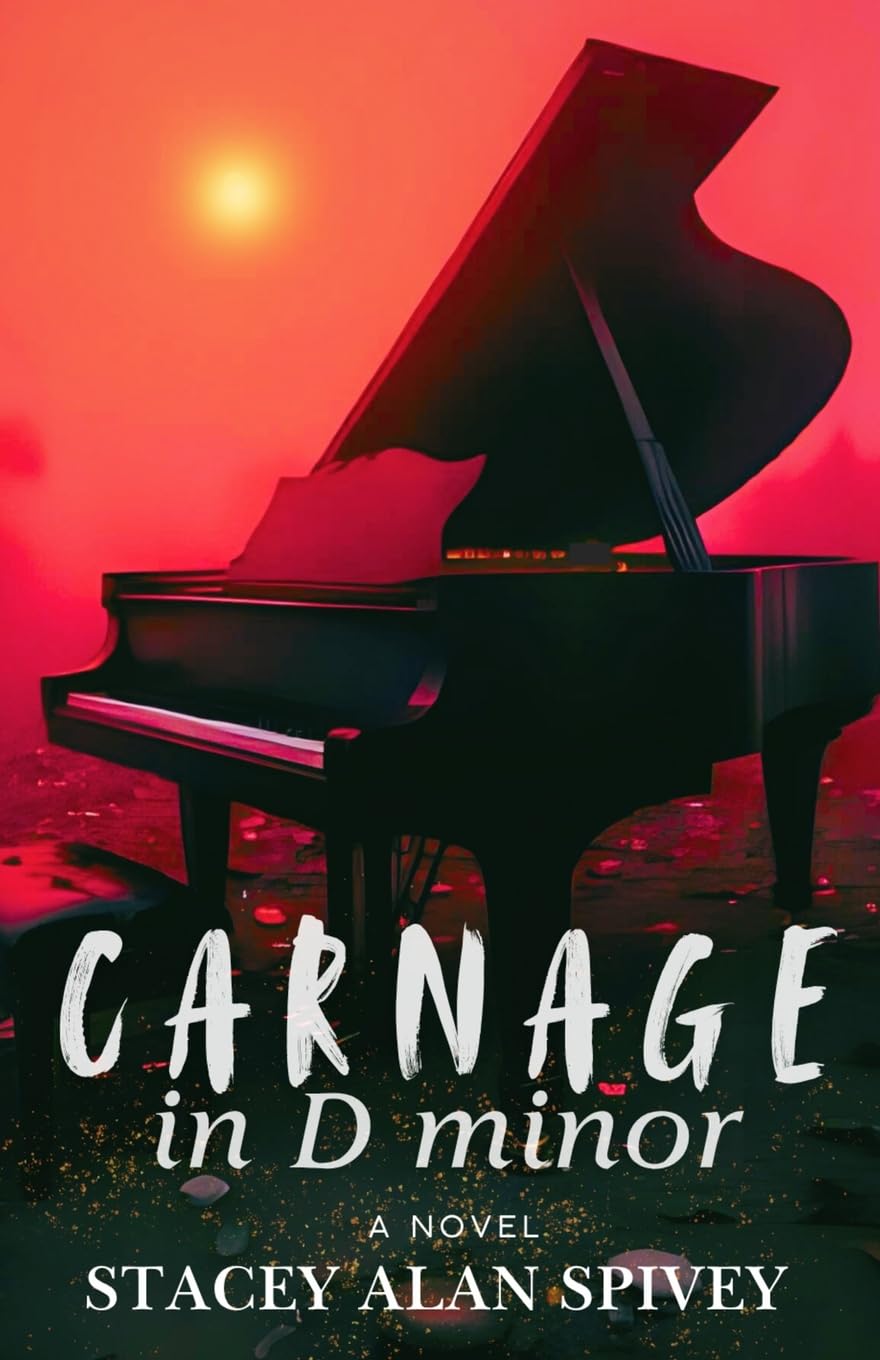
Carnage in D Minor follows Leeza Allen’s rise from a prodigious Southern piano talent to a battle-hardened military veteran who is struggling to hold herself together while trauma keeps dragging her back into the dark. The novel blends psychological suspense with a deeply personal story about survival, family, fear, and the brutal tug of the past. From childhood recitals in Beaufort to the nightmares she carries home from deployment, the book moves between tenderness and terror with an intensity that caught me off guard. The story paints a heroine who is gifted and broken and stubbornly alive. It builds a world where beauty and violence keep brushing up against each other in quiet but devastating ways.
I found myself pulled in by the voice of the book. The writing swings sharply between raw emotion and calm precision. I liked that. It made me feel as if I was inside Leeza’s head even when I wanted to reach out and steady her. The scenes around her childhood are vibrant and warm. Then the tone shifts when the story lands in adulthood where PTSD, addiction, and grief turn everything jagged. That contrast shook me a little, and honestly, that is what made the book memorable. The author seems to understand trauma from the inside out. The panic attacks. The sudden triggers. The numbing habits that pretend to help but only make the ground softer under your feet. Those moments felt painfully real. The writing has a rhythm that matches Leeza’s state of mind. Sometimes measured. Sometimes chaotic. Sometimes barely holding onto structure at all. I felt myself riding those waves with her.
I also found myself reacting strongly to the ideas the book brings up about responsibility and the human mind. The novel keeps circling back to the question of why people break the way they do. It shows trauma not just as an event but as a rewiring of a person’s internal world. I appreciated that the story never treats addiction or homelessness or depression as simple problems with simple solutions. There is frustration in Leeza’s voice. Anger too. And a fierce compassion that pushes her to believe she can fix the unfixable even while her own life is slipping through her fingers. At times, her determination feels reckless. At other times, it feels heroic. I found myself rooting for her even when she made choices that scared me.
The novel is gripping and emotional and often uncomfortable in ways that feel purposeful. I would recommend Carnage in D Minor to readers who enjoy psychological fiction that digs into trauma without sugarcoating it. It is also a strong pick for anyone drawn to stories about gifted women trying to rebuild themselves after the world has already taken too much. If you want a book that feels honest and relatable and a little bruising in all the right ways, this one is worth your time.
Pages: 265 | ASIN : B0G1CN78FG
I, Robot Alien

I, Robot Alien follows Scoots, a robot created by transcendent alien beings and sent to a devastated Earth to guide humanity back from devolution. His mission sounds simple on paper. He must stop humanity’s decline, reverse it, and redirect human evolution, all while avoiding involvement in any significant event. The paradox of that directive shapes the entire story. Through encounters with primitive tribes, a treacherous hummingbird-shaped drone companion named Billy, and generations of humans who view him as everything from saint to monster, Scoots records a centuries-long confession of mistakes, discoveries, and unintended consequences.
I liked how author Joel R. Dennstedt uses Scoots’s calm, clinical voice to highlight the strangeness of human behavior. Scoots cannot eat, sleep, age, or reproduce, and each of these gaps pushes him into awkward and often funny situations. His early fumbling attempts to understand social expectations, especially around food and intimacy, made me grin. His encounter with Myra, for example, forces him to lie for the first time, something he revisits with both guilt and amusement. The writing works best in these grounded moments. I felt the tension between his programmed serenity and the messy reality he walks through. The book never rushes. The measured pace fits a being who experiences centuries as casually as humans experience hours.
What surprised me most is how emotional the story became even though Scoots claims to feel nothing. That contrast hooked me. When he tries to save the broken boy Alexander, only to watch his legacy twisted by Alexander’s son Damon, I felt a pull of frustration and sadness, even though Scoots insists he does not experience those things. The detached narration makes the violence colder and somehow more tragic. The book balances dark turns with odd sweetness, and I really enjoyed that mix.
I would recommend this book to readers who enjoy reflective science fiction with philosophical edges. If you like stories that linger on ideas of perception, evolution, and what it means to guide others without losing yourself, this book will speak to you. It is also a good fit for anyone who likes Asimov-inspired fiction that plays with the spirit of the Three Laws while carving out something more personal and strange.
Pages: 336 | ASIN : B0F9QKYDVL
Celebrating Small Victories
Lalibela is a book of poetry that wanders through memory, love, pain, Blackness, faith, and survival, shared through snapshots of memories filled with real emotions that hit the reader hard, and amplify the realities of Black life. What inspired you to write this particular collection of poems?
I am so grateful for the opportunity to talk about this collection.
This work was part of an intended series, picking up from where a previous work, Black Architects, left off. There was this and a prequel to Black Architects called Dearest. Unfortunately, the latter was stolen from my storage unit, but Lalibela survived. I was very much moved by my community and the struggles that I witnessed/experienced. When I look around me, there are people living unglorified lives, battling day in and day out to survive. I also see triumph, I see joy, I see grit, I see humor, I see love. The scene of backs breaking under hard work, celebrating on Sundays in church and lending a hand, set a very heartfelt rhythm in my mind. This was the rhythm to which my hands went to work to capture the sanctity of what we lived. The pieces, in turn, celebrate simply getting through the day and all other seemingly small victories.
I was also partly inspired by “Of the Coming of John” by W.E.B DuBois as well as the Allegory of the Cave by Plato. Being in the motions of experience sometimes means that the very thing that is taking place is lost on your eyes precisely because of its proximity to you. The burden, weariness, revelations and love carried by the protagonists in these two stories felt familiar to me. Having experienced the world outside of my neighborhood and family inspired an awakening of sorts that stirred a deeper love and admiration for the persons around me.
I love my community and I wanted to do justice to show just what made it so special to me. I was inspired by the coming architects of our tomorrow, (specifically my niece who was around 1 at the time and my nephew who was just a fetus), that will inherit and take charge of the world that I must one day forfeit. It was important to me to pass down my own legacy within the greater legacy of this community. I wanted to explore the nuances of ‘home’ and in a lot of ways this is my letting go of what I think ‘home’ should look like. The neighborhood is in the hands of a different young now; that narrative of its character no longer belongs to me, it belongs to the coming generation of architects that must rise to the task of defining and defending it.
Were there any poems that were particularly difficult to write? If so, why?
Most of the poems were difficult to write. The time they were written, in 2018, was turbulent for me. There was a death in my community, one that I managed to blame myself for and I was battling a number of things personally. Among these battles were crippling panic attacks. I would become completely incapacitated for any number of hours and then once I was functional again, I would hit the page. During this time, I thought a lot about mortality and I wondered about the things that really mattered in life. I found myself in this picture of the universe, small and mighty and I was thus able to blend easier into the flow of things on a larger scale. I realized how my life meant more when spent in communion with the Most High and in service of those around me. Being a vessel for Christ in this way meant that I had to be pure, so the task was to confront the world in me in writing and to speak truth to power as an honest and accurate witness to all that occurred within my realm. This made it difficult to write because I would have to face those lives and those faces who were written into the lines of each of the pieces. I had to live the baring of soul that made me feel naked – in the eyes of the Lord and the eyes of the people on whom I depended on and whom depended upon me. I felt so exposed. The lesson was this: there really is no hiding place in all of Creation.
How did you go about organizing the poems in the book? Was there a specific flow or structure you were aiming for?
I wanted the poems to speak to one another, so I arranged them in a way that they kind of flow into each other. Here’s a fun fact: you know how most movies have a love scene or a romantic storyline? I wanted to integrate that into the pulse and beat of the collection so I wrote “And When On Days” to give the collection that added bit of romance. The collection creates a certain type of world, like a mini neighborhood, and I wanted every representation and expression of love present in it.
Have you received any feedback from readers that surprised or moved you?
I think that when the Most High puts it in the hearts of man to be moved by these words from my soul, then there will be more readers. As of now, any feedback is welcomed and the invitation is extended to chance upon these waters in time.
Author Links: GoodReads | Amazon
Lalibela holds within its reams the fatigue and redemption of a working class family of the African Diaspora in the West. The lively avenues, bus routes, love lives and cultures preserved in memory and in real-time as if frozen in place from another, happier time. Retaining a legacy of teaching its young hard truths about survival, identity, achievement, failure, faith, death, resilience, life, love and hate.
As concepts evolve, facts change and truth disrobes, Lalibela is an expression and legacy of survival. Within this small community with limited resources people ponder existentially, pray colossal prayers, and resuscitate grit mouth-to-mouth. Named after a town in Ethiopia that is home to the legendary rock hewn churches, Lalibela is the sanctuary for a piece of mind and a direction to that inner place of belonging that travels with us all as we navigate our various and difficult realities. Simply, Lalibela is home.
Different Solutions

The Grubby Feather Gang follows a boy plagued by bullying and fear who finds himself part of a small circle of friends who together find adventure and hope in a village otherwise torn by war and chaos. What was the inspiration for the setup of your story?
I’m really not sure, to be honest. I am very interested in the experiences of those who lived through either or both of the world wars because both wars plunged otherwise peaceful, ordinary people into extraordinary and horrific situations. But I love the idea that different people can have different solutions to the same problems; most young men of fighting age during WW1 wanted – or felt the need – to go overseas and join the fighting whereas some, such as George’s father in the story, believed in a totally different, peaceful approach. The amount of courage needed for either approach must have been immense, and thankfully, most of us today can only imagine what it must have been like to face that dilemma. I’m fascinated by the fact that these experiences, that seem, to us today, to exist only in the realms of fiction, really happened to real people.
What do you find is the most challenging aspect of writing for middle-grade readers?
Other than the usual challenges of writing for any audience, I’m not sure I find anything especially challenging about writing for middle-grade readers. It can be a challenge when you’ve been hired by a publishing company – rather than writing just because you yourself have decided to do so – because if the project is for a young audience the publishers give you a tight word-count which creates restrictions and challenges, ones which, I have to say, I really enjoy working within. However, I wrote The Grubby Feather Gang off my own bat, so I didn’t have those restrictions, even though I did want to keep the book short. But middle-grade is a wonderful age range. I don’t hold back on the complexity of the language I use or the depth of the issues the story tackles. The only thing I do differently when writing for children as opposed to adults is to make the main characters children.
Is there anything from your own life included in the characters in The Grubby Feather Gang?
I’m happy to say that the experiences of the children in this story are very different from mine. I don’t think you have to have experienced something to write about it in a believable way though. I hope I’m right about that! But there often elements of the writer’s personality in the characters they create. George is prone to anger and sulking, and as a child, I was a little like that. (I’ve grown out of it now though!) I would add that I am always warmed by people – real or fictional – who turn out to be more impressive in some way than you originally realised, like Mr Haxby. And in a way, the same can be said of each of the three main characters.
What is the next book you are working on, and when will it be available?
I’m currently working on a novel for adults. Unlike most of what I’ve written before, this is a fantasy novel, with elements of horror. It features werewolves and witches. There is so much literature about such things, so the challenge is to present them in a new way, avoiding stereotypes and tropes, and I think I’ve achieved that…
Author Links: Facebook | Website
Worse still, the school bully hangs George upside-down from the hayloft, and the next day, George gets the cane! So, with a bit of help from Emma, a curious newcomer to the village, he decides to take daring and drastic revenge on both the bully and his teacher. But he could never have predicted what happens next…
The Grubby Feather Gang is the story of four friends helping each other cope with their parents’ problems.
The BigShorts books are short, stand-alone novels for strong Key Stage 2 readers. Each novel is around 100 pages long. The content is rich and detailed, tackling discussion-worthy themes. Being shorter than most novels, BigShorts books are a great length for teachers to read to their class, or for use as guided-reading texts.
A Quiet, Universal Fear
The Moments Between Choices centers around a man who is allowed to see both the consequences of his life choices and glimpse of the man who could have been. What was the inspiration for the setup of your story?
The story began with a dream I had a few years ago. It wasn’t one of those scattered, surreal dreams — it felt frighteningly clear, like being allowed to watch pieces of my life from the outside. Not the big, obvious turning points, but the tiny moments I’d brushed off. The ones you only recognize as important when you see what they added up to.
That experience sat with me for a long time. At first, I wrote the story with myself as the center because that’s where the emotional spark came from. But as the manuscript grew, I realized I needed to protect the privacy of the people who shaped my life — family, friends, even casual figures from childhood. So I created Omar. He became a way to keep the emotional truth while allowing the details to shift into fiction.
The structure came from trying to recreate the feeling of that dream. We don’t remember our lives chronologically; we remember them through sensation — what we touched, ignored, hurt, loved, or failed to see. I wanted each stage of Omar’s journey to feel like a sense dimming out as he comes closer to understanding himself.
More than anything, the novella came from a quiet, universal fear:
If we were suddenly forced to face our choices all at once…would we be proud of what we see?
That was the seed. Omar grew out of that question.
Where did you get the inspiration for Omar’s traits and dialogue?
Omar didn’t come from one person. He grew out of the parts of ourselves we usually ignore — the moments we move too fast, the people we take for granted, the habits we justify because we think there’s always more time. When I first started writing, I pulled from my own blind spots. But as the story grew, Omar stopped being “me.” He became a reflection instead of a replica.
His traits aren’t meant to point to a specific individual. They’re meant to feel uncomfortably familiar. Anybody who reads this novella is, in some way, Omar. Not because they’ve lived his exact life, but because everyone has those small, forgettable choices that slowly shape who they become.
His dialogue came from trying to capture that everyday tone — the half-distracted conversations, the rushed apologies, the small dismissals we don’t even notice. I didn’t want him to sound poetic or polished. I wanted him to sound real…sometimes painfully real. Because in those ordinary moments, you see the entire arc of his life.
Omar is fictional, but the habits that made him are human. That’s why readers recognize him — not as someone they know, but as someone they might be without realizing it.
What are some things that you find interesting about the human condition that you think make for great fiction?
I’ve always been fascinated by the small, almost invisible moments that end up shaping a person’s entire life. Not the dramatic events we expect to remember, but the tiny decisions we barely register — the things we say out of habit, the people we overlook, the apologies we delay because we assume there’s endless time. Those small choices become the architecture of who we are, and most of us don’t realize it until much later.
Another thing that interests me is how people carry two versions of themselves at the same time: who they are, and who they believe they could be “if things were different.” That gap is where a lot of pain — and a lot of hope — lives. It’s also where great fiction usually hides.
And then there’s memory. We don’t remember our lives in clean timelines — we remember through sensation. A smell, a sound, a sudden feeling in your chest. Emotions come back to us through the senses, not the calendar. That idea shaped the way I wrote this story.
One of the things I love about fiction is the freedom it gives you. You can reach heights you didn’t even know you were capable of. You can follow imagination to places that feel unbelievable — and still land on something emotionally true. Who would’ve thought I’d end up writing a novella based on a dream I had? That’s the power of fiction. It lets you take something fragile, something fleeting, and turn it into a story that might touch someone else.
What makes great fiction, to me, is honesty. Not in a factual sense, but in the way it forces us to sit with something we’ve been avoiding. When a story captures those small, uncomfortable truths about how we love, how we fail, how we change, or how we refuse to — that’s when the human condition feels most alive on the page.
Can we look forward to more work from you soon? What are you currently working on?
Yes, there will definitely be more. Writing this novella opened up a creative side of me I honestly didn’t expect, and I’m already shaping the next project. But right now, I want to give this book the space it deserves. It’s my debut, and I’d like to see how it finds its readers, how people react to it, and hopefully enjoy whatever success it earns.
I’m taking this moment to connect with readers, learn from their responses, and appreciate the journey of having my first story out in the world. After that, I’ll be ready to step fully into the next one — and I’m excited for where that will lead.


 LITERARY TITAN