Blog Archives
Daughters of the Empire
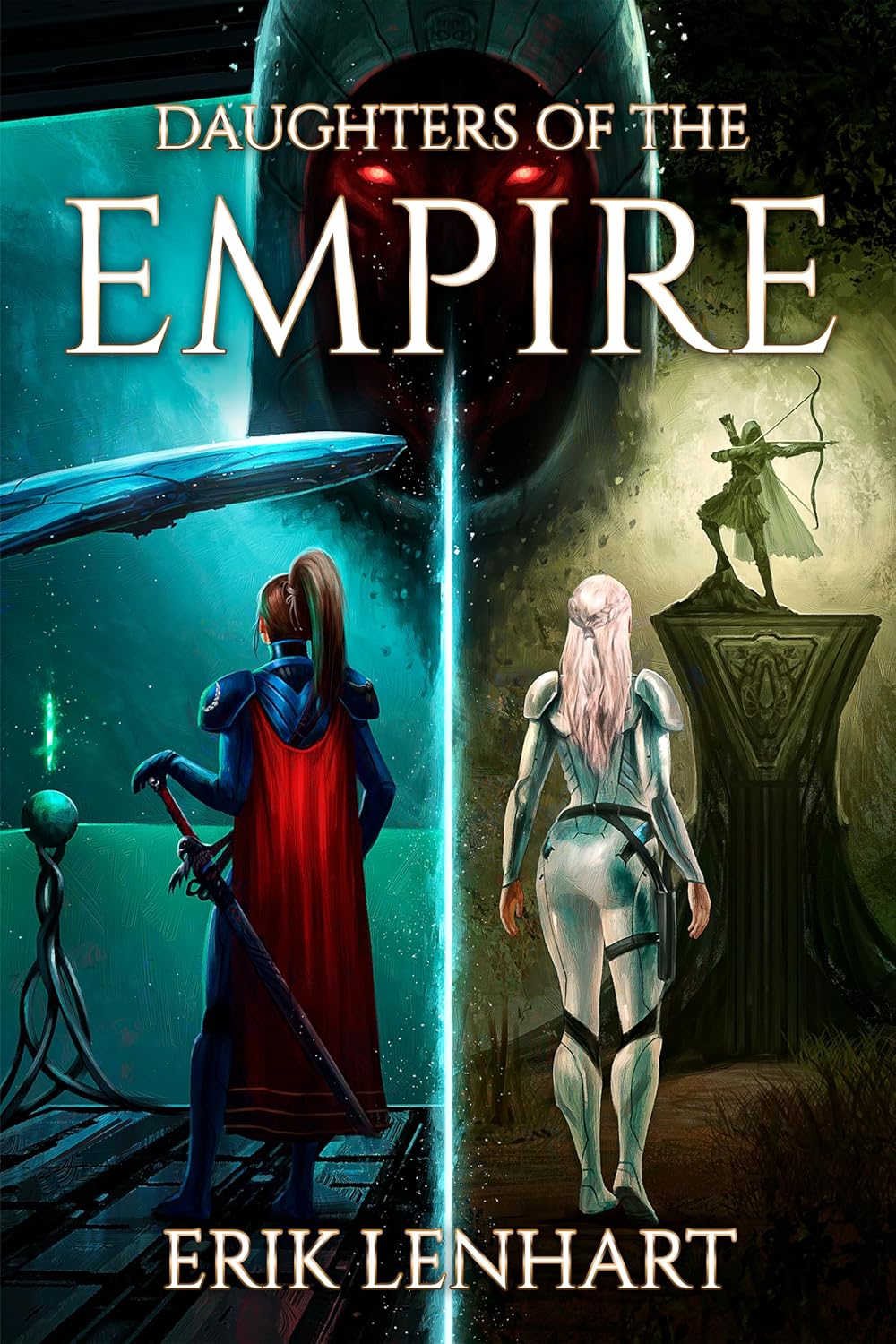

The story kicks off with a punch. It drops you straight into a massive space battle where Valerica Crassus commands a fleet with sharp precision and a colder kind of confidence. Then the book switches gears and gives a warm, grounded look at Deanna and her cousin Miyu living a quiet merchant life on Dorset II. Their world feels ordinary until it suddenly breaks apart as raiders strike the annual Vintage Festival. From that moment on, the story pulls together politics, ancient prophecies, power struggles, and a galaxy that feels both huge and fragile. The contrast between star-spanning warfare and small human hopes gives the novel a strong emotional core.
I enjoyed how bold the writing can be, and I felt pulled into the action when Valerica faced Drakos. The pacing had real energy. I liked how the author shifts from sweeping military strategy to quiet domestic scenes. The jump between those worlds kept me on my toes. I did find myself craving more breathing room during some of the denser political explanations, since the universe is packed with factions and titles. Still, I appreciated that the author refuses to treat worldbuilding like filler. It carries weight. It feels like people actually live in this place instead of moving through a backdrop.
I also got attached to Miyu more quickly than I expected. His stubborn bravery and his rough humor made the raid hit hard. Watching Deanna run into the forest felt tense in a very personal way. The book knows how to mix danger with heart, and that mix worked for me. On the other hand, Valerica’s storyline sometimes felt so large that it overshadowed Deanna’s. Even so, the emotional sparks between Valerica and Lana were vivid, and their relationship added warmth to a story that could have been too cold without it.
I would recommend Daughters of the Empire to readers who enjoy big galaxy-shaking plots but also want characters who feel alive and flawed. It’s a good pick for fans of military sci-fi who like mythology, political tension, and a bit of romance. If you want a space opera that moves fast, has heart, and isn’t afraid to swing between quiet moments and high stakes, this one should be on your list.
Pages: 525 | ASIN : B0FVXWR1NZ

Prima Nocta: A Mystical Quest for Love
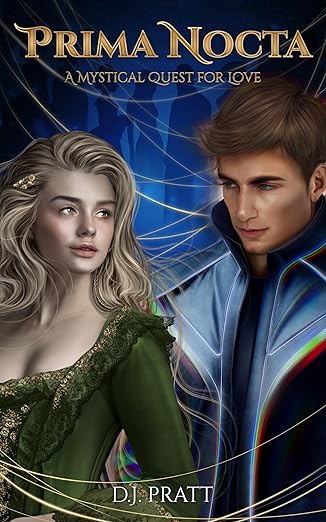
Prima Nocta is a sprawling, intimate, and deeply passionate novel that moves through time and culture to explore the idea of soul connections, those rare and fated relationships that transcend logic, distance, and even death. Through a series of interconnected vignettes told from different perspectives and historical settings, the book traces recurring meetings between soulmates over centuries. It begins with a hunted philosopher in 16th-century France and moves to a grieving daimyō in Edo-period Japan, a nobleman in Renaissance England, and onward into modern and future lives. Each tale crescendos in a moment of intense emotional and erotic connection, all part of a larger narrative arc about love, memory, and the spiritual bonds that tether us across time.
From the very first page, I was struck by the raw emotion Pratt brings to the prose. It doesn’t hide behind elaborate metaphors or highbrow literary tricks. Instead, it opens its heart right to you. The writing is so personal. There’s a genuine ache that lives in every chapter. I felt it most in the quiet moments, those simple exchanges of glances, the gentle touches, the characters’ longing to be seen and understood. The dialogue doesn’t try to be clever. It tries to be true. And it is. That’s what makes it hit so hard. It’s not clean or tidy. It’s messy and complicated and bursting with yearning. The characters aren’t perfect, and neither are their lives, but the connections they form are electric. You believe in them. You want them to win. Even when they can’t.
There’s something haunting about the way Pratt weaves the spiritual and the physical. These aren’t just love stories. They’re meditations on fate, identity, time, and what it means to truly know someone. The way the book blends sensuality with existential questions is bold and surprisingly tender. It’s not erotica for the sake of titillation. It’s about finding divinity in the act of connection. The erotic scenes feel earned, not gratuitous. They’re emotional revelations just as much as physical ones. And that’s where the book shines most. It dares to suggest that sex, love, and meaning are all wrapped up in the same tangle, and I completely bought into that.
The pace is slow in places. It lingers, it wanders, it reflects. But if you’re someone who likes your stories soaked in feeling and not afraid to be a little weird or mystical, you’ll find something special here. I’d recommend Prima Nocta to readers who crave emotional intensity, who love deeply romantic fiction with spiritual undertones, and who are open to a narrative that feels more like a journey than a destination. This book isn’t afraid to look you in the eye and ask big questions.
Pages: 333 | ASIN : B0F1YTBGR1
The Derge

The Derge is a sweeping sci-fi adventure set thousands of years in the future, where humanity has mastered interstellar travel and tamed emotion itself. The story follows Commander Titus and his deputies, Caeli and Rogat, on a high-stakes pursuit through space and time to capture a fugitive named Corso. Their chase leads them to a planet that mirrors ancient Earth, filled with strange societies and barbaric rituals like “The Derge.” Beneath its thrilling plot and futuristic technology, the novel wrestles with timeless questions about morality, control, and the meaning of progress.
Reading The Derge pulled me into a world that felt both distant and familiar. The writing style is vivid and cinematic, with crisp dialogue and detailed settings that make each scene easy to visualize. I loved how the story mixed classic space opera adventure with deep philosophical undertones. There were a few places where the pacing slowed a little as the story delved into background detail. Some of the futuristic terms and technical descriptions occasionally pulled me away from the emotional flow, but they also added depth to the world. The human elements, the tension between duty and empathy, the clash between freedom and control, kept me hooked. I found myself rooting for Titus even when I wasn’t sure if I trusted him completely.
Seeing a society that eradicated violence by regulating emotion made me question what we lose when we trade chaos for peace. The scenes on the alien planet, especially “The Derge” event, were chilling. It was brutal and absurd, yet disturbingly believable. Cezar’s depiction of humanity’s reflection in alien form hit hard. The contrast between the sterile perfection of Earth’s future and the raw savagery of Spaith stayed with me long after I closed the book.
I’d recommend The Derge to readers who love thoughtful science fiction with moral weight. Fans of Asimov, Bradbury, or Clarke would find its ideas fascinating, though Cezar’s storytelling leans more visceral and emotional. It’s perfect for anyone who wants more than a space chase, someone who wants to be made a little uncomfortable, to think, and to feel.
Pages: 191 | ASIN : B0F1M1FCZD
BLOOD OF YARUMAYA


Blood of Yarumaya by Kevin D. Miller follows Isabella Delgado. She’s a wealthy botany student from Malibu who travels to the Amazon rainforest for an internship. Her mentor is Dr. Dominic Quinn. He’s a brilliant but secretive scientist who appears much younger than he is. They discover a complex biological secret to anti-aging that involves rare tree resin and special bees. A corrupt politician named Julio Ortega wants this secret for his own gain. He hires mercenaries to attack the indigenous Kawirén tribe to get it. Izzy must use her newfound survival skills to save Quinn and protect the forest from destruction.
I found the character arc of Isabella surprisingly engaging. She starts the story as a somewhat entitled gymnast. She quickly transforms into a capable survivor. Her growth felt earned rather than just given to her. The romance between her and Quinn is sweet. It also carries a unique tension due to his actual age versus his appearance. I felt genuine anxiety during the raid on the village. Miller does a wonderful job of making you care about the Kawirén people. You desperately want them to survive the encroaching threats of the modern world.
The book tackles heavy themes like deforestation and corporate greed head-on. I appreciated this direct approach because it did not feel overly preachy. The science behind the longevity serum was fascinating to me. I loved the twist with the “rapid aging” weapon used against Ortega near the end. It was a satisfying bit of poetic justice.
I enjoyed this thrilling adventure. It carries a real emotional punch that stuck with me. I would recommend this book to readers who enjoy fast-paced eco-thrillers. Fans of adventure stories with a strong romantic subplot will also like it. It is a perfect read for anyone who has ever dreamed of escaping civilization to find something deeper in the wild.
Pages: 310 | ASIN : B0FTMC4WGN
The Magnificent Legend of the Steampunk Warrior
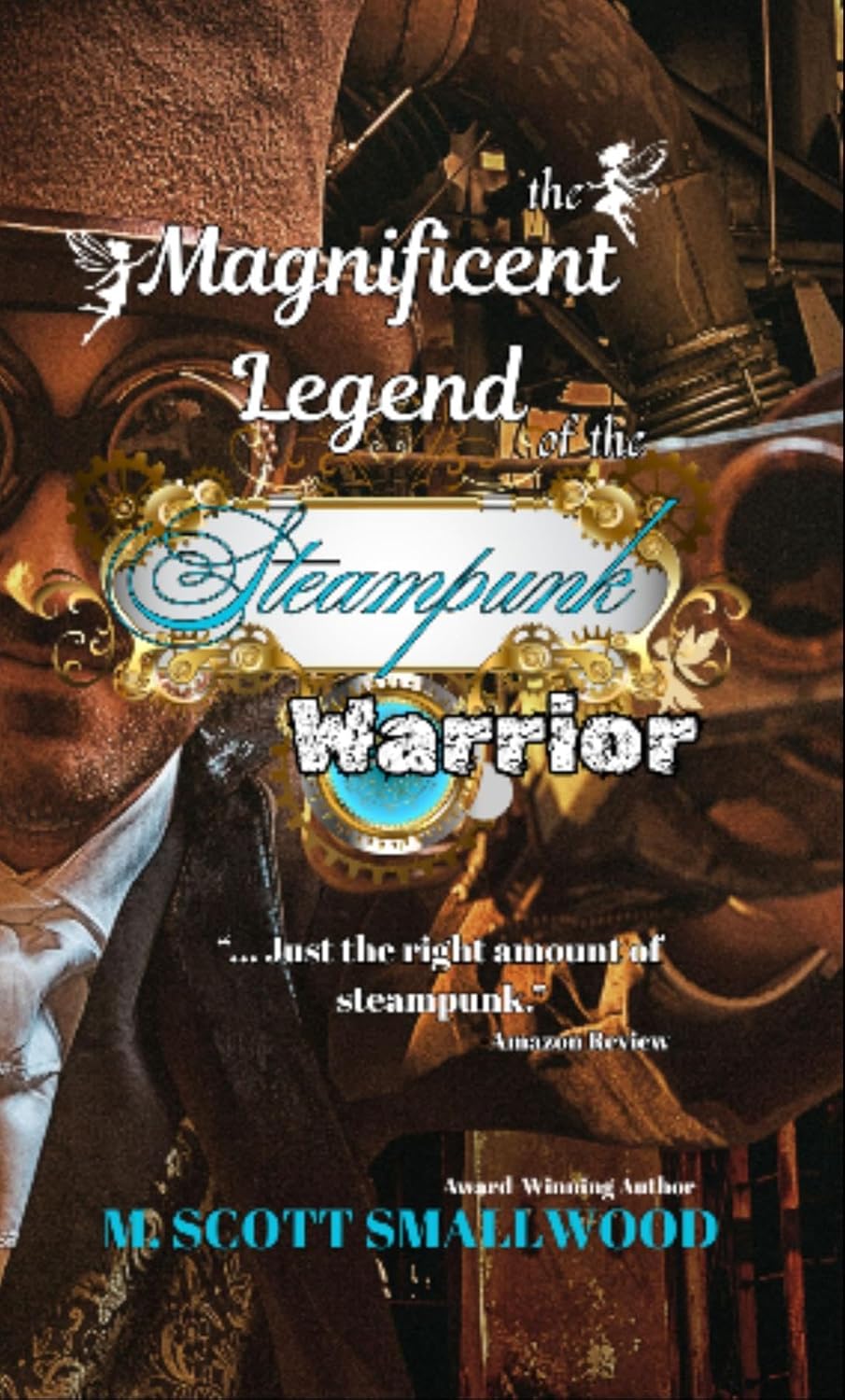
From the first page, The Magnificent Legend of the Steampunk Warrior feels like diving headfirst into a swirl of brass gears, magic dust, and heartbreak. It’s a strange and beautiful mix of time travel, friendship, and redemption. The story follows Thaddeus Might, a self-proclaimed Time Magician, along with Clyde, Arnold, Karl, and others as they tumble through centuries and worlds chasing after fragments of the fabled Golden Lion. The book blends steampunk invention with mystical lore and even a touch of science fiction, all while threading through themes of loss and second chances. It’s a wild, cinematic journey, jumping from Victorian England to alien worlds, filled with wit, wonder, and a surprising amount of emotion.
The writing is lush, full of rhythm and melody, almost poetic at times. Author M. Scott Smallwood clearly delights in language, spinning dialogue that feels both archaic and alive. Sentences twist and turn like clockwork spirals, sometimes dazzling, sometimes dizzying. Still, the characters kept me grounded. Clyde’s weariness and Arnold’s loyalty hit close to home. Thaddeus, with his tragic backstory and impossible hope, stood out the most. He’s eccentric and endearing, the kind of character who makes you smile even when he’s rambling about time’s cruel logic. What I liked most was how human it all felt beneath the fantasy, people clinging to purpose, trying to fix what can’t quite be fixed.
At times, I caught myself grinning. Other times, I found myself working to keep up with the story’s many threads. Yet, I never wanted to stop reading. There’s something earnest in the storytelling, something old-fashioned and heartfelt. You can feel the author’s joy and pain in every page, the same way you can hear a musician’s soul in the flaws of a live song. The mix of humor and heartbreak worked for me, especially when the story leaned into its quieter moments, those small pauses between battles where the characters actually breathe. That’s when the book shone brightest.
The Magnificent Legend of the Steampunk Warrior is an ambitious and oddly touching ride. I’d recommend it to readers who love sprawling adventures, old-school fantasy, and stories that aren’t afraid to get weird and sentimental. It’s messy, it’s moving, and it’s magnificent in its own peculiar way.
Pages: 268 | ASIN : B0FR2PMMPD
The Human Psyche

The Woman in the Ship follows the captain of a starship and the ship’s sentient AI, as they drift through the black silence of space after the destruction of Earth. What was the inspiration for the setup of your story?
It was a wonderful and fascinating topic to write about, but the inspiration itself would involve a major spoiler for a twist in the novel, so I will have to tell you later off mic! But I have always been interested in space flight since teenage years and have had an interest in artificial intelligence since writing my previous novel Android Author. I am primarily interested in human emotions and interactions though, and putting the crew of the Ascension into such an extreme situation is a perfect way for me to delve into the human psyche and the AI element was an interesting jump point to explore what it means to be a conscious, intelligent life form.
The writing in your story is very artful and creative. Was it a conscious effort to create a story in this fashion, or is this style of writing reflective of your writing style in general?
It is my natural style, although it has developed over the years. When I first started writing, I was always lyrical in my style, and actually, I have reigned it in over the years and learned that just because I know how to write beautiful twiddly prose doesn’t mean you always have to – a bit like not showing off all the time on the guitar in a band – not that I am in a band, well not yet anyway!
What were some themes that were important for you to explore in this book?
Yes, I wanted to explore childhood memories, how we remember our parents and how we can relive similar stories through different lifetimes. Mostly though, getting sidetracked from your question a bit, I just wanted to be in space! And until they decide to appoint a poet laureate in the international space station, this is the closest I can get. I woke up one morning at about 2AM and had the whole book plotted out in two hours, including names and everything. Sitting down and writing it was the equivalent of getting my space boots on and venturing out myself into, as you say, the black silence of space.
What is the next book that you are working on, and when can your fans expect it to be out?
I have just finished this and another project, a comic called The Gloriously Untrue Adventures Of Sapphira which I wrote and illustrated – also set partly in space – and will be working on my new projects in January. Issue 2 of my comic and a new novel, as yet untitled, about a future society where unborn children are vetted by AI systems before they are deemed suitable for birth and inclusion in society.
Author Links: GoodReads | Facebook | Website | Amazon
Captain Sally Arden finds herself at the heart of this drifting elegy, caught between duty and despair. Her closest companion is Nova, the ship’s sentient AI, who defied orders to self-destruct and now manifests with the personality and memories of a long-dead woman named Nova Starlight. As the remaining crew wrestles with loss, love, and fractured identities, Sally’s bond with Nova deepens into something intimate, uncanny—and possibly redemptive.
With luminous prose and a dreamlike voice, The Woman in the Ship drifts between science fiction and philosophical fable.
The Solar Current Is Nuptially Tuned

Thomas M. Miovas, Jr.’s The Solar Current Is Nuptially Tuned is a lively, old-school science fiction adventure filled with invention, romance, and a touch of satire. The story follows Spencer Harling, a fiery engineer exiled from Lunar Industries who discovers that the so-called “alien ship” that crashes on the Moon is not an alien vessel at all; it’s piloted by his lost love, Adrian Lunar, the daughter of his former employer. What starts as a mysterious space exploration tale becomes a heartfelt reunion between two brilliant minds who combine science, love, and courage to outwit bureaucracy and rediscover their shared purpose. It’s an inventive mix of hard science fiction and playful romance, framed within the optimism of human ingenuity.
Reading this book, I felt like I’d stepped into a retro sci-fi movie from the golden age of the genre. The writing has that earnest energy, long paragraphs that brim with ideas, characters who speak in grand tones, and technology that’s both ambitious and oddly personal. Spencer is a classic idealist, the kind of scientist who believes knowledge and reason can solve anything, and I found that sincerity refreshing. Miovas has a knack for building tension in quiet moments, especially when Spencer debates the nature of communication and consciousness. The reunion with Adrian felt a little melodramatic, but in a way that fit the tone, like a satisfying reveal in an old pulp serial. The story’s heart lies in its belief that exploration, both scientific and emotional, is what makes life meaningful.
Some exchanges between characters feel a bit formal, which adds a unique charm. It is worth noting that the exposition can sometimes be heavy, but there’s also charm in that thoroughness. I could tell Miovas cares deeply about the science and the philosophy behind his fiction. I liked that the story wrestles with moral ideas, authority versus curiosity, fear versus discovery, and even what it means to be human when faced with the unknown. Beneath the space battles and romance, there’s a clear message about individual thought and integrity.
I’d recommend The Solar Current Is Nuptially Tuned to readers who love classic sci-fi with a philosophical edge, or anyone who appreciates a bit of romance mixed into their cosmic adventure. It’s a thoughtful and imaginative ride through human ideals and relationships. If you enjoy stories where love, reason, and invention all share the same orbit, this one will feel like a rare find.
Pages: 38 | ASIN : B0BRGCQBMR
Mirrors of Humanity

Terra Secundus follows a war-weary journalist sent to Titan, where humanity’s quest for discovery collides with its oldest flaws: ambition, control, and the fragile meaning of being human. What inspired you to set Terra Secundus on Titan rather than another world or moon?
In my exploration of the world of science fiction, I often encountered situations where many famous writers with multiple awards and nominations set their novels on many planets of the solar system and seldom on any satellites of the gas giants such as Jupiter, Saturn, Uranus, and Neptune. Before I decided to place my protagonist in a new world, I carefully studied the science literature about the possibilities of colonizing moons and planetoids orbiting the gas giants. Saturn’s moon Titan was a very strong contender for such an endeavour, and after studying everything I could about that unique moon, I decided to send my protagonist there, since Titan is considered a good candidate for a colony. Many scientists believe it could become a smaller version of Earth, since Titan has a thick atmosphere composed of nitrogen and other gases. Add oxygen to it, and humans could theoretically breathe its air.
The novel’s tone feels both futuristic and nostalgic. Was that a conscious stylistic choice to evoke classic science fiction?
I love classic science fiction novels and my exploration into this literary genre started with many memorable books by Ben Bova, Issac Asimov, Ray Bradbury, Arthur C. Clarke, Frank Herbert, Allen Steele, and Robert Heinlein. When writing about a future removed from our time more than 1,200 years, I tried to imagine a future society of the 32nd century to develop amazing new technologies and modify its social and religious beliefs. In this novel, I tried to use a classic style of storytelling, because for most readers it is much easier to understand. I believe that every society must learn from the past experience and try to avoid repeating tragic mistakes that led to the fall of ancient civilizations and magnificent extinct cultures. The roots of the future are in the present, and I hoped to tell this story in such a way as to entertain and educate my readers about the fascinating distant worlds, new technologies that border on magic and what it means to be human.
How did you approach writing the Artborn androids like Erika, as characters, machines, or mirrors of = humanity?
Interesting question. I like robots. Even as a kid, living in a different society during the Cold War, I liked all science fiction movies that featured cyborgs and robots. Since those days, robotics and and cybernetics both made giant strides forward, and now we see many cybernetic models starting to imitate humans. We are also witnessing the radical advances in Artificial Intelligence and autonomous systems that help us to explore other places and other planets. My approach to such characters as Artborn Erika was both scientific and philosophical. In my story, Artborns are advanced synthetic humanoids that were created to assist humanity, working in most dangerous places in space and underwater. They are essential mirrors of humanity and in some ways are better than us when it comes to programmed mission parameters and sense of duty. In my novel, androids like Erka are employed as explorers, personal servants and bodyguards but they can certainly do much more than that.
If Paul Rexton were alive today, what story would he report on Earth in 2025?
If my protagonist, Paul Rexton were alive today, I believe that he would be deeply fascinated, intrigued and disturbed by the Earth in 2025. His world is certainly very different from ours in many respects, but he would be able to understand our world and form his own unbiased opinion about it. He would no doubt be pleased about the technological progress and human rights, Very concerned about environmental pollution and deeply affected by the fact that there are still powerful evil forces exist on the planet, making life difficult for their neighbors and many other countries. He would no doubt be fascinated by our means of mass entertainment and our taditionsl and electronic libraries of vast human knowledge that contain many centuries of wisdom. I would imagine Paul Rexton standing on a hotel balcony in a quiet and beautiful Japanese village, visiting the beautiful museums of Europe or enjoying a good book at home with a glass of old, smooth, wellaged brandy.
Author Links: GoodReads | Amazon



 LITERARY TITAN