Blog Archives
The Diary of Vivienne – Is hope enough?


The Diary of Vivienne unfolds as a layered and haunting story. It follows a hidden journal discovered in the ruins of a future society that has scrubbed away its own painful past. The entries from Vivienne Rose, her partner Richard, and the ethereal teachings of Neferatu paint a world that swings between collapse and renewal. War tears through nations, faith shakes, and reforms itself, and ordinary people cling to hope as their only compass. The book wanders through violence, prophecy, political decay, and spiritual awakening, then suddenly shifts into a bright new age where humanity tries to forget what nearly destroyed it. The result is a narrative that asks, again and again, if hope can save us or if forgetting our darkness only guarantees its return.
I found myself caught between admiration and discomfort as Ashby moves from intimate confessions to sweeping political commentary. Sometimes the writing feels like a storm that refuses to settle. Other times it quiets into soft moments of grief or tenderness, especially when Vivienne speaks of her daughter or her friends. I loved those parts. They felt raw and human. But I kept circling back to the idea of Neferatu. His teachings land with a strange mix of poetry and severity. I felt drawn in, then pushed back out, unsure if I was reading wisdom or warning. That tension made the experience oddly addictive. I kept turning pages just to sit with that uncertainty.
The political edges of the book hit me differently. Ashby writes with open frustration about the collapse of governments, the decay of social trust, and the failures of institutions. Those sections made me pause because they echoed fears many people carry but rarely spell out so boldly. Sometimes I nodded along. Sometimes I winced. The diary style makes these passages feel personal rather than preachy. Still, the blend of prophecy, politics, mysticism, and dystopia can feel dizzying. But I liked the daring mix. The emotional swings, though, are what give the book its pulse. I felt alarm, sadness, wonder, and even hope that felt shaky but real.
I would recommend The Diary of Vivienne to readers who enjoy stories that blur the line between spiritual reflection and dystopian fiction. It fits anyone who likes a narrative that thinks out loud, pokes at uncomfortable ideas, and makes you question what you believe about society, faith, and the future. If you want a book that lingers in your mind long after you close it, this one will do just that.
Pages: 288 | ASIN : B0F6TFS5DG

Blessings Abound: Awaken to the Gifts at Hand

Blessings Abound is a short and sweet guide designed to help us spot the good things in life. Katherine Scherer and Eileen Bodoh wrote this book to help readers wake up to the gifts they already have. The authors break the content down into three main buckets. These are blessings we receive. There are blessings we ignore. And there are blessings wearing masks. The pages are packed with quotes from famous folks like Rumi and Abraham Lincoln. It explores how nature and music and friendship make life rich. The main goal is to shift your mindset from complaining to appreciating. It acts as a roadmap to peace and wonder.
I honestly felt a wave of calm washing over me while reading this. It is not trying to be a hard textbook. It feels like a warm hug. I really liked the way they used so many quotes. It felt like a greatest hits album of wisdom. Sometimes self-help books try too hard. They use big words to sound smart. This one keeps it real. It is simple. That is its superpower. The section on nature really resonated with me. I felt lighter after finishing it. It pushes you to use your heart more than your head.
The authors talk about blessings in disguise. This part made me think. It is hard to see the good when things go wrong. But they make a solid point. They mention people like Edison, who failed but kept going. That was inspiring. I also noticed the book gets pretty spiritual near the end. It talks about God and the Bible. They included Native American prayers, too. It felt like they wanted to welcome everyone. The focus on gratitude as a tool to fix a bad attitude is smart.
I think this book is a solid pick for anyone feeling a bit burnt out. If you need a mental reset. It works well as a coffee table book. You can pick it up and read a page or two. It does not demand a lot of your time. It just asks for an open heart. I would gift this to a friend going through a rough patch. It reminds you that the world is actually pretty cool if you look closely. Give it a shot if you want to smile more. It is a quick read with a long-lasting impact.
Pages: 58 | ASIN : B0FBSTLR27
Literary Titan Book Award: Nonfiction

The Literary Titan Book Award recognizes outstanding nonfiction books that demonstrate exceptional quality in writing, research, and presentation. This award is dedicated to authors who excel in creating informative, enlightening, and engaging works that offer valuable insights. Recipients of this award are commended for their ability to transform complex topics into accessible and compelling narratives that captivate readers and enhance our understanding.
Award Recipients












Visit the Literary Titan Book Awards page to see award information.
The Empowerment Revolution
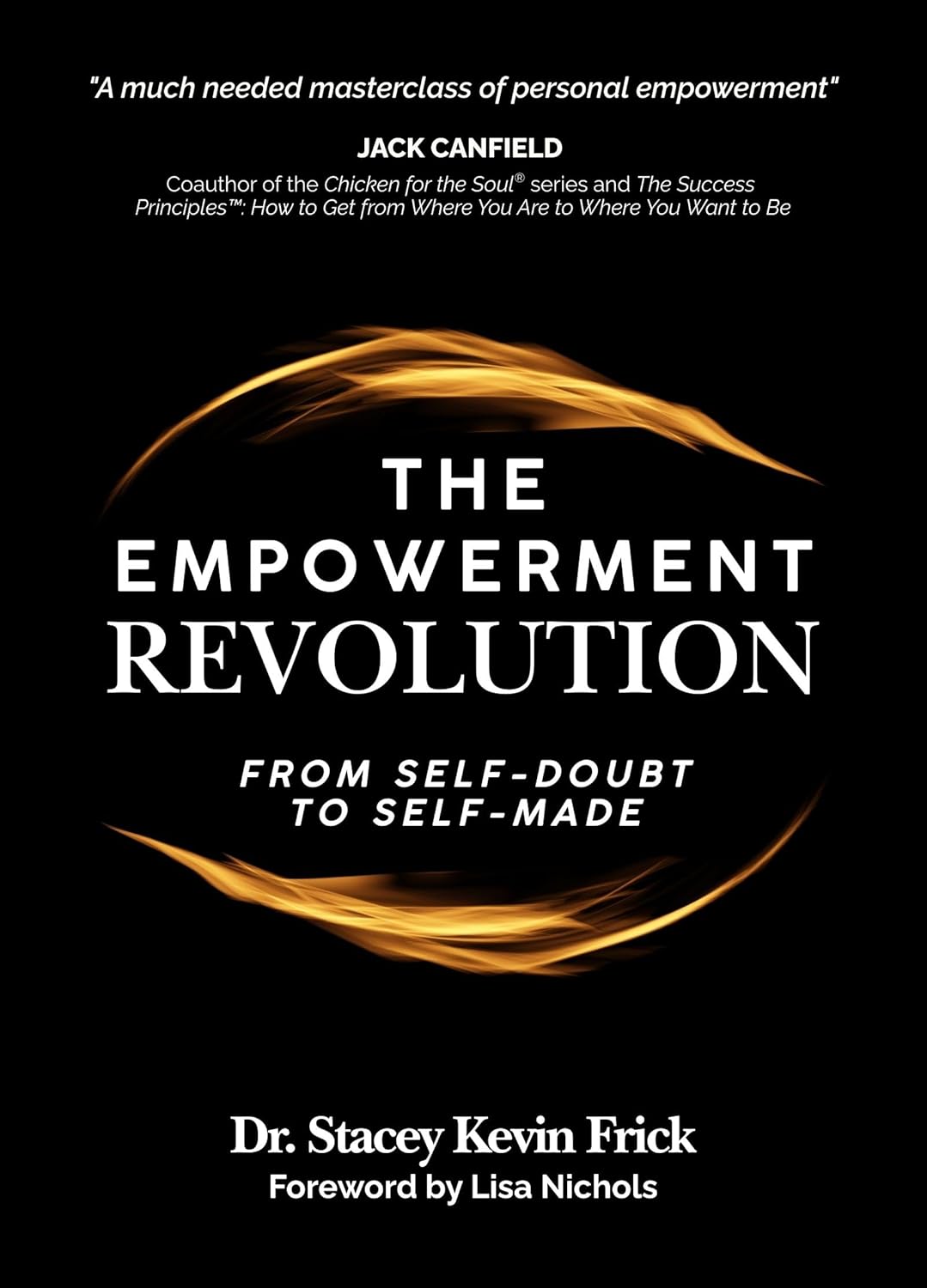
The Empowerment Revolution is a personal-development book that blends memoir, psychology, spirituality, and practical coaching into a clear roadmap for moving from fear and survival into confidence and self-authorship. Dr. Stacey Kevin Frick opens with his own early story of trauma and learned fear, then expands outward into ideas about subconscious programming, emotional survival states, energetic narratives, accountability, and redefining success on your own terms. The book reads like a mix of self-help and narrative psychology, anchored by the author’s belief that empowerment is both a mindset and a lifelong practice of reclaiming your personal agency.
As I moved through the book, I found myself reacting as if in conversation with someone who’s lived the work they’re teaching. Frick’s stories of childhood fear and misaligned beliefs aren’t told for shock value. They serve as the emotional doorway into his central point: most of us inherit limiting stories long before we know we’re allowed to question them. His description of being suffocated as a toddler by his father hit me hard, not because of the event itself, but because of how clearly he connects it to the beliefs he carried into adulthood, beliefs about danger, abandonment, and worthiness. The writing is plainspoken at times, but the honesty gives it weight. I liked that he doesn’t try to sound like a guru. Instead, he sounds like someone who’s been in the dark and is willing to say exactly what it took to find the light.
What surprised me most was how often the book invited me to slow down and check in with myself. There’s a whole section about “old energetic narratives” that blend scientific and spiritual language, but the core idea is relatable: your environment shapes you, and if you’re not careful, it keeps shaping you long after you’ve outgrown it. The story of the CEO who still carried his father’s “you’re not good enough” energy despite having every external marker of success made the point better than any metaphor could. Moments like that made me pause and take stock of which beliefs in my own life were inherited rather than chosen. And even when the book leaned a bit mystical, the practical reminders, like checking where your feet are to remind yourself you’re safe, brought everything back down to earth.
By the time Frick gets to empowerment itself, the tone shifts in a good way. It becomes less about uncovering wounds and more about building something new. The chapter on accountability frames it not as a burden but as a reclaiming of your strength, almost like choosing your life rather than reacting to it. I appreciated that. It felt grounded, not preachy. And the distinction he draws between “proving” and “improving” landed with me. One drains you because you’re performing for someone else. The other fills you because you’re growing for yourself.
The Empowerment Revolution feels best suited for readers who enjoy personal-development books that mix introspection with practical coaching. If you like memoir-styled self-help or transformational psychology, you’ll probably connect with it. The book encourages you to look honestly at the beliefs that built your identity, question the ones that hurt more than they help, and choose new ones with intention.
Pages: 130 | ASIN : B0FNY5VM47
Our Beloved Futures
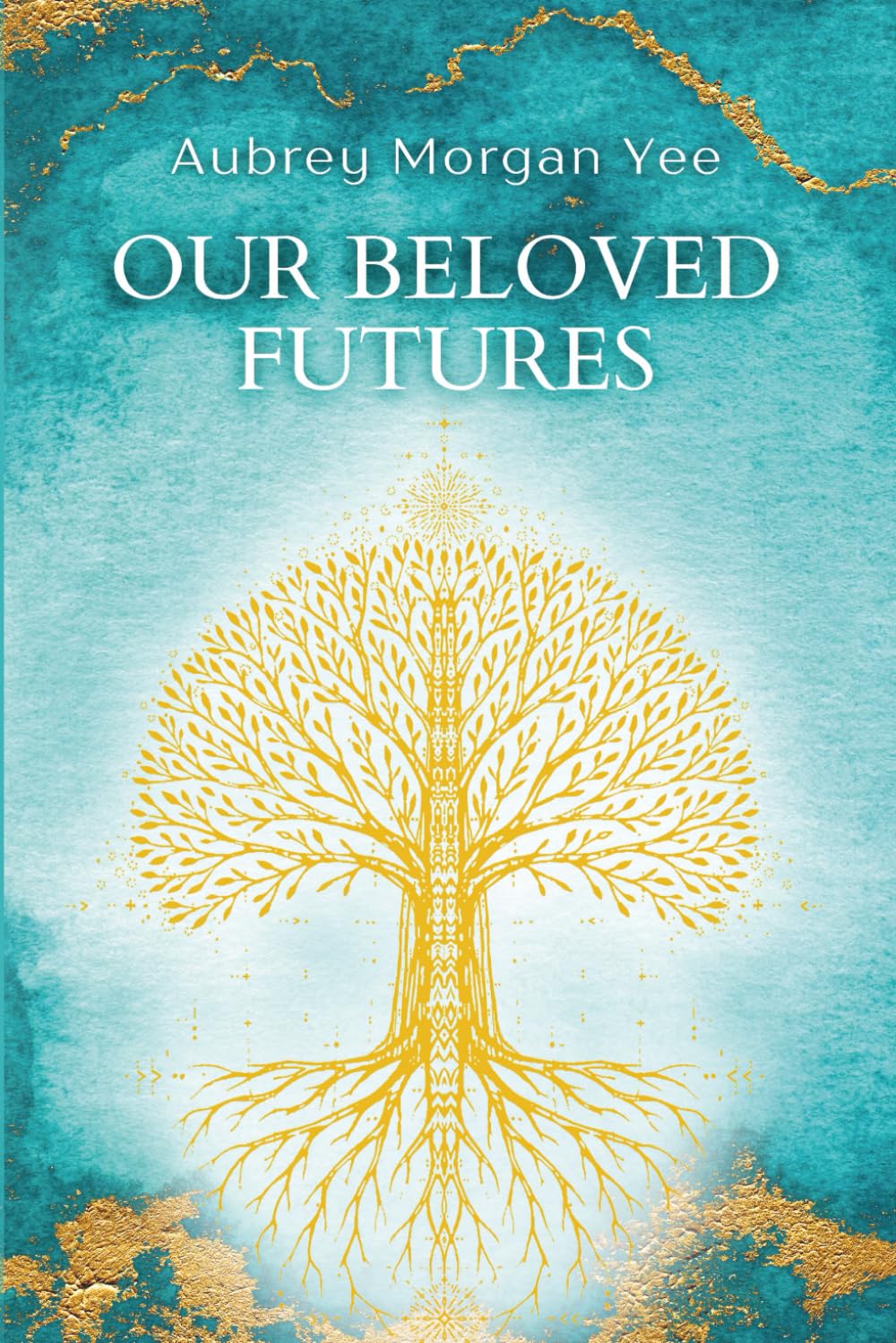
Our Beloved Futures unfolds as a sweeping spiritual reflection on collapse, rebirth, and our tangled relationship with Earth. The book blends myth, ecology, futurism, and deeply personal experience into a poetic call for awakening. It moves from the author’s own encounters with grief and wonder to a larger vision of humanity rising through crisis into a renewed sense of interbeing. The early chapters weave Venus, Inanna, banyan trees, and butterfly metamorphosis into a single thread about losing the self we cling to and returning to a more ancient, peaceful way of being. It is a book about remembering who we are beneath the noise.
The writing is lush and vivid. Sometimes it feels like prayer, sometimes like myth retold in the glow of a campfire. I loved that softness. It slowed me down and opened space for feelings I usually push aside. The author writes about grief, collapse, and accountability with a kind of tender boldness that made me stop and breathe. I found myself nodding along when she described anxiety as an “animal” roaming at night that looks for a mind to inhabit. I’ve felt exactly that, and seeing it named so plainly surprised and comforted me.
The language can get mystical. I would catch myself wanting something firmer to grab onto. Still, the sincerity kept pulling me back. The book’s belief in our ability to change is infectious. I appreciated how the author doesn’t dodge the hard stuff. She talks about complicity, privilege, and the uncomfortable work of reckoning with modernity’s harms. She calls it the “age of consequence,” and it resonated with me because it feels exactly like where we are. Even when I didn’t fully track every metaphor, I never doubted the heart behind it.
The book invites you to see yourself as part of a larger unfolding, and even if you don’t share every spiritual frame in its pages, the emotional truth still lands. I’d recommend Our Beloved Futures for readers who enjoy poetic nonfiction, mythic storytelling, and spiritually grounded reflections on climate, culture, and personal transformation. It’s especially suited for people who like to sit with big feelings and big ideas at the same time.
Pages: 238 | ASIN : B0FV4NWFGB
The Spiral Can Be Reversed
The Path from Hell to Heaven is a philosophical and psychological map of the ego, tracing how people spiral downward into “Hell” through fear, shame, and denial, and upward toward “Heaven” through trust, openness, and renewal. Why was this an important book for you to write?
Because ego explains nearly every human collapse and ascent, yet most people never receive a practical map for it. I wanted to translate psychological chaos—fear, shame, denial—into a recognizable model anyone could use, the same way we map complex systems in software or business architecture. This book is that missing human blueprint: a self-debugging framework that moves readers forward instead of leaving them looping in abstraction.
How did you come up with the concept of the two-sided spiral of the ego and develop this into a process that readers can implement into their own lives to find clarity and understanding of themselves?
I analyzed patterns before individuals. Ego contracts or expands; there’s no true neutral. Avoiding truth descends, openness creates lift. The spiral metaphor stuck because it captures momentum and acceleration.
To make it implementable, I structured it as an RPM self-awareness loop:
- R – Recognize the ego state you’re operating in
- P – Pause the automatic reaction loop
- M – Move with intentional correction or openness
It’s diagnostic and reversible, giving readers a clear exit path whether they’re descending or rebuilding upward.
I found the ideas presented in your book relatable and appreciated the actionable steps that readers can take to find their own clarity. What were some ideas that were important for you to share in this book?
The concepts that mattered most to me were:
- Ego itself isn’t the problem → closed ego is
- Narcissism is often unprocessed fear wearing armor
- Pain isn’t identity, it’s a turning point
- Ambition without self-awareness becomes self-sabotage
- Recognition of the loop always comes before the escape
And above all—I wanted a book that doesn’t just sound smart, but gets applied and changes outcomes.
What is one thing that you hope readers take away from The Path from Hell to Heaven?
That their ego has directions, and so do they. If they feel stuck, defensive, ashamed, or overwhelmed—it’s a state, not a life sentence. The spiral can always be reversed, rebooted, and climbed. The only real trap is believing the descent is normal and permanent.
This book is a Map of the Ego’s Double Spiral — a journey every individual, family, and society travels between Hell (closed ego) and Heaven (open ego).
Through vivid metaphors and grounded psychological insight, LANOU unveils how pain becomes protection, how protection turns to illusion, and how awakening begins when trust cracks the shell.
You’ll see yourself, groups, and even nations in these patterns:
The wound that starts the descent.
The mask that hides pain through control.
The collapse that breaks illusion.
The trust that starts renewal.
The open ego that frees love and truth.
Structured as a fractal spiral, the book reveals six repeating steps across all scales — from individuals to groups to the world itself. It blends the clarity of psychology with the simplicity of spiritual truth: hell is repetition; heaven is renewal.
Once you see the map, you cannot unsee it.
A Call to Repentance and Renewal

Words for a Wounded World is a striking collection of scriptural poetry that bridges devotion and art, journeying from the foundations of faith to the trials of endurance, calling readers to reflection, repentance, and renewal. What inspired you to write this particular collection of poems?
It all began with a young husband and father named Tucker. He was quietly losing a war few could see—caught in the grip of pornography and desperate for freedom but unsure how to reach it. As I walked with him through this struggle, the Holy Spirit stirred something unexpected in my heart: Write him a poem.
That poem became “Lured: The War for Your Soul.” It wasn’t meant to be creative expression—it was spiritual warfare. Every line was grounded in Scripture, confronting the enemy’s lies, exposing the spiritual battle, and calling Tucker back to the Truth of God’s Word. With the poem, I included companion Scriptures, reflection questions, and a call to repentance and renewal.
Weeks later, Tucker shared that the poem became his lifeline. He carried it with him. He turned to it in moments of temptation. And God used it to remind him that he wasn’t alone—and that freedom is possible through Christ.
After Tucker, the Lord continued placing people on my heart, along with specific burdens and Scriptures for each one. One poem became two, then three… until I realized the Lord wasn’t giving me isolated pieces—He was forming a collection. These became Words for a Wounded World, a book written for every soul wrestling with sin, sorrow, confusion, or spiritual longing, pointing them back to the healing power of God’s Word.
Do you have a favorite poem in the book, and if so, why does it hold special meaning for you?
That’s a tough question and a bit like asking which of your children you love most, (Lol) Each of the sixteen poems carries its own story, its own ministry moment, and its own spiritual burden. They were all born out of real conversations, real struggles, and real breakthroughs.
What makes them especially meaningful to me is how each poem teaches the Word of God in a reverent, compassionate, poetic, and even prophetic way. They are not just poems—they are invitations to encounter Scripture, to hear God’s heart, and to respond to His truth.
How has this poetry book changed you as a writer, or what did you learn about yourself through writing it?
I never set out to write a poetry book, and I certainly never saw myself as a poet. But when you follow the prompting of the Holy Spirit and immerse yourself deeply in God’s Word, you discover that God can do far more through you than you ever imagined.
The process was remarkable. For each poem, the Lord impressed a subject on my heart. I would turn to Scripture—searching, collecting, studying, meditating, wrestling, and praying—until the lines and stanzas began to take shape. After each poem came the reflection questions, journaling prompts, and the prayer prompts.
I didn’t know where any of it was heading until the twelfth poem. That’s when the vision of a full collection began to emerge. By the time the sixteenth poem was written, a four-part structure had taken shape—a structure I didn’t plan, but that God did.
Writing Words for a Wounded World has taught me that God delights in using imperfect people with imperfect words to point others to His perfect Word.
Have you received any feedback from readers that surprised or moved you?
The most meaningful feedback has been how readers are drawn from the poems directly into Scripture. Hearing that a line, a question, or a prayer prompt sent someone diving deeper into God’s Word—that’s the highest encouragement I could receive. The poems were never meant to stand alone; they were meant to be bridges leading people straight to the heart of God.
Author Links: GoodReads | Facebook | Website | Amazon
In this Spirit-led collection, author and Biblical teacher Mark Richard weaves together sixteen Scripture-inspired poems that speak life into dark places. Each poem is grounded in the timeless truth of God’s Word, accompanied by full biblical references, and deep devotional reflection questions-creating a rich three-part encounter with God’s truth.
These “hymn-like” poems were born in real moments of ministry-written for people facing doubt, anxiety, sickness, and sorrow. Now, they are offered to you-to awaken your soul, convict your heart, and strengthen your faith.
Intuitive and Non-Logical
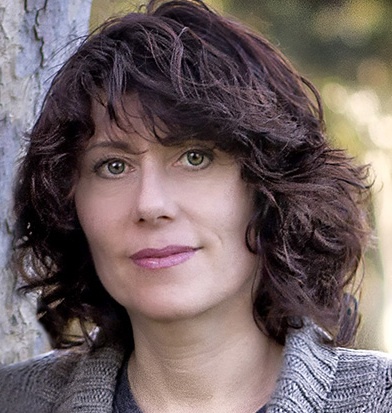
Love’s Cauldron traces your path from childhood wounds and self-doubt toward awakening her “witch self,” a reclamation of intuition, creativity, and the divine feminine. Why was this an important book for you to write?
Writing Love’s Cauldron made me much more aware of how the feminine aspects of myself have been shaped and impacted by my family, our culture, and the world. It was only in writing the book and talking about what I had written that I fully realized that part of my identity (and sensitivity) was that of a Healing Witch. I had not fully understood the value of my feminine sides previously.
What were some ideas that were important for you to share in this book?
In a world dominated by logic, it was vital for me to look at how specific feminine qualities have been demonized. The intuitive, those who channel, and the non-logical have been made suspect and sometimes punished by mainstream culture. I also wanted to share what an emotional healing journey looks and feels like.
What was the most challenging part of writing your memoir and what was the most rewarding?
I had wanted to write this book for years. But I had not been able to sense how to weave together the ideas that were percolating. It was challenging to write a non-linear book without losing the reader. It was satisfying to have the book come together and to see that, despite its unorthodox form, it worked. It was also rewarding to have readers let me know that it had a positive impact on them.
What do you hope is one thing readers take away from your story?
I hope that the readers will affirm aspects of themselves that they have not fully claimed. I wish for them to understand more about themselves and about the necessity of these undervalued aspects of each of us.
Author Links: GoodReads | Facebook | Facebook Page | Website | Book Page
Jennifer J. Lehr, LMFT, shares her journey from emotional pain and disconnection to deep self-awareness and spiritual awakening. Weaving together memories, mystical understanding, and guidance from the unseen realms, she offers a path to reconnect with our intuition, compassion, and inner voice—qualities often lost in a world that favors logic over feeling.
Through powerful narratives and sacred incantations, Love’s Cauldron redefines the meaning of “witch” as someone who embraces all aspects of themselves and holds the power to transform not only their own life, but the world around them. This is a book for anyone who has ever felt marginalized, silenced, or spiritually disconnected—and who longs to come home to their wild, wise self.
Whether you’re healing from trauma, seeking spiritual connection, or curious about reclaiming your feminine power, this book will stir something ancient and true within you. The feminine is rising—and Love’s Cauldron is a call to remember, rejoice, and rise with it.



 LITERARY TITAN