Author Archives: Literary Titan
Operation Archer 2nd Edition.


Operation Archer is a wartime time-travel thriller that follows Simon — a grieving engineer in 2027 — whose recurring nightmares and unresolved trauma lead him to seek hypnotherapy. What begins as an attempt to heal from the anguish caused by his wife Lorna’s preventable death develops into something far stranger, as Simon’s sessions unlock vivid recollections of flying RAF bombers in WWII. Soon, the boundaries between memory, imagination and reality vanish until he participates in a dangerous mission with life – changing consequences. The book blends historical fiction with speculative adventure, grounding its big swings in a character who feels painfully human.
Beyond the aerial action, hypnotherapy and intrigue, this is really a story about grief and the mind’s strange ways of restoring balance after it has been shattered. The early chapters are heavy with loss. Simon’s memories of Lorna feel tender and raw, and his anger toward the medical system is explored in a way that feels honest rather than melodramatic. When the book shifts into regression, past-life imagery, and eventually full time-travel, the transition works better than I expected because the emotional groundwork is so solid. I found myself believing the unbelievable simply because Simon did, and because the narrative lets his curiosity and vulnerability drive the plot rather than spectacle alone.
The author makes some bold choices, especially in how he describes the procedural details of hypnosis, RAF aviation, and wartime operations in great detail. Sometimes I caught myself wishing the pace would move a little quicker, but then I would hit a passage where the sensory detail pulled me right back in. The roar of Merlin engines. The searing heat of a burning bomber’s fuselage. The eerie quiet of a hypnotic induction. When these moments appear, they feel less like exposition and more like slipping into someone else’s skin. And I appreciated the book’s willingness to stretch genre boundaries. It is a mixture of historical and science fiction plus psychological drama, which gives it a strange charm.
Operation Archer is reflective, occasionally surprising, and anchored by a protagonist whose pain feels real even when the plot turns surreal. If you enjoy historical thrillers with a speculative twist, or character-driven stories that explore trauma and transformation, you’ll enjoy this book. Readers who love World War Two aviation fiction or time-travel adventures will feel especially at home here. For me, Operation Archer is a compelling blend of heart, history, and imagination.
Pages: 223 | ASIN : B0G52L2ZL3

Woody Woodchuck: Adventure in the City


Woody Woodchuck lives with his mama in a small cabin, wrapped in quiet country beauty. He is a homebody at heart. The big city holds no appeal for him. One summer afternoon, curiosity gets the better of him when he notices a bakery truck stopped on the road, its driver busy changing a tire. Warm, tempting scents drift through the air, rich with memories of his mama’s wild berry and acorn pies. Woody gives in to temptation and hops inside. A sudden slam of the door changes everything. Trapped and frightened, he finds himself heading straight for the city.
Once there, Woody is completely out of his element. The noise, the crowds, and the unfamiliar sights overwhelm him. Fear replaces curiosity. The central question soon emerges: can a country woodchuck survive a bustling metropolis and find his way safely home?
Woody Woodchuck: Adventure in the City, by Steven Frank, is a children’s book aimed at readers roughly ages three to seven. The story echoes familiar themes found in films such as Babe: Pig in the City or Homeward Bound II: Lost in San Francisco, though it remains firmly grounded in a gentler, younger framework.
Because of its intended audience, moments of danger never become intense. A barking dog gives chase, but the tension stays mild. The tone remains reassuring throughout. This approach makes the book especially suitable for children who are not yet ready for higher-stakes adventures. The illustrations stand out as a major strength. Bright, expressive, and full of detail, they expand the story and help hold a child’s attention, whether at bedtime or during a quiet afternoon indoors.
The idea of a character becoming lost and relying on others is familiar, yet effective. Woody meets a wise owl and other city dwellers who guide him along the way. Their help proves essential. Longtime fans will also appreciate the return of old friends introduced in the first book of the series, which adds continuity and warmth.
Frank demonstrates a clear understanding of pacing and structure for young readers. The book never overstays its welcome. The problem-and-solution arc is clean and satisfying. The underlying message about seeking help and trusting one’s community comes through naturally. Taken together, these elements give the story lasting appeal and position it as a likely favorite for both children and caregivers alike.
Pages: 32 | ASIN : B0FD7X2W6M
The Gardener: A Lesson for Leaders

The Gardener follows PJ, a thoughtful and hard-working executive who suddenly finds herself facing two life-changing opportunities: inheriting her grandfather’s farm and being offered the role of CEO at her company. What starts as a simple visit with her grandfather turns into a five-week leadership apprenticeship in the garden. Each Monday lesson uses farming as a metaphor for vision, culture, timing, teamwork, and resilience. The book ends with a clever reveal. Her grandfather is not only a farmer but also the company’s board chairman. The lessons were his way of preparing her for the weight of leadership. It is a clean, warm story that frames leadership principles through family ties and simple moments in nature.
The writing is plain and smooth, which made it easy to sink into the rhythm of each Monday morning. I liked how author James McCarroll kept the tone gentle. The lessons were clear without being preachy. At times, I found myself smiling at G Pa’s calm wisdom. At other times, I felt a tug in my chest when he talked about storms or when he paused to remember his late wife. Those small human touches brought the teaching to life. I did wish PJ pushed back a little more in certain moments. She accepted a lot very quickly. Still, the simplicity of the writing worked. It felt like sitting on a porch and listening to someone who has lived enough life to stop showing off.
What surprised me most was how much the ideas stuck with me after I closed the book. The garden metaphors are not new, but the way they were tied to PJ’s personal doubts made them feel fresh. I found myself thinking about seasons, soil, bugs, and rain in totally different ways. Some lines were especially emotional, especially the parts about rebuilding after storms and choosing people with the right mix of grit and joy. The story kept pulling me along because it stayed grounded in experience instead of theory. I could feel PJ’s nerves and her relief as each lesson clicked. I could feel that mix of fear and anticipation right before the final meeting. The book made leadership feel less like a cold skill set and more like a fully lived thing shaped by patience and resilience.
I would recommend The Gardener to readers who enjoy personal growth wrapped inside a light narrative. It is a great fit for new leaders and for anyone stepping into a role that feels bigger than they expected. It is also a warm read for people who appreciate family-centered stories that offer gentle guidance. If you want a book that teaches without lecturing and comforts while it challenges and leaves you feeling steadier about the storms that come, you’ll enjoy this book.
Pages: 61 | ASIN : B0CTKL1T2Q
Faithless Friends and Replacement Lovers: Short Stories About Love and Loss

Faithless Friends and Replacement Lovers is a collection of short stories about the messy, complicated, and sometimes sweet intersections of love, loss, loyalty, and self-discovery. The tone shifts from historical drama to whimsical fable to quiet contemporary reflection, but the heartbeat across the book stays the same. Each story looks at how people cling to one another, fail each other, and try again. Reading it felt like moving through a gallery of relationships, each framed a little differently but sharing a common light.
I was surprisingly moved by how earnest the writing is. Horst leans into classic storytelling styles, almost old-world at times, especially in stories like Rosalyn’s journey away from her “father the general” and the richly voiced tales that read like folklore. There is a simplicity to the prose that makes the emotional turns hit harder. Sometimes the characters feel like archetypes. Other times, they feel painfully relatable. I liked that the author doesn’t rush to explain the lessons. She lets the stories sit with you so you can decide what they mean in your own life.
What stood out most, though, was the author’s underlying curiosity about why we choose the people we choose. Some stories felt like gentle warnings. Others felt like quiet invitations to look inward. And a few caught me off guard, offering moments that were tender or humorous or unexpectedly sharp. The book lives in that space between longing and clarity, where love is both desire and discipline. I appreciated that. It felt honest, even when the characters themselves were fumbling through their own illusions.
This is a collection for readers who enjoy literary short fiction with a reflective bent, especially those who like stories about relationships, imperfect, hopeful, and sometimes heavy. If you appreciate narrative variety within a unified emotional theme, this book will land warmly. And if you’ve ever wondered about your own faithfulness to the people in your life, these stories will give you plenty to think about.
Pages: 211 | ASIN : B0G4HXJF39
The MACH-10 PM: AI-Powered Product Management at Hypersonic Speed

The MACH-10 PM lays out a clear promise. Product managers can use AI to move at “hypersonic speed” without losing judgment or empathy. The book walks through the whole product life cycle, from discovery and roadmapping to launches, growth, and leadership. Each chapter mixes stories from Qualcomm and GoPro with simple models, tool suggestions, and concrete prompts that show how to pull AI into real work rather than treat it like a toy. The main idea is simple. You stop trying to outwork the chaos and instead use AI to gain leverage, clarity, and what Riggs calls “speed with soul.”
The tone of the book is punchy and direct, almost like a seasoned PM talking across a whiteboard after a long sprint. Sentences stay short, the examples feel real, and the metaphors around “MACH-10” and “radar” stick in my head. I liked the way each chapter closes with questions and small exercises, because that nudged me to picture my own workflow instead of just skimming along. The visuals and little tables, like the “AI-powered discovery loop” and the roadmap comparisons, break up the text and make the main arguments easy to recall later.
I found a lot to like. I really appreciated the focus on AI as a multiplier, not a replacement. The sections on discovery, feedback synthesis, and roadmap scenarios felt grounded and very practical. The prompt examples are useful, and the insistence on pairing AI with ethics and judgment kept the whole thing from sliding into tool worship. I also liked the recurring message that PMs should measure themselves by impact, not output, and that the real job is to orchestrate people and systems, not just ship tickets.
I would recommend The MACH-10 PM to working product managers who already know the basics and want a push to rethink how they use AI day to day. I think it will be especially useful for people in mid-level roles who feel stuck in meetings and backlogs and want language and tools to reclaim time for strategy. Leaders of product teams could also use it as a shared playbook for running experiments and setting expectations around AI use. If you want a sharp, fast, and pretty human guide on how to work with AI without losing your soul, this book fits that slot nicely.
Pages: 270 | ASIN : B0FSP1Z1C4
The Last Orbit

The Last Orbit is a science fiction novel that follows a small crew aboard the ISS as they witness the end of the world unfold beneath them. It starts in warmth and routine, with astronauts teasing each other over birthday cake and Bowie songs, and then shifts as they detect what looks like a simple anomaly near the sun. That flicker becomes an approaching asteroid, and soon the crew is watching the Earth fall apart as fragments strike Berlin, Naples, Rio, and eventually the entire Atlantic coast. Cut off from Houston, stranded in orbit, the four astronauts are left with nothing but each other, the damaged station, and the impossible weight of survival in a world that no longer exists below.
The writing is simple and vivid, almost cinematic, but what pulled me in most was the emotional pacing. Author Mark Heathcote lingers on quiet moments: a tomato drifting in a hydroponic bay, a Polaroid stuck to a wall, the metallic creaks of the station as it flexes in shadow. These details make the early chapters feel warm and lived in, which makes the later horror hit harder. When the asteroid fragments start landing, the scenes are brutal, shown through the detached silence of orbit. That contrast makes everything sharper. I kept thinking how strange it is that a catastrophe can look almost beautiful from far away. The author plays with that feeling a lot, letting awe and dread sit side by side.
What I enjoyed most was how grounded the characters felt. Their reactions aren’t heroic or polished. Sometimes they panic. Sometimes they shut down. Sometimes they argue because there’s nothing left to do and nowhere left to go. I appreciated that the author didn’t try to tidy their emotions. Ava’s insistence on discipline, Greg’s grief-strained anger, Koji’s quiet resilience, Lena’s obsession with data as a kind of ritual. None of it feels dramatic for drama’s sake. It feels like people are trying to hold on to something solid when the world below them is literally being torn apart. The book leans into the psychological weight of isolation rather than into action-heavy sci-fi, and that choice makes the story feel more intimate.
The book is bleak, yes, but also reflective, in a way that reminds me of standing outside on a cold night and realizing how small you are. If you like science fiction that mixes disaster with character-driven storytelling, or if you enjoy space settings that feel tactile and real instead of glossy, this book will be right up your alley. Readers who appreciate slow-building tension, emotional honesty, and apocalyptic fiction seen through a very human lens will get the most out of it.
Pages: 154 | ASIN : B0FVTTJFT4
American Insomniac: Reflections on the future of a dying democracy

American Insomniac is a restless, wide-ranging collection of essays, op-eds, and personal reflections that circles around one big worry. American democracy feels like it is slipping away. Author Jim Smith moves through three big territories. First, he pulls apart the health of democracy and freedom in the United States and ties it to capitalism, inequality, and political polarization. Then he turns to culture, from a gripping story about Argentina’s “Dirty War” to feminism, consciousness, and the way modern life sells us “experiences” as products. Finally, he dives into explicitly philosophical explorations of thinkers like Vine Deloria, Lukács, and Gregory Bateson and uses them to ask what a more humane, sane society might look like. All of it sits inside one frame. An insomniac citizen who lies awake at three in the morning, trying to make sense of a country that feels both familiar and broken.
The opening autobiography of carnival life instantly hooked me. The details about flat stores, grab joints, rock o planes, and a childhood spent as “other” among carnies and then “other” again back in a small town, give his later anger and skepticism real roots. That early outsider lens never really leaves the page, and I found myself trusting him more because of it. When he goes after Congress, the Supreme Court, Trump, Montana’s legislature, or the hollow language of nationalism, it feels less like a partisan rant and more like the long view of someone who has watched the same bad habits play out in different costumes. The tone swings between dry humor, exasperation, and real grief. I caught myself laughing at his jokes about both parties and then, a page later, feeling that heavy, sinking sense that he might be right about how fragile things have become.
Stylistically, the book is a bit of a mixed bag, and I mean that in a good way. Parts of it read like newspaper op eds, quick and punchy, rooted in specific Montana fights and court cases. Other sections feel like seminar papers, thick with references and theory, especially when he gets into consciousness, reification, or Bateson. Those more academic stretches slowed me down, and at times I wished he had trimmed or translated the theory a bit more for general readers. On the other hand, that density also signals how seriously he takes ideas. This is not a collection of hot takes. It is the product of years of teaching, reading, and arguing with the world, and I appreciated that he did not talk down to me. Even when some statistics or political references feel a little dated, the core worries about authoritarian drift, commodified life, and the erosion of public trust still hit hard, maybe even harder now.
The book makes a convincing case that “natural stupidity” and bad faith politics are not going anywhere on their own. I was encouraged, though, because Smith never fully gives up on the idea that ordinary people can organize, think clearly, and push back. I would recommend American Insomniac to readers who already pay attention to politics and culture and want something more honest and personal than a standard textbook. It will work especially well for folks who enjoy critical essays, progressive political writing, and memoir woven together and who do not mind doing a bit of intellectual heavy lifting in return for an honest, insomniac tour of a “dying democracy” that is still fighting to stay alive.
Pages: 308 | ASIN: B0FNQSH73Y
SACRED SEXUALITY: Grace and Truth Revealed in a Culture of Confusion
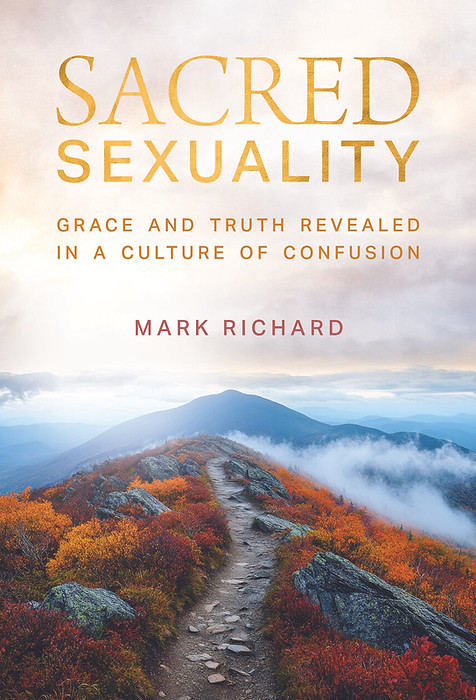
Sacred Sexuality is a straightforward and deeply personal exploration of biblical sexuality told through the lens of Mark Richard’s own journey out of what he describes as deception, confusion, and sexual brokenness. The book blends teaching and testimony, moving from his years in a same sex relationship to his eventual break with that life as he embraced what he believes is God’s design for sexuality. Throughout the chapters, he lays out a consistent argument: Scripture is the unchanging authority on sexuality, culture has drifted far from it, and believers must return to a life shaped by holiness, repentance, and obedience. The book weaves his story with biblical passages, devotional sections, and practical steps meant to guide readers toward what he calls sacred sexuality.
The sincerity of the author is undeniable. His emotional honesty, especially in the preface and his retelling of leaving behind a relationship of many years, comes through with force. There were certain moments that were thoughtful and moving, like when he described falling to his knees with Scripture open, wondering what it must have felt like to have your whole sense of self cracked open by a single passage. The writing carries an intensity that sometimes made me feel like I was sitting across from someone who desperately wants you to grasp what he grasped. That passion can be stirring. His voice is pastoral, urgent, and deeply convicted. Whether one agrees with every interpretation or not, it is clear he has lived every word he wrote, and that kind of vulnerability will resonate with readers.
The book leans on long blocks of Scripture and strong declarations about sin, judgment, and identity. There were moments when I wanted more nuance, especially when he addressed topics like same sex relationships, temptation, or modern cultural norms. His certainty is absolute, which can feel steadying for some. I would have liked more stories from people he has ministered to. The book’s frame of reference is clear, sharp, and unwavering, which offers readers clarity.
The book has a solid sense of purpose, and it delivers exactly what it promises. Readers who long for strong biblical arguments about sexuality, or who want a testimony of radical life change, will likely find this both challenging and encouraging. Pastors, parents, and believers who feel lost in cultural debates might also appreciate the book’s firm convictions and practical steps. If someone is already inclined toward a traditional Christian sexual ethic, this book will feel like a roadmap and maybe even a lifeline. If someone is questioning, searching, or carrying pain around sexuality, they may find honest reflection and heartfelt hope.
I would recommend Sacred Sexuality to readers who want a bold, earnest, Scripture-centered approach to sexuality and identity. It is best suited for those who appreciate direct teaching and personal testimony woven together. The emotion in these pages is raw, and the message is clear, and for the right audience, it could be deeply impactful.
Pages: 120 | ISBN 13: 979-8-89804-030-7



 LITERARY TITAN