Blog Archives
My Real and Raw Self

Prince Ewald the Brave is the story of a young prince who becomes a respected royal by standing up to his father. Where did the idea for this novel come from and how did that evolve as you wrote?
In my first novel “The Gift-Knight’s Quest”, I kept going to flashback time to show you the life and death of Derek’s ancestor Lenn. The antagonist in that flashback time is none other than King Jonnecht, who was presented there in his brief time as two-dimensionally bloodthirsty and petty. Since that novel isn’t about him, it leaves people with many questions; you never learn what happens to him after a particular scheme he perpetuates, you never learn if he gets punished or overthrown, or why he doesn’t just try a different scheme or attack the rival land of Wancyrik. Given that we know Chandra Kenderley will be his descendant in approximately a hundred years, that also raises questions of what it’s like having this man for a father; the family dynamic. And if he treated them exceptionally well compared to how he handles everything else, then why would his successors behave nothing like him, pursuing practically the opposite foreign policy? If they had, why wouldn’t the empire have collapsed from hubris long before Chandra was born? I wanted to answer those questions, and my first draft was actually called “The Mad King Jonnecht”. But the story became far more about all the people around him and how they live with him, and I no longer wanted to name the book after its most unlikeable character. His reign and fatherhood was a problem to be solved that’s central to the story, but by no means is he the hero. And given the weird political structure the Kensrikan empire has, no one would have been better suited to stop him than a family member–such as the heir. However, this heir shouldn’t solve problems the way his father does, or it would be difficult to imagine things getting better if he wins. From that complication came a novel-length story.
This seemed like a fun novel to write. What scene did you have the most fun writing?
Well, some of Ewald’s night-time adventures in the city borrow from adventures of my own. I don’t go to medieval/renaissance reenactment parties nor is Ewald headed for alternative/subculture clubs that would make more sense in the twentieth century or later, so I had to imagine what an underground club could possibly be in such an age. I wanted it to serve a purpose for people of different social classes and backgrounds to meet each other in a more relaxed environment. I also wanted something masked, but not a ball; I use masks differently in my other novels, but this use was more of a nod to someone in my life who was known to be real and raw, but also to wear a mask, an interesting juxtaposition; he spoke to me early in my career when I was very lost and concerned about being famous and making a fortune, and he just wished I would be concerned with what my real and raw message would be. So, my candid social and political views make their way into my fantasies without restraint, and I try to be my real and raw self on social media, and I hope this would have meant something to him. We were very different people. Anyway, the nights out were fun. I would also like to give a shout out to my editor who insisted I go ahead with the wedding scene, because I was initially too scared that I would mess it up, but it turned out very satisfying to me and I know readers who agree with that.
What was something you wanted to do in this novel that was different from any other fantasy novel you read?
This might just reveal the narrow scope of my reading so far, but I wanted to look at what responsibilities a good leader should have, and the healthy/unhealthy dynamics between leaders and their following. I think there is plenty of literature about noble leaders who are born for their role and living up to their name or their destiny, and I don’t believe in that enough to write it. There are also many books about corruption, scheming, siblings and rivals backstabbing each other for an imperial throne–realistic and rooted in history, true, but this has been done many times and memorably. I wanted to focus more on the damage done when someone behaves like power is nothing but entitlement and all about what others constantly owe him. I wanted to contrast that with people who having achieved or realized their privilege understand what it is to offer a way up for others, or empathize with suffering and do something positive about it with these privileges, or who at least understand that the throne should implicitly come with responsibilities that can be very limiting to anybody who would rather just have the most fun in life. And then I wanted to spend time with all the characters who work hard every day to minimize the damage done by this irresponsible leader, and who will no doubt get blamed by that leader when things go wrong, though that has plenty of inspiration from contemporary politics; it doesn’t belong strictly to imperialism or monarchy. But I also wanted to show how very difficult it would be to unseat such an irresponsible person, without using the same toxic solutions that the leader would turn to (I already have a book about that called “Alathea: Goddess and Empress”). I wanted to give people hope that even in the face of corruption, in a system where people don’t want to put their privileges at risk, someone will learn what’s needed and reach out to others to solve a huge problem in the best way, before it gets worse for everybody. Instead of showing one hero destined to save them all, I wanted to show that making things better is a complicated issue and a team effort that should be enriched with different viewpoints and approaches. There have been so many fantasy books in and out of print that I suspect all of this has been covered before, but I felt like doing it my way.
What is the next book that you are working on and when will it be available?
My next book is a story about a melancholy Duke who finds something to fight for, a good lady who wants her people to be free by as peaceful means as possible, and three musicians who think they have landed the most extraordinary gig in their kingdom. The current working title is The Death of Lenn, and it would end the six part extended series that began with the Gift-Knight trilogy; it would be a good point to stop and think about writing a different story. I would love to have this out in 2021 to be able to say I’ve released two great personal efforts within a year, but budgetary constraints may make that a questionable timeline.
Author Links: GoodReads | Twitter | Facebook | Website
Meet the Kenderleys, the wealthiest and most powerful family in the world.
The youngest, Prince Bonifaz, takes his lessons and trusts no one. The middle child, Princess Isabel, sneaks away to a secret regency of her own making. Their mother, Queen Dulcibella, watches out for her children just as readily as she watches over them. Their father, King Jonnecht, is a capricious tyrant who hopes to control his family as strictly as he does the largest empire, and his violent rage threatens all under his rule.
Then there’s Prince Ewald, eldest and heir to the throne. No one is more aware of the threat his father poses to everyone. No one has better legal standing to do anything about it. How can he save everyone he loves while upholding his mother’s kind values? He must learn the lessons required to be the best regent, choose allies wisely and earn their trust, and enact a thoughtful and detailed plan.
And even if he succeeds in all that, can one who draws the line and conducts a plan with honour defeat one whose rage, selfishness, and deceit know no bounds?
Can Prince Ewald stop his father?
This is a stand-alone prequel to The Gift-Knight Trilogy.
Set My Mind Awhirl

Find the Girl follows a young girl on a magical adventure to free a boy who’s stuck in a weasels body. What was the inspiration for the setup to your story?
For years I participated in a worldwide project to distribute books. One of the years, there was this book about a princess encountering a frog at a well. It turned out to be fairy tale “mashup.” That the frog was a prince, didn’t inspire me. However, I appreciated the imagination, but veered off to think my own thoughts. I live in the United States Heartland. Caves are not uncommon, nor are caves along the Antrim Coast in Ireland, close to where I was born. Fairies and leprechauns are not far from the stories my mother and grandmother shared. Add to that I traveled to Greece on a ship formerly owned by one of my US employers. That set my mind awhirl.
Eta is an interesting and well developed character. What were some driving ideals behind her character development?
While I’m a male, strong female characters inspire my writing. Not the women who dominate the national headlines, but those who everyday care for the persons around them. Eta, a teenager, can’t demonstrate these ideals initially but she, in my mind, could challenge her present anxieties while she possessed the future potential to change the world, if only for one person. And that person need not be a stranger, but one closest to her, i.e., her grandmother.
What were some themes that were important for you to explore in this book?
You present an interesting question about themes. First of all, I wished the story to grab the imagination of a young reader. That is to say a reader I’ve been. Yes, if only in my past and present imagination. And, isn’t that what reading is all about, to explore what may happen? To answer the question I pose, yes. For all who read this, I agree. To answer your question about a theme, I join all who try to expand one’s mind, to live in a world not ours, and to experience the constraints of a prior world. I try by my writing to offer this.
What is the next book that you are working on and when will it be available?
My answer is both hard and easy. I’m working on, as the excerpt to Find the Girl, A Fantasy Novel, teased, a follow-up fantasy novel that stars Lucia who wishes for a Christmas tree. If the tree is but an image that hides supernatural forces is yet to be explained. When it will be available is open to my work ability to complete. While I’m well along with it’s writing, it is challenged by a murder/mystery that preceded “Find the Girl, A Fantasy Novel.”
Thus, while I don’t wish to be evasive, the accurate answer is we’ll have to, along with me, have to wait and see.
Author Links: Amazon | GoodReads
And, Eta’s fingertips glow blue and she dares not tell Dad, Grandma, sister Daria, nor brother Nathan.
Ian, a seventeen-year-old sailor in the 1800s, is cursed to live as a 21st Century weasel unless he collects the silver, gold, and pearl spelled out by an anagram: ‘Find the Girl.’
Eta doesn’t believe she has magical powers. Yet, she’s an empowering spirit as she and Ian propel themselves on three separate trips to 1859 Greece, Ireland and the Mississippi River. The adventures blend harrowing intrigue, bond-building, and enlightenment without romance as Ian’s collectibles are not freely given. Eta’s family dynamics build and reveal her empathy.
The Struggle to Survive
A Sense of Purpose follows a kitten who’s abandoned on the streets and finds a sense of purpose among the various people and obstacles he encounters. What were some sources that formed this novel’s development?
“A Sense of Purpose” is a story about Chester who was an important character in my earlier novel, “Journey Home – A Cat’s Tale”. He was that down to earth, honest and helpful character that we all wish existed in our lives, always there to help, to be a friend, to be a positive influence. Because of those traits, I thought he deserved a story of his own. While I thought about writing a story based upon the character I had created, a lost and lonely cat exited the forest near our home, looking for food and shelter. For over six New England seasons this abandoned cat approached our home ever so cautiously as my wife called him from the forest and placed food outside on a daily basis. The character I had created actually became real; hence, we named our homeless friend, Chester.
While we fed Chester over several New England seasons and attempted to give him a permanent home, my wife also discovered a feral mother cat with her four kittens on another portion of our property. It was Chester who eventually brought her to our front door for us to feed. This feral mother cat with her four kittens and the dramatic incidents that revolved around Chester provided me with the consequential inspiration and resolve to create this story; a story that has relevance to everyone of us.
The struggle to survive, the determination to complete something meaningful, and the intertwining of Chester’s life with the lives of others make this story what it is. Chester’s life has relevance to tragedies and joys for all of us, and I hope this story will make people think about their own lives and how each life can be important to others in so many ways. Each of us affects one another at some point in our lives—to create a purposeful meaning. No matter what we do in our lives, we all have a sense of purpose—a message, I’m sure, Chester would want me to share.
Just so you know—on one early, cold October morning, Chester finally decided to step through our front door on his own volition. He now has a permanent home.
Chester is a stirring character that I enjoyed following. What were some ideas that guided his character development?
When Chester appeared at the edge of the forest near our home, my wife and I wondered where he came from and what his travels might have been like to get here. So I started his story as an orphaned kitten surviving in New York City and then traveling to a coastal town in the State of Maine. After finding a new home in a small town surrounded by forests, I introduced him to an abandoned kitten by the name of Patches, the main character in my previous novel “Journey Home – A Cat’s Tale. When Chester’s new friend disappears in a blizzard, I wondered about what lengths he would go through in order to find him. What might any of us do under unforeseen circumstances? It is during his search and his relationship with other characters involved with the obstacles he encounters that affect his character development throughout the story. The homeless people, the perils of a forest, a blizzard, the friendships, and the resolve to never give up on hope all add to an understanding of himself and what he must do to complete his quest to find his friend.
There were a lot of great scenes in the book. What scene was your favorite to write?
There were actually several descriptive scenes that were a favorite. It’s difficult to pick just one. Please bear with me. Here are six examples:
1) On the first day of being on his own in the city, Chester wandered into a bodega owned by a shopkeeper by the name of Mr. Pettigrew, searching for something to eat. That’s where a nine- year-old girl by the name of Helena first met Chester. The following excerpts are portions from that beginning:
—As I neared an aisle of baking goods, I noticed a young girl shopping with her mother. It didn’t take much time for the little girl to notice me. Perhaps it was the combined appearance of my white feet in addition to the reflection of the florescent light that intensified a bluish color to my eyes that caused me to be the object of her immediate attention. The little girl had curly brown hair, dark brown eyes, and a smile that seemed to make the world take notice, much like my distinctively white feet.
She stared at me for what seemed a very long time, beamed a big smile, then looked up at her mother, tugged on her mother’s coat sleeve, and said, “Mom, we don’t have any pets. You told me that when I got to be nine years old I could have a kitten. I’m nine. Can I have that one?”
“Helena, we’ve shopped in Mr. Pettigrew’s bodega now for many years. Today, we are just picking up some cut flowers and a few items for dinner, not a cat.”
“But Mom, you promised, and I like that one.”
“Well, I don’t think Mr. Pettigrew would like us absconding with one of his cats,” replied her mother as she bent over slightly to take a closer look—
—Pettigrew had overheard the conversation. Distracted from his task of shelving canned goods, he paused and turned to face Helena and her mother. While thoughtlessly snapping one of the red suspenders that stretched across his robust stomach with his one free hand, he quickly responded, “He’s not my cat. He just wandered in here a few minutes ago. Like all the others in the past, he’s looking for a hand out. I doubt if he even has a home. This morning is the first time I’ve ever seen that one,” he said as he lowered his head, peered over the top rim of his spectacles once again, and pointed at me.
Helena’s understanding mother took another look at what she considered to be a somewhat bedraggled kitten, then glanced back at her daughter and remarked, “Well, he looks like he could use a home, doesn’t he?” —
—Helena’s mother glanced at her daughter and paused as she deliberated on what to do. “He certainly is a pocket-sized bundle of fur,” said her mother. “I wonder if that tan and gray fur is color or just plain dirt,” she added. Then she nodded her head approvingly, and said, “Okay Helena. But you’re responsible for taking care of him.”
“I promise. I’ll take really good care of him.”
“We’ll have to take him to a veterinarian and get him checked for fleas, get him a rabies shot, and get him fixed,” said her mother.
“Is he broken, Mom?”
“No honey. I just mean that we should make sure he’s okay,” her mother added with a slight smirk on her face as she turned her attention to Mr. Pettigrew.
Surprisingly to Mr. Pettigrew and Helena’s mother, Helena needed no further affirmation and didn’t hesitate to act. She looked down at me, scooped me up with both hands, cradled me into the sleeves of her warm coat, and said, “I’m going to call you Chester.” —
2) When Chester stayed with Abram, a homeless man in New York City, during below zero degree, pitch-black winter nights, there were a few scenes when they huddled together to keep warm from the cold. Here is an excerpt from a portion of one scene:
—When a gust of wind invaded our space, he quietly looked down at me, while shivering, and apologized for not being able to do better. “We need to stay out of this wind,” he whispered repeatedly. “We could get hypothermia if we’re not careful.” I looked up at him, not understanding at the time what he meant. Then he continued to provide an explanation and tried to remain lucid in our frigid surroundings. “It’s a gradual type of trauma,” he said. “We don’t want to get soaked by this cold wet snow. If we’re not careful, we could get disoriented, tired, not realizing we’re freezing. You huddle in my coat. I’ll keep you warm.” He then removed one of the tattered mittens from his hand and stroked the top of my head with his chilblained fingers, even though they throbbed from the cold.
I stayed with Abram for almost one entire winter, until one early below-freezing morning I awoke to his breath hardly but a whisper. I’ll never forget that moment as long as I live. He stroked the side of my head with a gentle hand, looked down at me with pale blue eyes, half shut, and in a barely discernible voice said, “Storms will come. I’m sorry I can’t be there for you.” I sat there nestled in his arms as he held me close—
3) When Chester was trapped in the back of a moving van and transported to a small town in Maine, he was adopted by the family who moved there. This is an excerpt of his arrival:
—It was the screech of the metal door latch that woke me early the next morning. Both doors to the back of the truck opened wide, simultaneously. Sunlight streamed through the darkness, and the sight of Helena surprised and exhilarated me as she poked her head into the wide opening and peered into the van. But when I emerged from my sleepy stupor, I looked closely at the welcome intruder and realized that it was a girl who only resembled Helena. It wasn’t her. It was the dark brown curly hair both had in common that confused me for one brief, exciting moment. It’s difficult to explain how disappointed I was.
The girl immediately spotted me at the back of the moving van. “Daddy, look what came with our furniture,” she yelled excitedly.
After that excited response to my presence, another face peered through the opening, and an older man’s voice boomed, “How did a cat get in there?”
Quite simply, that’s how I got my second chance at finding a new home. A family of seven, moving from New York City to a small New England town on the coast of Maine, quickly and unanimously decided to adopt me as they carried both me and the couch into their new home. They figured if I had been a feral cat, I would have quickly cowered to the rear of the van or would have been aggressively defensive. Although fearful of what might happen, I decided to remain on the couch, and accepted the ride into the house. I never once thought about fleeing. I figured things couldn’t get much worse; only better. I guess the family figured that if the stray cat came with the furniture, he stayed with the furniture; that’s the way it was supposed to be. Fate had determined a new destiny for one homeless cat. Me. —
4) During the development of the story, there was a point in time when Chester visited a nearby forest, sensing he wasn’t alone. The following is an excerpt as he was leaving the forest late one afternoon:
—Even though it was getting dark, a bright moon lit my way as light glistened from the frosty snow-covered ground. Clouds swirled around a full moon and provided an eerie, otherworldly reflection over the landscape. Just before I exited the edge of the forest, however, I sensed a shadow in the distance, a rustling among the saplings—heard but not seen. The silhouette wasn’t caused by the moon’s reflection or by the stiff breeze that swayed branches through the snow-covered trees. Rather, the shapeless shadow lurked as something sinister, beyond comprehension. Something dark, moving through the snow-ridden undergrowth—quietly. I sensed a danger never before known, an instinct to run, but instead I turned to look in the direction of movement, yet found nothing there. The shadow lurched within the deep recesses of the forest, a silent movement, perhaps a ghost I thought. Fear engulfed my soul. The unknowing made me cower. The wind chattered through the trees and in the distance the cawing of crows diminished until I could only sense the beating of my heart and the freezing whiskers against my face. Snowflakes hushed over the forest till there was no sound except for my own rapid breathing, my chest pounding as if a hand had choked my very breath. I plunged headlong into the coastal driven wind that had changed direction, no longer at my back. Swirling snow from fierce winds punished the air and made it difficult to see any distance ahead. —
5) When Chester started to search for his friend after several days of blanketing snowstorms, he hurriedly headed for home as a new storm strengthened. This is a scene from that experience:
—The walk home was laborious. I sloshed my way along the empty streets while the freezing wind sought to steal my every breath. By the time I arrived home, darkness had swallowed the afternoon. The Anderson’s had been watching for my return and had left the outside lights on. I was glad they had because by the time I arrived I could barely see the house. I made my way up the snow-covered walkway and was happy to see the front door creak open just enough to let me inside. I heard Beth Anderson’s voice before I even got to the front stairs.
“It’s about time you got home. If we had known this storm was gonna turn into a blizzard, I never would have let you out this morning,” she said, talking to me as she would chastising a child. As I entered the house she added, “You look like a walking snowball.” —
6) At a later point in the story, Chester met Tate, a solitary man who kept mostly to himself and spent much of his time quietly walking about the neighborhood, as if he were in his own world. Unlike Abram, Tate didn’t talk to anyone he could find. He was usually quiet and only spoke to a select few. When he did speak, his voice was a low, barely audible mumble about his forecast of the weather. The following is an important excerpt from the story:
—When I proceeded down the granite steps onto the sidewalk, Tate was sitting on the bottom step mumbling one of his not so unusual incoherent rants; to no one. As I casually passed beside him on the last step, however, his left hand gently washed over the top of my head and onto my shoulders. He had never done that before; never had touched me, never had patted me, but this time he did. I stood there for a moment, feeling a calming connection between us; his hand gently rested on my shoulders. I looked up as he continued to mumble something about the cloud cover and saw him staring out across the street, as if he was looking at something. Then he suddenly stopped talking and slightly lifted his hand from me. He removed his baseball cap with his right hand and placed it on the stair beside him while he continued to stare directly ahead. Then, as if he had received some sort of message, he turned his gaze downward, catching my upward glance with his. In a low methodical, distinctively firm voice he warned, “A storm is coming.” It was the same announcement he had made just days before the blizzard in January. I had heard him utter those same four words several times before. This warning was vocalized as it had been previously, but this time it had a sympathetic sound to it. His words seemed apprehensive, yet the tone of his voice was soft and strangely empathetic.
It wasn’t just the tone of his voice, however, that was different. Tate never had much of any kind of facial expression when he spoke. I had never seen him smile, but he did on that day. Perhaps it wasn’t his intention, but there was a slight, asymmetric smile that expressed a deep sadness, as if what he said was somehow painful for him; a smile that turned up ever so slightly at the corners of his mouth and exhibited a kindness I had never witnessed before. He placed his left hand ever so gently on my shoulders once again and paused as if doubting what he knew and didn’t dare say. Then he stood and slowly pulled his hand away. I looked up at him and his eyes drifted downward once again, looking at me. He stared intently into my eyes in a way that made me think he could see into my very soul. That’s when I realized there was a real sadness in his look. Then he stepped down onto the sidewalk, leaving me on the last step, and walked away. He never looked back or spoke another word as the distance between us grew. I watched, sad to see him go from the moment; a simple exchange of emotion, an experience so intense, yet seldom shared. I didn’t know it then, but that was the last time I would ever see Tate. It was as if he had waited all those months I had known him in order to deliver a message that could no longer wait. I returned to the forest that day and thought about Tate’s implicit words. I wondered what he had meant. Winter was over. Even I knew that. —
What is the next book that you are working on and when will it be available?
My fourth novel, “The Path Before Me”, is a Middle Grade Young Reader version of my philosophical adult novel, “Journey Home – A Cat’s Tale”. It should be available in July 2021. I wrote it in hopes that such a story would provide a better understanding of compassion, empathy, and hope for a young reader; a good social aspect addition for schools systems and the in-home library. I am currently working on my fifth novel, a science fiction story about our Earth, our possible connection with other worlds, and the reason why other civilizations have not contacted us. I still have a bit of research yet to do while writing the manuscript. I would expect completion and publication sometime in 2022.
Author Links: GoodReads | Twitter | Facebook | LinkedIn | Website
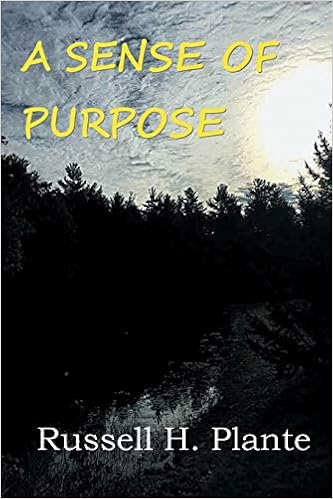
Orphaned as a kitten on the streets of Manhattan, Chester recounts his first home with Helena, a nine-year-old girl, then losing his home two years later. Living on the city streets, he befriends Abram, a homeless man, who warns him about an impending storm, then dies early the following morning after a bitter, cold night. Friendless once again, Chester becomes trapped inside a moving van and finds himself taken to a small town on the coast of Maine. There he meets an abandoned cat named Patches, a compassionate cat named Buster, and Tate, a peculiar homeless man who also warns Chester of an impending storm. Remembering his own past struggles, Chester helps Patches find food and shelter. Becoming friends, they explore an ancient graveyard one day in a nearby wetland forest where Patches tells Chester about his father entering the dark forest but never returning. When winter arrives, the worst blizzard in over a decade strikes the small coastal town and Patches disappears like his father had. Hoping Patches might have sought shelter from the storm in the nearby forest, Chester begins an arduous search into the forest for his friend. There he encounters a young woman in the old graveyard, drawing in her sketchbook, and ultimately learns the truth about the disappearance of Patches’ father. He also discovers a feral mother cat with her four kittens, struggling to survive, not knowing they would change his life forever. When terrifying events happen under the halo of a moonlit night, Chester realizes the warnings from Abram and Tate were about significant events that would occur in his life. His search not at an end, he comes to understand that every life affects another, and that no matter what we do in our lives, every living being has a sense of purpose.

The Journey to Finding My Way
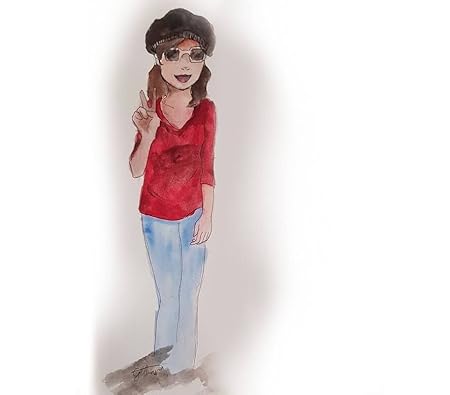
Twinkle’s Starlight follows a star on a journey through the universe to find its light. What was the inspiration for the setup to your story?
My inspiration for Twinkle’s Starlight came from a self-reflection of my own experience. I spent my twenties studying and travelling, trying to find my place in the universe. Sometimes I looked for answers in the wrong places, but it was all part of the journey to finding my way to becoming who I am. It is, and was, an adventure of self-discovery, which I think is a lifelong quest for us all as we each navigate our way through different or similar circumstances. We all have our own light within us, and once found, we should let it shine as brightly as we can, so we can guide others when the opportunity arises to do so.
I loved the beautiful art pieces in this book. What was the art collaboration like with illustrator Carole Higgins?
The collaboration with Carole Higgins was an awesome experience. Once I had formed the script of the story, I passed the manuscript on to Carole to create the illustrations. All the artwork is Carole’s visual perception of the message found within the text, there was no storyboarding, just “this is the story, would you like to do the illustrations?” Which is a totally different technique to how Carole usually works.
On canvas, Carole would usually use a live or photographic reference for the portrait interpretation. She did an amazing job in rising to the new challenge of book illustration. Carole is an amazingly creative and imaginative artist, and the person who I have to thank for my own creativity as ‘Twinkle’s Starlight’ was the result of mother-daughter collaboration.
What were some themes that were important for you to explore in this book?
The main theme of importance for me is that through our individual life journeys we will encounter times of struggle, excitement, despair, loneliness, happiness, companionship and so on. But in the end, when we achieve our goals, and find where we belong, it will all be worth it as long as we don’t give up.
Sometimes other people might not be willing or able to help, or simply do not agree with the path we are on.
Sometimes you might not be willing or able to receive the help that is offered. Sometimes you might be walking with someone on parallel paths that seem the same but eventually diverge.
Sometimes you will be on the path entirely alone.
And sometimes you will be surrounded by people.
In every circumstance, it is ok, and you will find your way as long as you keep going. I would be lying if I said I had all this figured out in my own life. But that is what ‘Twinkle’s Starlight’ is all about – the journey of figuring out where you belong in life, and looking toward the future.
What is the next book that you are working on and when will it be available?
As author, I am currently working on another illustrated children’s book. The availability is yet to be confirmed.
In an editorial role, ‘You Can’t Ride a Yak: Looking for yaks and finding God’s call in Nepal’ written by Sarah Reardon was recently released by Ark House. ‘You Can’t Ride a Yak,’ is the autobiography of Sarah’s journey in founding the Wise Woman Project charity organisation. It is an amazing story of strength, faith, hope, and love for both people and country. The book is available for purchase from the WWP website (https://wisewomanproject.com) and Ark House Press (https://www.arkhousepress.com/you-cant-ride-a-yak/).
Author Links: GoodReads | Facebook
Twinkle’s Starlight is an illustrated children’s book that explores the effects of losing sight of self and purpose. As the star travels through the universe to find it’s light once more, Twinkle seeks help from all the planets. The moral of the story highlights that it is alright to need and seek help. However, life is a journey and seeking the right people for support is important in keeping motivated to achieve goals. It takes dedication and commitment to succeed and keep the passion alive.
Through A Lot of Adversity

Life of a Lounge Lizard is the insightful and authentic memoir of your life on the road as a musician and things you learned along the way. Why was this an important book for you to write?
The era of the cover band in America is pretty much forgotten now. But it was a way of life back in the mid-60s through mid-80s. For entertainment, people of all ages, (i.e. twenty-one to fiftyish), went out to a club, hotel, or restaurant to watch and dance to a band. This was before home theatres and VCR tape players and it was the perfect time to earn a living as a musician. Nowadays, unless you’re famous, you’re lucky to have a gig or two a week. You need a Real job!
I appreciated how candid you were. What was the hardest thing for you to write about?
I did not want any person mentioned in the book to have their feelings hurt by my words. I wanted to be honest but not vindictive.
What were some ideas that were important for you to explore in this book?
In addition to the whole cover band phenomenon as stated above, I wanted to show the reader that you can reinvent yourself as you go through life. Keeping a positive attitude gets you through a lot of adversity.
What is one thing you hope readers take away from your story?
I think everyone should write their own life story. Each of us have had many life-defining experiences that would make for a very interesting memoir. It’s very important to leave “Little Memories of You.”
Author Links: GoodReads | Amazon Music | YouTube
People Want to Destroy It

The Bystander finds mankind trapped in time, never aging, which brings out the best and worst in mankind. What was the inspiration for the setup to your story?
My inspiration was a scientific theory that i read about. Please, don’t ask me, it’s a major spoiler for the story! And once i read it, the main story created in my mind.
The characters in your story were intriguing and well developed. What were some driving ideals behind your character’s development?
The first thing i did was think about what characters i want to tell my story. Then, i made a storyboard which showed what journey would make every character from beginning to end. Τhis technique helped me develop my characters as best I could.
What were some themes that were important for you to explore in this book?
I wanted to explore three themes that intrigue me. The first was the hunger for power. The second one was how easy you can believe everything because you have the need to feel that you belond to somewhere. And my last and favourite theme was whatever political system you apply (good or bad), if some group of people want to destroy it, then they will find the way and they will do it.
What is the next book that you are working on and when will it be available?
For my next book, i want to play with the theme of stereotypes. In another words, i want to break them. Αnd I know you will be immensely sorry for what I say, but I am at a very early stage.
Author Links: GoodReads | Amazon
A homeless failed stockbroker walks the streets of New York City, just waiting for another chance…
A C.I.A. operative lies comatose in a hospital bed…
Their lives, and many more, are destined to cross when the world is struck by an incredible global phenomenon…
When time itself inexplicably stops, mankind is trapped in an eternal moment, never ageing and effectively immortal. But still just as ruthlessly ambitious.
As people fight to survive the perpetual evening of a new America, murderous leaders and dictatorial oppressors rise. The brutality of man is brought into focus more clearly than ever before.
Thousands of miles away, on another continent, a different threat is emerging – and the connection between these distant events just might hold the answer to the mystery of time…
Dystopian sci-fi fantasy on an epic scale, The Bystander is a metaphorical allegory of humanity, power-hunger and the ambiguity of war.
The King of Beasts
Battle Carried examines the history and meaning of tiger imagery of good luck flags in Japanese culture. Why was this an important book for you to write?
Battle Carried was important for me to write because it took into consideration two primary subjects that I had been passionate about since childhood: Japanese good luck flags and the tiger. Growing up, I had a fascination for flags; I drew and colored them and hung them on my bedroom walls. The more colorful the banner, the more I wanted to learn about it. At the time, the young student in me enjoyed learning about the histories of the nations that each flag represented. Flags and military history go hand-in-hand. I often thought how those colorful pieces of cloth could inspire ordinary men to accomplish extraordinary acts of courage in battle.
My interest in tigers was a little more straightforward. As a youngster I thought about pursuing a career in veterinary medicine. My home was an animal menagerie. I was always bringing some kind of pet home, or nursing an injured animal back to health. Based on that interest, I spent quite a lot of time reading about different animals, visiting zoos, etc. The reality for me was that while many people think of the lion as the king of beasts, I was more captivated by the beauty of the orange and black striped tiger. I did not know it at the time, but Asian culture actually celebrates the tiger as the king of the beasts. Years later, when I first heard that there were good luck flags with tigers painted on them, I knew that I wanted to eventually study them. It ended up being a match made in heaven. Battle Carried was a long-awaited outgrowth following the 2008 release of my introductory volume on Japanese good luck flags.
What kind of research did you undertake to complete this book?
I was familiar with doing research in history and anthropology at both an undergraduate and graduate school level. I began my research for Battle Carried by reading whatever I could find on the evolution, migration patterns and demographics of the tiger in Asia. As a student of anthropology, I had also studied Asian religious and philosophical worldviews. I wanted to better understand how and why those relationships came to be encapsulated into the Japanese tiger art good luck flags. Later, I thought that perhaps there was a connection between the animal that I saw in rare wood block prints (ukiyo-e) and those that illustrated the flags. It was fascinating to observe that the styles and poses of tiger art painted on flags during the World War Two era, often appeared to be near exact copies of those created, sometimes a few hundred years earlier. That realization led me to research the early Chinese influences that so heavily affected later Japanese art.
What is the most surprising thing you’ve learned about Imperial Japanese Tiger Art in your research?
In Asian cosmology, the tiger was seen as a divine creature that played a significant role in how those cultures understood the origin, and evolution of the universe. In Taoist art, the tiger was frequently observed representing the “Yin” to the dragon’s “Yang”. When the tiger (tora) was complimented visually with the dragon (ryu), one of the most prolific pairings to illustrate the Japanese Zen Buddhist struggle for enlightenment emerged. With some exceptions, the Japanese embraced the zodiac system of the Chinese. The Tao constructs the world around two forces; They operate within a Yin-Yang relationship. Yin characteristics are composed of water, wind, earth, and are murky in nature. Furthermore, their essence is female, and static. The aspects of Yang incorporate fire, rain, the heavens, and brightness. Their essence is male, and energetic. The elements described may be manifested in the combined Yin-tiger, and the Yang-dragon; the pairing is known to the Japanese as uchu no tora, or “tiger in rain”. Zen Buddhism acknowledges an interplay between these two natures, one that exists throughout the entire universe. The tiger, with its courageous character, is accepted throughout Asia as the most esteemed of all the large wild animals. In pictures it is frequently positioned focused, ready to pounce upon its prey. Similarly, it is often portrayed descending along rocky outcropping, its belly stretched out low, hugging the ground. As a common theme, wind-strained bamboo thickets typically occupy the same image as the growling orange, and black striped beast. The late orientalist, Robert van Gulik wrote that, “In Japan, the tiger portrayed among bamboo stalks in the wind is known as take ni tora, ‘tiger in bamboo’. This representation is generally taken to symbolize that even the most powerful of terrestrial forces, namely the king of all animals, had to yield to the forces of nature. As such, the tiger in the take ni tora representation is also said to be identified with the wind itself, symbolizing as it were, the rustling wind in the bamboo grove.” The English born barrister, and art collector, Marcus Bourne Huish expounded upon this relationship further when he wrote in his 1889 book, Japan and Its Art that the tiger, “…is very often depicted in a storm cowering beneath bamboos, signifying the insignificant power of the mightiest of beasts as compared to that of the elements.” The powerful cat has a tempered force that is evident in its rigid muscles; allowing it comfort in its Yin/earth realm.
The dragon typically shows its force in a more spirited manner. He is often portrayed, surrounded within the heavens by angry rain clouds, and storm energized waters. Projecting himself out of the heavens, the dragon is frequently shown descending toward the earth where his Yang menaces, but does not dominate, the tiger’s Yin. Those two forces, uniformly matched are in balance, as they typify the universe’s harmonious nature.
In writing Battle Carried, I realized that the Yin-Yang relationship is one that all mankind would do better to more fully understand. When we strive to live in balance with the natural environment, the world tends to operate in a more harmonious fashion. Whenever mankind seeks to dominate or control that natural world, harmony is lost and systems break down. In Asian philosophy, the tiger as the king of beasts realizes that fact of life. Hopefully we will use that example to better steer our own destinies as humans.
I loved all the art you used in the book. What is your favorite art piece from this book?
My favorite piece of art is the 1885 woodcut triptych by the artist Koyama Chikusai titled Kato Kiyomasa on the Korean Campaign (p.33). The exploits of the samurai warrior Kato Kiyomasa were legendary among his friends and foe. He was famous, not only for his prowess on the field of battle, but also for his one-on-one fights against the fierce tiger. His fame grew to such an extent that other samurai attempted to elevate their own status by performing similar acts. Apparently enough samurai were being killed by their tiger opponents, that the Japanese leader, Toyotomi Hideyoshi banned his officers from taking part in the “sport”!
Author Links: GoodReads | Website
From the author of “Imperial Japanese Good Luck Flags and One-Thousand Stitch Belts,” Michael Bortner’s long awaited “Battle Carried” examines World War Two era Imperial Japanese good luck signed flags, featuring artistic renderings of the tiger.
“Battle Carried” examines the history, meaning and cultural context of tiger imagery as it applied to the decoration of good luck flags. Through hundreds of extensive color images and detailed close-ups, as well as woodblock prints and rare vintage photographs, this book superbly illustrates some of the rarest and most highly sought after specimens of tiger art flags, many of which are identified to their soldier, sailor and airmen owners.
“Battle Carried” is an invaluable resource for artists and scholars of Japanese culture, as well as for historians and collectors of flags and Japanese wartime memorabilia.
Lives That Are Gradually Destroyed

Where I am Standing is a thoughtful collection of short stories that provide subtle but potent commentary on life. What inspired you to write this collection of stories?
The book is about a hometown which, little by little, witnesses ruins in all aspects there. It is a narrative of valuable spiritual and worldly lives that are gradually destroyed and turned into ashes. The name of the book “Where I am standing” illustrates the place a human is born and stands on his root, hometown. This can be interpreted as every human being’s life status encompassing all sorrows, joys, struggles and desires.
Did you write these stories specifically for this book or did you write these stories over time?
I have written the stories over time since each story was an inspiration through gradual degradation of human’s life around me.
My favorite story from the collection is ‘Human Being’. Do you have a favorite story from this book?
As you know generally it is almost impossible to choose one of them, but I can tell you some of them are different; Scarecrow-The Alley- Titanic, War, Lost, and My Shadow.
What are some themes you wanted to explore in this book?
The themes mostly deal with the human values which are about to vanish as well as all symbols of life in every individual’s life span.
Author Links: GoodReads | Amazon



 LITERARY TITAN