Blog Archives
Change Your Destiny And Return To Power

Return to Power tells your inspirational story of overcoming adversity and stepping out from the background after years of feeling insignificant. Why was this an important book for you to write?
I wrote this book because I wanted to give those who feel like they are stuck in the background a voice. To those wonderful people who, even with success in their lives, have for whatever reason been relegated to the background or are once again voiceless, those are the ones I want to help EMPOWER. I want them to feel their power and be on TOP of their game, becoming their most authentic selves.
I appreciated the candid nature with which you told your story. What was the hardest thing for you to write about?
The hardest thing to write about was the painful memories of feeling alone and not fitting in with all my classmates. My shyness held me back from pursuing my dreams. I wanted to be a journalist but without the proper support from my teachers it took me in a different direction. I settled for whatever was comfortable for me because I didn’t think I was good enough to do anything significant.
What were some ideas that were important for you to share in this book?
Some of the ideas I wanted to share in my book were of confidence, self-love, and compassion. Even though I went through a lot of challenges in life, I always hoped that one day I would conquer my demons feeling confident enough to prevent that negative inner voice from taking over. I did not grow up in a family that hugged so it was hard to feel love in that tactile way. When my dad told his friends my sister and I were not beautiful, I took that literally. For most of my life I felt shame and embarrassment when people complimented me because I couldn’t accept it. Having great teachers and mentors who were loving people helped me realize that I had to love myself first before I could love others unconditionally. If they weren’t compassionate and didn’t see potential in me, I would not have been able to see potential in others. This compassion brought me wisdom, gratitude, and an abundance of love to pursue my dreams, contribute to great causes, and pay it forward.
What is one thing you hope readers take away from your book?
The one thing I hope readers will take away from my book is to practice self-love and self-care daily so they can feel empowered to do anything their heart desires. I invested a lot of time and money into self-development so I could pursue my dreams. It took me many years. It is important to learn how to grow from a place of hurt, scarred by negative epithets, into the great human being you were meant to be by finding that inner love, removing the walls that have protected you for so long. No matter where you started in life, you can course correct and change directions any time to change your destiny and Return to Power!
Author Links: Facebook | Website
Even After The End Of The World

Descent of the Vile follows a photographer and mysterious woman who barely escape death and must figure out a way to survive together and save humanity. What was the inspiration for the setup of your story?
This was the first time I used a dream to create a novel. I’d watched all three films in the Three-Flavours Cornetto Trilogy consecutively, and although the films have comedic elements, I had a nightmare that night that became the opening sequence to Descent of the Vile. When I woke, I had the feeling that an epic journey would come of it, and I wanted to write it down. Originally, I wrote it as a novella, but I had to cut too much out to keep it at the shorter length. So, I revised it to add the missing part of the story, and it became this short novel. I liked the idea of an antagonist that changes throughout the story and a hero who is flawed, but learns from his past mistakes. I also wanted to have Jackson’s perspective, even if a flawed one, the only perspective we see throughout the story, watching the events unfold through his eyes. His journey isn’t only the one he takes with Nadine, but a journey of discovery as he learns that life still holds possibilities for him, even after the end of the world.
What was the inspiration for the relationship that developed between the characters?
Originally, I thought I didn’t want to have it be a romance at all. And I think there is a romance that isn’t quite a romance between them. They bond with each other beyond any level of attraction. I also didn’t dwell on it, but there is an age difference between them, so I did consider that they might separate at the end, but the further I got into writing it, that seemed unlikely due to the personalities of the characters of Jackson and Nadine both. Although they might not have met if not for the apocalypse that occurs, I thought they would at least find comfort in not being alone through the traumatic experiences that they endure. It was important to me that Nadine save Jackson’s life, in more ways than one, and that Jackson opens up to her, learning that together they are stronger than they are apart. But I didn’t want her to remain as someone Jackson has to protect, that they evolve to working more as a team. It was also difficult to write from a male perspective, while creating a character who might be at once hurt but not broken. He is healed by Nadine’s presence and discovers that he can evolve as a person, too.
What were some themes that were important for you to explore in this book?
I definitely wanted to write a story about an older protagonist. Jackson is in his forties at the point of this novel, although it isn’t mentioned. He has an established career. Nadine was a student who dropped out of college, so she is younger, but she’d been in a stable relationship before she meets Jackson. It was important that they both learn to accept each other for who they are and to grow as individuals. But the main thing is that there is never a point of no return, when someone can’t make a new start. I feel like there are few older protagonists in genre fiction especially, and older people still have valid contributions to make. Also, making the point that being established doesn’t mean that a person can’t make a change and start over was important to me. It’s never too late to learn a new skill or to make a career change or to move across the country to your dream house. Life isn’t static ever, and finding your own peace is something you have to work at, but you’ll never know what you’re capable of if you never attempt anything new.
Will there be a follow-up novel to this story? If so, what aspects of the story will the next book cover?
The sequel was signed by my publisher last summer, so it should come out this year. It’s titled The Blood Hotel, and it takes place five years after the events in Descent of the Vile. Jackson and Nadine have settled into a comfortable routine when the return of a familiar foe uproots them and sends them fleeing once again. This time, the enemy has changed tactics, and they wonder what they can do to end the threat forever. There will be some themes that do come up again, like the fear of change, but it’s a new story with a different setting, so hopefully readers of Descent of the Vile will enjoy it. I think it’s a bit darker in tone with historical correlations, but you can simply read it as an action adventure if you prefer. I want it to be an enjoyable read, but there’s something more if you look for it.
Author Links: GoodReads | Twitter | Facebook | Website
He barely escapes horrifying peril on the shuttle and races away in his car, only to rescue an enigmatic woman named Nadine who barely speaks to him. In doing so, he wonders what strange new terrors he’s discovered. Seeking to uncover the answer to the mystery, he drives away from the city and hopes to outrun any danger while also keeping his new companion safe. Eventually, however, he is no longer sure that running for the rest of his life is enough. To end the threat, he thinks he may have to return to the starting point but wonders if Nadine is too traumatized to face it again. Facing the choice of what to do with the mysterious woman he supposedly rescued, he must decide if he will protect her at all costs or if he will put her at risk to save the last of humanity.
Control Over Life And Death

Miracle Man follows an average man and librarian who discovers he has a unique gift to heal people and resurrect the dead. What was the inspiration for the setup of your story?
Most of my writing pits one or more people against an outside force. I drop ordinary, everyday characters into an impossible situation and watch them squirm. With Miracle Man, I wanted the battle to be internal. I wanted to see what it would take to turn a good man into not just a bad man, but into a monster. What better way to do that than by giving him power?
By granting Elijah control over life and death, I knew it would only be a matter of time before he started to think of himself as beyond human, meaning he would have little regard for mere mortals. And by giving him the very powers that Jesus was purported to have, the contrast between good and evil couldn’t have been more stark. Plus, I got to have fun stirring up some controversy with some of Elijah’s sermons.
Did you plan the tone and direction of the novel before writing or did it come out organically as you were writing?
I always go into a story knowing the main plot points I want to hit, but I leave myself the freedom to get there in whatever way feels right at the time. I fully intended Elijah to become bad, but honestly, he surprised me with just how far he fell, and how quickly. I generally start each writing day going over what I had written the day before, and there were times when I thought that I had gone to far and should probably dial it back. On those occasions, I would remind myself that that had been my intention from the beginning, and I would let it stand. Of course, I then had to outdo myself in the next chapter, so the plunge continued.
What character did you enjoy writing for? Was there one that was more challenging to write for?
My answer to both questions is the same. Elijah Zion. Once Milton adopted the persona of Elijah Zion, he became immensely interesting. It was a joy to write scenes of him performing literal miracles while at the same time lecturing the faithful on how ridiculous it was to have faith. There was a dichotomy there that was a lot of fun to play with. I also loved those deep dives into his psyche, seeing how he could justify his actions so seemingly rationally.
The most difficult scenes to write were when he was stroking his ego by doing some pretty despicable things to his human playthings. I drew the line at harming children in any way, but those scenes were challenging to depict in an honest and realistic way.
What is the next book that you are working on, and when can your fans expect it to be out?
The next book in the Stage 3 series should be out by spring of 2023. It is called ‘Stage 3: Delta’, featuring our familiar cast of characters along with others who will have larger roles to play later on. And hopefully by the end of the year there will be a new standalone, as yet unnamed, about a man who may or may not be losing his grip on reality.
Author Links: GoodReads | Twitter | Facebook | Website
Miracle Man: The Rise of an Anti-Christ by horror master Ken Stark might be the most horrifying portrayal of mankind’s inner demons ever written.
Milton Fisk was a good man, once.
Then came the day when he discovered his gift.
He can heal with a touch.
He can resurrect the dead.
Now known as Elijah Zion, Miracle Man, he is worshipped by billions. Kings and presidents bow before him. He is the most powerful man on Earth.
But it is not enough…
There was only one other man in history with Elijah’s powers, and Elijah Zion hates Him with a passion.
He will show the world the impotence of their false god.
He will open their eyes to the lies they’ve been told.
He will free the world from the teachings of the Jew.
He will snatch his victims’ souls from the light and bring them back to life, just so he can kill them again… to spite Him.
Once he has grown powerful enough, he will grab the Jew from the heavens and cast him into a body that has long since turned to dust… and it will be as if the accursed Nazarene had never existed.
He will tear down the old gods if it takes him an eternity, and from that day onward, the world will know only the name, Elijah Zion.
Milton’s best friend from boyhood and the woman he once loved are the only ones who know the truth. They have vowed to stop him, but do mere mortals stand a chance against the Miracle Man?
Healer. Killer. Blasphemer. Anti-Christ. Evil Incarnate.
Elijah Zion, Miracle Man.
Prepare for horror that will reach deep into the darkest corners of your psyche. Whether you’re a believer or not, Miracle Man will make your flesh crawl, as Ken Stark reveals the face of TRUE EVIL in this disquieting story.
*** WARNING ***
NOT for devout Christians.
NOT for the squeamish or sensitive.
ALSO by KEN STARK:
THE STAGE 3 SERIES
Stage 3: A Post-Apocalyptic Zombie Thriller
Stage 3: ALPHA
Stage 3: BRAVO
Stage 3: CHARLIE
Billy the Kid (A Stage 3 Short Story)
HORROR NOVELS
Gaia’s Game
Arcadia Falls
SHORT STORIES
Born of the Dark
Horrible Little Nasties
Jitters
Killing Joe Prince
Dead Weight
Who’s Going to Feed Johnny?
A Climate Think Tank

Plan to Save the Planet explains to readers how we can resolve climate change at the lowest cost and in a way that is politically feasible to save the planet. Why was this an important book for you to write?
I am the director of a climate think tank, and this book summarizes our research.
How much research did you undertake for this book, and how much time did it take to put it all together?
This book summarizes 3 years of research. I managed and sponsored 25 university researchers to help produce this material.
What is a common misconception you feel people have about decarbonization?
People, cities, states and companies rarely have the physical ability to decarbonize at lowest cost. For that, one needs power companies to build more solar farms and more wind farms.
What do you hope is one thing readers take away from your book?
Little progress will be made unless federal law requires decarbonization at lowest cost.
Author Links: GoodReads | Twitter | Website
The easiest solution is a federal law that requires decarbonization at the lowest cost over 30 years, with additional costs passed onto consumers. If applied to the U.S., this would cost each American $20 in year #1, $40 in year #2, $60 in year #3, etc.
The world’s current economic decarbonization strategy is to encourage individuals, companies, cities, and regions to reduce CO2 emissions. However, they rarely have the physical ability to do so at the lowest cost. Instead, we should task power companies with decarbonizing at massive scales and at the lowest cost.
Decarbonization policy in the U.S. is controlled by a political coalition of environmentalists, labor unions, and the automobile industry. Unfortunately, labor and auto must focus on their own financial interests, and not getting to zero at the lowest cost. To do the latter, one would need a political coalition that benefits. For example, regions that import carbon-based fuels benefit from lowest-cost decarbonization in two ways: (a) they gain local green jobs while carbon jobs are lost elsewhere, and (b) they save money when decarbonization causes fuel price to drop, due to less fuel consumption.
The cherry on top of our climate solutions sundae is a new R&D laboratory that further reduces decarbonization costs.
To read the first 4 chapters for free, or watch a 10 minute TED talk that summarizes the book, visit APlanToSaveThePlanet.org
The Lives Of Outsiders

When You See Her is an immersive coming-of-age novel that explores what it means to be both visible and invisible, desired and reviled, all while carving out a space in a world that feels small. What was the inspiration for the setup of your story?
I have always been fascinated by closed-off or secret societies and wanted to write a book about the lives of outsiders. The carnival sideshow seemed like the perfect setting for that. The carnival workers and sideshow performers create a spectacular display in the towns they visit, and yet they are invisible to the very people they attract. The same is true for Sarah. In her life before the carnival, she was shunned and ridiculed for her weight, but people pay money to see her in the sideshow. They edge closer to the stage, fascinated by what they see. She is both desired and reviled.
Sarah is an intriguing and well-developed character. What were some driving ideals behind your character’s development?
When You See Her started with a plus-sized protagonist. Having experienced weight issues for all of my life, I wanted my main character to be a fat woman who lives a fulfilling and unapologetic life despite the obstacles thrust in her way. From there the story unfolded through a series of what-if questions. What if her weight were extreme enough to keep her trapped and isolated? What if she lived in a time period when there were few overweight and virtually no morbidly obese people? What if she needed to go on the run? What if her only option was to join the sideshow? What if she could find a way to live a bold and meaningful life? What if she didn’t try to fit in?
What were some themes that were important for you to explore in this book?
This book focuses on paradoxes and the pairing of opposing forces. As a large person, Sarah is visually stunning, impossible to miss. At the same time, her weight overshadows all other aspects of her physical and psychological makeup. Despite her unusual and obvious size, she remains invisible.
Sarah and the other sideshow performers and carnival workers live on the margins of the so-called acceptable society that has rejected them, or that they have left behind. This ostracism makes them very insular. In essence, being separated from the mainstream turns this group of outsiders into the ultimate insiders.
These seemingly contradictory ideas form the backdrop against which Sarah and the other characters live their lives and find their paths. The book opens with a quote from Ralph Waldo Emerson: “To be yourself in a world that is constantly trying to make you into something else is the greatest accomplishment.”
In one way or another, Sarah and the others all try to find a way to be their authentic selves.
What is the next book that you are working on and when will it be available?
Right now, I’m finalizing a book I wrote about a troubled family, crushed together in the isolation of the Covid-19 pandemic. The father is a survivalist. The mother is having an affair, and the daughter is incandescent with her desire to move away from the small town where they live. As the world around them erupts with grief and fear, will they break apart or find a new path forward? This book examines the corrosive effects of loneliness and what it means to be judged by others.
Author Links: Website | Facebook | GoodReads | Instagram | Bookbub
When Sarah commits an unthinkable act, she seizes the only opportunity available to escape the consequences of her actions. She contacts the carnival man who previously offered her a job as a sideshow act. Burying her guilt, Sarah leaves home and begins performing under the stage name Lola Rolls.
Traveling from town to town, Lola wonders if it’s possible to hide in plain sight and truly outrun her past. She builds lasting friendships along the way, and as the quality of her performances improves, she starts on a path to self-reliance and self-acceptance.
Set in the late 1970s, When You See Her is an immersive page-turner that explores what it means to be both visible and invisible, simultaneously desired and reviled, while carving out a space in a too-small world.
Our Unbelievably Complex Universe
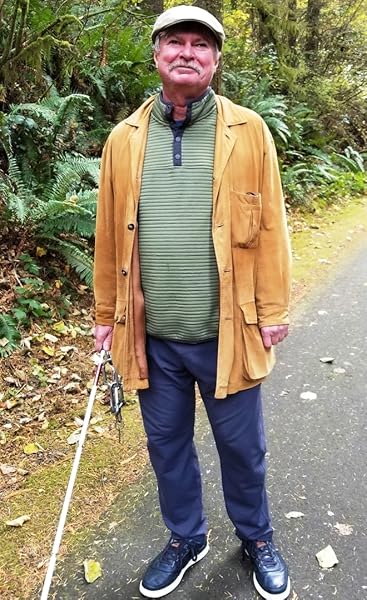
Interstellar Sex Wars and the Blind Detective follows a renowned blind private investigator who is drawn into a case in which the fate of sentient life hangs in the balance. What was the inspiration for the setup of your story?
There are two interconnected inspirations for the story. The first is to introduce a credible blind hero into popular literature. If I can inspire some young blind men and women to pursue professional success, good. The second inspiration is to challenge readers to think seriously about enormously important issues (within the context of an exciting sci fi/fantasy mystery). I think many folks in the modern world have lost their way. It is my personal belief that good and evil really do exist and that there are transcendent forces at work in our unbelievably complex universe. I also believe that certain animals will be intellectually augmented in the future and that it is possible that self-aware and autonomous artificial intelligence will be developed. Exploring the ethical and practical implications of these issues, without getting preachy, while keeping an exciting story moving along, is a project.
This book is filled with intriguing characters. What were some driving ideals behind your character’s development?
Well, the point of the blind hero is hopefully self-evident. Beyond that, since intellectually augmented animals are in our future, I am fascinated as to what they would be like. As a retired forensic psychologist with a specialty in neuropsychology, I thought it would be possible to imagine what it would be like for a dog, a porpoise, and a chimp to receive such augmentation. I believe that my characterizations of the augmented animals in my stories provides a credible description of their cognition, personality styles and relationships with human beings. And then there is the question: what on earth might a truly self-aware and autonomous AI be like? With that, much fun did I have though it could not avoid getting a little scary.
What scene in the book did you have the most fun writing?
With regard to “Interstellar sex wars and the blind detective” I most enjoyed the scene where the octopoids sing ‘amazing grace’ to their astounded human counterparts. In my second book, “Demons, the great white north and the blind detective,” my favorite scene was the debate in the cave concerning the existence of the soul between the humans, the intellectually augmented animals, the AI and, of course, the demon from hell. That debate includes info from Plato, Jung, parapsychic research and research on dreaming. It was a chore to write it while keeping the story moving, and all but one of ten reviewers thought it worked. You cannot please everyone.
Do you plan on writing more books in this universe?
I must write more books from this universe. It is far too much fun to stop now.
Author Links: Website | Amazon
Renowned blind, private investigator Peter Straw, of the “Third Eye Detective Agency,” assisted by his intellectually augmented guide dog, Watson, is initially retained by a victim of child abuse to aid her in the civil trial of her wealthy and powerful stepfather. In the midst of this investigation, because of a unique friendship between Watson and the first self-aware and autonomous AI to originate on Earth, Straw and his canine companion find themselves drawn into an interstellar intrigue in which the motives of two different alien actors are unclear and the fate of sentient biological life may hang in the balance.
Exotic locations, plots within plots and an unforgettable cast of human, intellectually-augmented nonhuman and inhuman characters provides the reader with a good old-fashioned mystery story on a believable future Earth. Recognizing that human history is characterized as much by the fantastic as the tragic, the reader is treated to a non-dystopian story full of surprises, dry humor and a thoughtful consideration of current and future moral dilemmas. Prepare for a story that will be as emotionally satisfying as it is thought-provoking.
It’s The Current News Stories

The Eagle Speaks follows a couple who sift through the chaos of a splintering small town to find out who is behind the plot to destroy it. What was the inspiration for the setup of your story?
It’s America’s story. It’s what we grapple with every day—the systems in this country that favor some and disfavor others and our inability to talk about inequality objectively and make progress and change. It’s the current news stories. It’s my own experiences as a woman and the white half of an interracial couple for five decades and what I’ve learned in those roles.
Lester and Marian Greene are intriguing and well-developed characters. What were some driving ideals behind your character’s development?
Marian is an optimist. No matter how bad it gets, and she’s seen and experienced a lot, she clings to the hope that the pendulum will swing toward good, justice, unity, and equality. She also loves Lester and witnesses his trauma and pain as a Black man, and she wants to make life better for him and everyone around her. She has a curious, intuitive mind and uses it.
Lester is driven by service to others. Even in the face of hatred and discrimination, he wants to serve people and his community, and he takes that role seriously. Even at risk of losing his life. Emergency workers have that kind of drive. He also grapples with depression, traumatic memories, and the darkness that many emergency workers carry within them and as a Black man in America who is well-acquainted with hatred, discrimination, and systemic racism. His love for Marian and his service to others may well be what keeps Lester going.
What were some themes that were important for you to explore in this book?
Race and gender equality. What equality looks like. The aftermath of violence. The imperfections of humans. How deeply rooted racism is in our history and how it survives and thrives today. Writing diverse characters who are not stereotypical and one-dimensional nor props in the story, but are real people with real emotions, thoughts, and actions.
What is the next book that you are working on and when will it be available?
The third book of A Cadence Mystery series is almost ready to be handed to my editor. It’s titled Stony Place and will be available in July 2023.
Author Links: GoodReads | Website | Facebook
The Novel Is About Time
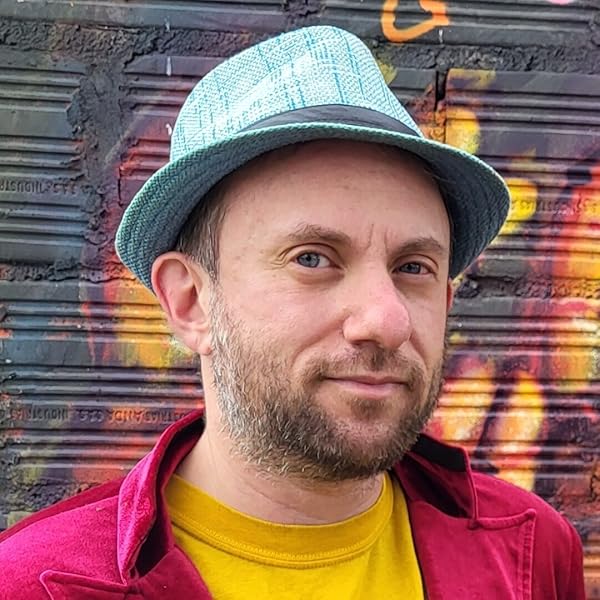
Most Famous Short Film of All Time is an enlightening book with thoughtful observations on life and insight into being transgender. What was the inspiration for the setup of your story?
Seeking ways to cut down my rough draft, I split the novel into 486 sections—one for each frame of the Zapruder film—and I limited each of those sections to 125 words. I marked each micro-section visually with a numbered frame from the film. Additional material didn’t fit within that structure. I found other ways to work in the rest of the material, so the novel remains long. That’s how the structure was set up.
Your characters were interesting and I enjoyed following them. What were some driving ideals behind your character’s development?
The narrator is treading water in his life when the story opens. Nothing much is happening for him. One day, he has a problem, and he realizes: The people in this system aren’t going to help me. This insight doesn’t merely open his eyes. His whole life accelerates. He has to find the way forward. Some ways back will have to close.
What were some themes that were important for you to explore in this book?
Replaying memories, ruminating on possibilities, dealing with ghosts, making decisions (or not), and what all of that tells us about our experience of time. The novel is about time.
What do you hope is one thing readers take away from your book?
It’s an opportunity to read a transgender character who’s dealing with things other than his gender transition. The narrator transitioned about 15 years before the main events of the story. Since he’s post-transition, the novel isn’t about his transition. It’s about other things he goes through as a result of being a person of transgender experience. I want to spark readers’ imaginations about certain life experiences and interpretations thereof that could be particular to transgender people and that we aren’t taught to see, appreciate, or respond to, partly because we tend to forget that post-transition is a real phase of life in which many people spend many years.
Author Links: GoodReads | Twitter | Facebook | Website



 LITERARY TITAN