Blog Archives
Triumphs and Tragedies
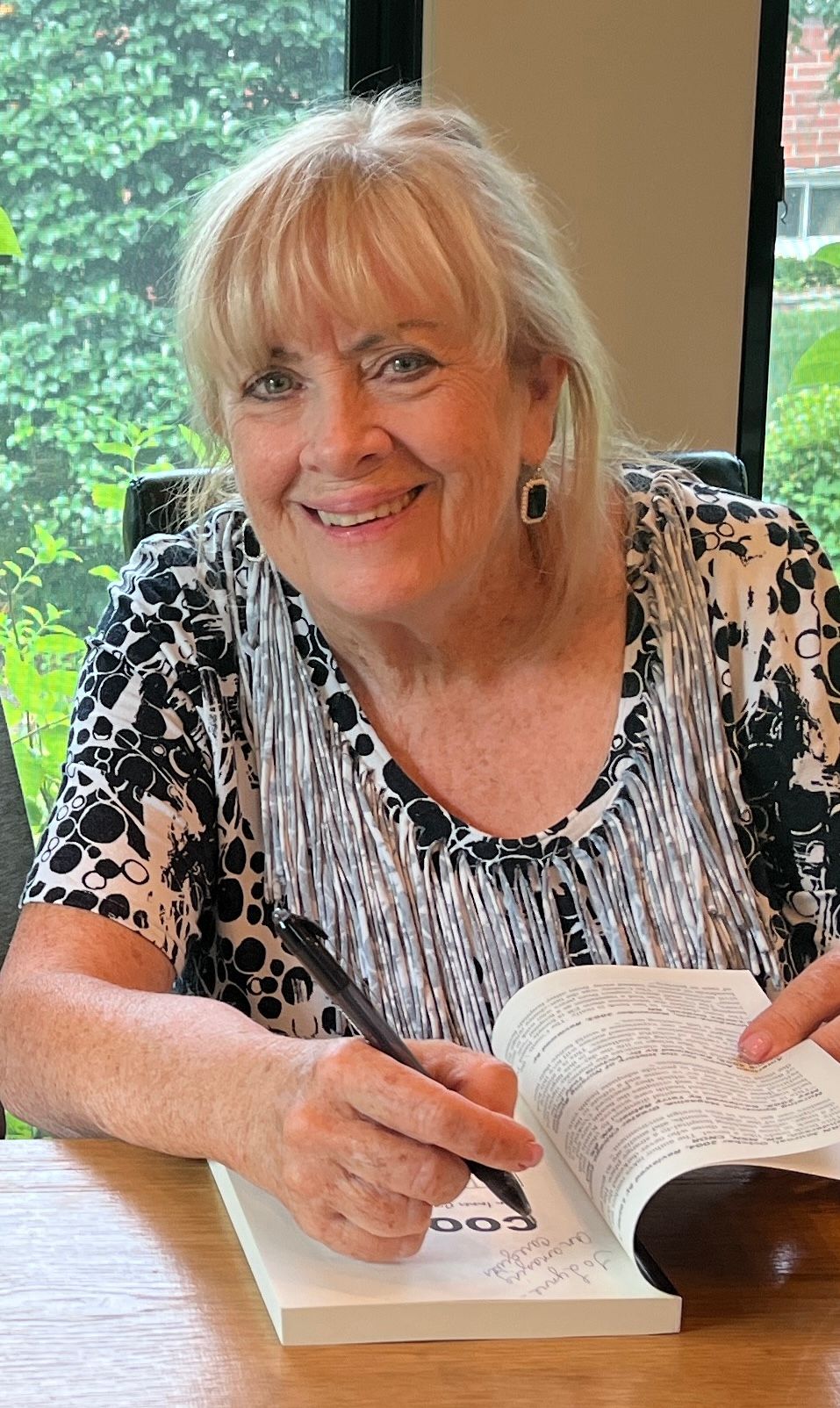
In War of the Words, you share your family’s experience building the company that shaped the modern office and the crushing blow that came with the Information Age. Why was this an important book for you to write?
It’s an untold story—that of the early days of tech innovation, before Silicon Valley. The earliest implementers of tech were secretaries who had to convert from typewriters to word processors. Ultimately, these women became the ones who transformed their offices into full-blown automated offices. Office automation elevated everyone. The crushing blow came to companies such as ours that couldn’t compete with Microsoft’s power and money. Few small companies and even some tech giants could.
I appreciate the candor with which you tell your family’s story. What was the most difficult thing for you to write about?
My memoir has twists and turns, triumphs and tragedies. My mother’s devastating illness, my father’s allegiance to a “new Age Cult,” and my brother’s alcoholism all contribute to the arc the story takes. The rise and fall of a most unusual company that was instrumental in the dawn of the Information Age.
What advice would you give someone who is considering writing a memoir? Why are you writing it?
To inspire, to heal? Give yourself time to reflect, to pause, as you write. Memoirs bring up emotions that have to be dealt with, and some can stop your progress. Allow time to heal as you write, for writing a memoir is a healing process. By sharing your story, perhaps others can heal or be inspired.
What is one thing you hope readers take away from your family’s experiences?
Take chances. Live a full and exciting life. Make a difference. Try something new. Be daring.
Author Links: GoodReads | Website | Amazon
Despite its clunky name, MASS-11 was a powerhouse–loaded with features, lightning-fast in performance, and trusted by a Who’s Who of the Fortune 500. Scientists, engineers, and office workers alike used it to document pivotal developments, including the Patriot Missile, the Hubble Space Telescope, the Alaska Pipeline, the first HIV test, and major pharmaceuticals like Zoloft, Zithromycin, and Prozac.
The Karels brothers, through their company MEC, saw the untapped potential of the VAX computer before DEC itself realized its impact on office automation. The author, a nurse by profession who joined the family startup from the beginning, offers an insider’s view of an industry undergoing rapid and radical change–an industry that would ultimately reshape society.
She reflects on the grueling world of office work before digital transformation, where secretaries typed on IBM Selectrics from nine to five, only to retype entire documents the next day for even minor corrections. With vivid detail, she captures a rarely told slice of history: the monochrome, repetitive rhythm of office life before the rise of word processors, email, fax machines, and the Internet changed everything.
Questions Remain Unanswered

- Genluminati follows a group of brilliant young scientists who invent a DNA-based religion as a cynical experiment—only to lose control of it when belief spreads, and a charismatic prophet emerges. Did the concept begin as satire for you, or did you always see it turning dark?
It started as an experiment as well. I was fascinated by cult and religious leaders, the power they wield over people, and what may be happening in their own hearts as events unfold, especially if they know that all they proclaim is not true. The weight of responsibility, the mental balance, and the unexpected consequences.
I didn’t know how things would turn out, but the characters started on an innocent enough path; however, power and curiosity are also powerful influences that lead to chaos.
The book asks whether belief can ever be “controlled.” What fascinates you about belief as a force?
Belief is a powerful force; it can inspire people to do amazing things they wouldn’t attempt without faith, but it can also lead people to do horrible things, including hatred, discrimination, and war. In Genluminati, I try to explore what people hungry for faith would accept and do in pursuit of their beliefs. What are the limits the “religious leaders” can cross, and what would they tell themselves?
How much did social media, viral movements, and online communities influence the story?
In Genluminati, social media helps build a community, amplify Genluminati beliefs, and strengthen its economic network. However, social media can amplify marginal social movements, synthetically foster a sense of belonging, and be dangerously exploited to manipulate and abuse people.
What do you hope readers are left thinking about once the book ends?
I would like people to think more independently about their own beliefs, not allow themselves to be manipulated. I would like people to consider the consequences of the pranks we sometimes pull, and, last, I would like us to think more about the responsibility for our own actions. I would like people to have enjoyed the thriller, but to know that, beneath Genluminati, many moral and ethical questions remain unanswered.
Author Interview: GoodReads | X | LinkedIn
What begins as a cynical experiment—a mix of curiosity, ambition, and a desire to stay connected—quickly grows beyond anything they intended. Their “innocent” idea spreads, gathering followers who take the message far more seriously than expected. A single misinterpreted “divine” insight sets off a chain of events that spirals toward real harm, forcing the founders to confront what they started and the responsibility they tried to ignore.
A story about science, belief, and the fragile line between fascination and fanaticism.
The book describes the overreaches of religious and governmental institutions that continuously endanger our ability to act as free, autonomous, and thoughtful individuals.
The Love For Truth

PHOENIXA: THE NEST is a story blending history and fantasy and follows a spirited girl growing up in turbulent time in China’s history. Where did the idea behind this novel come from?
I AM PHOENIXA. PHOENIXA: THE NEST is my personal, lived history, and a passionate initiation of dialogue between myself, my grandfather, and my ancestors—whose connection to me was, in essence, cut off by politics and by time. PHOENIXA: THE NEST can be viewed as a bioepic, in which a real-life story is elevated to mythic, historic and moral significance. I was born and raised in Beijing in Mao’s China, and with only a small dose of private education from my family- one that had been essentially torn apart – I was able to somehow survive the very sweet, sugar-coated terror of collectivism and brainwashing. I am eternally grateful to the motherland that has nurtured me. Yet there is something greater than the love for your motherland, that is the love for truth – truth that lies beyond familiar borders and comfort zones.
The idea behind this novel came from my midlife cry for roots. After leaving my job as a CCTV anchor/journalist in the late 1980s, and living an adventurous, self-exiled life in the United States for two decades, I grew increasingly restless, uncertain of who I was, or what—or where—home truly meant. After a willful search for Cheng family history – I stumbled upon my grandfather’s name – one that my father had hidden all his life, one that struck me like lightning: Cheng Zhenjun 程振鈞, a western-educated Chinese pioneer and leader who died on duty in 1932, advancing China’s modernization. In that moment, I trembled, shocked by the magnitude of family drama as well as the voice of history itself—muffled, suppressed, and long silenced. I felt betrayed, lied to by omission. Someone—or something larger—had cut off my roots, my very source of becoming.
I picked up my pen and my camera. What followed was more than a decade of research into the life of my grandfather and the forces that shaped him into a hero and a martyr, I have traversing not only the physical terrain of China, but also the inner fabric of Chinese civilization including Chinese mythology. Here you are, PHOENIXA: THE NEST, the first in PHOENIXA trilogy.
Looking back, I’ve come to realize that I paid a dear price to preserve my naïveté, my idealism, my conscience and, ultimately, my freedom as an individual human being. I am so thrilled today that I am now able to share “the pearl of life “with you – formed over the course of my entire life, but cultivated into shape in the solitude of the three-year COVID lockdown. I feel I have been metamorphosed through creating PHOENIXA and reinventing myself as an author and mythic thinker— and I hope my readers will be too, through reading and listening to this novel ( yes, as an audiobook, too), through pursuing something truly meaningful, something that allows each of us to make a contribution to this troubled yet beautiful world.
What is it that draws you to this period in history?
The dominant narrative throughline centers around PHOENIXA’s life inside CHENG COURTYARD during the onset of the Cultural Revolution in 1966 — echoes of which a careful reader will recognize not only in today’s China but also other parts of the world. It is the violent nature and its insidious chain of indoctrination that I defy, and from which we must break free; PEACE – world peace – must begin with inner peace. But how does one attain inner peace as an individual? Let the ancient wisdom of Chinese sages guide you. The novel detours into, and occasionally references, several sub‑timelines, each designed to illuminate the depth of Chinese culture, history, and philosophy, which runs at the core of Cheng values and education. Some explore the dynasties and the Enlightenment of the early twentieth‑century Republic of China; others drift into the timeless, fantastical realms of the Chinese Phoenix and other magical beings. My hope is to lift the spirits of readers, guiding them to navigate this troubled world. Glide with me, and soar on the wings of a child’s imagination!
What was your writing process to ensure you captured the essence of the characters?
As the Cheng family historian, I have devoted years to meticulous research on my grandfather’s life—his struggles, his achievements—and the tumultuous era he lived in: China at a crossroads in the late 19th and early 20th centuries, transforming from a wounded, fragile imperial dynasty into a young, hopeful, and vigorous Republic. I am fortunate to read both simplified and traditional Chinese, as well as classical Chinese. I have delved deep into the layers of centuries, savoring the flavor and absorbing the nutrients of Chinese antiquity. My research will continue across China, the United States, and soon, Europe, in preparation for the PHOENIXA Trilogy.
Writing, to me, is confessional and a deep act of soul-searching—therefore, an act of courage. You cannot lie; you must lay yourself bare in order to connect with, and perhaps even be rescued by, a higher power—be it your ancestors, a guardian angel, or God.
Can fans of PHOENIXA: THE NEST look forward to a follow-up soon? Where will it take readers?
Yes, I have created my life’s work and brand: PHOENIXA or P.H.O.E.N.I.X.A. Each acronym has its distinct meaning. please discover yours and share with me.
Here is the PHOENIXA Trilogy: THE NEST, THE FLIGHT, and THE RETURN.
From the enchanted childhood and coming-of-age in tumultuous China in PHOENIXA: THE NEST, to the evocative youth odyssey in America in PHOENIXA: THE FLIGHT, and onward to her middle-age return confronting the dark fate of Cheng Courtyard and enacting a Cheng ancestral resurrection, Cheng continues her bioepic fantasy storytelling deeply rooted in her intimate personal adventure and the unflinching history of China.
Author Website
A Mystical Quest for The Cheng Legacy
A novel
by J.J. Cheng
Phoenixa, rising from the ashes of her ancestors, the six-and-half-year-old kite-flying, Phoenix-riding, Chinese girl embarks on a mystical journey into China’s tumultuous past searching for her Renaissance Grandpa who read her Shan Hai Jing, The Lore of Mountains and Seas, seeking cures for human greed.
From the interior of a traditional Beijing courtyard to the tip top of a giant Wu Tong Tree, Phoenixa found her nest being moved from safety to danger. Fortunately, the enduring incandescent Feng Huang, the Phoenix, has kept her amused and protected as a secret guardian from a relentless hidden Red force ready to strip her home bare.
Written in the genre-defining style now called“mystical realism”, Cheng tapped into the subconsciousness and beyond in search of human goodness. Cheng’s debut novel is stunningly visual, fantastical, dreamlike yet achingly real, demystifying China, as it offers a luminous insider’s view on why and how the dragon roared.
Phoenixa: The Nest, A Mystical Quest for the Cheng Legacy, is a story of courage, of hope, of madness, of redemption, of humanity at the brink of self-destruction.
The Moving Finger Moves Again


The Moving Finger Moves On is a cozy mystery set in Lymstock, a small English village where gossip travels faster than the post and murder feels almost indecently out of place. Told in first person by Jerry Burton, it follows his life with his fiancée Megan after the events of Christie’s The Moving Finger, as they settle into village routines, plan a wedding, and try to recover from past trauma. That quiet life is disturbed by a new death at a house party, an old poison, and a fresh tangle of suspects, with Miss Marple arriving as the calm, watchful centre of the storm. Underneath the whodunit puzzle, the book explores relationships, especially Megan’s growth, Joanna’s marriage, and Jerry’s slow realisation that love is not the same as possession.
The writing keeps the easy, conversational tone of a Golden Age detective story, yet it slips in modern touches, like Megan’s frustration with dresses that lack pockets or the way people talk about investments and cruises. I liked being inside Jerry’s head: he is observant enough to carry a mystery plot, but also flawed and a bit blinkered, especially about Megan. The choice to let him narrate a cozy mystery means we get more emotional texture than pure puzzle, and I found that grounding. At the same time, the prose stays simple and clear, so the pages move quickly. I never felt lost in the cast, even though village mysteries can sometimes turn into a blur of names and motives.
What I liked most was how the book uses the tools of a classic cozy mystery to talk about identity and agency. Megan’s love of Latin and maths is not just a quirk; it becomes a way to show her sharp mind, her right to a life beyond “the girl who was once in danger,” and her shift into someone who goes to university and studies what she loves. The kitten, the extra dog lead, the broken and un-broken phone lines, even Jerry’s dream of birds and needles, all feel like gentle symbols of control and freedom, of who is being led and who holds the lead. I enjoyed how Miss Marple recognises Elsie’s performance as a kind of acting, almost like costume changes in a village play, and how that idea of “who you are in public” runs through the book. The story balances comfort and tension in a way that feels right for a cozy mystery.
The mystery is satisfying, the clues are fair, and the solution fits the emotional logic of the story as well as the facts. If you enjoy classic whodunits, village gossip, and Miss Marple quietly seeing everything, this will feel like a warm return to familiar ground. And if you like your cozy mysteries to come with a real emotional arc, especially around a woman finding her footing and a couple learning to love each other as equals, this book is very much for you.
Pages: 78 | ASIN : B0CW1KL6LY

Ballot: When Fate Called Their Name

Ballot: When Fate Called Their Name follows Mitch Masters, a young Sydney speedway rider, and his mates Greg, Kiwi, and Jay after the birthday lottery drags them from hot flats, cold beer, and rock gigs into national service. Author Dan Mulvagh walks them through call-up, rough training at Kapooka, and tense jungle patrols out of Nui Dat, then jumps forward to a later life of scars, secrets, and Cold War scheming as Mitch and Greg head into Russia and Finland to help the long-lost Jay and his wife Mooi escape. By the time the afterword rolls around, the men sit with damaged bodies, messy loyalties, and a government medal that feels both overdue and hollow.
I really enjoyed how the author handles the nuts and bolts of the story. The opening ballot scene in the stuffy flat hooked me immediately; that jittery wait in front of the telly felt real and a bit sickening. The training chapters have a grim, almost slapstick rhythm, with buzz cuts, shouted insults, and blokes trying not to stuff up kit inspection, and I could almost smell the boot polish and sweat. Out in Vietnam, the writing sharpens, and the jungle patrols feel cramped and tense, full of talk about booby traps and the weight of the SLR that suddenly makes sense when bullets might come from anywhere. The later shift into espionage, Russian factories, and snowy border runs surprised me at first, yet the tone stays grounded in the same easy banter and practical thinking, so it holds together. The prose is plain and punchy, heavy on dialogue, heavy on Aussie slang, light on fancy description, which suits the characters and keeps the pages moving. The tone is consistent and confident, and it carried me through a long story without dragging.
The book keeps circling fate and choice, that simple birth date that yanks some kids out of bands and beach culture and drops them into someone else’s war. The ballot, the protesters, the “Save Our Sons” mums at the depot gate, and the later debate over medals all push the same question: who gets to decide what counts as service and sacrifice? Mitch’s anger at the medal offer and Greg’s pride in the same bit of metal gave me a real jab in the ribs because both reactions feel fair and human. Jay’s path hit me hardest, from surf club golden boy to missing in action, then Soviet asset, then possible traitor who just wants to stand on a beach again with his board and his wife. The book never fully cleans that up, and I liked that unease; it kept me thinking about how war twists people, not just bodies but stories and paperwork and memorials. There is a quiet rage under the humour, aimed at lazy bureaucracy and political spin, and it left me feeling sad, angry, and oddly hopeful all at the same time.
I came away feeling like I had spent time with a real group of mates, not perfect heroes, just stubborn, funny, damaged men trying to make sense of what the ballot did to them. The mix of Vietnam combat, home-front politics, and later spy-style adventure will work well for readers who enjoy war stories with strong characters and clear, down-to-earth writing rather than high literary polish. If you are interested in Australian history, conscription, or how national decisions land on individual lives, this book is worth your time. I would happily recommend Ballot as a vivid, heartfelt tale of fate, loyalty, and the long shadow of one small numbered ball.
Pages: 368 | ASIN : B0FV8G8QXS
Dominion: Ascension


Dominion: Ascension drops readers into a future where a woman-led government controls every part of life and men are sorted into rigid castes by a brutal testing system. We follow Dani Matthews, an investigative reporter who cannot let go of the lies around her father’s death or her mother’s role in building Dominion’s power. As she digs, she crosses paths with rebels, hidden sanctuaries, and the underground world of men who are bred, bought, and discarded. Her journey pulls her away from the glitter of elite parties and into tunnels, camps, and secret havens, then sends her back again with new eyes. By the end, Dani has to decide what kind of truth-teller she wants to be, what price she will pay for that choice, and how far she will go to expose the system that raised her and used her.
I felt the world of Dominion in my gut. The Singletary bands around the men’s necks, the polished parties full of “Seducers,” the Dissident buses packed with bodies, the cold efficiency of Illegis testing, all of it hit me with a mix of fascination and dread. The alternating focus on Dani and her mother, Linda, kept pulling me in two emotional directions at once. I kept judging Linda, then catching myself, then feeling a twist of pity when the book showed the ruins she lived through after the war. At the same time, Dani’s voice felt raw and human, not a perfect hero, just a stubborn, sometimes messy young woman who loves her father’s memory and hates what her mother built. I liked that the book let her be angry and scared and selfish and brave in turn. By the time she reached Haven and started to see what resistance actually costs, I felt that familiar tightness in my chest, the one I get when a story stops being “cool dystopia” and starts feeling a little too close to home.
On the craft side, the book was well written. The prose can be lush, even theatrical, and at times it lingers on description a bit longer than I liked, especially early on in the gala scenes and some of the world exposition. Still, those same details created a strong sense of place, and the visual images stuck in my mind. The emotional beats between mother and daughter worked very well for me. Their arguments about safety, control, and sacrifice gave the book its heart. The romantic thread has real chemistry and some scenes that feel both tender and intense, though now and then it nudged the story toward drama when I wanted to stay in the political tension. The ending, with Dani sitting in front of her article and deciding whether to send it, gave me a sharp jolt of excitement and frustration at once, because it clearly sets up more to come rather than tying everything off in a neat bow.
I would recommend Dominion: Ascension to readers who enjoy character-driven dystopian fiction with a strong emotional core and who do not mind some darkness in both theme and imagery. If you like books that flip power structures and ask what happens when the oppressed become the rulers, this will hook you. It is a good fit for fans of speculative stories that blend politics, family tension, romance, and questions about justice into one fast-moving arc. Book clubs that want something to argue about, especially around gender roles and state control, will have a field day with this one.
Pages: 354 | ASIN : B0FGZMLYCM
The Condemner: Arisen

The Condemner: Arisen is a dark fantasy novel that drops you straight into a world already splitting at the seams. It opens with Snip, a wiry and stubborn survivor, returning to a growing settlement ruled by his old friend Bobby, now “King Robert.” Their relationship is complicated, built on shared history and shaky trust, and things fall apart fast. A single moment of violence sends Snip running for his life, hunted by people who once saw him as family. From there, the story shifts to his struggle in the northern kingdom of Fanlon, where he gets tangled in cults, crime, and a hulking miner named Laf who saves him for reasons that feel as mysterious as they are unnerving. It’s gritty, moody, and full of momentum.
The writing has a lived-in roughness that good dark fantasy thrives on, but it also lets in these brief moments of softness, just enough to make the hard edges hit harder. Snip’s voice in particular is addictive. He’s flawed, cynical, sometimes funny without meaning to be, and painfully honest. His reactions feel grounded, even when the world around him swings between political ambition, daemon worship, and back-alley chaos. The author’s choice to center such a small man in such a dangerous world works beautifully. It makes everything feel bigger, heavier, more threatening. Even the early warehouse scene with the plague-masked revelers lingers like smoke in the lungs, strange and unsettling without feeling forced.
What surprised me most was how often the book made me feel two things at once. Curiosity and dread. Warmth and irritation. Admiration and exhaustion. The genre label here is firmly dark fantasy, but it’s got a human pulse running through it that keeps it from sinking into hopelessness. The ideas around power, loyalty, and the cost of survival show up in small gestures as often as in big confrontations. And whenever the world starts to feel too large, too mythical, the story tugs you back to the intimate perspective of someone who just wants to make it through the day with his ribs unbroken and his conscience mostly intact. That balance kept me turning pages.
If you like character-driven dark fantasy with grit, tension, and a touch of the uncanny, this book will be right up your alley. It’s especially suited for readers who enjoy morally tangled protagonists and worlds that don’t pretend to be kinder than they are. I’d recommend it to fans of grimdark and anyone who appreciates a fantasy story that feels personal even when the stakes swell to the size of nations.
Pages: 322 | ASIN : B0GC8R8LXF



 LITERARY TITAN