Blog Archives
Leftwich Blues/Elfwitch Rules
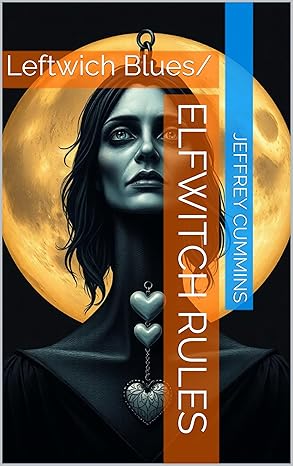

Leftwich Blues/Elfwitch Rules is a sweeping fantasy tale woven into the struggles of a fractured family. It starts in myth, with vows made under the moon and curses that shake kingdoms. Then it jolts into the present, landing in the Ozarks with two twins caught in the fallout of their parents’ broken marriage. From there, the story keeps folding back and forth between a mystical Realm of hunters, owls, and ancient metals, and the harsher modern reality of courtrooms, social workers, and family strife. The twin narratives eventually bleed together, blurring what is real, what is allegory, and what is memory.
The writing bounces between old-world fantasy language and down-to-earth small-town chatter. That clash can be jarring, but it also gives the book a unique energy. One minute I was caught up in quicksilver necklaces glowing under a full moon, the next I was listening to kids argue about video games and crackheads. Sometimes I found myself laughing at the dialogue, other times I felt weighed down by how bleak it could get. The swings were sharp, but they kept me reading.
What hit me hardest wasn’t the magic or the battles. It was the raw mess of family life. The fights between Mom and Dad felt too familiar, too close to real arguments I’ve overheard in my own life. The kids’ tug-of-war over which parent to trust felt honest, painful, and sad. The fantasy parts worked like a mirror, twisting those personal struggles into epic stakes. When the twins lost their footing in the “real” world, it was like the Realm itself was cracking apart. That connection between worlds gave the story its punch.
The sudden shifts might throw some readers. But for people who like fantasy mixed with real grit, who don’t mind faith and scripture tucked into the corners, and who can handle a story that cuts close to the bone about family, it’s worth the ride. I’d recommend it to readers who like their myths messy, their heroes flawed, and their stories willing to sit in both wonder and heartbreak.
Pages: 435 | ASIN : B09CD1D958

Breaking Barriers

Breaking Barriers follows Declan and Alex, two people carrying the weight of their pasts and trying to figure out what kind of future they deserve. Declan has sacrificed his dreams for family, building walls around himself while trying to find meaning in his work and his life. Alex is fiery, bold, and fiercely independent, but underneath that strength is a woman scarred by her own struggles and wary of letting anyone close. When their lives collide in what begins as a one-night encounter, they’re both unprepared for the connection that sparks. What starts as chemistry soon turns into something deeper, tangled with family ties, secrets, and the need to finally stop running from themselves and each other.
This book left me feeling a lot of things at once. I’ll be honest, at times I wanted to shake both Declan and Alex for being so stubborn, but I also couldn’t look away. The writing pulls you into their heads, showing not only the heat between them but also the doubts and scars they’ve carried for too long. Author Nikki Lamers has a knack for making the banter sharp and funny, then hitting you with a moment of raw vulnerability that catches you off guard. Some of the dialogue feels a little over the top, but in a way, it matches the heightened emotions of two people who’ve lived with walls up for years. I liked how messy and imperfect they were, because it made them feel real.
I liked the push and pull between independence and needing someone. Alex especially jumped off the page for me. Her mix of sass and fragility, the way she covered hurt with boldness, hit close to home. Declan, too, felt achingly human in the way he struggled between being the family protector and admitting he wanted more for himself. The book isn’t shy about showing both their flaws, and that’s what made their eventual growth satisfying. It’s not just a romance. It’s about forgiveness, breaking cycles, and finding the courage to build a life you actually want instead of one you think you’re stuck with.
Breaking Barriers is perfect for readers who want more than just a love story, who want to see characters wrestle with family, identity, and their own fears. If you like strong heroines, protective but flawed heroes, and romance novels that balance heat with heart, this one is worth picking up.
Pages: 352 | ASIN : B0F9Z4FQDS
Darkness and Blight

The story follows Lydarc, a shaman whose survival in the hostile wasteland of the bitterwood feels both desperate and defiant. Her battles with carrion ghouls, her visions, and her fraught ties to her tribe form the beating heart of the book. Alongside her are figures like Wayland, Rapha, Leisil, and Sitka, each carrying their own griefs and secrets. The novel shifts between past and present, weaving together brutal survival, strange magic, and an undercurrent of looming doom. It is a tale drenched in blood, pain, and flashes of tenderness, set in a world teetering on collapse.
The writing is harsh and unflinching, sometimes even grotesque, but it never feels hollow. Author Dap Dahlstrom has this way of dropping you right into the mud and gore, then undercutting it with dark humor or an intimate confession. I loved how Lydarc’s voice carried such bitter resilience, even when she teetered on madness. The story doesn’t shy away from the ugliness of survival, and I enjoyed that. Sometimes the violence was relentless. Every chapter bleeds. Still, I couldn’t look away.
The ideas behind the story fascinated me. The notion of peri-souls and spirit animals, the fractured world of “afterarth,” and the endless tug-of-war between survival and humanity gave me plenty to chew on. Sitka’s transformation into the bear was one of my favorite moments, both raw and oddly uplifting. And Leisil’s chapters hit me hardest. Her childhood trauma, her brutal induction into the Resistance, all of it felt painfully real under the fantasy trappings. I found myself angry, sad, and unexpectedly protective of her. The slang language was sometimes heavy, but it added character to the dialogue.
By the end, I came away impressed and strangely energized. This book is for readers who don’t mind being dragged through blood, madness, and despair if it means glimpsing strange beauty on the other side. If you like your fantasy dark, twisted, and uncompromising, you’ll find a lot here. I’d recommend it to fans of grimdark fantasy.
Pages: 372 | ASIN: B0FGK5NFPN
The Savior/Shadow Principle: A Self-Help Technique and Philosophy Using Archetypes
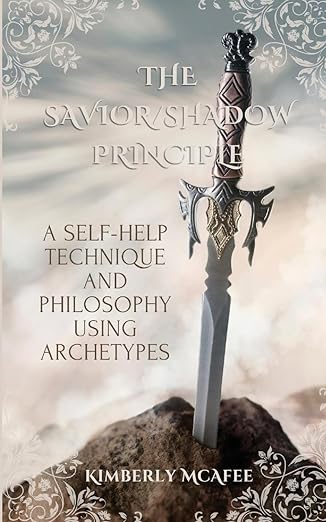
The book is both a personal memoir and a guide to a self-help technique the author calls the Savior/Shadow Principle. It blends mythology, psychology, and spirituality, drawing especially from the figures of Hekate and Jesus. McAfee takes readers through her journey from traditional Christianity into ChristoPaganism, then back into a reimagined Christianity. Along the way, she shares how she developed a meditative practice that uses archetypes of light and shadow to encourage self-honesty, growth, and healing. The book weaves in Jungian psychology, mythological parallels, and personal reflection, while offering readers practical ways to explore their inner lives through story and symbol.
I didn’t expect the writing to be so approachable. The author’s voice is warm, even when she’s discussing heavy topics like shame, fear, or midlife crises. She doesn’t hide behind theory or pretend to be an expert. Instead, she writes like someone who’s been in the dark, stumbled around, and finally found a lantern worth sharing. That sincerity resonated with me. At times, the language wanders, especially in sections heavy with history or myth, but that wandering matches the subject. The whole book is about exploration, so the digressions feel more like trails branching off a main path rather than distractions.
I loved the emotional undercurrent. I could feel the author’s vulnerability, her wrestling with faith, and her refusal to gloss over contradictions. That gave the philosophy weight. When she described Hekate lighting the way through shadow, or Jesus pulling someone into the light, it didn’t read like fantasy; it read like a relatable metaphor.
This isn’t a book for someone who wants a neat formula or a rigid system. It’s for seekers. It’s for people who are tired of shallow answers and who want to dig into the messy mix of spirituality, psychology, and story. If you’ve ever felt caught between belief systems, or if you’re curious about how myth and archetype can help uncover truth about yourself, this book has something to offer. It’s personal, heartfelt, and comforting.
Pages: 174 | ASIN : B0F8PLQMJB
Black Glove
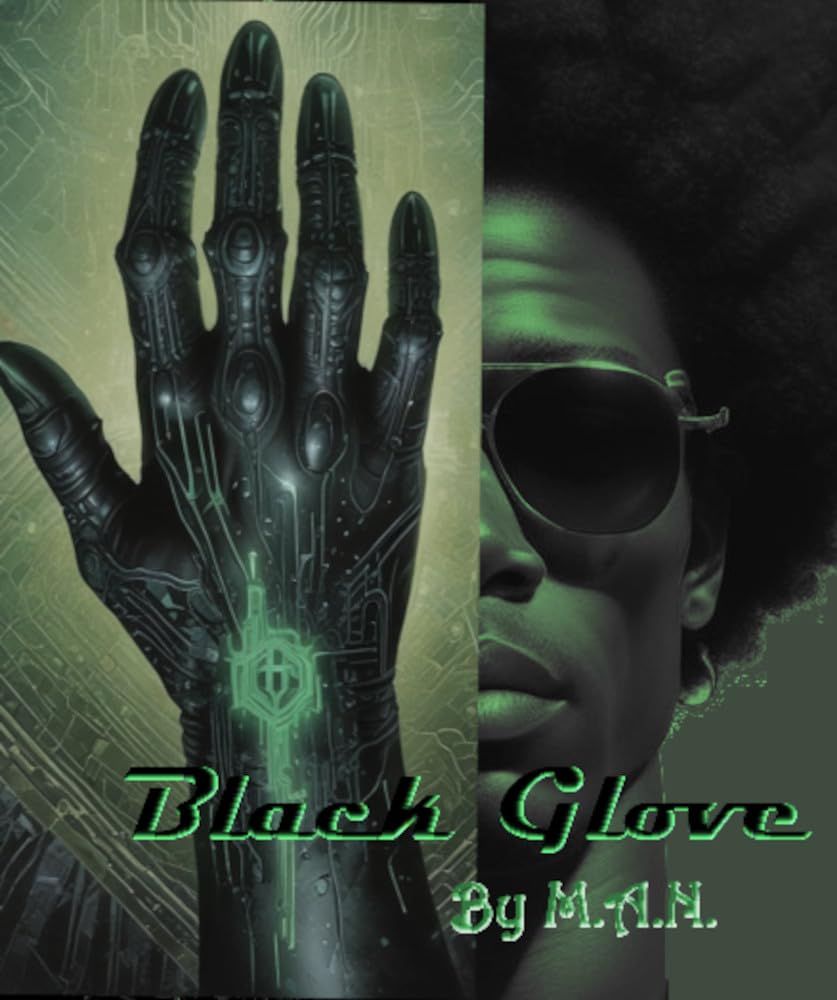

The novel Black Glove by M.A.N. is a sprawling tale of vengeance, power, and the blurry line between justice and corruption. It follows Leroy Black, a young man marked by loss, who grows from grief into a relentless vigilante. His brother is murdered by gang members, his father killed unjustly by police, and these tragedies set him on a lifelong path. Trained in every art of combat, from boxing to martial arts to military precision, Leroy reinvents himself as a force of wrath against gangs and systemic oppression. Parallel to his story is the rise of King Solomon, the leader of the Dynamite Flash, a militant group caught between fighting oppression and becoming what they despise. The two figures move through a world where brutality and ideals clash, raising the question of whether salvation can ever be born from violence.
This story is a whirlwind of action and anger. The fight scenes are long, detailed, and absolutely wild, sometimes almost cinematic in their intensity. At times, I found myself grinning at the sheer audacity of the battles. The writing doesn’t hold back. It’s raw and brutal, sometimes over-the-top, yet I could tell the author poured a lot of heart into balancing the spectacle with deeper themes. I liked the tension between Leroy’s personal mission and the wider chaos around him. He’s both a hero and a man broken by grief, and that contradiction kept me hooked. At the same time, there were stretches where the detail of combat overshadowed the emotional core, and I found myself wishing the quieter, human moments had more room to breathe.
I admired the ambition. The book isn’t afraid to dive into uncomfortable territory. It doesn’t gloss over systemic failures or the ways power corrupts, and it asks hard questions about what happens when resistance begins to mirror oppression. King Solomon, in particular, fascinated me. He’s charismatic and ruthless, convinced that dirt must be fought with dirt. I felt uneasy whenever he spoke, which I think was the point. The moral ambiguity, paired with the relentless energy of the prose, gave the story a jagged edge.
Black Glove is a furious book. It’s for readers who want action mixed with philosophy, who don’t mind a story that gets messy and brutal to make its point. I’d recommend it to people who enjoy gritty superhero stories, vigilante epics, or urban tales that don’t shy away from politics and pain. It’s not a light read, but if you’re ready to ride through chaos, it has a lot to offer.
Pages: 260 | ASIN : B0FDTRSBZH

Once Upon a Safehouse

The story begins in Dobbs Ferry, New York, in the early 1960s, when Ivy Halliday receives a letter out of the blue from Argentina. Her uncle, a wealthy banker, has passed away and left her a sprawling fortune, a mysterious house called Casa Florencia, and a legacy she never expected. What starts as a thrilling surprise inheritance quickly spirals into something far more complex. As Ivy, her husband Glenn, and their two children travel to Buenos Aires to claim the estate, they’re drawn into a web of secrets connected to the aftermath of World War II, old family mysteries, and unsettling ties to the shadowy presence of Nazis who fled Europe after the war. The book unfolds with a mix of domestic charm, suspense, and lurking danger that creeps in through hidden doors, whispered rumors, and strangers who may not be what they seem.
I found myself pulled into this one almost immediately. The writing has a warmth to it, especially in the early chapters with Ivy’s family, that made me want to sit at their breakfast table and listen in. The descriptions of Buenos Aires were lush and inviting, and yet every time the narrative turned toward the darker threads, like the Nazi fugitives, the shadowy history of Casa Florencia, I felt my stomach tighten. That balance between light and heavy is tricky to pull off, but Quinn manages it well. At times, the prose leans a little old-fashioned, but that suits the period setting. I liked that it didn’t try to be flashy. It let the story carry the weight. The mystery around the wallpapered door in the mansion had me grinning like a kid, and the way tension built slowly but surely kept me hooked.
What really got me, though, was the emotional undertone of Glenn’s memories from the war. Those scenes were haunting, and they gave the book a gravity I wasn’t expecting. I could feel his reluctance to face Argentina, knowing the place had become a hiding spot for men he once fought against. As someone who loves mysteries, I appreciated that the danger didn’t just come from some masked villain lurking in the night but from history itself pressing down on the present. The family scenes sometimes lingered, and I caught myself itching to get back to the secrets. But when those secrets came forward, they delivered. The mix of personal drama, historical shadows, and good old-fashioned hidden-room intrigue made for a rewarding read.
Once Upon a Safehouse is the kind of book I’d recommend to anyone who enjoys mysteries laced with history, family drama, and just a touch of gothic atmosphere. If you like stories about ordinary people stumbling into extraordinary secrets, this will hit the spot. Fans of historical mysteries or readers curious about how World War II echoes could ripple into later decades will find plenty here to sink into.
Pages: 174 | ASIN : B0FPHQG2CQ
My Own Take On Elden Ring

Mercy: Tears of the Fallen follows a cast of broken warriors, seers, rebels, and rulers as they claw through violence, political upheaval, and their own personal demons. What was the inspiration for the setup of your story?
The primary questions I asked myself when setting out to write this story were:
What if Aragorn lost everything after the War for the One Ring?
And what if Sam had to kill Frodo in order to save Middle Earth?
Taking those into my story as I explored my newly crafted world helped me identify key themes and modes of that very exploration.
I find the world you created in this novel brimming with possibilities. Where did the inspiration for the setting come from, and how did it change as you were writing?
Inspiration for the setting came primarily from Elden Ring. There are so many deeply minted stories hidden in the Lands Between. And I truly wanted to create my own world with Elden Ring being a primary influence. I played a lot of World of Warcraft growing up, and so geographically as far as the continents and factions/races are concerned, one may find several similarities or at least be able to identify the inspiration there.
As far as the darkness of the setting goes though, Elden Ring has to take the biggest nod.
When creating the dynamic characters in this novel, did you have a plan for their development and traits, or did they grow organically as you were writing the story?
I had a plan for where each of the main ones started and where I wanted them to end up at the end of the four-volume epic. Other characters introduced themselves to me and I decided to explore their personalities and thoughts and mannerisms to really bring the life out of the story. Everybody is the hero of their own story—and I felt the need to put that on full display each time I entered a character’s perspective.
Is this the first book in the series? If so, when is the next book coming out, and what can your fans expect in the next story?
The next book (MERCY: ILL IS THE FATE) is slated for release on March 31st, 2026. The cover reveal is September 25th. In this second installment, fans can expect a close-out of a lot of the questions I raised in the first volume.
This being a four-volume series, books one and two serve as a single “arc” just as books three and four will serve as the second “arc” of the story. And I’m very excited to share what’s in store (Already 10,000 words into drafting the third volume). And if anybody is curious as to more of the story, I have the “Blood Rebellion” Short story and the first four chapters of Tears of the Fallen available through my newsletter on my website!
Author Links: GoodReads | X | Instagram | Website
A paragon left for dead, Alevist Lightseeker sought peace—but peace had other plans.
Thirty four years past, the blade he buried must rise again. As he hunts the ones who shattered his world, another exile awakens—Erevayn. A man drunk on grief and bound by blood. A minstrel must bring the two together in a war against a rising ill fate.
Viyala, a lost love, unexpectedly returns and sparks a fire in Erevayn—but will it be enough to quell his thirst for vengeance? And will the world unfolding around her offer the chance for the future she has long desired?
Salasmir, Blade of the Reckoning, must answer the call of duty once again.
Hayde and Neera, twins of the Stained, hunt for sacred artifacts for their false king. Steyvin and Ilatu must travel across the Sundered Sea in order to do the same, but for their once wise father—who holds damning secrets of his own.
The Tears awaken—and call to the broken.
Two men, one path, and no Gods left to help them.
Some martyrs stay dead. Others—become legend.
Resiliency and Strength

All She Knew follows a twelve-year-old girl who loses her mother suddenly, leaving her with chaos, confusion, and grief as she tries to navigate a new world in a new place she has no connection to. What was the inspiration for the setup of your story?
The inspiration for the story is my own. I lost my mother at a young age, and All She Knew is loosely based on my story. I didn’t have the opportunity to connect with other kids who had experienced a loss at that time. I wanted to provide a story that other children and those young at heart can relate to; to connect with the challenges the character goes through; to know they are not alone and can be ok through their journey.
What were some ideas that were important for you to personify in your characters?
I wanted to show the range of emotions Charity goes through and the different experiences she has. I wanted to show that it’s ok to laugh, cry, feel uncomfortable, angry and unsure as you go through grief. Grief isn’t linear, it has ups, downs, and sideways turns. I wanted to normalize this for children experiencing loss and different ways of navigating through it.
What were some themes that were important for you to explore in this book?
It was important for me to highlight the loneliness, sadness and confusion Charity goes through. When anyone loses a loved one, they can feel isolated and alone. For a child, those feelings are more confusing, hard to understand and work through. I wanted to connect and explore the different dynamics and struggles Charity goes through. The various ranges of her grief journey and trying to understand her new reality, who she is and will need to become after her loss. It was important for me to show all the different angles to her. I wanted the reader to connect with the character; to see themselves in what Charity is experiencing.
What is one thing that you hope readers take away from All She Knew?
I hope readers take away that they aren’t alone in their grief and they can get through it. I want readers to know, as is written in the synopsis of the book, “while tragedy can feel like a pit of turbulent emotions, resiliency and strength are always within us.”
Author Links: GoodReads
Charity’s life becomes a roller coaster. She’s lonely. She has to go through a grieving process she doesn’t understand. And in all of this she has to leave her home and move to a place she doesn’t feel connected to. It’s overwhelming. How is a young girl supposed to get through this?
In this powerful story, All She Knew looks at the human spirit to remind us of this important truth; while tragedy can feel like a pit of turbulent emotions, resiliency and strength are always within us.
A Finalist in American Book Fest 2025 American Fiction Awards which honors literary excellence.



 LITERARY TITAN