Blog Archives
Open the Mind of Some Poor “Nitwit”
Revolutionary Women A Little Left of Center, weaves together your personal history with your artistic, and ideological journey, starting with your early life in Toronto to your awakening as a gay artist and the experiences that shaped your identity and worldview. Why was this an important book for you to write?
“The book, Revolutionary Women, a Little Left of Center, is meant to be a work of revolution and revolt. Rejecting stale outdated notions and inspire people to think and see things differently.”
“The old dysfunctional thinking wasn’t working and needed to be laid bare. I wanted to create humorous imagery for all people, who were craving “phycological relief” and “counter-balance,” to the endless outpouring of “agony” and “hate” from the “extreme right.” I wanted to lift up the “left” and show it too, was an important human ingredient.”
“Women, more often than not, embody the left; more subtle in tone, soft, gentle, caring, uncanny intuition, creative and intelligent. These are the same characteristics shared by artists, musicians, gay people and any intelligent free-thinking person. What’s needed is real acceptance by society at large of people who are different. The standing order from idiotic religious & xenophobic ideologies is…. “You’re different and our leaders are telling us who to hate & to join-in their agenda of taking power by suppression and annihilation of others.”
“Let’s look at it from a gay women’s point of view and learn to lean a little to the “left.”
Your book expertly blends memoir with satire, offering readers a dash of humor alongside serious topics that impact modern day women. What is one thing that you hope readers take away from your story?
“What’s happening in the United States right now, sickens and horrifies me. It is my heart felt wish to connect and ease the hearts that ache for the planet and all its living creatures.”
“The “Left” is often attacked, and certainly regarded as less important than the ideas associated with extreme masculine notions of the “Right.” The extreme right rigid binary people are stuck in their own conflict of what is right and what is wrong. Unfortunately, they’ve been misinformed.”
“So, let’s laugh in the face of the ridiculous societal norms. Lay bare the faulty logic in religious beliefs and open the mind of some poor “nitwit” saturated in bigotry and speak out for those who cannot!”
What part of the book did you have the most fun illustrating? Was there one particularly hard section?
“I had the most fun actually drawing all the illustrations. The first four illustrations really set the tone. Firstly, imagine a fantasy of women cleaning up a war scene in WOMEN DO ETHNIC CLEANSING. Or next, envision a 3,000-year-old scene, at the ancient monument STONEHENGE, where women are included in the construction and joke about a huge fear known to all mankind.”
“Thirdly, a reenactment of the famous first moon landing, with women astronauts in MOONWALK. And fourthly, I introduce the character of Mother Nature in the illustration called GOD AND MOTHER NATURE DO THE REVIEW.”
“I suppose THE PHOBE FAMILY was a particularly hard section to finish, as it took me 10 years to resolve the problem presented in THE PHOBE FAMILY and answer it in WHY MAKE IT LEGAL? In the “Phobe Family,” I wanted to hi-light the fear, isolation & denial families go through, when it turns out they have a Gay child. It’s funny but hints of dark undercurrents.”
What is the next book that you are working on, and when can your fans expect it to be out?
Work in progress.
Step into a world where sharp wit meets unapologetic truth. A collection of full color illustrations/cartoons delivers a fierce and funny feminist punch, from the absurdity of gender roles to the hypocrisy of historical myths. With a clever commentary of edgy humor, and a wink into gay culture. These pages don’t just make you laugh; they make you think. Whether poking holes in patriarchy, challenging religious relics or spotlighting modern day madness, these cartoons are radical in the best way. Some are satirical, some are heart felt and sincere. All of them are drawn with a love for justice a questioning spirit and a mischievous pen. Perfect for anyone who’s ever rolled their eyes at the status quo or laughed in its face..
Laura M. Duthie was born in Toronto. Attended the Ontario College of Art from 1976 to 1980. Studied Fine Art. Worked in Real Estate Graphics, Woodworking and Carpentry. Also worked in property management and Security. Recently retired to become a full-time artist.
About the Author:Laura M. Duthie was born in Toronto and studied Fine Art at the Ontario College of Art (1976–1980). Her diverse background spans real estate graphics, woodworking, carpentry, security, and property management. Now retired, she has returned to her true passion as a full-time artist—using her art to speak truth with humor and heart.
What Happens Next?
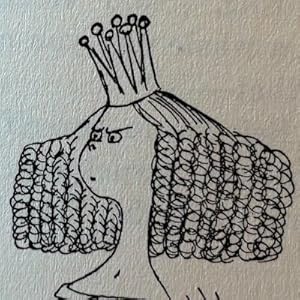
The Countess and the Spatula follows a disheveled noblewoman who finds solace in baking after her husband’s death until her peaceful life of flour and philosophy is upended by a melodramatic opera singer. What was the inspiration for the setup of your story?
The Spatula of Power came first. The characters of the countess; Claudio, the Man with the Black Mustache; and Isabella of Alberthane followed.
What inspired your characters’ interactions and backstories?
Once you know the characters, their interactions follow more or less logically.
I found this novel to be a cutting piece of satire. What is one thing that you hope readers take away from your novel?
I hope readers take away the desire to read the sequel and find out what happens to the countess next.
What is the next book that you are working on, and when can your fans expect it to be out?
The sequel to THE COUNTESS AND THE SPATULA is called NOBODY EXPECTS THE SPANISH INQUISITION. It’s about an inquisition that is also a soap opera.
Author Links: X
The Adventures of Belle Bear


The Adventures of Belle Bear tells the story of a cheerful polar bear cub who lives in snowy Mount Bearia with her loving grandmother, Baba Bear. Life is warm and cozy even in the cold. Then everything changes when they must move far away to sunny Calibearia. Belle Bear struggles with loneliness, new faces, and a school where she feels totally out of place. With Baba Bear’s steady encouragement and a magical new orange cape, she slowly finds her courage, makes friends, and discovers that who she is has always been enough.
This picture book captures that weird mix of excitement and fear that comes with starting over. The writing is simple in the best way. It feels comforting. I loved how Baba Bear’s words repeat like a song. It made me smile every time because it reminded me of the kind of thing a real grandma might say. The gentle rhythm of the book pulled me in. I didn’t expect to feel so moved by a polar bear pep talk, but here we are.
Moving, making friends, trying to fit in. It all felt honest. That moment when Belle Bear loses her cape on the journey felt symbolic in a way that surprised me. When the new cape appears as she speaks those affirmations in the mirror, it feels empowering. The story doesn’t pretend that being brave is easy, and I appreciated that. The artwork in the book is bright, friendly, and the characters are full of personality. Every character looks lively and expressive. The colors are soft but cheerful, which gives the whole book a cozy vibe. Each animal has its own charm. The style overall feels playful and comforting, perfect for a children’s book about friendship and courage.
By the end, I felt genuinely happy for Belle Bear. The book wraps everything up with this sweet feeling of hope, and it left me wishing every kid could hear Baba Bear’s nightly reminder. I’d recommend this book for kids who might be moving, starting a new school, or feeling unsure of themselves. Honestly, it’s also lovely for any child who just needs a confidence boost or a comforting story at bedtime. It’s warm. It’s kind. It’s the sort of book that stays with you.
Pages: 32 | ISBN : 1966786506

Skilled At Handling Lies

Angus Sliders follows Max as he struggles to remember what versions of history are real and what is made up from Mirror’s effects, causing history to fracture further, and possibly in irreparable ways. What was the inspiration that created the journey Max goes on in this book?
Max’s journey in Angus Sliders originates from a core question. What happens to a spy when his most trusted asset, his memory, fails him? The Mirror has always posed a threat because it warps time, but the greater threat is psychological. I aimed to examine how an experienced intelligence officer, skilled at handling lies, disinformation, and shifting loyalties, would react when his internal compass fails him.
The inspiration came from three connected ideas. The first is the fallibility of memory in espionage, where spies operate within constructed realities such as covers, legends, and half-truths. The second is what could be called post-war trauma. The fear of misremembering. Lastly, there’s the ethics of changing history. If altering one moment could save lives or end them, how does someone like Max resist the temptation or cope with the guilt of decisions made in unstable times?
So, his journey ultimately revolves around identity under pressure. Max becomes a man forced to navigate through multiple versions of his own past, aware that each step could deepen the cracks. The tension in Angus Sliders comes from whether he can hold onto the truth long enough to repair the present, or if the Mirror will completely overwrite him.
I find that authors sometimes ask themselves questions and let their characters answer them. Do you think this is true for your characters?
Absolutely. For me, that’s one of the engines behind the entire Sliders universe. I often start with a question I’m unsure how to answer, for example, what would it feel like to step into a version of history that remembers you differently? How much of your identity remains when memory becomes negotiable? What does loyalty mean when time itself can be rewritten? Then I stop answering as the author and begin listening to the characters.
Max and Alicia are both shaped by the worlds they navigate. Max, for example, rarely gives the easy answer; he provides the necessary one. Alicia responds with accuracy and restraint, revealing the cost of knowing more than she can admit. So yes, my questions start the conversation, but the characters finish it. That’s the value of writing in this universe: the characters live close to points of fracture such as history, memory, and time, and their answers often reveal truths I wouldn’t have reached on my own. In that sense, I’m not just writing them. I’m discovering what they’re willing to tell me.
I felt that there were a lot of great twists and turns throughout the novel. Did you plan this before writing the novel, or did the twists develop organically while writing?
The honest answer is both. I always start with a skeleton. The main plot points, structural pivots, and key revelations that the whole story depends on. In a book like Angus Sliders, where the narrative twists around time distortion and espionage, those anchors are crucial. Certain twists must happen for the story to have the right impact. But the best twists are the ones that seem inevitable in hindsight yet are surprising in the moment. They tend to happen naturally. They appear when characters react honestly to pressure. They surface when a secondary detail suddenly becomes essential. They occur when the logic of the world requires a new fracture in the timeline.
As I write, the characters often reveal parts of the story I didn’t fully see during the outline stage. Max, for example, rarely acts like someone who wants his arc to stay linear. The Mirror’s influence almost encourages unexpected angles. Alicia makes choices that challenge the neat structural plan, deepening the stakes. So, the process becomes a balance. Plan the structure and, to some degree, let the characters decide how to move through it. That’s where the twists come from. Structure supported by surprise, and surprise supported by character truth. If I’ve done it right, the reader feels both the inevitability and the shock.
Can you tell us more about what’s in store for Max Calder and the direction of the third book?
Without revealing too much, the third book pushes Max into the most dangerous territory he’s faced yet. Not because the enemies are stronger, but because the consequences of what he’s already survived finally catch up with him. Cuban Sliders, based in the Caribbean, leaves Max standing at the edge of a world where the Mirror has been dismantled, but its influence hasn’t disappeared – it’s just increased. The third book poses a more complex question: What does a man do when the past he fought to fix begins rewriting itself around him? Max has learned to navigate fractured histories. But now he must decide which version of himself he’s willing to live with. The third book will force him to confront timelines he thought he’d closed and choices that refuse to stay buried.
Max no longer knows if he’s fighting for the right side or if the right side even exists. If the first book broke Max, and the second tested him, the third questions whether he can survive the truth he’s spent his life trying to uncover.
Author Links: Facebook | Instagram | GoodReads | Website | Amazon | Apple Books
It’s 1948. Max Calder thought he’d escaped the Mirror’s grip. But when an encrypted MI6 radio message pulls him from the shadows, he finds himself trapped in a deeper conspiracy involving Kim Philby – one that spans timelines, and versions of himself he can no longer remember… or trust.
Partnered once again with Alicia Rayes, Calder races from Lisbon to London to Edinburgh to uncover Project Oracle, a secret MI6 experiment buried at a black site called ANGUS beneath a loch at Invershiel. There, an unstable Mirror still hums. And waiting for him is Variant 6F… a doppelgänger who might be the last warning before history fractures for good. As enemies close in and memories slip through the cracks, Calder must face the truth: the timeline isn’t broken – it’s being rewritten.
Angus Sliders is a taut, cerebral spy-fi thriller steeped in Cold War tension, noir grit, and mind-bending science fiction.
Blackstone’s Law

Blackstone’s Law follows Elijah Ramirez, a young defense lawyer in Buffalo who stumbles into the case of Antoine Blackstone, a man who has spent twelve years in prison for a murder he insists he never committed. The story jumps between Elijah’s legal battles, the corrupt legacy of Detective Ralph Silas, and the tension between Buffalo’s criminal justice system and the communities harmed by it. By the time the truth about the case cracks open, Elijah finds not only a path to freeing Antoine but also a way to find himself after years of chasing prestige instead of purpose.
Author DB Easton’s writing moves quickly and has this natural rhythm that makes even the heavier scenes easy to fall into. I found myself rooting for Elijah early on, mostly because he starts out kind of cocky and comfortable, then slowly realizes how deeply he has to dig to be the lawyer he always thought he was. The scenes with Antoine in the prison visiting room got to me. Antoine comes across smart, tired, hopeful, and angry, all at once. When he starts talking about his life before his arrest, I felt that familiar twist in my stomach that comes from hearing something unfair but completely believable. The author does a great job showing how a single crooked cop can tilt an entire system off balance and how a whole city learns to either look away or make noise.
The plot tightens in the last stretch, and I found myself flipping pages fast. The courtroom moments, the media swarming Elijah, the tension around the investigation, all of it pulls together in a way that feels cinematic without losing the human parts. Blackstone’s Law sits comfortably alongside legal thrillers like The Lincoln Lawyer and Presumed Innocent, but it feels more grounded in everyday struggle than either of those. Easton gives the courtroom tension you’d expect, yet the book carries the emotional weight and social awareness you see in novels like Just Mercy, only with a faster and more commercial pace. It also shares some of the gritty big-city texture of Richard Price’s work, though the tone is warmer and more personal. Overall, it blends the slick entertainment of popular legal fiction with the heartfelt bite of stories that deal with wrongful convictions and the communities shaped by them.
I’d recommend Blackstone’s Law to anyone who likes legal thrillers with a little heart, readers who enjoy stories about flawed people trying to do right, and anyone curious about how the justice system can bend when the wrong person gets power. It’s gripping, emotional, and surprisingly warm in all the right places.
Pages: 284 | ASIN : B0G4NT9PBB
Dali & Banksy’s Brave Bite Adventure

Dali and Banksy set out on a bright morning for what they call a Brave Bites Quest. Gram sends them off with a picnic full of surprise foods, and Pepere gives them a sweet little pep talk about being bold with new bites. It feels like the whole day is meant to nudge them into trying things they have never tasted before, and turning it into an adventure instead of a chore.
I had a warm and fuzzy feeling while reading it. Something about Gram waving from the window made me smile. The writing is simple and upbeat. It has this cozy family energy that feels familiar. I like how the story frames trying new foods as something exciting rather than scary. The tone is gentle throughout.
The ideas behind it hit me in a good way. I love it when a children’s book teaches something without sounding like a lecture. This one just lets the adventure do the work. Pepere’s line about every new bite making you stronger actually stuck with me for a second. It is a tiny message. It still feels encouraging. The illustrations help too. They add a soft, friendly look that makes the whole thing even sweeter.
I’d recommend Dali & Banksy’s Brave Bite Adventure to young kids who get nervous about new foods and to the adults trying to help them along. It is cheerful, cute, and easy to read. It would be great for preschoolers and early elementary kids who enjoy simple adventures told with kindness.
Pages: 36 | ASIN: B0FKTCRQRJ
This Is For MY Glory: A Story of Fatherlessness, Failure, Grace, and Redemption

This Is For My Glory is a memoir that follows Stephen B. Glenn’s journey from a childhood marked by fatherlessness and emotional chaos to a later life unraveling under the weight of financial collapse, legal consequences, and deep spiritual searching. The book moves between scenes of his upbringing, his complicated relationships with the various father figures who entered and exited his life, and the months he spent in federal prison. It’s a Christian memoir about failure, love, trauma, and redemption. It reads like a blend of personal testimony and reflective narrative, a kind of spiritual autobiography wrapped in a story of loss and return.
The author’s writing is unpolished in a way that feels relatable. He doesn’t hide the messy parts: the shame of prison, the generational wounds passed down through his family, the way fatherlessness shaped every corner of his inner world. What struck me most was how he layered scenes from prison next to scenes from childhood. One moment he’s describing the cold shock of learning the man he loved wasn’t his father, and the next he’s sitting in a holding cell decades later wondering how he became the man who broke trust and ended up stripped of everything. That back-and-forth rhythm works. It shows how the threads of our early lives tug on us long after we think we’ve cut them.
His descriptions of his mother’s pain and volatility felt raw, almost like he was opening a wound that still hasn’t fully closed. And in other places, especially the spiritual reflections, the tone softens into something quieter and more hopeful. Whether or not you share his faith, those moments feel genuine. There’s a scene in the prison gym where he hears a worship song and breaks open, realizing that all the failures he thought defined him were only pieces of a longer story. That moment stays with you. I wish he had gone even deeper into certain relationships, especially the ones that shaped him as a young adult.
The book feels like listening to someone who has finally stopped running and is trying to make sense of what happened. If you appreciate stories of redemption that don’t pretend the journey is smooth, or if you’re drawn to narratives about overcoming generational pain and finding identity through faith, you’ll probably connect with this one. It’s for readers who value honesty, reflection, and the reminder that even the most broken chapters can lead somewhere worth going.
Pages: 237
Limited Partnership Basics and More!
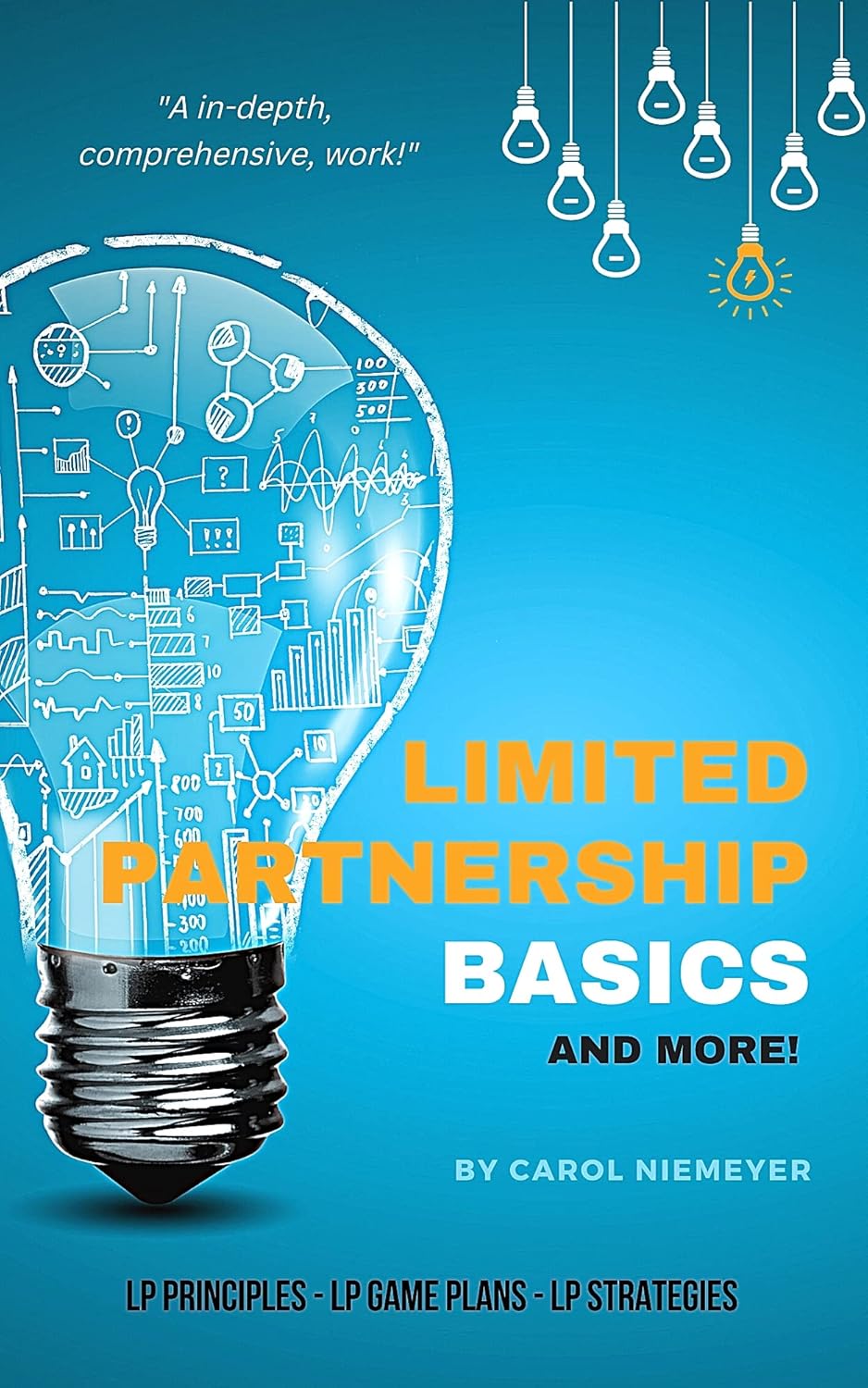
Limited Partnership Basics & More! is a practical, upbeat guide to understanding how limited partnerships work and why they matter. Author Carol Niemeyer breaks the topic down into clear parts: what LPs are, how general and limited partners function, how businesses raise money, how deals are structured, and why LPs can become long-term wealth generators. She mixes explanations with examples of apartments, sport facilities, retail strips, clubs, and even big names like major sports teams. The book sits squarely in the business and entrepreneurship genre, and it aims to show everyday people that investing in or building an LP is possible, even on a modest budget.
I felt like Carol Niemeyer genuinely wants readers to feel empowered. Her tone is enthusiastic, almost cheerleading at times, but that energy makes the material less intimidating. She doesn’t hide her belief that limited partnerships can be “little gold mines,” and she repeats that theme often. I liked how straightforward she made complicated things sound. The writing isn’t heavy. It’s more like someone at a coffee shop leaning in and saying, “Look, this is doable.” Some sections felt dense with numbers, but the charts and simple explanations helped balance things out.
What stood out most was how strongly she emphasizes community and teamwork. The “Friendship Formula,” the examples of friends pooling money, the idea of local athletes or students boosting visibility, it all paints LPs as something built on relationships. I appreciated the reminders about risk and due diligence, even if they’re brief. And while the optimism can feel a bit rosy, her message about people combining resources to build local assets feels grounded. I found myself imagining small towns where these projects really could reshape the local landscape. It made the ideas feel human, not just financial.
By the time I reached the end, I felt like I had been given both a pep talk and a starter toolkit. It’s a motivational, beginner-friendly look at LPs. It’s a book best suited for aspiring entrepreneurs, small-business dreamers, and investors who want a down-to-earth introduction to the structure. If you’re curious about the world of partnerships and want something clear, encouraging, and easy to follow, this book will fit you well.
Pages: 150 | ASIN : B0BS74L4QM



 LITERARY TITAN